- Joined
- Sep 1, 2010
- Messages
- 7,023 (1.40/day)
Self-explanatory random thread. The target audience is ... me 
Btw I've updated all my posts here (December 10, 2012), added links, pictures and videos. I spent lots of time, but it's all worth it! And now posts make more sense.
________________
Contents:
part 1: Neptune and Jupiter (Moons and Rings)
part 2: Mars
part 3: Saturn (Moons, Rings)
part 4: Uranus (Moons, Rings)
part 5: new images of Saturn
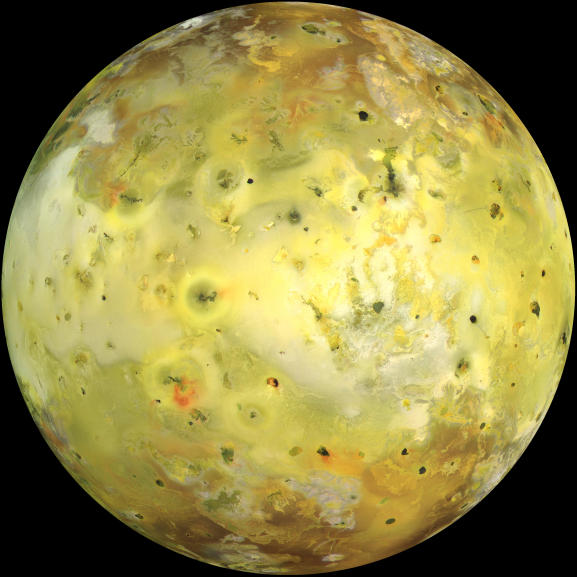
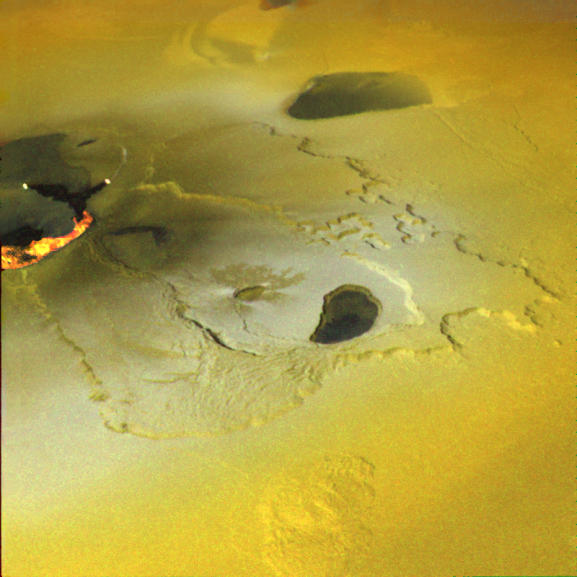
part 6: Io
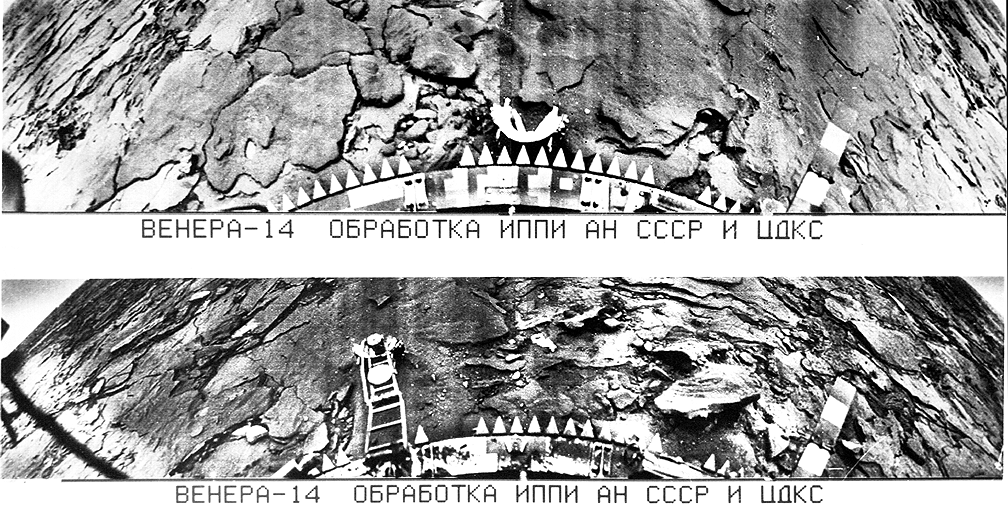
part 7: Venus and part 7a
part 8: Titan
part 9: Mercury
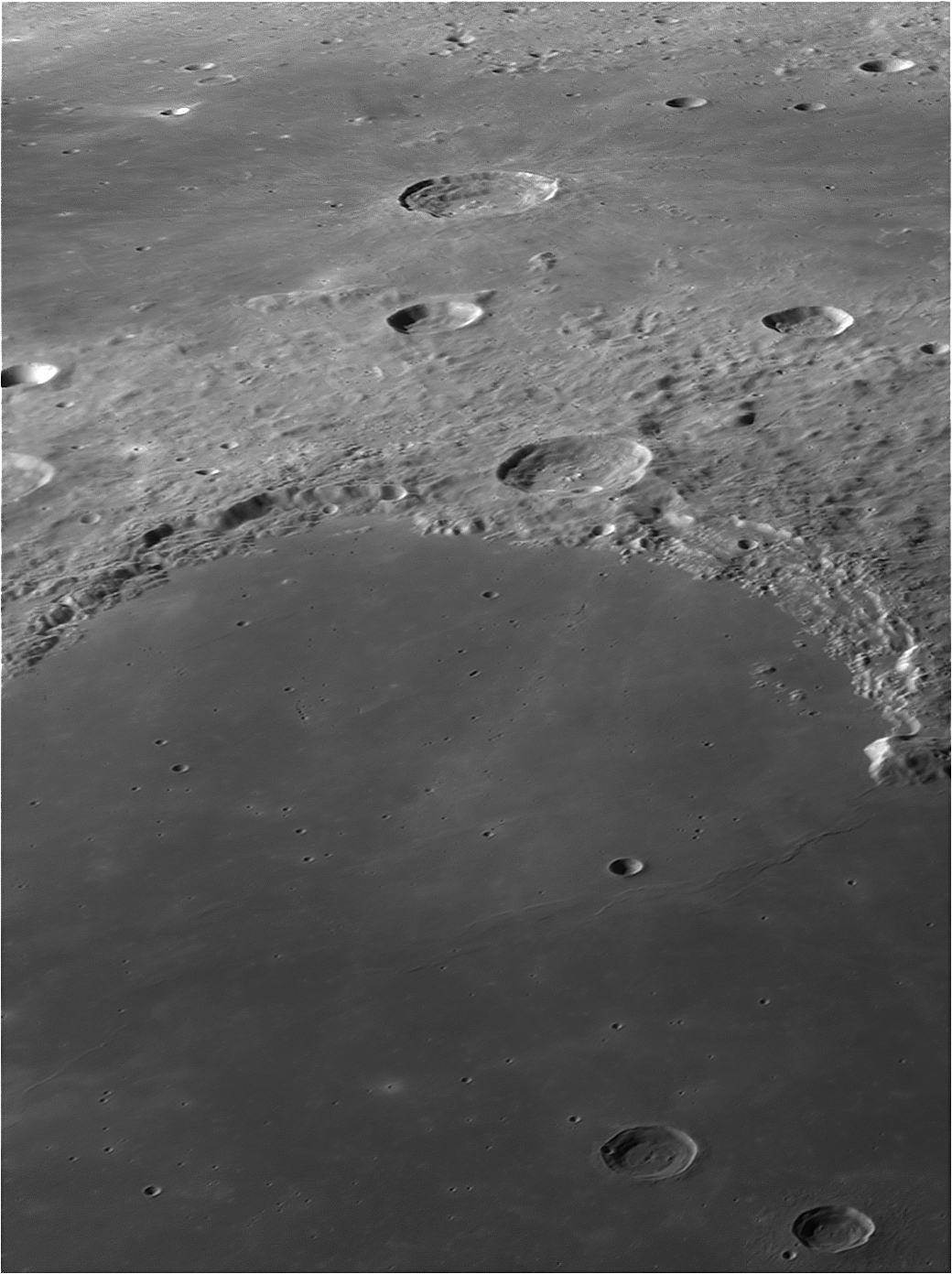
part 10: Moon
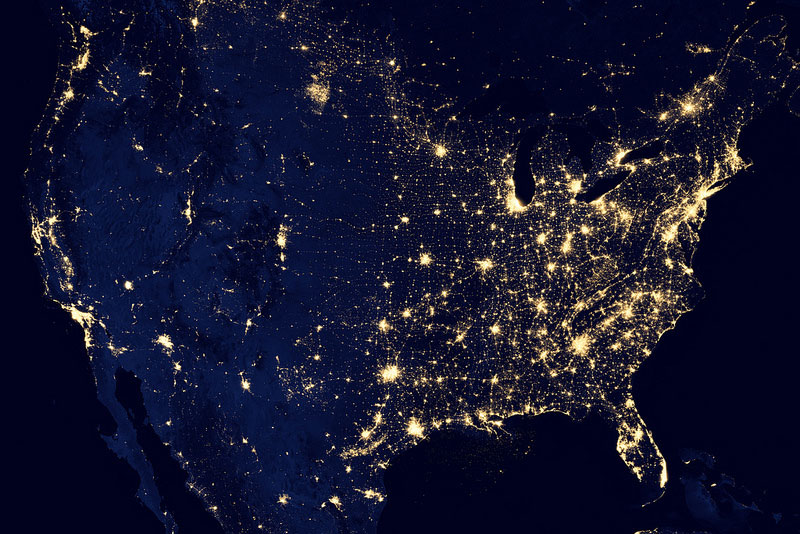
part 11: Earth at night
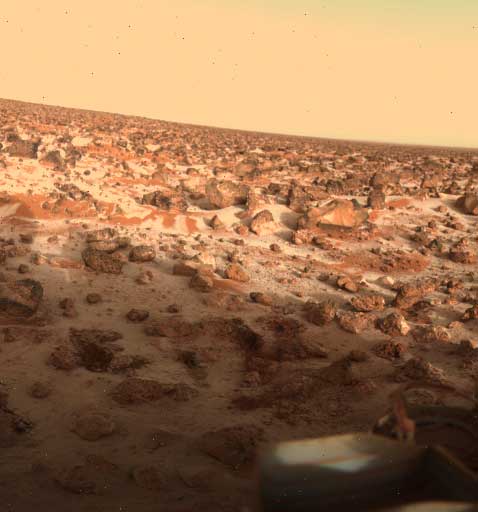
part 12: Martian terrain
____________________
Neptune

Dark, cold and whipped by supersonic winds, Neptune is the last of the hydrogen and helium gas giants in our Solar System. More than 30 times as far from the sun as Earth, the planet takes almost 165 Earth years to orbit our sun. In 2011 Neptune completed its first orbit since its discovery in 1846.

Planet profile.

This picture taken in 2011 shows planet's 16-hour rotation. The snapshots were taken at roughly four-hour intervals, offering a full view of the planet.

Infrared picture of Neptune and its moon Triton (lower right).

Rings of Neptune. Yes, it does have rings!

Triton's (Neptune's largest moon) surface.

Neptune and Triton
__________________________________
Jupiter - Largest Planet of the Solar System

Planet profile
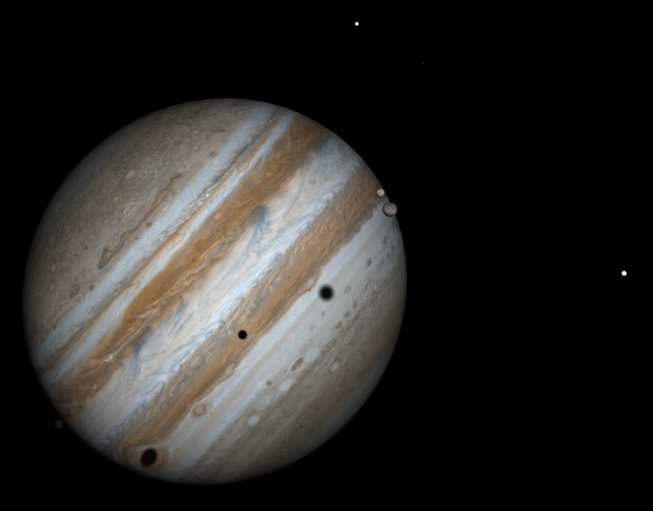

True color image of Jupiter.
Big, fast, windy (footage from Voyager 1, 1979)
Jupiter Collision September 2012
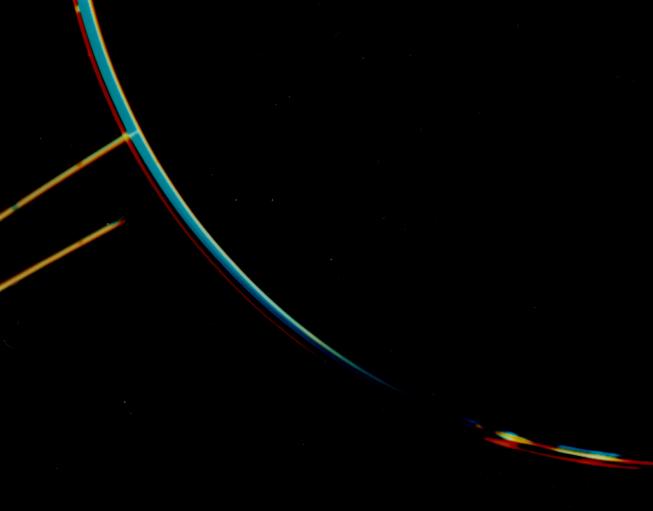
Rings of Jupiter. So faint but so beautiful. Orange light lines are so sexy.

The comet or asteroid hit near Jupiter's South Pole. Impact happened in 2009.
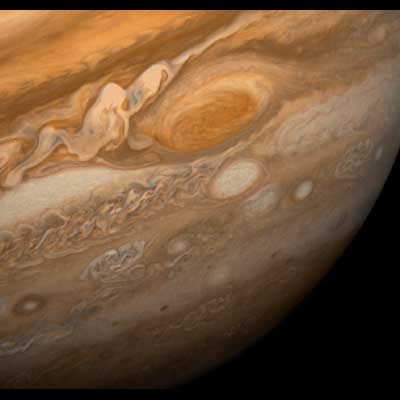

Jupiter's Great Red Spot is an atmospheric storm that has been raging in Jupiter's southern Hemisphere for at least 400 years. About 100 years ago, the storm covered over 40 000 km of the surface. It is currently about one half of that size (twice the diameter of Earth) and seems to be shrinking. It is not known how long the spot will last, or whether the changes in size are a result of normal fluctuations.
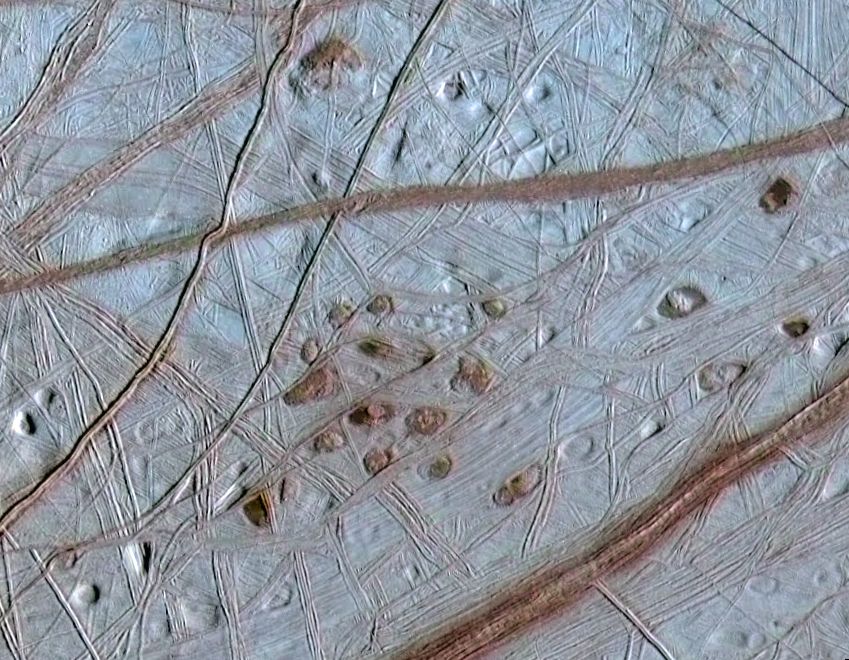
Surface of Europa (Jupiter's moon). Looks like a map of some city lol. Scientists think that there can be an ocean of liquid water hidden beneath its icy surface, and maybe some primitive life.
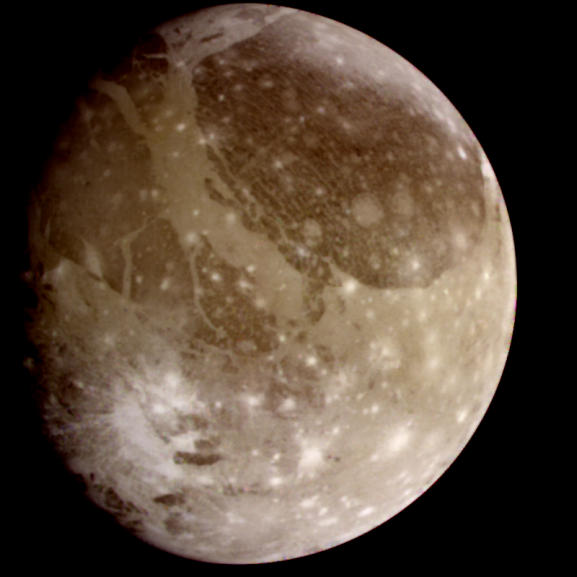
That's Ganymede (Jupiter's moon), the Largest Moon in the Solar System. If Ganymede orbited the Sun, it would be considered a planet. It is larger than Mercury.
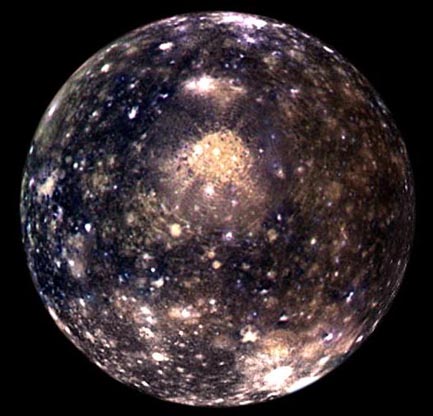
Callisto (Jupiter's moon). It's old and its surface is half rock and half ice. It has one of the largest impact craters in the Solar System, measuring about 4000 km across called Valhalla.
______________________________
It's amazing that scientists and engineers designed such amazing instruments like Voyager, Venera, Galileo, Cassini, Juno, Hubble, Kepler, Herschel, Huygens and many more. And it's so amazing that we have great and restless minds of scientists and thinkers. You rule. Forever and ever.
Btw I've updated all my posts here (December 10, 2012), added links, pictures and videos. I spent lots of time, but it's all worth it! And now posts make more sense.
________________
Contents:
part 1: Neptune and Jupiter (Moons and Rings)
part 2: Mars
part 3: Saturn (Moons, Rings)
part 4: Uranus (Moons, Rings)
part 5: new images of Saturn
part 6: Io
part 7: Venus and part 7a
part 8: Titan
part 9: Mercury
part 10: Moon
part 11: Earth at night
part 12: Martian terrain
____________________
Neptune
Dark, cold and whipped by supersonic winds, Neptune is the last of the hydrogen and helium gas giants in our Solar System. More than 30 times as far from the sun as Earth, the planet takes almost 165 Earth years to orbit our sun. In 2011 Neptune completed its first orbit since its discovery in 1846.
Planet profile.
This picture taken in 2011 shows planet's 16-hour rotation. The snapshots were taken at roughly four-hour intervals, offering a full view of the planet.
Infrared picture of Neptune and its moon Triton (lower right).
Rings of Neptune. Yes, it does have rings!
Triton's (Neptune's largest moon) surface.
Neptune and Triton
__________________________________
Jupiter - Largest Planet of the Solar System
Planet profile
True color image of Jupiter.
Big, fast, windy (footage from Voyager 1, 1979)
Jupiter Collision September 2012
Rings of Jupiter. So faint but so beautiful. Orange light lines are so sexy.
The comet or asteroid hit near Jupiter's South Pole. Impact happened in 2009.
Jupiter's Great Red Spot is an atmospheric storm that has been raging in Jupiter's southern Hemisphere for at least 400 years. About 100 years ago, the storm covered over 40 000 km of the surface. It is currently about one half of that size (twice the diameter of Earth) and seems to be shrinking. It is not known how long the spot will last, or whether the changes in size are a result of normal fluctuations.
Surface of Europa (Jupiter's moon). Looks like a map of some city lol. Scientists think that there can be an ocean of liquid water hidden beneath its icy surface, and maybe some primitive life.
That's Ganymede (Jupiter's moon), the Largest Moon in the Solar System. If Ganymede orbited the Sun, it would be considered a planet. It is larger than Mercury.
Callisto (Jupiter's moon). It's old and its surface is half rock and half ice. It has one of the largest impact craters in the Solar System, measuring about 4000 km across called Valhalla.
______________________________
It's amazing that scientists and engineers designed such amazing instruments like Voyager, Venera, Galileo, Cassini, Juno, Hubble, Kepler, Herschel, Huygens and many more. And it's so amazing that we have great and restless minds of scientists and thinkers. You rule. Forever and ever.
Last edited:


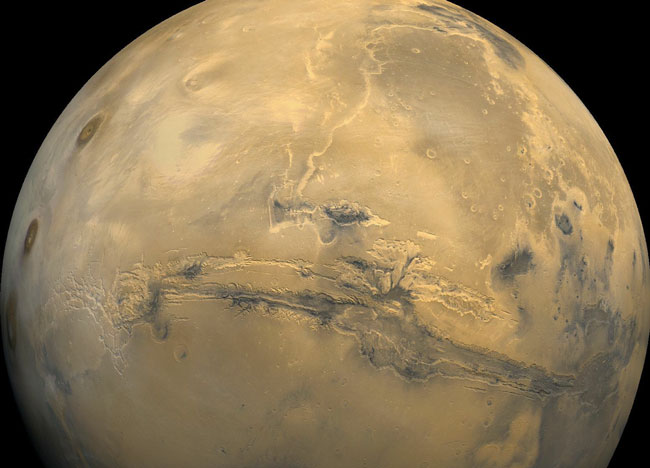















 You can find 1000 ways to die on Venus



 )
)