Sunday, August 9th 2015

Intel Skylake De-lidded, Reveals Tiny Die
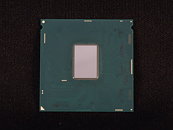
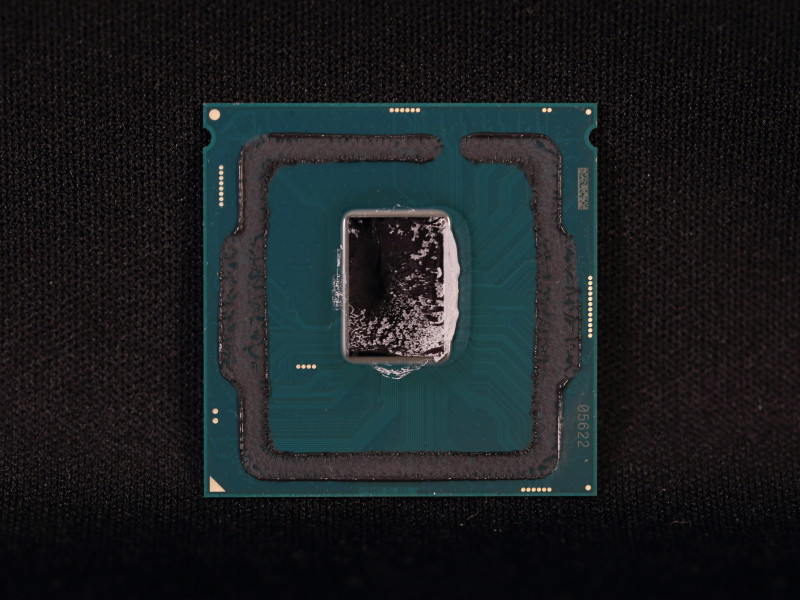
When Japanese tech publication PC Watch got under the hood (lid) of a Core i7-6700K quad-core processor, what they found was an unexpectedly small silicon, that's shorter in proportion to its width, than previous dies from Intel, such as Haswell-D, and Ivy Bridge-D. It's smaller than even the i7-5775C, despite the same 14 nm process, because of its slimmer integrated graphics core with just 24 execution units (compared to 48 on the i7-5775C), and the lack of an external 128 MB SRAM cache for the iGPU.
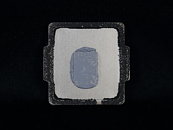
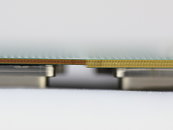
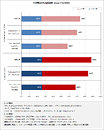
The substrate Intel is using on the i7-6700K was found to be slimmer than the one on the i7-4770K, at 0.8 mm thick, compared to 1.1 mm on the latter. The thicker IHS (integrated heatspreader) makes up for the thinner substrate, so it shouldn't cause problems with using your older LGA1150 coolers on the new socket. Intel is using a rather viscous silver-based TIM between the die and the IHS. The die is closer to the center of the IHS than its predecessors were. PC Watch swapped out the stock TIM with Prolimatech PK-3 and Cool Laboratory Liquid Pro, and found some impressive drops in temperatures at stock speed (4.00 GHz) and with a mild overclock (4.60 GHz).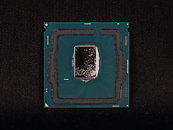
Source:
PC Watch
The substrate Intel is using on the i7-6700K was found to be slimmer than the one on the i7-4770K, at 0.8 mm thick, compared to 1.1 mm on the latter. The thicker IHS (integrated heatspreader) makes up for the thinner substrate, so it shouldn't cause problems with using your older LGA1150 coolers on the new socket. Intel is using a rather viscous silver-based TIM between the die and the IHS. The die is closer to the center of the IHS than its predecessors were. PC Watch swapped out the stock TIM with Prolimatech PK-3 and Cool Laboratory Liquid Pro, and found some impressive drops in temperatures at stock speed (4.00 GHz) and with a mild overclock (4.60 GHz).


112 Comments on Intel Skylake De-lidded, Reveals Tiny Die
Compared to the large number of machines like Acer Veritons I see shifted, enthusiasts are a small minority.It's possible, that due to the density and size of the die, the heat required to bind the heat spreader would kill the chip.
I'm not making excuses for Intel here, just trying to present a sensible, logical argument. Personally I believe the 1151 platform has been pushed dangerously close to the 2011-3 platform in price and some of its value has been lost as a result.
If AMD had by now a replacement for the FX-8350 we'd be talking of a different Skylake.
So, Thanks but no.
Would you be smarter to give us energy which does not have carbon footprint at all and leads to maximum performance instead, so we can solve problems quicker and enjoy better entertainment?
I wonder if this is part of some strategy/tactic or just for profit and streamlining.
To release a TIM one on tock and then a soldered one on tick. Or on the same tick but with a "Refresh" like with Haswell. To put it simply, as it probably involves sales figures and response/reception from the consumers/community.
And again, quantum mechanics limits clock speeds.
Hopefully when AMD releases real competitive chip, Intel hasn't forgotten how to solder. :rolleyes:
like how the 980ti is such a good card (for the money by nvidia standards) today, they we concerned about fury and brought their A game.
i am hoping amd's move to 16 or 14nm will force intel to stop dialing them in too. but more i hope intel shows us what they can do, and not just what they need to do you know.
you can see by looking at that they could of made this their 1st mainstream oct or hex core with ease. fuckers.
I remember a couple of years ago when Skylake was just beginning to be discussed on tech forums that people had high hopes for a large performance increase. It was said that the team working on Skylake was the same team that brought us Sandy Bridge. Companies just don't do their best unless they have serious competition. It's human nature I guess to do only what you have to to get by.
This 10% IPC over Haswell may not mean a lot on a quad core CPU, but think of what this will bring to Xeon behemoths, remember +10% each core and more cores because they are smaller, coupled with increased performance per watt has some ingredients for insane big dies CPUs.
Enthusiasts are a small part of Intel's revenue, don't be surprised if they are focusing on IGP plus perf/watt for consumers and perf/watt plus core scalability for enterprise businesses.
This does not surprise me, they refuse to solder to keep the profit margins as high as possible and it probably satisfies another couple of needs like limiting the overclocks (saves people from killing chips with extreme clocks), gives room for "Enthusiast grade" versions (Devils canyon), and keeping the next generation more relevant. Sandy Bridge was so great that people kept them for so long for a reason...
Soldered IHS means lapping. TIM means delidding.
If I had a choice I would choose a water free delid to lapping any day of the week.
It wasn't so long ago that CPU's didn't have an IHS at all.
Intel won't jack up prices anymore significantly, it's a monopoly yes, but they are competing with themselves. They will need to remain competitive price wise with what they offered in the past if they want to sell in volumes.
HEDT platform on the other hand... That's pony up and pay.
that's my understanding anyway.
And lets face it prices keep creeping upwards and K versions don't come with coolers so i am sure they could solder them.
In fact i think the K ones should come soldered and none K paste.
The fact I can push 100W+ through that tiny chip in and of itself is pretty amazing.