| Wednesday, September 17 2008 |
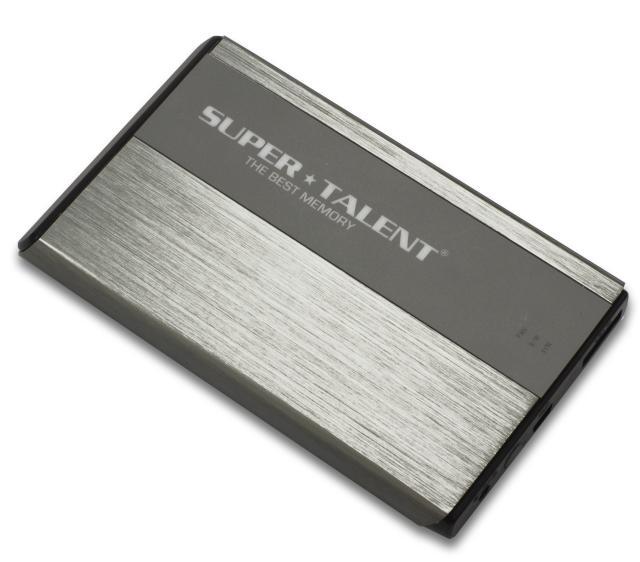
Super Talent Technology, a leading manufacturer of Flash storage solutions and DRAM memory modules, today added two new series of SSD products in their MasterDrive family that deliver substantially faster performance than existing SSDs.
These new SSDs are based on a sophisticated new multi-channel SATA-II (3.0 Gbits per sec) controller. The MasterDrive OX uses MLC NAND Flash to transfer data at speeds up to 150 MB/sec (sequential read) and 100 MB/sec (sequential write). The MasterDrive OX is offered in capacities up to 128GB, and is backed with a 1-year warranty.
The MasterDrive PX employs SLC NAND Flash to deliver the best possible reliability and endurance. Furthermore, it supports breath-taking sequential read and write speeds, up to 170 and 130 MB/sec read and write speeds respectively. MasterDrive PX SSDs are available in 32 and 64GB capacities, and includes a 3-year warranty.
Both MasterDrive OX and PX SSDs support the following standard features:
Super Talent Director of Marketing, Joe James commented, "In this, our third generation of SATA SSDs, we've taken performance to incredible new heights, with sustained read and write speeds that will leave any hard disk drive in the dust. At the same time, our MasterDrive SSDs are among the most cost effective solid state storage solutions available."

These new SSDs are based on a sophisticated new multi-channel SATA-II (3.0 Gbits per sec) controller. The MasterDrive OX uses MLC NAND Flash to transfer data at speeds up to 150 MB/sec (sequential read) and 100 MB/sec (sequential write). The MasterDrive OX is offered in capacities up to 128GB, and is backed with a 1-year warranty.
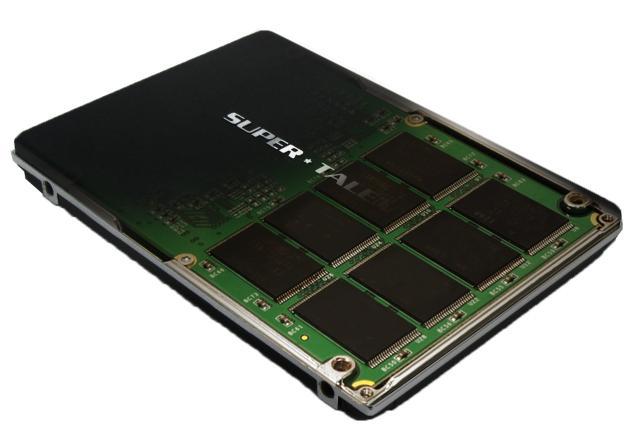
The MasterDrive PX employs SLC NAND Flash to deliver the best possible reliability and endurance. Furthermore, it supports breath-taking sequential read and write speeds, up to 170 and 130 MB/sec read and write speeds respectively. MasterDrive PX SSDs are available in 32 and 64GB capacities, and includes a 3-year warranty.
Both MasterDrive OX and PX SSDs support the following standard features:
- Fast 0.1msec access time;
- 0C to 70C operating temperature range;
- Integrated wear leveling and bad bit management algorithms, and ECC.
Super Talent Director of Marketing, Joe James commented, "In this, our third generation of SATA SSDs, we've taken performance to incredible new heights, with sustained read and write speeds that will leave any hard disk drive in the dust. At the same time, our MasterDrive SSDs are among the most cost effective solid state storage solutions available."

User comments
Nice to see prices slowly coming down. Can't wait till higher performance drives like these are closer to $1/GB
1-year warranty ? nice total bs if you ask me, i rather get normal HDD with 3-5 years warranty.
any powersaving features?
yea those drives are way to much, maybe in a year they have TB ssds? for CHEAP
Agreed one year is not long enough it is kind of scary actually. That shows they know they will crash and burn within a year or right after a year..,
by: Baum
any powersaving features?
No need. Unlike a hard drive there are no moving parts. These are very energy efficient.
Hmm, the price is becoming more reasonable, for that i may consider purchasing one in the near future.
how many read/writes till the flash drive is totalled though... they only have a certain amount of read/writes before they start to break.... definately dont want to have vista indexing one of those drives lol or an auto defrag hehe
Those are pretty damn fast transfer rates now. If this keeps up my next computer will probably have one of these for the operating system and perhaps a couple of games :toast:
get a several for raid 0
by: twicksistedits not like the entire drive will explode here, it'll just had 'bad sectors' like a failing mechanical drive and map around them.
how many read/writes till the flash drive is totalled though... they only have a certain amount of read/writes before they start to break.... definately dont want to have vista indexing one of those drives lol or an auto defrag hehe
The drive would slowly get smaller and smaller, instead of going POOF.
by: Musselsand lose data... but yeah i guess its not all that bad
its not like the entire drive will explode here, it'll just had 'bad sectors' like a failing mechanical drive and map around them.
The drive would slowly get smaller and smaller, instead of going POOF.
by: twicksistednot really. on NTFS it automatically remaps the data if bad sectors are found. besides, losing one sector of data is a LOT better than a whole DRIVE of data. as soon as you notice problems, stop using it for critical data... no different to a mechanical drive.
and lose data... but yeah i guess its not all that bad
by: MusselsI guess... though most people will use this as a system disk.. (which is critical) to make use of the performance increase it gives. the current sizes are tiny and even though it would re-map bad sectors, when theres not much space left things are bound to go wrong. They are working on more durable flash memory and hopefully in the near future they will have lifespans like their moving part cousins :)
not really. on NTFS it automatically remaps the data if bad sectors are found. besides, losing one sector of data is a LOT better than a whole DRIVE of data. as soon as you notice problems, stop using it for critical data... no different to a mechanical drive.
by: twicksistedA system disk isn't critical unless you are running a mission critical server. Sure, it's a pain to reinstall a bunch of apps, but you don't actually lose anything but time when a drive goes bad.
I guess... though most people will use this as a system disk.. (which is critical) to make use of the performance increase it gives. the current sizes are tiny and even though it would re-map bad sectors, when theres not much space left things are bound to go wrong. They are working on more durable flash memory and hopefully in the near future they will have lifespans like their moving part cousins :)
Critical data are your personal photos, documents, downloaded music, etc., etc. AKA: Things that cannot be replaced.
by: Wile Eyeah i guess... but critical for me in my home and personal use is the ability to have an operating system on my hardware as without it the hardware is just useless ;)
A system disk isn't critical unless you are running a mission critical server. Sure, it's a pain to reinstall a bunch of apps, but you don't actually lose anything but time when a drive goes bad.
Critical data are your personal photos, documents, downloaded music, etc., etc. AKA: Things that cannot be replaced.
(like when my raid array breaks and i cant boot up!!!)
so a flash drive that will give me a little bit more performance but is tiny and will mostly be full... that degrades over time is not a good idea at this point.
(is what im trying to get at)
by: twicksistedWell, this would be no different than any other hard drive failing. If that kind of risk was a true concern to you, you wouldn't be booting to a RAID0 array either.
yeah i guess... but critical for me in my home and personal use is the ability to have an operating system on my hardware as without it the hardware is just useless ;)
(like when my raid array breaks and i cant boot up!!!)
so a flash drive that will give me a little bit more performance but is tiny and will mostly be full... that degrades over time is not a good idea at this point.
(is what im trying to get at)
by: Wile Efair enough...
Well, this would be no different than any other hard drive failing. If that kind of risk was a true concern to you, you wouldn't be booting to a RAID0 array either.
I think my main concern is the small capacity... and the fact that it would be mostly filled up with a few programs and the operating system leaving little or no space for re-allocated sectors when they happen.
Anyways, im all for this new technology and cant wait to jump on the bandwagon... however I dont think that I will anytime soon with the current cost, speeds and capacity offered
by: twicksistedthere was a link provided in one of these threads, where the intel SSD was 64GB but only 60GB usable - the other 4GB was for backup/redundancy.
fair enough...
I think my main concern is the small capacity... and the fact that it would be mostly filled up with a few programs and the operating system leaving little or no space for re-allocated sectors when they happen.
Anyways, im all for this new technology and cant wait to jump on the bandwagon... however I dont think that I will anytime soon with the current cost, speeds and capacity offered