Sunday, August 11th 2019
Drivers from Over 40 Manufacturers Including Intel, NVIDIA, AMD Vulnerable to Privilege Escalation Malware Attacks
Cybersecurity research firm Eclypsium published a report titled "Screwed Drivers," chronicling a critical flaw in the design of modern device driver software from over 40 hardware manufacturers, which allows malware to gain privilege from Ring 3 to Ring 0 (unrestricted hardware access). The long list of manufacturers publishing drivers that are fully signed and approved by Microsoft under its WHQL program, includes big names such as Intel, AMD, NVIDIA, AMI, Phoenix, ASUS, Toshiba, SuperMicro, GIGABYTE, MSI, and EVGA. Many of the latter few names are motherboard manufacturers who design hardware monitoring and overclocking applications that install kernel-mode drivers into Windows for Ring-0 hardware-access.
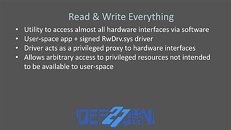
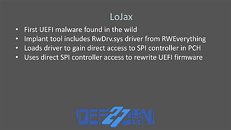
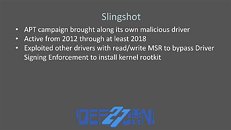
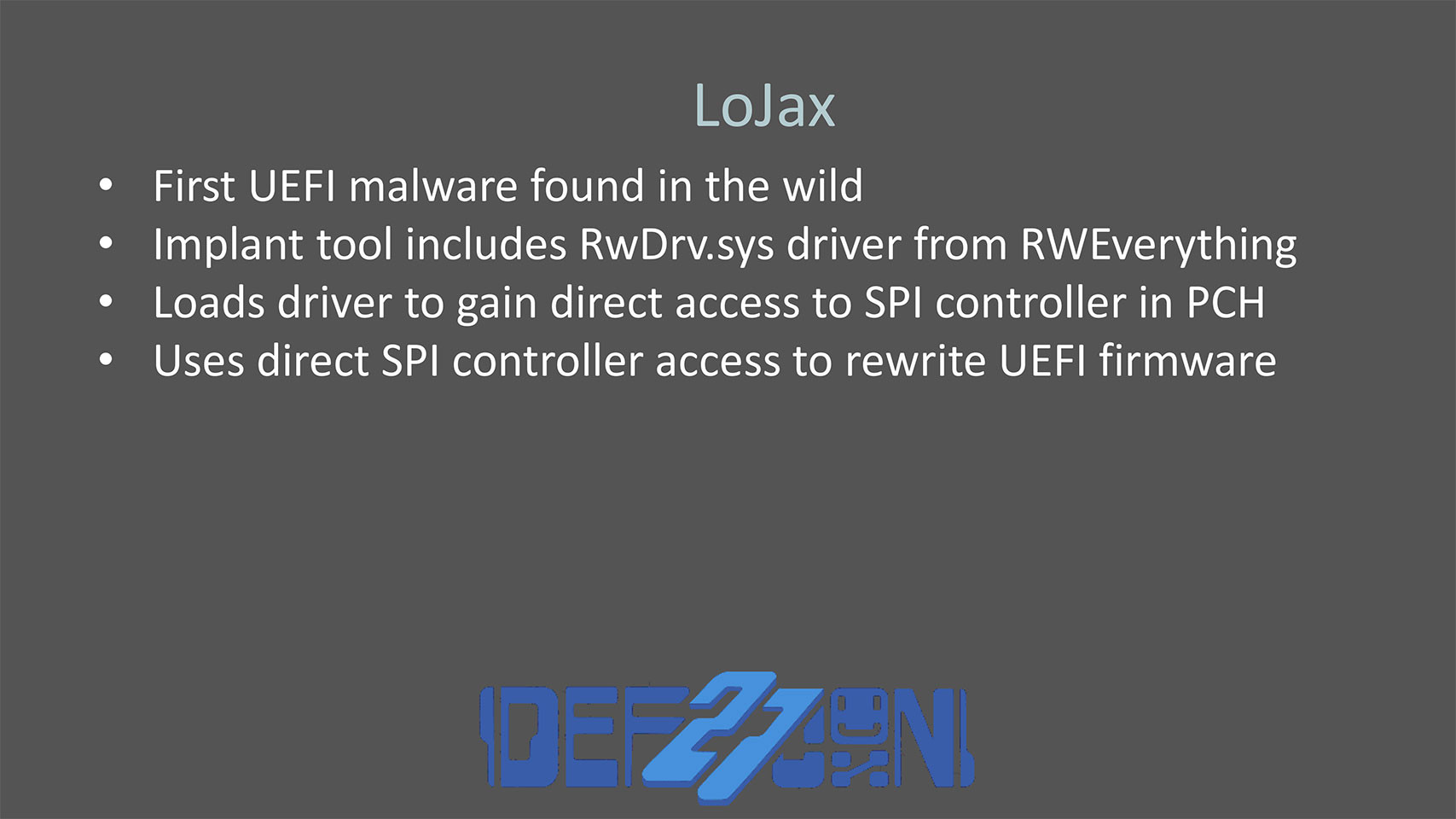
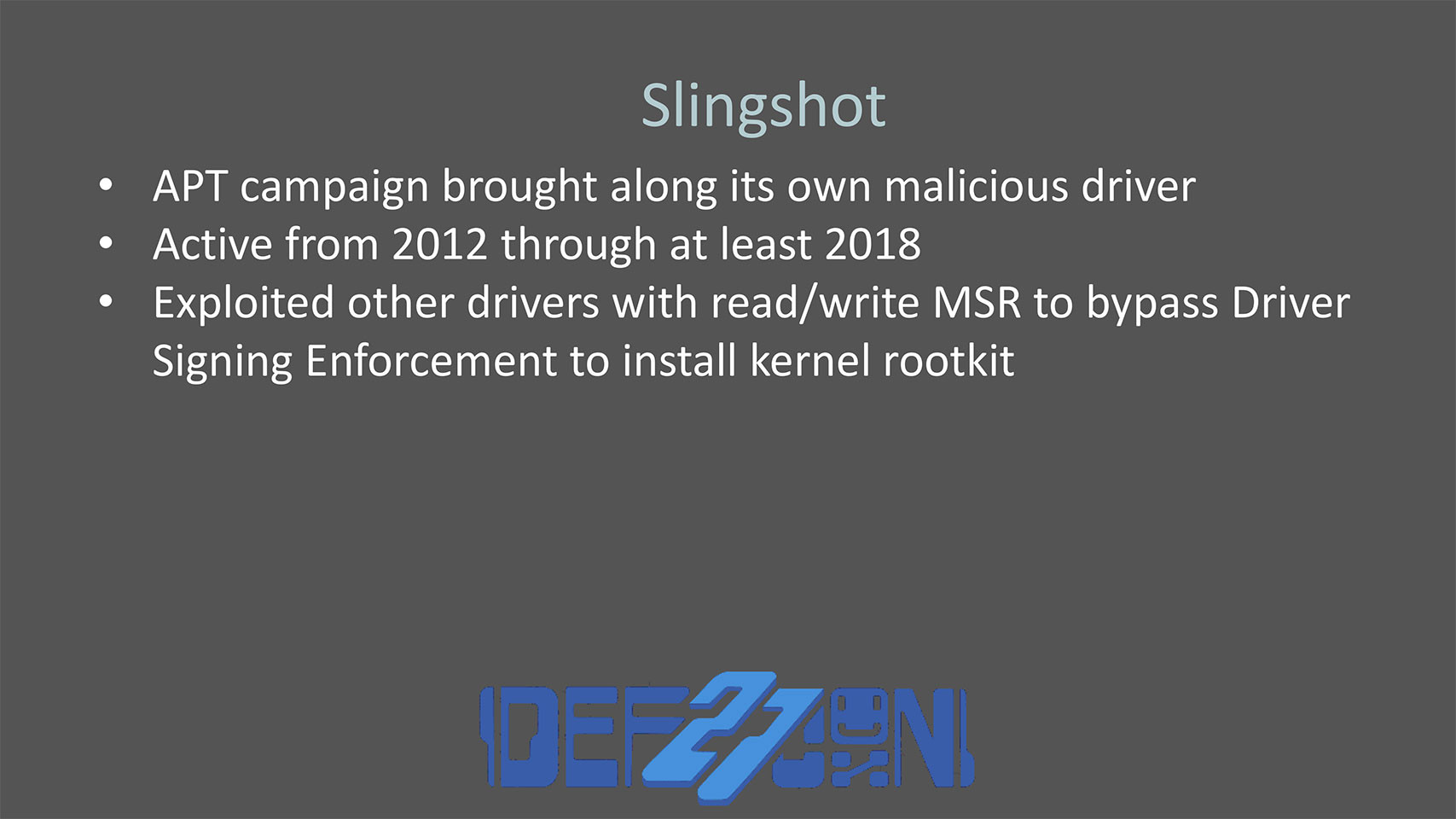
As part of its study, Eclypsium chronicles three classes of privilege-escalation attacks exploiting device drivers, RWEverything, LoJax (first UEFI malware), SlingShot. At the heart of these are the exploitation of the way Windows continues to work with drivers with faulty, obsolete, or expired signing certificates. Eclypsium hasn't gone into the nuts-and-bolts of each issue, but has briefly defined the three in a DEF CON presentation. The firm is working by several of the listed manufacturers on mitigations and patches, and is under embargo to put out a whitepaper. RWEverything is introduced by Eclypsium as a utility to access all hardware interfaces via software. It works in user-space, but with a one-time installed signed RWDrv.sys kernel-mode driver, acts as a conduit for malware to gain Ring-0 access to your machine. LoJax is an implant tool that uses RWDrv.sys to gain access to the SPI flash controller in your motherboard chipset, to modify your UEFI BIOS flash. Slingshot is an APT with its own malicious driver that exploits other drivers with read/write MSR to bypass driver signing enforcement to install a rootkit.
Source:
Eclypsium
As part of its study, Eclypsium chronicles three classes of privilege-escalation attacks exploiting device drivers, RWEverything, LoJax (first UEFI malware), SlingShot. At the heart of these are the exploitation of the way Windows continues to work with drivers with faulty, obsolete, or expired signing certificates. Eclypsium hasn't gone into the nuts-and-bolts of each issue, but has briefly defined the three in a DEF CON presentation. The firm is working by several of the listed manufacturers on mitigations and patches, and is under embargo to put out a whitepaper. RWEverything is introduced by Eclypsium as a utility to access all hardware interfaces via software. It works in user-space, but with a one-time installed signed RWDrv.sys kernel-mode driver, acts as a conduit for malware to gain Ring-0 access to your machine. LoJax is an implant tool that uses RWDrv.sys to gain access to the SPI flash controller in your motherboard chipset, to modify your UEFI BIOS flash. Slingshot is an APT with its own malicious driver that exploits other drivers with read/write MSR to bypass driver signing enforcement to install a rootkit.

43 Comments on Drivers from Over 40 Manufacturers Including Intel, NVIDIA, AMD Vulnerable to Privilege Escalation Malware Attacks
Indeed, anyone can sign a driver in seconds for free.
Google what I told you, or let me just tag our founder who knows @W1zzard. GPU-Z uses a signed kernel mode driver.Seconds? Seriously, nondevs need to get out of this discussion. No, that is not how it works and some of us actually do this for a living.
You may be able to get such a cert for apps, but not for drivers. Not at all. The issues are not in the ID-validation, but the code verification and the fact someone can use existing bad drivers to bypass it.
Example of how once admin is had (via another driver issue, like here), anything can be run/loaded unsigned:
github.com/hfiref0x/TDL/blob/master/README.md
www.google.com/search?q=RwDrv.sys&oq=RwDrv.sys
Did you google what I said?
Digicert is the approval agency for the cert (they issue it after you pass ID validation), you know the one you linked. You need to pass their validation. Looks like rwdrv is cross-signed by globalsign, and also subject to the older sha1 algorithm that is no longer allowed for new signatures.
Of course it is not signed by microsoft, it's signed by the applicant. It must be cross-signed by microsofts root cert agencies to be used in modern Windows though. The agencies that review these are supposedly monitored and subject to review from microsoft, but that's really kinda where things break down.
This used to be more lax but Microsoft tightened it a lot recently. And you can no longer apply under the old system. Or renew. The issue is the old drivers running around are exploitable in many ways... and signing review itself still is a joke after ID validation.
Look here, it seems my suggested google search is turning up the wrong thread. You should start reading at my first post to save time.
github.com/shauleiz/vJoy/issues/23
Anyone else remember having to enable/disable BIOS write protection setting? :)
Please tell me how to build a trust?
Key here is risk! Not IF your systems are breached; knowing how to act and work under presumption they already are, is the tricky part here.Of course! My BIOS write protect switch is right next to the Turbo button. Man, 40MHz Turbo is the shizzle!
Under "political notes:"
www.techpowerup.com/forums/threads/asrock-z370-z390-taichi-and-some-others-actively-modding-firmware-with-intel-management-engine-disabled.243939/
I know a thing or two about this.Yes and no. It's easier to machine read, but has some more protections to circumvent.In short, you can't. But you can at least use secureboot as a start... but it's still, as I said, a broken mess. Part of my point.
Heck, it wouldn't surprise me if mobo vendors have just a couple of guys for UEFI development. Lord help us when on of them is on a leave.
There has to be a high number of exploitables...and they are.
Driver-level access is like a root access so that's why many 'goodies' will try to exploit that.