News Posts matching #4K

Return to Keyword Browsing

Satechi Launches ExtendView USB4 Dual HDMI Multiport Adapter

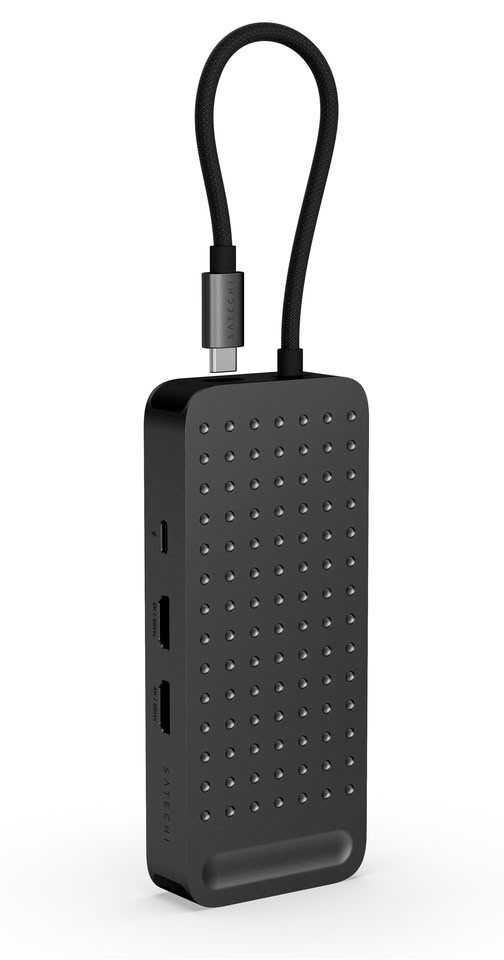
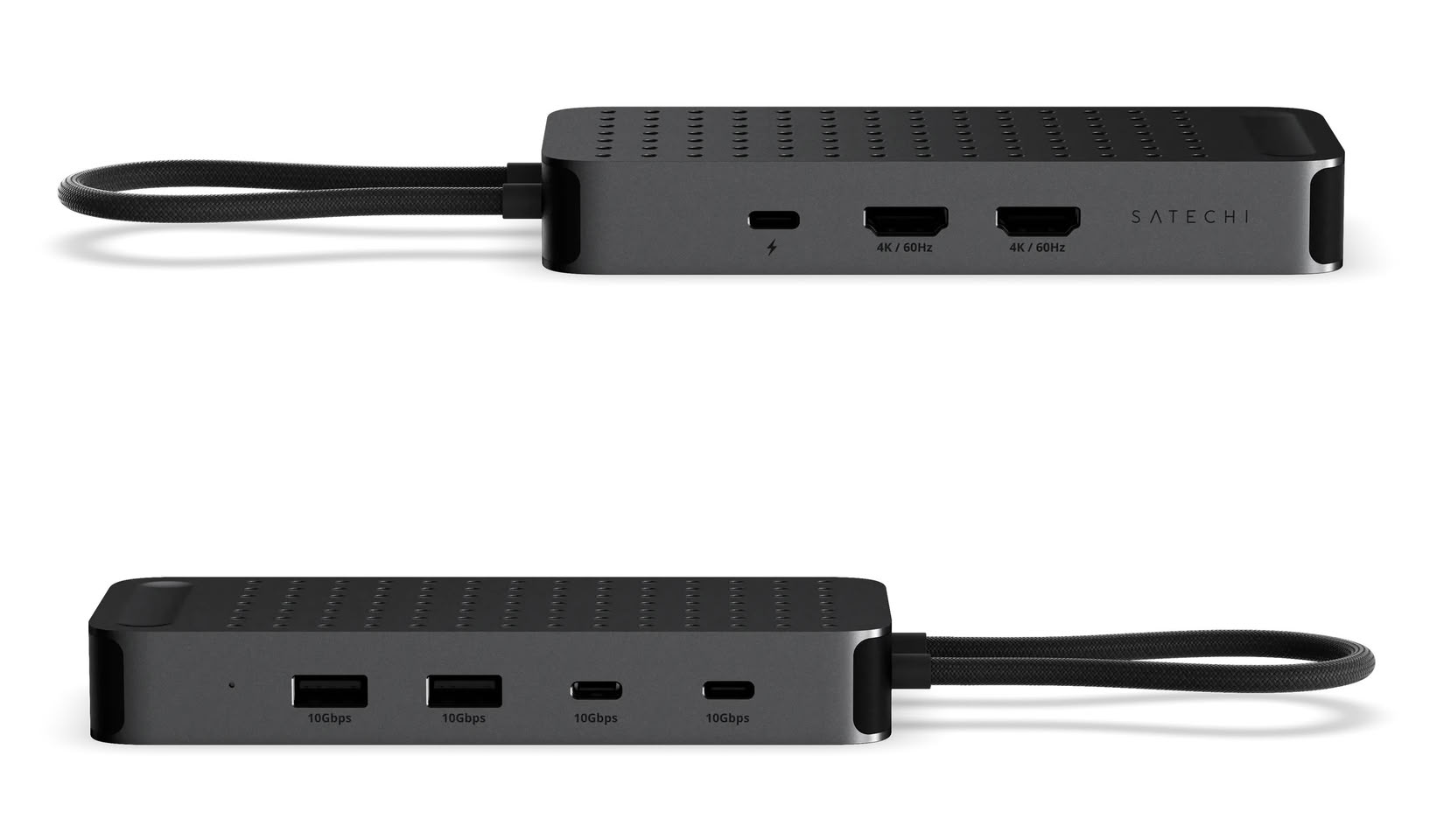
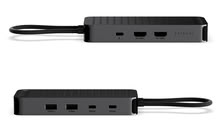
Satechi has introduced the ExtendView USB4 Dual HDMI Multiport Adapter. This is a compact, seven-port hub that connects two 4K displays at 60 Hz through a USB4 cable. The adapter works with Mac and Windows laptops without additional drivers or DisplayLink software. Besides the two HDMI 2.0 outputs, the adapter features two USB-A 3.2 Gen 2 and two USB-C 3.2 Gen 2 ports, all supporting up to 10 Gbps of data transfer speeds. The dedicated USB-C power delivery port accepts up to 140 W from an external charger and delivers up to 125 W to the connected laptop. The USB-C data ports do not support video output, while the power delivery port is limited to charging.

The adapter connects to the host through an integrated 20.1 cm long braided USB4 cable with a bandwidth of up to 40 Gbps. It also features a built-in cable storage slot and an LED power indicator. The aluminium enclosure has an anodized Space Black finish and measures 140 x 59 x 20 mm, with a weight of 168.5 g.


Modded RTX 2080 Ti 22 GB Shows What Extra VRAM Can Still Do for Turing

PC Games Hardware has put a modded GeForce RTX 2080 Ti 22 GB through their test gauntlet, and the extra memory seemingly pays off once games run out of headroom. At 4K with DLSS Performance and FSR 3.1 Frame Generation, the card averaged 52.5 FPS in Flight Simulator 2024 against 30.2 FPS on a regular 11 GB model, roughly 74% faster. Spider-Man 2 jumped from 39.4 to 64.0 FPS, and Indiana Jones and the Great Circle crashed to the desktop on the 11 GB card. At 1440p with DLSS Quality, the gap was smaller, though those first two games still ran about 20% slower on 11 GB. Of course, PCGH chose nine memory-hungry games on purpose, and most titles run fine on 11 GB. Keep in mind that these are just one outlet's numbers, and other results may vary.

These cards have shown up everywhere from Alibaba to eBay listings at $499, and this one came from a reader. All eleven memory chips are swapped for 2 GB Samsung parts. No firmware changes are needed, since relocating a single strap resistor tells the GPU about the extra capacity, and NVIDIA's regular drivers pick it up. Its weak blower-style cooler and 250 W limit held it back, so PCGH tuned both cards to identical 1.9 GHz, 15 GT/s, and 280 W settings. At around €500, the 22 GB card costs quite a bit less than a 16 GB RTX 5060 Ti, which goes for €770 in Germany. PCGH still calls it a gamble, citing eight-year-old hardware and soldering work that can fail weeks later, and advises checking the seller's reputation and whether any warranty goes beyond a 30-day return window.

New DLSS 5 Mod Borrows a VR Trick for Better Ultrawide Performance

A new DLSS 5 mod borrows a trick from VR headsets to make Neural Rendering less punishing on ultrawide monitors. FoveatedDLSS5, a ReShade add-on built by maximedgoulet, keeps neural rendering at full resolution in the middle of the screen and steps it down toward the edges, where peripheral vision picks up less detail. In a Reddit post, the modder says The Witcher 3 went from 49 FPS to about 80 FPS on an RTX 4090 at 7680x2160 with 2x multipass, a gain of over 60%.

With default settings on a 7680x2160 panel, Neural Rendering ends up processing about 71% of the original pixels. Smaller screens gain less, however. At 4K, the defaults leave 93% of the pixels, and at 3440x1440 the mod turns itself off, so 16:9 and 21:9 users should shrink the center zone. It's also a pre-release tested in one game, and it only works when neural rendering runs after upscaling, which rules out pairing it with the Neural Upstream trick. Videocardz points out a similar project, CheekyFoveatedDLSS, that has been out since early September and adds eye-tracked foveation for VR headsets.

Jailbroken PS5 Consoles Can Now Run Windows Steam Games Locally

The PS5 jailbreaking scene keeps making progress almost on a weekly basis. A jailbroken PS5 can now download Windows games from a Steam library and run them locally on the console, with no PC streaming involved. The tool behind it is Playden for PS5, an alpha launcher from developer leolobato that adapts the macOS version of Playden. It lets users sign in to Steam with a QR code, browse their library, download games, and launch each one from its own tile on the PS5 home screen. Under the hood, it relies on prospero-win, a PS5 port of Wine, with DXVK handling the graphics side. Unlike Linux on the PS5, there's no separate OS to boot into, since Playden runs as a regular PS5 app.

Development is moving quickly. The first public release landed on October 12, and version 0.5.0 added Direct3D 12 support through VKD3D-Proton, which, according to the release notes, opens the door to games like Cyberpunk 2077 and Deep Rock Galactic. Version 0.6.0 followed this week with USB and FTP game imports, 120 Hz output and a 4K resolution option. Of course, this is still very much experimental. The compatibility list has a decent number of working games, mostly older and indie titles such as Half-Life 2, Fallout: New Vegas, and Vampire Survivors, but plenty of others crash or refuse to start.

Sony Retires Its Last 4K Blu-ray Player in Japan, PS5 Is All That's Left

Sony has stopped shipping the UBP-X700/K in Japan, its last standalone 4K Ultra HD Blu-ray player in the country. Shipments ended on October 22, and according to Sony retailer Kunkoku, the remaining stock on Sony's Japanese store sold out almost immediately. There's no word on a successor. That leaves the disc-equipped PlayStation 5 as the only Sony product in Japan that can still play 4K Blu-ray movies. The UBP-X700/K only launched on May 17, 2025, as a cut-down version of the 2018 UBP-X700 without streaming apps, and it was last listed at ¥58,300. Sony will keep selling the BDP-S1700/K, though that one only handles regular Blu-ray discs.

The PS5 is not a perfect stand-in for home theater enthusiasts either. It handles 4K Blu-ray with HDR10, but it lacks Dolby Vision support, which the UBP-X700/K offered. Sony has also announced that new PlayStation games will stop shipping on disc from January 2028, and it hasn't confirmed whether the PS6 will even have a disc drive, despite an earlier report of a detachable one. If it doesn't, the PS5 becomes Sony's last disc player, and with a successor on the way, its days are numbered too. Sony already announced in February that it would phase out all of its Blu-ray recorders in Japan with no successors, so this was somewhat expected. For now, the player exit seems to be limited to Japan, as Sony's US store still lists the UBP-X700U. However, it's hard to see the standalone player sticking around for long elsewhere if Sony is winding down its disc business at home.

PlayStation 6 Could Get Sony's Own Frame Generation Technology, Patent Suggests

Sony has a new patent application that describes its own take on frame generation, and the PlayStation 6 seems like the obvious target, though no console is named. Titled "Generation Super Sampling," the filing (US 2026/0320740 A1) was published on October 15 and lists Sony engineer Denis Dupeyron as the inventor. It describes an encoder neural network that turns a newly rendered frame into a compact embedding, and a decoder network that uses it to predict the next frame. Optional inputs include motion vectors and recent controller inputs, which help the model guess where the player is heading. That frame is displayed while the next real one is still rendering.

The filing points out that existing methods insert a generated frame between two real ones, which means waiting for both and adding delay. Sony's version predicts forward from a single frame, with the goal of smoothing out hitching in heavy scenes without lowering visual quality. It can also predict several frames at once, and there's a simpler non-AI fallback that shifts blocks of pixels along their motion vectors. Apparently, the model trains on the video stream itself, comparing each guess with the real next frame, so no human labeling is needed. However, the filing includes no latency or image quality numbers, and it remains pending, so there's no guarantee any of it ships.

ASUS Republic of Gamers Announces Bulwark Dock DG310

ASUS Republic of Gamers (ROG) today announced the ROG Bulwark Dock DG310, the perfect companion for the ROG XBOX Ally family of gaming handhelds. Offering 6-in-1 connectivity and distinctive ROG design cues that blends easily into existing setups, the Bulwark Dock can instantly transform an ROG Xbox Ally into a full desktop or living room battlestation with just a single USB-C connection. HDMI 2.1 support provides the dock with variable refresh rate (VRR), auto low-latency mode (ALLM), and high dynamic range (HDR) technologies. With seamless Bluetooth pairing for wireless peripherals, the Bulwark Dock makes it easy to connect and get straight into the game.

Classic ROG styling
Designed to be a must-have gaming accessory for any ROG XBOX Ally gaming handheld, the Bulwark Dock sports the classic ROG aesthetic and includes an ergonomic stand that ensures unimpeded airflow for the handheld when docked. A fixed 60 cm USB-C cable with a 90° connector provides a clean single-cable connection to the handheld for a clutter-free setup. Built-in 6-in-1 connectivity turns the ROG XBOX Ally into the heart of a full desktop or gaming console, boasting up to 80-watt power delivery (when using a 100-watt charger) via USB-C, HDMI 2.1, 1 Gb Ethernet port for wired networking, and three USB Type-A 3.2 Gen 1 ports for a mouse, keyboard, or controller. Four selectable RGB lighting modes enable gamers to create a unified gaming setup and set the mood for different games.

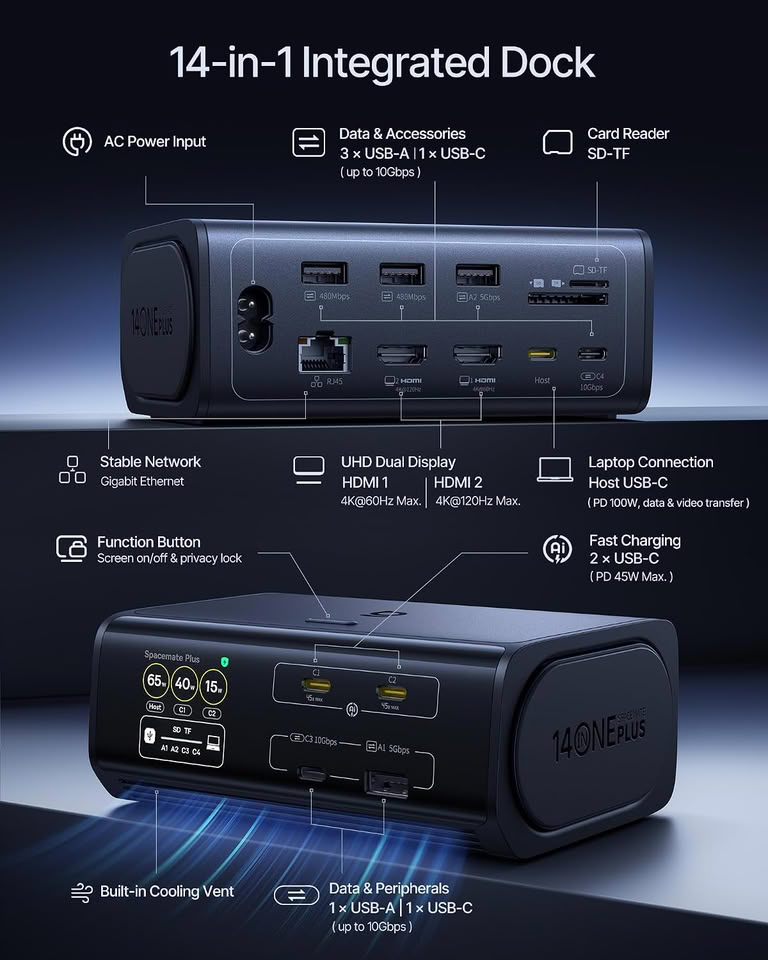
Baseus Launches the Spacemate RD1 Plus: The Definitive 14-in-1 Desk Tower with 4K @ 120 Hz

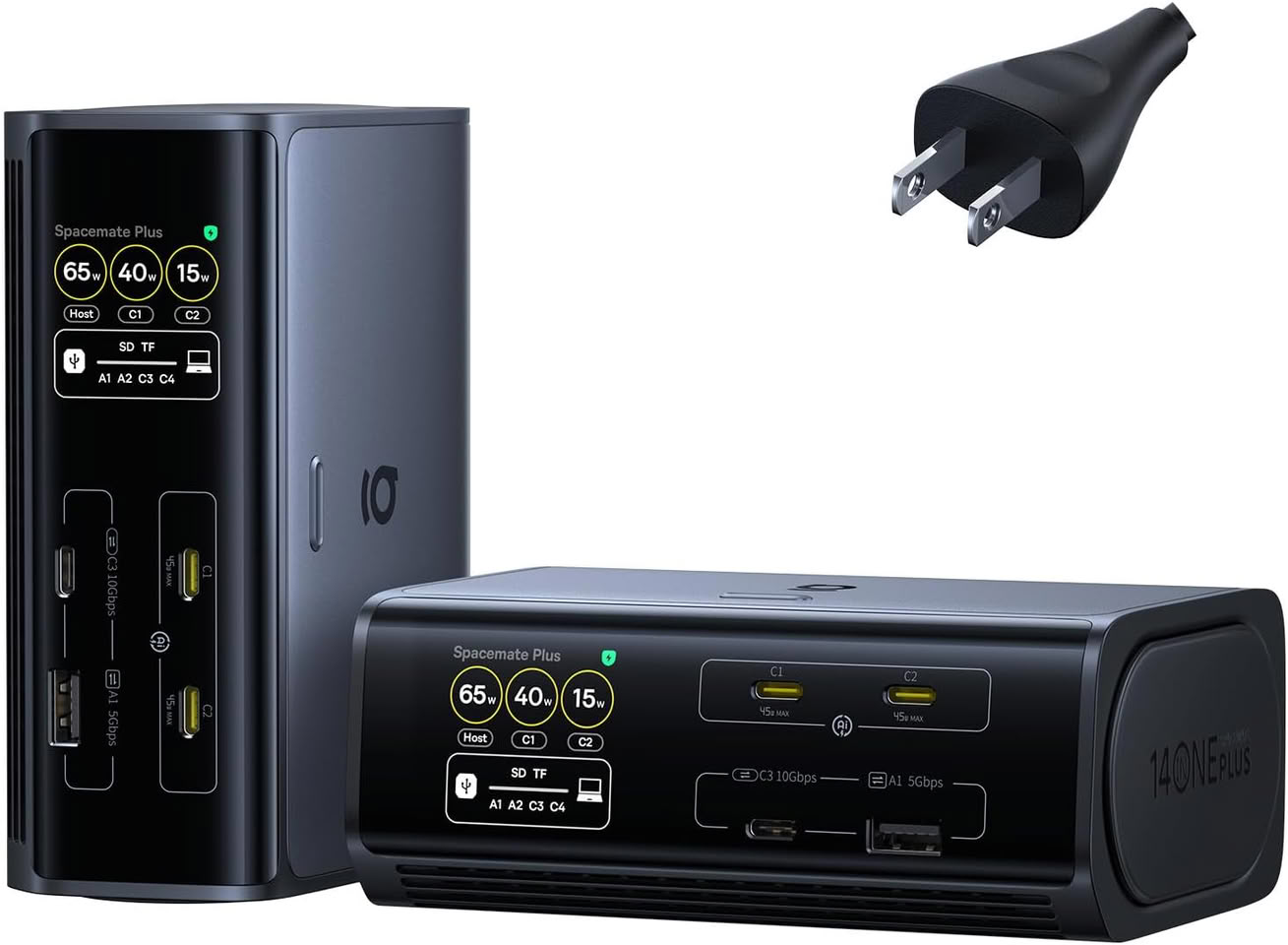
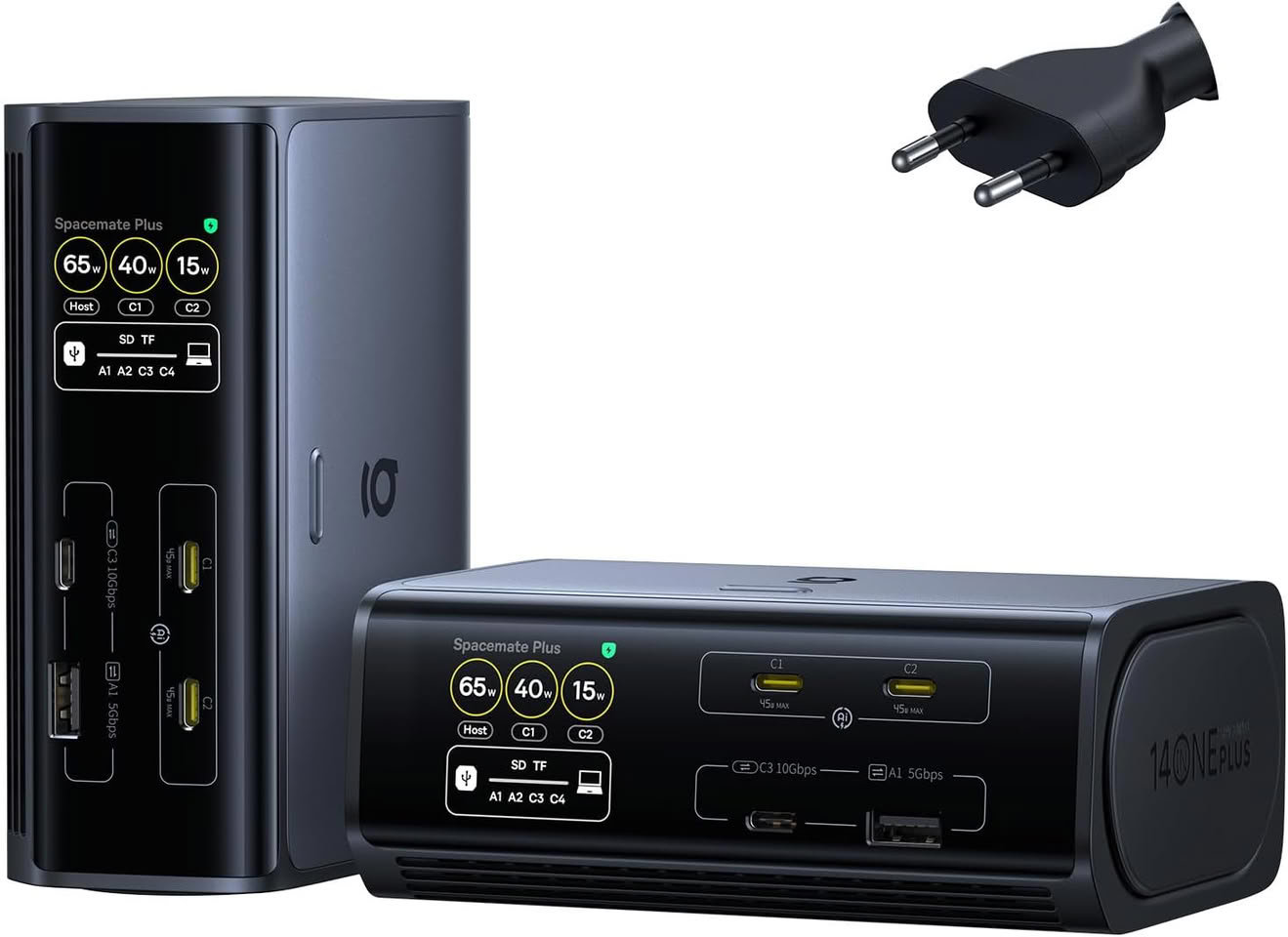
Baseus today announced the launch of the Baseus Spacemate RD1 Plus 14-in-1 (WIN) Station, a next-generation docking station that combines integrated GaN power, high-refresh display output, and intelligent workspace organization in one compact device. Built around the principle of total desktop authority, the dock integrates ultra-smooth high-refresh capabilities, an intelligent GaN-powered charging system, and an orientation-sensing display to bring effortless order and speed to modern desktop workflows.

Engineered primarily for the needs of today's desk-based professionals, the Spacemate RD1 Plus sets a new benchmark for daily office comfort and workstation performance with 14-in-1 function. Backing its 4K @ 120 Hz output, the dock supports horizontal and vertical setups with the auto-rotating smart display. It grants an effortless, real-time command over your workspace. A closer look at the Spacemate RD1 Plus reveals thoughtful advancements designed to redefine the daily desktop experience.

NVIDIA DLSS 5 Gets 2x Performance Boost with 20% Less VRAM Usage

NVIDIA's continuous optimization of software and its technology stack has yielded another great improvement. The latest DLSS 5 update, scheduled for October 16, will deliver another 2x performance boost, meaning that previously DLSS 5-optimized workloads will literally run twice as fast. Alongside this significant performance uplift, NVIDIA promises that in 4K gameplay with DLSS 5 enabled, the neural rendering technology will use 20% less VRAM, leaving more room for game textures to load without DLSS 5 interfering with capacity or hogging resources. NVIDIA updates its DLSS by running a continuous loop on top of an internal supercomputer that constantly optimizes DLSS technology for performance, efficiency, and visual fidelity. Specifically for this week's DLSS 5 update, NVIDIA states that the company used a combination of systematic pipeline optimizations and neural model refinements to achieve that 2x performance boost.

Originally in late August, we saw that the leaked DLSS 5 file was roughly a 148 million parameter model. Our analysis turned out to be accurate, and we see that, according to NVIDIA, the DLSS 5 October update shrinks the footprint of this model by another 24% to roughly 118 million parameters, meaning that our original estimation was correct. Consequently, the smaller model scales memory usage almost linearly and cuts VRAM usage by about 20%. Compared to the initial launch in mid-March, when the DLSS 5 was showcased on two GeForce RTX 5090 GPUs, we see that NVIDIA managed to scale the performance by 10x in the span of a couple of months.

Logitech Unveils Its Biggest Enterprise Launch Ever

Today, Logitech unveiled the largest enterprise product launch in company history, engineered to equip companies for the AI revolution. Headlined by Logitech Rally Bar 2, Rally System 2 Pro, and Sound Shape technology, the new portfolio brings advanced compute, intelligence, and sensing into more workspaces to support the next decade of intelligent collaboration.
Henry Levak, general manager of Team Workspace Solutions at Logitech"This second generation of smart video collaboration devices is Logitech's answer to a new, dual mandate for IT: Deliver exceptional meeting experiences today while preparing for an AI-powered tomorrow."

NVIDIA Raises Shield TV Pro Price to $299, Discontinues Standard Shield TV

NVIDIA has raised the price of the Shield TV Pro from $199.99 to $299.99, effective October 2. The streaming box launched in October 2019 at $199.99 and held that price for almost seven years. Earlier this year, NVIDIA promised to keep updating the Shield TV, with hardware engineering SVP Andrew Bell saying the company had no plans to abandon it anytime soon. NVIDIA has also stopped making the standard, tube-shaped Shield TV, which had reportedly been out of stock for months. That leaves the Pro as the only Shield model in production. NVIDIA confirmed both changes in a statement. Here's what the company said:
Starting October 2, SHIELD Pro will be priced at $299. The cost of components, including memory, has increased substantially across the industry. We've also stopped producing the standard SHIELD TV model as we focus on production for SHIELD TV Pro.

BenQ Introduces AK900ST and AK800ST 4K Projectors Aimed at Golf Simulation

BenQ, a global leader in display and projection technology, today announced the AK900ST and AK800ST, its newest projectors purpose-built for golf simulation. Building on BenQ's deep experience and continued innovation in the golf simulator market, the new projectors combine true 4K UHD resolution, advanced color processing, and automated setup tools to deliver a more realistic round of indoor golf while making even complex simulator installations easier to set up and use.

As golf simulation evolves from practice tools into immersive, year-round spaces to practice, compete, and entertain, expectations are changing. With the introduction of advanced software platforms that allow for lifelike visuals, players expect the courses they know to look like the real thing, even as larger screens, curved installations, and changing ambient light make setup more complex. With many golf simulator spaces now doubling as home theaters and gaming rooms, the AK900ST and AK800ST are designed for more than golf.

Raspberry Pi Announces Availability of Its Smart Display Module

Back in January, we introduced the Raspberry Pi Smart Display Module, an adapter board for Raspberry Pi Compute Module 5 that is designed to deliver high-quality, low-power display experiences for digital signage and other visual applications. Today, we are delighted to announce that the Smart Display Module is available to buy now from our global network of Approved Resellers.

The Raspberry Pi Smart Display Module was developed in collaboration with Sharp Display Solutions Europe and works with any display or device that supports products conforming to the Intel Smart Display Module (SDM) specification. It provides cost-effective performance with 4K video playback and is fully compatible with numerous content management systems that already support Raspberry Pi 5 or Compute Module 5.

CD Projekt Red Unveils Detailed PC Requirements for The Witcher 3: Wild Hunt Remastered

CD Projekt RED has published the full and updated PC requirements for The Witcher 3: Wild Hunt Remastered, which launches tomorrow, September 29, as a free upgrade for existing owners. Only the minimum and recommended specs were public until now, but the new detailed requirements are broken down by categories and even include separate Ray Tracing and Path Tracing requirements. The updated table covers six tiers: Minimum, Recommended, Ultra, RT Minimum, RT Recommended, and Path Tracing.

The Minimum tier targets 1080p at 30 FPS with the Low preset, and requires a Core i5-8400 or Ryzen 5 2600 CPU, 12 GB of RAM, and a GTX 1660, RX 5500 XT, or Arc A580 graphics card. CDPR says the GTX 1660 can reach 60 FPS or higher there. Recommended (1080p, 60 FPS, High) asks for a Core i7-8700K or Ryzen 5 3600X CPU, 16 GB of RAM, and an RTX 2060 Super, RX 6600 XT, or Arc B580 GPU. If you want to play at Ultra (1440p, 60 FPS), it calls for a Core i7-13700K or Ryzen 7 7700X CPU, 24 GB of RAM, and an RTX 3070 Ti, RX 6800 XT, or Arc B580 graphics card with XeSS.

Razer Unveils Kiyo V2 Pro: A 4K Webcam With 60 FPS Video

Razer, the leading global lifestyle brand for gamers, today announced the Razer Kiyo V2 Pro, a professional 4K webcam engineered for gamers, streamers, and content creators seeking studio-quality video without a complicated setup. As the latest addition to Razer's Kiyo webcam line, the Razer Kiyo V2 Pro delivers 4K resolution at 60 FPS, combining smooth, high-quality video with versatile features that make it easy to capture more, stay in frame, and showcase every detail.

An 86-degree wide-angle lens captures more of the scene with minimal edge distortion, making the Kiyo V2 Pro ideal for streaming, product demonstrations, collaborative content, or showcasing an entire gaming setup. Its universal pivoting mount supports both monitor and tripod placement, providing flexible positioning for any creative space, while an integrated privacy shutter offers instant peace of mind with a simple twist.

First Certified Ultra96 HDMI 2.2 Cables Hit the Market From Silkland and ELECOM

Certified Ultra96 HDMI cables, required to unlock the full HDMI 2.2 specification, are now available for retail purchase. VideoCardz spotted Silkland taking orders for its new H96 series, which appears to be among the first certified Ultra96 cables available to consumers, offering up to 96 Gbps of bandwidth. ELECOM also revealed its own Ultra96 cables on September 8, advertised as the first certified products of their type in Japan, though those aren't expected to ship until mid-November. Silkland's cables, by comparison, opened for orders on September 14. Currently, there's nothing on the market that can actually use that bandwidth, so these cables are targeted towards future products.

HDMI 2.2 was finalized back in June 2025, and it enables some genuinely big jumps on paper, like uncompressed 8K at 60 Hz or 4K at 240 Hz with full 10-bit and 12-bit color. It also edges out DisplayPort 2.1's 80 Gbps ceiling. Actual HDMI 2.2 hardware, meaning GPUs, TVs, and monitors with the right silicon, isn't expected until 2027 at the earliest. Even then, AMD's upcoming RDNA 5 GPUs reportedly won't hit the full 96 Gbps tier, apparently topping out closer to 64 or 80 Gbps instead.

HKC Debuts 43.8-Inch 4K Ultrawide Monitor With Uncommon 24:9 Aspect Ratio

HKC has announced the Tianqi 43H180C, a 43.8-inch curved gaming monitor with an unusual 24:9 aspect ratio and a 5760 x 2160 resolution. This is actually 4K pixel density stretched across the ultrawide 24:9 format. It's worth noting that HKC already showed something even more ambitious at Computex this year, the 83.4-inch curved 12K Shield C83U60, so the company clearly isn't shy about unusual display formats. The 24:9 ratio sets it apart from other 43.8-inch monitors on the market from Acer or INNOCN, which all run 3840 x 1080. The panel uses Mini LED backlighting with 99% DCI-P3 coverage and a 1000R curvature, running up to 180 Hz. Regarding the panel technology, this information is still unknown, VA or IPS, neither of them has been confirmed, and the number of local dimming zones is also a mystery so far.

Interestingly and handy for productivity, the monitor supports split-screen modes. One mode divides the display into three 1920 x 2160 zones, the second offers a single 4K zone alongside a 1920 x 2160 panel for timelines, chat, document windows, or any other secondary information. The monitor features DisplayPort 2.1, USB-C with 96 W power delivery, and KVM support. The 5760 x 2160 resolution has roughly 1.5 times the pixel count of standard 4K, which should offer sharper images, however, for gaming, it can put a lot of stress even on high-end GPUs. No pricing or availability has been announced for the HKC Tianqi 43H180C ultrawide monitor.

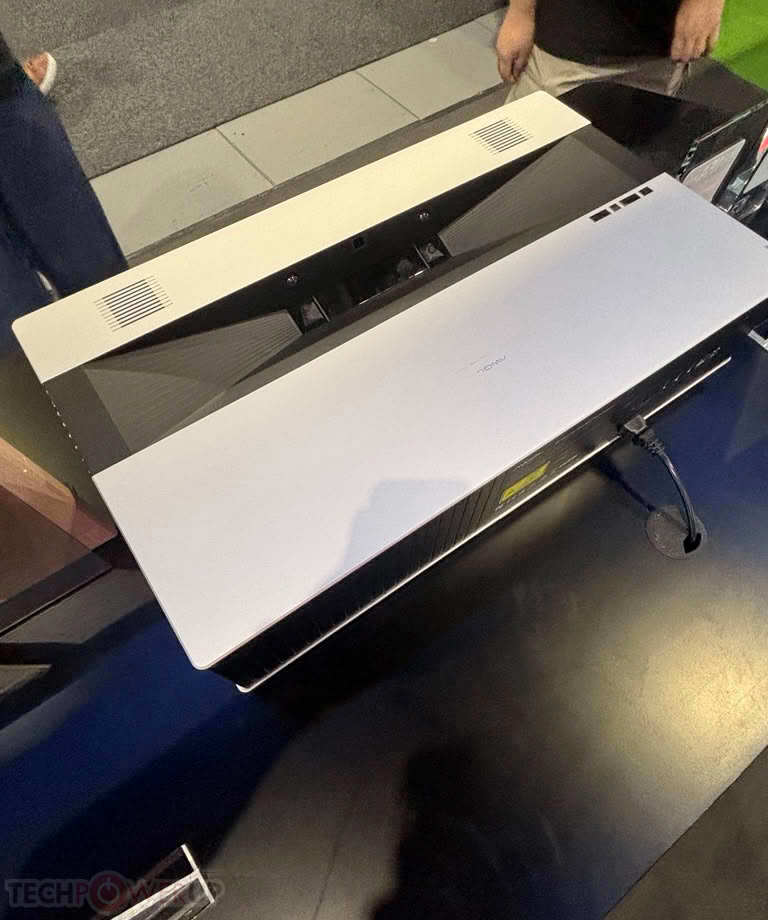
AWOL Vision Showcases World's First 4K 120 Hz Ultra-Short-Throw Projector with Optical Shift

At IFA 2026, we visited the AWOL Vision booth to explore what the company had in store. The highlight was the AWOL LuxVision ultra-short-throw (UST) projector, the company's flagship model designed for high-end home entertainment and theater spaces. As the world's first UST projector with 4K resolution, a 120 Hz refresh rate, and optical shift, this model boasts an output of 6000 ISO lumens and triple-laser RGB projection. It supports a 0.18:1 throw ratio and can project a screen size of up to 200 inches, transforming your home's wall into a large-format entertainment space at the click of a button. The projector features a motorized lens cover and a zero-light-leakage lens that automatically adjusts for optimal alignment and focus with the screen.

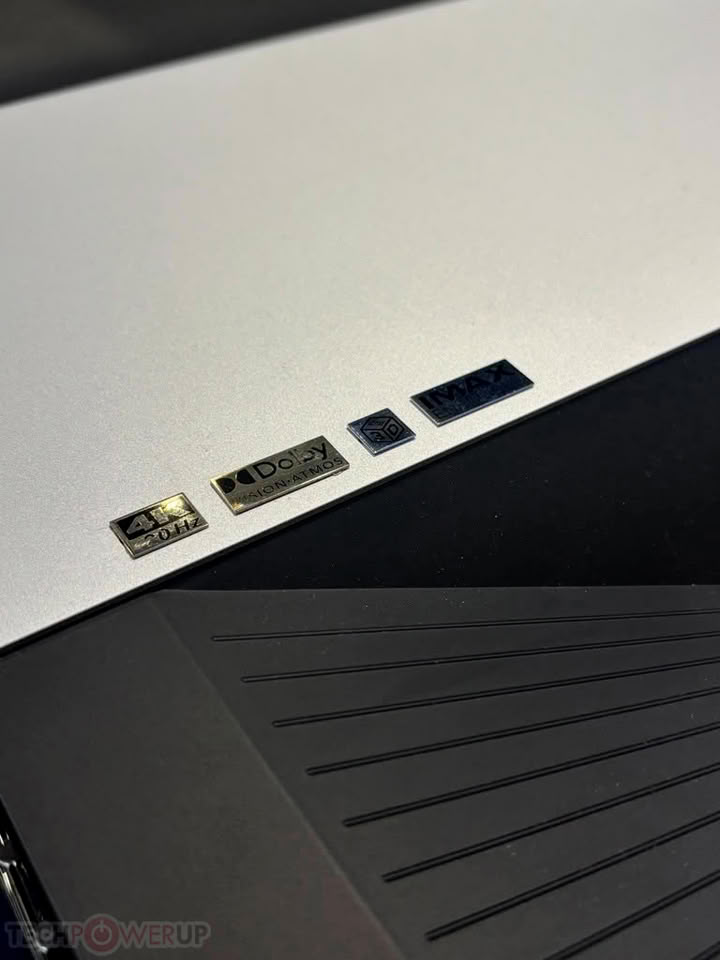
The projector delivers a highly vivid image with 110% Rec. 2020 coverage, Dynamic Tone Mapping, and a 7-level dynamic IRIS that fine-tunes color, contrast, and light scene by scene. Dolby Vision, IMAX Enhanced, Filmmaker Mode, and 3D support enhance the cinematic experience for all types of content. It caters not only to cinematic enthusiasts but also to gamers, with features like a 1 ms input lag, Auto Low Latency Mode (ALLM), Variable Refresh Rate (VRR), and Dolby Vision Gaming. For connectivity, it offers three HDMI 2.1 ports and a single DisplayPort.

TCL CSOT Showcases Latest Display Innovations at IFA 2026

IFA 2026 officially opened today in Berlin, presenting the latest products and cutting-edge innovation in consumer technology from around the world. At this year's show, TCL CSOT is showcasing a broad portfolio of innovative display products under its advanced display technology brand, APEX. Built on technologies including IJP OLED and oxide backplanes, these products and technologies represent TCL CSOT's vision for what a great display should be.

Cutting-Edge Display Innovation Earns Top International Recognition
As the display industry evolves, what defines a great display is no longer just brightness or refresh rate but a more holistic experience spanning image quality, visual health, sustainability, and form factor.

JMGO IRIS Series Makes Global Debut with World-First 4K @ 120 Hz and Theater-Grade Visuals at IFA 2026

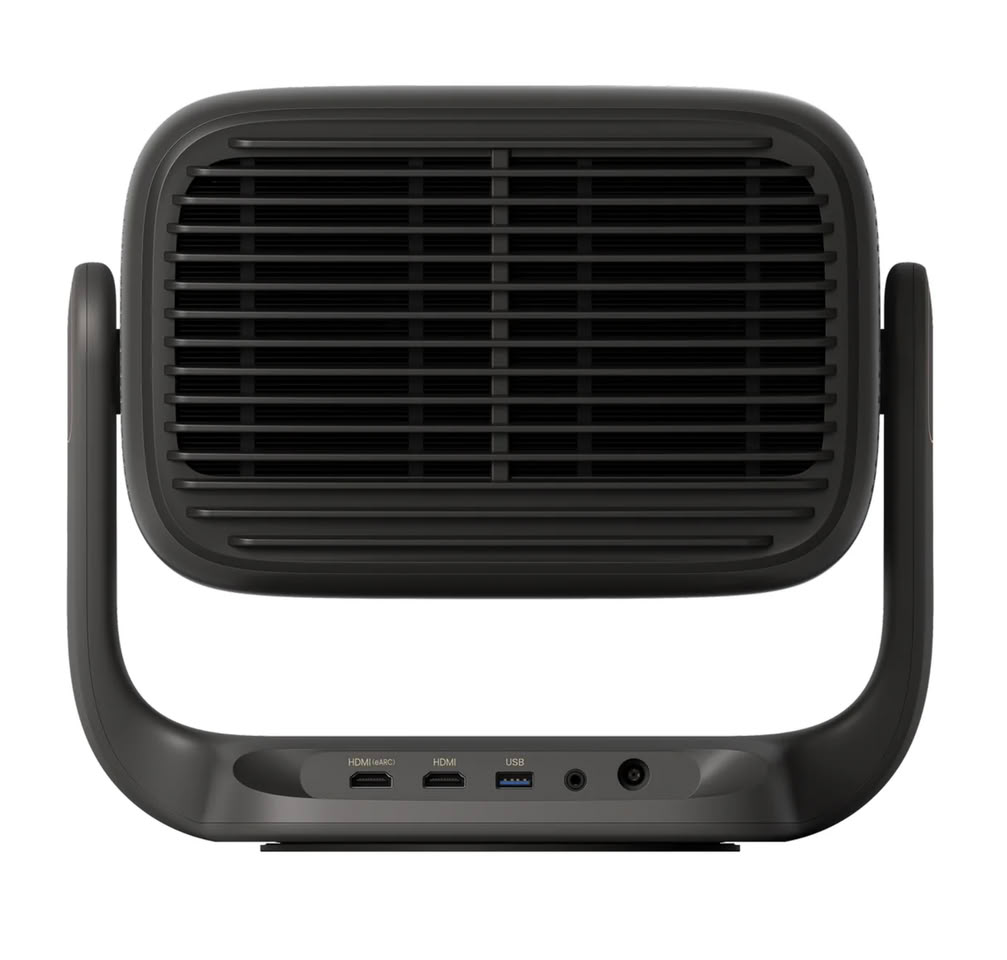
The JMGO IRIS Series, the world's first 4K @ 120 Hz smart projector series, will make its global debut at IFA 2026. Combining 4K @ 120 Hz motion clarity with up to 6,500 ISO lumens of brightness and a 10,000:1 native contrast ratio, the series brings theater-grade picture quality to fast-moving content. Led by the flagship JMGO IRIS Ultra Max, JMGO IRIS Ultra brings the same core innovations at unbeatable value.

JMGO first launched its 4K @ 120 Hz projector in China in May. With more than 5,000 units sold within three months, it quickly sparked strong interest and discussion among users worldwide. This strong response led JMGO to bring its proven 4K @ 120 Hz technology to global markets through the IRIS Series.

EIZO Unveils ColorEdge CG3200X 31.5-Inch 4K UHD OLED Professional Monitor

EIZO Corporation today introduced the ColorEdge CG3200X - a 31.5-inch 4K UHD (3840 x 2160) color management OLED monitor with unique luminance and contrast control for HDR post-production. Designed for workflows mastered in HLG, PQ, or SDR, it delivers ColorEdge-class precision for reliable results throughout the post-production pipeline.

Modern post-production places increasing importance on precise contrast control and high dynamic range, where image integrity depends on accurately rendering both shadow detail and highlights. These demands require display technologies that enable creators to evaluate fine luminance differences and tonal continuity with confidence. The CG3200X is the first OLED model in the ColorEdge family, bringing decades of color management expertise to QD-OLED technology. With a peak brightness of 1000 cd/m², full screen white brightness of 300 cd/m², and typical contrast ratio of 1,500,000:1, it faithfully reproduces both bright highlights and deep shadows.

DLSS 5 No Longer Needs Two RTX 5090s, NVIDIA Says Model is 5x Faster Since March

NVIDIA has shared its first-party performance numbers for DLSS 5, the neural rendering feature arriving September 3 in NBA 2K27. The company says the model is now five times faster than when it was first shown at GTC in March, which required two RTX 5090 GPUs just to run. It now works on a single card across the whole RTX 50-series lineup, from the RTX 5060 up to the RTX 5090. That is a commendable improvement in a span of just 6 months, but DLSS 5 will still incur a significant performance penalty compared to native rendering, contrary to what we have come to expect from DLSS.

In NBA 2K27, running at 4K with the Ultra preset, ray tracing, and Multi Frame Generation, NVIDIA's own figures put the RTX 5090 at roughly 370 FPS with DLSS 5 on, and the RTX 5080 around 233 FPS. At 1440p, the RTX 5090 gets close to 600 FPS, while even the RTX 5070 stays above 260 FPS. NVIDIA also shared some 1080p benchmarks with the RTX 5090 hitting nearly 800 FPS, but those are not relevant to how these cards will be used in the real world. NVIDIA did not provide performance figures without DLSS 5 enabled.

BenQ Creative Pro Unveils the PV50 Professional Monitor Series

BenQ, the internationally recognized provider of professional display solutions, today announced the availability of its new Creative Pro PV50 Series professional monitors, comprising the 4K 32-inch PV3250U and 27-inch PV2750U. Designed for video editors and post-production professionals, the new monitors deliver precise and reliable color grading for post-production workflows, enabling predictable and consistent results across advertising, short-form films, branded content, and social media campaign material.

Meeting the Growing Demands of Professional Post-Production
In commercial post-production, achieving consistent and reliable color decisions remains a key challenge, especially in dark scenes where subtle shadow details are essential to visual storytelling. While industry standards such as Rec.709 define the color space, maintaining accurate shadow detail across different displays and delivery environments is often difficult. Issues such as black crush and tonal inconsistencies can lead to grading errors, additional correction time, and unpredictable final outputs.

ASUS Republic of Gamers Announces ROG Flux Charger Dock

ASUS Republic of Gamers (ROG) today announced the ROG Flux Charger Dock, a premium all-in-one charging and connectivity hub for gamers and creators. With 260 watts of total power output, it easily turns a laptop into a full gaming setup with an external monitor, mouse, and keyboard. A built-in 1.9-inch LCD screen and control knob let users view critical information and adjust settings on the fly. The dock features extensive connectivity options, including USB-C with 140 W charging and 10 Gbps transfer speeds, as well as HDMI 2.1 to support up to 4K @ 144 Hz visuals. Aura Sync compatibility and bold ROG design elements help set it apart from other devices in its class.

Unmatched power
Engineered to deliver 260 W of continuous power, the ROG Flux Charger Dock can easily run any accessory in a gamer's arsenal. The dock can charge a laptop at up to 140 W, with capacity to spare for a gaming handheld, phone, headset, keyboard, and more. The single-cable design allows for neater setups and greater convenience.

AGON by AOC Unveils CQ32G4ZA 31.5-inch Curved Gaming Monitor with Triple Refresh Rate

AGON by AOC, the world's leading gaming monitor brand, is expanding its G4 gaming line-up with the AOC GAMING CQ32G4ZA. The 31.5-inch (80 cm) curved display combines a 1500R Fast VA panel with Triple Refresh Rate technology, response times of 0.3 ms MPRT as well as up to 1 ms GtG, DisplayHDR 400 support and 95 % DCI-P3 color coverage. It is the first AOC monitor to offer three selectable resolution & refresh rate combinations in a single display, with further Triple Refresh Rate models to follow.

One monitor for three kinds of game
Most competitive players own one display and play several genres on it, each with different demands. The CQ32G4ZA meets them with three presets that can be selected from the on-screen menu:
  • QHD at 260 Hz for detail-rich titles where texture quality and draw distance matter more than raw frame rate, from large-scale RPGs and strategy games to open-world adventures
  • FHD at 360 Hz for competitive shooters, where a steady high frame rate counts for more than pixel density
  • HD at 500 Hz for highly competitive scenarios where achieving the highest possible frame rate takes priority over image detail
Return to Keyword Browsing
Nov 11th, 2026 04:20 CST change timezone

New Forum Posts

Popular Reviews

TPU on YouTube

Controversial News Posts