News Posts matching #Alice

Return to Keyword Browsing

Report: Jensen Huang Eyes NVIDIA Comeback

Jensen Huang has talked with close confidants about returning as NVIDIA's CEO, according to a Sunday report from the Financial Times citing people familiar with the matter. Huang resigned as CEO and left the board on November 12, with CFO Colette Kress stepping in as interim CEO. NVIDIA gave no reason for the exit, which followed reports of an affair with a suspected Chinese spy and a second relationship with an NVIDIA executive who reported to him. Apparently, his Silicon Valley allies have now set up a "war room" to lobby the board to reinstate him and to seek support from the White House.

The "Stand with Jensen" open letter, which recently passed 115,000 signatures when we covered it, now has more than 156,000 names. The campaign says over 7,500 of them are current NVIDIA employees, though signers self-identify and the numbers haven't been independently verified. Elon Musk said on X that he signed it, and Epic Games CEO Tim Sweeney is listed as well. NVIDIA shareholders Brad Gerstner of Altimeter Capital and Gavin Baker of Atreides Management have urged directors not to rush a successor and to keep "all options on the table, including the potential return of Jensen Huang."


Epomaker Launches Alice40 40% Mechanical Keyboard With Ergonomic Layout and $70 Pricetag

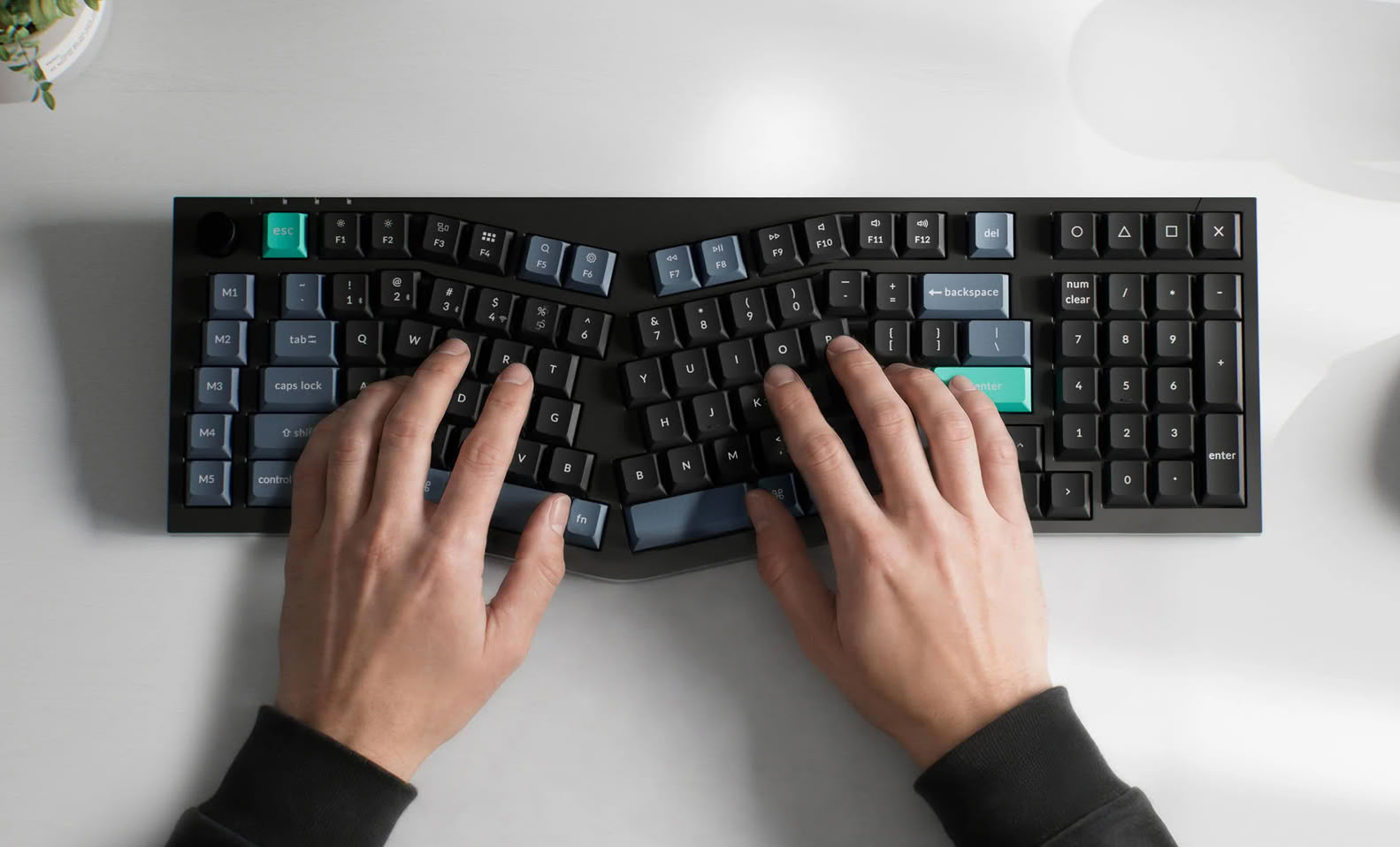
Epomaker has officially unveiled the Alice40 as its latest foray into the world of 40% mechanical keyboards—after the TH40 we reviewed previously and the Luma40 after that—and this time, the brand has gone for yet another unique layout option. As the name suggests, the Alice40 is based on the Alice layout that is commonly recommended to first-time ergonomic keyboard buyers, for its similarity to a regular unibody keyboard, although the Alice40 has a few features that set it apart from other mechanical keyboards in the same $69.99 price bracket.

For starters, the Alice40 modifies the traditional Alice layout with columnar stagger, meaning the columns are vertically offset from one another instead of the rows being horizontally offset. This is meant to make the keys align more appropriately to the natural movement of your fingers while you're typing. Another interesting quirk of the Alice40 is the knob between the two halves of the alpha cluster. As expected from a $69.99 mechanical keyboard, it has a plastic case, but it also has flip-out feet that allow users to adjust the typing angle between 5° and 8.5°. The case also features a gasket mount design, much like the Epomaker TH40, and it is stuffed with sound-damping materials to cut down on echoes and reverberation inside the case.

Keychron Launches Two New Alice Keyboards with Scissor Switches

Keychron is known for its line-up of wireless mechanical keyboards, but it also has more basic scissor switch designs for office and productivity use. With the launch of the Keychron B40 and B39, the brand has brought some of its mechanical layouts into the scissor switch realm with two Alice layout keyboards. The Keychron B40 is a 75% Alice layout keyboard, while the B39 features an 1800 Alice layout, which just means it packs a num pad to the right of the navigation cluster and alpha block. The B40 is available for $49.99, while the B39 launched for $54.99 on the Keychron online store.

Keychron's B40 and B39 both feature scissor switches, which Keychron claims are more silent than mechanical switches, but the switch mechanisms are still pre-lubed from the factory, and the switches still have 3.5 mm of total travel distance—a claimed 59% taller than traditional scissor switches. The B40 and B39 both run ZMK firmware, which is designed for wireless efficiency, and Keychron claims that this allows the keyboards to reach up to 520 hours on a single charge in 2.4 GHz mode, despite the relatively small 800 mAh batteries.

Dygma Launches Travel-Friendly Sonsei Monobody Ergonomic Mechanical Keyboard

Dygma Lab, the company known for split ergonomic keyboards like the Dygma Defy and Raise, has launched its latest keyboard, the Dygma Sonsei, as a travel-friendly take on the ergonomic keyboard. Instead of the typical split ergo design, the Sonsei's aluminium unibody design takes inspiration from Alice keyboards, sacrificing some of the flexibility, and arguably some of the ergonomic benefits, of a split keyboard, in exchange for a more travel-friendly design that doesn't require the cable-heavy setup of something like the ZSA Voyager or the hassle of managing a fully split keyboard, like the MoErgo Go60.

The Sonsei still uses a columnar stagger layout, like the Defy, which offsets keys vertically instead of horizontally and is said to position the fingers more naturally when in resting position, and it has a 56-key compact layout, reducing hand movement and stretching while typing and making it more travel-friendly. Instead of the typical MX-style 3- and 5-pin switches, the Sonsei uses Gateron KS-33 2.0 Low-Profile switches to offer both a travel-friendly slim design and a variety of aftermarket switch options.

Keychron Launches B11 Pro Pocketable Alice Layout Ergonomic Keyboard

Keychron has been revamping its mainline mechanical keyboard line-up pretty consistently lately, but its latest launch, the B11 Pro, is a deviation from those designs, falling square in the mobile productivity space rather than the enthusiast mechanical keyboard sphere. The B11 Pro adapts the ergonomic 65% Alice layout seen in Keychron's K11 Max and puts it into an ultraportable, foldable keyboard with scissor switches. The folding form factor and 65% layout mean that, when folded, the B11 Pro measures in at just 196.3 × 143 mm when folded up, making it a potential option for space-constrained travelers and commuters. The Keychron B11 Pro is currently available on the Keychron online store for $64.99, although it will likely launch on Amazon at a later date.

The B11 Pro has a 65% layout, meaning there is no num pad, nor is there an F row—likely a decision made in favor of a compact physical footprint—although there is a dedicated compact arrow cluster, which should make the adjustment to the smaller layout somewhat easier. It also uses Keychron's scissor switch mechanism and concave keycaps, meaning it should feel something akin to a laptop keyboard to type on. Keychron does not specify, but none of the other keyboards in the B Pro series feature NKRO, so it's safe to assume neither does the B11 Pro. Interestingly, Keychron has opted for a soft-touch material on the back of the B11 Pro, and the whole keyboard weighs in at just 258 g. The B11 Pro also features both 2.4 GHz and Bluetooth 5.3, and the keyboard supposedly gets around 135 hours on a single charge from a 250 mAh battery. There's also a nifty sensor that detects when the keyboard is closed—both a convenience and battery-saving feature. Keychron has also conveniently labelled the relevant modifier keycaps with both macOS and Windows legends, and the key maps themselves can be changed in Keychron Launcher, much like the brand's mechanical keyboard line-up.

Alice & Bob Tape Out New "Helium 1" 16-Qubit Quantum Processing Unit

Alice & Bob, a leading hardware developer in the race to fault tolerant quantum computers, today announced the tape out of a new chip expected to improve error rates with every qubit added, making it a prototype for the company's first error-corrected, logical qubit.

The 16-qubit quantum processing unit (QPU), Helium 1, is the first chip in Alice & Bob's roadmap combining cat qubits to run an error correction code. The company will be able to use this platform to create its first logical qubit with error rates lower than any existing single physical qubit. With the tape-out complete, the chip enters a characterization and calibration phase that will be followed by a release on the cloud.

EA Rejects Alice in Wonderland Threequel, Development on Asylum Ceases

American McGee has been busy (since 2017) with the pre-production phase of his proposed follow up to 2011's Alice: Madness Returns. The third game in the series was going to be called Alice: Asylum, but after recent interactions with Electronic Arts McGee has admitted that: "Alice had a good run but the dream is over." McGee and a team of collaborators (artists, writers, designers, modelers and producers) have contributed to a massive Alice: Asylum Design Bible, and it was hoped that after many years of negotiations with EA, that the large chunk of presentation material would provide enough motivation for the publisher to sign up for a push into full development. The Alice: Asylum Design Bible was financed via fan contributions, through the Patreon crowd funding platform.

The publisher has decided to not finance the Asylum project, and will pursue other routes with the Alice intellectual property. McGee provided an update on the game's Patreon page: "After several weeks of review, EA has come back with a response regarding funding and/or licensing for Alice: Asylum. On the question of funding, they have ultimately decided to pass on the project based on an internal analysis of the IP, market conditions, and details of the production proposal. On the question of licensing, they replied that "Alice" is an important part of EA's overall game catalog, and selling or licensing it isn't something they're prepared to do right now."
Return to Keyword Browsing
Nov 15th, 2026 18:14 CST change timezone

New Forum Posts

Popular Reviews

TPU on YouTube

Controversial News Posts