News Posts matching #Asus

Return to Keyword Browsing

ASUS Announces Chromebook CR11 Series

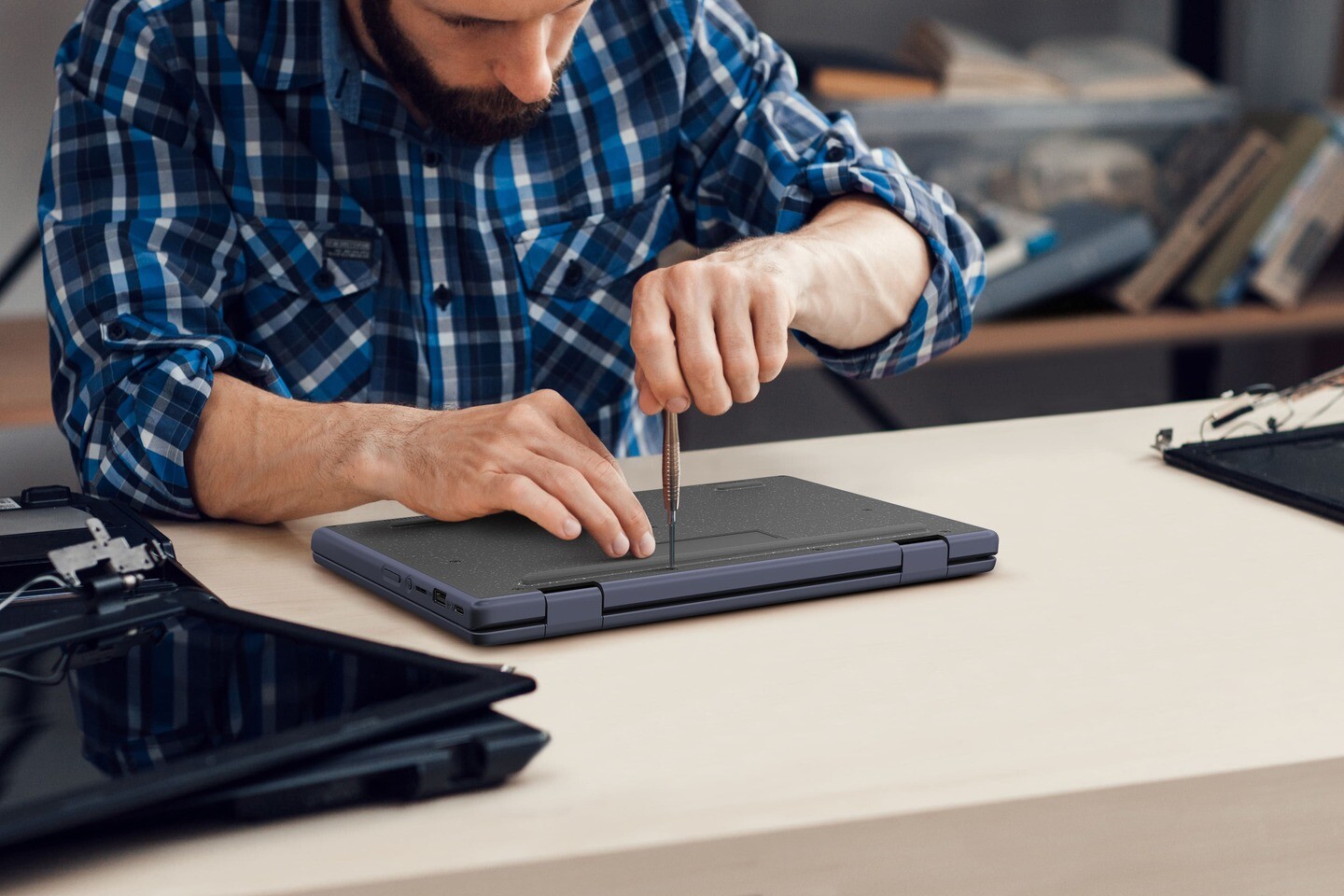
ASUS today announced the ASUS Chromebook CR11 series, all-new, education-focused ChromeOS laptops available in 11.6-inch clamshell form (ASUS Chromebook CR11) for a traditional experience and a convertible design that flips to become an 11.6-inch multitouch tablet (ASUS Chromebook CR11 Flip).

The fresh ASUS Chromebook CR11 models are built to military-grade standards to survive the hustle and bustle of everyday life at home, outside and in the classroom, with clever protective features including an all-round rubber bumper, a spill-resistant keyboard and an optional Corning Gorilla Glass display. There's sufficient battery life to handle a full day's learning and beyond, plus an easy-to-service modular construction and zero-touch enrolment. In addition to all of this, the convertible ASUS Chromebook CR11 Flip benefits from an optional garaged stylus, a world-facing camera for innovative learning opportunities and maximum flexibility, and a physical webcam shutter for instant privacy.

ASUS IoT Announces Tinker V—Tinkerboard Based on RISC-V

ASUS IoT, the global AIoT solution provider, today announced the all-new Tinker V—a versatile single-board computer (SBC) powered by a 64-bit RISC-V-based processor, which supports both Linux Debian and Yocto operating systems. Tinker V packs features rich connectivity into a compact Pico-ITX form factor, and pairs assured longevity with reliable support, making it the ideal choice for diverse IoT and gateway applications.

The RISC-V processor in Tinker V employs the open-source Instruction Set Architecture (ISA), based on Reduced Instruction Set (RISC) principles. Compared with traditional x86 and Arm platforms, the defining benefit of RISC-V is that ISA is open source. Both individual developers and enterprises can change, optimize and deploy freely based on the RISC-V architecture—bypassing licensing and copyright fees.

MSI Also Working on Motherboard With Connectors on the Reverse Side

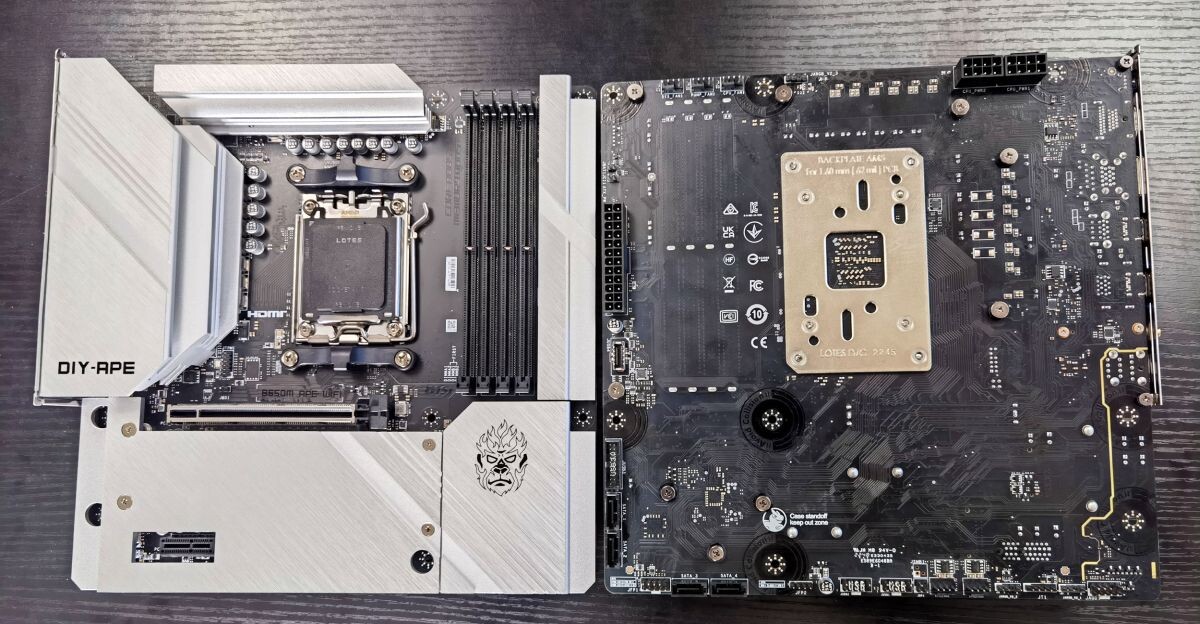
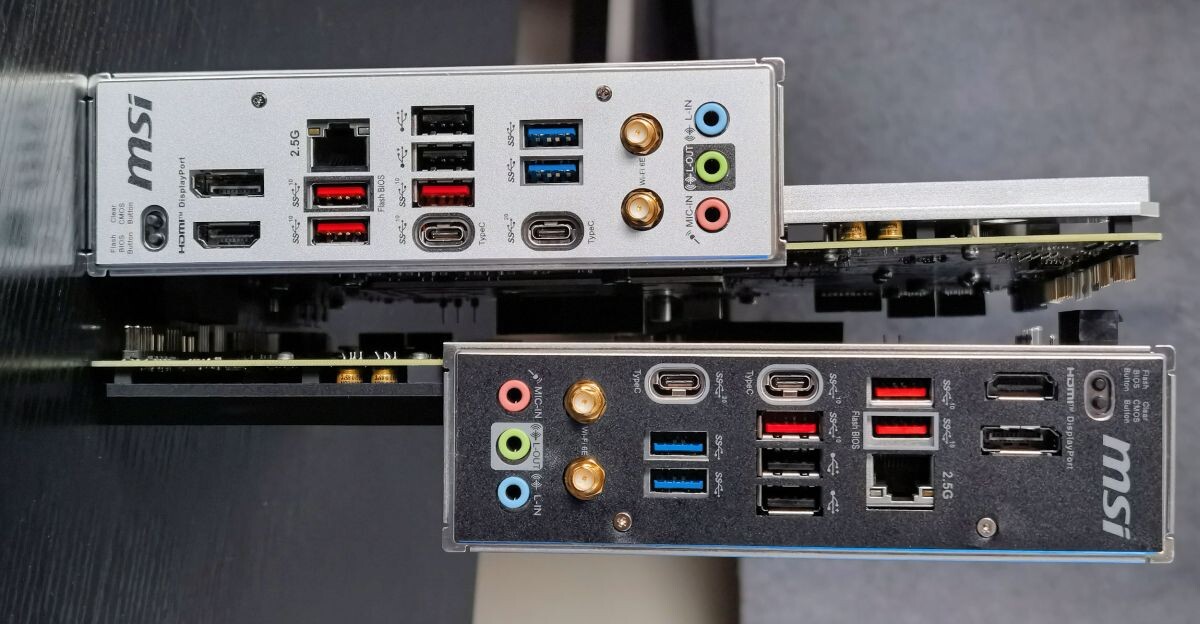
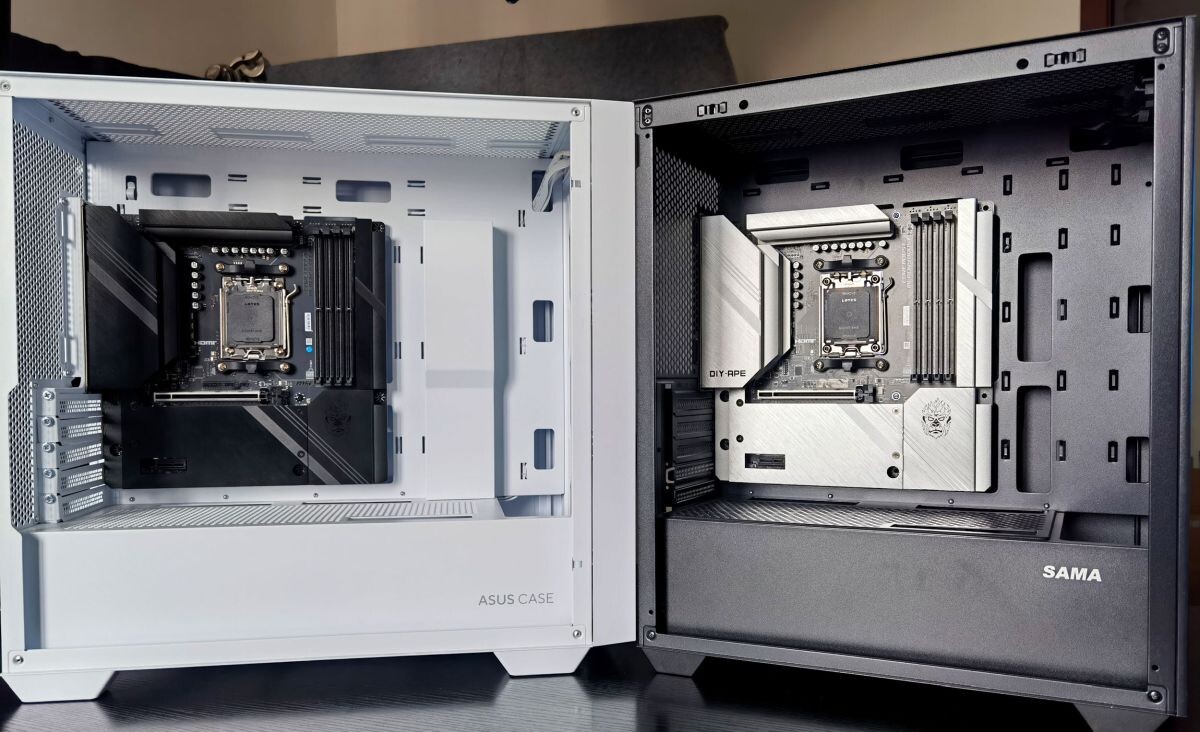
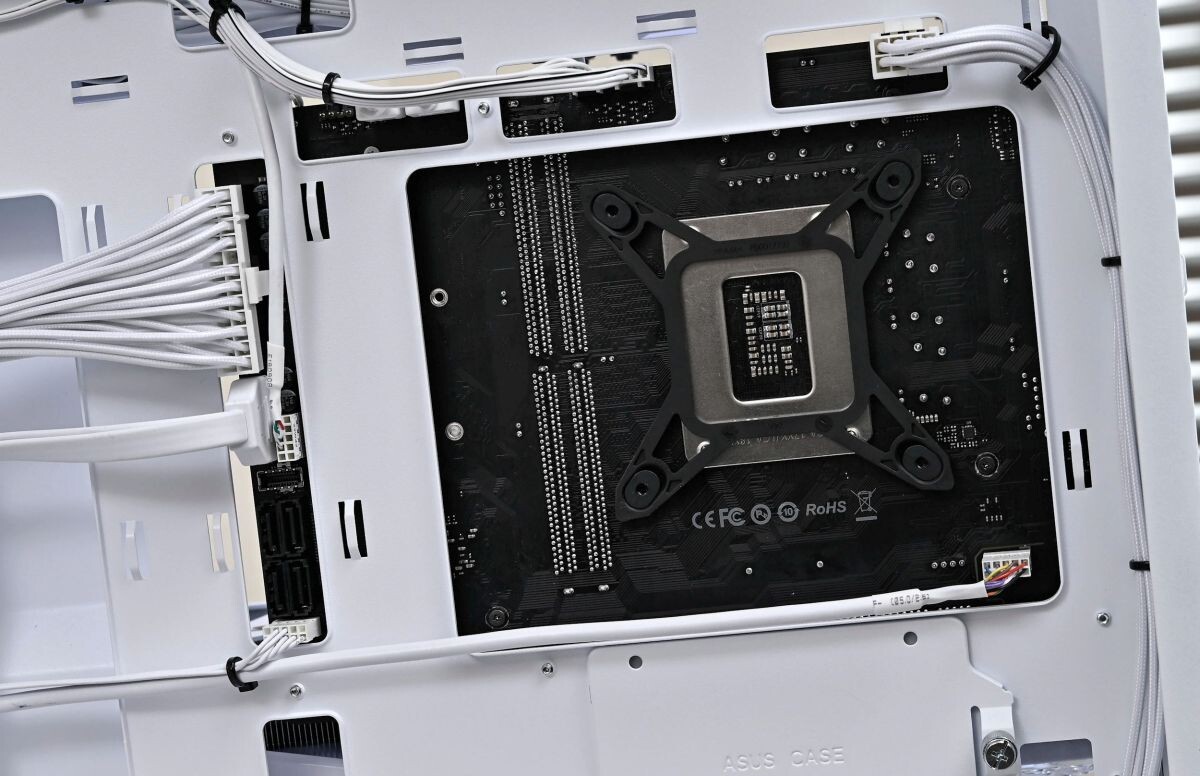
After Gigabyte and ASUS, it appears that MSI is also working on a similar motherboard concept that puts most, if not all, connectors on the reverse side of the motherboard. MSI will be joining Gigabyte, ASUS and MaxSun with such concept, as MSI B650 DIY-APE motherboard has been now spotted online. In order to optimize cable management, the idea is that most, if not all connectors are located on the reverse side of the motherboard, allowing users to hide power, fan, storage, and peripherals cables behind the motherboard.

According to the latest leak, MSI is apparently working on two motherboards based on AMD B650 chipset that have entered a qualification state. While it means that these are still far away from being a retail product, it is certainly an interesting concept that we are looking forward to. Of course, this also means that one would need a compatible PC case, that has strategically placed cutouts in order to access those connectors. The original post has some of those cases pictured. In addition to ASUS, MaxSun, and now MSI, Gigabyte also had a similar concept with Project Stealth.

ASUS Announces PE6000G Edge-AI System

ASUS IoT, the global AIoT solution provider, today announced PE6000G - the industry's first edge AI system that supports up to a 450 W GPU for high-throughput, demanding GPU-computing applications. Powered by a 12th Gen Intel Core processor and paired with the Intel R680E chipset, PE6000G supports up to 450 W graphics card power and is ready for the latest PCI Express (PCIe ) 5.0 standard, meeting requirements for enabling real-time AI inference at the edge.

Demand for high-performance GPU-accelerated solutions at the edge is increasing to satisfy mission-critical AI applications. Users who require rugged and durable systems to withstand shocks and vibration, plus wide-range operating temperatures to accommodate high GPU computing power, face the dilemma of finding solutions that provide the necessary specifications to meet physical space constraints, along with heat dissipation and power consumption within a rugged mechanical design. The all-new PE6000G series strikes a balance between all these needs for deployment in a variety of challenging environments.

ASUS Announces ExpertCenter PN64-E1 Mini PC

ASUS today announced the ExpertCenter PN64-E1, a mini PC powered by up to a 13th Gen Intel Core processor with up to DDR5-4800 memory and Intel Iris Xe Graphics. The PN64-E1 features two PCIe 4.0 x4 M.2 slots, five USB ports, two Thunderbolt 4 ports with DisplayPort 1.4 support, two HDMI, plus a configurable port for flexibility. In addition, the chassis provides quick access to the storage and memory modules for easy upgrades. Compared to the previous generation, the 13th Gen Intel Core processor that powers the PN64-E1 delivers up to 9% faster performance to enable smooth and efficient processing of intensive business applications. DDR5 memory offers considerably faster data speeds over DDR4, ensuring efficient productivity.

ASUS IoT Presents Complete Embedded Portfolio to Accelerate Digital Transformation at Embedded World 2023

ASUS IoT, the global AIoT solution provider, today announced that it is delighted to be attending the Embedded World 2023 from March 14-16 in Nuremburg, Germany. On show will be the comprehensive ASUS IoT lineup of edge AI computers, industrial motherboards, COM Express (COMe) modules, Tinker-series single-board computers (SBCs), Mini PCs, market-ready solutions and AI solutions. This impressive portfolio of embedded and IoT offerings delivers ASUS IoT's leading hardware and software computing capabilities and services across diverse vertical markets.

ASUS Announces ZenScreen MB249C Portable Monitor

ASUS today announced ZenScreen MB249C, a frameless 23.8-inch FHD (1920 x 1080) portable monitor designed for users looking to maximize their workspace. Its IPS panel provides ultrawide viewing angles and features an anti-glare surface to minimize glare and reflections. ZenScreen MB249C, which has just won a Consumer Electronics Show Innovation Award, weighs just 2.8 kg and provides complete flexibility with its integrated carrying stand/kickstand, height-adjustable C-clamp arm, and partition hook kit. It also offers comprehensive connectivity with a full-function USB-C featuring 60 W Power Delivery, HDMI, and an earphone jack. Featuring two 1 W speakers with an amplifier, this monitor includes TÜV Rheinland-certified ASUS Eye Care technology, has ENERGY STAR certification, and is packaged in FSC Mix paper.

ASUS ZenScreen MB249C is designed to give multitasking a boost. Its large, frameless 23.8-inch 1080p IPS panel offers 178° viewing angles for multiple users and an anti-glare coating for more comfortable work in bright environments. Meanwhile, a sleek 7.6 mm profile, 2.8 kg weight and integrated carrying handle offer easy portability around the home, office and co-working spaces. Plus, multiple stand options offer wide versatility, so users can configure the MB249C to meet a variety of needs. Additionally, twin 1 W speakers with amplifier technology deliver immersive sound when watching videos, listening to music, or gaming. Its flexibility can turn nearly any space into a nook for both productivity and entertainment.

Intel Xeon W9-3495X Sets World Record, Dethrones AMD Threadripper

When Intel announced the appearance of the 4th generation Xeon-W processors, the company announced that the clock multiplier was left unlocked, available for overclockers to try and push these chips even harder. However, it was only a matter of time before we saw the top-end Xeon-W SKU take a chance at beating the world record in Cinebench R23. The Intel Xeon W9-3495X SKU is officially the world record score holder with 132,484 points in Cinebench R23. The overclocker OGS from Greece managed to push all 56 cores and 112 threads of the CPU to 5.4 GHz clock frequency using liquid nitrogen (LN2) cooling setup. Using ASUS Pro WS W790E-SAGE SE motherboard and G-SKILL Zeta R5 RAM kit, the OC record was set on March 8th.

The previous record holder of this position was AMD with its Threadripper Pro 5995WX with 64 cores and 128 threads clocked at 5.4 GHz. Not only did Xeon W9-3495X set the Cinebench R23 record, but the SKU also placed the newest record for Cinebench R20, Y-Cruncher, 3DMark CPU test, and Geekbench 3 as well.

G.SKILL Announces DDR5-8000 CL38 48GB (24GBx2) Memory Kit

G.SKILL International Enterprise Co., Ltd., the world's leading brand of performance overclock memory and PC components, is announcing an extreme performance DDR5 memory kit based on the latest 24 GB module capacity, with a specification of DDR5-8000 CL38-48-48 at 48 GB (24 GB x2) under the flagship Trident Z5 RGB series, and setting a new bar for extreme overclocked memory with 24 GB capacity modules.

ASUS Intros ROG Strix Impact III Gaming Mouse

ASUS introduced the ROG Strix Impact III, a lightweight, compact, quasi-ambidextrous, wired gaming mouse. Measuring 126 mm x 62 mm x 39 mm (LxWxH), and weighing just 59 g, the mouse is optimized for mainly claw and fingertip grip types, as its slender design may not be the best fit for palm grips. FPS is the most suitable game genre for this mouse. It features a 5-button layout—two main buttons, two left-side buttons, and the middle-click, along with a vertical scrollwheel. There's also a physical button to cycle among dpi presets, which is set in the ROG Armory app. Under the hood, the ROG Strix Impact III rocks a PixArt PAW3318 optical sensor with 12,000 dpi hardware resolution, with 300 ips top speed, and 35 ips acceleration, along with a USB polling rate of 1000 Hz. The main buttons are backed by 70 million-click rated ROG microswitches. PFTE gliding feet, and a braided USB cable makes for the rest of it. The company didn't reveal pricing.

TWS Launches New One-Stop Solution - AI 2.0 Foundation Model Consulting Services

ASUS today announced that Taiwan Web Services (TWS) has launched its AI 2.0 Foundation Model Consulting Services — a one-stop solution that integrates infrastructure, development environment, and professional technical team services for the development of next-generation AI. TWS is the first company in Taiwan to integrate a BLOOM (BigScience Large Open-science Open-access Multilingual Language Model) into a supercomputer.

Despite the recent rapid development of large language models (LLM) and generative AI, it is still tough for an enterprise to conduct an LLM project by itself. That is why using the TWS one-stop AI 2.0 Foundation Model Consulting Services is so powerful — it dramatically reduces the barriers to entry and allows enterprises to concentrate more on research and development projects.

Using the new TWS service, enterprises can immediately start building their own generative AI applications while simultaneously reducing their hardware equipment and human capital costs, as well as lowering development risk and time to completion.

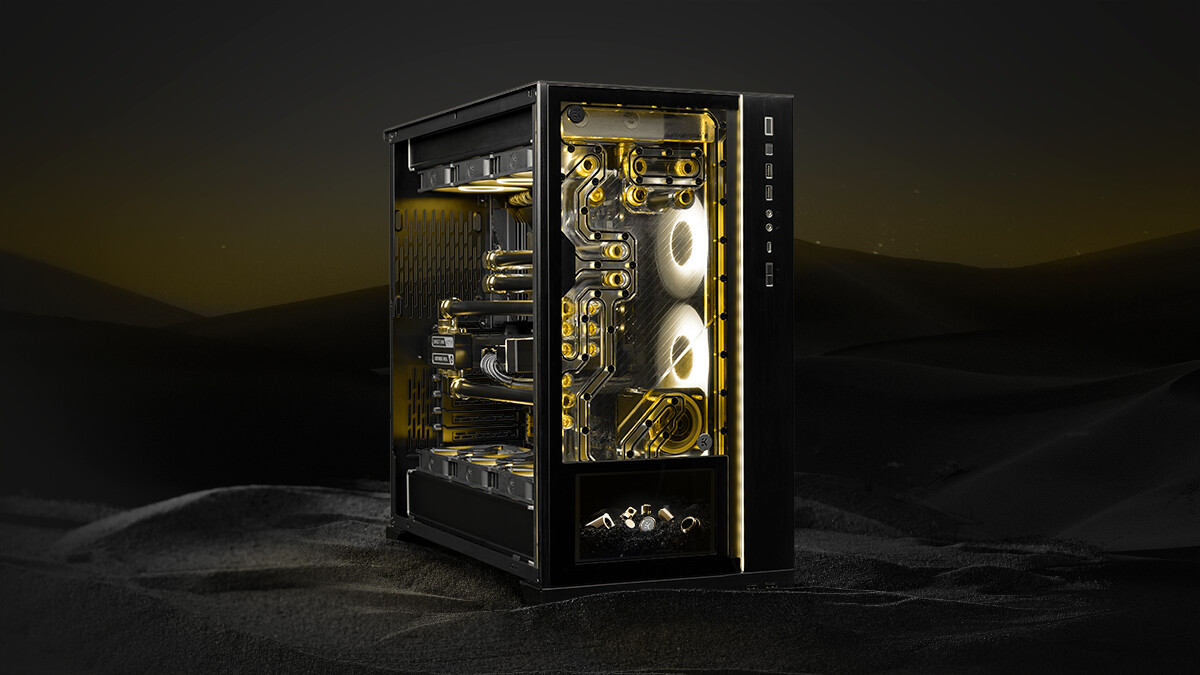
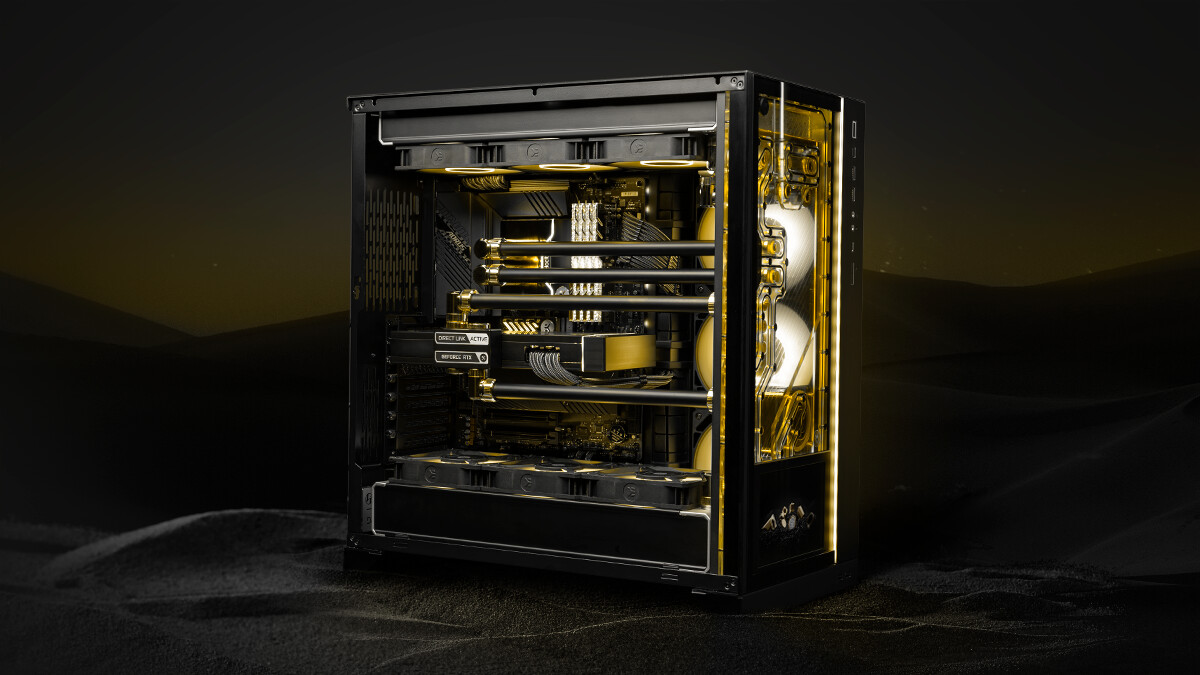
Lian Li O11D XL Case Gets EK Reflection² Distribution Plate With an Integrated Screen

EK, the premium water-cooling gear manufacturer, is launching a new distro plate for the Lian Li O11D XL chassis. The distro has a built-in EK-Quantum Lumen screen, a 7" IPS monitor that can be seen from the front of the case. It is designed to provide advanced water cooling with the latest 3rd-generation SATA-powered D5 pump, removing the need for additional 4-pin Molex cables. The Reflection² series distribution plates are EK-Matrix7 compliant.

The EK-Quantum Reflection² PC-O11D XL D5 PWM D-RGB - Screen Edition is a custom water-cooling reservoir, routing, and pump solution that seamlessly fits into the front of the case showing off a beautiful 7" IPS screen with an aluminum frame. This waterway is also equipped with six innovative push-in ports that come with female G1/4" threaded adapters. The idea is that users can easily assemble the whole radiator + fittings + tubing combo and use these push-in adapters to simply slide it into the distribution plate. The bottom radiator is mounted via a special metal bracket.

ASUS TUF Gaming B760M-BTF WiFi D4 has its Connectors on the Reverse Side of the Motherboard

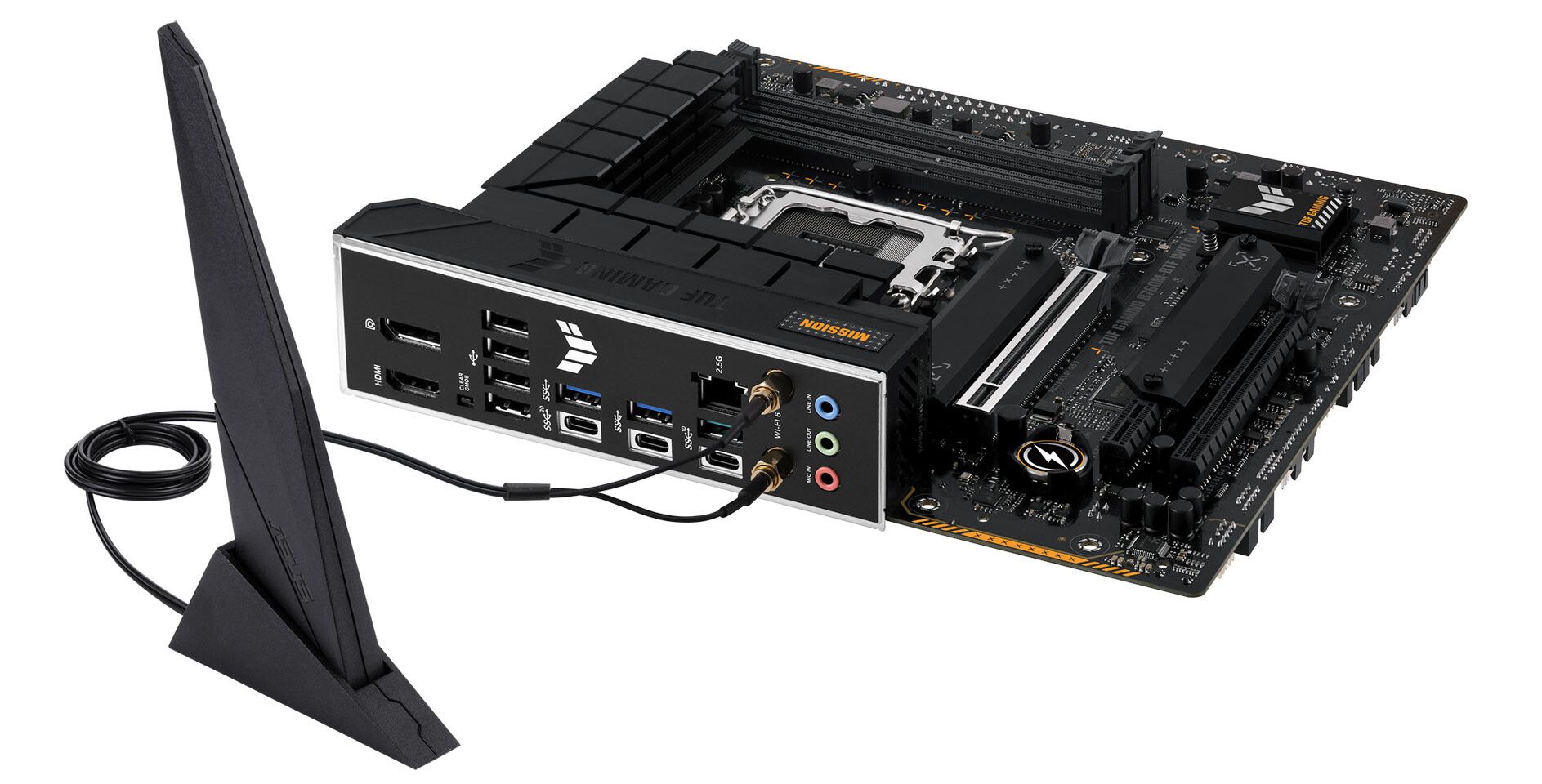
Back in October of last year, pictures from an ASUS event in China appeared online, showing off a pair of mATX motherboards that had most of its peripheral and power connectors on the reverse side of the motherboard. Now it appears that ASUS has decided to launch such a product, in the shape of the unforgettably named TUF Gaming B760M-BTF WiFi D4. The BTF part in the model name stands Back To (the) Future, although ASUS is most likely not allowed to use that term due to copyright restrictions, so it had to make do with BTF. Regardless of naming, the interesting part here is that all of the power connectors, the four SATA ports, the USB-C and USB 3.0 headers, as well as multiple other headers and one of three M.2 slots, are on the reverse side of the motherboard. This is all done to allow for cleaner cable management.

Other noteworthy features on the board include a single PCIe 5.0 x16 slot, one PCIe 4.0 x4 and one x1 slot, three USB-C ports, of which one is capable of 20 Gbps speeds and 2.5 Gbps Ethernet. As this is a mid-range board, we presume ASUS wants to test the waters so to speak, to make sure there's a market for such a product. However, one major hurdle is the small fact that there aren't any suitable chassis in the market and the product page even mentions that "This motherboard is compatible with specific case models", without going into any details. Presumably, ASUS will offer a suitable chassis, or have some partner(s) lined up that will provide a suitable chassis. Gigabyte announced something similar in May last year, but decided to team up with system integrators, something ASUS might be planning on as well.

ASUS Intel 700, 600 Series Motherboards Support 48 GB of DDR5-7000 modules

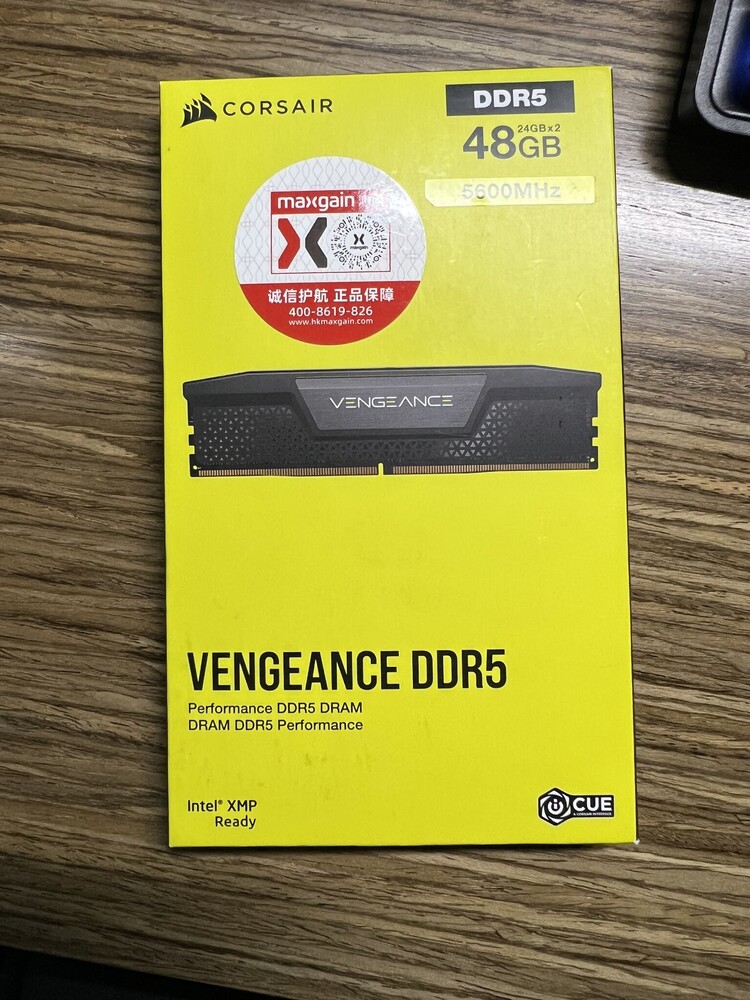
ASUS today announced BIOS updates for its Intel 700 and 600 series motherboards in partnership with Corsair, adding support for up to 192 GB of DDR5 memory and support for the new Corsair Vengeance DDR5 48 GB (2 x 24 GB) 7000 MT/s modules.

When builders acquire a 700 or 600 series Intel motherboard from the ROG Maximus, ROG Strix, ProArt, TUF Gaming or Prime lineups, they often have a choice to make: grab an option with support for budget-friendly last-gen DDR4 memory, or future-proof their purchase with a DDR5 model. As the market for DDR5 RAM has matured, it has become difficult for enthusiasts to ignore the performance potential of next-generation memory. With this latest BIOS update, ASUS motherboards with DDR5 support are formidable options. The entire selection of ASUS 700 and 600 series motherboards now supports the latest 24 and 48 GB DDR5 memory modules.

Installing 24GB DDR5 Modules on AMD Ryzen 7000 Platform Springs Mixed Results—POSTs but Doesn't Boot

Over the past month, memory manufacturers started releasing DDR5 memory modules of 24 GB and 48 GB densities, which make up 48 GB (2x 24 GB), 96 GB (2x 48 GB or 4x 24 GB) and even 192 GB (4x 48 GB) capacities. There's only one catch—these modules only work with 12th Gen Core "Alder Lake" and 13th Gen Core "Raptor Lake" processors, as their memory controllers support a maximum of 192 GB of memory, and 24/48/96 GB DIMM densities. MEGAsizeGPU decided to find out what happens when one of these kits is installed on an AMD Ryzen 7000 "Zen 4" platform.

A Corsair Vengeance DDR5-5600 48 GB (2x 24 GB) memory kit was installed on a machine consisting of an AMD Ryzen 5 7600X processor, and an ASUS ROG Strix B650E-E Gaming motherboard (BIOS version 1222). It turns out that the machine POSTs, and is able to start the UEFI setup program. Here, the program is able to display the correct 48 GB memory amount, and the memory density of each of the two modules. The trouble is, Windows would not boot, and does not go past the Boot Manager. It halts with an error message that indicates a hardware problem.

ASUS Announces the Chromebook CM14 Series

ASUS today announced the newest additions to the ASUS Chromebook family—the 14-inch ASUS Chromebook CM14 and ASUS Chromebook CM14 Flip. With a fresh, stylish look and flexible designs these dynamic laptops are primed to boost productivity and empower fun, all day, every day.

Powered by an efficient MediaTek Kompanio 520 processor and with up to a 15-hour battery life, the new CM14 models deliver the freedom to stay productive throughout the day. These attractive, modern laptops also open a gateway to the best of Google, including the rich library of apps for work and leisure found on Google Play, and benefit from WiFi 6 for fast, stable connectivity at home, at the office, in the classroom or on the go.

ASUS Releases BIOS Updates for AMD Ryzen 7000 Series CPUs with 3D V-Cache

ASUS today announced availability of a BIOS update for its X670 and X670E motherboards that enables full compatibility with the latest AMD Ryzen 7000 Series X3D CPUs featuring AMD 3D V-Cache technology.

The proven gaming performance of the AMD Ryzen 7 5800X3D CPU made it a long-standing favorite for PC builders. ASUS motherboards gave those builders high-performance, feature-rich options for assembling a potent gaming machine built around one of these chips. Now, AMD is upping its game with two new Ryzen 7000 Series CPUs with AMD 3D V-Cache technology: the Ryzen 9 7950X3D and the Ryzen 9 7900X3D. Combining a 3D vertical cache and all the advantages of the cutting-edge X670 platform, these chips are poised to seize the gaming performance crown.

AMD AGESA 1.0.0.5C AM5 Enables Fine-grained Control Over Ryzen 7000X3D CCD Priority

ASUS began rolling out Beta UEFI firmware updates for its Socket AM5 motherboards encapsulating AGESA 1.0.0.5 patch-C microcode. This exposes several new options to end-users through the UEFI Setup Program, which gives them greater control over the way the processor prioritizes workload among the two CCDs (CPU complex dies) on 12-core and 16-core Ryzen 7000 series processors, including the upcoming 7000X3D processors.

While AMD is working to release Chipset Software updates that include "3D V-cache Optimization driver" components that introduce OS-level awareness of the asymmetric implementation of 3D V-cache on the 7900X3D and 7950X3D where only one of the two CCDs has the additional cache; these firmware-level options give users control on prioritizing one CCD over the other for workload. The firmware-level optimization is OS-agnostic, so pretty much any OS should benefit from 3D V-cache the way it was intended (where less parallelized workloads such as games are prioritized on the CCD with the 3D V-cache.

G.SKILL Announces Zeta R5 Series Overclocked DDR5 R-DIMM Memory Kits for Xeon W

G.SKILL International Enterprise Co., Ltd., the world's leading brand of performance overclock memory and PC components, is thrilled to announce an all-new G.SKILL Zeta R5 memory series of high-performance, overclocked DDR5 R-DIMM memory kits. Designed for use with the latest unlocked Intel Xeon W-2400X and W-3400X series processors on respective Intel W790 chipset-based motherboards that has quad-channel and octo-channel memory support. Available in specifications up to DDR5-6400 CL32 and in large kit capacity of up to 256 GB (32 GB x8), the Zeta R5 series DDR5 R-DIMM memory kits are ideal for workstation systems built for content creation, 3D graphics, or scientific computing.

With the Intel W790 platform, memory overclock support to DDR5 R-DIMM memory is officially introduced, allowing workstation systems to achieve higher memory speeds than R-DIMM based on standard JEDEC specifications. Taking advantage of this new feature set, the G.SKILL Zeta R5 series DDR5 R-DIMM memory kits are equipped with Intel XMP 3.0 profiles for easy overclocking, allowing users to gain additional memory bandwidth and performance by simply enabling XMP in BIOS.

ASUS Launches 300 Hz 27-inch WQHD ROG Strix Gaming Monitor with DisplayHDR 600

For those that find a 270 Hz refresh rate a bit on the laggy side when gaming at 2560 x 1440, ASUS has updated its ROG Strix series of monitors with the XG27AQMR model. The R on the end of the model name denotes the higher refresh rate, as well as support for DisplayHDR 600 over the previous model in the series. Although the two monitors are said to be using a Fast IPS panel, the new model has a 1 ms Grey to Grey response time, whereas the older model is rated at 0.5 ms.

All the gaming features you'd expect to find are of course included, such are FreeSync Premium Pro and G-Sync compatibility, ELMB which can be combined with FreeSync and various other ASUS specific features such as GameFast Input technology and GameVisual. The inputs haven't changed from the previous model in the series either, which means there's one DP 1.4 port and two HDMI 2.0 ports, as well as a USB-B input and two USB-A ports, all supporting USB 3.2 Gen 1 speeds, or 5 Gbps. The stand supports tilt, swivel, pivot and height adjustment. No word on pricing, but the previous model retails for around US$650, so we'd expect a small price premium on top of that for the higher refresh rate and improved HDR support.

EK Announces ROG Strix Z790-I Mini-ITX Quantum Monoblock

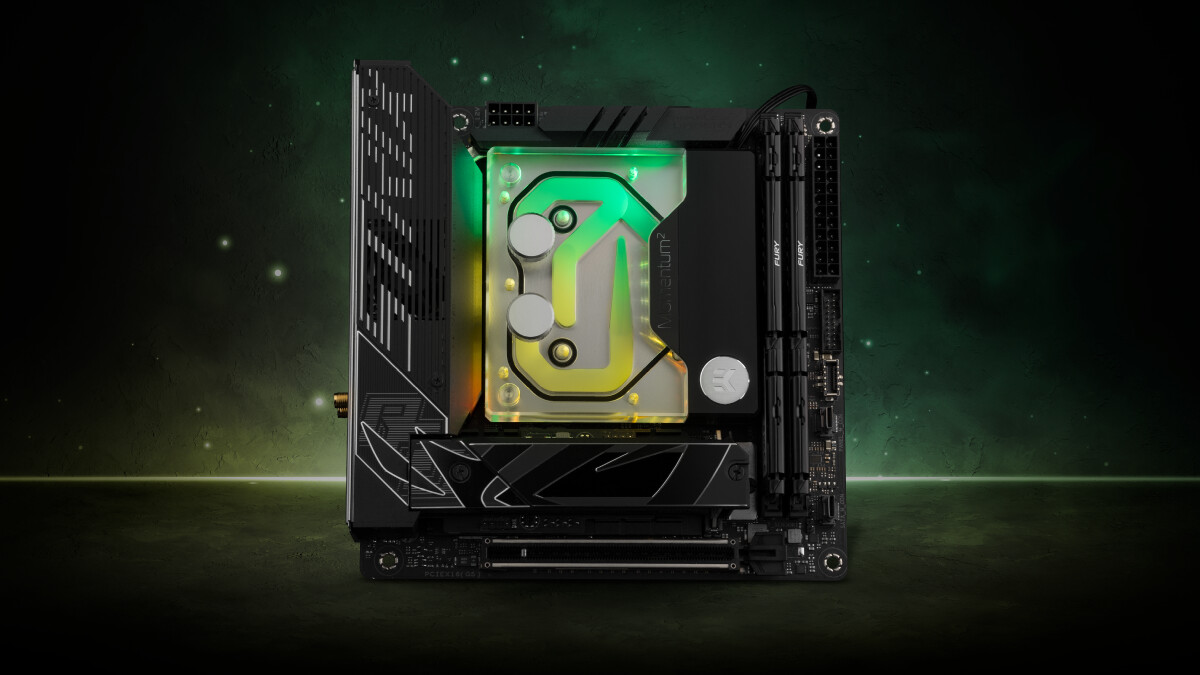
EK, the premium PC liquid cooling gear manufacturer, is launching the EK-Quantum Momentum² Strix Z790-I Gaming D-RGB - Plexi, the latest Intel LGA 1700 socket-based monoblock. The new Quantum line monoblock is engineered specifically for the ASUS ROG STRIX Z790-I GAMING motherboard. The addressable D-RGB LED in this monoblock is compatible with ASUS Aura Sync RGB control, offering complete lighting customization for every single diode at any given time. This Momentum² monoblock is also EK-Matrix7 compatible and doesn't require removing the factory-mounted heatsink before installation.

This is a complete, all-in-one (CPU + motherboard) liquid cooling solution for 12th and 13th gen Intel Core processors, compatible with LGA 1700-socket ROG Strix ZZ90-I Gaming ITX motherboard. This water block directly cools the Intel 1700 socket-type CPU and the heatsink of the power regulation (MOSFET) module. It doesn't replace the stock heatsink but instead complements it. It connects with the preinstalled heatsink through thermal pads between them and cools the heatsink instead of directly cooling the VRM.

Alphacool Introduces Eiswolf 2 AiO for RTX 4080/4090 and RX 7900XT/XTX GPUs

Eiswolf 2 AiO - now also for custom designs of RTX 4080/4090 and RX 7900XT/XTX GPUs! Alphacool presents additional innovative solutions for cooling Nvidia's Geforce RTX 4080 and 4090 and AMD's RX 7900XT/XTX graphics cards.

The enormous waste heat of the new graphics card generation is excellently dissipated with these coolers. The very good water flow and the large cooling surface are due to the particularly filigree fin structure. The jet plate with revised inflow engine also distributes the water perfectly on the cooling fins. The complete chrome plating of the cooler not only provides resistant protection against acids, scratches and damage, but also achieves a beautiful homogeneity and remarkable shine. The Aurora design of the cooler is kept visually calm and simple. This is evident not only in the cooler's design, but also in the wonderfully even lighting achieved via digitally addressable RGB LEDs.

ASUS Launches the Pro WS W790 Series of Workstation Motherboards

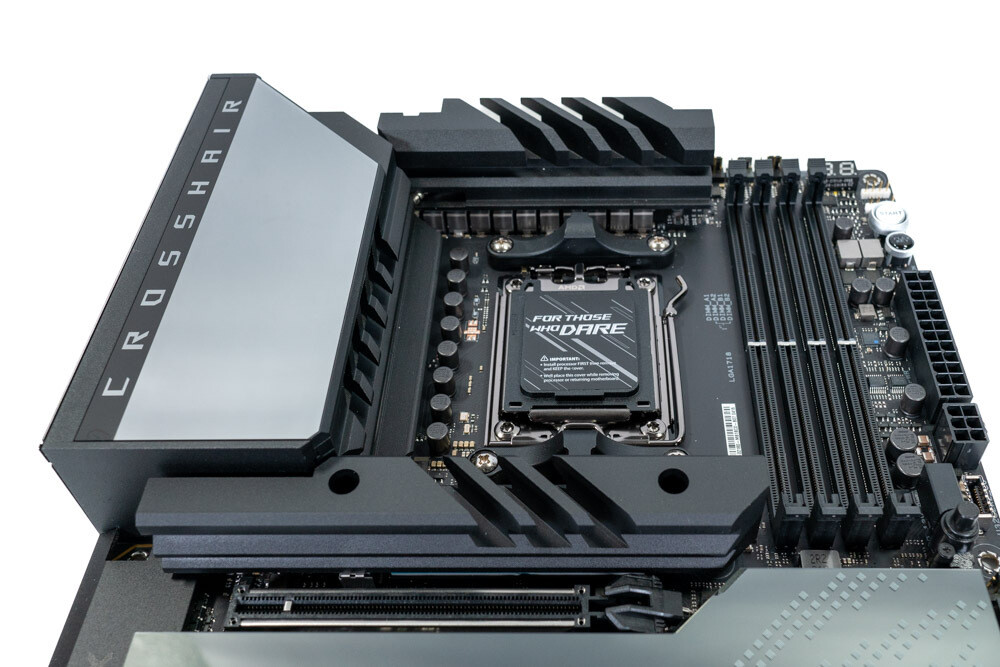
Yes, you read that correctly, ASUS didn't launch just one, but two W790 based LGA-4677 motherboards today, namely the Pro WS W790-Sage SE and the Pro WS W790-Ace. The main difference here is that the Sage supports up to seven PCIe 5.0 x16 slots—one is a x8 slot electrically—and is designed for the Xeon W-3400 series, whereas the Ace supports five PCIe 5.0 x16 slots and is in turn designed for the Xeon W-2400 series. One downside of these boards is that they might not fit in a standard ATX case, as the Sage follows the SSI-EEB form factor and the Ace the SSI-CEB form factor, both of which are a fair bit wider than an ATX motherboard and with different mounting holes.

The Pro WS W790-ACE also sports eight DDR5 DIMM slots that operate in quad-channel and supports up to 2 TB of RAM if ECC R-DIMMs are used. Furthermore, ASUS has kitted out the Ace with a pair of PCIe 4.0 M.2 slots, one 2280 and one 22110 slot, four SATA ports, three slim SAS ports, a Marvell 10 Gbps and an Intel 2.5 Gbps Ethernet interface, a single USB 3.2 Gen 2x2 20 Gbps USB Type-C port around the back and an internal header for a second, case mounted port. Finally the board has four USB 3.2 Gen 2 10 Gbps Type-A ports around the back and a header for a further two., as well as eight USB 2.0 ports around the back and audio courtesy of a Realtek S1220A based solution with optical S/PDIF out.

ASUS ROG Strix X670E-I Chipset Sits on a M.2 PCB

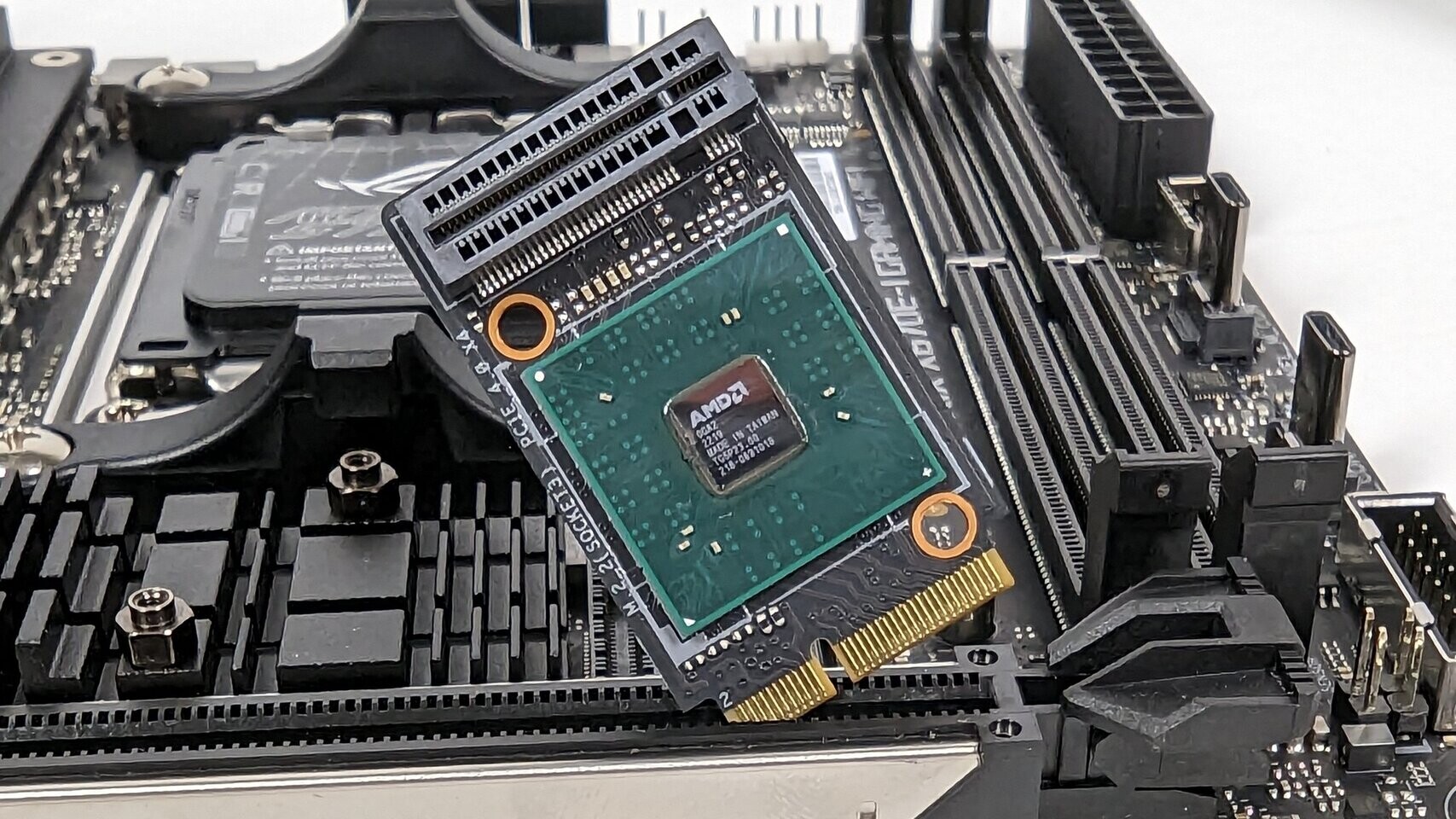
AMD's high-end X670E motherboard chipset combines two Promontory 21 chips working together to deliver a single solution. With regularly-sized ATX motherboards, having two chips to form a chipset is fine, as there is much room on the PCB. However, with Mini-ITX motherboards, packing two Promontory 21 chips is difficult as the PCB area is limited. To combat this, ASUS introduced an interesting solution to solve the problem and allowed the company to ship the high-end X670E chipset inside a Mini-ITX form factor. Thanks to UNIKO's Hardware's findings, we look at the exciting solution ASUS used to solve this problem.

Instead of two Promontory 21 chips side by side, one is placed on the motherboard directly, while the other stands vertically attached by M.2 PCIe slot. Below, the chipset's pictures and the highlight show how it looks disassembled.

Motherboard Shipments Drop by Ten Million Units in 2022

The PC industry has been hit hard by the current market conditions and economic downturns, as the entire industry has seen sales of new PCs drop to new lows. Equally so, the PC motherboard makers have experienced a crash in sales, where collectively, they delivered ten million units less in 2022 compared to 2021. Thanks to the information by DigiTimes, we have information that major motherboard makers, ASUS, Gigabyte, MSI, and ASRock, have seen their sales plummet to new lows and reflect how much of a drop the market experienced in the middle of economic uncertainty that the year 2022 brought.

In 2021, ASUS delivered more than 18 million motherboard units; in 2022, it is down to 13.6 million, representing a 25% difference. GIGABYTE shipped 11 million units in 2021, whereas in 2022, the company delivered around 9.5 million motherboards. GIGABYTE has experienced the smallest drop with "only" 14% lower sales. MSI used to deliver 9.5 million motherboards in 2021, and in 2022 its sales plummeted by 42% to 5.5 million units. The worst drop in sales is the one by ASRock, where the company saw its sales go from around 6 million units in 2021 to just 2.7 million units in 2022. This is the report's most significant recorded drop, equaling 55% lower sales in 2022.
Return to Keyword Browsing
Nov 26th, 2026 00:45 CST change timezone

New Forum Posts

Popular Reviews

TPU on YouTube

Controversial News Posts