
News Posts matching #CoreWeave

Return to Keyword Browsing

NVIDIA's Six-Years-Old A100 "Ampere" GPU to Remain in Use Until 2029

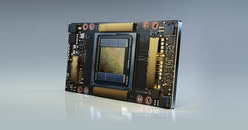
With the expansion of AI, every bit of available computing power is being utilized, and even NVIDIA's six-year-old A100 "Ampere" accelerator is being fully utilized at CoreWeave. According to CoreWeave, and confirmed by NVIDIA's CEO Jensen Huang, the company has signed an agreement with a customer to rent chips released more than half a decade ago for several more years, specifically through 2029. This demonstrates that NVIDIA's platforms remain in high demand, with chips released in 2020 expected to have a usable lifespan extending nearly to the end of the decade. CoreWeave customers have rented these chips through 2029 for AI training and inference. In late 2020, NVIDIA introduced a GA100 GPU SKU for the A100, featuring 6,912 CUDA cores and up to 80 GB of HBM2E memory. By today's standards, the core count may not match modern solutions, but in an era where memory shortages affect everyone, even older HBM2E is acceptable when there is 80 GB of it per card.

Despite the later-introduced "Hopper," "Blackwell," and modern "Rubin" generations offering significant, multifold improvements in efficiency, performance, and memory capacity, every available computing resource is currently being utilized. CoreWeave confirmed that a customer is renting this six-year-old GPU through 2029, indicating that it still holds value for someone. This GPU likely costs much less to access per hour than modern solutions, but it probably performs well enough that customers are still willing to pay for it. On his social media feed, NVIDIA CEO Jensen Huang posted the following message.
Indie InferenceX Data Shows NVIDIA Blackwell Ultra Delivering up to 50x Better Performance

The NVIDIA Blackwell platform has been widely adopted by leading inference providers such as Baseten, DeepInfra, Fireworks AI and Together AI to reduce cost per token by up to 10x. Now, the NVIDIA Blackwell Ultra platform is taking this momentum further for agentic AI. AI agents and coding assistants are driving explosive growth in software-programming-related AI queries: from 11% to about 50% last year, according to OpenRouter's State of Inference report. These applications require low latency to maintain real-time responsiveness across multistep workflows and long context when reasoning across entire codebases.

New SemiAnalysis InferenceX performance data shows that the combination of NVIDIA's software optimizations and the next-generation NVIDIA Blackwell Ultra platform has delivered breakthrough advances on both fronts. NVIDIA GB300 NVL72 systems now deliver up to 50x higher throughput per megawatt, resulting in 35x lower cost per token compared with the NVIDIA Hopper platform. By innovating across chips, system architecture and software, NVIDIA's extreme codesign accelerates performance across AI workloads—from agentic coding to interactive coding assistants—while driving down costs at scale.

NVIDIA & CoreWeave's Strengthened Collab to Accelerate Buildout of AI Factories

NVIDIA and CoreWeave, Inc. today announced an expansion of their long-standing complementary relationship to enable CoreWeave to accelerate the buildout of more than 5 gigawatts of AI factories by 2030 to advance AI adoption at global scale. In addition, NVIDIA has invested $2 billion in CoreWeave Class A common stock at a purchase price of $87.20 per share. The investment reflects NVIDIA's confidence in CoreWeave's business, team and growth strategy as a cloud platform built on NVIDIA infrastructure.

"AI is entering its next frontier and driving the largest infrastructure buildout in human history," said Jensen Huang, founder and CEO of NVIDIA. "CoreWeave's deep AI factory expertise, platform software and unmatched execution velocity are recognized across the industry. Together, we're racing to meet extraordinary demand for NVIDIA AI factories—the foundation of the AI industrial revolution."

NVIDIA H100 GPU Cluster on CoreWeave AI Cloud Platform Breaks Graph500 Run Record

The world's top-performing system for graph processing at scale was built on a commercially available cluster. NVIDIA last month announced a record-breaking benchmark result of 410 trillion traversed edges per second (TEPS), ranking No. 1 on the 31st Graph500 breadth-first search (BFS) list. Performed on an accelerated computing cluster hosted in a CoreWeave data center in Dallas, the winning run used 8,192 NVIDIA H100 GPUs to process a graph with 2.2 trillion vertices and 35 trillion edges. This result is more than double the performance of comparable solutions on the list, including those hosted in national labs.

To put this performance in perspective, say every person on Earth has 150 friends. This would represent 1.2 trillion edges in a graph of social relationships. The level of performance recently achieved by NVIDIA and CoreWeave enables searching through every friend relationship on Earth in just about three milliseconds. Speed at that scale is half the story—the real breakthrough is efficiency. A comparable entry in the top 10 runs of the Graph500 list used about 9,000 nodes, while the winning run from NVIDIA used just over 1,000 nodes, delivering 3x better performance per dollar.

Top 10 Most Intelligent Open-source Models Run 10x Faster on NVIDIA Blackwell NVL72

A look under the hood of virtually any frontier model today will reveal a mixture-of-experts (MoE) model architecture that mimics the efficiency of the human brain. Just as the brain activates specific regions based on the task, MoE models divide work among specialized "experts," activating only the relevant ones for every AI token. This results in faster, more efficient token generation without a proportional increase in compute. The industry has already recognized this advantage. On the independent Artificial Analysis (AA) leaderboard, the top 10 most intelligent open-source models use an MoE architecture, including DeepSeek AI's DeepSeek-R1, Moonshot AI's Kimi K2 Thinking, OpenAI's gpt-oss-120B and Mistral AI's Mistral Large 3.

However, scaling MoE models in production while delivering high performance is notoriously difficult. The extreme codesign of NVIDIA GB200 NVL72 systems combines hardware and software optimizations for maximum performance and efficiency, making it practical and straightforward to scale MoE models. The Kimi K2 Thinking MoE model—ranked as the most intelligent open-source model on the AA leaderboard—sees a 10x performance leap on the NVIDIA GB200 NVL72 rack-scale system compared with NVIDIA HGX H200. Building on the performance delivered for the DeepSeek-R1 and Mistral Large 3 MoE models, this breakthrough underscores how MoE is becoming the architecture of choice for frontier models—and why NVIDIA's full-stack inference platform is the key to unlocking its full potential.

NVIDIA Links Data Centers into a Unified Supercomputer with Spectrum-XGS Ethernet

Data center networking is one of the most overlooked factors by the public, which is in fact responsible for all communication between nodes. However, NVIDIA knows that data centers with millions of GPUs are on the horizon, and for the fastest AI models, they need to be interconnected, even across multiple facilites. That is why NVIDIA today unveiled Spectrum-XGS Ethernet, an extension of the Spectrum-X networking platform engineered to interconnect multiple, geographically separated data centers into a single, giga-scale AI super-factory. The company states that Spectrum-XGS eliminates the capacity limits of single facilities by introducing distance-aware networking, which delivers predictable, low-latency performance across campuses, cities, and continents.

The technology is mainly delivered through software and firmware updates to existing Spectrum-X switches and ConnectX SuperNICs rather than new silicon. Spectrum-XGS offers auto-adjusted congestion control optimized for long-haul links, precise latency management to minimize jitter, and comprehensive end-to-end telemetry, which allows operators to visualize and control network traffic across multiple sites. NVIDIA reports that these changes nearly double the NCCL (Collective Communications Library) throughput for multi-GPU, multi-node training jobs and large-scale experiments, thereby improving efficiency for distributed AI workloads. NVIDIA framed Spectrum-XGS as a new axis of growth for AI infrastructure: after scaling up inside servers and scaling out inside data centers, scale-across connects facilities into unified compute fabrics.

NVIDIA Blackwell Delivers Breakthrough Performance in Latest MLPerf Training Results

NVIDIA is working with companies worldwide to build out AI factories—speeding the training and deployment of next-generation AI applications that use the latest advancements in training and inference. The NVIDIA Blackwell architecture is built to meet the heightened performance requirements of these new applications. In the latest round of MLPerf Training—the 12th since the benchmark's introduction in 2018—the NVIDIA AI platform delivered the highest performance at scale on every benchmark and powered every result submitted on the benchmark's toughest large language model (LLM)-focused test: Llama 3.1 405B pretraining.

The NVIDIA platform was the only one that submitted results on every MLPerf Training v5.0 benchmark—underscoring its exceptional performance and versatility across a wide array of AI workloads, spanning LLMs, recommendation systems, multimodal LLMs, object detection and graph neural networks. The at-scale submissions used two AI supercomputers powered by the NVIDIA Blackwell platform: Tyche, built using NVIDIA GB200 NVL72 rack-scale systems, and Nyx, based on NVIDIA DGX B200 systems. In addition, NVIDIA collaborated with CoreWeave and IBM to submit GB200 NVL72 results using a total of 2,496 Blackwell GPUs and 1,248 NVIDIA Grace CPUs.

NVIDIA Blackwell a Focal Point in AI Factories; As Built by Dell Technologies

Over a century ago, Henry Ford pioneered the mass production of cars and engines to provide transportation at an affordable price. Today, the technology industry manufactures the engines for a new kind of factory—those that produce intelligence. As companies and countries increasingly focus on AI, and move from experimentation to implementation, the demand for AI technologies continues to grow exponentially. Leading system builders are racing to ramp up production of the servers for AI factories—the engines of AI factories—to meet the world's exploding demand for intelligence and growth. Dell Technologies is a leader in this renaissance. Dell and NVIDIA have partnered for decades and continue to push the pace of innovation. In its last earnings call, Dell projected that its AI server business will grow at least $15 billion this year.

"We're on a mission to bring AI to millions of customers around the world," said Michael Dell, chairman and chief executive officer, Dell Technologies, in a recent announcement at Dell Technologies World. "With the Dell AI Factory with NVIDIA, enterprises can manage the entire AI lifecycle across use cases, from training to deployment, at any scale." The latest Dell AI servers, powered by NVIDIA Blackwell, offer up to 50x more AI reasoning inference output and 5x improvement in throughput compared with the Hopper platform. Customers use them to generate tokens for new AI applications that will help solve some of the world's biggest challenges, from disease prevention to advanced manufacturing.

Thousands of NVIDIA Grace Blackwell GPUs Now Live at CoreWeave

CoreWeave today became one of the first cloud providers to bring NVIDIA GB200 NVL72 systems online for customers at scale, and AI frontier companies Cohere, IBM and Mistral AI are already using them to train and deploy next-generation AI models and applications. CoreWeave, the first cloud provider to make NVIDIA Grace Blackwell generally available, has already shown incredible results in MLPerf benchmarks with NVIDIA GB200 NVL72 - a powerful rack-scale accelerated computing platform designed for reasoning and AI agents. Now, CoreWeave customers are gaining access to thousands of NVIDIA Blackwell GPUs.

"We work closely with NVIDIA to quickly deliver to customers the latest and most powerful solutions for training AI models and serving inference," said Mike Intrator, CEO of CoreWeave. "With new Grace Blackwell rack-scale systems in hand, many of our customers will be the first to see the benefits and performance of AI innovators operating at scale."
Return to Keyword Browsing
Nov 22nd, 2026 18:19 CST change timezone

New Forum Posts

Popular Reviews

TPU on YouTube

Controversial News Posts