News Posts matching #European Comission

Return to Keyword Browsing

EU Now Requires USB-C Charging for New Laptops Up to 100 W

The European Union has officially imposed a new rule for selling laptops with a power rating of 100 W or less, requiring them to use a USB-C port for charging. This rule takes effect today, April 28, Tuesday, as the European Commission has been exploring ways to reduce electronic waste and has been planning this since imposing a similar rule on smartphones in 2024. As readers may recall, modern smartphones have largely been shipping with USB-C ports since the European Commission mandated that all newly sold smartphones must have a unified connection, instead of multiple connectors that create a significant amount of e-waste across Europe. With laptops, the EU legislation now aims to address this issue in the laptop sector, as they contribute significantly to the problem.

However, there are exceptions to this rule. The traditional USB-C power delivery mechanism can deliver 240 W through a single port, but gaming laptops sometimes require more power. Gaming laptops can continue to use the typical barrel power connector on models that exceed 100 W of power, whereas any laptop model with a power rating of 100 W or less must adopt USB-C as its primary charging connector. From today, it is illegal to sell laptops that do not meet the European Commission's standards across the European Union. However, this rule does not apply to computers sold on the second-hand market; only new devices entering the EU zone must comply.

Antitrust: European Commission Fines Google for Record €4.34 billion for Illegal Practices

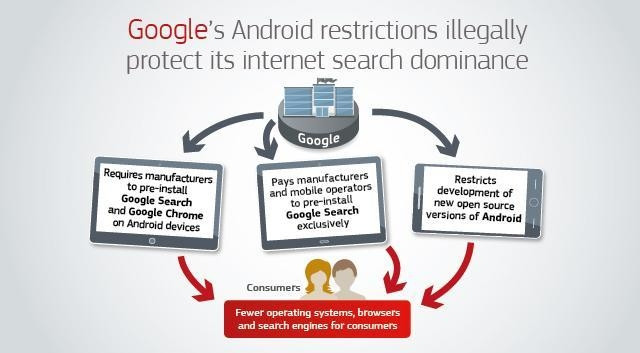
It's a record-setting fine: the European Commission has officially ruled that Google must pay a fine of €4.34 billion for breaking antitrust laws, specifically related to the implementation of its services within the Android ecosystem. The three key areas within which the EC has found wrongdoings pertain to bundling of its search engine and Chrome apps into the operating system; blocking phone makers from creating devices that run forked versions of Android (claiming, without proof, that these versions would offer more security risks), and "made payments to certain large manufacturers and mobile network operators" to exclusively bundle the Google Search app on handsets.

Google now has 90 days to comply with the EC's decision (notwithstanding payment of the fine), which Google, obviously, has already announced will appeal the decision. In a statement to The Verge, a Google representative said that "Android has created more choice for everyone, not less. A vibrant ecosystem, rapid innovation, and lower prices are classic hallmarks of robust competition," and that Google "(...) will appeal the Commission's decision." The idea here seems to be to stop Google from forcing manufacturers to bundle their app and search software stacks - many times in a seemingly unremovable way. You can check the press release in the source link, but some of the more interesting snippets have been collated after the break.

European Comission Fines Capacitor Producers In €254 Million Over Cartel Fraud

The European Comission has put out yet another fine to tech companies, joining some other multi-million dollar fines that have already been dolled out. The targets of the latest fine over cartel association and price manipulation is being pointed at nine Japanese capacitor manufacturers, which were found by the European Comission to have conspired towards unduly increasing capacitor pricing between the years of 1998 and 2012.

The companies named in the investigation aren't an exact match to those that were actually fined, though. Sanyo, Hitachi, Rubycon, ELNA, Tokin, NEC, Matsuo, Nichicon, Nippon Chemi-Con, Vishay Polytech, Holy Stone Holdings, and Holy Stone Enterprises, for instance, were named. However, Tokin, Elna, Rubycon, and Hitachi each received reductions in their respective fines for cooperating with the investigation. The largest single fine, totalling €97,921,000, was given to Nippon Chemi-Con. Sanyo, however, outsmarted all its competitors - the company dodged the fine altogether for bringing the matter to the attention of the Commission in the first place. This is an interesting tactic - proceeding to take part in a cartel, extract profits, and then turn over the cartel associates to regulating bodies at the price of immunity. A part of the ruling justifying the fines can be seen after the break.
Return to Keyword Browsing
Nov 11th, 2026 20:27 CST change timezone

New Forum Posts

Popular Reviews

TPU on YouTube

Controversial News Posts