News Posts matching #FOSS Tool

Return to Keyword Browsing

SteamOS 3.9.0 Preview Launches With KDE 6.7.3 and Linux Kernel 7.2

Following a recent small patch to the beta branch of SteamOS, which heralded fixes to many of the Linux distribution's desktop and gaming mode features, Valve has announced the SteamOS 3.9.0 Preview, which upgrades the Desktop Mode to KDE 6.7.3, from 6.4.3, and updates to the Linux kernel version 7.2.

Both the updates to KDE and the Linux kernel bring noteworthy improvements—from improved Krunner search functionality, clipboard pinning, and better support for drawing tablets, to Linux 7.2's Intel Arc B390 performance improvements and USB4Stream support for device-to-device sharing over USB4—But Valve has apparently also made some changes to the configuration that make SteamOS easier to live with.

Update Oct 26th: SteamOS 3.9 has officially released to the Stable SteamOS update channel, bringing the aforementioned updates and expanded hardware compatibility to those who prefer a stable system over being on the bleeding edge. Full update notes here.

Ubuntu Will Get Opt-In "Thoughtful AI Integration" In Upcoming Releases

The Linux community's response to the advent of LLMs and generative AI has been very mixed, but Ubuntu has more or less made its stance clear in a recent project discussion thread about the future of AI in Ubuntu. The gist of it is that, starting with Ubuntu 26.10 Stonking Stingray in October 2026—the next major release after 26.04—Ubuntu will start to get new AI features scattered throughout the operating system. The project's technical lead, Jon Seager, states that in 2026, Ubuntu has started encouraging its developers to use AI internally, incentivizing engineers to "go deep" and effectively figure out what works and what doesn't by measuring output. As internal adoption increases, Canonical will be integrating AI into the OS, but he notes that "responsibility and transparency are at the core of our approach."

This approach means that, instead of stuffing ChatGPT into every nook and cranny of Ubuntu, Canonical will prioritize open source models and offline, local inference wherever possible. Canonical will also pay special attention to the terms of the model, as opposed to simply considering whether the weights are open. The AI implementations will come in the form of what Seager describes as implicit and explicit features—implicit being features that integrate directly into the OS and enhance its standard operation, like speech-to-text and OCR, while explicit features are AI-centric features, like agentic and AI-automated workflows. "Implicit AI features will improve what Ubuntu already does; explicit AI will be introduced as new features." The full statement on how Canonical will implement AI in Ubuntu follows.

Godot Dev Laments Increasing "AI Slop" Code

Rémi Verschelde, maintainer of the open-source Godot game engine project, has recently taken to Bluesky to express his frustrations at the added burden placed on open-source project maintainers and developers by the increasingly common practice of submitting PRs with completely or at least mostly AI-generated code. The gist of his issue with this code is that it often contains errors and oversights that result in maintainers wasting time not only reviewing sloppy code but also discussing the code with the developers responsible for the contributions. In the post, the developer notes that in many cases where code is obviously written entirely by AI, the proposed changes "make no sense," and goes on to question whether the code was tested, if the contributor made up test results, or even whether they understood the changes they were proposing.

In addition to questionable code, the explanations for the contributions are also excessively verbose and difficult to understand, further adding to the workload for maintainers. This isn't the first time we've heard directly from developers that AI tools have been more of a hindrance to productivity than anything else. Shortly after EA announced its AI pivot, workers at the gaming giant claimed that the AI tools that had been pushed by management for a year at that point were costing developers time instead of increasing productivity. There have been similar discussions in the Blender development forum, where one user proposed implementing an AI contributions policy that would only allow AI-generated code in a limited capacity, only when disclosed, in cases where the developer takes full accountability for their submission, and when they understand the utility and functionality of the code.

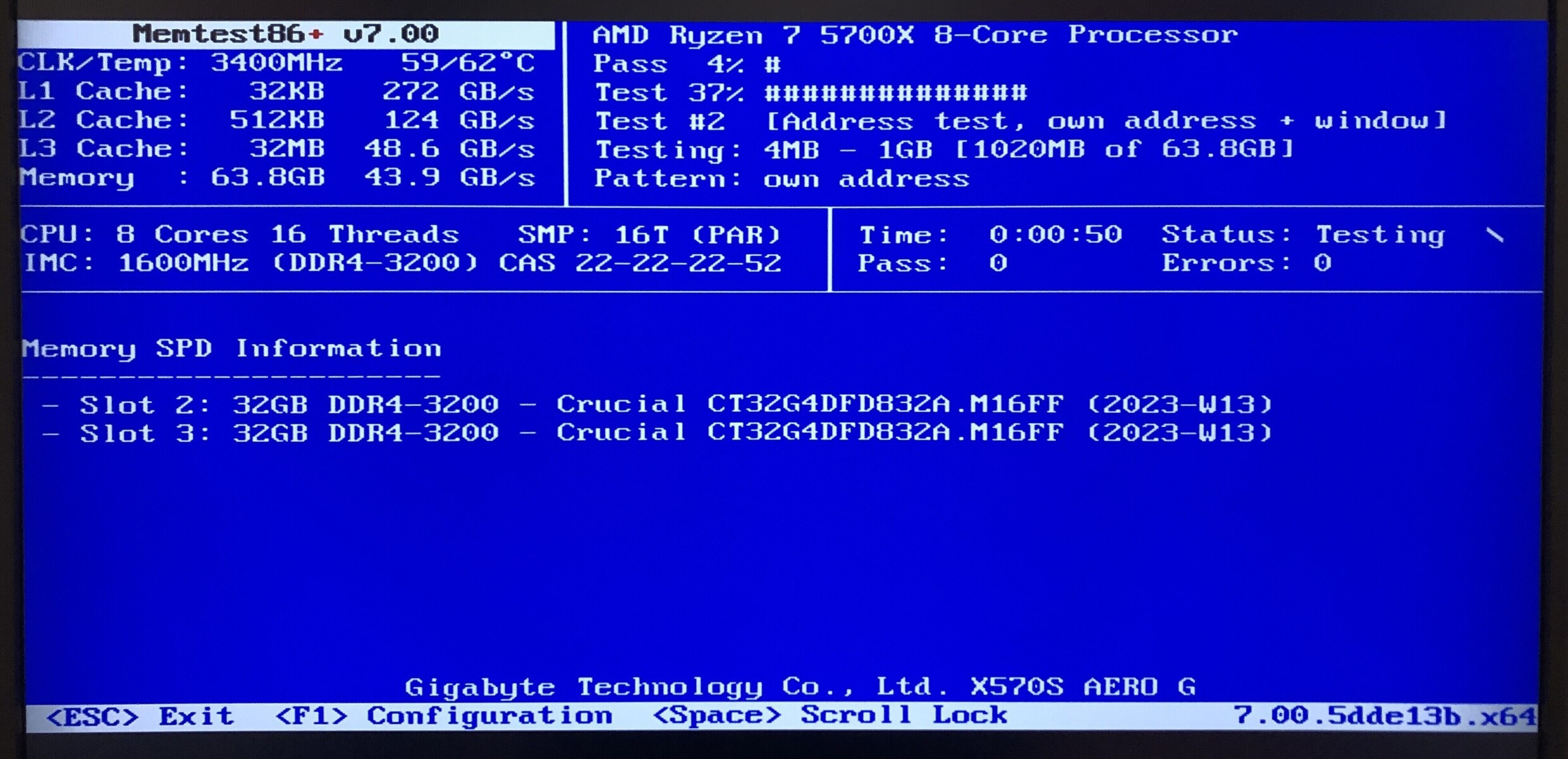
Memtest86+ Version 7.0 Introduces Live Settings & ECC Support for Select Ryzen CPUs

Last week, Doc TB acted as a spokesperson for an updated version of everyone's favorite lightweight open source memory testing tool: "We have released Memtest86+ v7! 🎉 Now with live RAM settings displayed (supported on Core 1st to 14th Gen & AMD Ryzen CPUs) and preliminary ECC support (supported on some Ryzen CPUs). Give it a try at memtest.org 👍." Version 6.0 of Memtest86+, issued back in 2022, was a complete overhaul (courtesy of dev. Martin Whitaker) that revived the irregularly updated FOSS tool's fortunes. Recent media coverage has presented a more optimistic view of Memtest86+ (not to be confused with Passmark's similarly titled app)—several articles propose that a consistent release of future updates is feasible. Version 7.0's changelog documents a good number of highlighted improvements, including: "IMC polling for live RAM settings, preliminary support for ECC polling (on a selection of Ryzen CPUs), added support for MMIO UART, debugging options, plus various bug fixes & optimizations."
Return to Keyword Browsing
Nov 16th, 2026 05:06 CST change timezone

New Forum Posts

Popular Reviews

TPU on YouTube

Controversial News Posts