News Posts matching #Game Boy

Return to Keyword Browsing

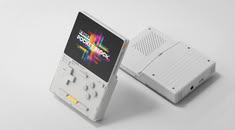
Ayaneo Opens Orders for Konkr Pocket Block, a Sub-$100 Game Boy-Style Android Handheld

Ayaneo has opened orders for the Konkr Pocket Block, the vertical Android handheld its budget Konkr sub-brand first showed off in May. The 2 GB RAM and 32 GB storage model costs $89, while the 3 GB and 64 GB version costs $109. Early bird pricing knocks $10 off both for a limited time, bringing them to $79 and $99. Ayaneo says shipping starts at the end of October. The handheld packs a 3.33-inch 4:3 LCD with a 960 x 720 resolution, a MediaTek Helio G85 chip, a microSD slot, and a 3,500 mAh battery. It runs Android 12 and has no fan, so Ayaneo is using a heat spreader instead.

It looks like the 2 GB model only comes in gray, while the 3 GB version also gets Cube Purple and a translucent Atoms White. The Helio G85 is a budget chip, so it might be best suited to emulating older systems up to around the PS1 and PSP era, while PS2 and GameCube games will probably be a struggle. Ayaneo billed the Pocket Block as the world's first AI handheld back in May, but it still hasn't said what the AI features are. In the meantime, the company also unveiled and launched the Game Boy Advance-inspired Konkr Pocket Advance. Pricing here looks to be reasonable enough that it may be worth a look, though readers are advised to wait for reviews first.
Modder Turns Steam Deck into Modern Game Boy

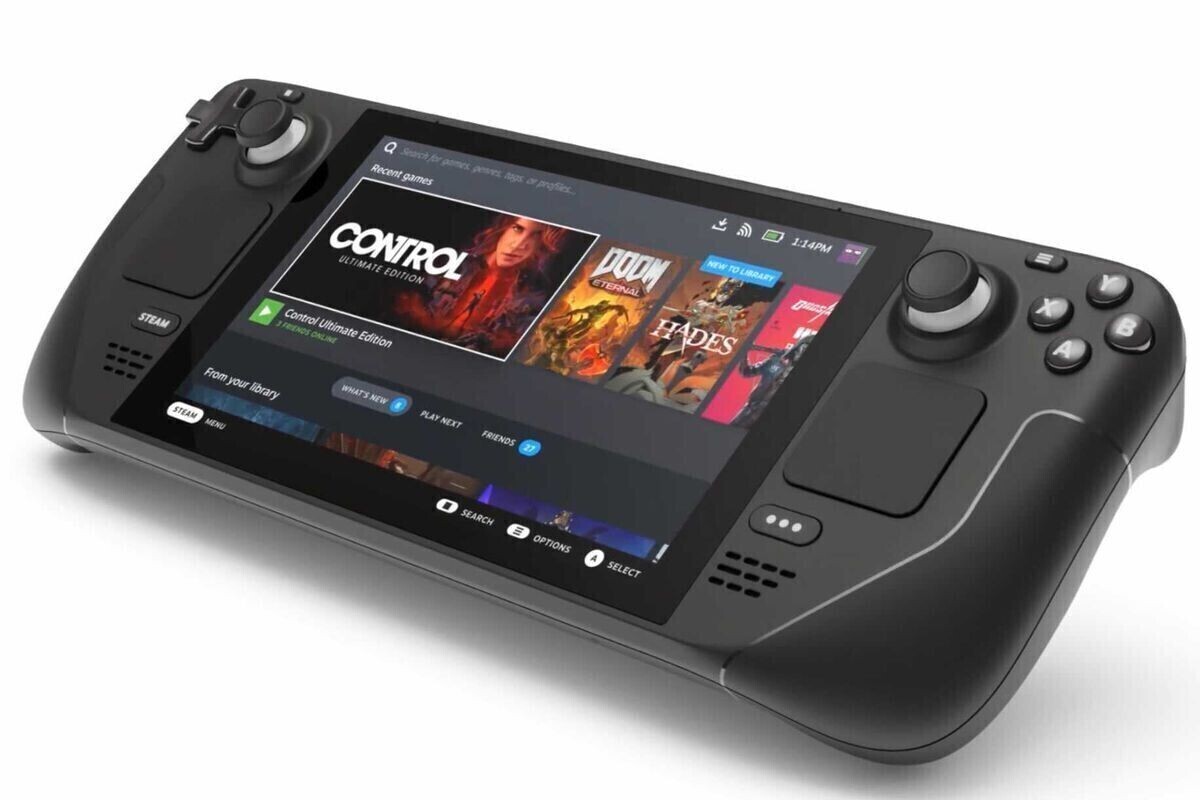
The modern gaming handheld boom has given rise to everything from the Steam Deck to quirky little Android-powered emulation machines that are more limited, but more affordable and portable. However, one modder, who goes by u/PhyFawkes on Reddit, has done some serious modding to turn his Steam Deck LCD into a compact gaming handheld that aims to be the best of both worlds.

The SteamBoy, as it is called by the modder, uses the original Steam Deck LCD motherboard, daughter boards, controller boards, and original battery stacked together very carefully in a vertical sandwich. The resulting SteamBoy features stock ABXY face buttons as well as a single trackpad and thumb stick. The new form factor also requires a new display, which turned out to be one of the biggest challenges, as the modder opted for a 1200×1080p AMOLED panel originally designed for VR headsets, which is still a work in progress.

Retro "KeyBoy Advance" Wireless Mechanical Keyboard Launches at $275

The KeyBoy Advance, a new 50% mechanical keyboard designed by PromoType (Galo), has just entered a group buy. The design, as the name suggests, is heavily inspired by the aesthetics of the Nintendo Game Boy Advance, achieving its retro looks with a case made of either anodized or e-coated aluminium or translucent PC, reminiscent of the classic translucent cases Nintendo was known for at the time. It is a small form factor keyboard that uses an unorthodox 50% HHKB layout, keeping the main alpha cluster and a 10-key number row while providing optional split space layouts, and it is fully remappable in VIAL, the open-source browser-based keyboard remapping utility.

The KeyBoy Advance is a barebones kit, meaning buyers will need to supply their own keycaps, switches, and stabilizers, but the PCB and plate feature options for both ANSI and ISO Enter keys, and buyers can choose between an MX switch-compatible soldered PCB, a wired-only hot-swap PCB, or a hot-swap PCB with wired, Bluetooth, and 2.4 GHz connectivity. Prices vary by vendor, but at Unikeys the soldered PCB with an anodized aluminium case is the cheapest option, at $275. Supposedly, the group buy is selling at a 20% discount off the RRP, which suggests that the KeyBoy Advance will eventually become available as an in-stock item. The group buy expects to ship in Q4 2026, although the date is not guaranteed, and will be available until Jul 22, 2026.

Ayaneo Officially Unveils AIR Mini IGS Limited Edition, Debuts New Retro Handheld

During its product sharing session held yesterday (May 21), Ayaneo made several announcements about its future and current products. The company introduced a limited-edition version of its Pocket AIR Mini in collaboration with IGS and Arcade Home. The main attraction point is that it features officially licensed retro arcade content and a themed design inspired by classic arcade machines. The handheld keeps the same compact 4.2-inch 4:3 display, is powered by the MediaTek Helio G90T and is equipped with Hall-effect joysticks and triggers alongside a 4,500 mAh battery. The device runs Ayaneo's own software ecosystem and comes preloaded with licensed IGS arcade titles, including Knights of Valour and Oriental Legend, alongside a built-in emulator. Two configurations are offered: 2 GB + 32 GB for $129.99 and 3 GB + 64 GB for $139.99.

Ayaneo sub-brand Konkr is also developing the Pocket Block, a vertical-format Android handheld with AI-focused features and a compact design inspired by Game Boy. The product is intended to blend retro handheld ergonomics with modern gaming capabilities.

Qwertykeys Teases QK65 MK3: Retro Mechanical Keyboard With Built-In Mini Games

One of the weirder gimmicks to come out of the enthusiast keyboard market is mini displays on keyboards, generally used to display anything from keyboard battery life and connectivity or OS modes to typing speed. The Qwertykeys QK65 MK3, however, takes the idea of a keyboard-mounted display to the next level. As the Instagram teaser and Discord announcement revealed, the QK65 MK3 includes a tiny vertical color screen—unclear whether it will be OLED or LCD, although LCD seems likely—on the right edge of the keyboard, replete with a set of built-in games that can be played on the screen. It seems as though the games will be controlled by two, maybe four, small buttons mounted directly under the display and potentially two Game Boy-inspired buttons mounted along the top edge of the keyboard, similar to shoulder buttons on a controller or gaming handheld.

The design of the QK65 MK3 also sets it apart from its kin, with a decidedly retro gray and beige aesthetic and bright accents clearly inspired by the design of old Nintendo game consoles and retro PCs. That said, it will also likely be available in a multitude of colors, as is usually the case with Qwertykeys keyboards. QK65 keyboards have also historically been available with wireless PCB options, so it stands to reason that this will be an option for buyers as well. Aside from the 65% layout, the rest of the specs, materials, and details for the QK65 MK3 are as yet unknown, although it will likely be available with an aluminium case and a variety of plate options—specifically FR4, aluminium, POM, PC, and carbon fiber—like its predecessors. It's unclear just how much the QK65 MK3 will cost, but the QK65 v2 comes in at $165 without keycaps and switches, and the QK65 v2 Classic is priced at $175. Qwertykeys keyboards are generally sold as custom kits, meaning buyers will need to bring their own switches and keycaps or buy them separately from Qwertykeys.

Steam Deck & Nintendo Switch Dominate Among Gamers Who Use Handhelds

TechPowerUp's team conducted research to find out how the market for handheld consoles performs and where its users are mostly going. The large community poll of 22,649 PC gamers, asking a simple "Do you game on a handheld console?" paints a solid picture of the customer base that a handheld console maker can expect. The majority, at 65.3% of the polled gamers, have chosen the option "No," indicating that two-thirds of PC gamers spend time on their main desktop or notebook PCs without using an additional handheld console. Among the 34.7% of respondents (7,852 votes) who game on the go, Valve's Steam Deck leads with 2,798 votes (35.6%), narrowly edging out Nintendo's Switch at 2,785 votes (35.5%).

ASUS's ROG Ally follows with 913 votes (11.6%), while "Other" devices, including Android emulators, retro-focused units like the Analogue Pocket, and various mini-PC handhelds, account for 810 votes (10.3%). Boutique Windows handhelds trail further behind, with the Lenovo Legion Go claiming 280 votes (3.6%) and the MSI Claw 266 votes (3.4%). Out of the entire fleet of these handhelds, only the Nintendo Switch is a real console. Others are mini portable PCs, which can serve functionality far beyond those of a console. Gamers are fond of the added functionality, which is why the Steam Deck, running Linux and Windows-based handhelds from ASUS, MSI, Lenovo, and others, are so popular.

90's Gadget Creator Retro Gadgets Now Available via Steam Early Access

Evil Licorice has today released their debut title Retro Gadgets via Steam Early Access. Available for £16.99, $19.99, EUR €19.99, the gadget-creation title lets players make, code, and customise their own gadgets and share them with the world. The first playable demo saw thousands of inventors make all sorts of devices, from fully playable portable consoles to functional MP3 players, and even 3D painting tools.

In Retro Gadgets, players make and customise their own gadgets, which they can code to bring to life before sharing with the community. Working in a tactile interface, tinkerers will press buttons, flick switches, twist dials, and move joysticks to build and interact with any gadget they can think of. The game features full Steam Workshop integration, letting players download, inspect and reverse engineer each other's projects to create their own versions.

Commodore 64 Modded To Mine Bitcoin

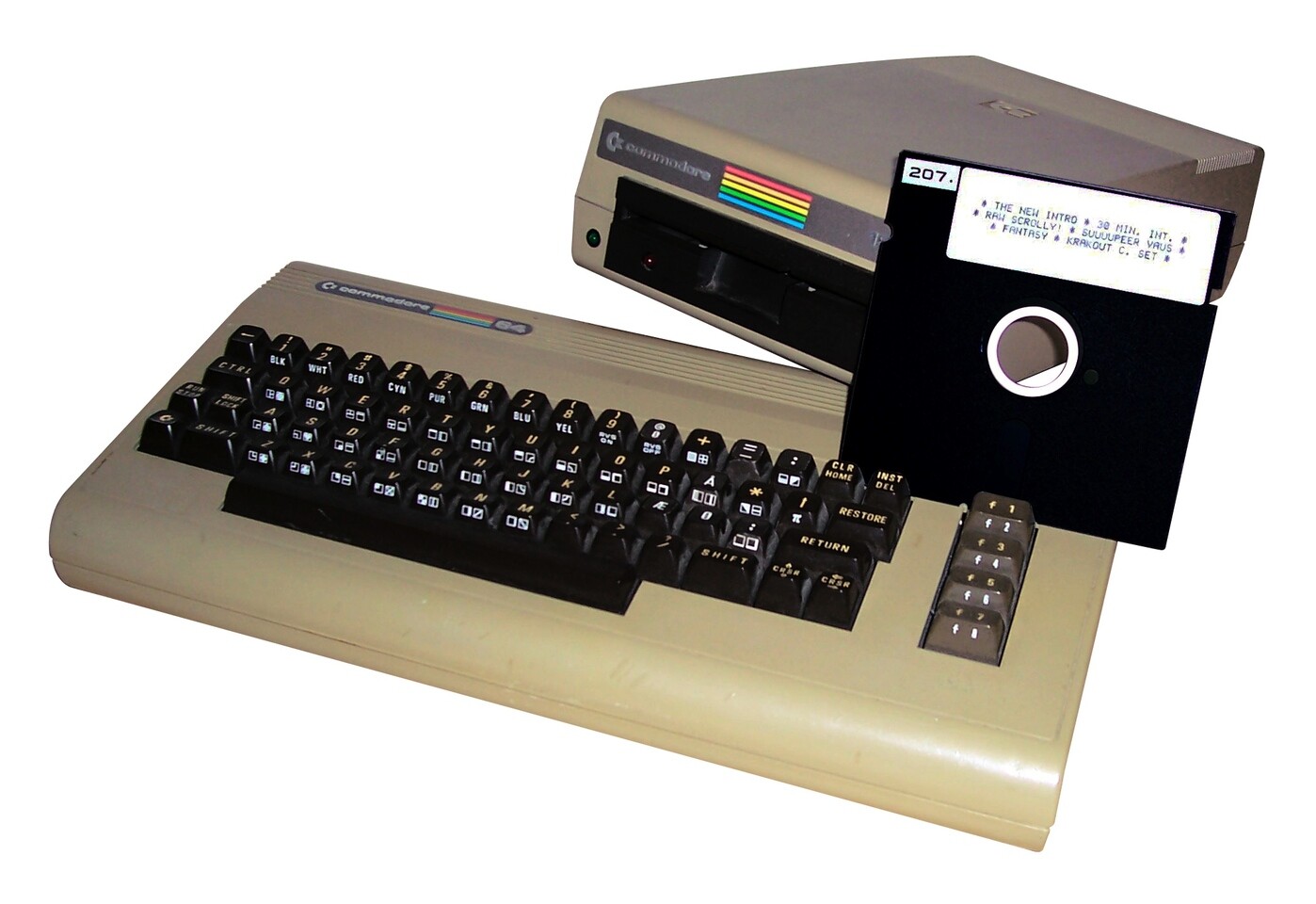
We saw the modified Nintendo Game Boy last month which could crank out Bitcoins at a blistering 0.8 hashes per second or ~125 trillion times slower than a modern Bitcoin ASIC miner. If you are searching for something a bit more modest than the Game Boy take a look at the Commodore 64 which has been modded to achieve a Bitcoin mining rate of 0.3 hashes per second. The Commodore 64 was released by IBM in 1982 featuring the MOS Technology 6510 processor clocked at 1.023 MHz and paired with 64 KB RAM and 20 KB ROM.

While the Commodore currently falls behind the Game Boy there is hope on the horizon with the creator of the program claiming a 10x performance improvement to over 3 hashes per second is possible by re-writing the code in machine language. The commodore 64 can be further upgraded with the SuperCPU upgrade which boosts mining speeds to over 60 hashes per second completely destroying the Game Boy but still falling just short of the latest ASIC miners at ~18,000,000,000,000 hashes per second. Obviously, this demonstration was not meant as a practical application but it is interesting to see how cryptocurrency mining can be implemented on older hardware and the amazing rate of technological advancement we have seen over the last 40 years.

Nintendo Game Boy Modded to Mine Bitcoin

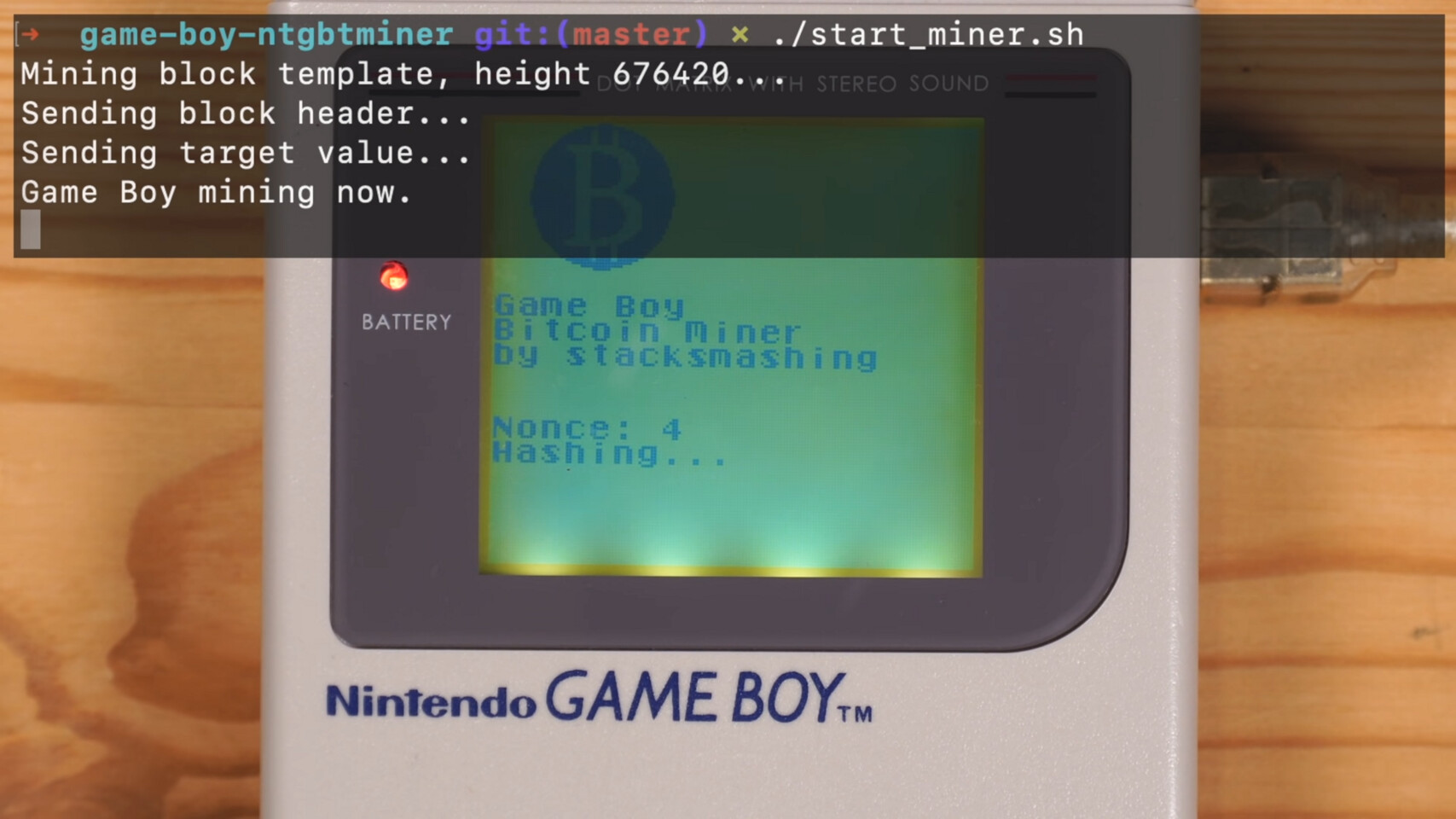
Nintendo's Game Boy handheld console was launched in 1989, making it 32 years old. Being widely regarded as the icon of handheld gaming, it was sold in millions and has been copied countless times. However, with some spare time and a crazy mind, the console has been modified to mine Bitcoin cryptocurrency. Yes, you are reading that right. An 8-bit console is mining the biggest and the most valuable cryptocurrency. An electronics enthusiast named "stacksmashing" has set himself a difficult task - to prove that the console can mine some Bitcoin, at any possible rate. And he has managed to prove it is possible, although with some modifications.

Given that the console lacks any connectivity options to the outside world due to its age, the modder had to use SPI (Serial Peripheral Interface) to connect the Game Boy with the Raspberry Pi, which had the task of connecting the Game Boy to the internet to mine some Bitcoin. Using the custom 8-bit Sharp LR35902 processor running at 4.19 MHz, the console is naturally not very powerful. Thus, it can not do any meaningful mining and to compare it to modern mining ASICs is just silly. However, it is interesting to see proof of concept and get to see some engineering fun. For more information, please check out the YouTube video here.
Return to Keyword Browsing
Nov 20th, 2026 16:23 PST change timezone

New Forum Posts

Popular Reviews

TPU on YouTube

Controversial News Posts