News Posts matching #Intel

Return to Keyword Browsing

Intel Arc GPU Graphics Driver 101.6319 Beta Released

Intel has released the latest version of its Arc GPU Graphics Drivers, the version 101.6319 Beta. Surprisingly, the product compatibility list still does not include support for the new Arc Battlemage B500 series graphics cards, so we expect yet another driver release when they become officially available. It also does not fix any bugs, and the known issues list is the same as with the previous WHQL drivers release. On the other hand, the Arc GPU Graphics Drivers version 101.6319 Beta adds Game On Drivers support for Indiana Jones and The Great Circle, Marvel Rivals, and Path of Exile 2 on Intel Arc A-series GPUs and Intel Core Ultra with built-in Intel Arc GPUs.

DOWNLOAD: Intel Arc GPU Graphics Drivers 101.6319 Beta

Intel Xe3 "Celestial" Architecture is Complete, Hardware Team Moves on to Xe4 "Druid" Design

We have already confirmed that Intel is continuing the development of Arc gaming GPUs beyond the current Xe2 "Battlemage" series, with the new Xe3 "Celestial" architecture in the works. However, thanks to PCWorld's The Full Nerd podcast, Tom Petersen of Intel confirmed that the Xe3 IP has been finished, and the hardware teams are already working on the next Xe4 "Druid" GPU IP. "Our architects are way ahead of us, and they are already working on not the next thing but the next thing after the next thing," said Petersen, adding: "The way I would like to comment is our IP that's kind of called Xe3, which is the one after Xe2, that's pretty much baked, right. And so the software teams have a lot of work to do on Xe3. The hardware teams are off on the next thing, right. That's our cadence, that we need to keep going."

The base IP of next-generation Xe3 "Celestial" GPUs is done. That means the basic media engines, Xe cores, XMX matrix engines, ray tracing engines, and other parts of the gaming GPU are already designed and most likely awaiting trial fabrication. The software to support this Xe3 is also being developed while Intel's team is working on enabling more optimizations for the Xe2 "Battlemage" architecture, which we previewed recently. We assume that Intel's Xe GPU will now follow a stricter cadence of releases, with SKUs getting updated much faster, given that a lot is prepared for the future.

Intel at CES 2025: Pioneering AI-Driven Innovation in Work and Mobility

AI is fundamentally changing technology - from the PC to edge and cloud—and redefining the way we work, create and collaborate. Next-generation technologies will empower workers through powerful new tools that enhance productivity and make intelligent, personalized computing more accessible than ever. At CES 2025, Intel will show how it's advancing what's possible on the AI PC—for on-the-go professionals and enthusiasts - by designing for the needs and experiences of tomorrow with breakthrough efficiency, no-compromise compatibility and an unmatched software ecosystem. Intel will also showcase the latest automotive innovations as the industry embraces software-defined connected electric vehicles powered by AI.

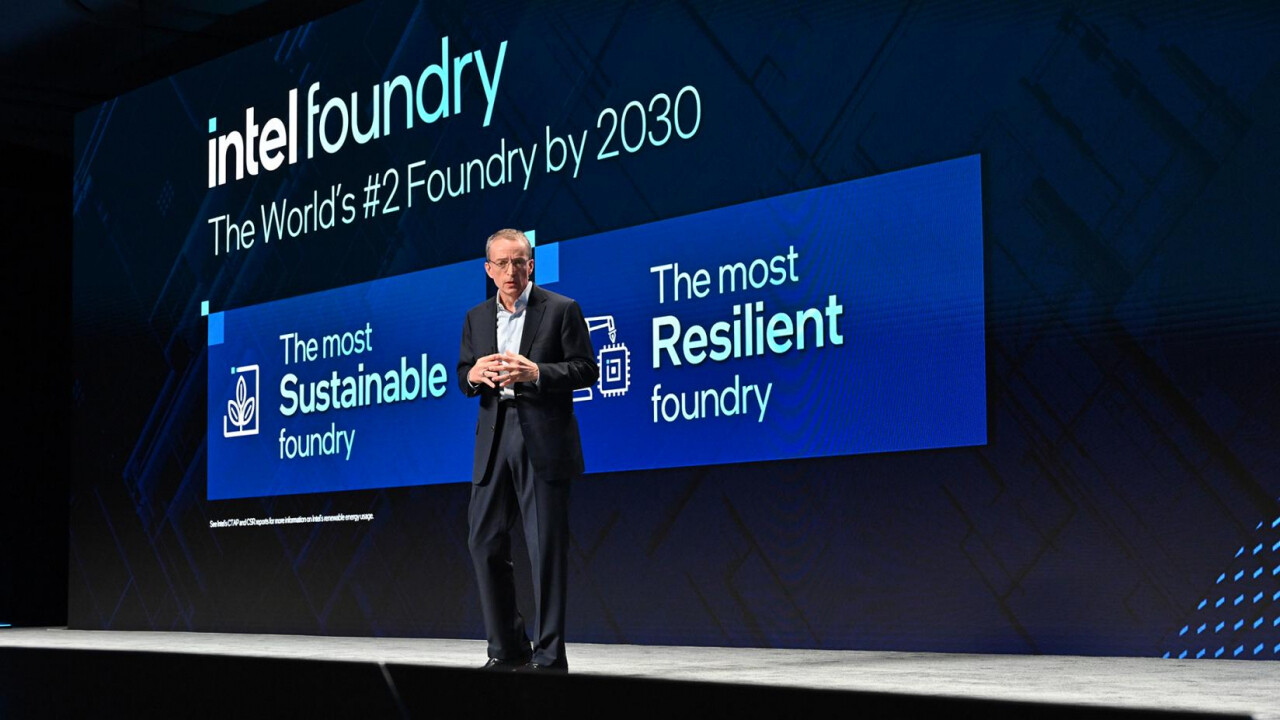
Intel's Foundry Plan Remains the Same, Interim Co-CEO David Zinsner Confirms

Intel's Foundry business is the company's current pain point and probably the reason why the company board of directors forced out ex-CEO Pat Gelsinger. However, the new interim co-CEO, David Zinsner, confirmed that the foundry plan would remain the same. At the UBS technology conference, Zinsner indicated that the company's core strategy remains unchanged and reiterated the forecasts shared in October, highlighting optimism about growth in its PC and server segments. This is a healthy sign that Intel will not lose its foundry subsidiary, which, even though difficult to operate, could be Intel's silver lining with growth opportunities ahead.

Yesterday, we covered the choice of Lip-Bu Tan as Intel's next CEO. However, the new co-CEO, Zinsner, stated, "I'm not in the process, but I'm guessing that the CEO will have some capability around foundry as well as on the product side." A new CEO would be left with a lot of work that, apparently, no one so far can finish. There are speculations that Intel's 18A node is yielding 10% of usable silicon, while Intel's head of foundry business, Naga Chandrasekaran, has noted that 18A node is going through evolution phases to improve final yields and remain profitable, noting that "there's nothing fundamentally challenging on this node now. It is about going through the remaining yield challenges, defect density challenges."

Intel Appoints Semiconductor Leaders Eric Meurice and Steve Sanghi to Board of Directors

Intel Corporation today announced that Eric Meurice, former president, chief executive officer and chairman of ASML Holding N.V., and Steve Sanghi, chairman and interim chief executive officer of Microchip Technology Inc., have been appointed to Intel's board of directors, effective immediately. Both will serve as independent directors.

"Eric and Steve are highly respected leaders in the semiconductor industry whose deep technical expertise, executive experience and operational rigor make them great additions to the Intel board," said Frank D. Yeary, interim executive chair of the Intel board. "As successful CEOs with proven track records of creating shareholder value, they will bring valuable perspectives to the board as the company delivers on its priorities for customers in Intel Products and Intel Foundry, while driving greater efficiency and improving profitability."

Intel 18A Process Node Clocks an Abysmal 10% Yield: Report

In case you're wondering why Intel went with TSMC 3 nm to build the Compute tile of its "Arrow Lake" processor, and the SoC tile of "Lunar Lake," instead of Intel 3, or even Intel 20A, perhaps there's more to the recent story about Broadcom voicing its disappointment in the Intel 18A foundry node. The September 2024 report didn't specify a number to what yields on the Intel 18A node looked like to spook Broadcom, but we now have some idea as to just how bad things are. Korean publication Chosun, which tracks developments in the electronics and ICT industries, reports that yields on the Intel 18A foundry node stand at an abysmal 10%, making it unfit for mass-production. Broadcom validated Intel 18A as it was prospecting a cutting-edge node for its high-bandwidth network processors.

The report also hints that Intel's in-house foundry nodes going off the rails could be an important event leading up to the company's Board letting go of former CEO Pat Gelsinger, as huge 2nd order effects will be felt across the company's entire product stack in development. For example, company roadmaps put the company's next-generation "Clearwater Forest" server processor, slated for 2025, as being designed for the Intel 18A node. Unless Intel Foundry can pull a miracle, an effort must be underway to redesign the chip for whichever TSMC node is considered cutting-edge in 2025.

Intel's CEO Role Could be Filled by Former Board Member Lip-Bu Tan

The search for a new Chief Executive Officer (CEO) of Intel has begun following Pat Gelsinger's departure on Monday. And it is not exactly an easy role to be filled. The tech giant's board is primarily considering external candidates to lead the company through one of its most challenging periods. Among the potential successors is Lip-Bu Tan, a former Intel board member and semiconductor industry veteran. Tan, who previously served as CEO of Cadence Design, left Intel's board in August 2023 after disagreements with Gelsinger over the company's strategic direction. Despite these past tensions, Intel's board has reportedly recently approached Tan to gauge his interest in the position. The search for new leadership is extremely difficult, considering the requirements and massive problems the new CEO would face.

Coming at a critical moment for Intel, which has experienced significant financial challenges under Gelsinger's tenure, the new CEO would need to get the Foundry business to pick up and maintain a solid product roadmap. The company's revenue dropped to $54 billion in 2023, marking a nearly one-third decline since Gelsinger took the helm in 2021. Analysts project Intel's first annual net loss since 1986 this year, with long-term signs of recovery. Gelsinger's exit, which came after the board presented him with the option to retire or be removed, reflects growing impatience with the pace of his ambitious turnaround strategy. The company has appointed CFO David Zinsner and senior executive Michelle Johnston Holthaus as interim co-CEOs while the search committee works to identify a permanent replacement.

AEWIN Launches ANCT401 Quad-Port 10G Network Expansion Module

AEWIN is glad to launch our new member of AEWIN Network Expansion Modules, the NCT401. Built upon Intel XL710-BM1 LAN Controller and Intel X557-AT4 PHY, it provides quad port 10GbE RJ45 with two pairs of Gen 3 bypass. It is with AEWIN standard Expansion Module form factor of PCIe x8 connection. The front-access design makes NCT401 easy to maintain/service and it is compatible with various kinds of AEWIN existing Network Appliances providing great flexibility to tailor specific configurations for target workload effortlessly.

DPDK (Data Plane Development Kit) is supported to improve package forwarding for better efficiency. Along with implementing DPDK, Dynamic Device Personalization (DDP) enables programmable packet-processing pipeline which is optimized for specific workloads on demand. With these features, performance for network edge workloads can be enhanced which is perfect for solutions of Communications, Cloud and Networking.

Intel Arc GPU Graphics Driver 101.6314 WHQL Released

Intel today released the latest version of its Arc GPU Graphics Drivers. Version 101.6314 WHQL don't seem to include support for Arc "Battlemage" B500 series GPUs yet (which will probably go live with the product availability). There's no Game On game-optimization payload, either. The release, however, fixes a handful important issues. For Arc A-series "Alchemist" discrete GPUs, lower than expected performance in Blackmagic Design DaVinci Resolve Studio, has been fixed. For Core Ultra processors with Arc Graphics, the drivers fix texture corruption on water surfaces in "Call of Duty: Black Ops 6." They also fix texture corruption issues with "Minecraft Bedrock" that show up when changing antialiasing settings.

DOWNLOAD: Intel Arc GPU Graphics Drivers 101.6314 WHQL

AAEON Pairs High-Performance Computing with an Intel Arc GPU in a Versatile Industrial AI Edge PC

AAEON, a leading provider of industrial and embedded computing solutions, has released the MXM-ACMA-PUC, a new system-level product line incorporating 13th Generation Intel Core processing with an embedded Intel Arc GPU. While this is not the company's first product to feature a GPU from the new Intel Arc series, it is AAEON's first product that uses the technology in a readily deployed system-level edge computer.

The MXM-ACMA-PUC can support a range of 13th Generation Intel Core CPUs, up to 35 W, with the system's default processor being the 16 core, 24 thread Intel Core i7-13700TE. For enhanced machine learning and AI workload management, the system contains an integrated MXM-ACMA module, which offers either an embedded Intel Arc A370E or Intel Arc A350E GPU, ideal for boosting compute power for AI workloads.

MAXSUN Unveils Intel Arc B580 Series Graphics Cards

MAXSUN and Intel introduced their latest collaboration, the MAXSUN Intel Arc B580 Series Graphics Cards. Both models come with 12 GB of VRAM, ensuring smooth gameplay and efficient creative workflows.

Two Options for Every Need
The MAXSUN Intel Arc B580 Series features two models:
  • MAXSUN Intel Arc B580 iCraft 12G (MSRP: $259)
  • MAXSUN Intel Arc B580 Milestone 12G (MSRP: $249)

Team Group Launches the T-Force XTREEM CKD DDR5 Desktop Memory

Team Group Inc.'s gaming brand T-FORCE launched the highly anticipated XTREEM CKD DDR5 8800 2x24GB Desktop Memory, designed with advanced Client Clock Driver (CKD) technology to enhance data transfer stability. With overclocking capabilities reaching up to 9600 MT/s, this memory module redefines overclocking potential with the groundbreaking CUDIMM platform, delivering exceptional performance and setting new industry milestones.

In close collaboration with leading motherboard manufacturers, the T-FORCE XTREEM CKD DDR5 is designed for stability at an exclusive frequency of 9600 MT/s on 2 DIMM motherboards. Featuring a premium 2 mm-thick aluminium alloy heat spreader and high thermal conductivity silicone, it significantly improves heat dissipation by 10%. Its CNC cutting technology, matte sandblasting, and black anodizing processes create a refined, understated aesthetic. Paired with the iconic T-FORCE logo, it offers gamers a product combining high performance and premium design. Utilizing patented IC classification and verification technology, the module integrates a power management chip for stable power consumption. It also supports on-die ECC for error detection and correction, ensuring exceptional system stability.

Sparkle Introduces its Intel Arc B-Series Graphics Cards

SPARKLE Intel Arc B-Series Graphics Card offer offers high-resolution gaming with Intel XeSS AI upscaling, ray tracing, and 8K media support, plus accelerated AI features for enhanced creation and editing through Intel AI Playground.

SPARKLE, an Intel official AIB partner, is announcing:

SPARKLE Intel Arc B580 TITAN OC - with Limited GPU Holder
The SPARKLE Intel Arc B580 TITAN OC debuts with 12 GB GDDR6 memory and advanced TORN Cooling 2.0 featuring triple AXL fans, a 2.2-slot design, and a full-metal backplate. With a boost clock of 2740 MHz and 200 W power consumption, it delivers top-tier gaming performance.
A blue breathing light effect adds elegance, while a limited SPARKLE GPU Holder completes this powerhouse package. The TITAN Series continues its legacy of performance and style.

Acer Boosts Gaming Lineup with New Nitro Intel Arc B-Series Graphics Cards

Acer today announced an expansion to its gaming portfolio with the new Nitro Intel Arc B-Series graphics cards, aimed at DIY gamers seeking high-performance gaming and content creation upgrades for their PC setups.

The Nitro Intel Arc B570 OC 10 GB and Nitro Intel Arc B580 OC 12 GB graphics cards, with clock speeds up to 2,740 MHz and up to 12 GB GDDR6 memory, offer gamers an immersive experience and access to the latest AI technologies via the Intel AI Playground application. These graphics cards are equipped with Acer's advanced FrostBlade cooling systems to ensure peak performance.

Intel Announces the Arc B-Series Graphics Cards

Today, Intel announced the new Intel Arc B-Series graphics cards (code-named Battlemage). The Intel Arc B580 and B570 GPUs offer best-in-class value for performance at price points that are accessible to most gamers, deliver modern gaming features and are engineered to accelerate AI workloads. The included Intel Xe Matrix Extensions (XMX) AI engines power the newly introduced XeSS 2, comprised of three technologies that together increase performance, visual fluidity and responsiveness.

"The new Intel Arc B-Series GPUs are the perfect upgrades for gamers. They deliver leading performance-per-dollar and great 1440p gaming experiences with XeSS 2, second-generation ray tracing engines and XMX AI engines. We're delighted to be joined by more partners than ever so that gamers have more choice in finding their perfect design." -Vivian Lien, Intel vice president and general manager of Client Graphics
[Editor's note: Our preview of the Arc Battlemage Series is now live]

ASRock Launches Intel Arc B-Series Graphics Cards Born To Shine Your PC Builds

ASRock, the global leading manufacturer of motherboards, graphics cards, mini PCs, gaming monitors and power supply units, today launches the all-new Intel Arc B-Series graphics cards, including Steel Legend and Challenger products based on Intel Arc B580 and Intel Arc B570 Graphics, which are born to shine your PC builds!

Based on the latest Xe2-HPG architecture, Intel Arc B-Series GPUs are designed for high performance gaming at 1440p and 1080p with AI upscaling and ray tracing. They are equipped with cutting-edge features: Intel Xe Super Sampling technology (XeSS), which takes your gaming experience to the next level with AI-enhanced upscaling for higher performance and high image fidelity. Intel XeSS Frame Generation and Intel Xe Low Latency technologies make your games play smoother and more responsive. Intel Xe Matrix eXtensions (XMX) AI engines accelerate AI-enhanced gaming, creation, and media generation. The Advanced Media Engine accelerates your content creation with two full-featured media transcoders to speed up the media exporting across the most popular formats including AV1.

MSI Launches New Claw 8 AI+ and Claw 7 AI+ Gaming Handhelds

Gear up for unparalleled mobile gaming with the new MSI Claw 8 AI+& Claw 7 AI+ refresh. Powered by the next-gen Intel Core Ultra 7 processor (Series 2), these two compact powerhouses combine exceptional performance with outstanding efficiency. Enjoy stunning visuals on vibrant displays, available in two sizes: 7-inch and the new 8-inch, enhanced by AI-driven precision.

Upgraded with larger batteries for longer gaming sessions and optimized power consumption for smoother performance. Designed for optimal comfort during intense gameplay, the Claw 8 AI+ and Claw 7 AI+ feature sleek ergonomic designs, advanced cooling technology, and comprehensive I/O ports for seamless connectivity. As the Copilot+ PC-capable handhelds available, they set a new standard for portable gaming.

Intel CEO Pat Gelsinger Retires, Company Appoints two Interim co-CEOs

Intel Corporation (NASDAQ: INTC) today announced that CEO Pat Gelsinger retired from the company after a distinguished 40-plus-year career and has stepped down from the board of directors, effective Dec. 1, 2024. Intel has named two senior leaders, David Zinsner and Michelle (MJ) Johnston Holthaus, as interim co-chief executive officers while the board of directors conducts a search for a new CEO. Zinsner is executive vice president and chief financial officer, and Holthaus has been appointed to the newly created position of CEO of Intel Products, a group that encompasses the company's Client Computing Group (CCG), Data Center and AI Group (DCAI) and Network and Edge Group (NEX). Frank Yeary, independent chair of the board of Intel, will become interim executive chair during the period of transition. Intel Foundry leadership structure remains unchanged.

The board has formed a search committee and will work diligently and expeditiously to find a permanent successor to Gelsinger. Yeary said, "On behalf of the board, I want to thank Pat for his many years of service and dedication to Intel across a long career in technology leadership. Pat spent his formative years at Intel, then returned at a critical time for the company in 2021. As a leader, Pat helped launch and revitalize process manufacturing by investing in state-of-the-art semiconductor manufacturing, while working tirelessly to drive innovation throughout the company."

Intel Arc B570 "Battlemage" GPU Details Surface: 18 Xe2 Cores, 10 GB VRAM

Intel's upcoming Arc "Battlemage" graphics card lineup has been exposed through a recent ASRock specification sheet leak, showcasing the company's latest products for the discrete GPU market. The leak details two models, the B580 and B570, with the B570 making a first appearance in the rumor section. The B580, positioned as the flagship model we already covered, features 20 Xe2-Cores and comes equipped with 12 GB of GDDR6 memory on a 192-bit interface, capable of reaching bandwidth speeds of up to 456 GB/s. Its slightly lower-spec sibling, the B570, sports 18 Xe2-Cores and 10 GB of GDDR6 memory on a 160-bit interface, delivering 380 GB/s bandwidth. In ASRock's case, both cards will be factory-overclocked, with the B580 reaching speeds of 2.8 GHz and the B570 hitting 2.6 GHz.

The new graphics cards are designed to operate on a PCIe 4.0 x8 interface. Both models will support modern display standards, including DisplayPort 2.1 and HDMI 2.1. Intel has scheduled the official unveiling of the Battlemage series for December 3, with cards expected to hit shelves on December 12. While the B570's pricing remains under wraps, the B580's rumored $249 price tag suggests Intel is making a serious play for the mid-range market segment. This aggressive pricing strategy, combined with the card's promising specifications, indicates Intel's determination to establish itself as a legitimate mid-range competitor in the discrete GPU segment, which NVIDIA and AMD have long dominated.

ASRock Arc B580 Steel Legend 12GB "Battlemage" Graphics Card Pictured

FunkyIT scored an ASRock Arc B580 Steel Legend 12 GB "Battlemage" graphics card that they previewed on their channel. The card appears fairly large, considering that Intel is positioning the B580 to be an upper-mid range GPU, if we go by the naming convention of the previous "Alchemist" generation, and the A580. The ASRock Steel Legend product features a large, aluminium dual fin-stack cooler featuring a trio of fans, and what looks like a metallic, dual-tone cooler shroud and backplate combo. The PCB underneath is a little over half the length of the card, which means nearly half the heatsink's airflow passes through the card and out large cutouts in the backplate.

The card draws power from a pair of 8-pin PCIe power connectors, a combination rated for up to 375 W power delivery. Previous leaks suggest that the ASRock B580 Steel Legend features RGB lighting in the form of a large Steel Legend ornament on top of the card, and the three fans each feature RGB LED lighting. FunkyIT also showed off the retail box of the card. There's no change in the Intel Arc main branding, but attention is given to the Intel XeSS technology logo, which mentions "AI Upscaling." The XMX cores, which are the main AI acceleration hardware on discrete Arc GPUs, get their own separate branding on the box. Intel isn't just going after gamers, but also creators, and AI acceleration markets. "Play, Create, Generate," reads the box.

Germany Readies €2 Billion in New Semiconductor Subsidy Package

Germany is set to invest €2 billion in the semiconductor industry after recent setbacks, according to TrendForce via Liberty Times citing Bloomberg. The German government's new funding is in response to the chip sector's problems, including Intel's delay of the Magdeburg factory and global disruptions in the semiconductor supply chain. The investment will support 10 to 15 projects from wafer production to microchip assembly to strengthen Germany's and Europe's microelectronics ecosystem. This is in line with the European Chips Act which aims to increase the EU's global production capacity to 20% by 2030.

Intel's €30 billion Magdeburg factory delay and other cancelled chip projects from Wolfspeed and ZF Friedrichshafen AG have created uncertainty in the German market. The Ministry of Economic Affairs is now calling for new applications for funding, with up to €3 billion available. The timing of the semiconductor investment follows the global supply chain disruptions caused by the pandemic and the increasing geopolitical tensions between the US, China and Taiwan. Germany is following a broader trend of governments investing in local semiconductor production to increase technological independence and economic resilience. The funding is subject to budget reallocation with the new government after February 2025 elections. In the first round of subsidies from the European Chips Act, Germany allocated resources to two key initiatives: Intel's investment and a collaborative project between Infineon and TSMC in Dresden.

ADLINK Develops Versatile Palm-Size Fanless Mini PC

ADLINK Technology Inc., a global leader in edge computing, has introduced the all-new Mini PC EMP-100. The smallest of its kind of the series (just 13 x 10.7 x 2.8 cm), this fanless PC and Dual 4K Media Player is robust and extremely versatile. It includes an Intel Celeron N6210/J6412 processor; IoT connectivity (Single GbE LAN and Optional Wi-Fi 6/BT 5.2 module); an M.2 2280 Key M for optional storage and Key E for optional Wi-Fi/BT modules; and two HDMI output ports. This combination plus adaptable function expansion makes it truly multipurpose.

Exceptional Media player
The EMP-100 Series was developed to support sophisticated digital signage with Dual 4K UHD display for clear and vibrant content; interactive kiosks; and the development of IoT and AI applications in the smart retail sector - enhancing the customer experience and boosting commercial engagement. The fanless design can be operated continuously in a broad range of temperatures and significantly reduces maintenance.

Intel to Announce Arc Battlemage on December 3rd, With Availability and Reviews Expected on December 12th

According to the latest information from Videocardz, the Intel Arc Battlemage announcement and launch could be closer than expected. The official announcement for two first SKUs, the Arc B580 and the Arc B570, is apparently scheduled for December 3rd, with availability and first reviews coming on December 12th.

Intel is expected to announce and launch two mid-range SKUs, the Arc B580 and the Arc B570, and has yet to give any information on the rest of the lineup, including higher-end as well as entry-level SKUs. The Arc B580 SKU has been leaked recently and is said to feature 20 Xe2-cores with a GPU clock of 2.8 GHz. The board comes with 12 GB of 19 Gbps GDDR6 memory on a 192-bit memory interface and needs two 8-pin power connectors. The price is said to be set at around $250, according to rumors and listings spotted earlier. The second SKU, the Arc B570, is rumored to pack 18 Xe2-cores, while the rest of the information is still unknown.

Intel Continues to Develop GPUs Beyond Arc Battlemage

New rumors emerged via Notebookcheck that point to Intel's intention to continue developing discrete desktop GPUs after the imminent launch of its Arc Battlemage series. Leaker JayKihn confirmed in a comment on X that Intel is actively working on future GPU generations, namely the Arc Celestial and Arc Druid, unlike previous rumors that pointed to a possible cancellation if Battlemage underperforms. Sources say Intel is still committed to its GPU roadmap. With the Arc Battlemage series led by the B580 model, Intel is targeting the budget segment, going in direct competition with NVIDIA's RTX 4060 and RTX 4060 Ti. Price-wise, we can expect graphic cards with Intel Arc Battlemage to go around $250 (for the 12 GB model) and although the performance will not be groundbreaking, it can attract interest from buyers on a tight budget.

Since Intel has reportedly canceled all plans to launch discrete laptop Battlemage cards, Arc Druid and Arc Celestial could follow the same path. Although details regarding Arc Celestial and Arc Druid are scattered, confirmation of their development is good news for the PC graphics card market. What we do know now is that Arc Celestial models will arrive in 2025 or early 2026, which could coincide with the launch of Intel's Panther Lake CPUs. The GPUs are expected to take advantage of the new Xe3 graphics architecture (Arc B580 will feature Intel's Xe2-HPG architecture). However, given Intel's latest challenges, the ultimate success of these next-generation GPUs remains to be seen, while we still believe that the success of Arc Battlemage will be decisive for future Intel GPU development.

Intel's $7.86 Billion CHIPS Act Grant Forbids Selling Its Foundry Business

When Intel announced the completion of its $7.86 billion CHIPS Act grant from the Biden-Harris administration on Tuesday, we assumed some special terms were tied to the grant. Intel is essentially making a law-abiding promise to the US government that it will not sell its stake in the Intel Foundry unit under any circumstances, even if it manages to become an independent entity. This ensures that Intel is the major voting party in any event. Intel disclosed in a regulatory document that if Intel Foundry becomes its own private entity, Intel must maintain majority control with at least 50.1% ownership to keep its subsidy agreements. Additionally, if Intel Foundry goes public in the future, no single investor would be allowed to acquire more than 35% of shares unless Intel remains the largest shareholder, as this would trigger control-change clauses.

This essentially positions Intel Foundry as too big and too important of a unit to fail, both for Intel and the US government. Given Intel's ties with the US Department of Defense, with up to $3 billion in direct funding under the CHIPS and Science Act for the Secure Enclave program, Intel is vital for providing the US government with advanced semiconductor manufacturing. Strategically, Intel Foundry is the sole US-based company that competes with advanced manufacturing companies such as TSMC and Samsung. Even with TSMC and Samsung driving investments on US soil with advanced fabs, Intel's work with the government requires additional safety and secrecy clearances that only a US firm could provide. In the latest Q3 2024 financial results, Intel Foundry recorded a revenue of $4.4 billion with $5.8 billion in losses. While the operating marking of negative 134.3% seems like a disaster, upcoming quarters will bring it to a positive with more customers and using already developed nodes like 18A.
Return to Keyword Browsing
Nov 17th, 2026 14:59 CST change timezone

New Forum Posts

Popular Reviews

TPU on YouTube

Controversial News Posts