
News Posts matching #Kysona

Return to Keyword Browsing

Linux Kernel 7.4 HID Support Includes Nintendo Switch 2 Controllers and Pulsar Gaming Mice

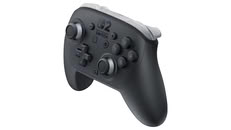
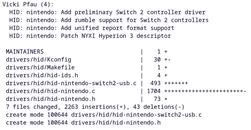
Valve has been a major contributor to the Linux gaming scene since it launched the Arch-based SteamOS alongside the Steam Deck, and the company's latest contribution to the Linux gaming ecosystem comes by way of a series of patches by Vicki Pfau, a developer working on hardware support on behalf of Valve Software. In the patch notes, Pfau notes that the preliminary driver supports "general input for the Joy-Con 2, Pro Controller 2, and GameCube NSO controllers," including Bluetooth for all controllers and USB mode for the Pro Controller. The Linux kernel version 7.4 is slated to land in a fully stable form in January 2027.

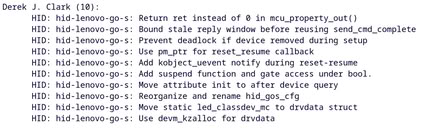
Crucially, the Nintendo Switch 2 controllers were already largely supported on Linux via Steam, but kernel support means the controller won't need to run via Steam Input and can work in other game launchers without Steam being open. In addition to the Nintendo Switch 2 controllers, Linux 7.4 should bring hardware enablement and several features for a host of other peripherals, both gaming and otherwise, including additional sensor support for new AMD SoCs, better trackpad handling on T2 Macs, a new HID driver for Pulsar gaming mice—with support for reading the battery level, voltage, and charging status over both wired and wireless connection modes. On the topic of mice, the Kysona M600V2 also gets an HID driver. There are also new fixes incoming for the ASUS ROG Ally power management, and support was improved for the Lenovo Legion Go S controllers and lighting.
Kysona Launches Saturn Pro, Saturn SE: 56 g Ergo Gaming Mice with Charging Dock

Kysona is known for its affordable, high-performance gaming peripherals, having previously launched the Jupiter and Mercury wireless symmetrical gaming mice, which weigh in at 40-46 g, and the brand has now announced the Saturn series gaming mice, which bring the same sensor and MCU hardware found in the aforementioned symmetrical models into an ergonomic shell. The Saturn series comes in two flavors: the more expensive Pro model, which comes with a PixArt PAW 3395 sensor and a bigger 500 mAh battery, and the Saturn SE, which uses the PixArt PAW 3311 sensor, ditches the 8 kHz polling, features a different coating, and comes in around 2 g lighter for it—56 g for the SE, 58 g for the Pro.

The Saturn gaming mice use a shell design reminiscent of something like the Razer Basilisk V3 or the more recent Mchose G7 series—that is to say, the Saturn shell is a right-handed ergonomic gaming mouse with a thumb rest. Kysona suggests that the shape is optimized for palm and claw grips and that the "ice-feeling coating" is resistant to sweat and helps maintain grip during intense gaming sessions. The Saturn measures in at 126 × 75 × 41 mm, making it 4 mm shorter than the Aforementioned Razer Basilisk and 5 mm shorter and 4 mm narrower than the venerable Logitech G502. The Saturn also looks to have slightly more palm support and a pronounced curve to the right near the back of the mouse shell. No specific switches or encoder are mentioned, but an image on the site suggests that the Saturn mice will use Huano 100M Transparent Green Shell White Dot switches, which are a medium force mechanical switch with an MTBF of 100 million clicks. Aside from the main click buttons, the Saturn features two programmable side buttons, and both models feature wired, 2.4 GHz, and Bluetooth connectivity. The Saturn Pro comes in black, pink, and white, and is available for $35.99 after a 60% launch discount, while the Saturn SE is available in white or black and comes in at $24.99 after that same launch discount, but this model includes a charging dock that doubles as a receiver extender.

Kysona Launches Jupiter and Mercury Superlight Gaming Mice

In competitive games such as FPS and MOBA, players frequently need to change directions, aim quickly, and perform rapid consecutive clicks. Mouse weight and feeling directly affect both performance and hand comfort. Esports peripheral brand KYSONA launched the Jupiter and Mercury series gaming mice from July to August 2025 based on these requests with super-light weight 46 g and 40 g respectively. These mice reduce hand fatigue while delivering low power consumption and high-performance, professional-grade peripherals for gamers worldwide.

Lightweight Design from Materials to Structure
Lightweight Materials
The mouse structure is made of ABS composite material, which is approximately 37% less dense than traditional plastics. This reduces overall weight without compromising strength, while improving drop resistance by around 29%.

Kysona Launches Mercury: 41g, $69.99 Wireless Gaming Mouse With Flagship Internals "Built for Small Hands"

Kysona has recently made a name for itself in the ultralight wireless gaming mouse space with the launch of the Uranus Pro, and now it is following that launch up with the Mercury series, headed up by the Mercury Ultra, which packs a PixArt PAW3950 sensor, a 41 g weight with no holes, and Omron Optical Micro switches, which should be good for 70 million clicks. The Mercury Pro and Mercury SE both also feature similarly lightweight designs and identical dimensions, with lower pricing and slightly altered internals. The Mercury Ultra carries a $69.99 MSRP and $49.99 launch price, while the Mercury Pro is $49.99 but $32.99 at launch, and the Mercury SE is $29.99 with a $21.99 launch price. Currently, it is only available via the Kysona online store, but Kysona's products have previously been available on Amazon, so that seems like a matter of time, too.

Kysona says the Mercury is built for smaller hands, measuring in at just 118×63×38 mm, and it features a similar shape to the Pulsar X2 Crazylight we recently reviewed, albeit with some slight tweaks to the curvature on the sides and a slightly heavier weight of 41 g, measured without the skates. The Mercury SE weighs in at 40 g, which is 1 g lighter than the Mercury Pro and Ultra. The Mercury Ultra features Omron optical switches and a PAW3950 sensor, while the Pro and SE have Huano mechanical switches—100 million "transparent white" and 20 million "blue shell white dot," respectively. The Mercury SE also drops the 8 kHz polling featured in the Ultra and Pro versions and uses the PAW3311 sensor, while the Mercury Pro maintains 8 kHz polling with a PAW3395 sensor. Curiously, the Ultra and the SE share the same 300 mAh battery capacity, while the Pro version steps it up to 500 mAh. All three mice also feature both Bluetooth and 2.4 GHz wireless connectivity, with wired USB Type-C as an option as well. All three mice also have the same five buttons (including scroll wheel click), and they are all remappable with macro support, although only the Pro and SE support a web driver, while the Mercury Ultra requires the installation of software—which has recently been proven to be suboptimal.
Return to Keyword Browsing
Nov 16th, 2026 09:09 CST change timezone

New Forum Posts

Popular Reviews

TPU on YouTube

Controversial News Posts