News Posts matching #NES

Return to Keyword Browsing

8BitDo Adds Commodore C64 Edition to Its Retro R8 Mouse Series

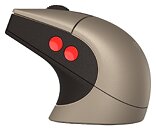
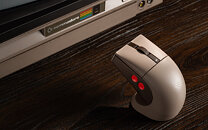
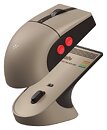
8BitDo is adding another variant to its Retro R8 mouse lineup, this time drawing inspiration from the Commodore 64. Like the previous R8 models, the C64 Edition keeps the same internals: a PAW 3395 optical sensor with six DPI levels between 50 and 26,000 DPI, and polling rates up to 8,000 Hz over wired and 4,000 Hz over 2.4G (Bluetooth is capped at 125 Hz). The symmetrical design supports both left and right-hand use, and four programmable side buttons can be configured through the 8BitDo Ultimate Software. The switches haven't been specified for this variant. The NES-inspired N Edition uses Kailh Sword GM X micro switches, but 8BitDo hasn't confirmed whether the C64 Edition carries the same.

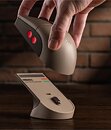
The mouse ships with a charging dock that doubles as a wireless signal extender, which is a nice touch. Battery life is rated at 100 hours over Bluetooth or between 26 and 105 hours on 2.4G depending on polling rate, with a full charge taking around 2.5 hours. All three connection modes are supported: Bluetooth LE 5.3, 2.4G wireless, and wired USB. The 8BitDo Retro R8 C64 Edition mouse is priced at $49.99, in line with the existing NES-inspired N Edition.
Acemagic Reveals Retro X5 Mini PC with Ryzen AI 9 HX 370

Acemagic has unveiled the Retro X5 mini PC, a compact system that blends an NES-style retro exterior with modern AMD hardware. The system aims at users interested in classic gaming, media playback, and everyday tasks, all of those in a small form factor with modern components. The Retro X5 is powered by the 12 cores, 24 threads AMD Ryzen AI 9 HX 370 processor with a 5.1 GHz boost clock. Graphics are handled by the integrated Radeon 890M GPU with 16 compute units clocked at up to 2.9 GHz. The chip also includes an AMD XDNA 2 NPU capable of delivering up to 50 TOPS of AI compute for supported workloads.

The system ships with Acemagic's RetroPlay Box software, which bundles emulators and basic game management tools to reduce setup complexity for retro gaming. According to the company, future updates are planned to introduce AI-assisted features such as improved content recommendations, though no timeline has been shared. The Retro X5 supports expandable memory and storage and is capable of multiple displays. Front I/O includes a USB Type-C port, two USB Type-A ports, and a 3.5 mm audio jack. Full rear connectivity, pricing, and availability details have not yet been disclosed; however, we expect more information next week during CES 2026.

Qwertykeys Teases QK65 MK3: Retro Mechanical Keyboard With Built-In Mini Games

One of the weirder gimmicks to come out of the enthusiast keyboard market is mini displays on keyboards, generally used to display anything from keyboard battery life and connectivity or OS modes to typing speed. The Qwertykeys QK65 MK3, however, takes the idea of a keyboard-mounted display to the next level. As the Instagram teaser and Discord announcement revealed, the QK65 MK3 includes a tiny vertical color screen—unclear whether it will be OLED or LCD, although LCD seems likely—on the right edge of the keyboard, replete with a set of built-in games that can be played on the screen. It seems as though the games will be controlled by two, maybe four, small buttons mounted directly under the display and potentially two Game Boy-inspired buttons mounted along the top edge of the keyboard, similar to shoulder buttons on a controller or gaming handheld.

The design of the QK65 MK3 also sets it apart from its kin, with a decidedly retro gray and beige aesthetic and bright accents clearly inspired by the design of old Nintendo game consoles and retro PCs. That said, it will also likely be available in a multitude of colors, as is usually the case with Qwertykeys keyboards. QK65 keyboards have also historically been available with wireless PCB options, so it stands to reason that this will be an option for buyers as well. Aside from the 65% layout, the rest of the specs, materials, and details for the QK65 MK3 are as yet unknown, although it will likely be available with an aluminium case and a variety of plate options—specifically FR4, aluminium, POM, PC, and carbon fiber—like its predecessors. It's unclear just how much the QK65 MK3 will cost, but the QK65 v2 comes in at $165 without keycaps and switches, and the QK65 v2 Classic is priced at $175. Qwertykeys keyboards are generally sold as custom kits, meaning buyers will need to bring their own switches and keycaps or buy them separately from Qwertykeys.

8BitDo Introduces New Retro R8 Mouse Model: "NES-inspired" N Edition

Late last November, 8BitDo announced the transparent "classic Xbox-inspired" Retro 87 mechanical keyboard and a matching Retro R8 wireless mouse. The brand tends to borrow visual language from much older hardware—mostly from the 1980s and 1990s—but Microsoft's debut home console effort (in Halo 2 Collector's Edition form) stimulated 8BitDo's design team. As of last week, the manufacturer has opened up pre-orders for another Retro R8 mouse model. The "N Edition" variant will be deployed with identical internals—as seen within its translucent forebear; namely Pixart's PAW 3395 optical sensor and Kailh's Sword GM X micro switches—but it features a familiar off-white/multi-gray tones/red button aesthetic. 8BitDo's product page does not mention Nintendo's Nintendo Entertainment System (NES) by name, but promotional imagery showcases a return to truly retro pastures. The Retro R8 N Edition SKU is also marketed as a "perfect companion" to the brand's first attempt at making a mechanical keyboard: the Retro 87. 8BitDo's official webstore advertises a May 22 launch for their Retro R8 N Edition wireless mouse—the pre-order price is $49.99 (+ shipping fee).

8BitDo Launches Their First Mechanical Keyboard Featuring Retro Nintendo Theme

Peripheral and accessory manufacturer 8BitDo today announced pre-orders are open for their Nintendo themed 'Retro Mechanical Keyboard' and accompanying 'Dual Super Buttons'. The two themes available are the "N Edition" and "Fami Edition". The former features the red, gray, and white coloring of the classic NES, while the latter features the maroon, black, and white coloring of the Famicom. "Fami Edition" also features both English and Japanese characters on the keycaps. Both editions are the same base 87-key, or tenkeyless, layout with a power LED on the top right and two dials at the top left for controlling volume and the connectivity. On the topic of connectivity the keyboard features Bluetooth, 2.4G wireless, and USB wired options while up to four sets of Super Buttons can connect to the keyboard via the rear 3.5 mm jacks.

Beneath the themed PBT keycaps are Kailh BOX V2 White switches attached to a hot-swappable PCB, while the Super Buttons feature heavy Gateron Green switches for a more chunky tactile feel. The keyboard has n-key rollover support and the keys can be remapped using 8BitDo's Ultimate Software V2, with the Super Buttons being customizable on the fly without software. The software requires a minimum of Windows 10 1903 or Android 9.0. Inside the keyboard body is a 2,000mAh battery which 8BitDo advertises as offering 200 hours of usable life on a single charge.

ORNL's Exaflop Machine Frontier Keeps Top Spot, New Competitor Leonardo Breaks the Top10 List

The 60th edition of the TOP500 reveals that the Frontier system is still the only true exascale machine on the list.

With an HPL score of 1.102 EFlop/s, the Frontier machine at Oak Ridge National Laboratory (ORNL) did not improve upon the score it reached on the June 2022 list. That said, Frontier's near-tripling of the HPL score received by second-place winner is still a major victory for computer science. On top of that, Frontier demonstrated a score of 7.94 EFlop/s on the HPL-MxP benchmark, which measures performance for mixed-precision calculation. Frontier is based on the HPE Cray EX235a architecture and it relies on AMD EPYC 64C 2 GHz processor. The system has 8,730,112 cores and a power efficiency rating of 52.23 gigaflops/watt. It also relies on gigabit ethernet for data transfer.

Sealed Copy Of Super Mario Bros. Sells For $114,000 at Auction

A sealed copy of the original Super Mario Bros. has sold at auction for $114,000 making it the most expensive video game ever sold. The record had previously been held by the same NES game which sold for $100,150 early last year. This version of the game dates back to mid-1987 and still features the original cardboard hang tab underneath the shrink wrap. This makes it one of the few remaining early copies in such a pristine condition with a high Wata Games certified rating of 9.4/10. This was the highest-quality version of the game ever sold by the company, where previously lower quality versions of the game such as a 8.0/10 selling for $40,200.

Nintendo Switch Sales Surge Surpassing SNES, N64, GameCube & Wii U

Sales of Nintendo's hybrid console the Nintendo Switch have surged with combined sales of 55.77 million units worldwide. The Nintendo Switch family of systems which includes the Nintendo Switch & Nintendo Switch Lite sold 21.03 million units last year which reflects a 24.0% increase in sales from the previous year, this was likely due in part to the launch of the Switch Lite and the recent demand from the current COVID-19 pandemic.

Software sales saw an even more impressive jump of 42.3% over the previous year with 168.72 million units sold this year which brings lifetime software sales for the Nintendo Switch to 356.24 million units. Animal Crossing: New Horizons along with other best-selling games all saw strong success. These numbers put the Nintendo Switch ahead of the failed Wii U, GameCube, Nintendo 64, and SNES. The switch is also quickly approaching the NES and will probably take its spot to become the second best-selling home console Nintendo has ever produced right after the original Wii.

Nintendo Wii Source Code and Schematics Leak, Could Spawn a Clone Industry

Software source-code and hardware schematics of the feverishly popular Nintendo Wii console leaked to the web. These include detailed Verilog design files, firmware, PCB- and chip designs, and practically everything else needed for a small company with qualified embedded systems engineers, to recreate a fully-functional Wii clone. Nintendo consoles have, in the past, sparked many clone revolutions, the most famous of which has been the NES clone and bootleg cartridge cottage industry that spread video gaming to markets that Nintendo had no presence in. The leak apparently originated when servers of BroadOn, a company Nintendo contracted during the development of Wii, were hacked.

AMD to Power Next-Generation NES

Nintendo is working on a next-generation gaming console to succeed even the fairly recent Wii U. The company is reacting to the plummeting competitiveness of its current console to the likes of PlayStation 4 and the Xbox One. Reports suggest that Nintendo would make a course-correction on the direction in which it took its game console business with the Wii, and could come up with a system that's focused on serious gaming, as much as it retains its original "fun" quotient. In that manner, the console could be more NES-like, than Wii-like.

Nintendo could ring up AMD for the chip that will drive its next console. It's not clear if AMD will supply a fully-integrated SoC that combines its own x86 CPU cores with its GCN graphics processor; or simply supply the GPU component for an SoC that combines components from various other manufacturers. The Wii U uses IBM's CPU cores, with AMD's GPU, combined onto a single chip. There's no word on when Nintendo plans to announce the new console, but one can expect a lot more news in 2015-16.

ASUS ProArt Series PA238Q Monitor Presents Total Color Fidelity

Created to meet the needs of graphic designers and other professionals, the IPS-paneled ASUS PA238Q joins the ProArt Series of displays as a 23", LED-backlit model with native 1920 x 1080 resolution. It reproduces 100% of the sRGB color space, with every individual monitor precision calibrated at the factory to ensure unmatched color accuracy. The PA238Q ships with ASUS-exclusive QuickFit Virtual Scale software to display photos and documents in their true size on screen. In terms of ergonomics, a fully adjustable and sturdy stand complements a wide I/O range, which includes HDMI, DisplayPort, DVI-D, D-sub, and multiple USB ports.

Nintendo Ends Support for the NES

The Nintendo Entertainment System (aka NES) is probably older than many techPowerUp! readers, being released in Japan during July 1983, the USA during October 1985 and most of Europe during September 1986. However, after over 24 years, Nintendo has finally decided that it can no-longer continue to support the console due to an increasing shortage of the necessary parts. As of 31st October this year, Nintendo has ended support for the NES (Famicom in Japan), Super NES, Nintendo 64 and both the original and pocket Gameboys. Considering that Sega ended support for its Dreamcast earlier this year, this really shows just how long Nintendo has kept the NES alive.
Return to Keyword Browsing
Nov 16th, 2026 03:02 CST change timezone

New Forum Posts

Popular Reviews

TPU on YouTube

Controversial News Posts