News Posts matching #NVMe

Return to Keyword Browsing

Montage Technology PCIe 5.0/CXL 2.0 Retimer Chip Achieves Mass Production

Montage Technology, a leading data processing and interconnect IC design company, announced today that its PCIe 5.0/CXL 2.0 Retimer has successfully achieved mass production. This chip is a key upgrade based on Montage's PCIe 4.0 Retimer, providing a stable and reliable PCIe 5.0 and CXL 2.0 interconnect solution with high bandwidth and low latency for the cloud and high-performance computing market.

Montage's PCIe 5.0/CXL 2.0 Retimer employs advanced signal conditioning technologies to improve signal integrity and increase the effective transmission distance of high-speed signals. Compliant with relevant PCI-SIG and CXL specifications, the chip meets mainstream package requirements, supports transfer rate up to 32 GT/s, and takes the lead in supporting ultra-low transmission latency of less than 5 ns. The chip supports various complex system topologies such as SRIS and Retimer cascading, offering an ideal solution to address the PCIe/CXL signal integrity challenges in next-generation servers, enterprise storage, and AI acceleration systems. The PCIe 5.0/CXL 2.0 Retimer has passed extensive interoperability testing with a variety of compute, storage and networking products, such as CPU, PCIe switches, SSDs, GPUs and NICs, thus laying a solid foundation for the large-scale deployment of cloud computing and data centers.


Micron Technology Announces 9400 Series Enterprise NVMe SSDs

Micron Technology, today announced the Micron 9400 NVMe SSD is in volume production and immediately available from channel partners and to global OEM customers for use in servers requiring the highest levels of storage performance. The Micron 9400 is designed to manage the most demanding data center workloads, particularly in artificial intelligence (AI) training, machine learning (ML) and high-performance computing (HPC) applications. The drive delivers an industry-leading 30.72 terabytes (TB) of storage capacity, superior workload performance versus the competition, and 77% improved input/output operations per second (IOPS). The Micron 9400 is the world's fastest PCIe Gen4 data center U.3 drive shipping and delivers consistently low latency at all capacity points.

"High performance, capacity and low latency are critical features for enterprises seeking to maximize their investments in AI/ML and supercomputing systems," said Alvaro Toledo, vice president and general manager of data center storage at Micron. "Thanks to its industry-leading 30 TB capacity and stunning performance with over 1 million IOPS in mixed workloads, the Micron 9400 SSD packs larger datasets into each server and accelerates machine learning training, which equips users to squeeze more out of their GPUs."

Mushkin Vortex Redline and Votex LX NVMe SSDs Detailed, Epsilon Gen 5 SSD Teased

Mushkin at the 2023 International CES showed off its Vortex Redline and Vortex LX M.2 NVMe SSDs. The Vortex Redline is the company's top PCIe Gen 4 drive, combining an Innogrit IG5236 NVMe 1.4 controller with 3D TLC NAND flash, to offer transfer speeds of up to 7415 MB/s. The Vortex Redline comes in capacities of 512 GB, 1 TB, and 2 TB. The Vortex LX is a more value-oriented product, based on an unnamed Innogrit-sourced DRAMless controller. This drive features a PCIe Gen 4 interface, but offers slightly lower performance that the company didn't disclose.

The star attraction at the Mushkin booth was its Epsilon SSD that features a PCI-Express 5.0 x4 + NVMe 2.0 interface, a Phison E26-series controller, and next generation 3D NAND flash memory (possibly 232-layer). The drive features active cooling from a fan-heatsink, and while the company didn't talk about performance, drives based on this controller are known to offer up to 12 GB/s of sequential transfers. Lastly, the company showed off its lineup of 2.5-inch SATA 6 Gbps SSDs in capacities ranging all the way up to 16 TB, which are meant to be HDD replacements, and "warm" storage devices.

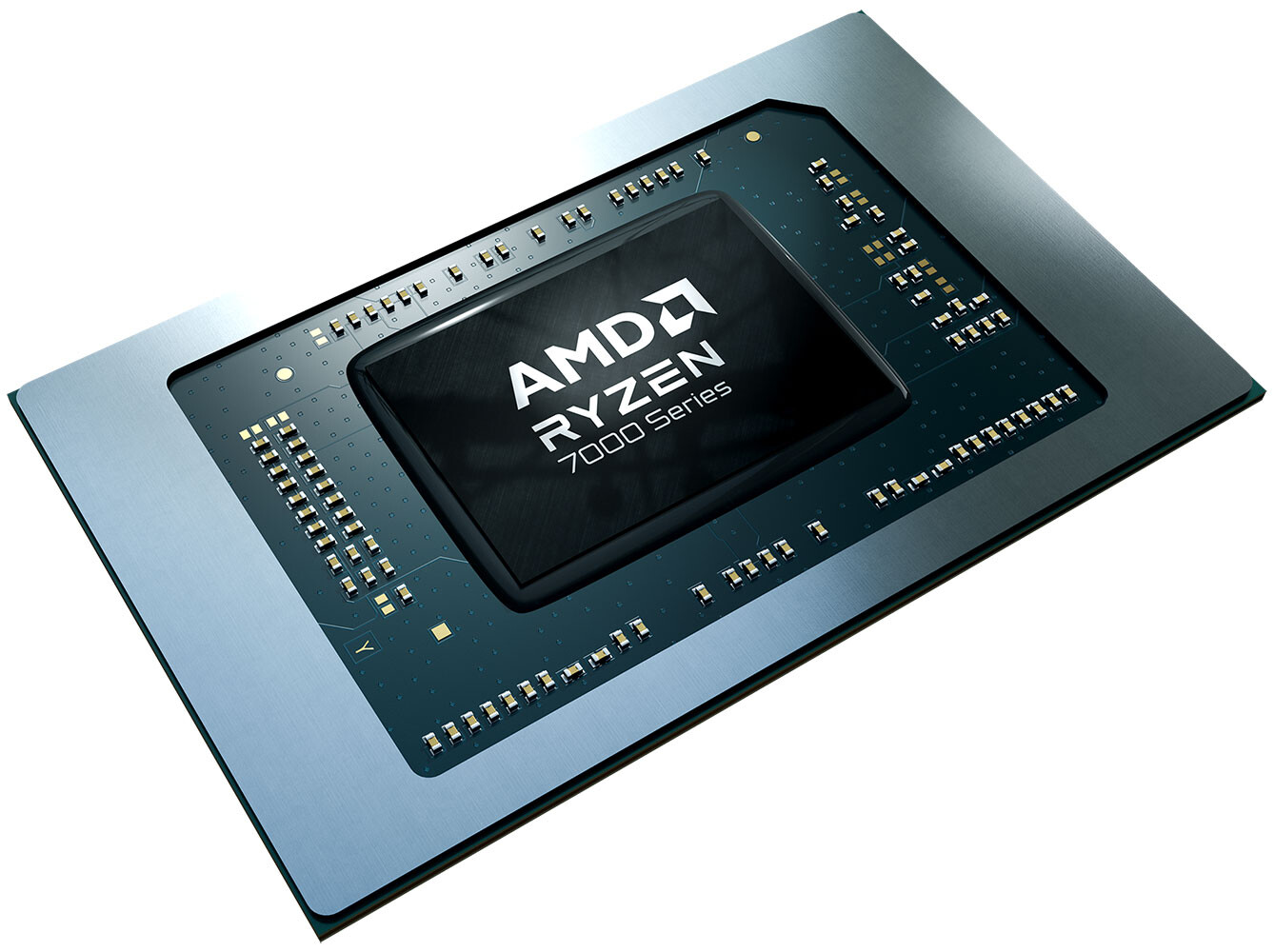
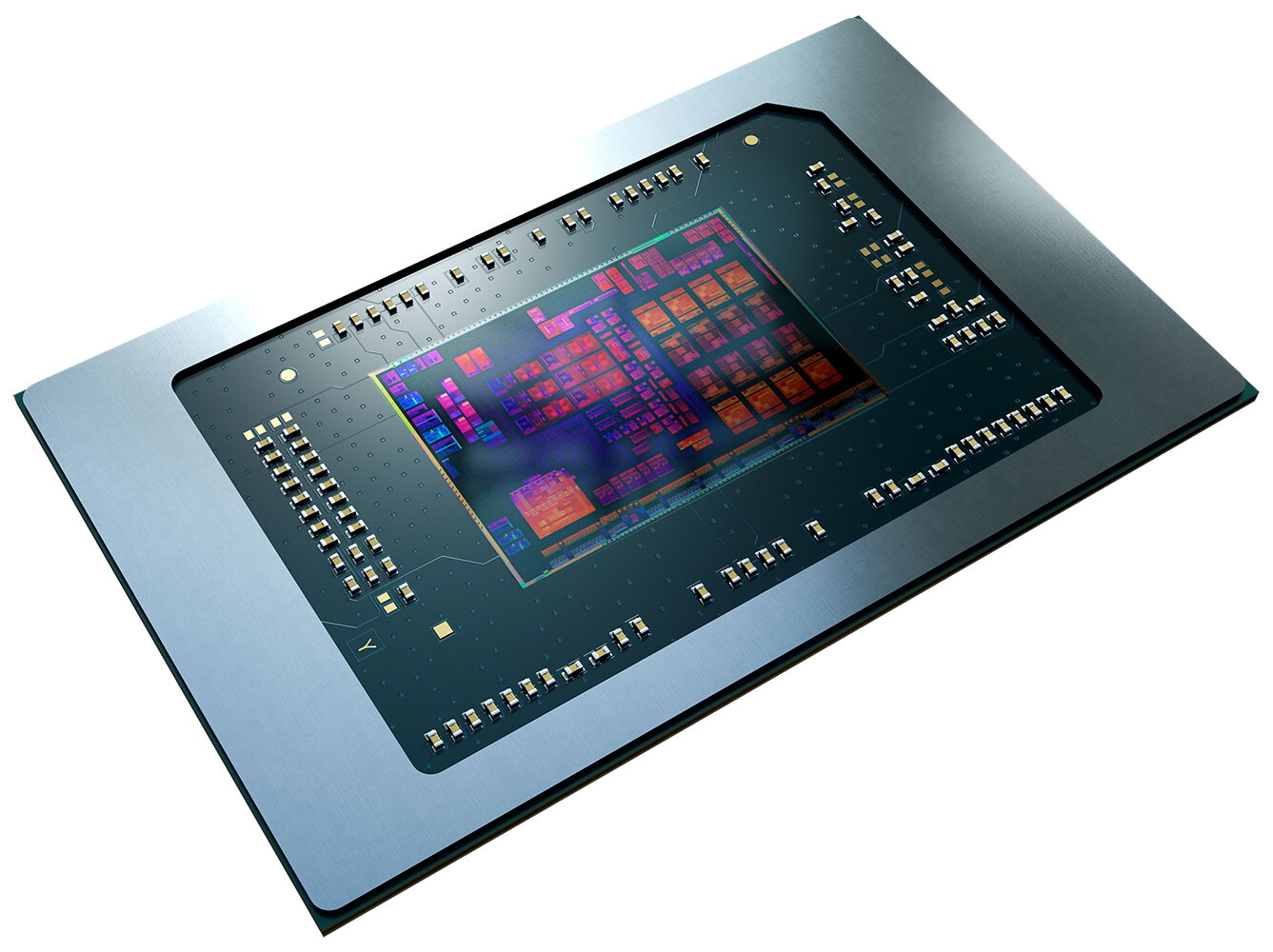
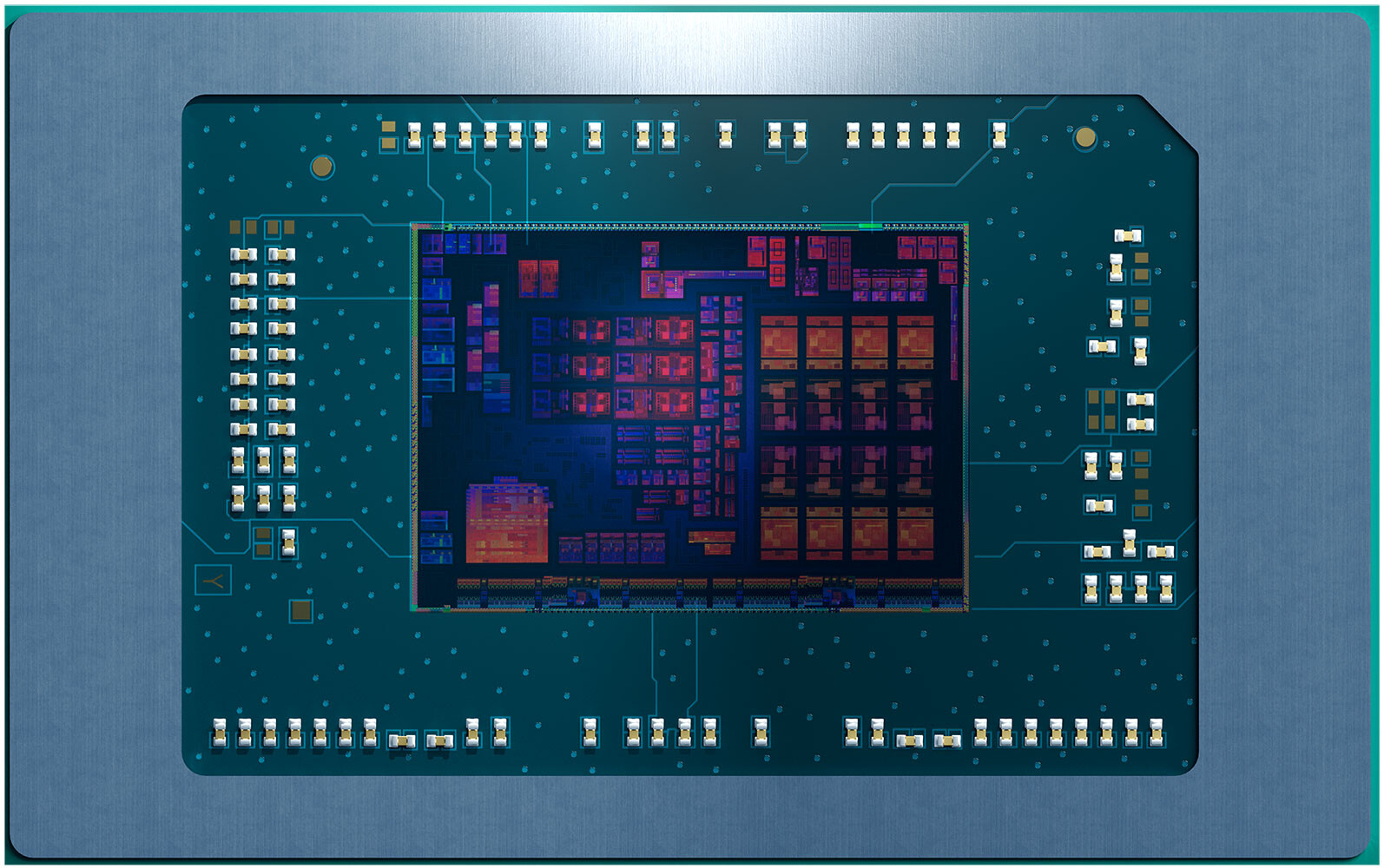
AMD Ryzen 7040 Series "Phoenix Point" Mobile Processor I/O Detailed: Lacks PCIe Gen 5

The online datasheets of some of the first AMD Ryzen 7040 series "Phoenix Point" mobile processors went live, detailing the processor's I/O feature-set. We learn that AMD has decided to give PCI-Express Gen 5 a skip with this silicon, at least in its mobile avatar. The Ryzen 7040 SoC puts out a total of 20 PCI-Express Gen 4 lanes, all of which are "usable" (i.e. don't count 4 lanes toward chipset-bus). This would mean that the silicon has a full PCI-Express 4.0 x16 interface for discrete graphics, and a PCI-Express 4.0 x4 link for a CPU-attached M.2 NVMe slot; unlike the "Raphael" desktop MCM and the "Dragon Range" mobile MCM, whose client I/O dies put out a total of 28 Gen 5 lanes (24 usable, with x16 PEG + two x4 toward CPU-attached M.2 slots).

Another interesting aspect about "Phoenix Point" is its memory controllers. The SoC features a dual-channel (four sub-channel) DDR5 memory interface, besides support for LPDDR5 and LPDDR5x. DDR5-5600 and LPDDR5-7600 are the native speeds supported. What's really interesting is the maximum amount of memory supported, which stands at 256 GB—double that of "Raphael" and "Dragon Range," which top out at 128 GB. This bodes well for the eventual Socket AM5 APUs AMD will design based on the "Phoenix Point" silicon. Older Ryzen 5000G "Cezanne" desktop APUs are known for superior memory overclocking capabilities to 5000X "Vermeer," with the monolithic nature of the silicon favoring latencies. Something similar could be expected from "Phoenix Point."

Schenker XMG Unveils Enthusiast "Raptor Lake" and RTX 4090 Powered Mobile Powerhouses

German boutique gaming notebook and mobile workstation builder Schenker XMG unveiled its latest line of mobile powerhouses that combine 13th Gen Core "Raptor Lake-HX" mobile processors and NVIDIA GeForce RTX 40-series "Ada Lovelace" Laptop GPUs. The 2023 XMG Neo 17 packs an 8P+16E Core i9-13900HX processor, two DDR5 SO-DIMM slots, an NVIDIA GeForce RTX 4090 Laptop GPU with 175 W power limit, and a 17-inch 16:10 2560 x 1600 pixels display that supports G-SYNC. The machine supports NVIDIA Advanced Optimus power management. Its centered keyboard features Cherry MX ULP Tactile mechanical keyswitches. The XMG Neo 17 is designed to provide a power-packed mobile workstation and gaming experience on the move. There is a slightly smaller version of the same notebook, the XMG Neo 15, but with a 15.6-inch display, but the same hardware.

While the XMG Neo 17 is positioned more like a mobile workstation, the 2023 XMG Ultra 17 is thoroughly wooing competitive gamers and PC enthusiasts, with its RGB LED-illuminated keyboard, a meatier heatsink designed for extended gameplay sessions, and an overall racy product design. Under the hood is similar hardware to the Neo, with an i9-13900HX 8P+16E processor, two DDR5-5600 SO-DIMM slots, an M.2 NVMe Gen 5 SSD, two Thunderbolt 4 interfaces, and that sweet GeForce RTX 4090 Laptop GPU with 175 W PL. the XMG Neo has an interesting air+liquid hybrid cooling solution that is detachable.

MSI Shows Off Spatium M570 PRO and M570 PCIe Gen 5 NVMe SSDs

MSI in its 2023 International CES booth showed us their upcoming M.2 PCIe Gen 5 + NVMe 2.0 SSDs, the Spatium M570 PRO and the Spatium M570. The M570 PRO unsurprisingly is the faster of the two, and rocks a sophisticated new cooling solution by MSI. A vapor-chamber plate makes direct contact with the controller and other hot components on the drive, conveying heat to a heatsink with a very fine aluminium fin-stack, whcih is capped off by a die-cast aluminium top-plate. This design, MSI claims, optimizes convectional airflow without interference from nearby airflow sources (such as CPU coolers).

The Spatium M570 PRO offers sequential transfer rates of up to 12 GB/s reads, with up to 10 GB/s writes, and is available in capacities of 1 TB, 2 TB, and 4 TB. The MSI Spatium M570 (non-PRO) rocks a simpler ridge aluminium monoblock heatsink, and comes in the same capacity options, but with lower maximum read performance. You get up to 10 GB/s sequential reads, with up to 10 GB/s sequential writes with this one.

A Walk Through the KIOXIA Memory Lane

KIOXIA is betting big on enterprise flash storage, and demoed several of its new and already-launched NVMe products based on the company's 162-layer 3D NAND flash memory, aka 6th Generation BiCS flash. Starting off, we see several single-chip solutions, namely the BiCS5 eTLC, the BiCS Industial TLC, and the BiCS5-QLC. These are complete NVMe SSDs on a single package, targeting embedded systems, industrial PCs, and the likes. They can even be directly embedded on server motherboards to serve as boot drives, freeing up precious chassis space for the main storage devices.

The EM6 is an enterprise network-attached SSD in a 2.5-inch form-factor. This is a NAS-on-a-stick that can be deployed at large scale, and accessible as a network resource, or as an NVMe-over-Fiber device. The CM7 is a high-capacity 2.5-inch (EDSFF E3.S) SSD that comes in sizes of up to 30 TB, and has PCI-Express 5.0 x4 interface with NVMe 2.0 protocol, with endurance of up to 3 DWPD and offering FIPS 140-33 security. We also see the XD6 line of EDSFF E1.S form-factor NVMe SSDs with PCIe 4.0 interfaces, up to 3.84 TB capacity, and 1 DWPD endurance.

Lenovo Yoga Book 9i is an Incredibly Versatile Dual-Screen Convertible PC: A Walkthrough

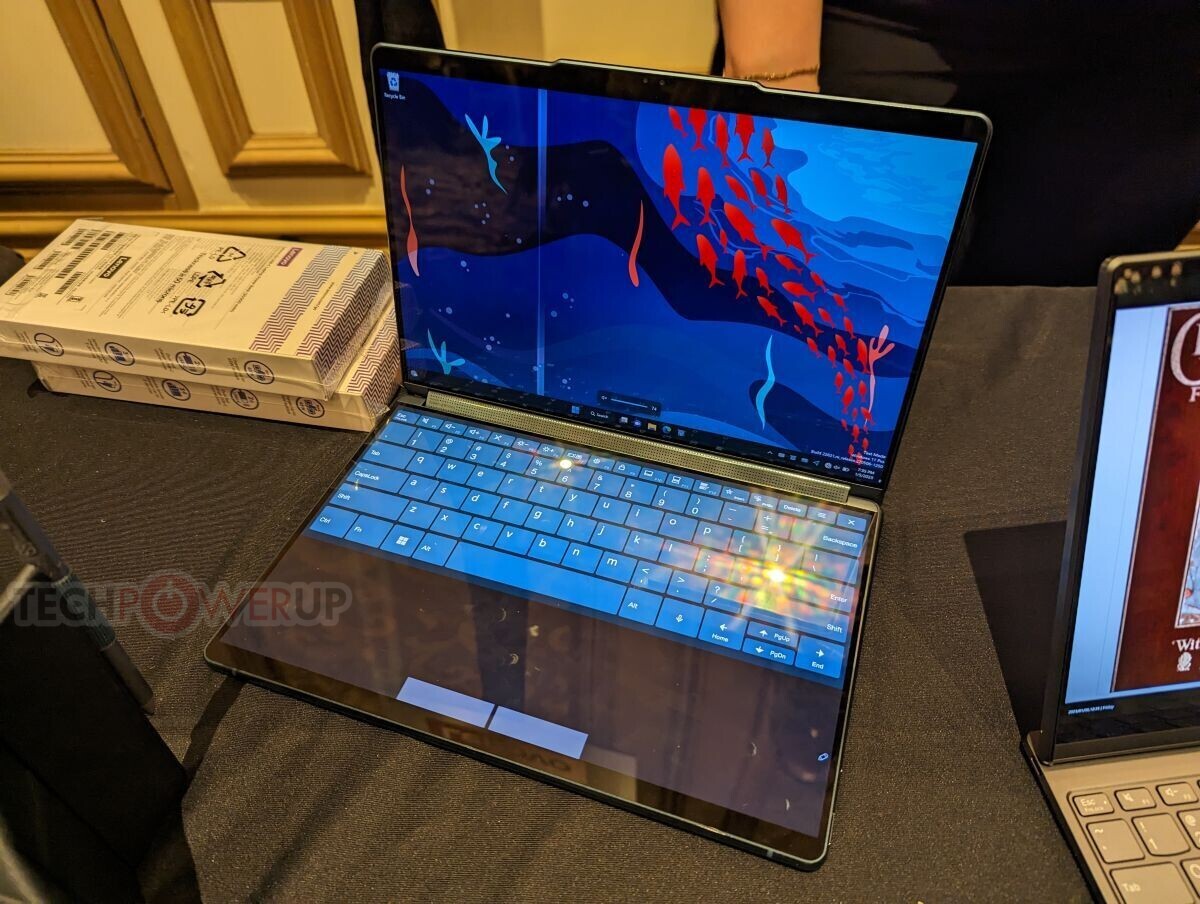
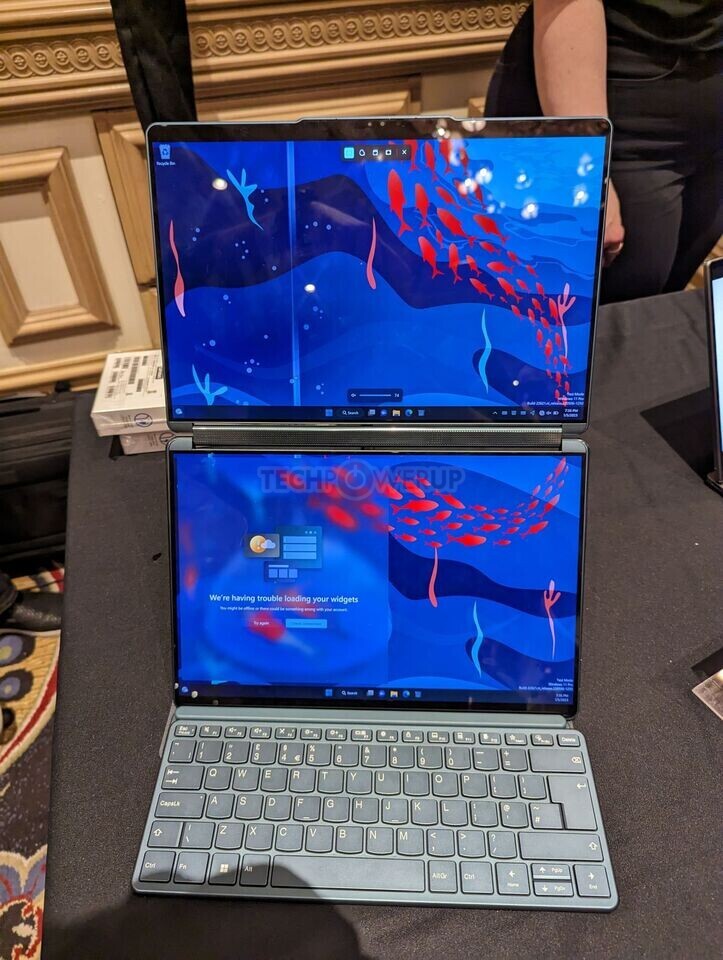
It's a laptop, but it can be anything—the Lenovo Yoga Book 9i has the conventional shape of a clamshell notebook, except that there's a second touchscreen where you'd expect the keyboard an trackpad to be. You get a folio-type silicone keyboard with physical keys that provide tactile feedback, or you can pull up an on-screen keyboard on either screen and type with haptic feedback. As a Yoga product, the hinge turns 360°, and at 180° it can become a dual-screen setup. The possibilities are endless.

Under the hood is an Intel Core i7 U-series "Raptor Lake-U" 15 W 2P+8E SoC with 16 GB LPDDR5X memory; NVMe Gen 4 SSD, integrated Iris Xe graphics, and an 80 WHr battery. Each of the two 13.3-inch touchscreens has a 16:10 aspect-ratio and 1920 x 1200 resolution. Comms include Wi-Fi 6E, and Bluetooth 5.2 (a 5G modem would be incredible).

Acer Predator DDR5 and NVMe Products Revealed, PC Giant Makes Inroads to DIY Market

Acer at the 2023 International CES showed off its latest lineup of memory and storage products targeting the DIY PC enthusiast market segment under its high-end Predator brand. Leading the booth is the Vesta II line of DDR5 memory modules featuring a high-end product design, and RGB LED lighting. The one shown to us featured a rather modest DDR5-5200 speed and 2x 16 GB density, but the company assured it is spreading the lineup to higher frequencies. The Pallas II line of performance-segment memory targeting creators, for example, does DDR5-6000.

A star attraction in the booth was the Predator GM7 M.2 NVMe SSD. Built in the M.2-2280 form-factor, the drive features a PCI-Express 4.0 x4 + NVMe 2.0 host interface, and combines a Maxiotech MAP1602 controller with YMTC 232-layer 3D TLC NAND flash based on the Xtacking 3.0 architecture. The drive offers sequential transfer speeds of up to 7400 MB/s reads, with up to 6300 MB/s writes, and comes in sizes of 512 GB, 1 TB, and 2 TB, priced at USD $49.90, $89.90, and $159.99, respectively. Acer is backing these drives with a 5-year warranty.

ADATA Caster RGB DDR5-8000 Memory, ACE-6400, Lancer ROG and SD 8.0 Card Pictured

Last year it felt like DDR5-6000 to DDR5-6400 was the top of the PC memory food-chain, and in a year, this has been pushed up to DDR5-8000. Platforms such as the 13th Gen Core "Raptor Lake" can already handle such high memory speeds, and ADATA has designed such a memory module that includes an Intel XMP 3.0 profile that enables the advertised DDR5-8000 speed at the click of a button. The new ADATA XPG Caster RGB DDR5-8000 features a chunky aluminium heatspreader that's crowned by a silicone addressable RGB LED diffuser. It's been tested for compatibility with both Intel and AMD platforms, however only an XMP 3.0 profile is included.

Elsewhere across the ADATA booth, we also came across the company's latest SD 8.0 memory card that uses PCI-Express 3.0 x2 physical layer and NVMe 1.3 protocol layer, to offer sequential speeds of up to 1600 MB/s reads, with up to 1300 MB/s writes, including LDPC ECC. The card comes in 256 GB and 512 GB capacities, and is backwards-compatible with UHS-I devices. Back at the memory section, we found an XPG + ASUS ROG co-branded Lancer ROG DDR5 memory that comes at speeds of up to DDR5-6600. Lastly, there's the ACE-6400, a mid-range DDR5-6400 memory module targeting creators, that runs at DDR5-5600 native (JEDEC), and its advertised DDR5-6400 using an XMP 3.0 profile.

KIOXIA Puts Next-Gen SSDs, Future-Ready Form Factors in the Spotlight at CES

This week at CES 2023, KIOXIA America, Inc., the inventors of NAND flash, will highlight new technologies, products, and form factors designed to meet upcoming IT requirements and standards - including PCIe 5.0 and UFS 4.0.

In an ever-changing technology landscape, where evolving standards push performance levels higher and higher, KIOXIA stands ready for what comes next - thanks to its broad, diverse lineup of flash storage solutions. "Whether it's the next connected vehicle, the next personal mobility device or the next smart city - we keep advancing flash memory to make the next thing possible," said Alex Mei, vice president of corporate marketing for KIOXIA America, Inc. "Countless consumer devices and applications require flash memory and SSDs, and we are committed to continued innovation."

Lexar Launches SL660 BLAZE Portable SSD, ARES DDR5 RGB Memory, NM800PRO with Heatsink NVMe SSD, and Professional Memory Cards

Lexar, a leading global brand of flash memory solutions, is unveiling new products specifically made for gaming at the Consumer Electronics Show 2023 (CES 2023). The new gaming portfolio includes a variety of products, including DRAM, internal SSDs, portable gaming SSDs, and to keep up with increasing mobile category growth, microSD cards.

Among the gaming lineup are the new ARES DDR5 RGB 6000 MHz, as well as existing products NM800PRO with Heatsink M.2 2280 PCIe Gen 4 x4 NVMe SSD, the SL660 BLAZE Gaming Portable SSD, and the PLAY microSD UHS-I Card. "We are excited to bring the quality, performance, and reliability you expect in our professional photo and video products to the gaming market. Our gaming products are designed to meet the unique needs of gamers and enable them to play at their peak without worrying about load times, game lag, or stuttering graphics," said Joel Boquiren, General Manager of Lexar.

Acer Boosts its Gaming Portfolio with New Predator Laptops and OLED Monitors

Acer announced two powerful Predator Helios gaming laptops and a pair of Predator gaming monitors. The laptops feature an all-new design with 16-inch and 18-inch display sizes, the latest 13th Gen Intel Core mobile processors and NVIDIA GeForce RTX 40 Series GPUs, making them Acer's most powerful gaming laptops to date. The Predator X45 showcases a massive 800R curved monitor and has earned a CES Innovation Award in the "Computer Peripherals & Accessories" category. Along with the Predator X27U, both monitors include OLED technology with fast 240 Hz refresh rates.

Predator Helios 16, Predator Helios 18 Laptops
The all-new Predator Helios 16 (PH16-71) and Predator Helios 18 (PH18-71) bring the latest and greatest tech to Acer's most powerful gaming laptop series. Sporting a completely new design and upgraded thermals, they both offer models that include 13th Gen Intel Core i9 or i7 HX processors paired with up to NVIDIA GeForce RTX 4080 Laptop GPU (MGP up to 165 W) and a plethora of must-have top-of-the-line gaming features.

2023 LG gram Lineup Offers More Stylish, Yet Powerful User Experience

LG Electronics (LG) is introducing an expanded LG gram lineup, which offers more diversity than ever thanks to the arrival of the exciting, new gram Ultraslim and gram Style, at CES 2023. LG gram continues to provide both power and portability, packing premium specs into sleek, ultra-lightweight form factors delivering take-anywhere convenience and exceptional user experiences.

LG gram Ultraslim
Headlining the LG gram showcase at CES 2023 is the brand-new LG gram Ultraslim (model 15Z90RT), the thinnest gram model yet. A laptop designed for users seeking supreme portability, the Ultraslim has an ultra-light weight of just 998 grams and a depth (when closed) of only 10.99 millimeters; around the same thickness of a smartphone or notepad. Even though it is the most svelte gram in the 2023 lineup, the 15Z90RT still supplies impressive image quality and processing power, packing a 15.6-inch OLED display with Anti-glare Low Reflection (AGLR) coating and Intel 's 13th Gen Raptor Lake chip with Performance Cores (P-Cores). Further enhancing the excellent portability of the new model is the inclusion of an ultra-compact adapter.

ASRock B760 Series Motherboard Launch including SONIC Special Edition

Leading global motherboard manufacturer, ASRock, proudly announces its new series of Intel B760 motherboards, including B760M Steel Legend WiFi, B760M Pro RS, and special edition B760M PG SONIC WiFi. These feature-filled motherboards are designed to bring supreme performance and the latest technologies - including up to PCI-Express 5.0 & overclocked DDR5 - to benefit more PC enthusiasts, gamers, and office/workstation builds than ever before. The B760 chipset is designed for the latest 13th Generation Intel Core 'K' or 'non-K' series processors (socket LGA1700), while also supporting the previous 12th generation.

Followed by the success and critical acclaim of the ASRock Z790 PG SONIC, the company has released another officially licensed motherboard featuring SEGA's Sonic the Hedgehog: the B760M PG SONIC WiFi. Based on the mainstream Intel B760 chipset, this micro ATX motherboard features all the exciting SONIC elements in a small form factor and budget friendly design.

MSI Reveals its Latest B760 Motherboards

Intel introduced the Z790 platform to the market last year and impressed enthusiastic gamers. This year, we expect the introduction of the latest B760 platform. MSI's new B760 motherboards lineup will spring a surprise for mainstream users, attracting interest and sparking widespread discussion. Targeting the mainstream market, MSI B760 motherboards have unique designs and loaded specifications. Let's explore more about the B760 platform.

The B760 platform has lots of amazing features accompanied by MSI's MPG, MAG, and PRO Series. The mainstream users' choice - MAG Series includes black TOMAHAWK and white MORTAR motherboards. The MSI MAG Series motherboards adopted 12 Duet Rail Power System with 75 A DrMOS and 6 layer PCB with 2oz thickened copper, which provides stable currents delivered to the CPU. For expansion, the MSI MAG Series supports Lightning Gen 5 PCIe and owns up to 3 onboard M.2 Gen4 slots. To deal with the heat generated in high-loading operation, the MAG Series features premium thermal solutions including All Aluminium Design and Extended Heatsink. The M.2 slots are covered with M.2 Shield Frozr as well.

Unlock the Z790-like DDR5 7600 Memory Performance with GIGABYTE B760 Motherboards

GIGABYTE TECHNOLOGY Co. Ltd, a leading manufacturer of motherboards, graphics cards, and hardware solutions today unveiled the latest Intel B760 series motherboards. With enhanced XMP and hardware design of memory, the full B760 DDR5 lineup can achieve superb Z790-like memory performance of DDR5-7600. Featuring up to 16+1+1 phases of 60 amps digital power VRM design with full-coverage heatsink, GIGABYTE's B760 lineup provides premium power and thermal design for the high-frequency operation of Intel 13th gen processors. Meanwhile, the innovative PCIe and M.2 EZ-Latch technology are implemented to simplify the upgrade of graphics cards and M.2 SSDs, and to avoid accidental damage to the surrounding components. Moreover, the features of 2.5 GbE LAN, Wi-Fi 6E, USB 3.2 Gen 2x2 Type C with 20 Gbps, and up to 3 sets of PCIe 4.0 x4 M.2 slots with armor on select models offer superb connectivity. Further with the latest GIGABYTE PerfDrive technology and GCC software platform, GIGABYTE delivers the outstanding B760 platform with the optimal hardware, software, and firmware which covers from DDR4 to DDR5 with full form factor options of ATX, Micro ATX, and Mini ITX.

In the Intel product plan, the "Z" chipset is the only platform to support CPU and memory overclocking. However, the B chipset with limited DDR frequency tuning offers more budget friendly options, especially those only require memory overclocking. In order to provide solid power for high-performance operation of CPU and XMP overclocking, GIGABYTE B760 AORUS motherboards are geared up to 16+1+1 power phases with 60 amps DrMOS design, while the well-received B760 AORUS ELITE features 12+1+1 power phases, and the leading power design of 14+1+1 phases on B760M AORUS PRO. These power designs allow GIGABYTE B760 AORUS motherboards of all configuration to deliver the most stable power, as well as to provide sufficient power when the CPU runs full loading. Meanwhile, enhanced by full-coverage heatsink, 5 W/mK thermal pad, and 2x copper PCB, B760 AORUS MASTER/ PRO/ ELITE/ GAMING X lineup covers from ATX to micro ATX models boast superb thermal design to improve the stability and keep the power supply area which is most likely to generate heat staying cool.

Intel Announces N-series Entry Mobile Processors with Just E-cores

Intel today debuted its 2023 N-series entry-level mobile processors targeting a range of low-cost notebook applications, such as educational notebooks for bulk purchase and distribution by public schools. These processors are built on the same Intel 7 (10 nm Enhanced SuperFin) node as the 13th Gen Core processors, but come with just "Gracemont" E-cores, and no P-cores.

The silicon physically features two "Gracemont" E-core clusters amounting to 8 E-cores, 6 MB of shared L3 cache, and an iGPU based on the Xe-LP graphics architecture, with 32 EUs (execution units). The silicon also features a GNI 3.0 for basic AI acceleration using a truncated version of the DLBoost instruction set, and an IPU (as in image processing unit), which can improve web-camera experience (on the fly background noise suppression). The iGPU also offers hardware-accelerated AV1 decoding. On the platform-side, the processor features a single-channel DDR5 memory interface that's backwards-compatible with DDR4, and also supports LPDDR5. Storage interfaces include eMMC, UFS 2.1, and NVMe SSD. Wireless networking options available with the platform include fast WiFi 6E and Bluetooth 5.2.

MSI Announces the Spatium M461, M453 and M451 PCIe 4.0 NVMe SSDs

MSI is announcing the launch of our new Gen4 PCIe NVMe models to its SSD category - SPATIUM M461, M452 & M453 in M.2 2280 form factors that can be easily installed into compatible desktop motherboards and laptops. These new products allow MSI to continue to refine its identity as a high-performance PC brand and grow its product ecosystem by expanding SPATIUM, our high-performance storage category. Our SSDs are built with high-quality, high-density 3D NAND flash that delivers astonishing performance and endurance for professionals, content creators, and gamers.

SPATIUM M461, The Competitive PCIe 4.0 SSD for Mainstream Segment.
SPATIUM M461 was developed to meet the expectations of mainstream SSD consumers. Blazing fast speeds up to 5000 MB/sec sequential read and 4200 MB/sec sequential write speeds allow users using the latest generation of PCs to enjoy the capabilities of the PCIe Gen4 interface. Available storage capacities are 500 GB, 1 TB, 2 TB, and 4 TB.

Supermicro Adds ARM-based Servers using Ampere Altra and Ampere Altra Max Processors targeting Cloud-Native Applications

Supermicro, a Total IT Solution Provider for Cloud, AI/ML, Storage, and 5G/Edge, is announcing an expanded product line with exciting new ARM-based series of servers as part of the MegaDC family. Using Ampere Altra and Ampere Altra Max processors, the Mt. Hamilton platform leverages a single unified motherboard design, targeting cloud-native applications, such as Cloud Gaming, Video-on-Demand, CDN, IaaS, Database, Object-Storage, dense VDI, and Telco Edge (Distributed Unit and Centralized Unit) solutions. In addition, the new servers address several objectives for cloud-native workloads, specifically delivering high performance per watt while executing scalable workloads and those that require very low latency responses.

"Supermicro continues to bolster our product line by introducing ARM-based servers, using the Ampere Altra and Altra Max CPUs," said Ivan Tay, SVP of Product Management, Supermicro. "Expanding our already broad server product line gives customers even more choices for their specific workloads. We can quickly offer optimized application servers for customers worldwide using our Building Block Solutions approach."

TECNO Unveils the First Flagship Laptop, the MEGABOOK S1 with USB4 Support and 3.2K 120 Hz Display

TECNO, a global innovative technology brand with operations in over 70 markets, recently announced the latest MEGABOOK S1 at TECNO Flagship Product Launch 2022 in Dubai, delivering its first flagship laptop to users.

In 2019, TECNO announced new efforts in building a digital product ecosystem by launching its AIoT business strategy, aiming to deliver digital to every person, home, and organization and help them create a fully- connected smart digital lifestyle. Following this vision, as the upgraded line of MEGABOOK T1, the flagship MEGABOOK S1 highlights the concept of ideas that create wonders, targeting users in professional fields like business and the creative industries, helping them work with ease while still achieving a higher efficiency.

Sabrent Launches Rocket NVMe SSD in M.2 2230 Form Factor for Steam Deck Compatibility

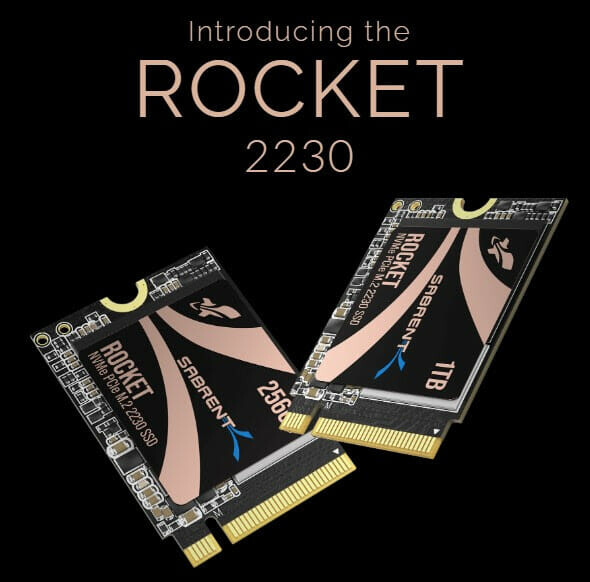
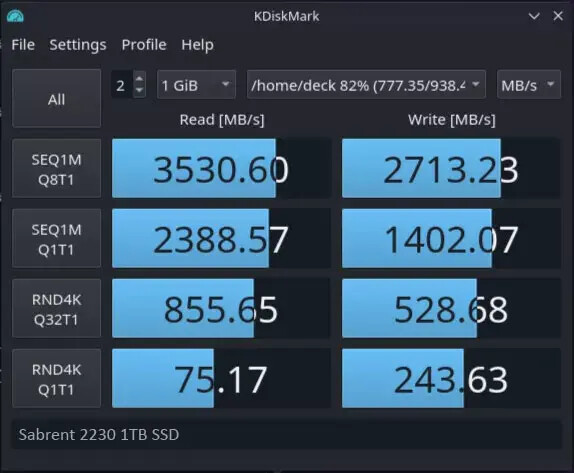
For those looking at upgrading—or adding an SSD—to their Steam Deck, there's now a new option from Sabrent. The company has launched an M.2 2230 sized version of its Rocket SSD that will be available in sizes of 256 GB, 512 GB and 1 TB. As one would expect, due to the form factor, we're looking at DRAM-less drives. Sabrent has gone with Phison's E21T controller and it has been paired with Micron's B47R, 176-layer NAND.

In other words, we're not talking about a high-performance drive here, but that might be a good thing as well, since it'll produce less heat, which should prevent drive throttling in the tiny space available inside the Steam Deck. Sabrent rates the drives as having a sequential read speed of up to 5,000 MB/s and a sequential write speed of up to 4,300 MB/s. The read IOPS are rated at up to 450K, with the write IOPS at up to 920K, which once again varies between the drive sizes. The 512 GB drive appears to have the overall best performance. The drives are rated for 200, 300 and 600 TBW and come with a five year warranty. No pricing has been revealed so far.

Micron Delivers the World's Most Advanced Client SSD Featuring 232-Layer NAND Technology

Micron Technology, Inc.,, today announced it is shipping the Micron 2550 NVMe SSD to global PC OEM customers for use in mainstream laptops and desktops. The 2550 is the world's first client SSD to ship using NAND over 200 layers. Delivering performance that eclipses the competition through its density and power advantages, the 2550 provides users with responsiveness and the low power consumption needed to extend battery life for work and home PCs.

"We focused on delivering a superior user experience for PC users with this SSD," said Praveen Vaidyanathan, vice president and general manager of the Client Storage Group at Micron. "The new 2550 SSD builds on our established and broadly adopted PCIe Gen4 architecture. It also incorporates Micron's industry-leading 232-layer NAND and focuses on thermal architecture and power design. These capabilities deliver impressive application performance and phenomenal power savings."

Seagate Mechanical HDD with U.2 NVMe Interface Pictured, Signals the Decline of SAS 12G

Here's one of the first pictures of a mechanical HDD with NVMe interface. Seagate is apparently in production of an Exos-series Enterprise HDD featuring U.2 NVMe interface where one would expect SAS 12 Gbps. We seriously doubt if the HDD is fast enough to take advantage of U.2 NVMe (at least 32 Gbps per direction), but the move to NVMe probably has to do with the decline of older interface standards such as SAS 12 Gbps and SATA 6 Gbps in the enterprise space for cold-storage, and that future generations of rackmount DAS and NAS enclosures could increasingly feature U.2 backplanes, phasing out SAS and SATA. This is like when optical drives switched over to SATA despite not needing the bandwidth SATA had to offer (optical discs barely move a few dozen MB/s, for which even ATA33 IDE was sufficient). We don't know how the Seagate Exos drive handles NVMe internally—whether there is a new native NVMe controller, or whether this is really just a SAS 12 Gbps drive with a PCIe-to-SAS bridge chip.

SMART Modular Launches DC4800 Line of NVMe Gen 4 Data-center SSDs

SMART Modular Technologies, Inc. ("SMART"), a division of SGH and a global leader in memory solutions, solid-state drives and hybrid storage products, announces that it is now offering a new class of high performance, power efficient, data center solid state disk drives (SSDs) beginning with the DC4800 PCIe Gen 4 family. SMART's DC4800 devices are designed with a specialized hardware-accelerated SSD controller that draws less power without compromising storage input/output (I/O) performance. Zero-induced throttling allows these SSDs to perform better under continued duress, even when they are pushed to their performance limit. This translates to significant power consumption improvement per server, as well as consistent latency performance of up to 7-nines or 99.99999% of the time.

"Today's leading-edge servers are not only expected to manage a significant mass of transactions to enable processes like machine learning, artificial intelligence, and the internet of things, but they are also expected to be more power efficient," said Andy Mills, data center architect for SMART. "Data centers are increasingly challenged by performance and energy demands as they expand to address these new workloads that process data from an ever-growing array of intelligent devices at the edge."
Return to Keyword Browsing
Nov 22nd, 2026 17:44 CST change timezone

New Forum Posts

Popular Reviews

TPU on YouTube

Controversial News Posts