News Posts matching #NVMe

Return to Keyword Browsing

Shuttle Unveils Robust fanless PCs Based on the "Jasper Lake" Microarchitecture

Mini-PC pioneer Shuttle is currently marketing two space-saving Mini-PCs in a 1.3-litre format which are also very much at home away from the usual office environment. The DL20N and DL20N6 models are fanless Barebones from the "XPC slim" family in two different performance classes. The XPC slim DL20N version operates with an Intel Celeron N4505 dual-core processor. By contrast, Shuttle's DL20N6 features an Intel Pentium Silver N6005 processor with four CPU cores. The appropriate model can be chosen to suit the requirements of the project.

"Shuttle Barebones with this design, such as the predecessor DL10J, are, to our own surprise, being used in places that we would not necessarily have expected," explains Tom Seiffert, Head of Marketing & PR at Shuttle Computer Handels GmbH. "Their flexibility and reliability makes them ideal for kiosk, control and digital signage applications."

KIOXIA Announces BG5 PCIe Gen4 NVMe SSD

KIOXIA America, Inc. today announced that it has bolstered its lineup of PCIe 4.0 solid state drives (SSDs) with the addition of the KIOXIA BG5 Series. Designed to bring a suitable balance of performance, cost and power to everyday gamers and PC users, the KIOXIA BG5 Series is built with a PCIe 64 GT/s interface (Gen4 x4 lanes) and accelerated by the company's fifth-generation BiCS FLASH 3D flash memory technology.

As a virtual multi-LUN (VML)-enabled client SSD, the KIOXIA BG5 Series unlocks back-end flash performance while maintaining affordability, making it an especially attractive option for a wide range of commercial and consumer notebooks and desktops. KIOXIA BG5 SSDs also support the latest Host Memory Buffer (HMB) technology to realize a finely optimized DRAM-less SSD. The KIOXIA BG5 ships in a compact M.2 2230 single-sided, thermally optimized form factor enabling mobility and work-from-home lifestyles. M.2 2280 single-sided form factor versions are also available.

Seagate HDD with NVMe Interface Demoed

Back in June, NVM Express, Inc announced the NVMe 2.0 specification, which included support for mechanical drives, also known as hard disk drives. Seagate has now demoed the first implementation of NVMe 2.0 on a HDD and is targeting market availability sometime in 2024. You might wonder why anyone would want an NVMe equipped hard drive and the short answer is that it's intended for the server space.

One of the key reasons that Seagate is even considering this, is because of its multi-actuator drives, which the company is expecting to surpass the interface speed of 12 Gbps SAS in the future. In addition to this, it makes sense having a single storage interface on servers, which allows for a mixed storage drive environment, where some drive bays can be fitted with SSDs and others with NVMe based hard drives. Seagate is planning to sample key customers with early drives in September 2022 and final drives will be backwards compatible with SATA and SAS.

KIOXIA Announces Production Availability of Native Ethernet Flash-Based SSDs

KIOXIA America, Inc. today announced the production availability of its EM6 Series Enterprise NVMe-oF solid state drives (SSDs) for Ethernet Bunch of Flash (EBOF) systems. Using the Marvell 88SN2400 NVMe-oF SSD converter controller that converts an NVMe SSD into a dual-ported 25Gb NVMe-oF SSD, KIOXIA EM6 Series drives expose the entire SSD bandwidth to the network.

Due to their ability to scale performance of NVMe SSDs, native NVMe-oF architectures are well-suited for applications such as artificial intelligence (AI)/machine learning (ML), high performance computing (HPC) and storage expansion. In the case of HPC, leveraging the Lustre file system, which is used to provide high bandwidth and parallel access to compute clusters, is beneficial to NVMe-oF based storage, such as EBOF systems with EM6 SSDs, that enable high availability (HA) configurations. An HPC HA configuration example consists of multiple and redundant network connections between a compute host and an EBOF with 88SN2400-connected NVMe SSDs, to deliver scalable throughput based on the number of SSDs.

IBM Cloud Selects 3rd Gen AMD EPYC Processors for New Bare Metal Offering for Compute-Intensive Workloads

AMD announced today that IBM Cloud has chosen 3rd Gen AMD EPYC processors to expand its bare metal service offerings designed to power customers' demanding workloads and solutions. The new servers, featuring 128 cores, up to 4 TB of memory and 10 NVMe drives per server, give users full access to high-end, dual-socket performance with AMD EPYC 7763 processors; a first for IBM Cloud in a dual-socket platform.

"Our customers have a high demand for computing processing power and the new 3rd Gen AMD EPYC processors provide the high levels of performance and scalability we were looking for," said Suresh Gopalakrishnan, vice president, IBM Cloud. "Our collaboration with AMD has helped us deliver our highest core counts and bandwidth ever available for IBM Cloud customers, to offer top market performance for today and tomorrow's demanding workloads."

"IBM Cloud customers regularly running compute-intensive workloads can see an immediate benefit to speed and scalability by upgrading to 3rd Gen AMD EPYC processors, while helping to deliver a secure experience for end-users," said Lynn Comp, corporate vice president, Cloud Business Group, AMD. "Our continued collaboration with IBM Cloud is further validation of the strong standing AMD holds in the market as we deliver topline solutions that promote a seamless experience for cloud partners and their customers."

OWC Announces Accelsior 8M2 World's Fastest and Highest Capacity PCIe SSD

OWC, the premier zero-emissions Mac and PC technology company, and a respected provider of Memory, External Drives, SSDs, Mac & PC Docking Solutions, Network Attached Storage, and Performance Upgrade Kits, today announces the all-new OWC Accelsior 8M2. The OWC Accelsior 8M2 brings impressive speed and storage capacity to 2019 Mac Pros, Windows or Linux computers, and PCIe expansion systems.

It utilizes the total bandwidth of the latest PCIe technology and has a highly efficient heat dissipating design to provide ultra-reliable speeds up to 26,000 MB/s. Creating the fastest PCIe SSD meant combining bold engineering with the latest technology. Each OWC Accelsior 8M2's eight NVMe M.2 SSD slots can run at their full x4 lanes of data throughput. All that insanely fast speed through an entire PCIe 4.0 x16 lane architecture with up to 64 TB of storage.

KIOXIA XD6 EDSFF E1.S Form-Factor Enterprise SSDs Now Available

Delivering on the promise of SSDs that address future enterprise infrastructure requirements, KIOXIA America, Inc. today announced production-ready availability of its 9.5 mm XD6 Series Enterprise and Datacenter Standard Form Factor (EDSFF) E1.S data center class SSDs. Introduced in late 2020, KIOXIA XD6 drives were the first EDSFF E1.S SSDs to address the specific requirements of hyperscale applications, including the performance, power and thermal requirements of the Open Compute Platform (OCP) NVMe Cloud SSD Specification. XD6 series also supports popular E1.S 15 mm and 25 mm form factor options, providing the flexibility to select the right balance of cooling through different E1.S heatsink options.

Representing the latest innovation in flash storage for servers in cloud and hyperscale data centers, KIOXIA EDSFF E1.S SSDs are designed to optimize system density, efficiency and management. As defined by the EDSFF consortium and leveraging the OCP NVMe Cloud SSD Specification, the small form factor E1.S replaces the M.2 form factor and delivers greater density, performance, reliability, and thermal management. E1.S is also designed to be hot pluggable for increased serviceability, which is another benefit over M.2.

KIOXIA Introduces Industry's First EDSFF Solid State Drives Designed with PCIe 5.0 Technology

A new era for flash used in servers and storage is here, and it's being introduced by KIOXIA America, Inc. Today, the company announced the industry's first lineup of Enterprise and Datacenter Standard Form Factor (EDSFF) E3.S SSDs designed with PCIe 5.0 technology - the CD7 Series. Building on the KIOXIA E3.S full-function development vehicle that received a 'Best in Show' award at last year's Flash Memory Summit, the CD7 Series E3.S increases flash storage density per drive for optimized power efficiency and rack consolidation.

Breaking free from the design limitations of the 2.5-inch form factor, the EDSFF E3 family is optimized for the needs of high-performance, highly efficient servers and storage. EDSFF enables the next generation of SSDs to address future data center architectures, while supporting a variety of new devices and applications. It provides improved airflow and thermals, signal integrity benefits, and options for larger SSD capacity points. EDSFF standardizes status LEDs on the drive, which eliminates the need for LEDs on the drive carriers. Support for higher E3.S power budgets than 2.5-inch form factor SSDs and better signal integrity allows EDSFF to deliver the performance promised by PCIe 5.0 technology and beyond.

Greenliant Industrial Temperature NVMe U.2 SSDs Available up to 7.68TB

Greenliant is sampling high capacity NVMe U.2 Industrial Enterprise PX Series solid state drives (SSDs), designed with high quality 3-bit-per-cell (TLC) 3D NAND and on-board DRAM to provide consistent low latency and high IOPS over the entire industrial temperature range (-40°C to +85°C). The G7200 NVMe U.2 PX Series offers customers a rugged industrial SSD with enterprise grade sustained performance. See NVMe U.2 Industrial Enterprise SSD information here.

NVMe U.2 Industrial Enterprise PX Series SSDs reach up to 2,500/1,900 MB/s sequential read/write performance and provide endurance of 2 drive writes per day (DWPD) for 5 years. Combining the best of enterprise and industrial SSD features, the G7200 PX Series is ideal for high reliability automation, datacenter, video, networking, transportation and aerospace applications.

XPG Unveils ATOM Series PCIe M.2 2280 Solid State Drives

XPG, a fast-growing provider of systems, components, and peripherals for Gamers, Esports Pros, and Tech Enthusiasts, today announces XPG, a fast-growing provider of systems, components, and Peripherals for Gamers, Esports Pros, and Tech Enthusiasts, today announces a new series of solid state drives (SSD), the XPG ATOM series, geared toward creators of different needs and budgets. They include the XPG ATOM 30, 40, and 50.

The ATOM 30 and 40 utilize PCIe Gen3x4 and NVMe 1.3 to deliver sequential read and write speeds of up to 2,500/2,000 and 3,500/3,000 MB per second, respectively, to give creators the performance they need to create without limitations. Their M.2 2280 specifications support the latest Intel and AMD platforms for creating on the latest PCs, including desktop and laptops. For users seeking a further boost, the ATOM 50 takes advantage of PCIe Gen4 x4 and NVMe 1.4 to offer read and write speeds of up to 5, 000/4,500 MB per second.

ADATA Unveils LEGEND Series PCIe M.2 2280 Solid State Drives

ADATA Technology, a manufacturer of high-performance DRAM modules, NAND Flash products, mobile accessories, gaming products, electric power trains, and industrial solutions today announces a new series of solid state drives (SSD), the ADATA LEGEND series, geared toward creators of different needs and budgets. They include the ADATA LEGEND 740, 750, and 840.

The LEGEND 740 and 750 utilize PCIe Gen3 x4 and NVMe 1.3 to deliver sequential read and write speeds of up to 2,500/2,000 and 3,500/3,000 MB per second, respectively, to give creators the performance they need to create without limitations. Their M.2 2280 specifications support the latest Intel and AMD platforms for creating on the latest PCs, including desktop and laptops. For users seeking a further boost, the LEGEND 840 takes advantage of PCIe Gen4 x4 and NVMe 1.4 to offer read and write speeds of up to 5,000/4,500 MB per second.

Kingston Technology Leads Channel SSD Shipments in 2020

Kingston Digital, Inc., the Flash memory affiliate of Kingston Technology Company, Inc., a world leader in memory products and technology solutions, today announced TrendForce has named it as the number one supplier of SSDs in the channel for all of 2020. According to TrendForce, Kingston accounted for a whopping 27 percent of the 111.5 million units shipped in 2020.

With the emergence of COVID-19 in 2020, TrendForce reported a 15% YoY decrease in annual SSD shipments to the channel and severe delays in manufacturing and logistics resulting in a sudden decline in order volumes. Yet, findings show through Kingston's global strategy for sourcing components, the company was well ahead of its competitors considering a global pandemic and looming chip shortage. The results reinforced Kingston as the clear leader in SSD production, as the second-place supplier accounted for only 8 percent of the total channel market. As a category, third-party suppliers (non-semiconductor) SSD makers accounted for 35% of the total shipments in 2020.

Seagate and Lucasfilm Collaborate to Take Gaming to the Next Level

Seagate Technology Holdings plc today introduced the new family of Star Wars Beskar Ingot Drives, the first release in a collaboration to bring designs inspired by the Star Wars franchise to its line of PC gaming storage devices, taking gamers' battle stations to the next level. The first release in the collaboration celebrates the legends of the Star Wars Mandalorian galaxy. These drives bring the iconic Star Wars "precious metal" aesthetic to the FireCuda line-up. The special edition designs will be available in M.2 NVMe, 2.5-inch SATA, and external HDD formats. Each drive resembles an ingot of Beskar, including its Imperial stamp featured prominently in the series, making these drives the ultimate collectible for Star Wars fans.

"We are thrilled to bring unique, iconic designs from one of the world's most popular franchises to the forefront of every gamer's battle station," said Jeff Fochtman, Senior Vice President of Business and Marketing at Seagate Technology. "This collaboration appeals to global audiences including gamers, PC builders, and Star Wars enthusiasts alike."

Kingston Digital Releases Next-Gen KC3000 PCIe 4.0 NVMe SSD

Kingston Digital, Inc., the Flash memory affiliate of Kingston Technology Company, Inc., a world leader in memory products and technology solutions, today announced KC3000, its next generation PCIe 4.0 NVMe M.2 SSD for desktop and laptop PCs. KC3000 SSD offers next-level performance using the latest Gen 4x4 NVMe controller and 3D TLC NAND ideal for power users who require the fastest speeds on the market.

By leveraging Gen4 technology, KC3000 delivers speeds up to 7,0000/7,000 MB/s read/write of blazing-fast performance and full capacities up to 4096GB2 for optimal storage. Users can keep up with demanding workloads and experience better performance with software applications such as 3D rendering and 4K+ content creation by upgrading the systems storage. KC3000 is built with high-density 3D TLC NAND housed in the industry standard M.2 2280 form factor to store even more and enable users to take advantage of PCIe 4.0 speeds. With the combination of performance and endurance, KC3000 is reinforced with a low profile, graphene aluminium heatspreader to effectively disperse heat and keep your drive cool during intensive workloads.
Kingston KC3000

GIGABYTE Z690 AERO D Combines Function with Absolute Form

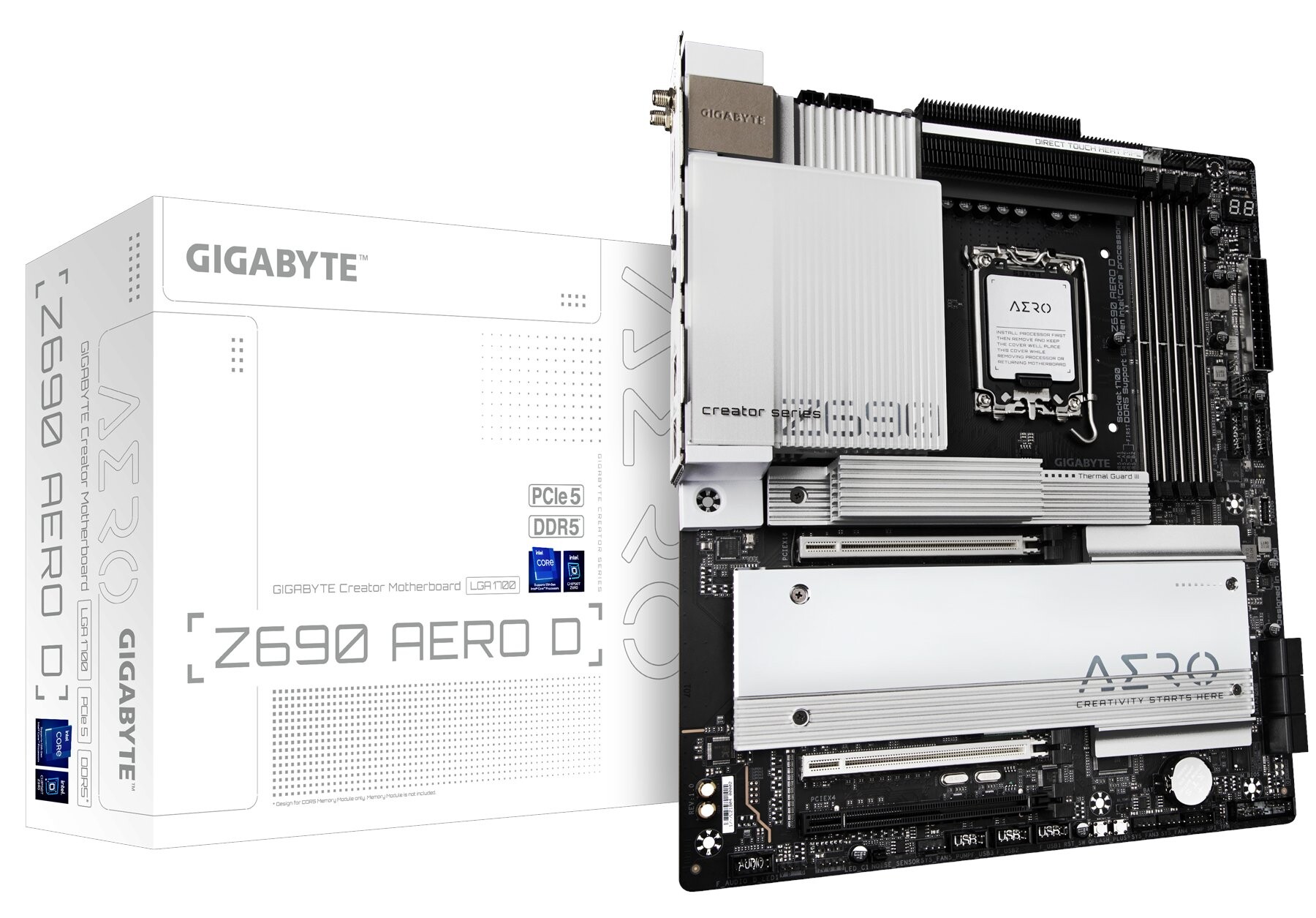
GIGABYTE's AERO line of motherboards and notebooks target creators who like to game. The company is ready with a premium motherboard based on the Intel Z690 chipset, the Z690 AERO D. This has to be the prettiest looking motherboard we've come across in a long time, and it appears to have the chops to match this beauty. The Socket LGA1700 motherboard uses large ridged-aluminium heatsinks over the chipset, M.2 NVMe slots, and a portion of the rear I/O shroud. Aluminium fin-stack heatsinks fed by heat-pipes, cool the CPU VRM. You get two PCI-Express 5.0 x16 slots (x8/x8 with both populated). As an AERO series product, the board is expected to be loaded with connectivity relevant to content creators, although the box is missing a Thunderbolt logo. We expect at least 20 Gbps USB 3.2x2 ports, and 10 GbE networking, Wi-Fi 6E.

GIGABYTE Announces a Unique Server Solution to RAID Drawbacks with GRAID SupremeRAID

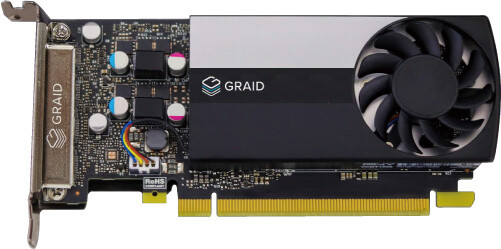
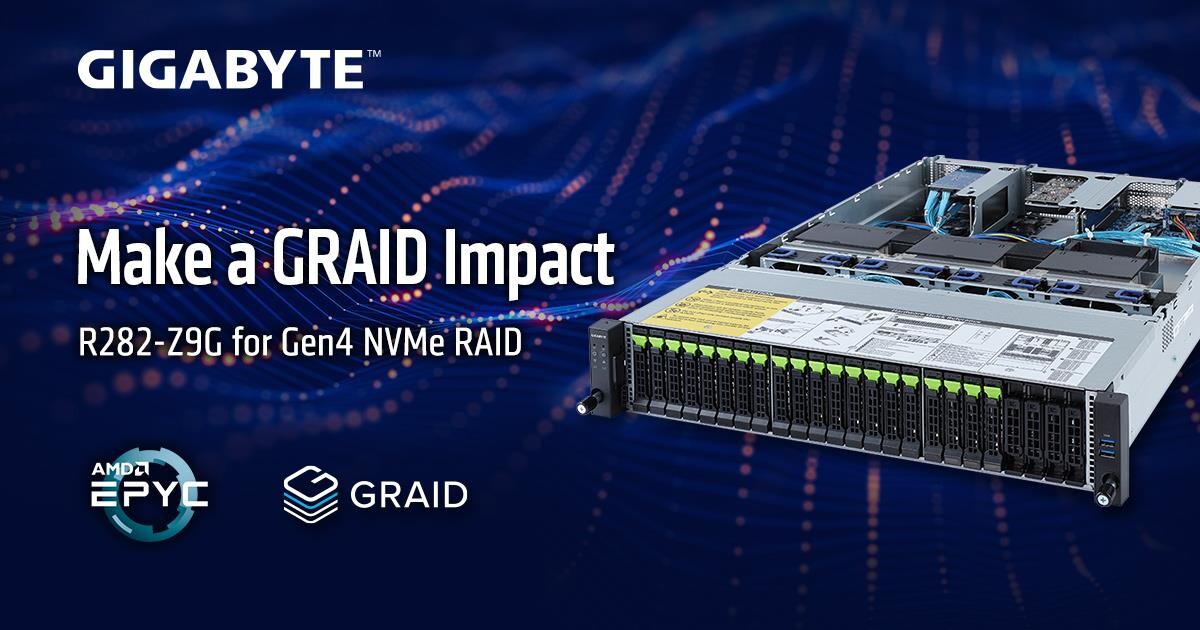
GIGABYTE Technology, an industry leader in high-performance servers and workstations, today announced a new server, GIGABYTE R282-Z9G, that gets around hardware and software RAID limitations that bottleneck RAID when used with NVMe SSDs. Continuing in the success of the R282 series, the new SKU was designed to house an all-in-one server solution that specifically targets high performance NVMe (Gen4) SSDs for RAID by incorporating the GRAID SupremeRAID solution into the R282-Z9G. This is the first GIGABYTE server to incorporate a GRAID Technology solution and has proven to be highly successful with Kioxia CM6-R SSDs.

More and more companies are using flash storage and doing so on a larger scale; however, there may be pitfalls when using RAID, such as limitations in computing performance or consuming a large amount of CPU resources. To solve these problems and to do so with a large amount of drives, the GRAID SupremeRAID works by installing a virtual NVMe controller on the OS while integrating a PCIe device for high performance. With this GIGABYTE solution over 100 GB/s of throughput is possible for workloads in HPC, 4K/8K video editing, high-frequency trading, online transaction processing, or database processing.

Asus ROG Strix Z690-I Gaming WiFi Leak Shows Off Stacked Board Design

Over the past few generations of Mini-ITX boards we've seen Asus add more and more stacked layers and its upcoming ROG Strix Z690-I Gaming WiFi seems to be taking this to the next level with what appears to be no less than three stacked layers on top of the main PCB. What can be seen from the side-shot of the boards is that there's at least one PCB for audio as well as what appears to be an ARGB and fan header, as well as what should be two layers for M.2 NVMe SSDs with associated heatsinks.

The rest of the pictures of the board have been put through some kind of filter which makes it hard to ascertain any details, although we can spot a USB type-C and USB 3.0 front panel connector. Asus has carried over the VRM heatsink from the Strix Z590-I Gaming WiFi by the looks of things, although it seems like the extra NVMe slot has been implemented on the cost of two SATA ports. We'll have to wait until the official unveiling to find out the full details, which should be sometime next month.

Acer Debuts New Large-Screen Chromebooks for Work, School and Entertainment

Acer today debuted four new Chromebooks that meet a range of customer needs, ranging from home and business users to hybrid workers and students. Equipped with the latest processors and sought-after features such as reliable Wi-Fi 6, video conferencing technology and durable designs, the new Acer Chromebooks keep customers connected, productive and entertained.

"Acer's expansive line of Chromebooks means that we're well-equipped to meet any sort of customer need—from display size, processors, durability, connectivity and more," said James Lin, General Manager, Notebooks, IT Products Business, Acer Inc. "Whether a customer needs a device for work, school or entertainment, we've got a Chromebook with exactly the features they're looking for."

Acer Introduces ConceptD 7 SpatialLabs Edition Laptop for 3D Creators

Acer announced the ConceptD 7 SpatialLabs Edition laptop (CN715-73G), bringing eye-popping, glasses-free stereoscopic 3D to designers and developers. The mobile workstation supports creators with Acer SpatialLabs, a suite of optical, display and sensory technologies with real-time rendering capabilities to deliver a glasses-free stereoscopic 3D experience.It's also backed by the NVIDIA Studio ecosystem, featuring NVIDIA GeForce RTX 3080 Laptop GPUs with exclusive driver technology that enhances creative apps for optimal levels of performance and reliability. Simply put, the new ConceptD 7 is an ideal laptop for 3D modeling, and also an excellent laptop for developers.

"Acer is dedicated to breaking the barriers between people and technology," said Jerry Kao, Co-COO, Acer Inc. "SpatialLabs is a great example of how we try to let that goal guide everything we do. From product and architecture CAD to projects with 3D graphics, designers can finally see their 3D creations in 3D during the workflow to make better judgments, rather than having to wait till afterwards. Developers are also empowered with new ways to tell stories and bring their ideas to life."

Samsung 980 PRO SSD Finally Gets a Stock Heatsink Option

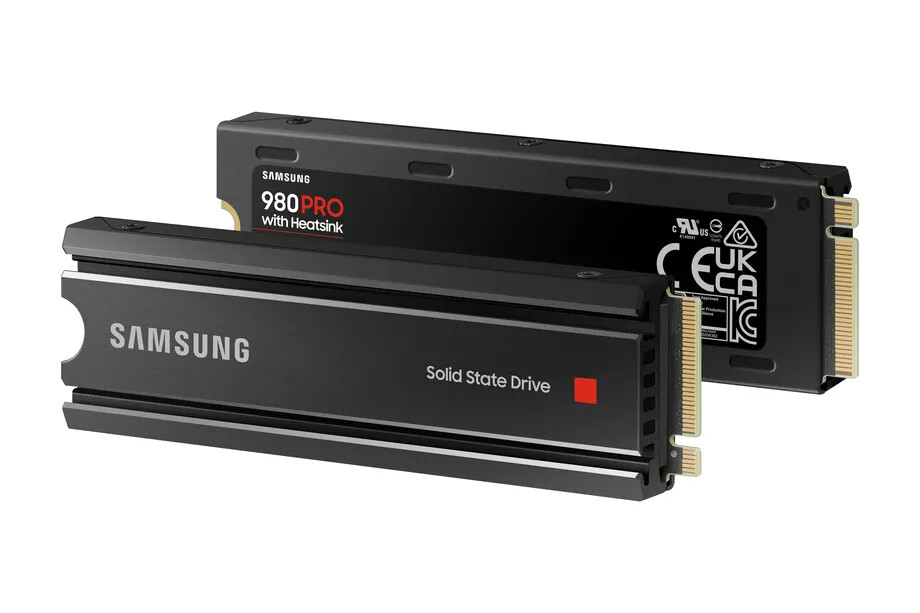
Samsung's flagship client M.2 NVMe SSD, the 980 PRO, finally has a stock heatsink in new SKUs. Its design calls for what appears to be an aluminium monoblock with ridges for fins that join at the top. This heatsink is held in place by a metal shroud that covers the sides and back of the drive. The drive comes with its own retail SKUs and name—"980 PRO with Heatsink," much like how Western Digital segregates SKUs with or without heatsinks for its flagship WD Black SN850 drives. Retail channel availability of these variants remains to be seen, as The Verge reports that these drives will be sold as PlayStation 5-compatible drives. When they come out on October 29, the 1 TB variant is expected to be priced at $250, with the 2 TB variant going for $450.

Intel Core i5-12400 Could be the Next Price-Performance King, Beats Ryzen 5 5600X in Leaked Benchmarks

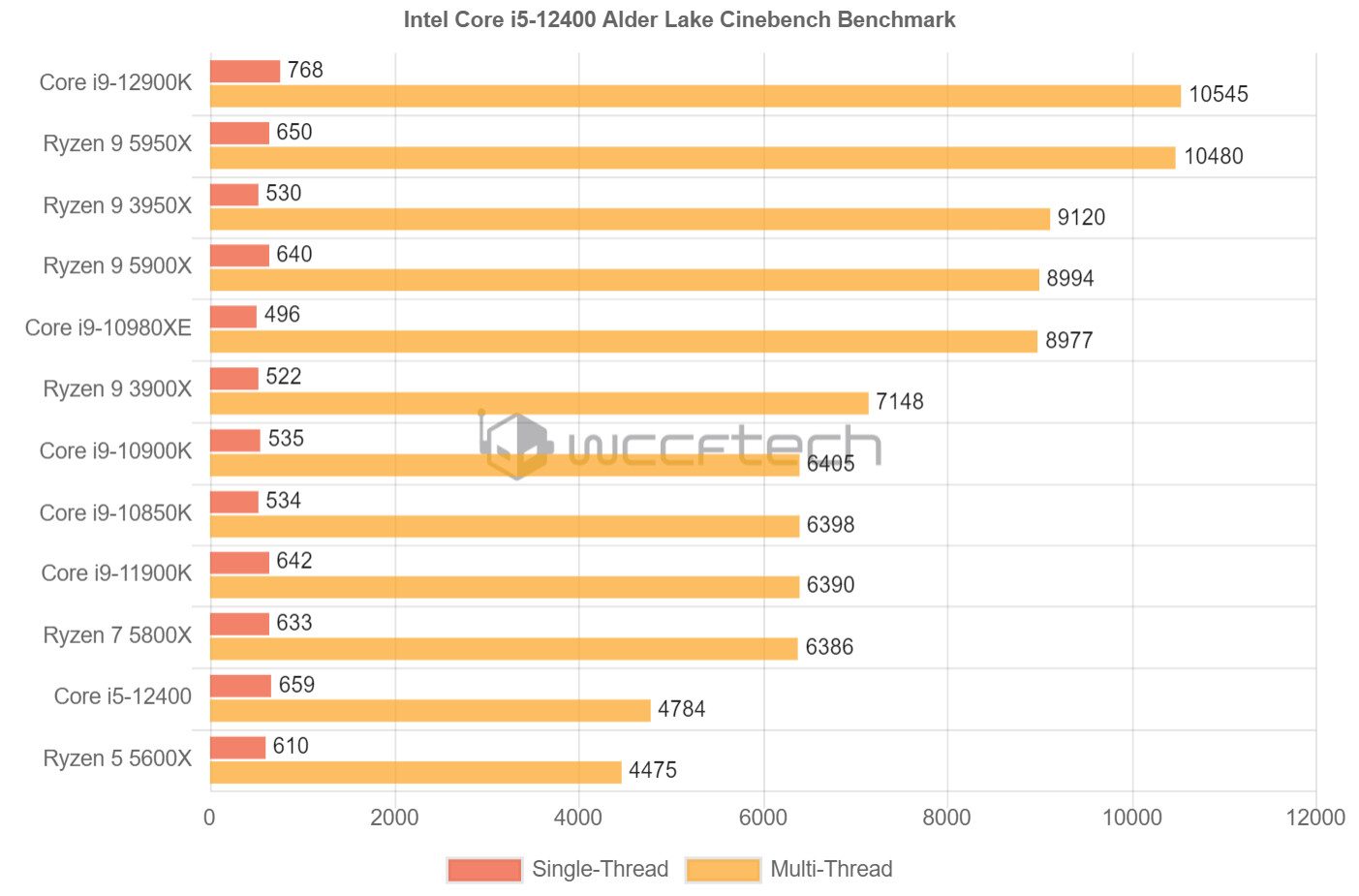
Intel's upcoming Core i5-12400 "Alder Lake-S" processor could be an interesting piece of silicon. Apparently, not all 12th Gen Core i5 desktop chips have the same core-configuration. While the top Core i5-12600K is expected to have six "Golden Cove" P cores and four "Gracemont" E-cores, some of the lower variants, such as the i5-12400, will lack E cores, and be pure P core chips. In this case, the chip is 6-core/12-thread with just P cores; 1.25 MB of dedicated L2 cache per core, and 18 MB of shared L3 cache. You'll probably get all the next-gen I/O, including PCI-Express Gen 5 (PEG slot), a PCI-Express Gen 4 CPU-attached NVMe slot, and DDR5+DDR4 memory.

Given that the Core i5-11400 is a $190 part, even with a 10-15% price hike, the i5-12400 is expected to be under $220. The only drawbacks here are expected to be locked BClk multiplier, and rather low clock speeds of 4.00 GHz. A user on Chinese social media posted alleged Cinebench R20 results of the i5-12400. It scores 659 points in the single-threaded test, and 4784 points in the multi-threaded test. Wccftech tabulated this against known performance numbers of popular chips, and found that the i5-12400 might end up slightly ahead of the Ryzen 5 5600X, a currently-$300 part. The table also puts out leaked i9-12900K numbers, which indicate why AMD is rushing with "Zen 3+" with 3D Vertical Cache, instead of next-gen "Zen 4."

Micron Announces 7400 PCIe 4.0 NVMe Enterprise SSD Portfolio

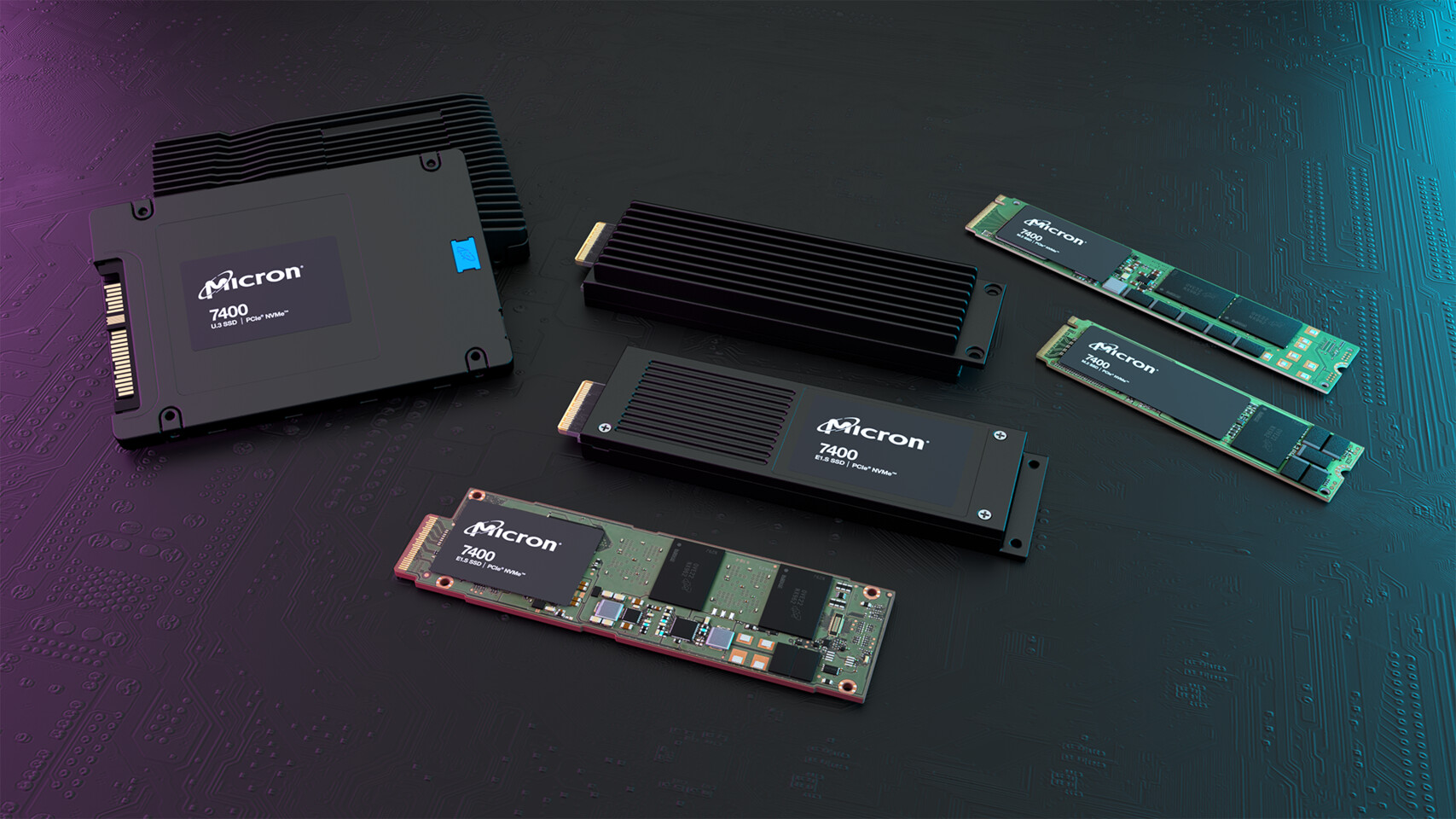
Micron Technology, today announced availability of the Micron 7400 SSD with NVMe, delivering industry-leading form factor flexibility, PCIe Gen4 performance, and leading-edge security to meet the storage needs of demanding data center workloads. With this portfolio, Micron is providing the broadest selection of mainstream data center SSDs available. Featuring seven form factors, the Micron 7400 SSD enables the transition to next-generation server architectures. Data centers continue to evolve thanks to the rapid growth of data and proliferation of applications that demand high performance. The need to process, analyze and secure data that provides valuable insights is fueling the modernization of the data center, requiring new levels of storage innovation.

ADATA Unveils Premier Extreme SDXC SD 7.0 Express Card

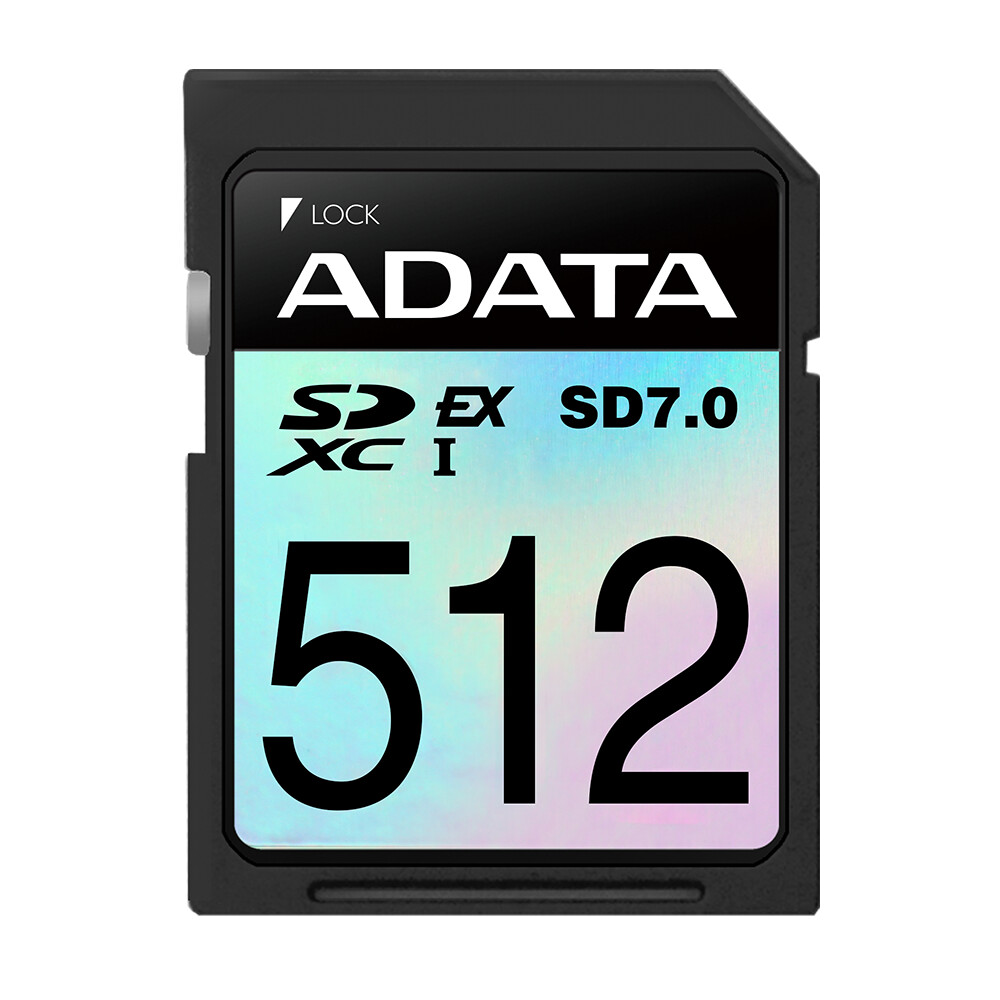
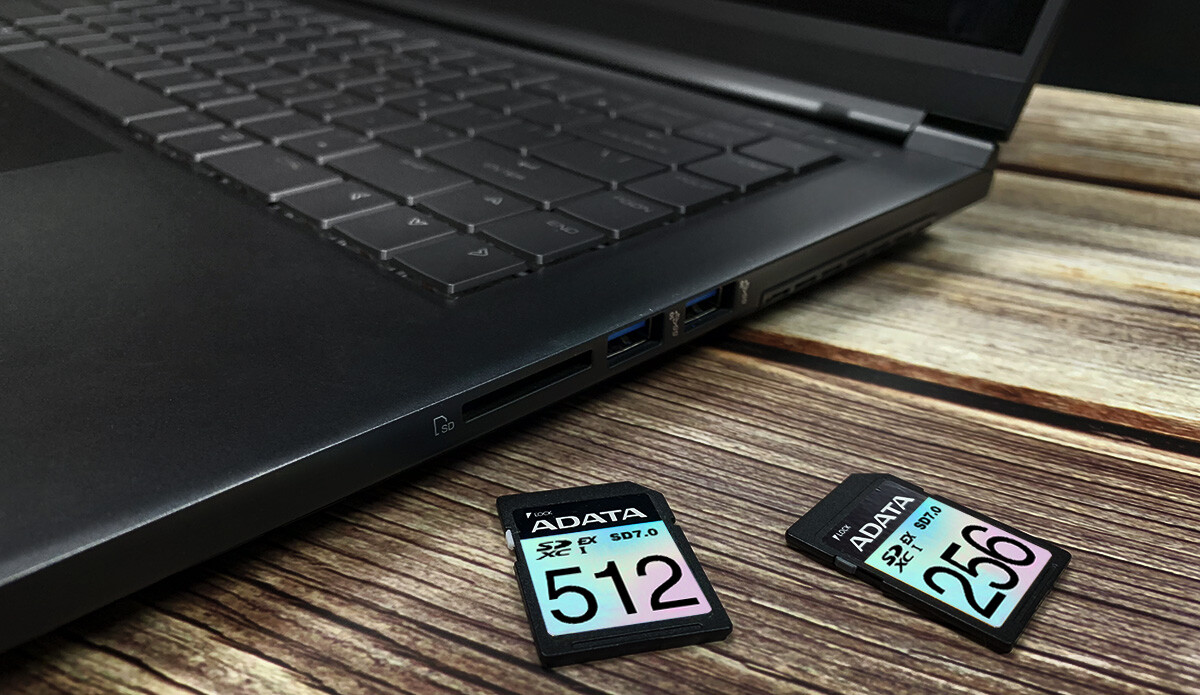
ADATA Technology, a manufacturer of high-performance DRAM modules, NAND Flash products, mobile accessories, gaming products, electric power trains, and industrial solutions today announces the new ADATA Premier Extreme SDXC SD Express Card. Thanks to the latest SD 7.0 specification, which supports PCIe and NVMe, the Premier Extreme SDXC SD 7.0 Express Card delivers performance on par with SSDs, but in the ultra-portable form factor of an SD Card.

With support for PCIe Gen 3 x1 and NVMe, the Premier Extreme SDXC SD Express Card delivers read and write performance of up to 800/700 MB/s, which is roughly 1.5 times faster than SATA SSDs. When compared to UHS-II SD and UHS-I SD cards, it's about 2.7 and 8 times faster, respectively. This memory card is backward compatible with the UHS-I devices with read and write speed of up to 100 MB/s and conforms to the V30 Video Speed Class.

ADATA Unveils XPG Xenia 15 KC Gaming Notebook

XPG, a fast-growing provider of systems, components, and peripherals for Gamers, Esports Pros, and Tech Enthusiasts, today announces the latest evolution of its XENIA 15 KC gaming notebook platform, following the success of a series of collaborations between XPG and Intel. The all-new XENIA 15 KC comes equipped with an 11th Gen Intel i7 H CPU, an NVIDIA RTX 30 series GPU, and XPG's own hand selected memory and SSD.

Designed in collaboration with Intel, the new XPG XENIA 15 KC takes full advantage of the latest 11th Gen Intel i7-11800H processor, NVIDIA RTX 3070 graphics, and top of the line XPG memory and SSD, to deliver top of the line benchmarks, close to or even outpacing higher spec systems in gaming performance and pixel-perfect productivity. To strike a satisfying balance between fast-paced action and rich, detailed visuals, a spacious 15.6-inch QHD (2560 x 1440) 165 Hz IPS panel delivers the best of both worlds, perfectly tailored for its performance envelope. What's more, it achieves 100% sRGB color coverage for accurate color reproduction for content creation.

Western Digital Announces WD Blue SN570 M.2 NVMe SSD

According to a recent report, it is estimated that more than 50 million people across the globe self-identified as having a career in the cultural and creative industries. With the everchanging definition of "creator" in a technology-driven world, this title now reaches beyond graphic designers and videographers to include content creators, UI/UX designers, artists and illustrators, entrepreneurs and freelancers, engineers, architects, grad students and more.

When crunching large amounts of data on their next passion project, access to fast and reliable storage solutions can greatly improve a creator's workflow, giving them peace of mind and allowing them to stay in the creative moment. With intense workload demands, today's creative professionals need technology that empowers their creativity without stress over losing their brilliant work, project bottlenecks or slow storage speeds.
Return to Keyword Browsing
Nov 22nd, 2026 18:17 CST change timezone

New Forum Posts

Popular Reviews

TPU on YouTube

Controversial News Posts