
Microsoft Reportedly Cutting Specs on Entry-Level 12-Inch Surface, AMD Arm Chip in the Mix
Microsoft might be working on a cheaper 12-inch Surface, and Apple's MacBook Neo looks like the reason. DigiTimes reports, citing supply chain sources, that Microsoft is reviewing the specifications of its entry-level 12-inch Surface to bring costs down, and is also rethinking which processor goes inside. The report's headline, spotted by harukaze5719 on X, goes as far as saying Apple is forcing Microsoft to downgrade the device, and hints at a comeback for AMD with an Arm chip. Reportedly, the processor, memory, camera, battery, and chassis are all being looked at, though nothing seems to be finalized yet.
The pricing gap between the two laptops is quite large. Microsoft only just refreshed the 12-inch Surface Pro with Snapdragon X2 Plus, and it now starts at $1,149, up from $799 last year, partly because the 8 GB base configuration was dropped. Apple launched the MacBook Neo at $599, and even after a $100 increase in June that Apple blamed on memory costs, it still sits at $699. As for the chip, AMD's "Sound Wave" Arm APU was previously linked to Microsoft's 2026 Surface lineup and has even shown up in shipping manifests, so it looks like a candidate. Leaks put it at 2 performance and 4 efficiency Arm cores, RDNA 3.5 graphics with 4 CUs, and a 5 W to 10 W power target. Then again, Microsoft could just as well stick with Qualcomm, and neither Microsoft nor AMD has confirmed anything.
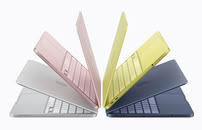
The pricing gap between the two laptops is quite large. Microsoft only just refreshed the 12-inch Surface Pro with Snapdragon X2 Plus, and it now starts at $1,149, up from $799 last year, partly because the 8 GB base configuration was dropped. Apple launched the MacBook Neo at $599, and even after a $100 increase in June that Apple blamed on memory costs, it still sits at $699. As for the chip, AMD's "Sound Wave" Arm APU was previously linked to Microsoft's 2026 Surface lineup and has even shown up in shipping manifests, so it looks like a candidate. Leaks put it at 2 performance and 4 efficiency Arm cores, RDNA 3.5 graphics with 4 CUs, and a 5 W to 10 W power target. Then again, Microsoft could just as well stick with Qualcomm, and neither Microsoft nor AMD has confirmed anything.




