News Posts matching #Sustainability

Return to Keyword Browsing

Supermassive Games Lays Off Up To 75 Workers To "Ensure Sustainability"

Mere months after its latest release, Directive 8020, indie studio, Supermassive Games, has announced that it is conducting yet another round of layoffs—the third in just over a year. In a statement on social media, Supermassive Games confirmed that it will be laying off "up to 75" employees.

The studio calls the layoffs "a necessary step to help ensure the sustainability of the company," and says that it will prioritize supporting employees affected by the layoffs. Supermassive is known for its work on Until Dawn, The Quarry, and Little Nightmares III. Its most recent launch, from May 2026, Directive 8020, was delayed due to a previous round of layoffs in July 2025, and launched to Mixed reviews on Steam.

NVM Express Publishes Set of NVMe Specifications Enhancing Security, Manageability and Sustainability

NVM Express, Inc. today announced the release of all 11 of the NVM Express (NVMe) specifications, incorporating new features and engineering change notices (ECNs). These updates represent the next step in the evolution of NVMe technology, with security, management and sustainability extensions to address the growing demands of data-intensive applications in AI, cloud, enterprise and client environments.

The updated specifications include:
  • NVMe 2.4 Base Specification
  • Command Set Specifications (NVM Command Set 1.3, ZNS Command Set 1.5, Key Value Command Set 1.4, Subsystem Local Memory Command Set 1.3, Computational Programs Command Set 1.3)
  • Transport Specifications (NVMe over PCIe Transport 1.4, NVMe over RDMA Transport 1.3, NVMe over TCP Transport 1.3)
  • NVM Express Management Interface (NVMe-MI) 2.2 Specification
  • NVMe Boot 1.4 Specification

Lenovo Publishes FY2025/26 Sustainability Report

Lenovo has released its annual sustainability report for the fiscal year 2025/26, marking the 20th edition and concluding the company's first five-year set of ESG targets. Companies typically set ESG targets to guide their sustainable corporate development, but only a few achieve these goals. Lenovo, the world's largest PC vendor, reports that it has met most of its objectives. It now sources approximately 90% of its operational electricity from renewable sources, incorporates recycled plastic into every PC it ships, and remains on track for net-zero emissions by 2050.

The 125-page document contains the usual corporate responsibility content, but a few numbers stand out for hardware enthusiasts. Over the five-year period, Lenovo claims to have recycled or reused about 800 million pounds (approximately 363 million kg) of end-of-life equipment, including old PCs, keyboards, mice, servers, and other products. Around 300 million pounds of post-consumer recycled plastic are now used across Lenovo's product range. The company also noted that data centers, the largest consumers of energy, are now utilizing its Neptune liquid cooling technology to reduce energy use compared to air cooling. These figures are self-reported, but Lenovo supports its key climate data with third-party verification and Science Based Targets initiative (SBTi) validation.

Noctua Has Shipped Half a Million CPU Cooler Mounting Upgrade Kits

Noctua has earned itself a reputation in the enthusiast space not only for its highly efficient air coolers, but also for its free mounting upgrade kit policy, which allows buyers of Noctua coolers to request a new mounting kit when a new motherboard socket from AMD or Intel launches, even years after they've purchased their original cooler. The company recently announced that it has shipped 500,000 of these free mounting upgrade kits since the project started way back in 2006 with the AMD AM2 socket. Noctua also promises that "as new sockets and architectures appear, we will continue to provide free mounting or upgrade kits where technically feasible."

Noctua explains that the ethos behind the program is to "ensure that a quality product remains useful for many years," and, in the blog post celebrating the achievement, it explains that change in approach meant rethinking the design of its coolers. New coolers designed by Noctua from 2006 onwards would need to be modular and standardized to maintain support across different platforms and generations. Noctua elaborated that part of the justification for the past and ongoing commitment to the free upgrade program is as much about the environment as it is about customer service and technical compatibility. Theoretically, 500,000 mounting kit upgrades means that up to 500,000 perfectly functional CPU coolers were kept out of the e-waste pile, conserving raw materials and cutting down on waste.

Giga Computing Introduces New B-series Blade Servers with Recycled Materials

Giga Computing, a subsidiary of GIGABYTE and an industry leader in accelerated computing servers and advanced cooling technologies, today announced the launch of its first 3U 10-node blade servers: the GIGABYTE B343-C40, supporting AMD EPYC 4005 or Ryzen 9000 Series processors, and the GIGABYTE B343-X40, supporting Intel Xeon 6300-series processors. This new GIGABYTE B-series marks Giga Computing's entry into blade server solutions, optimized for enterprise, edge, and cloud workloads that demand scalable, power-efficient systems with centralized management.

The GIGABYTE B343 Series is also Giga Computing's first product line to incorporate post-consumer recycled (PCR) low-carbon materials, supporting the rising global demand for sustainable computing. These servers are engineered for performance and environmental responsibility, aligning with evolving carbon regulations and enterprise ESG goals.

HPE Announces First Shipment of NVIDIA "Grace Blackwell" System

Hewlett Packard Enterprise announced today that it has shipped its first NVIDIA Blackwell family-based solution, the NVIDIA GB200 NVL72. This rack-scale system by HPE is designed to help service providers and large enterprises quickly deploy very large, complex AI clusters with advanced, direct liquid cooling solutions to optimize efficiency and performance. "AI service providers and large enterprise model builders are under tremendous pressure to offer scalability, extreme performance, and fast time-to-deployment," said Trish Damkroger, senior vice president and general manager of HPC & AI Infrastructure Solutions, HPE. "As builders of the world's top three fastest systems with direct liquid cooling, HPE offers customers lower cost per token training and best-in-class performance with industry-leading services expertise."

The NVIDIA GB200 NVL72 features shared-memory, low-latency architecture with the latest GPU technology designed for extremely large AI models of over a trillion parameters, in one memory space. GB200 NVL72 offers seamless integration of NVIDIA CPUs, GPUs, compute and switch trays, networking, and software, bringing together extreme performance to address heavily parallelizable workloads, like generative AI (GenAI) model training and inferencing, along with NVIDIA software applications. "Engineers, scientists and researchers need cutting-edge liquid cooling technology to keep up with increasing power and compute requirements," said Bob Pette, vice president of enterprise platforms at NVIDIA. "Building on continued collaboration between HPE and NVIDIA, HPE's first shipment of NVIDIA GB200 NVL72 will help service providers and large enterprises efficiently build, deploy and scale large AI clusters."

Intel Previews Sustainable Modular PC Design Concept

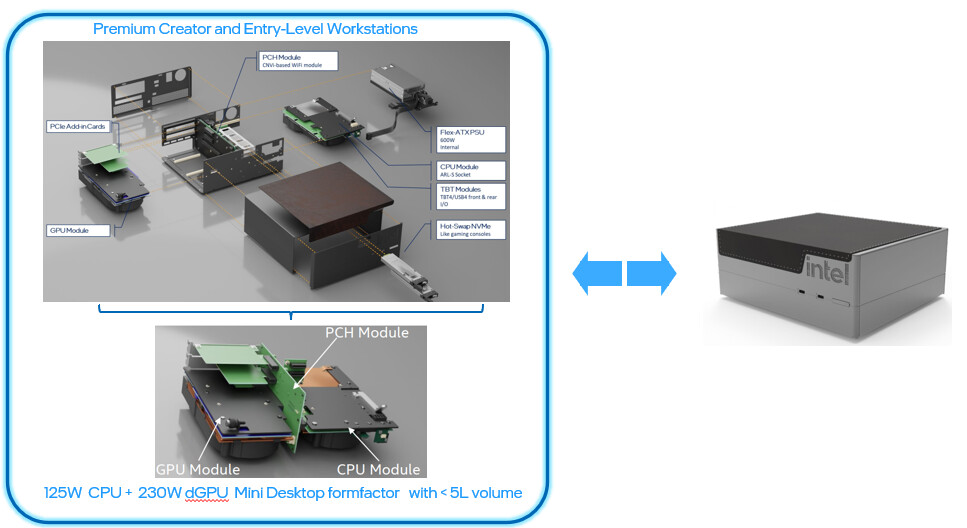
Intel's Platform Engineering and Client Segments groups are actively looking into ways of reducing computer e-waste, and (in parallel) enhance product repairability. The company's newly proposed "Modular PC Design" is set to take a "sustainable approach" across three key modularity levels: factory, field and user. Team Blue's blog post goes into great detail about revised laptop and mini-PC designs—with the "right-to-repair" movement serving as a major influence. Many "consumer activists and environmental groups" have advocated for improvements in personal computer design—Intel appears to be listening, but a firm release timeline has not been set.

Intel's proposed new standards will revolve around repairability and upgradability—as explained in their blog: "the right-to-repair emphasizes the importance of being able to fix and upgrade PCs on one's own. Improving repairability requires fundamental changes starting from the design methodology." Team Blue's Modular PC program—for laptops—breaks away from the tradition of utilizing an "all-in-one motherboard." A reference diagram shows off three internal modules: a motherboard package and two "universal" left and right I/O units. These separate boards can be: "utilized across various platforms or market segments leads to cost savings by streamlining the duration of the design cycle and minimizing the engineering investment required. The I/O boards for Premium Modular designs are engineered to be common between the fan-less Thin & Light system, which operates within a 10 W power envelope, and the premium fanned designs, which function within a 20 W (single fan) and 30 W (dual fan, Wi-Fi only SKU) power envelope." Framework recently celebrated its fifth year of operation—its modular laptop designs have seemingly "inspired" a few copycats.

Lenovo Group Announces Second Quarter Financial Results 2024/25

Lenovo Group Limited (HKSE: 992) (ADR: LNVGY), together with its subsidiaries ('the Group'), today announced Q2 results for fiscal year 2024/25, reporting significant increases and growth in net income, year-on-year revenue growth for the 4th consecutive quarter, and strong double-digit year-on-year revenue increases from all its business groups. Group revenue increased 24% year-on-year to US$17.9 billion. Net income was up 48% year-on-year to US$404 million on a non-Hong Kong Financial Reporting Standards (non-HKFRS)[1] basis, and non-PC revenue mix was up five points year-to-year to 46%. The Group's results reflect its clear strategy, operational excellence, investment in R&D, innovations in hybrid AI, and global footprint.

The Group's hybrid AI strategy and years of continuous investment in R&D and innovations are paying off, with its first phase of AI PCs, launched in China in May 2024, already reaching double digit share of its total notebook shipments in the China market. Recent launches of AI PCs for the global market with Lenovo AI Now have also been received positively. For enterprise AI, the Group is leveraging its full-stack hybrid infrastructure as well as Lenovo Hybrid AI Advantage to capture growth opportunities. This relentless focus on AI innovation as well as investment in R&D (up 10% year-on-year to US$548 million) is firmly establishing the Group's market differentiation and industry leadership.

Microsoft Introduces Surface Pro 10 and Surface Laptop 6 Models for Business

We are excited to announce the first Surface AI PCs built exclusively for business: Surface Pro 10 for Business and Surface Laptop 6 for Business. These new PCs represent a major step forward in customer-focused design and are packed with features that business customers have been requesting - from amazing performance and battery life to more ports, better security and custom, durable anti-reflective displays. These are the first Surface PCs optimized for AI, with the new Copilot key being added to Surface Laptop 6 and Surface Pro keyboards that accelerate access to the best Windows AI experiences. In addition to the new Surface for Business products, we are pleased to announce the Microsoft Adaptive Accessories will now be available to commercial customers.

These new PCs are powered by the latest Intel Core Ultra processors. We partnered with Intel to deliver the power and reliable performance our customers depend on, along with compelling AI experiences for Surface and the Windows ecosystem. Surface has also been leading in Neural Processing Unit (NPU) integration to drive AI experiences on the PC since 2019, and the benefits of these connected efforts are evident. From a performance perspective, Surface Laptop 6 is 2x faster than Laptop 52, and Surface Pro 10 is up to 53% faster than Pro 9. The benefits of the NPU integration include AI features like Windows Studio Effects and Live Captions and the opportunity for businesses and developers to build their own AI apps and experiences.

Silicon Box Announces $3.6 Billion Foundry Deal - New Facility Marked for Northern Italy

Silicon Box, a cutting-edge, advanced panel-level packaging foundry announced its intention to collaborate with the Italian government to invest up to $3.6 billion (€3.2 billion) in Northern Italy, as the site of a new, state-of-the-art semiconductor assembly and test facility. This facility will help meet critical demand for advanced packaging capacity to enable next generation technologies that Silicon Box anticipates by 2028. The multi-year investment will replicate Silicon Box's flagship foundry in Singapore which has proven capability and capacity for the world's most advanced semiconductor packaging solutions, then expand further into 3D integration and testing. When completed, the new facility will support approximately 1,600 Silicon Box employees in Italy. The construction of the facility is also expected to create several thousand more jobs, including eventual hiring by suppliers. Design and planning for the facility will begin immediately, with construction to commence pending European Commission approval of planned financial support by the Italian State.

As well as bringing the most advanced chiplet integration, packaging, and testing to Italy, Silicon Box's manufacturing process is based on panel-level-production; a world leading, first-of-its-kind combination that is already shipping product to customers from its Singapore foundry. Through the investment, Silicon Box has plans for greater innovation and expansion in Europe, and globally. The new integrated production facility is expected to serve as a catalyst for broader ecosystem investments and innovation in Italy, as well as the rest of the European Union.

Edged Energy Launches Four Ultra-Efficient AI-Ready Data Centers in USA

Edged Energy, a subsidiary of Endeavour devoted to carbon neutral data center infrastructure, announced today the launch of its first four U.S. data centers, all designed for today's high-density AI workloads and equipped with advanced waterless cooling and ultra-efficient energy systems. The facilities will bring more than 300 MW of critical capacity with an industry-leading average Power Usage Effectiveness (PUE) of 1.15 portfolio-wide. Edged has nearly a dozen new data centers operating or under construction across Europe and North America and a gigawatt-scale project pipeline.

The first phase of this U.S. expansion includes a 168 MW campus in Atlanta, a 96 MW campus in the Chicago area, 36 MW in Phoenix and 24 MW in Kansas City. At a time of growing water scarcity where rivers, aquifers and watersheds are at dangerously low levels, it is more critical than ever that IT infrastructure conserve precious water resources. The new Edged facilities are expected to save more than 1.2 billion gallons of water each year compared to conventional data centers. "The rise of AI and machine learning is requiring more power, and often more water, to cool outdated servers. While traditional data centers struggle to adapt, Edged facilities are ready for the advanced computing of today and tomorrow without consuming any water for cooling," said Bryant Farland, Chief Executive Officer for Edged. "Sustainability is at the core of our platform. It is why our data centers are uniquely optimized for energy efficiency and water conservation. We are excited to be partnering with local communities to bring future-proof solutions to a growing digital economy."

Logitech Conference Room Products Transition to Recycled Plastic & Next Life Materials

Logitech has announced that all video collaboration devices that run on the CollabOS operating system will now be manufactured with next-life plastics, helping enterprise customers support their sustainability objectives. Existing products- Rally Bar, Rally Bar Mini, Tap IP, Tap Scheduler, and Scribe- are being refreshed with materials that lower the carbon impact of each product. This provides organizations with a partner that in turn helps position them to better manage their carbon footprint. "By transitioning our portfolio of conference room devices to a lower product carbon footprint, we are helping other companies navigate their sustainability challenges," said Prakash Arunkundrum, Chief Operating Officer at Logitech. "We're not only designing and manufacturing new products with recycled plastic and other lower carbon materials, but refreshing existing products to provide IT leaders with a new way to evaluate their workplace technology investment in conference room systems—one that includes people and planet. We do this without increasing prices or compromising the highest quality and performance companies expect from Logitech."

"By transitioning our portfolio of conference room devices to a lower product carbon footprint, we are helping other companies navigate their sustainability challenges," said Prakash Arunkundrum, Chief Operating Officer at Logitech. "We're not only designing and manufacturing new products with recycled plastic and other lower carbon materials, but refreshing existing products to provide IT leaders with a new way to evaluate their workplace technology investment in conference room systems - one that includes people and planet. We do this without increasing prices or compromising the highest quality and performance companies expect from Logitech." Efforts to reduce negative environmental impact have rapidly become a business imperative. In a recent survey of IT professionals by analyst firm Frost & Sullivan, 65% say that becoming a leader in environmental, social, governance and sustainability practices is a critical or very important business objective in the coming year.

Razer's Promise for 2024 & Beyond: Incorporation of Recycled Materials

Razer, the leading global lifestyle brand for gamers, has announced another major milestone in their commitment towards a sustainable future, with the inclusion of recycled materials in new PC products launching throughout 2024 and beyond. Focusing on its core PC peripherals, this new initiative covers three key categories: mice, keyboards, and headsets. Initially, only the models produced in Razer's signature black base colorway will feature recycled materials, with more product categories to be added over time.

Razer has been experimenting with the use of recycled materials in product manufacture, with two products already available. The Razer DeathAdder V2 X HyperSpeed gaming mouse contains 40% recycled materials, and the Razer Ornata V3 ergonomic clicky gaming keyboard has at least 20%. With these successful integrations of recycled materials, both products met the strict criteria to achieve the UL 2809 ECOLOGO label, an independently verified ecolabel certification from the world's leading testing, inspection and certification company, UL Solutions. Razer is now pushing the program out to encompass an even wider range of products, for all its core PC peripheral launches from the start of 2024 and onwards.

Semiconductor Climate Consortium Representatives to Present During 2022 United Nations Climate Change Conference (COP27)

SEMI, the industry association serving the global electronics manufacturing and design supply chain, today announced that members of the new Semiconductor Climate Consortium (SCC) will discuss key aspects of the group's vision, goals and membership at two sessions during COP27 in Sharm El-Sheik, Egypt.

On Nov. 10 from 8:30am to 10:00am at Hotel Steigenberger Alcazar, the panel discussion SCC Collaboration for Solutions on Climate, with opening remarks by former U.S. Vice President Al Gore, will feature SCC founding members including ASM, ASMPT, Samsung Electronics and Schneider Electric discussing the importance of collaboration, transparency and reporting across the semiconductor value chain. Dr. Mousumi Bhat, Vice President of Sustainability Programs at SEMI, and Mark Patel, Senior Partner at McKinsey & Company, will also speak at the gathering.

SEMI Announces Semiconductor Climate Consortium Founding Members

SEMI, the industry association serving the global electronics manufacturing and design supply chain, and the new Semiconductor Climate Consortium (SCC), a group formed by companies across the semiconductor value chain to accelerate the ecosystem's reduction of greenhouse gas emissions, today announced more than 60 founding members of the Consortium.

Representatives from SCC member companies and SEMI will hold informational sessions November 8-10 during COP27 in Sharm El Sheik, Egypt. Requests to attend a session and for more information on the SCC can be sent to SCC@semi.org. The SCC is the first global collaborative of semiconductor ecosystem companies focused on reducing greenhouse gas emissions across the value chain. The consortium's members are committed to working toward the following pillars and objectives:

GlobalFoundries and Qualcomm Announce Extension of Long-term Agreement to Secure U.S. Supply through 2028

Following the recent passage of the U.S. CHIPS and Science Act last week, GlobalFoundries (Nasdaq: GFS) (GF), a global leader in feature-rich semiconductor manufacturing and Qualcomm Technologies, Inc. today announced they are more than doubling their existing strategic global long-term semiconductor manufacturing agreement previously entered into by GF's and Qualcomm's respective subsidiaries. Today's announcement secures wafer supply and commitments to support U.S.-based manufacturing through capacity expansion at GF's most advanced semiconductor manufacturing facility, in Malta, New York.

The announcement was made in Washington D.C. at a CEO Summit co-hosted by GF, Ford Motor Company, and Applied Materials, which included National Economic Council Director Brian Deese, Under Secretary of Defense for Acquisition & Sustainability Dr. William LaPlante, and National Security Council Senior Director for Technology & National Security, Tarun Chhabra underscoring the importance of domestic manufacturing to national and economic security. The Summit included CEOs and senior leaders from across the semiconductor supply chain from tool and wafer manufacturers to key suppliers to end users of chips manufactured in the U.S.

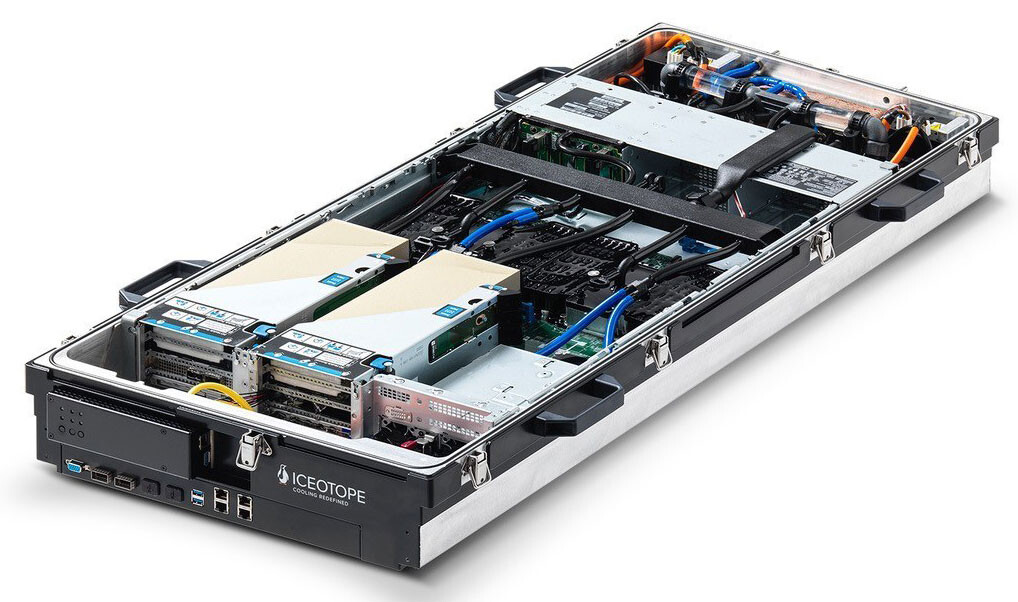
Iceotope collaborates with Intel and HPE to accelerate sustainability and cut power for Edge and Data Center compute requirements by up to 30 Percent

Iceotope, the global leader in Precision Immersion Cooling, has announced that its chassis-level cooling system is being demonstrated in the Intel Booth at HPE Discover 2022, the prestigious "Edge-to-cloud Conference". Ku:l Data Center is the product of a close collaboration between Iceotope, Intel and HPE and promises a faster path to net zero operations by reducing edge and data center energy use by nearly a third. Once the sole preserve of arcane, high performance computing applications, liquid cooling is increasingly seen as essential technology for reliable and efficient operations of any IT load in any location. There is a pressing concern about sustainability impacts as distributed edge computing environments proliferate to meet the demand for data processing nearer the point of use, as well as growing facility power and cooling consumption driven by AI augmentation and hotter chips.

Working together with Intel and HPE, Iceotope benchmarked the power consumption of a sample IT installation being cooled respectively using air and precision immersion liquid cooling. The results show a substantial advantage in favour of liquid cooling, reducing overall power use across IT and cooling infrastructure.

Samsung Electronics Expands its "Green Chip" Line-Up

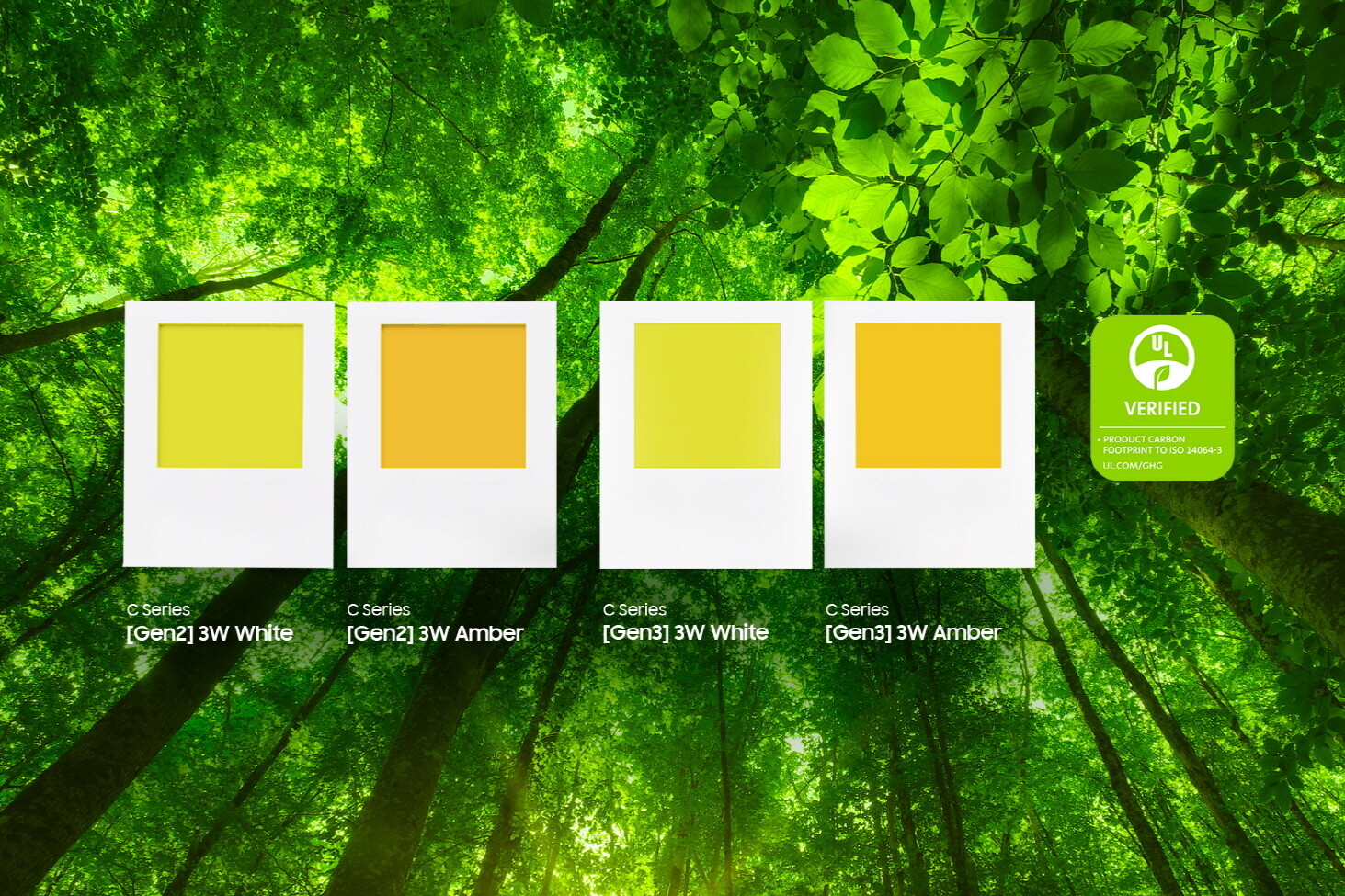
Samsung Electronics Co., Ltd., a world leader in advanced semiconductor technology, today announced that five of its memory products achieved global recognition for successfully reducing its carbon emission, while 20 additional memory products received carbon footprint certification. Samsung's automotive LED packages also had their carbon footprint verification, a first in the industry for automotive LED packages, further expanding Samsung's portfolio of eco-conscious "green chips".

"It is exciting to see our environmentally sustainable efforts receiving global acknowledgements," said Seong-dai Jang, Senior Vice President and Head of DS Corporate Sustainability Management Office at Samsung Electronics. "We will continue our path towards a sustainable future with 'greener' chips enabled by Samsung's cutting-edge technology."

Samsung Receives its First Global Carbon Footprint Certification for Logic Chips

Samsung Electronics Co., Ltd., a world leader in advanced semiconductor technology, today announced that four of its System LSI products received product carbon footprint label certification from the Carbon Trust, the first of Samsung's logic chips to do so. Having received the semiconductor industry's first carbon footprint accreditation for memory chips from the Carbon Trust in 2019, Samsung has now broadened its ESG (Environmental, Social, and Governance) spectrum with this global recognition of 'eco-friendly' logic chips. Samsung also grabbed the industry's first triple Carbon Trust Standard for Carbon, Water and Waste in June 2021.

The Carbon Trust is an independent and expert partner of organizations around the world that advises businesses on their opportunities in a sustainable, low carbon world. The Carbon Trust also measures and certifies the environmental footprint of organizations, supply chains and products. Of the various certification categories of the Carbon Trust, Samsung's System LSI products received the CO2 Measured product carbon footprint label. The label certifies the chip's carbon footprint, which informs consumers of the impact that the product and its manufacturing process have on the environment. Receiving the CO₂ Measured label is a critical first step for carbon reduction, since it verifies the current carbon emissions of the product with globally recognized specifications (PAS 2050), which Samsung can use as a benchmark to measure future carbon reductions.

Micron Closes Sustainability-Linked Credit Facilities Totaling Nearly $3.7 Billion

Micron Technology, Inc. (Nasdaq: MU), today announced the successful closing of nearly $3.7 billion inaugural sustainability-linked credit facilities. The facilities, which create additional long-term value for Micron's stakeholders, reinforce the company's commitment to sustainability and 2030 environmental goals.

These facilities comprise a five-year $2.5 billion sustainability-linked revolving credit facility, which matures in May 2026, and a nearly $1.2 billion sustainability-linked term loan A, which matures in October 2024. The credit facility agreements refinance Micron's existing revolving credit and term loan A facilities with no impact to cash or debt balances while reducing future interest expense. Both the revolving credit facility and term loan A feature pricing adjustment mechanisms linking Micron's financial pricing to meeting the environmental targets the company has set for greenhouse gas (GHG) emission intensity, waste diversion from landfills and Responsible Business Alliance (RBA) score metrics. Crédit Agricole Corporate and Investment Bank (CIB) served as the sole sustainability structuring agent on both credit facilities.

This transaction reflects Micron's leadership in sustainable financing and positions the company as a top-five corporate sustainability-linked credit facility issuer in the U.S. while reaffirming Crédit Agricole CIB's role as a strategic investment bank and partner to global companies for sustainability.

Samsung Announces New Sustainability Policy, Phasing Out Plastic Packaging Materials

This piece of news is slightly off the beaten path for our usual coverage of solely PC hardware or gaming, but I think that Samsung's overall size in the worldwide market merits a headline. Sustainability efforts have been increasing for a number of years now (albeit slower than many of us would like), and Samsung, being the giant corporation that it is with threads in all sorts of product lines, has taken a bold step in achieving environmental sustainability. Plastic used for product packaging is being phased out with recyclable, environmentally-friendly products. Some plastic usages will be kept, though even those will see a revised, recycled-plastic or bioplastic materials.
Return to Keyword Browsing
Nov 13th, 2026 22:18 CST change timezone

New Forum Posts

Popular Reviews

TPU on YouTube

Controversial News Posts