News Posts matching #cryptography

Return to Keyword Browsing

AMD Advances Built-in Protection from Physical Attacks for Security-Critical Systems

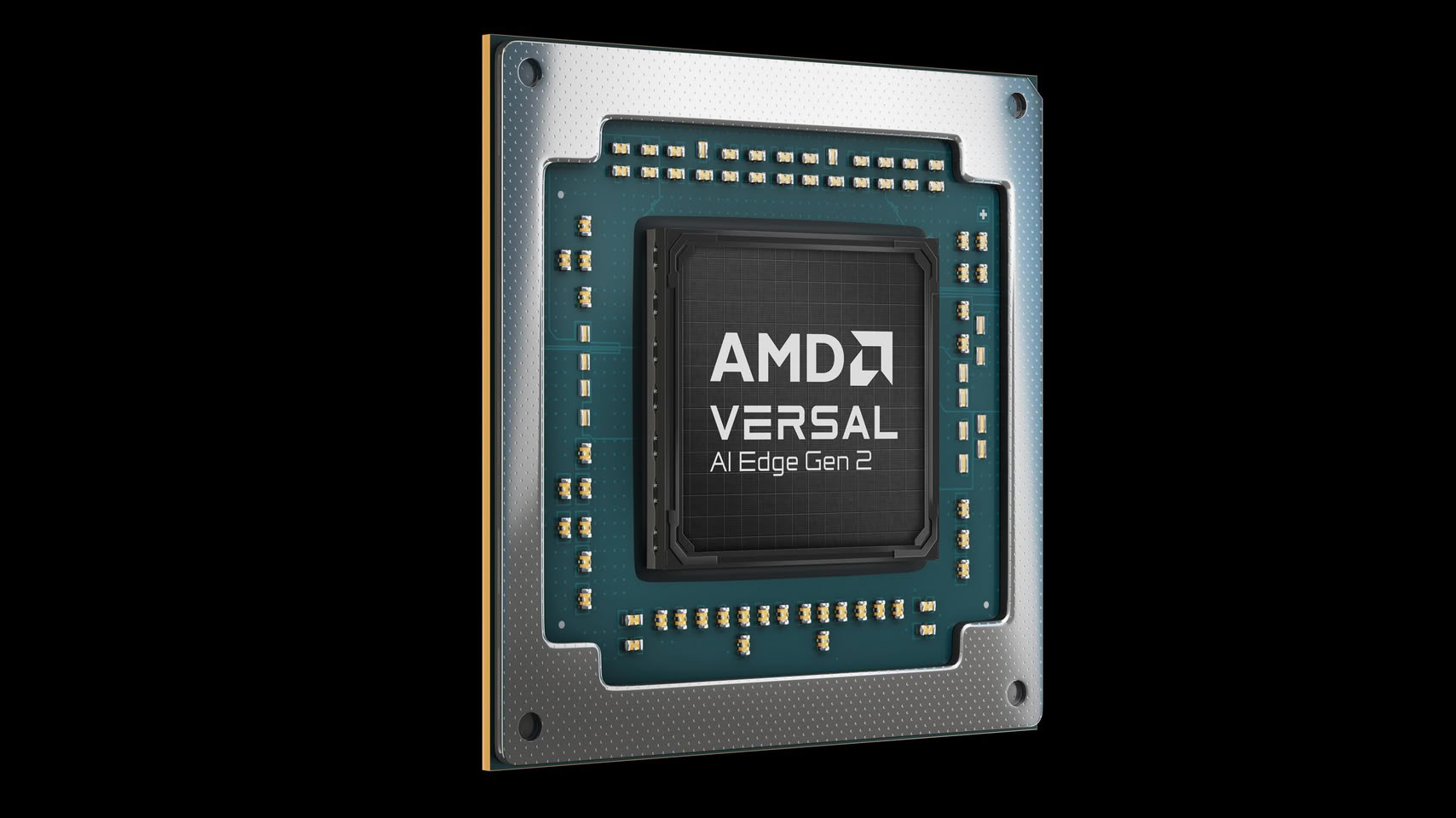
What's the News? AMD today announced AMD Versal tamper-resistant ("TR") devices, designed to protect security-critical information against sophisticated physical attacks while delivering the high-performance heterogeneous processing capabilities of AMD Versal AI Edge Series Gen 2. Versal TR devices are the industry's first adaptive SoC or FPGA-based devices providing built-in protection against physical attacks on the silicon backside. A sensor-based protection die is bonded to the main compute die using 3D active-on-active technology, shielding the entire backside of the device, protecting sensitive information, detecting physical attacks and preventing boot if the protection die is tampered with or removed. Combined with embedded CPUs, AI Engines and programmable logic, Versal TR devices help customers strengthen the protection of security-critical information without compromising system performance, size, weight, power or time to market.

Why It Matters? Protecting sensitive information from sophisticated physical attacks is a priority across markets and embedded applications. From data center networking and fintech applications to defense systems and critical industrial infrastructure, customers seeking higher levels of device security today typically build custom solutions in-house using mechanical enclosures, ASICs and other components, adding development cost, specialist resources, verification effort and re-spin risk. Versal TR devices integrate heterogeneous processing with enhanced security features including backside physical attack protection in a single device. This reduces the need for separate compute, security and enclosure-based protection components. This approach can save board area and simplify board design versus custom solutions while giving customers access to AMD tools, technical support and a broad partner ecosystem.

WD Advances Next-Generation Trusted Infrastructure with Industry's First Post-Quantum Cryptography Hard Drives

Western Digital Corporation, the storage foundation of the AI-driven data economy, today announced a significant step in next-generation infrastructure security with the integration of post-quantum cryptography (PQC) into its newest high-capacity Ultrastar UltraSMR hard disk drives. As AI infrastructure evolves from compute-centric deployments to data systems that persistently retain information across every inference, training run, and interaction, the durability and security of that data becomes foundational, not optional. These drives are currently in qualification with multiple hyperscale customers, reflecting strong early interest in quantum-resilient storage architectures.

AI data systems generate and retain massive, long-lived data sets. Securing that data over decades, not just years, must be a core requirement of modern infrastructure. WD's launch of the first hard drives to implement NIST-approved quantum-resistant algorithms marks a definitive industry transition—from theoretical planning to deployed hardware-level defense. By hardening the root of trust, WD provides a critical safeguard against threats like harvest now, decrypt later (HNDL) and similar attacks. This helps protect the massive data lakes fueling today's AI innovations against the cryptographic protection-breaking power of tomorrow's quantum computers. WD is among the first to bring post-quantum cryptography into production storage infrastructure, helping lead the industry's quantum transition with deployed, standards-aligned, infrastructure-level protection, setting a new baseline for trust in AI-era data systems.

HPE Introduces 64 TB Memory Server for Critical and Complex Business Workloads

HPE (NYSE: HPE) today announced the availability of HPE Compute Scale-up Server 3250, a purpose-built server for in-memory databases, engineered to deliver scalability, resilience, performance, and security for critical business transactional and analytics workloads. Powered by Intel Xeon 6 processors, HPE Compute Scale-up Server 3250 delivers the highest memory available as the first scale-up server validated by the SAP BW Edition HANA benchmark with at least 48 terabytes (TB) of memory.

"HPE Compute Scale-up Server 3250 raises the bar for business-critical infrastructure," said Krista Satterthwaite, senior vice president and general manager, Compute at HPE. "Designed for complex business applications like enterprise resource planning and customer relationship management systems, this system helps customers in ways competitive offerings cannot - allowing them to run faster transactions, gain insights in real time, and support analytics without slowing down business. With simpler operations, always-on reliability, and chip-to-cloud security - we're redefining what scale looks like for workloads with zero-tolerance downtime."

Kensington Expands VeriMark Portfolio with Two NFC+ Hardware Security Keys

Kensington, a worldwide leader of desktop computing and mobility solutions for IT, business, and home office professionals, today announced the expansion of its VeriMark security portfolio with the launch of two new NFC+ hardware security keys: VeriMark NFC+ USB-C Security Key (K64739WW) and VeriMark NFC+ USB-A Security Key (K64738WW).

Both models are FIDO2 Level 2 certified and support the latest FIDO CTAP 2.1 protocol, delivering enterprise-grade, phishing-resistant multifactor authentication (MFA) and passwordless login protection across modern cloud and web-based services.

Novachips Debuts New Self-Encrypting P2-series SSDs Compliant with CNSA 2.0

Novachips Co., Ltd., an innovator in flash storage solutions, today introduced the new P2-series SSDs, which will allow the embedded system developers and system integrators to meet PQ (Post-quantum) cryptography security requirements by adopting general-purpose QR (Quantum-resistant) algorithms recommended by CNSA 2.0.

The P2-series is a new family of self-encrypting SSDs based on an in-house NV7X processor. Compared to its predecessor (the P-series), it offers upgraded read/write bandwidth, new QR algorithms, and improved power efficiency. The P2-series supports ML-KEM-1024 (FIPS 203), ML-DSA-87 (FIPS 204), and other general-purpose post-quantum algorithms (NIST Cert #A7341). It also includes a physical entropy source accessible via its Crypto API, enabling host systems to migrate to post-quantum cryptographic standards without requiring additional hardware or software components.

Microsoft's Hardware-Accelerated BitLocker Brings Massive Performance Gains

Microsoft has unveiled a new hardware-accelerated BitLocker encryption system for Windows 11, which shifts cryptographic operations from software to dedicated accelerator units integrated into future CPU microarchitectures. Historically, software-based BitLocker in Windows 11 has caused massive performance degradation. For example, in Windows 11 going from no BitLocker to software-based BitLocker has caused average number of cycles per I/O to skyrocket from roughly 400,000 cycles to about 1.9 million cycles. This is a 375% increase in cycles per I/O, and can cause significant storage performance degradations. However, Microsoft is finally bringing hardware-based encryption to solve this.

The new hardware acceleration, announced at Ignite 2025 in November, is now available in Windows 11 version 25H2 and Windows Server 2025 with the September update. Early testing shows that some workloads experience double the storage performance while reducing CPU usage by over 70%. The system offloads AES-XTS-256 encryption processing from the main processor to a fixed-function cryptography engine embedded within the SoC. Encryption keys are hardware-wrapped to enhance security against memory-based attacks. The initial rollout will target Intel vPro platforms with the upcoming Core Ultra Series 3 "Panther Lake" processors, but Microsoft plans to extend support to other vendors as well.
Return to Keyword Browsing
Nov 12th, 2026 12:56 PST change timezone

New Forum Posts

Popular Reviews

TPU on YouTube

Controversial News Posts