News Posts matching #demonstration

Return to Keyword Browsing

Anthropic's Fable 5.2 One-Shots a Playable FPS Game in Just 8 Hours

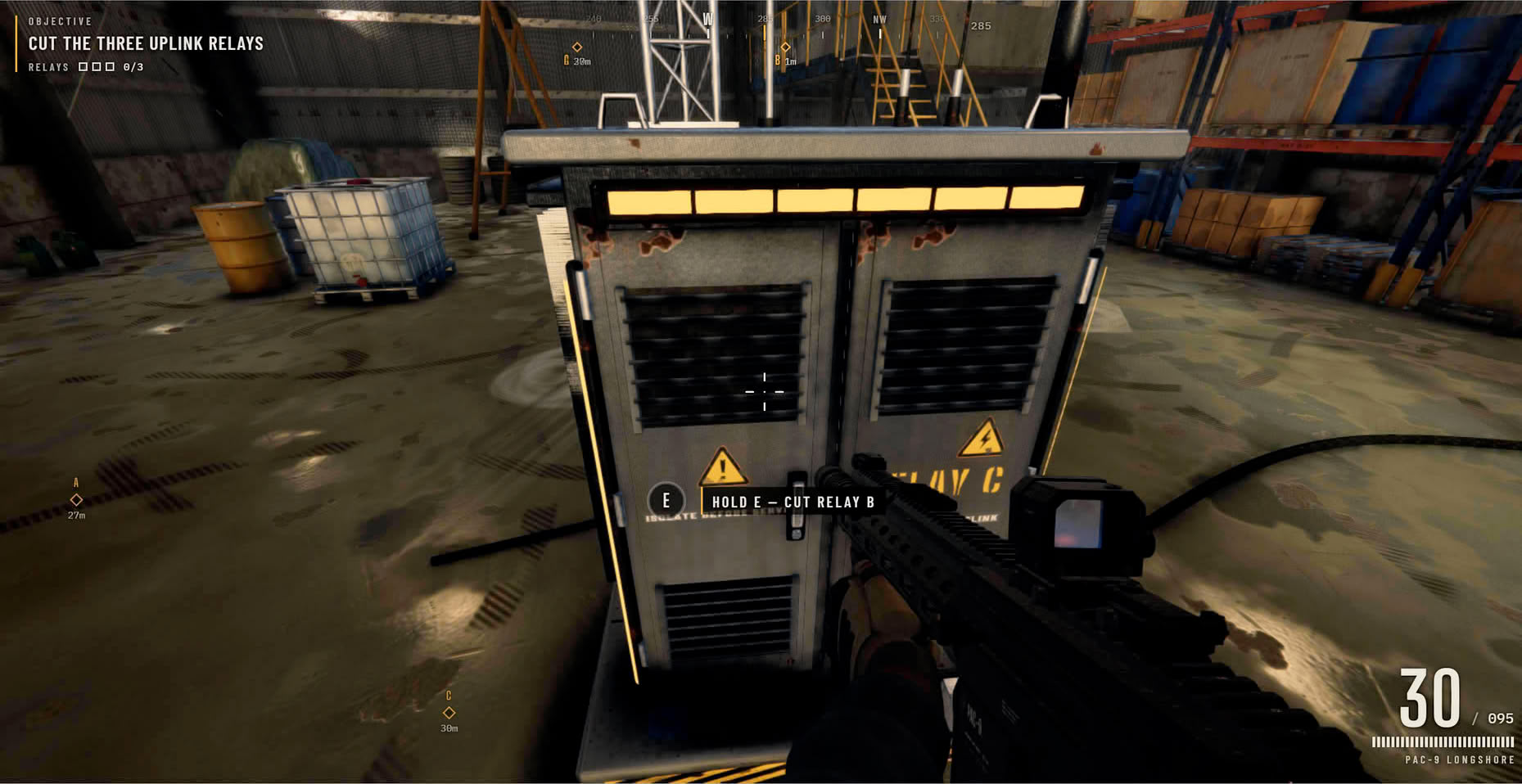
The power of frontier AI models is increasing, and the gaming realm has already experienced what AI can do in terms of mods, changes, bug fixes, and many other aspects when a powerful model is put to work. Late last night, Anthropic released its most powerful frontier model, Fable 5.2, which brings the best intelligence from the company's offerings into an API. As a demonstration of this model's capabilities, we are seeing a relatively complex first-person shooter developed from scratch today. This includes models, sounds, and textures, all created by Fable 5.2. It took about eight hours, 445 million input tokens, and about 2.7 million output tokens, totaling around $550 if done through an API. The result is a game called "Saltline," which can be played entirely in a browser through Claude Artifact, a platform used to showcase creations.

Below you can find the "Saltline" game, where the objective is a simple mission to cut three relays while being constantly attacked by an army of robot dogs and drones. After completing the objective, the main character reaches a boat, and the mission is complete. While this is a very simple task, the fact that Fable 5.2 accomplished all of this from a prompt is an amazing achievement. It can deploy thousands of agents to get one thing done, and with better descriptions, it can perform tasks much closer to what you have imagined.



XCENA Showcases CXL Memory Innovations for AI Inference at OCP Global Summit 2026

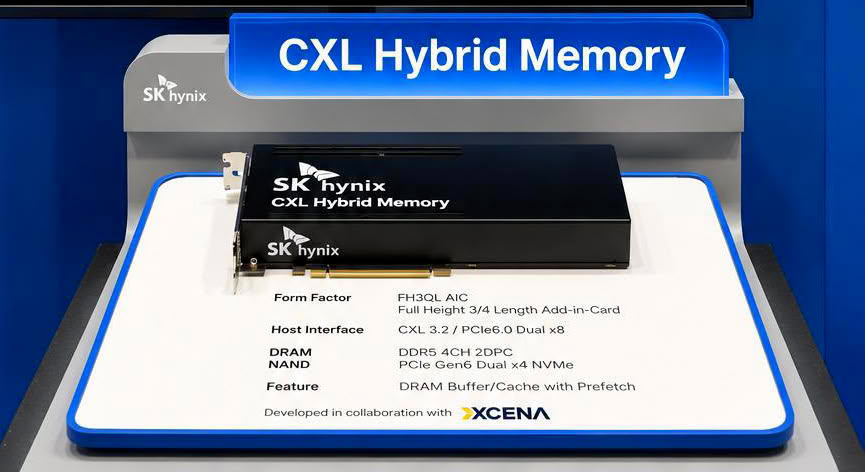
XCENA, a fabless semiconductor company developing next-generation memory infrastructure for the AI era, demonstrated its CXL-based memory solutions for AI inference demonstrations at OCP Global Summit 2026, addressing AI inference's growing memory requirements and data-movement burden. The event was held Oct. 12-15 at the San Jose McEnery Convention Center. The demonstrations address two of the biggest constraints on AI inference: growing memory requirements and the cost of moving data.

XCENA showed two AI inference use cases built on MX1, its Compute Express Link (CXL)-based computational memory solution.

FADU Reveals World's First "File-Semantic SSD" (FS-SSD) at OCP 2026

Data center semiconductor company FADU (CEO: Ehyun Nam) announced on the 15th that it revealed the world's first 'File-Semantic SSD' (FS-SSD) at '2026 OCP Global Summit' currently being held in San Jose Convention Center, California, U.S. and showcased storage solutions optimized for AI data centers along with the company's vision.

'OCP Global Summit' is an official annual conference of Open Compute Project (OCP), world's largest open data center technology community founded in 2011. As an event where major global big tech companies, semiconductor companies along with server and infrastructure manufacturers gather, this year's event featured 'Scaling Innovation for the AI Era' as the theme.

Microchip Partners with Micron to Showcase High-Performance PCIe Gen 6 Storage Architecture

Microchip Technology (Nasdaq: MCHP) today announced a demonstration showcasing an end-to-end PCIe Gen 6 storage architecture, combining Microchip's Switchtec PCIe Gen 6 switches with high-performance Micron 9650 NVMe solid state drives (SSDs). The demonstration highlights the role of next-generation PCIe technology in enabling higher data throughput, reduced latency and scalable connectivity for AI, high-performance computing (HPC) and cloud data center workloads.

At the 2026 Future of Memory and Storage (FMS) Conference, the demonstration features a Microchip Switchtec Gen 6 PCIe fanout switch acting as a high-bandwidth, low-latency interconnect between host processors and multiple Micron 9650 SSDs enabling the drives to operate at the full potential of Gen 6 speed. The architecture supports composable and disaggregated system designs, allowing data center architects to scale storage resources efficiently while maintaining predictable performance.

Seagate Roadmap Targets 50 TB HAMR Hard Drives in 2027

This Tuesday, Seagate presented its Q4 fiscal 2026 earnings report and during the presentation it offered some updated storage roadmap details. The company says that new 50 TB HAMR hard drives are planned for customer validation in 2027. The current Mozaic 4+ platform supports drives up to 44 TB and is built around Seagate's Heat-Assisted Magnetic Recording Technology (HAMR). By the end of 2026, the company expects that Mozaic 4+ models will account for 50% of its HAMR exabytes shipped to customers. "We expect to achieve our next ramp milestone by exiting calendar 2026 with 50% of our HAMR exabytes on our Mozaic 4 platform," CEO, Dave Mosley said. CFO Gianluca Romano confirmed the company is on track to exceed 5 TB per platter and since Seagate flagship-tier HDDs use ten platters, we will have 50 TB per drive. The next step is Mozaic 5+, the third generation of the platform, which will enable that +5 TB per platter density. As mentioned, first Mozaic 5+ drives are expected to ship to customers for qualification later in 2027, after which they go through OEM and data center validation before any broader availability.

Seagate also has a lab demonstration target of 10 TB per platter around 2028, which would eventually bring drives close to the 100 TB range. Last year, Seagate disclosed that it successfully produced a prototype platter capable of storing roughly 6.9 TB of data and is trying to reach 8 TB per platter. The broader capacity roadmap runs from 40-44 TB in the 2027/2028 window, scaling to 50-60 TB around 2030, and pushing past 80 TB in the 2031/2032 timeframe. Worth keeping in mind what "customers" means in this context, these drives first go to Big Tech, enterprises and AI companies, not retail. Consumer availability typically follows years later, if at all.

HRL Demonstrates a Silicon Quantum Processor That Runs Itself

HRL Laboratories published a quantum computing milestone in Nature today: a quantum processor that runs itself. Quantum computers normally depend on racks of external electronics to generate every control signal. HRL replaced those racks with a custom control chip that sits near the qubits, in the extreme cold. The combined system autonomously ran error correction, an essential routine for any future quantum computer.

HRL's approach addresses a central obstacle for all quantum computing platforms: how to control the enormous number of qubits that a useful machine will require without an unmanageable tangle of wiring and electronics.

IBM Debuts World's First Sub-1 Nanometer Chip Technology

IBM (NYSE: IBM) today unveiled a major semiconductor breakthrough with the introduction of the world's first sub-1 nanometer (nm) chip technology, featuring a revolutionary transistor architecture at the 0.7 nm, or 7 angstrom node. The achievement marks a landmark moment for an industry facing the physical limits of traditional chip scaling. Semiconductors play critical roles in everything from computing, to appliances, to communication devices, transportation systems, and critical infrastructure.

IBM's new sub-1 nm chip packs nearly 100 billion transistors onto a chip the size of a fingernail, nearly twice the density of IBM's 2 nm chip, unveiled in 2021. Enabled by a series of structural and material innovations, including IBM's groundbreaking three-dimensional nanostack architecture, the technology demonstrates how continued gains in performance and efficiency remain possible even as chip features approach atomic dimensions.

Quantum Machines Launches Open Acceleration Stack Alongside NVIDIA and AMD

Today Quantum Machines launches The Open Acceleration Stack, a first-of-its-kind framework allowing users to integrate any classical processor (XPU) into their quantum control stack. This novel architecture allows quantum computers not only to be Quantum Error Correction (QEC)-ready and AI-ready, but also QEC- and AI-native.

The Open Acceleration Stack marks a significant expansion of Quantum Machines' Orchestration Platform, the industry's leading hardware and software framework for the control and operation of quantum processors. Using Quantum Machines' OPNIC (OPX Network Interface Card) and NVIDIA NVQLink, the framework enables an ultra-low, microsecond-level latency link between its proprietary Pulse Processing Unit (PPU) and high-performance accelerators, including GPUs, CPUs, FPGAs and ASICs.

Crimson Desert PS5 Footage Shows Off Solid Performance Ahead of Launch

Crimson Desert's official March 19 launch is just around the corner, and in the lead-up to the launch, PlayStation Japan and Pearl Abyss have shown off the upcoming action-adventure game running on base PS5 hardware with respectable image quality and performance. The presenters of the Play! Play! Play! broadcast play through the first few minutes of the game's prologue and show off a few tutorial scenes, and, although it's difficult to gauge image quality directly, there is some information to be gleaned from the broadcast. Overall, performance and image quality seem to align with the promises made by the minimum hardware requirements published earlier this month—even if there are some upscaling artifacts visible in finer textures, like character hair.

The most notable aspect of the gameplay footage is that there are no obvious framerate issues, texture pop-ins, or stuttering visible. Even at longer draw distances, image quality seems to be well controlled, and motion remains smooth, even during high-action scenes where the load would generally increase. The demonstration has been heartening for PS5 players, since there were suspicions that the PS5 gameplay footage was being kept under wraps ahead of the game's launch due to lackluster performance. The broadcast also serves to give players a taste of the challenging combat, puzzle-platformer mechanics, exploration, and atmospheric world they can expect from the game's launch.

Fraunhofer IIS and Airoha Showcase Next-Gen Multi-Channel Spatial Audio on AB1595 Platform

Fraunhofer IIS and Airoha Technology are presenting a breakthrough multi-channel spatial audio solution for next-generation wireless headsets at Mobile World Congress (MWC) 2026. The collaboration integrates Fraunhofer's industry-leading LC3plus codec and Cingo spatial audio rendering solutions with Airoha's flagship Bluetooth SoC, the AB1595—enabling high-definition, low-latency, and resilient wireless multichannel audio tailored for premium mobile and XR applications.

At the core of this joint solution is a seamless, high-definition multichannel wireless transmission chain designed to meet the evolving demands of mobile devices, extended reality (XR), and immersive media ecosystems. By leveraging Airoha's proprietary High Data-rate Technology (HDT), the AB1595 platform provides the robust bandwidth required to support Fraunhofer's LC3plus codec. This combination delivers high-resolution audio with efficient bitrates and ultra-low latency—essential for scalable, multichannel headset designs that go far beyond traditional stereo limitations.

pureLiFi Debuts 10 Gbps "Connectivity DNA" and Bridges the 5G Gap With Global FWA Partners at MWC

pureLiFi, the global leader in light-based communications, is set to challenge expectations at Mobile World Congress (MWC) 2026 by shattering speed barriers and solving the Fixed Wireless Access (FWA) industry's toughest challenge, delivering high quality signal indoors. LiFi is a high-speed, wireless communication technology that transmits data through the light spectrum rather than traditional radio frequencies.

The latest LiFi systems on show leverage technology trusted by international security agencies for classified networks, demonstrating that LiFi's massive capacity and military-grade security are accessible to all. Moving beyond the constraints of radio frequencies, pureLiFi is unveiling its High-Bandwidth Architecture, capable of a staggering 10 Gigabits per second (Gbps). Alongside this breakthrough, the company will showcase a powerhouse lineup of 5G FWA partner demonstrations and the latest Bridge XC Flex system.

Microsoft Shader Execution Reordering Brings 90% Performance Increase on Intel Arc B-Series, 80% on NVIDIA "Blackwell" GPUs

Microsoft recently updated its Agility SDK to version 1.619, bringing DirectX Shader Model 6.9 alongside some new DirectX 12 improvements. However, Microsoft's latest product demo about Shader Execution Reordering (SER) now confirms a massive performance uplift across several GPUs, with up to a 90% improvement on Intel Arc B-Series and more than 80% from independent sources' benchmarks on NVIDIA "Blackwell." With SER, the API gives applications the ability to dynamically sort rays for highly optimized parallel execution, improving performance by a large margin. In Microsoft's own testing, Intel's Arc B-Series GPUs, which include "Battlemage" discrete GPUs and Xe3-based integrated GPUs in "Panther Lake," managed to achieve a 90% framerate increase in the technology demonstration, suggesting that ray tracing performance still has some tricks up its sleeve for optimization.

Meanwhile, the company also tested the NVIDIA GeForce RTX 4090 with SER, scoring a 40% improvement over the default ray sorting in the previous execution model. Independent testing from Osvaldo Pinali Doederlein on X showed that the GeForce RTX 5080 "Blackwell" GPU scored about an 80% improvement running this demo, which gives confidence that games implementing this technology will provide gamers with a massive performance boost once implemented. Microsoft has built this D3D12RaytracingHelloShaderExecutionReordering demo with a minimum demonstration of the SER technology, so anyone can test their own hardware and the performance improvement.

Europe Launches Euro-Q-Exa Quantum Computer in Germany

Euro-Q-Exa, the first EuroHPC Joint Undertaking quantum computer deployed in Germany, has been unveiled at the Leibniz Supercomputing Centre (LRZ) in Garching, Munich. The deployment marks a significant step in Europe's effort to build long-term quantum capability as part of its sovereign digital infrastructure, alongside world-leading high-performance computing (HPC).

Installed, hosted, and operated at LRZ, Euro-Q-Exa is designed not merely to provide access to quantum computing, but to enable European researchers to build, operate, and scale quantum capabilities locally. By embedding the system within an established HPC environment, the system supports the development of hands-on expertise, operational know-how, and sustainable research capacity within Europe.

Forge Nano Transforms Advanced Semiconductor Chip Manufacturing with High-Speed 1000:1 Aspect Ratio Atomic Layer Deposition Coatings

Forge Nano, Inc., a technology company pioneering domestic battery and semiconductor innovations, today announced a breakthrough that fundamentally redefines the economics and architecture of advanced semiconductor manufacturing. The company has demonstrated high-speed, defect-free atomic layer deposition (ALD) coatings in semiconductor features at a 1000:1 aspect ratio. Conformality is maintained at production-scale while providing coverage on features 2 orders of magnitude greater than line-of-sight techniques.

This breakthrough removes the primary constraint that has limited 3D semiconductor scaling and enables architectures previously considered uneconomic or impossible. The demonstration was performed on production-representative wafers supplied by C2MI, a leading semiconductor process development and manufacturing innovation center in Canada, with conformality, defectivity and electrical performance independently validated through the partner's internal metrology and reliability testing.

Samsung HBM4 Reportedly Verified for NVIDIA "Vera Rubin" AI Platform, Could be Demoed at GTC '26

Last week, intriguing early details of Samsung's (up to) 2 nm custom HBM logic die designs turned up via South Korean semiconductor industry insiders. As expected, talk of really futuristic computer memory tech also included comparisons to less distant prospects. According to official roadmaps, development of 4 nm node process-based HBM4 (sixth generation) modules wrapped up in 2025. Last Sunday, an SBS Biz news article claimed that Samsung Electronics had: "recently passed the final quality test for HBM4 from NVIDIA plus AMD, and will begin mass production next month." On the Team Green front, this fresh verification and consequent full-on manufacturing phase, could lead to initial batches getting showcased at the upcoming GTC 2026 AI conference (March 16-19). Industry moles propose that Samsung HBM4 modules will be "immediately used" in the performance demonstrations of next-gen "Rubin" AI accelerator products. NVIDIA's current-gen "Blackwell" AI GPU designs rely on HBM3E. Industry experts believe that Samsung trailed behind main rivals during the era of HBM3 and HBM3E, but newer observations predict the South Korean giant's (potential) return to prominence in the High Bandwidth Memory market sector.

A few weeks ago—at CES 2026—NVIDIA announced an upgrade of "Vera Rubin" memory bandwidth. It is not (officially) clear whether this jump from 20.5 TB/s (September 2025 spec) to 22 TB/s was enabled by the utilization of Samsung HBM4 modules. SBS Biz outlined one major advantage: "Samsung's HBM4 is said to have the industry's highest specifications (over the closest competition), operating at 11.7 Gb/s, which is faster than the 10 Gb/s (JEDEC standard) required by NVIDIA and AMD. It is said that Samsung demonstrated its technological perfection by passing verification without redesign, despite a customer's request for increased performance last year." Additionally, the publication's anonymous sources reckon that "full-scale supply" will commence by June time, due to HBM4 being closely tied to Team Green's "Vera Rubin" manufacturing schedule. Recently, Quanta Computer's Mike Yang anticipated first shipments of server hardware—heading to hyperscaler customers—starting around late summer.

ASRock Presents New DeskSlim, DeskMini, & Box PC Systems at CES 2026

Earlier today, ASRock granted TechPowerUp access to its mostly new product laden Las Vegas hotel suite, where several brand-new mini PC systems immediately drew the eye. The Taiwanese manufacturer's DeskSlim B760 is already a somewhat known property, but over a month later, it is encouraging to examine a demonstration unit in-person. ASRock's demo example was already opened up when TPU turned up on the scene; clearly showing Intel hardware-based innards. Team Blue's reference Arc Pro B50 "Battlemage" workstation-grade graphics card is dinky enough to fit inside the DeskSlim B760 model's ultra-compact 4.9-liter chassis. Also, a Laminar RH-style air cooler was crammed into the tight interior space—tasked with cooling up to Intel 14th Gen Core CPUs. A nearby product placard mentions that the AMD-based DeskSlim X600 variant is also on the way to launch.

Powiser Showcases New VOLIX 3 P-series Outdoor Energy Solutions at CES 2026

Powiser has unveiled a couple of new VOLIX 3 P-series models, signalling the start of an expanded range of products in 2026. TechPowerUp spent some time at the power system specialist's CES booth, where we took a closer look at two outdoor-centric models. Starting with the physically larger VOLIX 3 P4000 demonstration unit, a TPU staffer took note of a rugged handle bar and set of wheels. Adventurous outdoors-types can lug this 4096 Wh LFP (LiFePO4) battery-based power station across the ground, rather than carry it. As befits this SKU's moniker, claimed AC output is 4000 W, going up to a surged 8000 W level. AC power input goes up to 1800 W, while solar input maxes out at 1600 W. A total of ten output ports can power a great variety of electronic devices. When inspecting the VOLIX 3 P4000 back section, TPU spotted two external battery expansion bays.

Hyperkin Shows Off Modular InfinaKore Guitar & X5 Alteron Mobile Controllers at CES 2026

Hyperkin launched its Drakong sub-brand last year, in parallel with an early introduction of their new product partnership with Fender. Almost six months later, the collaborative InfinaKore "Telecaster Edition" guitar controller has been showcased in-person at CES 2026. Yesterday, TechPowerUp inspected this highly-anticipated modular rhythm game-based accessory. Drakong's InfinaKore controller is being marketed as the ideal input device for Sound System's "Pro Mode." This next-generation rhythm game is expected to launch by Spring of this year. The InfinaKore controller features a fully modular design; several parts—including body, frets, tuners, whammy bar, and strum bar—can be swapped out. Users will be able to 3D print customized pieces; relevant files will be made available on day one of release. An "accessibility-first" approach means that "open-source mods will be provided to empower players of all abilities."

Bitspower Shows Off CPU Cooler Prototype with Multiple Mounted LCD Screens

Bitspower has a curious demo setup tucked in a corner of its Las Vegas suite. A cuboid CPU cooler—featuring three LCD screens—sits atop a dummy ATX-shaped motherboard. PC builders have become accustomed to the presence of single screens on various types of modern central processor cooling solutions. In stark contrast, Bitspower has opted into prepping an unusual triple-panel array that is hooked up to a nearby tablet. A proprietary application allows users to select picture, GIF or video content and adjust displayed diagnostic information. The tablet was also put in charge of controlling ARGB lighting systems present on connected fans.

Considering the size of the block mounted onto the plastic board, initial inspectors would conclude that Bitspower's engineering team had created some sort of air-cooled tower. The absence of fans and a dense matrix fin array indicates an alternative method; perhaps not passive. TechPowerUp lifted up the demonstration block and found part of a liquid cooling pump fixed onto the pretend CPU socket. Most of Bitspower's prototype seems to be made of dark gray plastic, and simply serves as a set of surfaces to affix LCD screens onto. Amusingly, the dummy mainboard sports four mock sticks of RAM—a wishful provision given current market conditions!

HAVN XR 1000 W Platinum A++ PSU Showcased in Torn Down Form at CES

Early this morning, the brand-new HAVN XR 1000 W Platinum A++ power supply unit was introduced via official press material. Motivated by an intriguing feature set, the TechPowerUp team checked out the brand's table over at the Pro Gamersware Group (PGG) booth. Two demonstration units were available for close-up examination; one intact example and another in deconstructed form. A very neat set of internal premium-grade components were exposed within the latter demo piece.

Additionally, HAVN's very slick die-cast aluminium top part was placed to the side, along with an H-series fan mounted on a vibration-dampening array—borrowing key elements from the brand's already familiar H14 design. The manufacturer has followed recent-ish PSU trends, by outfitting their upcoming product with two 12V-2x6 connectors. Nearby product placards state that the top-level PSU model will be "coming soon." HAVN expects to ship finalized XR 1000 W Platinum A++ products by the second or third quarter of 2026, with an intended global rollout.

Vastarmor Debuts Low Profile Radeon RX 9060 XT Custom Graphics Card at CES

Vastarmor, a Chinese graphics card specialist, has showcased an intriguingly compact custom Radeon RX 9060 XT design at this week's CES trade event. The TechPowerUp team stumbled upon this fairly unique demo unit—at least for AMD's dGPU RDNA 4 generation—when perusing the Minisforum booth. Concrete details were not available at the time of writing, but TPU staffers will endeavor to extract more information from Vastarmor representatives in the near future. On initial inspection, the slimline two-slot card seems to be a prototype/early sample—given the unfinished nature of its backplate; as evidenced by incomplete/cut-off AMD Radeon branding.

Normally, Vastarmor's triple-fan cooling solutions have been deployed on more potent and larger hardware, but their CES 2026 product showcase focuses on dinky shroud and PCB designs. ASUS and Gigabyte have tended to release similarly proportioned low profile triple-fan cards, albeit with NVIDIA GPU tech under the hood. Team Red introduced its reference Radeon RX 9060 XT LP 16 GB SKU mid-way through December, with reports pointing out that this twin-fan model could be reserved for the Chinese market. Specifications mention a slightly reduced TDP rating, when compared to the standard Radeon RX 9060 XT 16 GB—140 W instead of 160 W. It is likely that Vastarmor engineers have used AMD's Navi 44 GPU-based LP reference model as a springboard for their own customized solution.

GMKtec's "Panther Lake" Flagship-powered EVO-T2 Mini PC Will be Centerpiece of CES Portfolio

Late last year, a myriad of Intel manufacturing partners started teasing next-gen "Panther Lake" processor-based devices. In November, GMKtec—a mini PC specialist—took part in a Team Blue-curated 2025 Technology Innovation and Industry Ecology event. Attendees in China witnessed a debuting of the hardware manufacturer's EVO-T2 model. A product placard boasted that the compact desktop system utilized a "Panther Lake H 12Xe3" mobile processor. This past weekend, freshly released GMKtec marketing material confirms that the EVO-T2 will feature Intel's Core Ultra X9 388H APU; presumably in the best available configuration. Up until the new year, Team Blue and involved parties have not publicly confirmed the nomenclature of forthcoming "Panther Lake-H" SKUs.

Officially, GMKtec's most potent Intel CPU-based package was declared worthy of being the company's centerpiece at their CES 2026 booth. The upcoming flagship 16-core Core Ultra X9 388H APU seems to be positioned to take on AMD's best current-gen "Strix Halo" mobile chip: Ryzen AI Max+ 395. According to a past weekend GMKtec Germany blog entry, EVO-T2 demonstration units will be "running AI tools and high-resolution creative software, showcasing real-world performance" at CES 2026. Additionally, company representatives are set to participate in "joint presentations of Intel-powered Edge AI solutions, highlighting the role of Mini PCs in lightweight intelligent computing scenarios." The EVO-T2 is advertised as offering local execution of multimodal generative AI workloads, with "Panther Lake" enabling significantly enhanced on-device AI performance.

HDMI LA, Inc. to Showcase Advanced HDMI Gaming Technologies at CES 2026

HDMI Licensing Administrator, Inc. (HDMI LA) announced that its CES 2026 booth will spotlight HDMI gaming technologies with a range of demonstrations designed to engage both professional attendees and gaming enthusiasts. The booth will feature the performance benefits of three HDMI cable types across interactive gaming demonstrations:
  • Ultra96 HDMI Cable, introduced in the recently released HDMI 2.2 Specification, will be on display with early prototypes
  • Ultra High Speed HDMI Cable
  • Premium High Speed HDMI Cable
These demonstrations will highlight how the right HDMI connectivity drives exceptional performance for next-generation gaming experiences.

Cadence Readies First Full eUSB2V2 Demo Targeting Edge AI and AI PCs for CES 2026

Since their debut in 2023, AI PCs have taken the market by storm. Gartner projects that 77 million AI PCs will ship in 2025, representing 31% of the worldwide PC market, and growing to a 55% market share in 2026. Meanwhile, edge AI is multiplying due to a variety of factors, including smaller and more efficient AI algorithms, more powerful AI silicon, and the proliferation of IoT devices.

As laptops, AI PCs, and the latest imaging systems demand even higher performance and lower power, SoCs are challenged to keep pace. Advanced-node SoCs at 5 nm and below must balance efficiency with ultra-low voltages and growing bandwidth needs. High-resolution cameras, faster frame rates, and AI-driven workloads all require interfaces that deliver speed with minimal EMI/RFI noise.

Samsung's Proprietary "Heat Path Block" Tech Could be Adopted by Apple & Qualcomm

Samsung Foundry's "Heat Path Block" (HPB) technology is reportedly a key aspect featured within the upcoming Exynos 2600 application processor (AP). The South Korean's previous flagship mobile chipsets have often been beset with thermal issues, leading to the deployment of rival chipsets within certain generations of Samsung Galaxy smartphones. The South Korean seems to be pinning its hopes on the emerging Exynos 2600 across a number of fronts. Most notably as a confident "proof of concept" demonstration of the foundry business's cutting-edge 2 nm GAA process (aka SF2). According to a freshly-published ET News SK article, Samsung's innovative "semiconductor heat-suppressing technology" has already attracted interest from Apple and Qualcomm.

In the recent past, these VVIP clients have been on the order books for TSMC's best modern node processes. Samsung's SF2 line is seemingly being dangled as a carrot; designed to entice the return of former customers. Semiconductor industry trackers reckon that the Exynos 2600 SoC—enhanced with HPB tech—will serve as a strong demo of Samsung's 2 nm chip making capabilities. The foundry's in-house Heat Path Block is a copper heatsink that is packaged on top of a mobile AP. Heat dissipation is further maximized by moving DRAM to the side—previous Exynos layouts had this aspect placed atop APs. Insiders believe that a 30% improvement has been observed when comparing the Exynos 2600 to a predecessor. Samsung's System LSI division supposedly co-created the HPB design with an internal packaging development organization.
Return to Keyword Browsing
Nov 11th, 2026 03:12 CST change timezone

New Forum Posts

Popular Reviews

TPU on YouTube

Controversial News Posts