News Posts matching #iPhone

Return to Keyword Browsing

Zelda: Ocarina of Time Remake Now Boots on Jailbroken PS5 and iPhone 17 Pro Max

Nintendo's Zelda: Ocarina of Time remake launched on Switch 2 on November 5, and it is already running on a jailbroken PlayStation 5 and an iPhone. On PS5, Vampinity posted results in the GitHub repository for EglantinePS5, a PS5 port of a Switch emulator based on Eden. On firmware 12.40, the game loads a save, and Link can walk out of his house into Kokiri Forest at roughly 15 to 20 FPS. However, it runs out of memory a couple of minutes in, with heavy white fog and missing geometry in the forest. Vampinity calls it "nowhere near playable" and says Claude wrote the patches. Apparently, much of the shader work was borrowed from forks of Lichii, the emulator that got the remake running on PC on launch day.

The iPhone port comes from developer Joe Jiang, who showed Kokiri Forest running on an iPhone 17 Pro Max. According to Jiang, memory was the hardest part, since the game wants about 9 GB while a single iPhone app is capped at 8,192 MB. He claims his approach keeps quality intact and peaks at just 3.4 GB when loading scenes. Apparently, the method isn't specific to Ocarina, and Jiang says it could bring any Switch or Switch 2 game to iOS, iPadOS, Apple TV, Android, and HarmonyOS. He hasn't released it yet, but it isn't the first Switch 2 game on iPhone. Mario Kart World booted on one shortly after the console's first jailbreak went public. The PS5 port, meanwhile, needs the Relapse jailbreak, which covers firmware 7.00 through 13.60. Neither is a practical way to play the game yet, but I'm sure Nintendo isn't too happy about the remake breaking containment this quickly.



Nintendo Switch 2 Exclusives Already Booting on iPhone and PC, Days After First Jailbreak

Less than a week after the Switch 2's first jailbreak went public, Switch 2 exclusives are already showing up on hardware Nintendo doesn't make. Developer Will Faust posted footage of Mario Kart World running on an iPhone 18 Pro through a private fork of nxnative, a project that runs original Switch games natively on Apple Silicon. That came a day after his macOS demo, which had missing geometry and wrong colors, so many people called it fake. Faust says the iPhone build uses just under 6.5 GB of physical memory thanks to a swap-like, file-backed memory setup. Switch 2 support needed extra work on NVN2, the console's newer graphics API, and Faust has said he won't release the code.

On PC, developer Sheepish got Splatoon Raiders booting in a private build of the Eden emulator. It now reaches character select, though it lags quite a bit, has no VSync, and is missing plenty of features. Sheepish credited AI-assisted development and hinted at a public release later this week. Centro LEAKS also posted that DK Bananza is running on PC, though only an image was shared, and it's unclear who is behind it.

New Project Lets Nintendo Switch Games Run Natively on Apple Silicon Macs and iPhones

An open-source project called nxnative lets Nintendo Switch games run natively on Apple Silicon, without an emulator in between. Built by developer seedds, the tool takes a user's own game files and prod.keys and turns them into an app for iPhone, iPad, or Mac. YouTuber Andrew Tsai put it to the test on Macs, where Monster Hunter Rise held a locked 60 FPS on a base fanless M1 MacBook Air with 8 GB of RAM. Unicorn Overlord, Dragon Quest XI S, and Dark Souls Remastered also ran, though Doom Eternal refused to boot.

Since the Switch and Apple's chips both use the Arm64 instruction set, nxnative rewrites the game's code to run directly on the Apple chip, swaps the Switch's Horizon OS for a small stand-in host, and rebuilds Nintendo's NVN graphics API on top of Metal. Shader translation is borrowed from Ryujinx, the Switch emulator that Nintendo shut down in 2024. The approach itself comes from d2r-mobile, which did the same for Diablo II: Resurrected. The README now lists around 70 tested games, mostly aimed at the iPhone 15 Pro or newer and iPads with M1 or later, and Mac apps need an extra build step. There's also no online play or amiibo support.

New Fan Project Brings Xbox One Games to iPhone Without Emulating the Hardware

A developer who goes by levi on X has announced Utsuro, a new project that runs Xbox One games on Apple devices. It's still very early, but the developer says it already runs Minecraft: Xbox One Edition "extremely well," and the attached video shows it running on iOS with touchscreen controls. According to the project's GitHub page, Minecraft hits around 36 to 60 FPS on the Mac build, and Sonic Mania and Rocket League run there too, complete with screenshots. Sonic Mania is marked as playable at around 57 FPS with sound, while Rocket League renders and drives at roughly 15 to 20 FPS, with dark lighting and no audio yet.

Utsuro also works differently from a typical emulator. Apparently, it skips hardware emulation altogether and runs the console's Windows-based software layer as x86-64 code on Apple's Arm chips through FEXCore, and fills in the system pieces the console itself would normally provide. Graphics go through Apple's Metal API, with the Xbox One's Direct3D 11.X shaders converted to Metal's shader language, while audio runs on CoreAudio. Getting it running isn't exactly simple either. On iOS, the app has to be sideloaded, needs a JIT helper like StikDebug, TrollStore, or a jailbroken device, and expects a decrypted dump of the game. The macOS version currently has to be built from source.

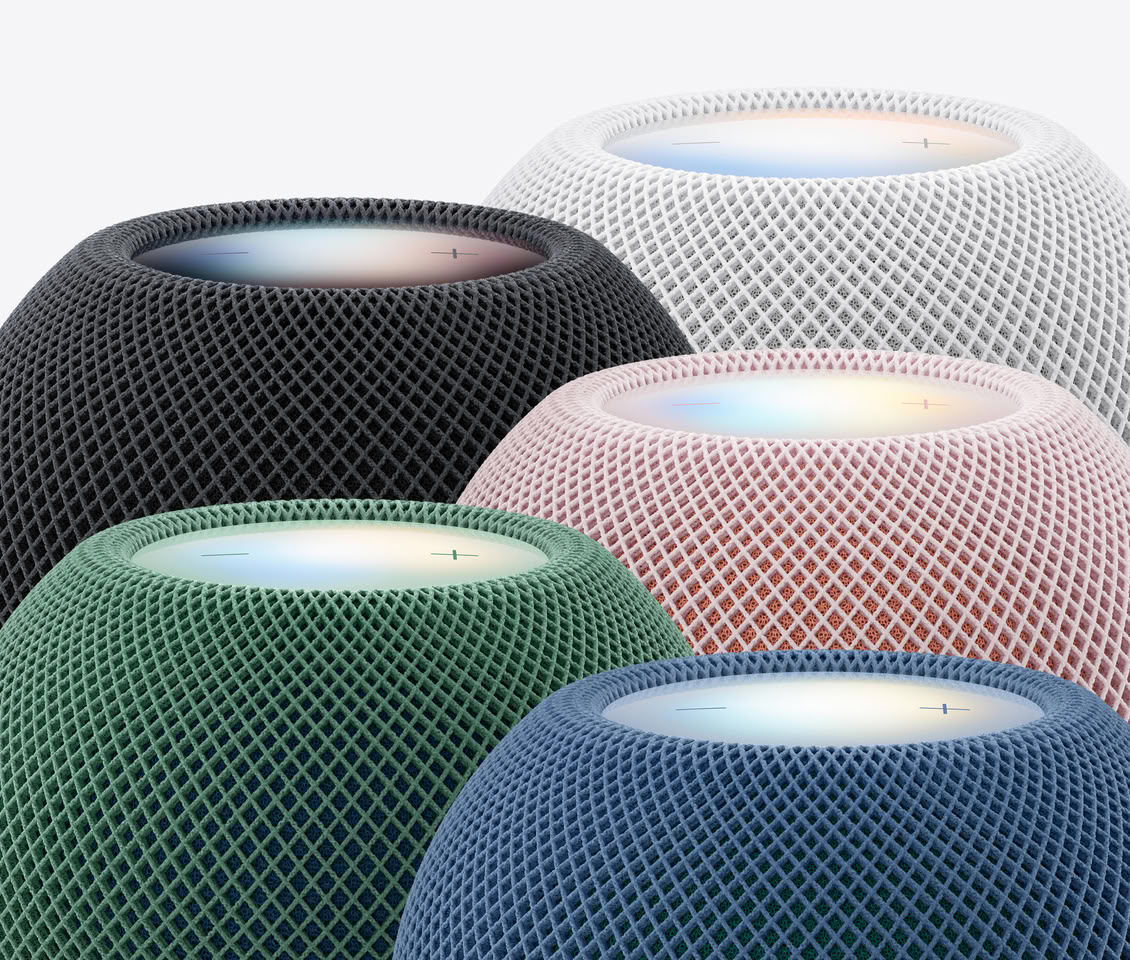
Apple Announces the Next Generation of HomePod mini

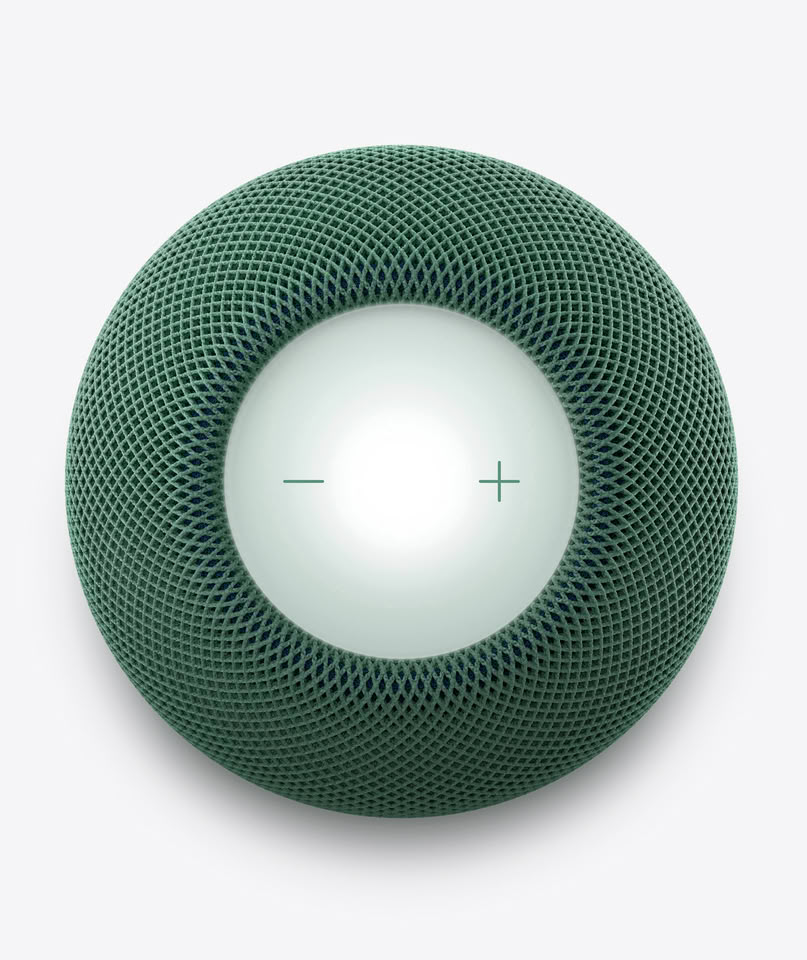
Apple today announced HomePod mini 2, featuring Siri AI, gorgeous new colors, and enhanced audio experiences. Siri AI, coming to HomePod mini 2 in a future software update, is a profoundly more capable and conversational assistant with personal context understanding, broad world knowledge that powers tasks like richer music discovery, and the ability to tap into even more apps—bringing a whole new level of capability to HomePod mini.

Users can enjoy room-filling audio with a single speaker, in a stereo pair, or using multiroom audio. When paired with the new Apple TV 4K, HomePod mini 2 supports four-speaker surround sound—Apple's most immersive home theater setup yet. And HomePod mini makes it easy for different users to manage the connected home with just a voice command, securely controlling accessories and running automations.

Apple and Qualcomm Renew Partnership for 5G Modem Supply

Qualcomm announced today that it is continuing its licensing agreement with Apple, as the previous agreement has ended. In a brief press statement, John Han, Executive Vice President and General Manager of Qualcomm Technology Licensing (QTL), stated that the company is "pleased to extend the Apple license agreement," which will take effect starting April 1, 2027. The end date of this new licensing agreement is still unknown, as the company did not disclose the exact terms, monetary value, or end date.

As readers may recall, in September 2023, Apple renewed its licensing deal with Qualcomm to obtain 5G modems for its products. This license was valid for three years and is now expiring, requiring a renewal. In its iPhones, Apple has started using a combination of in-house modems, known as C-series SoCs, along with Qualcomm-provided 5G modems. In 2019, Apple purchased Intel's modem business for $1 billion, acquiring the engineers and patents needed to jumpstart its own modem design and production. Early last year, with the launch of the iPhone 16e, Apple unveiled the C1 modem, its first-generation in-house 5G modem, which has since evolved into the upgraded C2 5G cellular modem design, now shipping with the iPhone 18 Pro lineup.

Apple to Launch Gaming Controllers Developed Under "Beats" Brand

After the announcement of the iPhone 18 series and the iPhone Duo, Apple is taking a step further by developing a new gaming accessory specifically for its phones and potentially other devices. According to the latest Power On newsletter from Bloomberg, Apple is in the process of creating game controllers, codenamed "T6502" and "T1057." These appeared in macOS 26.7 release candidate mentions and are reportedly dedicated to a handheld mobile experience first. According to Bloomberg's Mark Gurman, Apple is designing game controllers for its iPhones, featuring all the usual elements such as thumbsticks, home buttons, triggers, shoulder buttons, and many more control options to make mobile gaming easier on the iPhone.

For the rollout, Apple plans to do it through its "Beats" brand, also known as "Beats by Dre." Since Apple owns the brand, the company will use it to launch non-traditional products like these gaming controllers, which don't necessarily fit the Apple brand. Launching this product also makes sense considering that mobile SoCs found in modern phones are equivalent to laptop or handheld consoles in raw CPU and GPU power, so turning the phone into a gaming handheld is a natural solution. For example, macOS 26.7 RC revealed that the T1057 gaming controller has accelerometer and gyroscope support, while the T6502 gaming controller does not.

TSMC Reports Record $16.26 Billion August Revenue

TSMC today announced its financial results for August, reporting NT$514.81 billion, or about $16.26 billion at the time of writing. This represents a significant 10.1% increase from July's $14.49 billion, indicating that demand remains robust. Growing a multi-billion-dollar manufacturing business at double-digit percentages each month is an impressive achievement and a clear sign that customer orders continue to pour in, with no end in sight for the increasing demand for advanced silicon and packaging. Compared to August 2025, TSMC reported a 53.3% increase in revenue this month, suggesting more customers are committing to new nodes and are willing to absorb any price increases TSMC imposes for its wafers.

Total revenue from January to August reached NT$3,386.87 billion, approximately $107 billion, indicating that the year's results will be extraordinary. Unlike quarterly reports, we don't have detailed information on revenue distribution and customer commitments across different nodes. However, data from the Q2 report showed that the N2 node accounts for only 3% of TSMC's revenue, while the 3 nm node contributes 30%, and the 5 nm node leads with 33%. With the recent launch of Apple's iPhone A20 Pro SoC, the share of 2 nm node orders is expected to increase significantly.

Apple Raises Prices Across the iPhone Lineup as DRAM Costs Catch Up

As was rumored for months, Apple's iPhone 18 Pro launch on September 9 brought price hikes across almost every iPhone in its lineup, not just the new models. The iPhone 18 Pro and iPhone 18 Pro Max now start at $1,199 and $1,299, a $100 jump over the iPhone 17 Pro pair, both of which have been discontinued. Apple also raised prices by $100 across the board on the phones it kept around. The iPhone 16 now starts at $799, the iPhone 17e at $699, the iPhone 17 at $899, and the iPhone Air at $1,099. None of these older models got any hardware changes to justify the bump.

The timing of these price hikes aligns with what's become an industry-wide DRAM shortage, driven largely by AI data center demand soaking up memory supply. Apple CEO Tim Cook has previously compared the situation to a "hundred-year flood," and said the company can no longer absorb rising memory and storage costs like before. This mirrors what's already played out across the PC space, where DRAM and SSD price hikes have been hitting system builders and OEMs for months. It looks like Apple, despite its scale and negotiating leverage, isn't immune to the same memory price pressure squeezing the rest of the industry.

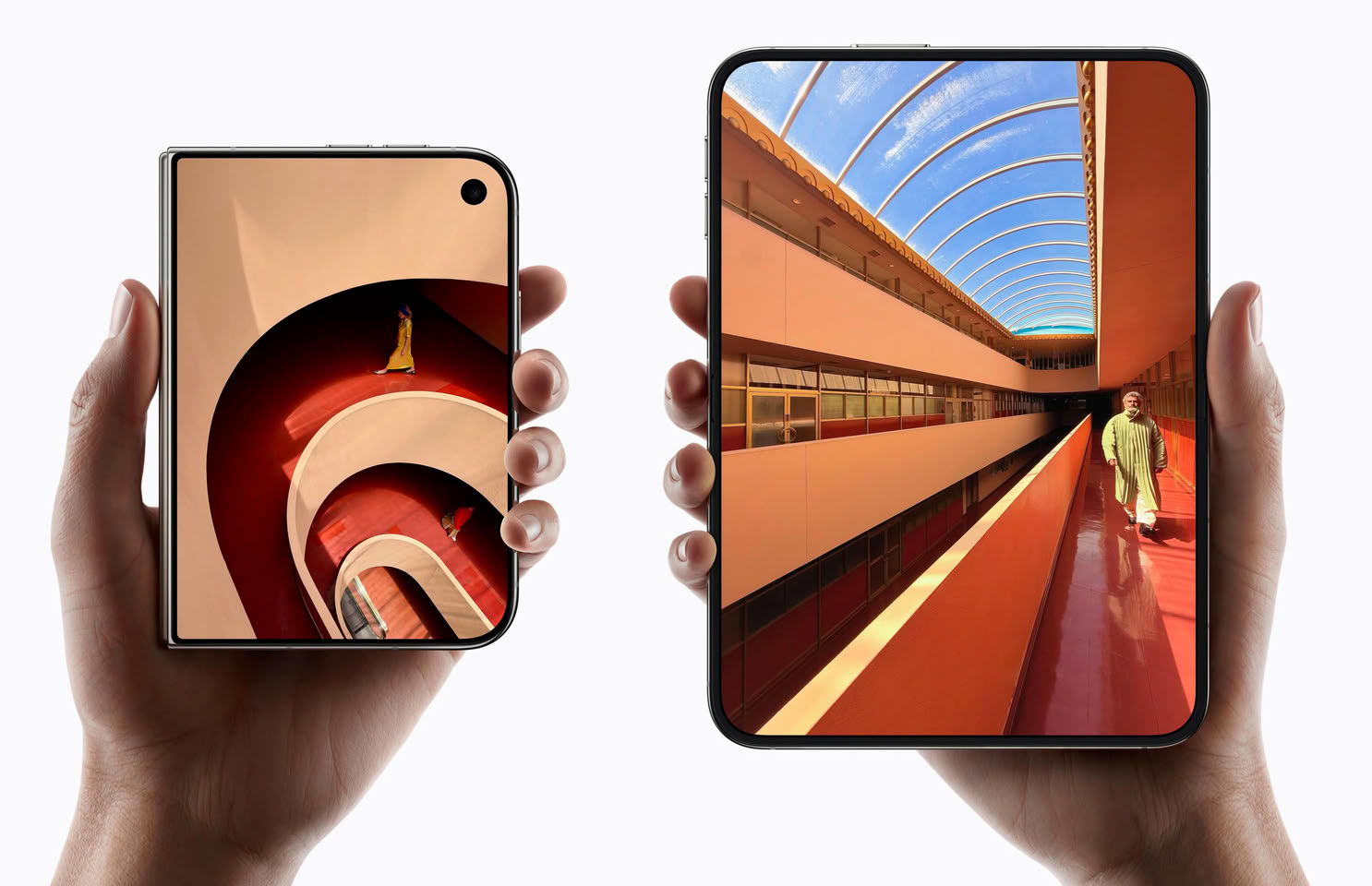
Apple Unveils iPhone Duo, the First Foldable iPhone

Apple today introduced iPhone Duo, the first foldable iPhone. Opened, it is the thinnest iPhone ever, with a 7.6-inch inner display that provides a large canvas for viewing content, gaming, and multitasking, and a special nano-texture finish that minimizes glare for an unparalleled viewing experience. Closed, the 5.4-inch outer display delivers 90 percent of the screen area of iPhone 18 Pro in a compact, pocketable design. Both displays share the same aspect ratio, so content scales proportionally, ensuring visual continuity. iPhone Duo is built to last with an innovative hardware design and a precision hinge that offers a smooth, satisfying feel with every use. Powered by the new A20 Pro, iPhone Duo features an advanced thermal management system with a custom-designed vapor chamber and a dual-battery architecture, delivering pro performance and impressive all-day battery life. The advanced camera system takes stunning photos and videos, with the folding design unlocking fun new ways to use the camera that aren't possible on any other iPhone. iOS 27 is reimagined, remaining familiar and intuitive while adapting to the versatile ways users can interact with iPhone Duo. And with Apple Intelligence and Siri AI, iPhone Duo brings powerful AI capabilities together with a user's personal context.

iPhone Duo is available in two refined colors: star white and night sky. Pre-orders begin Friday, October 16, with availability beginning Friday, October 23.

Apple Debuts iPhone 18 Pro and iPhone 18 Pro Max

Apple today announced iPhone 18 Pro and iPhone 18 Pro Max, delivering the most advanced pro camera system in an iPhone, and huge leaps in battery life and performance. The new 48MP Fusion Main camera, now with variable aperture, brings creative control that wasn't possible before, and new Pro controls let users customize their experience in the Camera app. Both models feature a smaller and even more useful Dynamic Island, as well as A20 Pro and a next-generation vapor chamber that together deliver the highest sustained performance in iPhone history. iPhone 18 Pro Max also delivers the largest increase in battery life ever on iPhone, thanks to advancements in Apple silicon and a larger battery. Featuring iOS 27 with Apple Intelligence and Siri AI, iPhone 18 Pro models bring powerful AI capabilities together with personal context to become an intelligent personal hub with privacy and security at its core.

iPhone 18 Pro and iPhone 18 Pro Max are available in four elegant finishes: black, silver, glacier, and an all-new burgundy. Pre-orders begin Saturday, September 12, with availability beginning Friday, September 18.

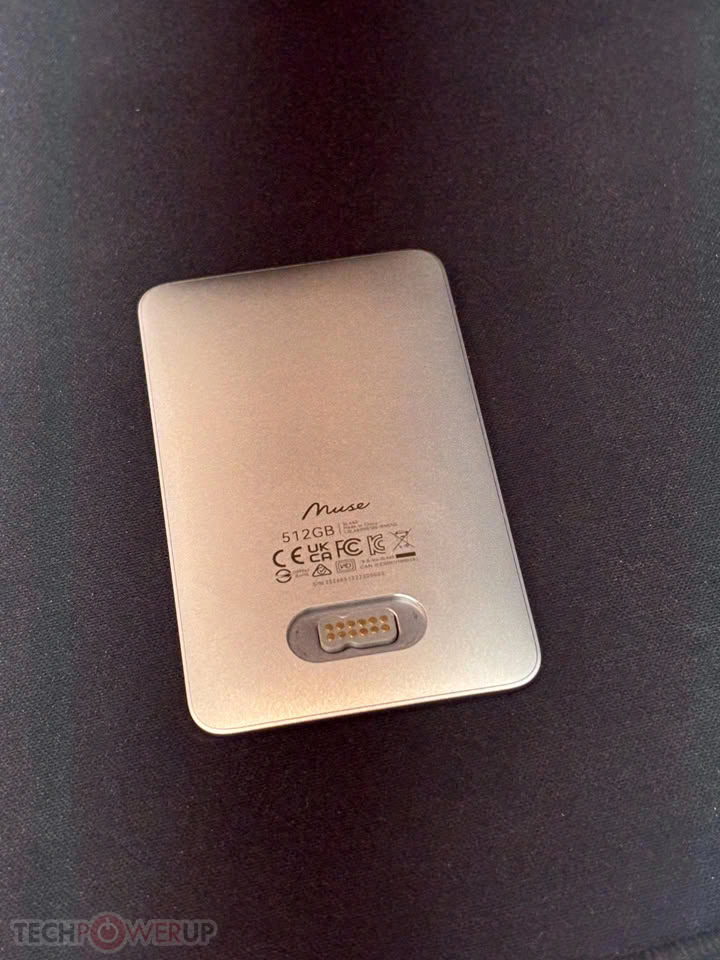
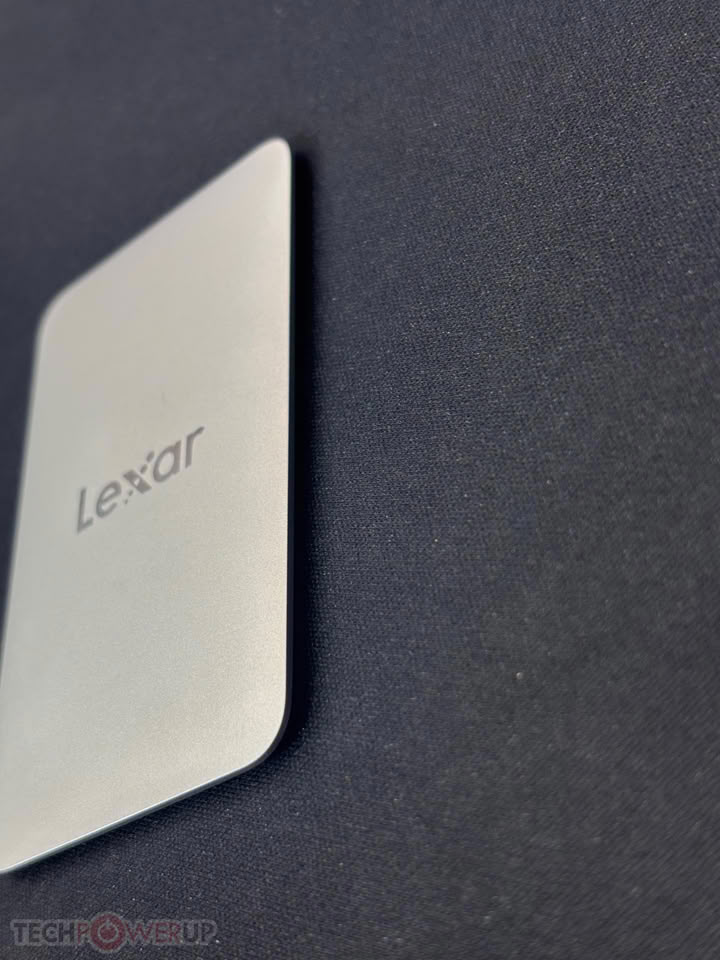
Lexar Shows Off Muse Portable SSD, Claims World's Thinnest at IFA 2026

We are on the ground at IFA 2026 in Berlin, and Lexar used the floor to show off the Muse, a portable SSD the company is calling the world's thinnest. It measures just 3.8mm at its thickest point, tapering to about 1mm at the edges. That's closer to a credit card than the SSD bricks most people are used to carrying. However, getting there meant losing the USB-C port entirely. The Muse instead uses SnapLink, a proprietary pogo-pin connector held in place by N52-grade neodymium magnets, paired with a separate magnetic cable that terminates in USB-C. That also means that if you lose the SnapLink cable, the Muse is pretty much dead weight, since there's no standard port to fall back on.

The speeds are unremarkable for this class of drive, with up to 1,050 MB/s reads and 1,000 MB/s writes, and support for 4K ProRes recording at up to 120 FPS on compatible iPhones. Lexar also throws in a magnetic sleeve so the drive can sit on the back of a MagSafe-compatible iPhone. It launches in 512GB and 1TB capacities in Q4 2026, but there's no word on pricing yet. Lexar also hasn't shared sustained write or thermal numbers, so it's not clear yet how that thin aluminium shell handles heat during a long video dump. Lexar showed the Muse alongside its AI Storage Core lineup at the show, marking the company's 30th year in the memory business.

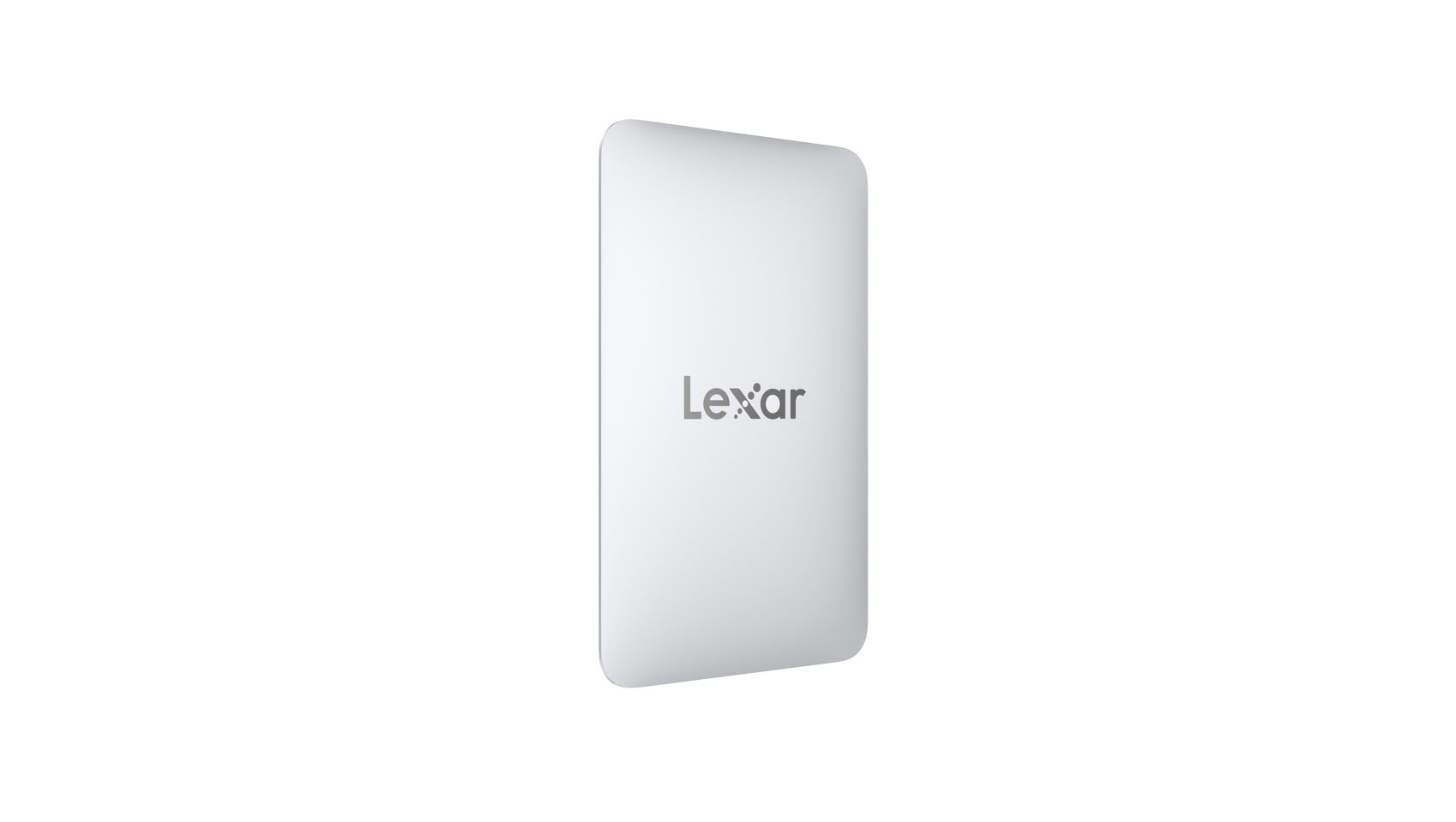
Lexar Claims the World's Thinnest Portable SSD with the Muse at IFA 2026

Lexar, a global leader in memory and storage solutions, today unveiled its latest storage innovations at IFA 2026, led by the new Lexar Muse the world's thinnest portable SSD. which brings high-speed external storage into a card-like form with premium minimalist aesthetics and intuitive magnetic connectivity to empower creators across mobile capture and on-the-go workflows. As Lexar mark s its 30th anniversary in 2026, the company is building on three decades of trusted memory expertise to enter its next chapter. Lexar's IFA showcase reflects this continued evolution—from the Muse Ultra-Slim Portable SSD created for mobile workflows to AI storage technologies and emerging B2B applications.

Lexar Redefines Portable Storage with the Muse, the World's Thinnest Portable SSD
Smartphones have become central to both professional and everyday content creation, yet conventional portable SSDs can add bulk and cable clutter to mobile setups. The new Lexar Muse Ultra-Slim Portable SSD takes a more considered approach, combining an ultra-slim, card-like body, a magnetic carry sleeve, and Lexar's proprietary PogoPin magnetic data connection. Paired with the supplied SnapLink Magnetic Cable, these elements create a cleaner, more intuitive storage experience. Named Muse to reflect its role in inspiring creativity, the drive provides a compact, streamlined storage setup for handheld filming, travel, on-the-go editing, and backup.

Razer Unveils the Razer Prio: the Pocket-Sized Controller

Razer, the leading global lifestyle brand for gamers, today announced the Razer Prio, an ultra-mobile, foldable USB-C gaming controller engineered for iPhone and Android. Built to turn daily downtime, from commuting delays to breaks between classes, into console-grade gaming sessions, the Prio delivers full-sized control in a palm-sized form that slips into any pocket.

The first in Razer's new line of ultraportable mobile gaming controllers, the Razer Prio packs full-sized, console-grade control into a one-of-a-kind foldable form that fits in a pocket, turning everyday downtime into real play.

GXTrust Launches Rovix Bluetooth Wireless Mobile Gaming Controller

Long gone are the days when gaming needed to be tied to a desk or console - with the launch of the new Rovix Bluetooth Wireless Mobile Gaming Controller, GXTrust opens up a world of possibility for gamers who want to enjoy their favorite titles wherever they go. Whether commuting, travelling, or relaxing at home, the Rovix turns any smartphone into the ultimate gaming device.

Built for seamless mobile gaming, this handy mobile gaming controller features a Bluetooth 5.0 connection, making it compatible with any iPhone or Android smartphone. Users can choose three ways to play: enjoying any controller-supported iOS and Android games, using cloud gaming for their favorite PlayStation or Xbox titles, or streaming PC games directly on their phone while they're out and about.

Apple Scrambles for DRAM, CXMT Reportedly Rejects Negotiations

Apple is one of the largest supply chain operators in the world, maintaining a vast network of suppliers and manufacturing capacity. However, even a company of its stature is struggling amid the current DRAM shortage. According to Tim Culpan's Culpium newsletter, Apple is scrambling to secure DRAM just weeks before its annual iPhone update cycle. With less than six weeks until the launch of the iPhone 18 series and the iPhone Ultra, assemblers are rushing to place DRAM orders to secure new supplies. The Cupertino-based giant primarily relies on DRAM from Micron, whose LPDDR5X memory is used in a range of devices and is the main source for the next-generation iPhone. SK hynix and Samsung are also suppliers, but Micron remains the primary choice.

Interestingly, another report has surfaced about Apple's efforts to secure more DRAM. The company has reportedly entered negotiations with Chinese memory giant CXMT for LPDDR5X memory needed for its current product lineup. Apple attempted to negotiate better pricing with CXMT, likely due to the volume it plans to purchase, but CXMT rejected the proposed lower price. This is one of the first instances where negotiation power lies with the suppliers, as CXMT is producing one of the world's most in-demand commodities and is offering it at market rates without discounts.

EU Pressures Apple Into Universal Clipboard for Compatibility With Windows

Apple is once again complying with the rules of the European Union, as the company is now developing a universal copy and paste system to transfer text directly from an iPhone to a Windows-based PC. Under the EU Digital Markets Act (DMA), Apple is required to create a feature to align itself with Microsoft's formal interoperability request, which will help users with the simple copy and paste action that hasn't worked until now. Currently, third-party applications on iOS, which powers iPhone mobile devices, can only access the iPhone's clipboard contents while they are open and active on the screen. Every copy or paste action required the user's manual approval.

However, Microsoft has built a workaround, and the EU has been pressuring Apple to adopt the standard. The company reportedly reviewed the Union's request in March 2026, put forward project plans by late June, and is now in development. Apple will implement this universal clipboard through a framework called AccessorySetupKit. One permission is granted per device, and once a Windows PC is approved, clipboard items will move automatically in the background. No further prompts will be required. The Cupertino-based company already offers similar universal syncing between its own ecosystem of devices through the existing Universal Clipboard, which connects iPhones with Mac computers for seamless integration.
Apple Universal Clipboard

Apple Upgrade Debuts in the United States

Apple today announced Apple Upgrade, a new product leasing program provided by Klarna for iPhone, Apple Watch, Mac, and iPad available on the Apple Store online, in the Apple Store app, and at Apple Store locations in the United States. Apple Upgrade makes it even easier for customers to get the Apple products they love with a leasing plan that is right for them.

"At Apple, we put the customer at the center of everything we do," said Karen Rasmussen, Apple's vice president of the Apple Store online, "and we're thrilled that Apple Upgrade offers our customers, both online and in-store, a more flexible way to pay for the products they love."

Apple to Launch Mac Leasing and Upgrade Program on July 28

Apple is reportedly preparing to launch a new financial structure aimed at boosting sales of Macs, iPhones, and iPads. According to Bloomberg, the company plans to introduce a program called "Apple Upgrade" on July 28. This program is essentially a leasing arrangement that functions like a subscription. Users will have the option to "subscribe" to owning their Mac or iPad for up to 36 months, with the flexibility to pay off the device early, upgrade to a new model early, or simply keep the device at the end of the leasing period. In any case, Apple benefits from a steady monthly income, increased sales, and users can pay off a device directly through Apple. For devices like the iPhone and Apple Watch, the leasing period will be shorter, at 24 months.

Initially, only customers in the United States will have access to the Apple Upgrade subscription/lease option, available both in physical stores and online. Klarna will act as the financial broker for these leasing structures. It is currently unknown if the program will expand beyond the United States, but Apple likely plans to do so as it addresses legal challenges in overseas markets. The program will not be available for entry-level devices, excluding the Apple Watch SE, iPhone 16, and MacBook Neo, which are considered low-end in Apple's product lineup. Business and education purchases will also be excluded. The program is primarily aimed at consumers who have been affected by recent price hikes and need an easier way to finance their hardware.

TSMC's 2 nm Node Gains Momentum with Fourfold Increase in Tape-Outs

TSMC's 2 nm node has reportedly attracted significant client attention, as the company's Senior Vice President, Kevin Zhang, confirmed that the N2 node has four times the number of tape-outs compared to its previous leading-edge 3 nm N3 node. This indicates that many of TSMC's customers, who are also long-time partners, have focused their resources on 2 nm chip designs instead of the 3 nm node PDKs. The driving force behind the fourfold increase in chip tape-outs is the impressive power and performance improvements achieved by the company's first gate-all-around FET nanosheet transistor. With GAAFET, TSMC's N2 delivers up to a 15% performance increase at the same power level, or up to a 30% power reduction at the same speed. This means designers can achieve much higher switching performance within the same power budget as the previous N3E, or reduce power consumption by nearly a third while maintaining the same performance target. Additionally, the transistor density increase is about 15%, allowing for smaller dies with the same functionality or larger dies with more performance.

Interestingly, TSMC began high-volume production of its N2 node in Q4 2025. Fast-forward two quarters to today's date, and the 2 nm node now accounts for only 3% of the company's revenue, while the 3 nm node commands 30%, and the 5 nm node holds the top spot at 33%. However, in the coming quarters, the situation is expected to change as TSMC's customers start receiving more 2 nm chips, and the node's revenue generation grows. Among the N2 customers are AMD with its EPYC "Venice" server CPUs, Apple with its A20 Pro chips for the iPhone 18 Pro series, and others. With four times as many customers using the 2 nm node compared to its 3 nm lithography, TSMC's record-breaking quarterly reports are likely to intensify. Each new node generation brings more expensive wafers due to the increasing complexity of developing a new node, so more tape-outs will significantly boost TSMC's revenue. We are yet to see just how substantial the changes will be in the next few quarters.

TSMC Achieves Record $13.75 Billion Revenue in June 2026

TSMC's revenue reached an impressive 442.68 billion NTD in June 2026, which is about 13.75 billion USD (at the time of writing) for a single month of net revenue. This represents a remarkable 67.9% growth compared to the same month last year, driven by the record AI data center expansion. Month over month, TSMC's revenue increased by 6.2% from May 2026. These figures are impressive, considering that such high double-digit growth for a company already generating billions in revenue is one of the best performances in modern history. Additionally, TSMC generated revenue of 2,404.48 billion NTD, equivalent to about 74.66 billion USD, in the first six months of the year. This marks an increase of 35.6% compared to the first half of 2025, indicating that the trend is expected to continue.

In June, TSMC successfully began high-volume manufacturing of the N2 process. AMD has partnered with TSMC to manufacture its EPYC "Venice" on the 2 nm N2 process, alongside the CoWoS packaging that TSMC's facilities offer. AMD is now a top-tier client at TSMC, utilizing the latest nodes that were typically adopted first by Apple, followed by others. Apple is following AMD with its A20 SoC for iPhones and M6 SoC for MacBooks. TSMC's revenue target for the full year 2026 is expected to significantly surpass the 2025 figures, as the company encourages customers to adopt more advanced built on pricier wafers.

Apple Taps Intel 18A-P Node for M7 MacBook Chip, 14A Node for iPhone

According to the sell-side equity research firm GF Securities, Apple is set to utilize both Intel's 18A-P and 14A nodes for its product lineups. As previously reported, the company will employ Intel's advanced 18A-P node for the M7 SoCs that power MacBook Air and entry-level MacBook Pro laptops. Intel's investment in the development and manufacturing ramp of the 14A node will also be beneficial, as Apple plans to use the 14A node for producing A21 SoCs for iPhones. The 18A-P node is ideal for Apple's laptop SoCs, providing a balance between efficiency and speed. It offers a 9% performance increase at the same power level or achieves 18% power savings at the same performance level compared to the standard 18A node, resulting in laptops with good frequency and low power usage. With Apple moving away from TSMC's 3 nm node in the current M5 SoC, the improvements will be significant and are expected to be realized by 2027.

For the A21 iPhone SoCs, Apple will use Intel's advanced 14A node, which promises a generational leap in density, frequency, and power savings. Apple's primary goal is to employ a more advanced node for mobile devices, with plans to have these chips ready by 2028. As this is anticipated to begin in about two years, Apple will likely wait for the final 14A PDK before starting trial production. It remains uncertain whether the company will manufacture its A21 Pro SoC at TSMC and leave the regular version to Intel. However, Apple is gradually diversifying its supply chain with more silicon manufacturers. With advanced packaging, Intel can compete with TSMC in many areas, and we are eager to see the outcomes of this competition.

Apple Taps TSMC For Fresh A18 Pro Silicon To Double MacBook Neo Production

It's no secret that Apple's $599 MacBook Neo has been a hit for general productivity workflows and as a Chromebook replacement, but in a recent financial results report, Tim Cook touched on just how unexpectedly high the Neo's demand was. The outgoing CEO on April 30 confirmed that Apple was supply-constrained on the MacBook Neo, explaining that "we under-called the level of enthusiasm that would be with it." In a recent report, industry analyst, Tim Culpan claimed that insider sources report that Apple has ordered a fresh production run on the A18 Pro SoC that powers the MacBook Neo from TSMC.

Crucially, getting TSMC to spin up a new production run of the A18 Pro may affect the pricing of the Neo, since its initial production run used rejected A18 Pro SoCs—with a defective GPU core—from the original iPhone 16 Pro smartphones, and a new run of SoCs would mean that Apple would be subject to the same memory supply constraints as the rest of the industry instead of using up old inventory that had already been paid for at a lower price. This news also comes after wild rumors of a potentially incoming MacBook Neo with an A19 Pro from the newer iPhone 17 Pro, replete with a potential 12 GB RAM upgrade. The fresh SoCs from TSMC, however, would allow Apple to reach its new 10 million unit production goal without changing anything about the hardware itself.

Apple Reports Second Quarter Fiscal 2026 Results

Apple today announced financial results for its fiscal 2026 second quarter ended March 28, 2026. The Company posted quarterly revenue of $111.2 billion, up 17 percent year over year. Diluted earnings per share was $2.01, up 22 percent year over year.

"Today Apple is proud to report our best March quarter ever, with revenue of $111.2 billion and double-digit growth across every geographic segment," said Tim Cook, Apple's CEO. "iPhone achieved a March quarter revenue record, fueled by such extraordinary demand for the iPhone 17 lineup. During the quarter, Services achieved yet another all-time record, and we were excited to introduce remarkable new products to our strongest lineup ever. That included the addition of the iPhone 17e and the M4-powered iPad Air, along with the launch of MacBook Neo, which is captivating customers all around the world."

John Ternus Takes Over as Apple CEO, Tim Cook to Step Down

Apple has officially announced that long-time hardware chief John Ternus will become the company's new Chief Executive Officer (CEO), taking over from the current CEO, Tim Cook. We have reported that Apple's succession planning is underway as the company considers who will lead one of the largest and most powerful companies in the world. As we reported late last year, John Ternus, Apple's Senior Vice President of Hardware Engineering, has been selected as the prime candidate for the new role. He has been with Apple since 2001 and has led the hardware division since 2013. Under his leadership, the hardware engineering efforts behind the iPhone, iPad, the entire Mac lineup, AirPods, Vision Pro, and countless prototypes have been developed. One of his most impressive feats is leading the transition of Apple MacBooks from Intel-based designs to custom, in-house developed Apple Silicon SoCs.

Interestingly, John Ternus will officially become CEO on September 1, 2026, when Tim Cook steps down to become Apple's executive chairman. Ternus and Cook will collaborate on the transition over the summer months to ensure that Apple's long-term goals remain a priority. "It has been the greatest privilege of my life to be the CEO of Apple and to have been trusted to lead such an extraordinary company. I love Apple with all of my being, and I am so grateful to have had the opportunity to work with a team of such ingenious, innovative, creative, and deeply caring people who have been unwavering in their dedication to enriching the lives of our customers and creating the best products and services in the world," said Tim Cook.
Return to Keyword Browsing
Nov 11th, 2026 04:20 CST change timezone

New Forum Posts

Popular Reviews

TPU on YouTube

Controversial News Posts