News Posts matching #price icnrease

Return to Keyword Browsing

Valve Faces Price Hikes for Steam Frame VR Headset Ahead of Launch

Valve's hardware portfolio has experienced significant pricing fluctuations due to various supply chain changes related to memory, storage, and now processor price hikes. According to Bloomberg, Qualcomm, the main chip supplier for the upcoming Steam Frame VR headset, is increasing its prices by double-digit percentages. This means that Valve's upcoming Steam Frame headset will face an unexpected price increase. Initially, Valve planned to use the Snapdragon 8 Gen 3 processor with 16 GB of unified LPDDR5X RAM and up to 1 TB of storage capacity. However, Bloomberg now confirms that Qualcomm is raising its processor costs for all customers, which is driving up expenses.

For Qualcomm, declining smartphone sales, due to the higher cost of DRAM and NAND Flash, have led to reduced sales of the smartphone SoCs that power these devices. As a result, the company has felt supply chain pressures across multiple sectors and is now attempting to recover by increasing chip prices across the board. The Qualcomm Snapdragon 8 Gen 3 will see a double-digit percentage price increase, meaning anything from 10% and upwards is possible. If the price increase is substantial, combined with limited availability of LPDDR5X memory and SSD storage, the Steam Frame VR headset launch might not align with Valve's original plans.


NVIDIA Reportedly Raises GDDR6 and GDDR7 Memory Kit Prices for RTX GPUs

NVIDIA has reportedly notified its add-in card partners of another GPU kit price increase, this time covering both GDDR7 and GDDR6 memory. This means the raise isn't limited to current Blackwell cards and could affect older GeForce products still using GDDR6 as well. The report comes from BenchLife via VideoCardz and follows a similar price adjustment for the RTX 5090 and RTX 5090D V2 back in May. NVIDIA supplies board partners with GPU and VRAM bundled together as a kit, so when memory costs go up, AIBs have little choice but to pass that along to retail pricing. BenchLife notes that partners are also seeing higher costs for coolers, PCBs, and packaging on top of the memory increases, though those secondary cost pressures are described as smaller than the memory-related ones.

The RTX 50 SUPER series is also affected by this. We've previously reported that those cards are on hold partly due to the cost of 3 GB GDDR7 modules. Inside sources say that each of those GDDR7 modules costs about $60-$70, roughly three times the cost of a 2 GB module at around $20. This adds a significant price premium on SUPER cards since the RTX 5070 SUPER was expected to be upgraded to offer 18 GB, while the RTX 5070 Ti SUPER and RTX 5080 SUPER would each provide 24 GB of GDDR7 memory. GPU prices have already increased 20-30% above where they were not long ago, and this latest round of kit price increases suggests there's more pressure to come. Previous-gen cards that use GDDR6 have been less affected up to now, but that appears to be changing.

Apple Increases Prices Amid Rising NAND Flash and DRAM Costs

Apple temporarily halted its online store today to implement a pricing update, bringing the store back online shortly after the changes were made. Even a leading consumer electronics company like Apple, known for having one of the best component supply chains in the world, couldn't ignore the impact of NAND Flash and DRAM price changes. As a result, the company has adjusted the prices of all products containing these components, reflecting an upward trend. Starting with its most affordable Mac option, the MacBook Neo, the price has increased from $599 to $699 for the base configuration. This pricing does not include the student discount, which has become more stringent. Apple now requires student verification for college students and other forms of verification for educational staff to access these discounts.

The average increase in today's price hike is $246.67. The most significant change is seen in the Mac Studio powered by the M3 Ultra SoC, which is now priced at $5,299, a $1,300 increase from its original $3,999 price. On the other end of the spectrum, the HomePod mini has experienced a $30 increase, going from $99 to $129. You can view the entire pricing update, compiled by MacRumors, below. Additionally, the 256 GB version of the Mac mini is back in stock, now priced at $799, up from its previous listing of $599. No price changes have been applied to any iPhone, Apple Watch, AirPods, Studio Display, and accessories.
All price changes follow.

NVIDIA Demand May Double LPDDR5X and Server DRAM Prices in 2026

Counterpoint Research expects memory prices to keep climbing through 2025 and into early 2026. The firm says DRAM prices could rise another 30% in Q4 2025, followed by up to 20% more early next year. This comes on top of roughly 50% price increases already seen this year. The main pressure right now is on older memory. LPDDR4 supply has tightened as manufacturers shift production to newer parts for AI hardware. That shift has created odd price gaps: DDR5 for PCs and servers is trading around $1.50 per gigabit, while DDR4, used in low-end phones and other consumer gear is selling for about $2.10. Even HBM3e is currently cheaper at around $1.70. Counterpoint expects DRAM output to grow by more than 20% in 2026 as Samsung, SK hynix, Micron, and China's CXMT ramp up production. But the bigger problem may be further ahead. NVIDIA's plan to use LPDDR in future AI systems puts it on par with a major smartphone vendor, something the LPDDR supply chain has never had to support. LPDDR also shifts error correction away from DDR5 ECC modules and onto the CPU, a change that could reshape server designs.

In a tight supply scenario, Counterpoint warns DDR5 RDIMM prices could double between early 2025 and the end of 2026. For now, the worst impact is hitting budget smartphones that still rely on LPDDR4. But analysts expect the strain to spread to mid-range and high-end devices, raising bill-of-materials costs by as much as 25% for some models. That could squeeze margins or slow shipment growth—or both. The report adds that broader risks like tariffs, geopolitics, and labor costs make the outlook even more volatile.

Q4 2017 300 mm Silicon Wafer Pricing to Increase 20% YoY in DRAM-like Squeeze

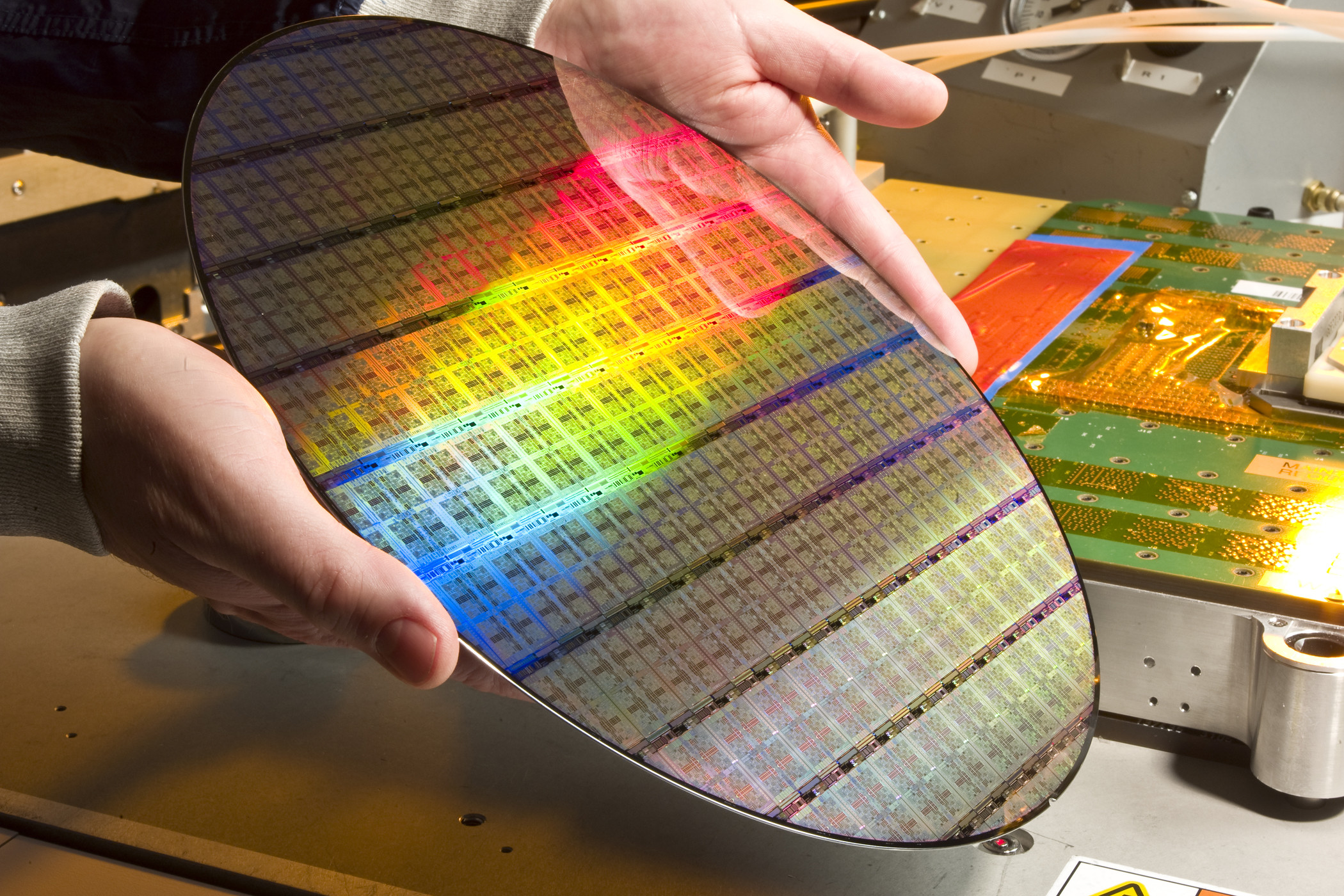
Silicon wafers are definitely the best kind of wafers for us tech enthusiasts, but as we all know, required financial resources for the development and production of these is among the most intensive in development costs and R&D. It's not just about the cost of employing enough (and crucially, good enough) engineers that can employ the right tools and knowledge to design the processing miracles that are etched onto wafers; there's also the cost of good, old production as well. Extreme Ultraviolet Lithography Systems that are used for the production of silicon wafers are about the size of a city bus, and typically cost more than 100 million euros ($115.3 million) each. ASML, a Dutch company that specializes in this kind of equipment, announced this year it was expecting to see a 25% revenue growth for 2017. Increased demand for these systems - and added cost of development of ever increasingly small and complex etchings in wafers - means this sector is seeing strong growth. But where there is strong growth, there is usually high demand, and high demand means higher strain on supply, which may sometimes not be able to keep up with the market's needs.

This is seemingly the case for wafer pricing; as demand for wafer production has been increasing, so to are prices. Faced with increased demand, companies are usually faced with a tough question to answer in regards to the correct course of action. Usually, it goes like this: higher demand at the same supply level means higher pricing. However, if supply isn't enough to satisfy demand, manufacturers are losing out on potential increased sales. This leads most companies to increase supply relative to demand, but always with lower projected output than demand requires, so they can bask in both increased ASP (Average Sale Price) and higher number of sales. This has been the case with DRAM memory production for some time now: and is happening with 300 mm silicon wafers as well.
Return to Keyword Browsing
Nov 17th, 2026 14:13 CST change timezone

New Forum Posts

Popular Reviews

TPU on YouTube

Controversial News Posts