 17
64 Audio Solo Planar Magnetic IEMs Review
(17 Comments) »Introduction

64 Audio is near-synonymous with world-class in-ear monitors routinely used by the who's who of music, including Beyonce, Jay-Z, John Mayer, IU, Bon Jovi, and many others for monitoring music live on stage—you know, the thing that IEMs were originally intended for. You can head over to the brand's social media pages and see multiple instances of music artists with their 64 Audio IEMs being showcased almost daily. Seeing your favorite music artist use a company's product helps with sales as well, including to the growing audiophile market that wants to now own the same set. Helping further is the part where 64 Audio IEMs have being generally received well across its product line, ranging from $499-$3599. To date, they have all contained multiple drivers, including in its custom-fit IEM lineup. That changes now with the introduction of the brand new 64 Audio Solo.

We have covered several 64 Audio IEMs to date, beginning with the detail monster that is the 18-driver U18t going to the Volür which introduced true isobaric dual dynamic driver bass which continues to be a standard today. A few weeks ago, 64 Audio discontinued the Duo, a set that was made during COVID restrictions with working from home in mind, being semi-open to strike a cohesive balance between music enjoyment and awareness of your external environment. It was part of a special subset of 64 Audio products, along with the Trió and Fourté, in using dedicated acoustic chambers for each individual driver and the complete patented tia (tubeless in-ear audio) driver system. The Solo joins this collection, but also shakes things up in a few ways. For one, as the name suggests, it uses a single full-range driver—a 14.2 mm planar magnetic driver that may seem similar to the many 14.x mm drivers we have seen used by various brands over the last two years. But pretty much every single implementation to date has had issues taming the driver and making the most of the listening experience. You will notice common complaints about shouty vocals and fatiguing treble there, for example. The 64 Audio Solo uses two Helmholtz resonators to help tune the driver to the brand's standards, and also uses other tech including Apex and LID (more on this in due time) to promise a sound signature that will be a step up from the norm. Thanks to 64 Audio for providing a review sample to TechPowerUp and let's begin with a look at the product specifications in the table below.
Specifications
| 64 Audio Solo In-Ear Monitors | |
|---|---|
| Shell: | T6061 aluminium shell with copper mesh faceplate |
| Cable: | Eight-strand cable with 23 x 25 AWG OCC copper wires |
| Driver Unit: | 14.2 mm planar magnetic driver |
| Frequency Response: | 20 Hz–20 kHz |
| Sensitivity: | 100 dB/mW @1 kHz |
| Impedance: | 16 Ω |
| Cable Connectors: | 3.5 mm TRS or 4.4 mm TRRRS to source + two 0.78 mm 2-pin plugs to IEMs |
| Cable Length: | 4 ft/1.2 m |
| Warranty: | Two years |
Packaging and Accessories


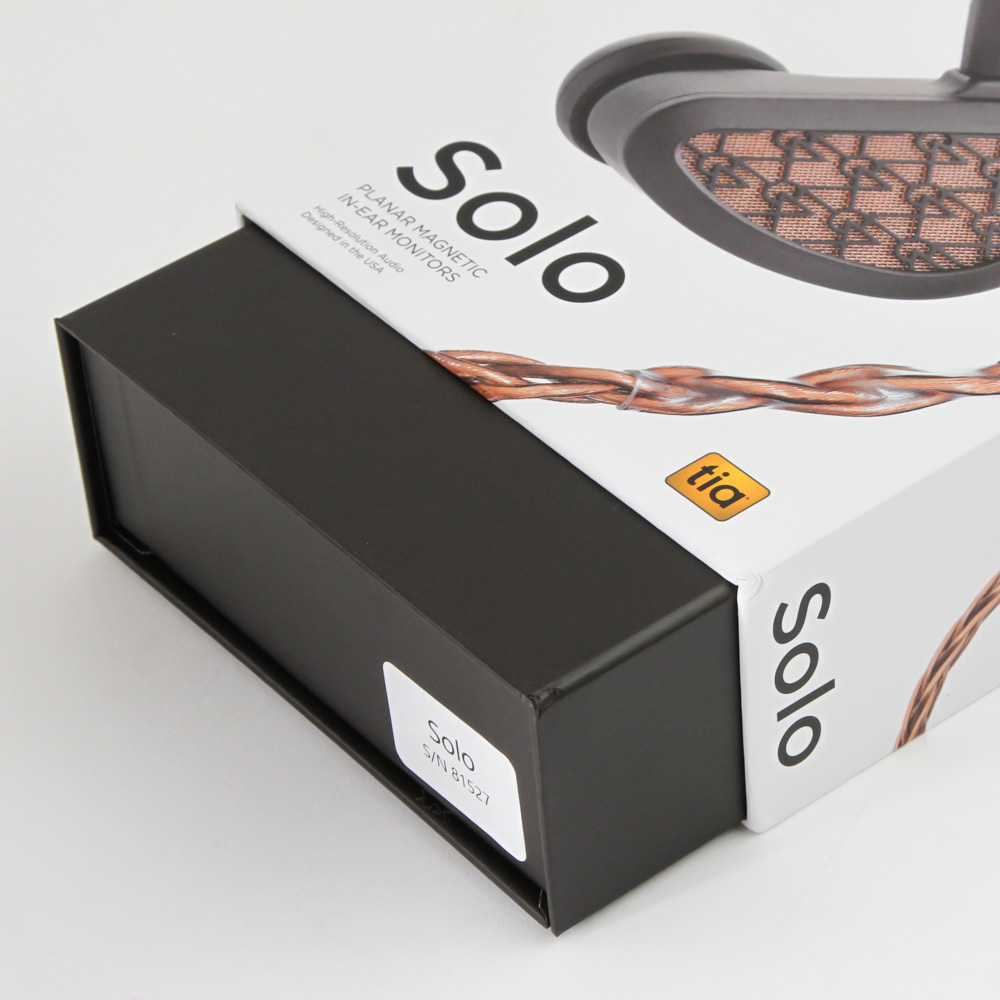
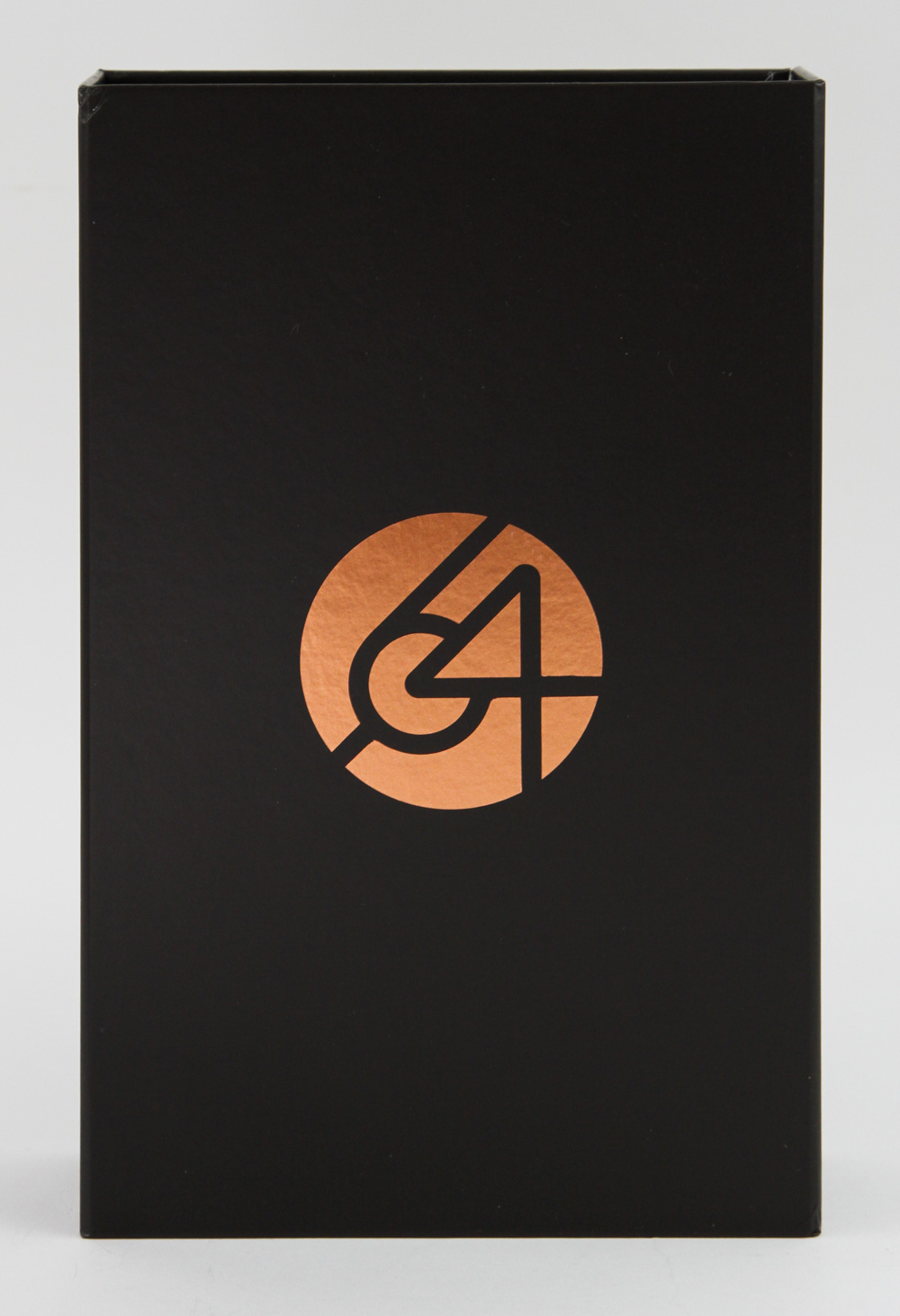
The 64 Audio unboxing experience is nearly similar across the board, with some small changes in how the items inside are arranged depending on the price range the IEMs belong to. Externally I already knew to expect a thick cardboard sleeve that is customized to the model and showing the company logo and product name on the front to go with a render of the IEMs. Having a white sleeve, as opposed to the usual black used by the brand, is a refreshing change though. On the back is another render with some of the salient features called out, and product specifications with a list of contents inside makes for a useful product box if you happen to come across this in a retail store. The inner box slides out the top or bottom, where we also see the serial number of the specific unit, and there is a copper-colored 64 Audio logo here to further tease the IEMs inside.


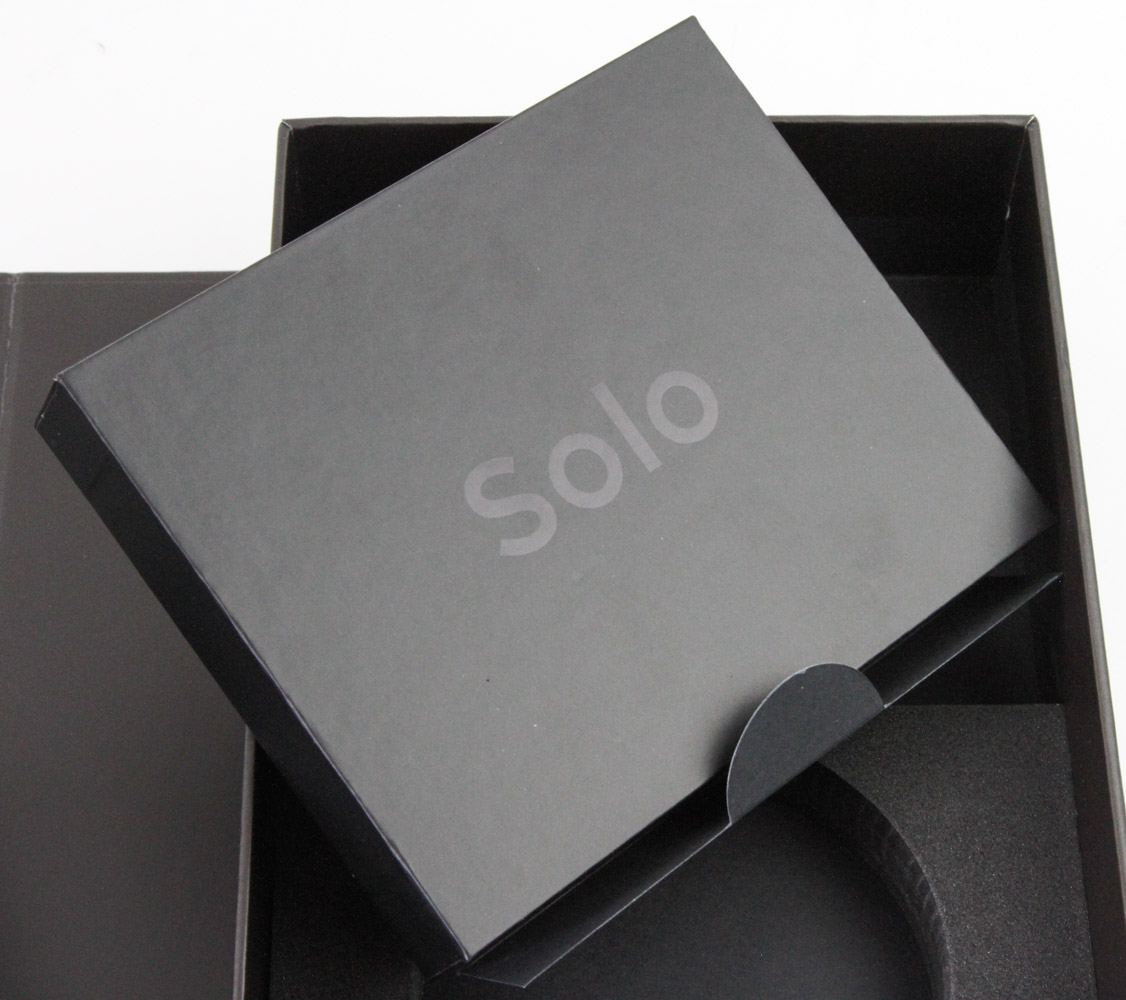

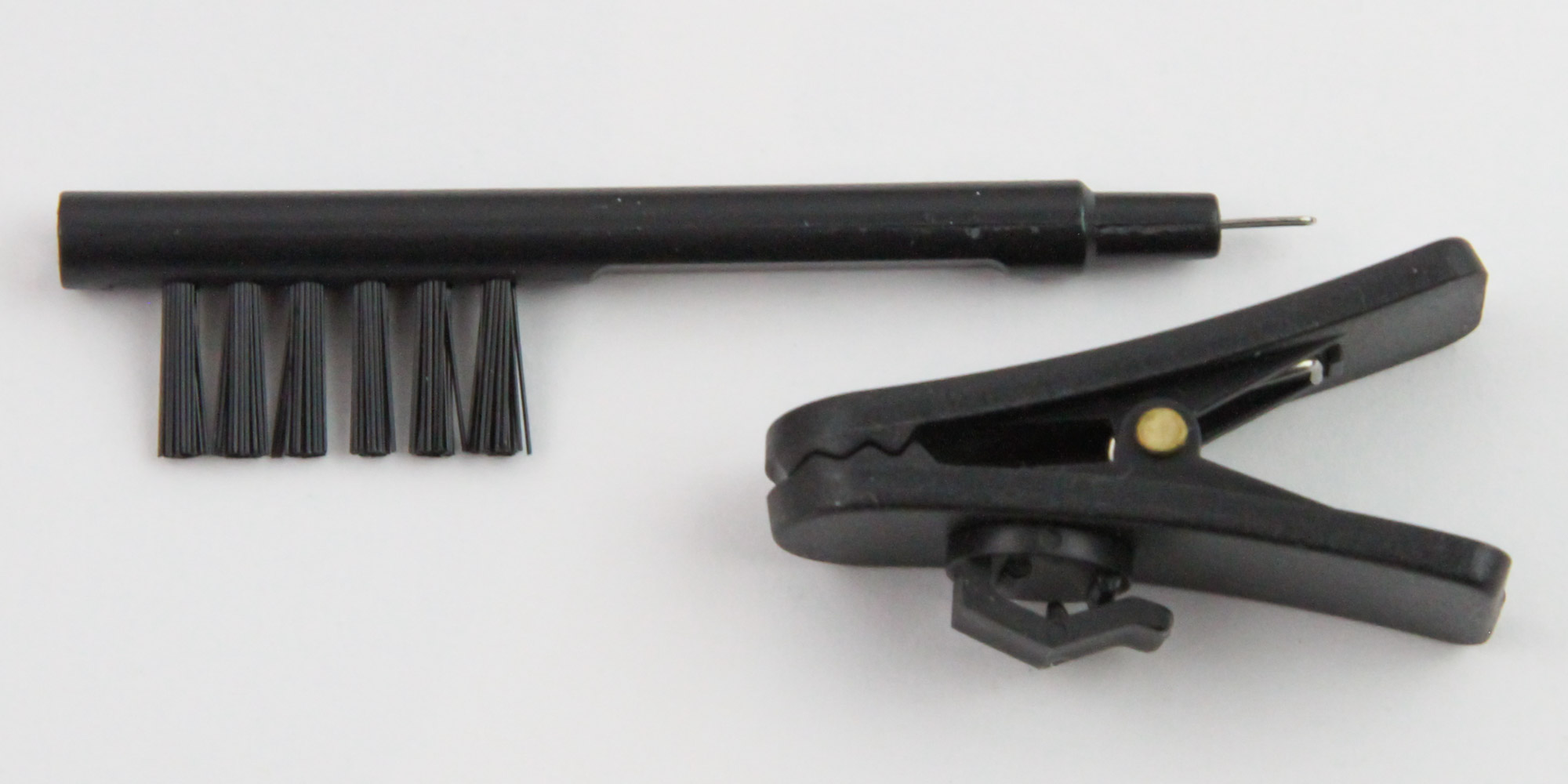
A magnetic clasp keeps this box closed neatly from the side, and it opens up to reveal a printed welcome note from the founder of the company on the inner lining. The other side contains a thick foam sheet with 64 Audio logos all over the surface and machined cutouts to snugly fit and protect the contents. At the top we see the IEMs themselves with the cable pre-attached and wound around a hard insert—again with a copper accent on the slogan—to keep it concealed underneath. At the bottom is a larger circular cutout that hosts the carry case and some other accessories inside, and the Solo also comes with a second layer below with even more accessories inside. This includes paperwork in the form of a quick start guide going over the setup, use, and maintenance of the IEMs as well as a product registration/warranty guide. A branded microfiber cleaning cloth will be handy to keep the IEMs looking pristine over time, as will the cleaning tool which accompanies a clasp/clip to help secure the cable to your clothing. Note also the second IEM cable here, which is another change from the norm for 64 Audio and helps make for a more welcoming, premium unboxing experience.


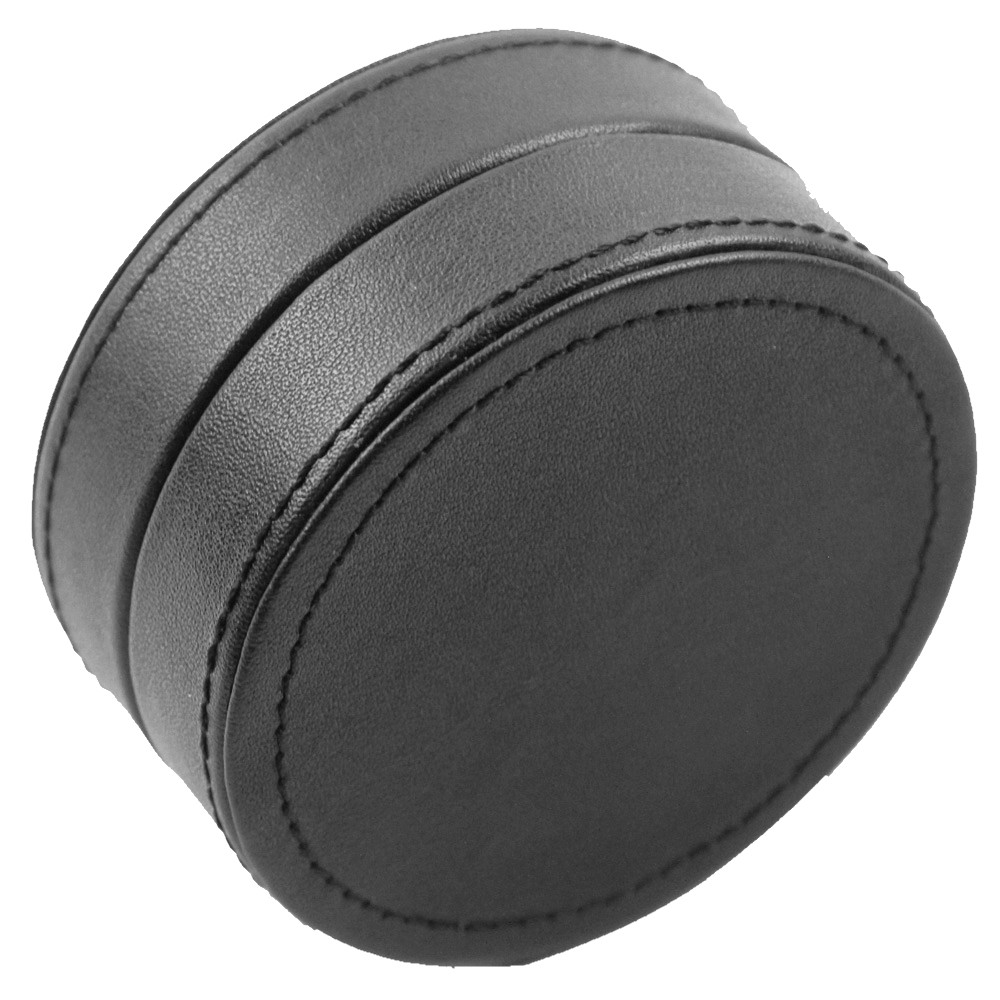

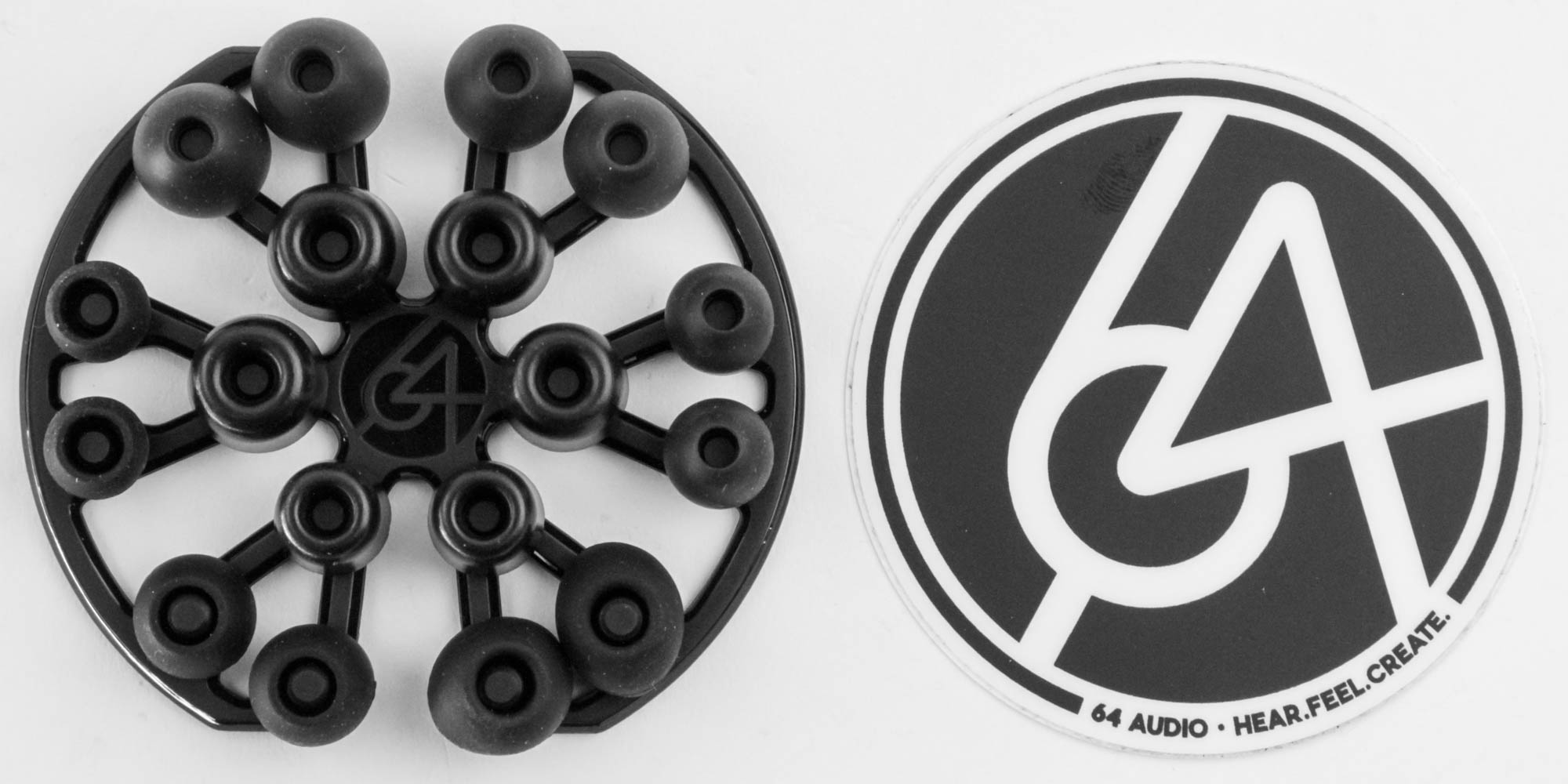
The carry/storage case that comes with the 64 Audio Solo adopts a cylindrical puck form factor which has been employed to good success before by many others and is the same case that we saw shipped with the other 64 Audio IEMs before, helping me vouch for its durability over a longer period of time. It uses bonded leather, which is effectively a higher grade simulation leather with a blend of actual leather, and comes off rather premium looking compared to the average IEM case. It features the company logo embossed on top with good quality stitching throughout and has plenty of felt-lined room inside for the IEMs, some spare ear tips, and even the cleaning brush if you pack efficiently. On the flip side, the case is not the easiest to carry around in your pockets given its size and is best used within another bag. Inside we see a sticker for fans of the brand, and the various ear tips come placed on a branded circular carry disc which allows for easier identification and storage/use.
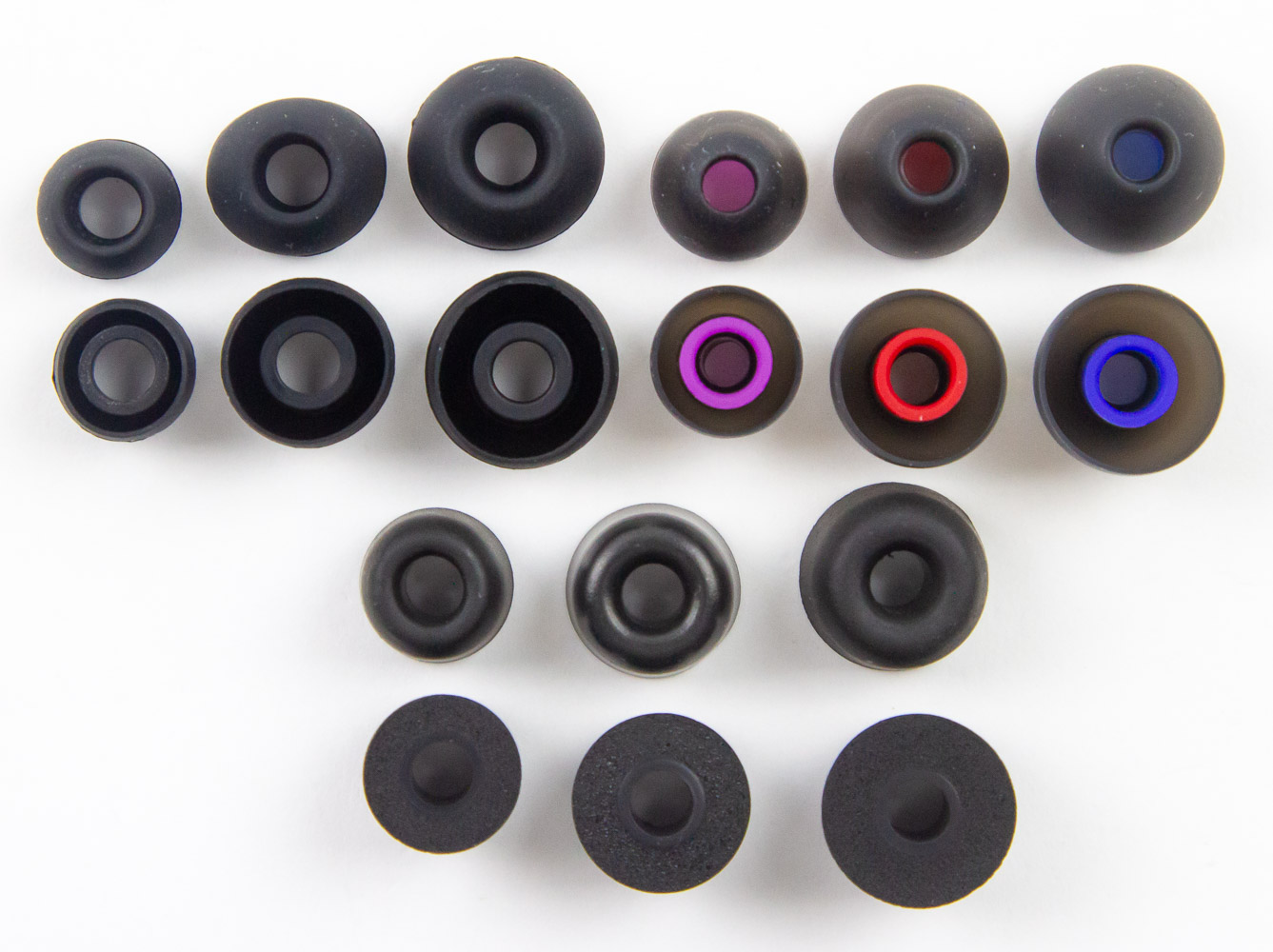
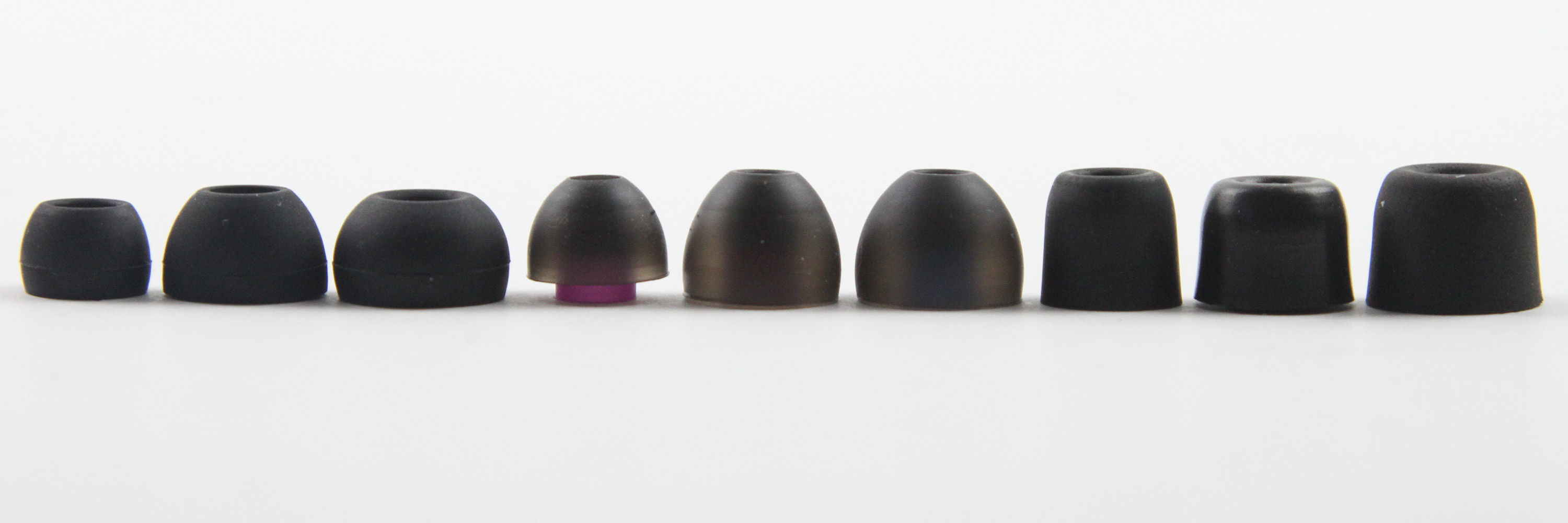
64 Audio is consistent with its ear tips offering across its UIEM lineup, and these include some wider bore, softer flange silicone tips in sizes S/M/L, some Spinfit silicone tips with longer, colored bores and a stiffer outer flange in sizes S/M/L, and some high-density foam tips also in sizes S/M/L. These sell separately for more than most aftermarket ear tips too, and offer enough options here for you to hopefully get a good fit and seal with the IEMs without needing to look elsewhere.


We saw above how the IEMs come with one of the provided stock cables pre-attached. Separating the two helps with a closer examination of these items individually, and this is easy enough thanks to the use of standard 0.78 mm 2-pin connectors. Carefully dislodge the cable connectors by holding one of the IEM shells in one hand and applying outward pressure on the cable connector with the other, without wiggling things sideways or up/down. Repeat this with the other side and you are done!
Our Patreon Silver Supporters can read articles in single-page format.
Nov 19th, 2026 17:12 CST
change timezone
Latest GPU Drivers
New Forum Posts
- TPU's Nostalgic Hardware Club (22170)
- How to prevent OLED burn damage due to PC freezes or power outtages? (29)
- Security Apps (3)
- Got the EOL 32GB TridentZ 6000 CL26 1.4V (13)
- Honestly, do you care about GTA VI? (167)
- Dell Workstation Owners Club (3517)
- Making a game in Godot engine (6)
- Introducing DST Bench : one of the most advanced disk benchmark and storage analyzer real-time software (6)
- Windows 11 General Discussion (7736)
- Current Sales, Bundles, Giveaways (10448)
Popular Reviews
- Acemagic Retro X3 Review
- Ugreen NASync DXP4800 GT Review
- Upcoming Hardware Launches 2027 (Updated Nov 2026)
- Pulsar Office Tour & First Look at P1 Dual-Sensor Mouse
- AMD Zen 6 Technical Deep Dive
- Biwin Black Opal NV7400 2 TB Review
- Sapphire Radeon RX 7700 XT Pure Review
- Sapphire Radeon RX 7700 XT Pulse Review
- Corsair RM1200e (Second Generation) Review
- AMD Ryzen 7 9800X3D Review - The Best Gaming Processor
TPU on YouTube
Controversial News Posts
- NVIDIA Co-Founder and CEO Jensen Huang Officially Resigns (489)
- Report: Jensen Huang Eyes NVIDIA Comeback (223)
- Open Letter Asking NVIDIA to Reinstate Jensen Huang Passes 115,000 Signatures (184)
- OpenAI CEO Argues Home PCs Waste the World's Limited DRAM Supply (152)
- NVIDIA Launches Investigation Into Jensen Huang's Relationship With Suspected Chinese Spy (136)
- Intel "Raptor Lake Next" 16-Core and 20-Core CPUs Surface (130)
- Legendary Game Studio BioWare Shuts Down Following EA Layoffs (104)
- Dell CEO Says the Memory Shortage Will Get Worse in 2027 (95)