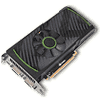
NVIDIA's new GeForce GTX 560 Ti is priced at the sweet spot of $249. It comes with a redesigned graphics processor that enables higher clock speeds and lower power consumption. NVIDIA's reference design board excels with nice overclocking potential and low fan noise.
Today NVIDIA announced their new GeForce GTX 560 Ti Series. ASUS designed a custom PCB and cooling solution around the new graphics processor. The factory overclocking ASUS GTX 560 Ti Direct CU II sets out to deliver maximum cooling power for improved overclocking and reduced temperatures.
NVIDIA's new GTX 560 Ti delivers excellent price/performance in the $250 market segment. We take two of these cards for a spin to investigate whether it makes sense to buy two of them for use in SLI.
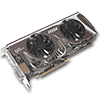
MSI's HD 6950 Twin Frozr II is the first custom design HD 6950 to reach our labs. It comes with a small overclock out of the box and MSI's well established Twin Frozr II heatsink to keep the card cool.
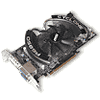
MSI's HD 6850 Cyclone Power Edition comes at 860 MHz, which is the largest overclock out of the box of any HD 6850 available. The card also features a little switch to enable a silent BIOS which reduces fan noise considerably and makes the card a virtually noiseless experience to use, in both idle and 3D.
ZOTAC's GeForce GTX 580 AMP! Edition comes at a massive core clock of 815 MHz. During our testing we also noticed that the card could overclock consistently higher than other reference designs, which seems to be thanks to a special binning process in the ZOTAC factory.
In this article we will investigate how much the HD 4870, HD 5870, GTX 285 and GTX 480 have gained over the lifetime of their driver releases. We also put this in contrast to what the latest AMD Catalyst 10.12 driver update can deliver.
In this review we will look at the performance of two Radeon HD 6950 cards running in CrossFire. This delivers a massively powerful graphics solution that is over 25% faster than NVIDIA's GeForce GTX 580 and also beats AMD HD 5970. At $600, this setup also manages to deliver maximum price/performance when looked at from a high-end graphics angle.
AMD's new Radeon HD 6970 comes with an improved shader architecture that promises more performance with less transistors, consuming less power. Another interesting aspect is the inclusion of a power limitation system that ensures maximum performance when needed and avoids damage to the graphics cards.
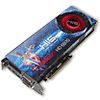
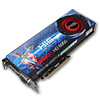
HIS Radeon HD 6950 is a new option in the $300 upper midrange graphics card segment. It has enough power to play the latest titles in Full HD resolution. Thanks to improved geometry and tesselation engines it also promises to deliver increased performance in latest titles compared to the Radeon HD 5870.
Today NVIDIA launches their new GeForce GTX 570 graphics card which is based on the new more power efficient Fermi technology that we saw on the GTX 580, too. ASUS' GTX 570 is a full reference design implementation, the only difference is a small clock speed increase of 10 MHz.
NVIDIA's new GeForce GTX 570 complements the GTX 580 at more affordable price levels. It offers the same reduced power consumption as its big brother without compromising performance. Palit's GTX 570 is a custom design with a unique thermal solution and substantially increased clock speeds out of the box.
PowerColor's HD 6870 PCS+ comes with some of the highest out of the box clock speeds of all HD 6870 cards available today. It also comes with a unique thermal solution that offers extremely low noise levels in both idle and load. Another improvement is that power consumption is slightly lower than AMD's reference design - despite the higher clock speed.
Last week NVIDIA launched their GeForce GTX 460 SE which is designed to give a good price/performance level without compromising on memory amount. But is this enough to compete with the full GTX 460 variants that have 768 MB or 1 GB of memory?
Gigabyte's GeForce GTX 480 Super Overclock sets out to deliver affordable high-end overclocking for NVIDIA users. The card features dual voltage software control, voltage measurement points, a powerful but quiet triple fan cooler and Gigabyte's OC Guru overclocking software. Best of all, it comes at a reasonable $469 which is not much more than the reference design. But is that enough to hold off the GeForce GTX 580 ?
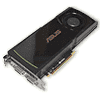
Last week NVIDIA released their new flagship graphics card, the GeForce GTX 580. Today we have on our testbench the ASUS ENGTX580 which is an almost full implementation of the reference design. The only exception is that the clock speed has been slightly increased - at no price premium.
Today NVIDIA releases their new GeForce GTX 580 which is based on their Fermi architecture. The card is 20% faster than the GTX 480, yet requires less power. NVIDIA has also optimized fan noise making this the quietest highest-end card on the market today.
NVIDIA's GeForce GTX 580 has claimed the single GPU performance throne today. We take two of these cards for a spin to see what performance users can expect from this $1000 GPU combination. The review will also give insight into potential performance numbers for 3D Vision Surround.
PowerColor's HD 6850 PCS+ is an overclocked variant of the HD 6850. But the changes do not stop here. PowerColor also includes their own cooling solution and has done extensive changes to the voltage regulation circuitry on the card. But is this enough to compete with the excellent AMD reference design?
The HIS Radeon HD 6870 Turbo is a factory overclocked variant of the HD 6870 that builds heavily on the AMD reference design. This means that PCB, components and cooler are unchanged from the original AMD card - which is a good thing. The increased clock speeds give the card a 4% performance advantage.
Today AMD released their new Radeon HD 6870. The card brings new features like HDMI 1.4 and DisplayPort 1.2 which allow up to six displays to be connected to a single card. Performance has also been substantially increased and power draw reduced. But is this enough to defeat NVIDIA's latest offerings ?
The new ASUS Radeon HD 6850 Direct CU aims to be the king of the sub-$200 segment. It offers plenty of performance for the latest DirectX 11 titles, overclocks very well and comes with improvements to the display output configuration. Instead of an AMD reference heatsink the card uses an ASUS Direct Touch heatpipe solution.
AMD's new Radeon HD 6850 comes at an extremely affordable $179 price point. This poses the question whether it can become the new weapon of choice for budget oriented gamers. In our testing we see excellent performance which enables full HD resolution gaming in DirectX 11.
In this review we will put the dual card CrossFire configuration of the AMD Radeon HD 6870 in the spotlight. It promises higher performance than a Radeon HD 5970 at only a fraction of the price. But is this enough to make CF a recommendation?
AMD's new Radeon HD 6850 is priced at an extremely affordable $179. This poses the question whether two cards in CrossFire can manage to claim the price/performance sweet spot in the $360 segment or if other alternatives are better.