 14
ACEMAGIC G3A Review
(14 Comments) »Introduction

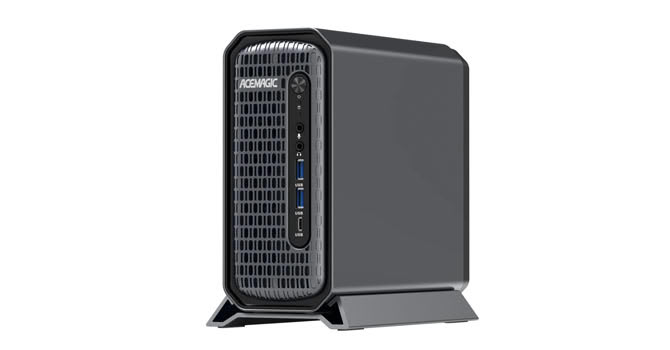
The ACEMAGIC G3A is a compact workstation built for users who need more than the usual office and productivity hardware from a mini PC. Its 3.46-liter chassis houses a socketed Intel Core i9-13900F desktop processor alongside an NVIDIA RTX 2000 Ada Generation professional graphics card with 16 GB of ECC GDDR6, giving it the hardware for CAD, 3D work, engineering applications, GPU compute, and other workstation workloads. My review unit included 32 GB of replaceable DDR5-5600 memory and a 1 TB Huawei eKitStor Xtreme 200E PCIe 4.0 NVMe SSD. Despite the small footprint, ACEMAGIC has kept much of the hardware accessible and replaceable, which gives the G3A more of a traditional workstation feel.
None of the other Mini-PCs in my current charts use a professional NVIDIA card like this, and its 16 GB of ECC GDDR6 gives it a very different workload profile. The low-profile dual-slot card also includes third-generation RT cores, fourth-generation Tensor cores, AV1 encoding support, and a 70 W maximum graphics power rating. That combination is especially useful for CAD, engineering visualization, 3D work, GPU compute, and local AI, while still leaving enough graphics performance to make AAA gaming possible.
ACEMAGIC currently lists this 32 GB/1 TB configuration at $1,999 USD with Windows 11 Pro and a two-year warranty. The rest of the platform follows the same workstation focus, with two DDR5 SO-DIMM slots, two M.2 2280 positions, a 2.5-inch SATA bay, dual Ethernet, Wi-Fi 6E, two COM ports, and four Mini DisplayPort 1.4a outputs directly from the RTX 2000 Ada. There is a lot of useful expansion packed into the chassis, and most of the major components can be accessed or replaced later.
The Core i9-13900F does not include integrated graphics, the rear HDMI 2.0 and full-size DisplayPort 1.4 connections are wired for processor graphics and therefore do not provide display output with this reviewed configuration; the four Mini DisplayPort connections on the RTX 2000 Ada are the primary display outputs. So, let's see how well the desktop CPU and professional GPU work inside this small chassis, whether the unusual internal design helps serviceability, and how the G3A balances workstation work, gaming, power draw, and noise.
| Specifications | |
|---|---|
| CPU | Intel Core i9-13900F 24 cores/32 threads Up to 5.6 GHz 65 W TDP |
| GPU | NVIDIA RTX 2000 Ada Generation 16 GB ECC GDDR6 70 W maximum graphics power 4× Mini DisplayPort 1.4a |
| Memory | 32 GB DDR5-5600 (2× 16 GB SO-DIMM) 2× SO-DIMM slots, up to 96 GB |
| Storage | Huawei eKitStor Xtreme 200E 1 TB PCIe 4.0 NVMe SSD 2× M.2 2280 NVMe slots 1× 2.5-inch SATA bay |
| Display Outputs | 4× Mini DisplayPort 1.4a from NVIDIA RTX 2000 Ada HDMI 2.0 and DisplayPort 1.4 present but unavailable with the Core i9-13900F |
| Connectivity | Front: 2× USB-A 10 Gbps, 1× USB-C 10 Gbps, microphone input, audio output, power button |
| Networking | 2.5GbE + 1GbE Wi-Fi 6E Bluetooth 5.2 |
| Cooling | Independent active CPU and GPU cooling |
| Operating System | Windows 11 Pro |
| Power Supply | 230 W external adapter 20 V/11.5 A |
| Dimensions | 212 × 190 × 86 mm (3.46 L) |
| Color | Silver and black |
| Accessories | Vertical stand Mini DisplayPort-to-HDMI cable Power adapter Instruction manual and screws |
| Pricing | $1,999 USD (Core i9-13900F/RTX 2000 Ada/32 GB/1 TB) * Pricing is reflected at the time of publication |
Packaging, Contents and a Closer Look
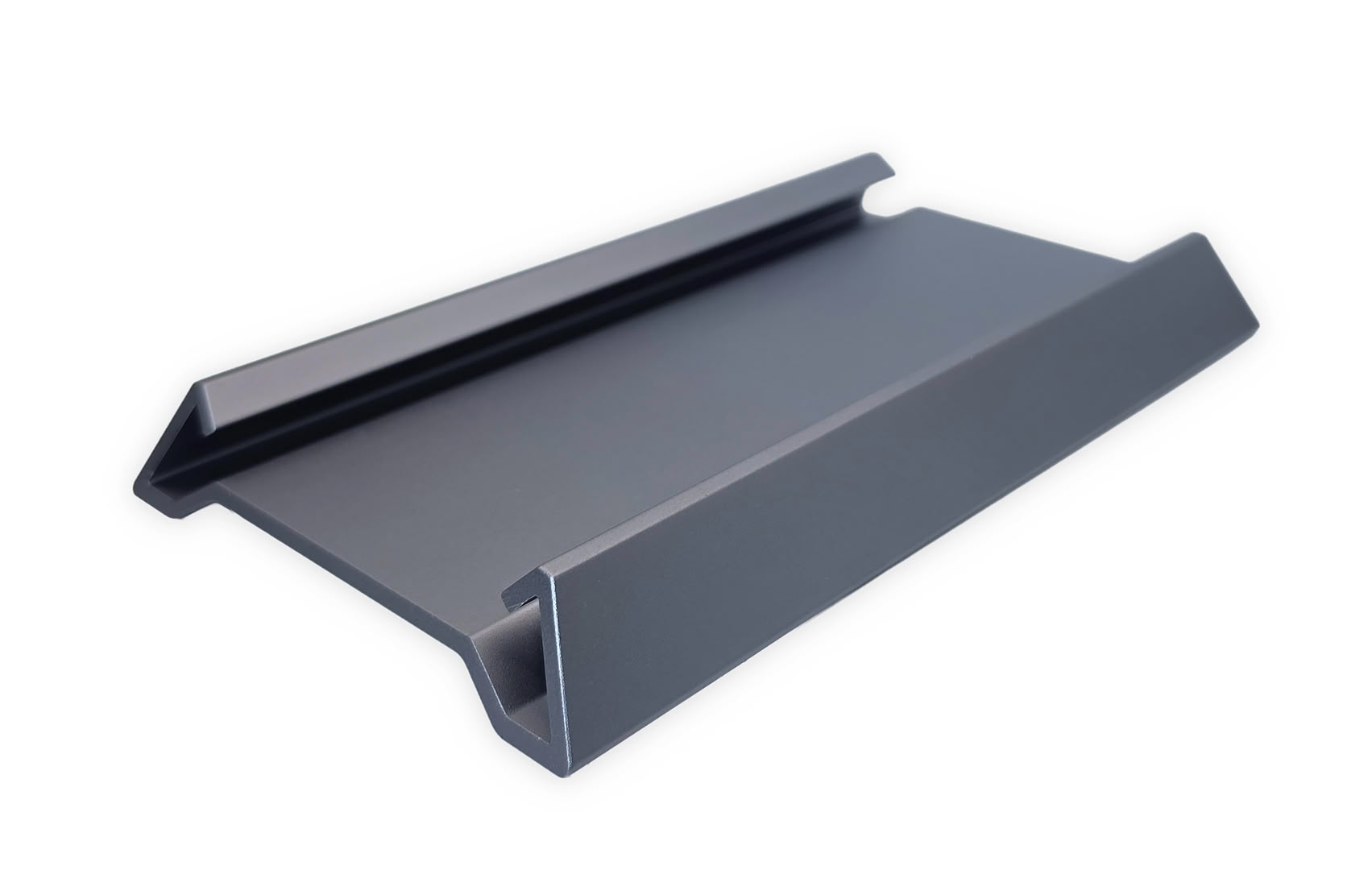
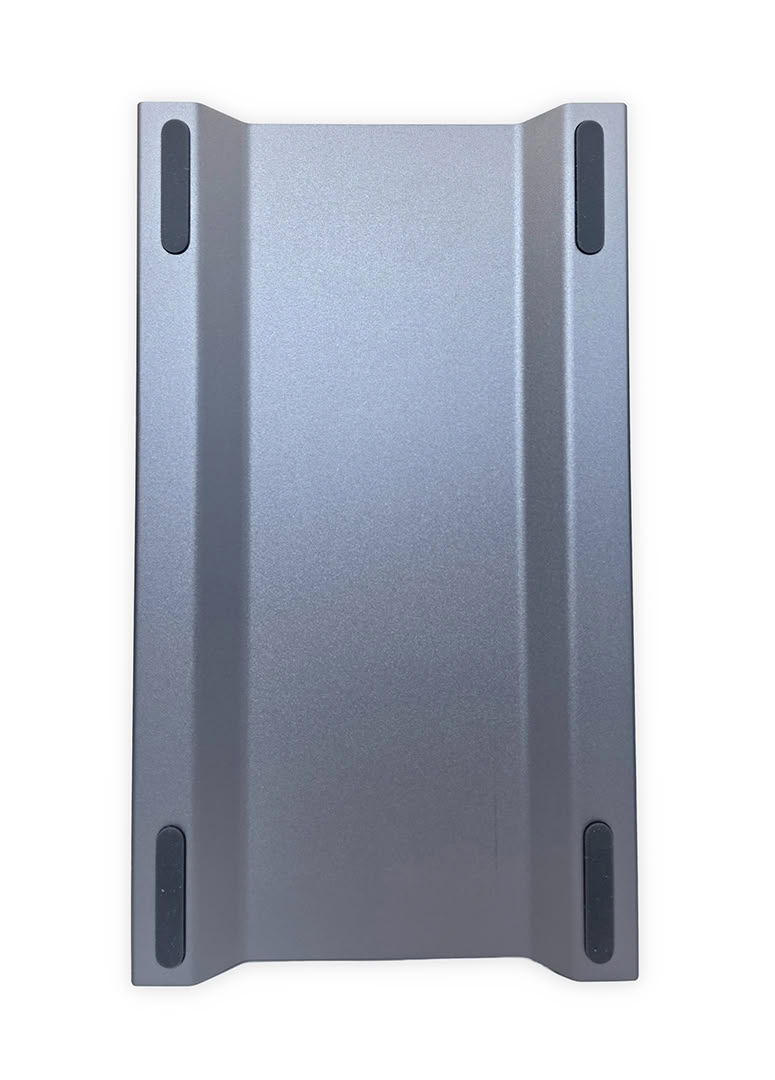
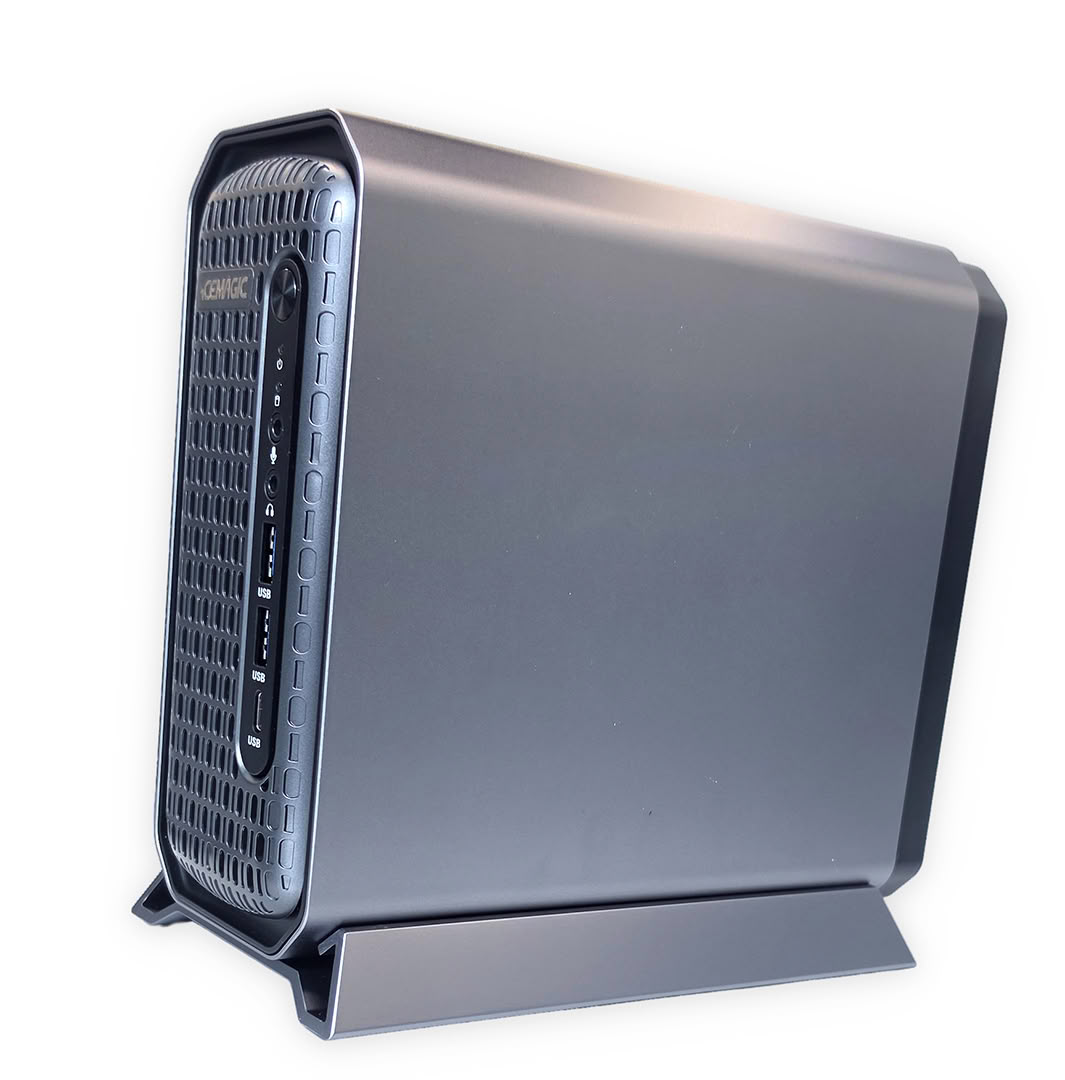
My G3A arrived a little differently from most systems I review because the product box was also the shipping box. There was no separate outer carton to remove first; I opened the shipping box and the system and accessories were packed directly inside. That said, everything was very well secured and arrived without any damage.
The box includes the system, 230 W power adapter, a Mini DisplayPort-to-HDMI cable, instruction manual, and a vertical stand. Including the display adapter is useful because the RTX 2000 Ada uses four much less common Mini DisplayPort outputs instead of full-size DisplayPort or HDMI connectors.
The stand lets the G3A run vertically and leaves both large side ventilation areas exposed for airflow around the internal cooling assembly. It is a simple one-piece support that holds the chassis securely without adding much desk space, while horizontal placement is also available if that works better for a particular setup. This gives users some flexibility when fitting a 3.46-liter workstation beside a monitor (I preferred using it vertically since it takes up much less desk space this way).
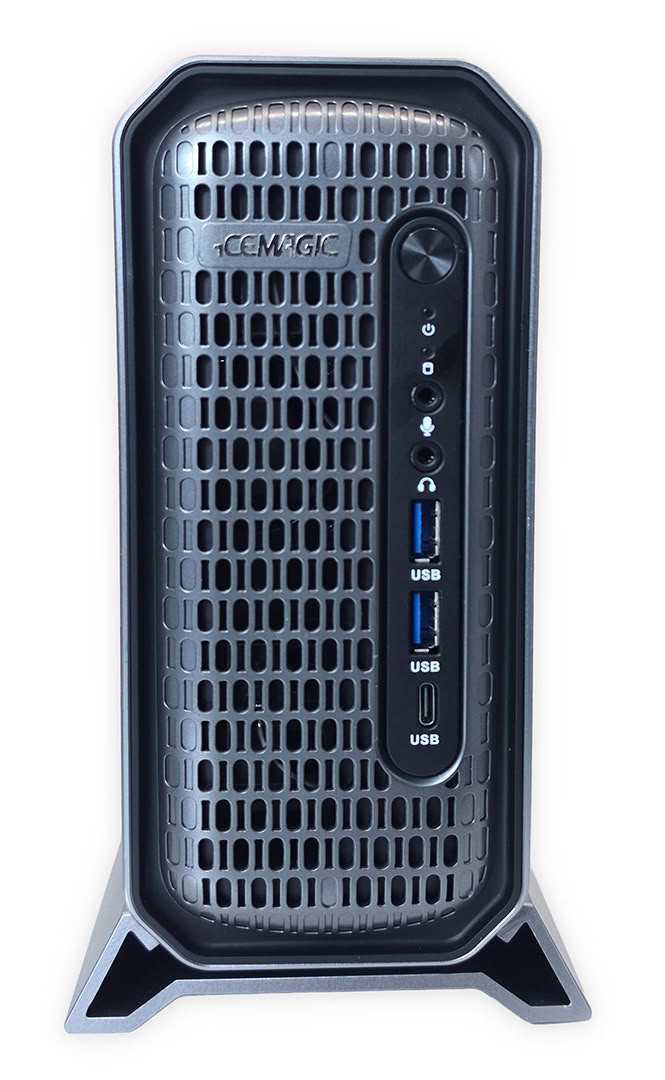
The G3A uses a rectangular silver metal outer shell with a heavily vented black front, giving it a more workstation vibe. At 212 × 190 × 86 mm, it is larger than the smallest office Mini-PCs, but that added volume creates room for a socketed desktop processor, a separate low-profile graphics card, and independent cooling hardware. The vertical stand shown with my sample also keeps the system footprint narrow on a crowded desk.
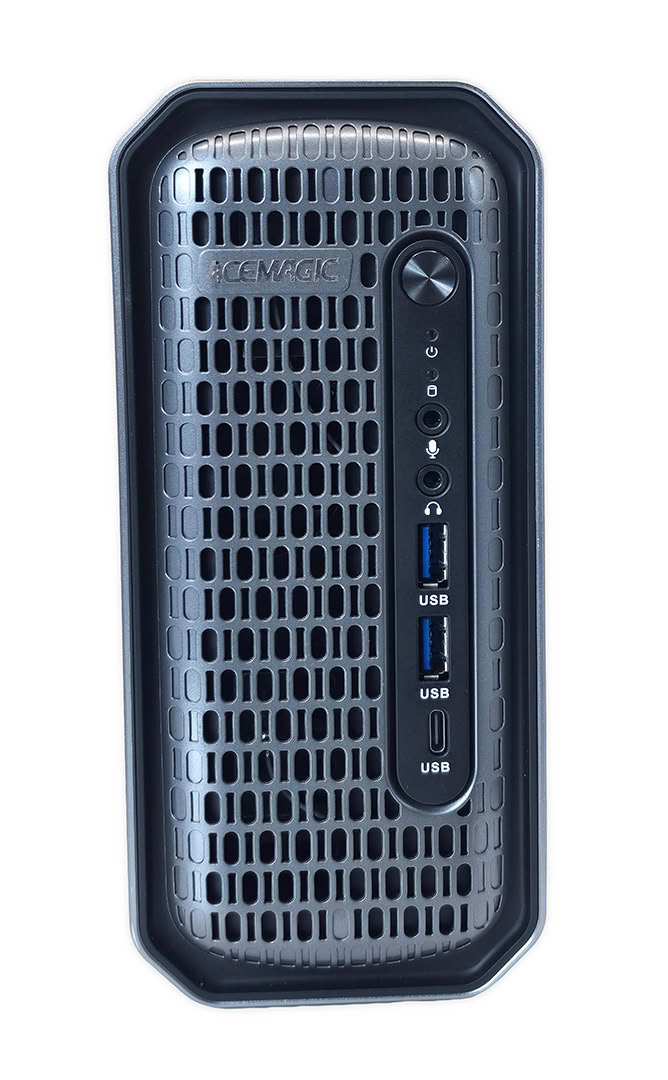
Front connectivity is simple and useful, with two 10 Gbps USB-A ports, one 10 Gbps USB-C connection, separate microphone and audio jacks, and the power button. I would have liked to see USB4 or Thunderbolt on a workstation at this price, especially for high-speed external storage and docking, but the three fast front USB connections still cover common portable drives and peripherals without reaching behind the chassis.
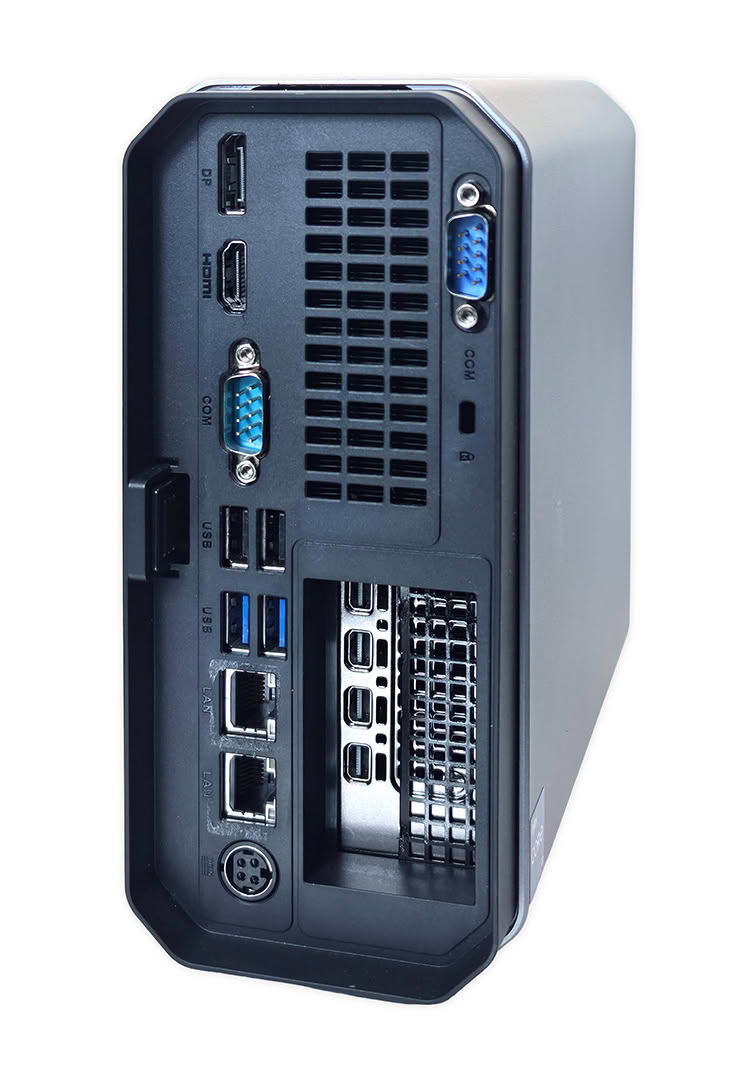
The rear panel shows the G3A's workstation and industrial focus through dual Ethernet, two COM ports, four additional USB-A connections, and the four Mini DisplayPort outputs on the RTX 2000 Ada. One Ethernet jack supports 2.5 Gbps while the second supports 1 Gbps, and the dedicated GPU can connect as many as four displays through its native Mini DisplayPort 1.4a outputs.
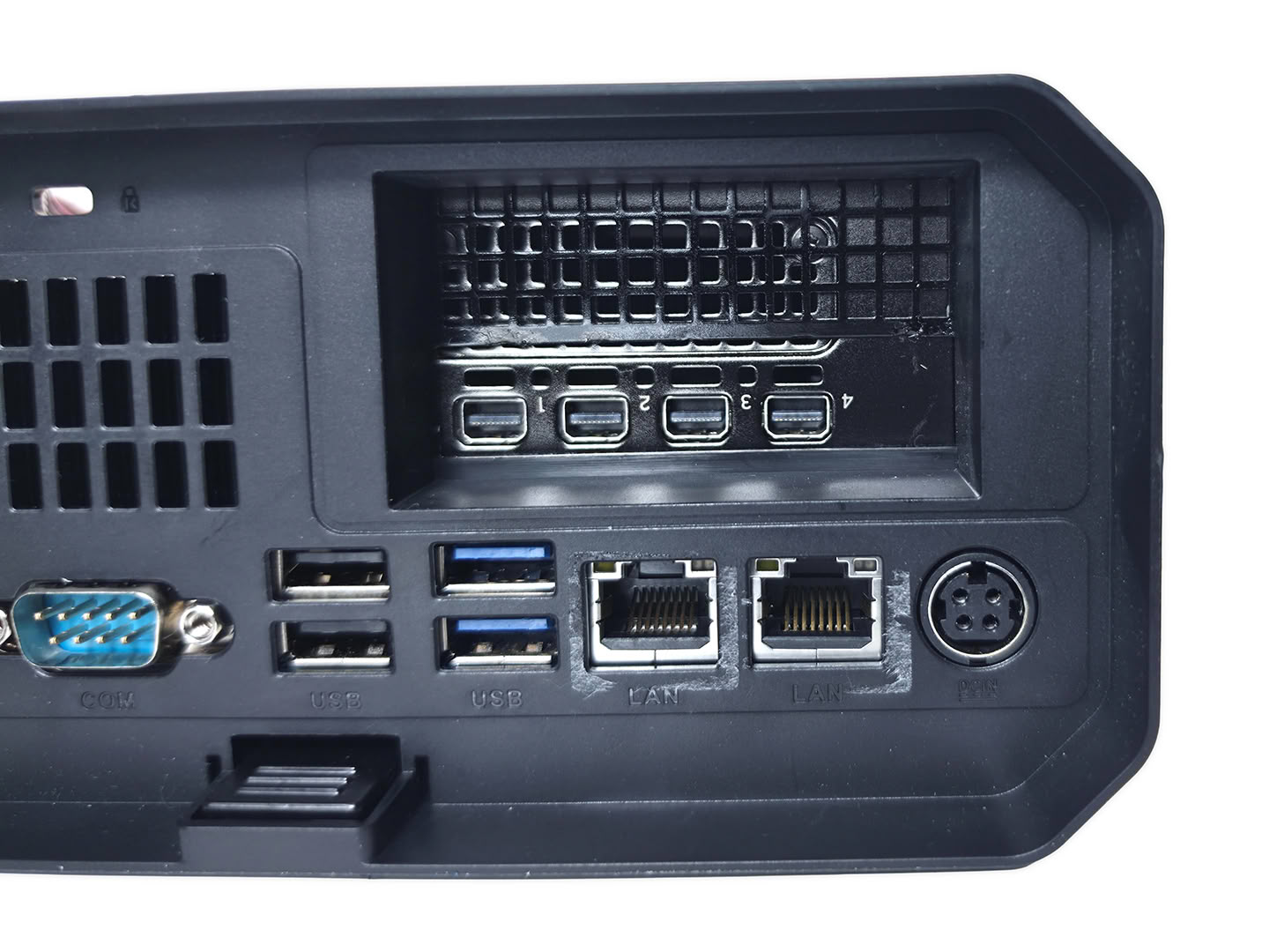
While the four Mini DisplayPort connectors on the Ada card avoid any display limitation once the correct cables or adapters are used, the inactive full-size ports can be confusing if someone assumes every visible display connector will work.
A Look Inside
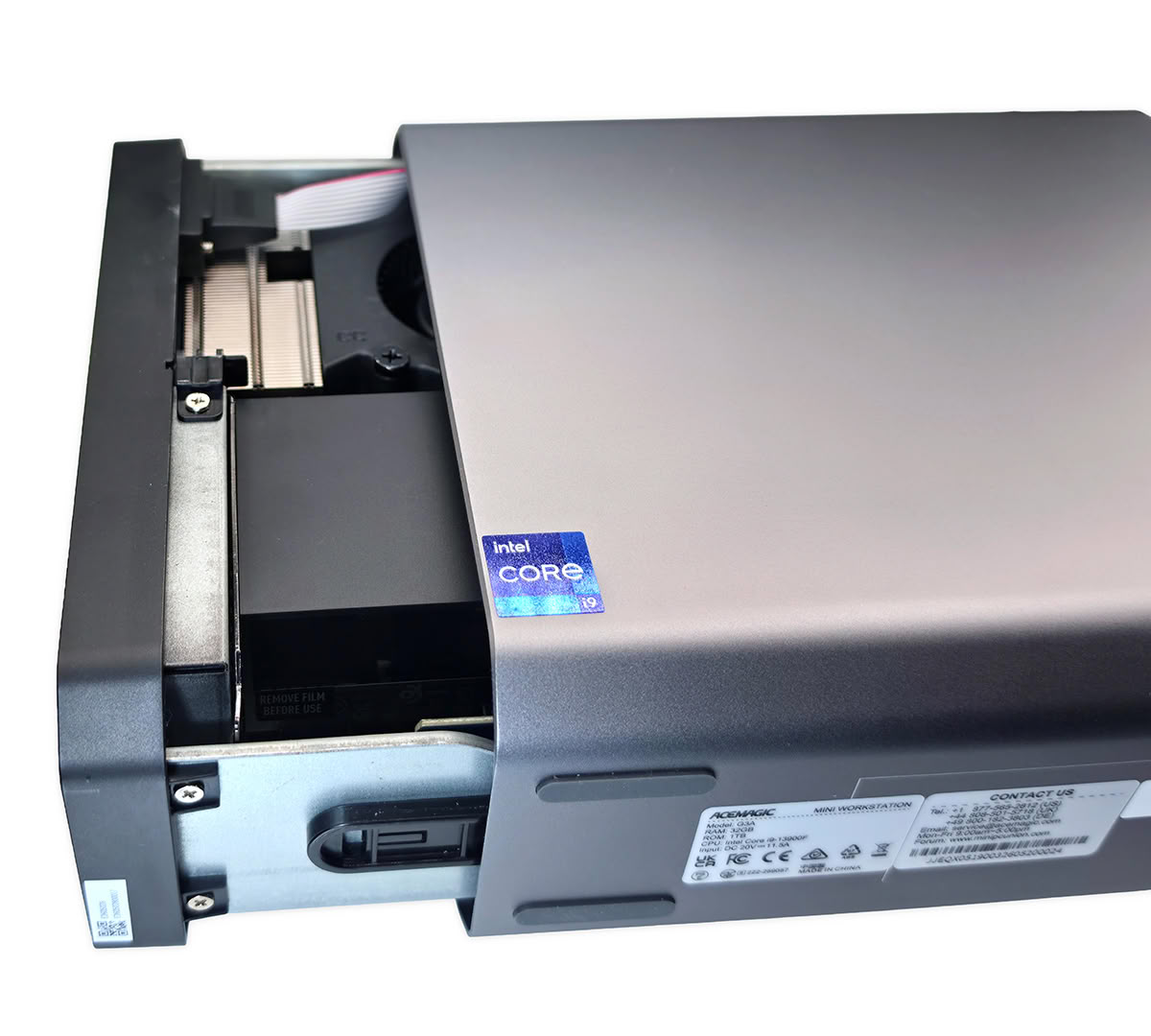
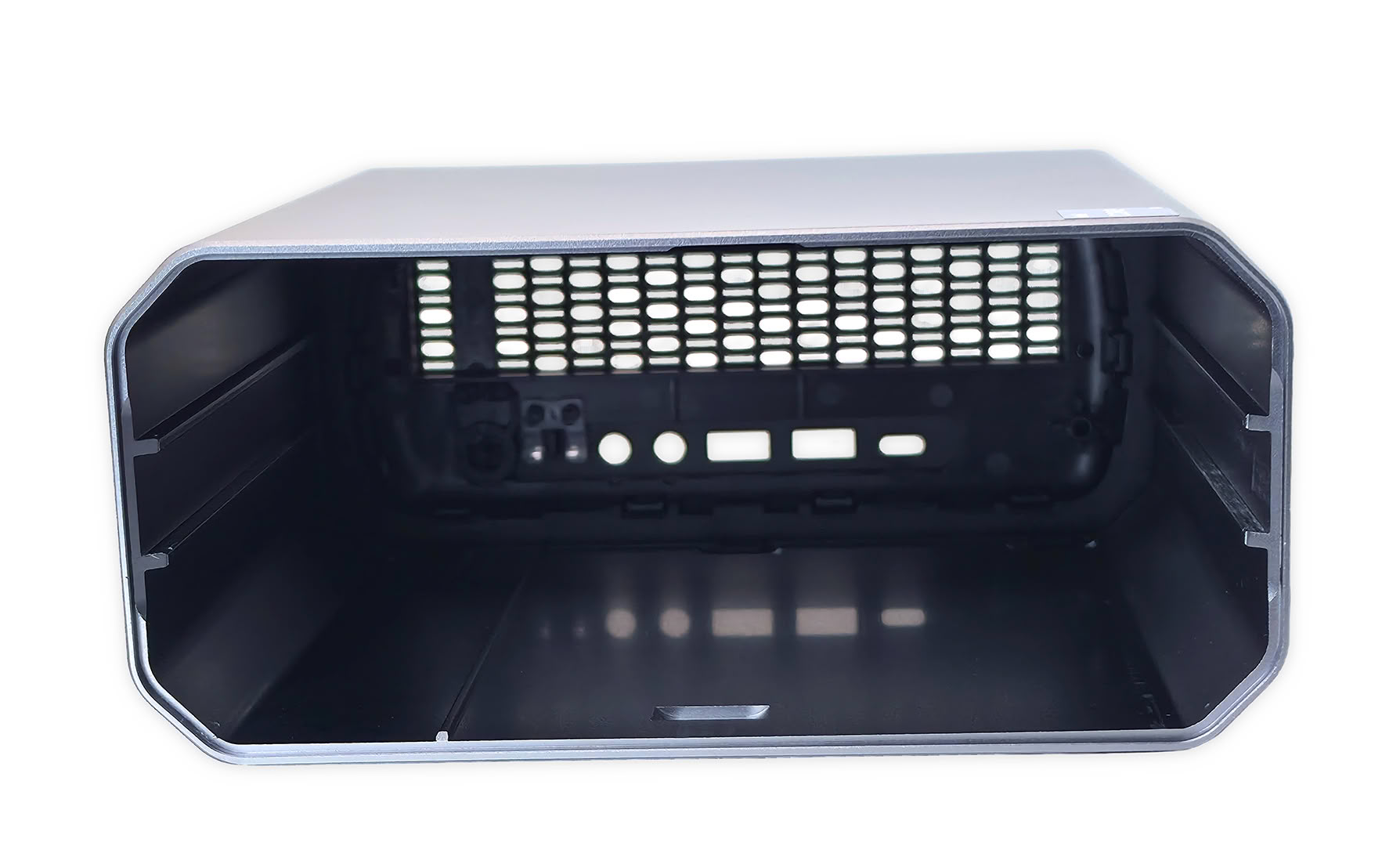
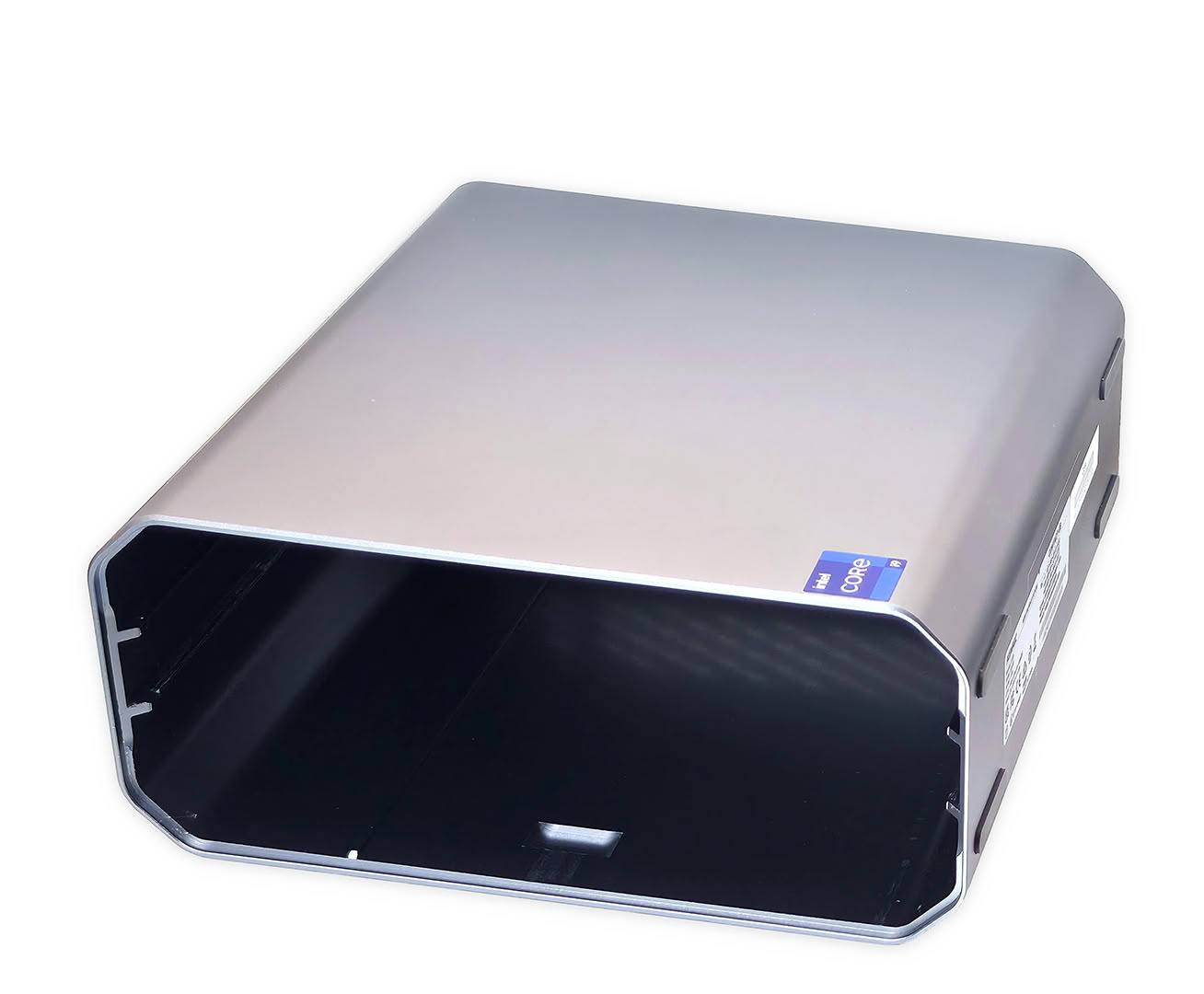
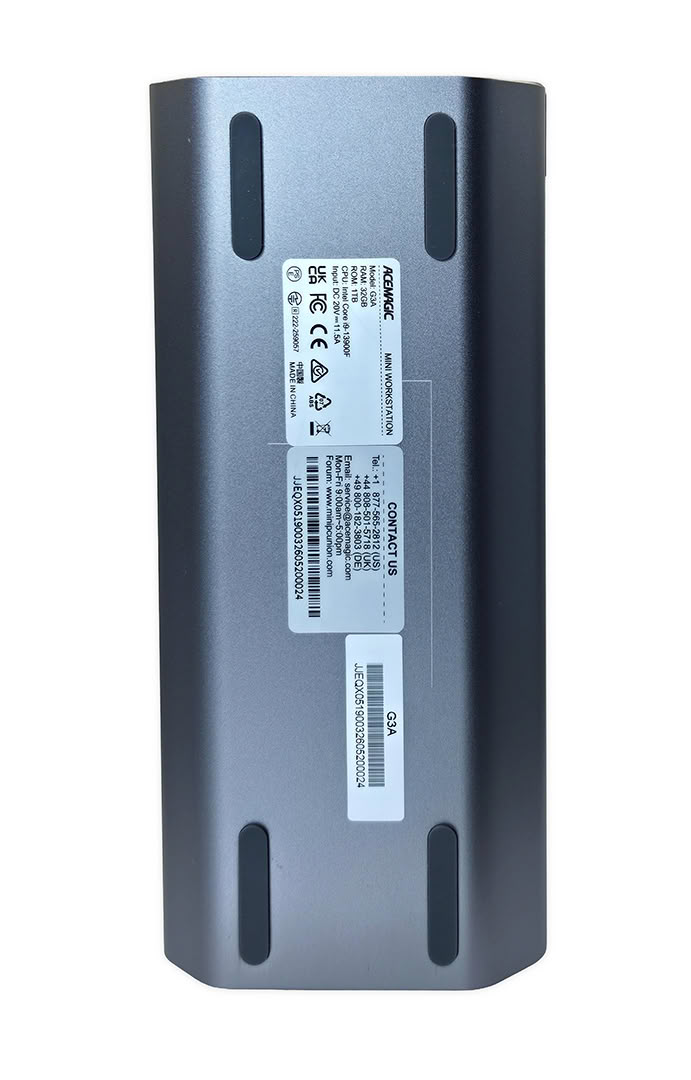
Opening the G3A reveals one of its most unusual design choices, since the main electronics and cooling hardware are assembled on a removable internal system module. After the outer chassis is released, that module easily slides out as a single unit, exposing the motherboard, memory, storage, graphics card, and cooling hardware instead of forcing the owner through several layered covers.
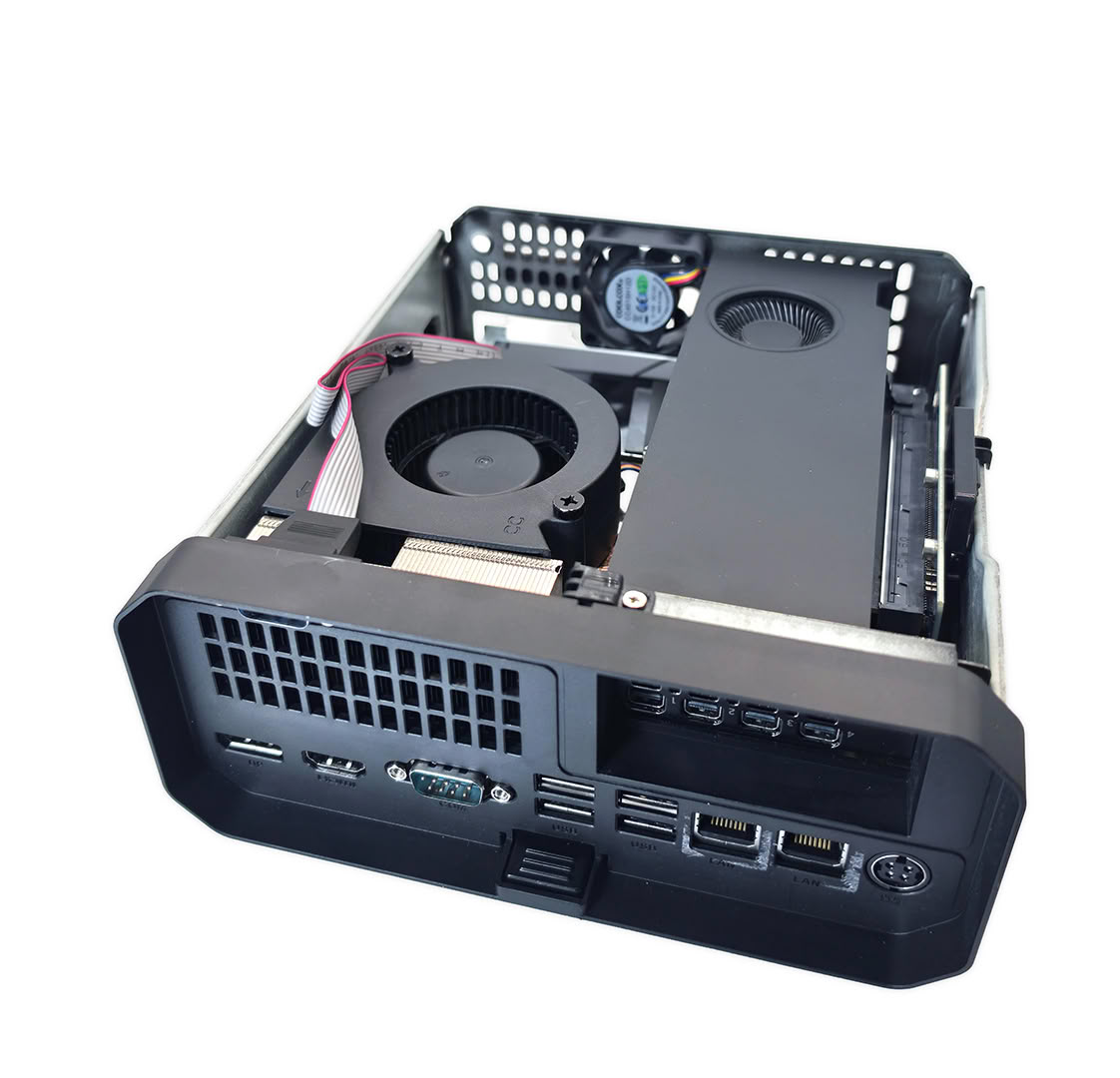
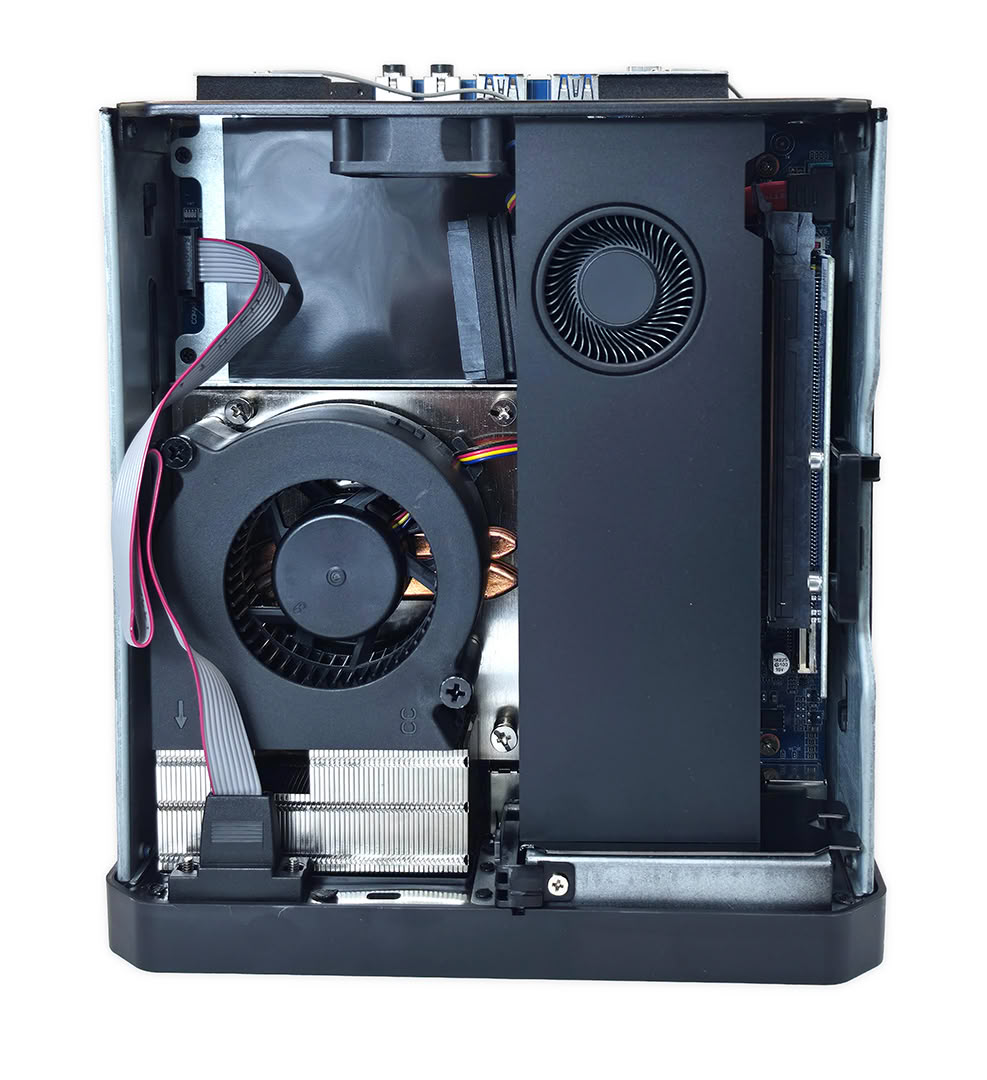
The CPU and graphics card also have their own cooling hardware, with separate fans moving air through each side of the internal module. The RTX 2000 Ada is also a real low-profile dual-slot PCIe graphics card, rated at 70 W with 16 GB of ECC GDDR6 and a PCIe 4.0 x8 interface. A replaceable graphics card is not seen very often in a system this small.
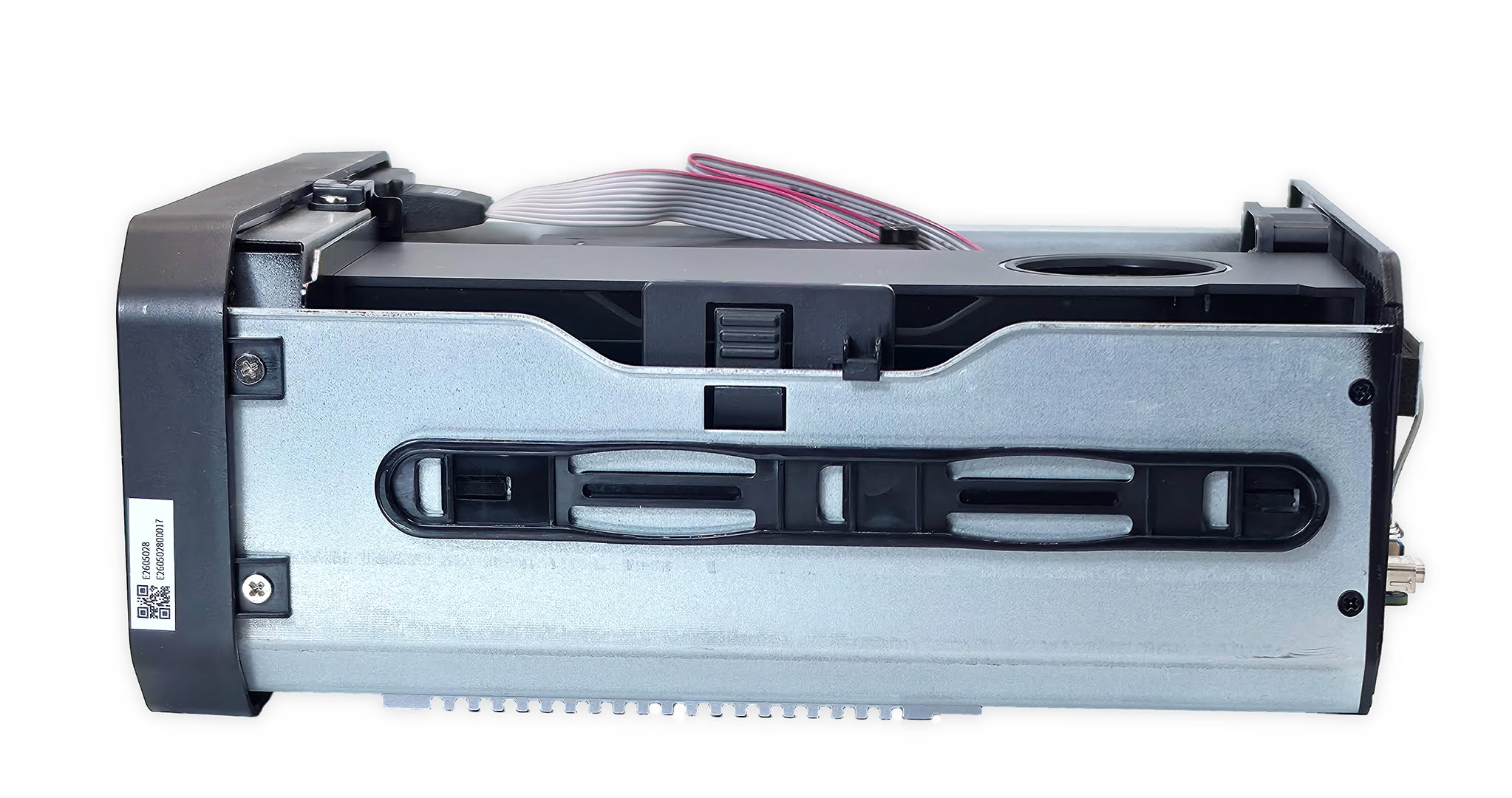
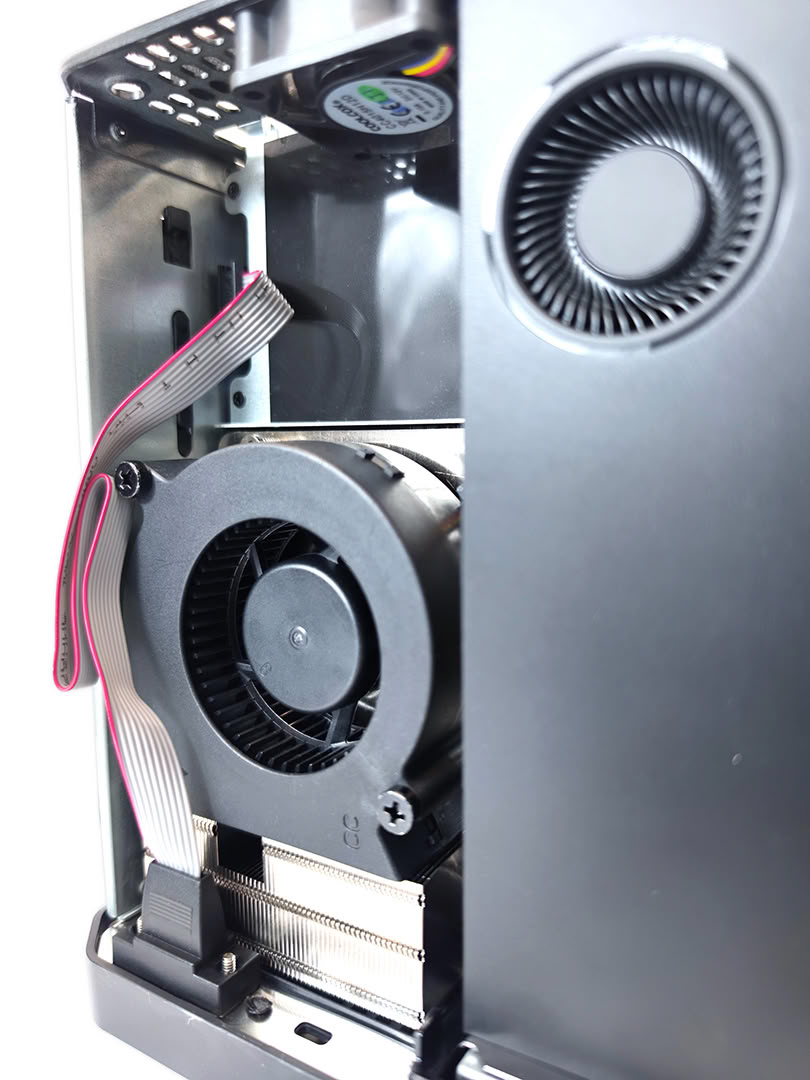
Memory and storage access are similarly desktop-like, with two DDR5 SO-DIMM slots and two M.2 2280 positions available inside the removable module. My sample uses two 16 GB Kingston modules for 32 GB of dual-channel DDR5-5600, and the current retail configuration supports up to 96 GB through those two SO-DIMM slots.
The factory drive is a 1 TB Huawei eKitStor Xtreme 200E, a DRAM-less PCIe 4.0 NVMe SSD. It is more of a mainstream, cost-conscious drive than a premium model, although its rated sequential speeds of up to 7,000 MB/s read and 6,500 MB/s write are still quite high for PCIe 4.0 (we'll see how it actually performs in our storage benching section). Huawei rates the 1 TB version for 400 TBW and covers it with a five-year warranty, so this is not some unknown generic SSD thrown into the system to keep costs down. A second M.2 2280 slot is available for another NVMe drive, and there is also a 2.5-inch SATA bay if you want to add cheaper bulk storage.
Our Patreon Silver Supporters can read articles in single-page format.
Nov 21st, 2026 04:19 PST
change timezone
Latest GPU Drivers
New Forum Posts
- What's your latest tech Freebie? (86)
- TPU's Nostalgic Hardware Club (22179)
- [Poll] 12V-2x6 Connector Protection: What Are You Using? (WireView / Ampinel / Equalizer / Other / Nothing) (50)
- UPS what one to get? (1)
- Anthrophics IPO (28)
- RX 9000 series GPU Owners Club (2252)
- Windows 11 General Discussion (7743)
- Without Jensen, PC gaming will be (52)
- Zen 3 IF/IMC degradation (242)
- AI generated images... (230)
Popular Reviews
- Microsoft Surface Laptop Ultra Review - The Next-gen Arm Laptop
- Ugreen NASync DXP4800 GT Review
- Corsair RM1200e (Second Generation) Review
- Pulsar Office Tour & First Look at P1 Dual-Sensor Mouse
- Upcoming Hardware Launches 2027 (Updated Nov 2026)
- Acemagic Retro X3 Review
- Biwin Black Opal NV7400 2 TB Review
- AMD Ryzen 7 9800X3D Review - The Best Gaming Processor
- AMD Zen 6 Technical Deep Dive
- Chieftec Iceberg PRO 360 DARK Review
TPU on YouTube
Controversial News Posts
- NVIDIA Co-Founder and CEO Jensen Huang Officially Resigns (491)
- Report: Jensen Huang Eyes NVIDIA Comeback (257)
- Open Letter Asking NVIDIA to Reinstate Jensen Huang Passes 115,000 Signatures (184)
- OpenAI CEO Argues Home PCs Waste the World's Limited DRAM Supply (152)
- NVIDIA Launches Investigation Into Jensen Huang's Relationship With Suspected Chinese Spy (136)
- Intel "Raptor Lake Next" 16-Core and 20-Core CPUs Surface (130)
- Legendary Game Studio BioWare Shuts Down Following EA Layoffs (104)
- NVIDIA GeForce RTX 50-Series Scheduled for up to $500 Price Hike This Week (89)