 10
ADATA SC735 2 TB Portable SSD Review - Rugged and Convenient
Performance »Package
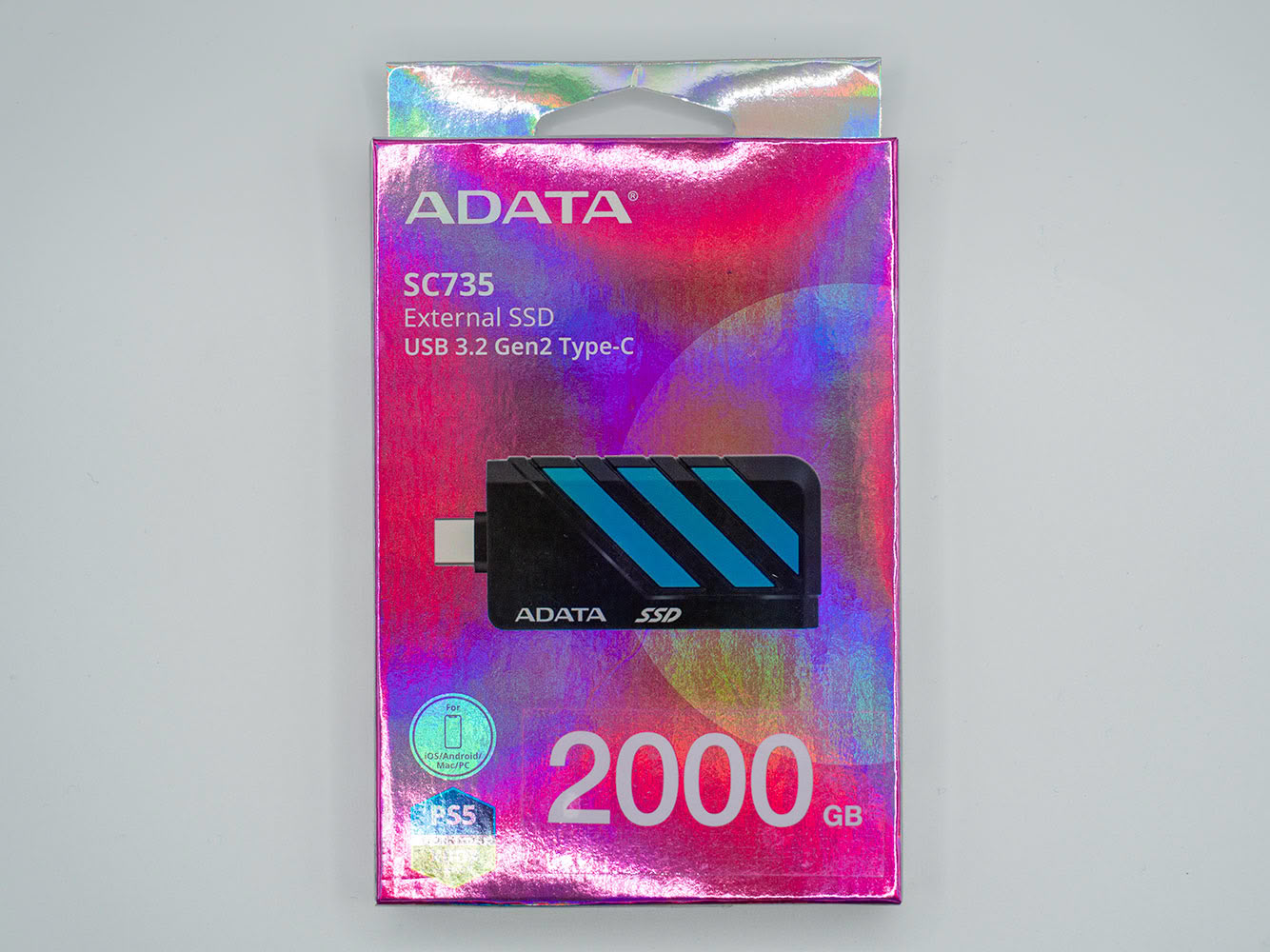
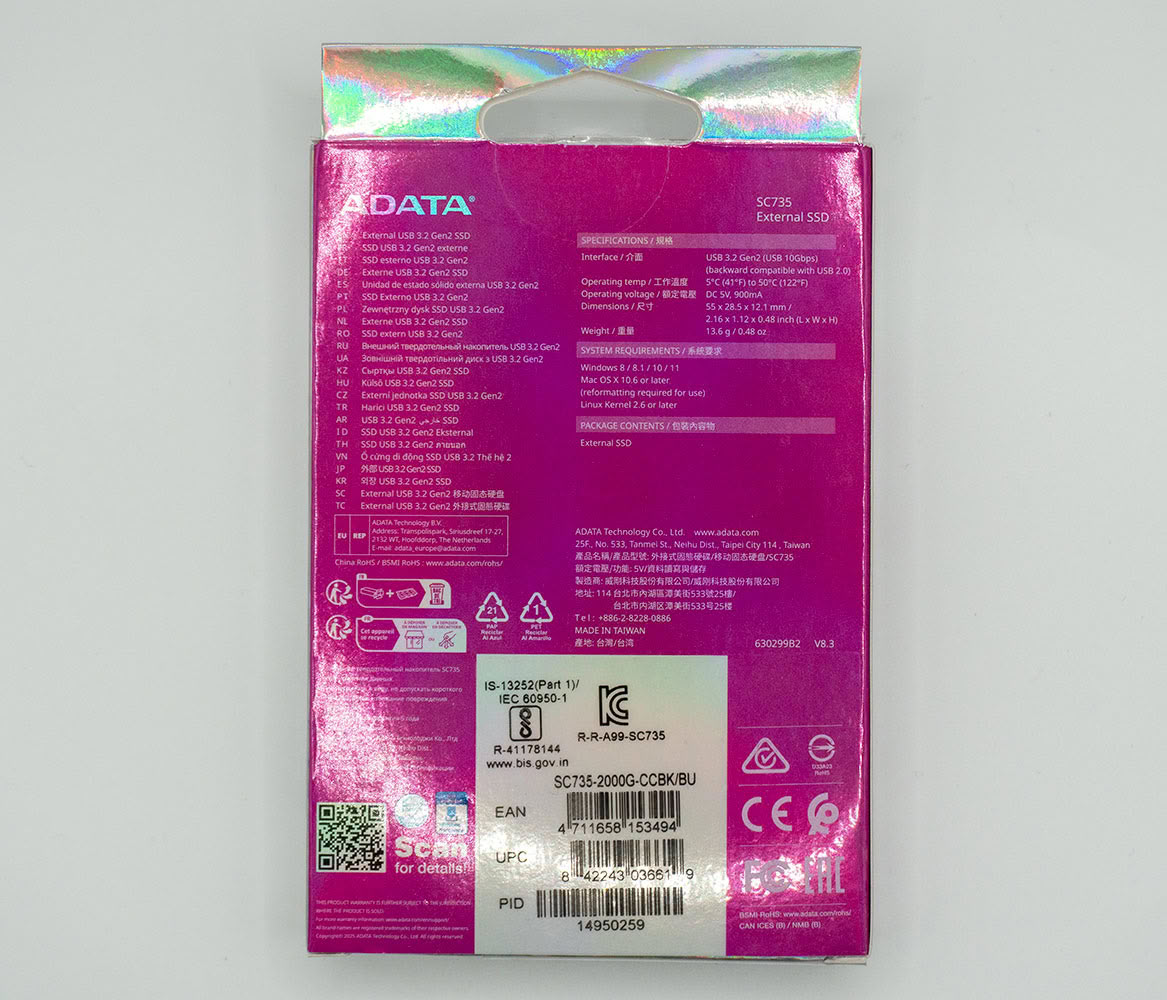
The ADATA SC735 comes in a cardboard box with an extremely glossy surface that has holographic film. The box does a good job of detailing all the features and specs.
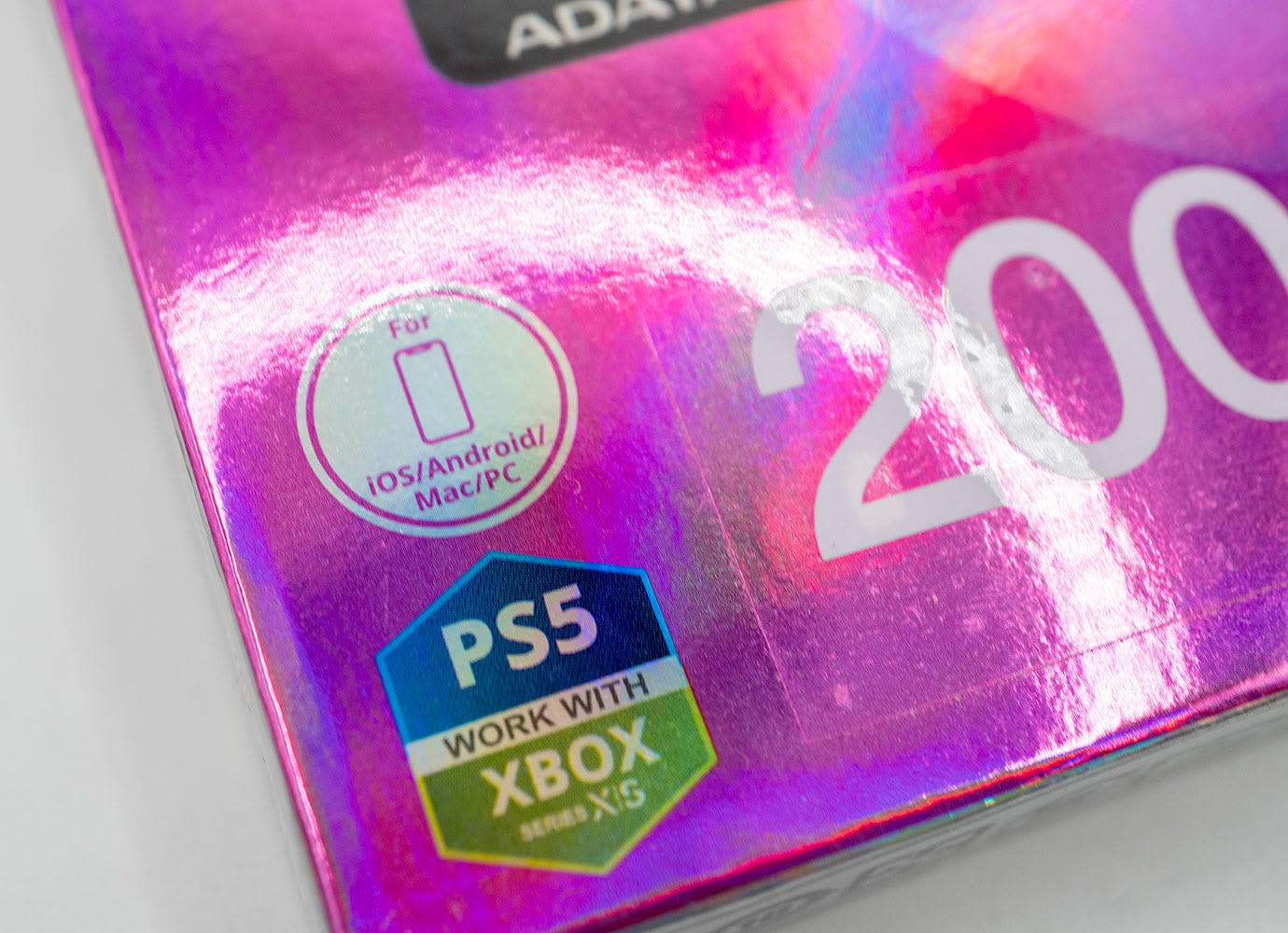

Our sample didn't come with any inclusions besides the drive. Here are a few more pictures of the box, which advertise its compatibility with your smartphones and tablets that feature USB-C ports, and its support for modern game consoles such as Xbox Series X/S and PlayStation 5. You can use this as a game install drive and count on its 1 GB/s transfer speeds to at least perform faster than a SATA SSD.
The Drive
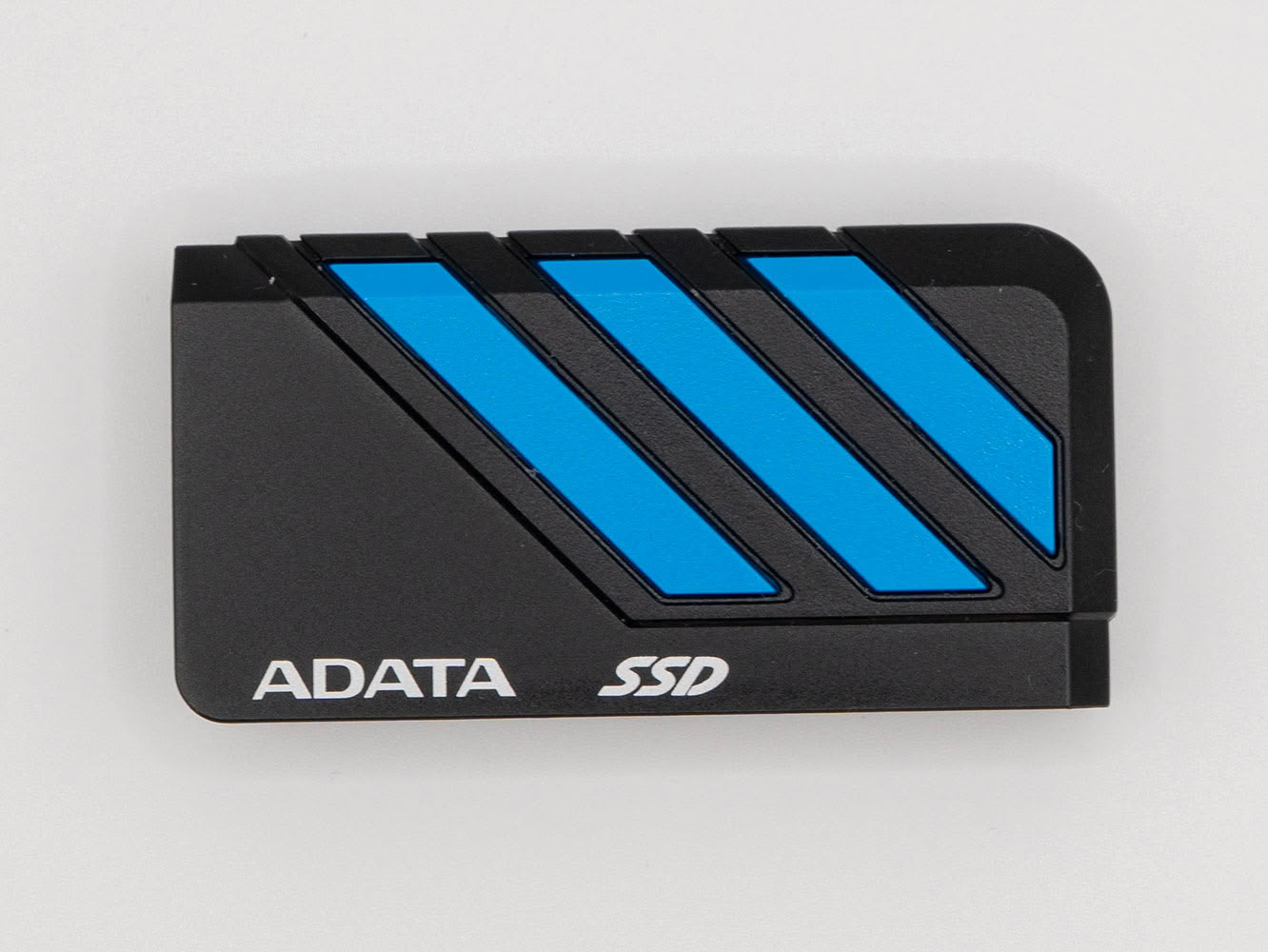
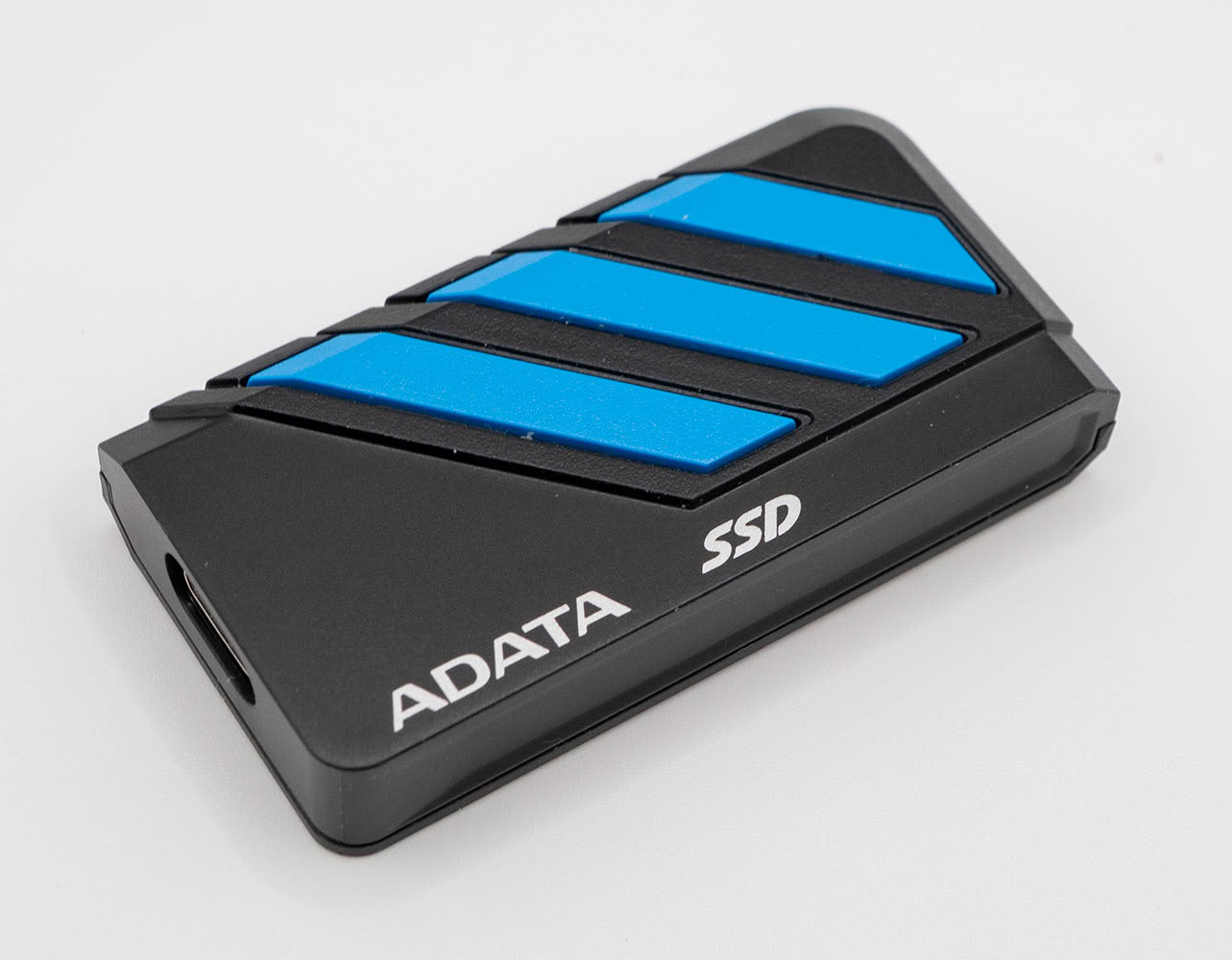
The ADATA SC735 feels slightly larger than a flash drive from the late 2000s. It has contrasting black+blue accents. On other ADATA rugged portable SSDs, these blue accents are made of rubber, but not on this drive.
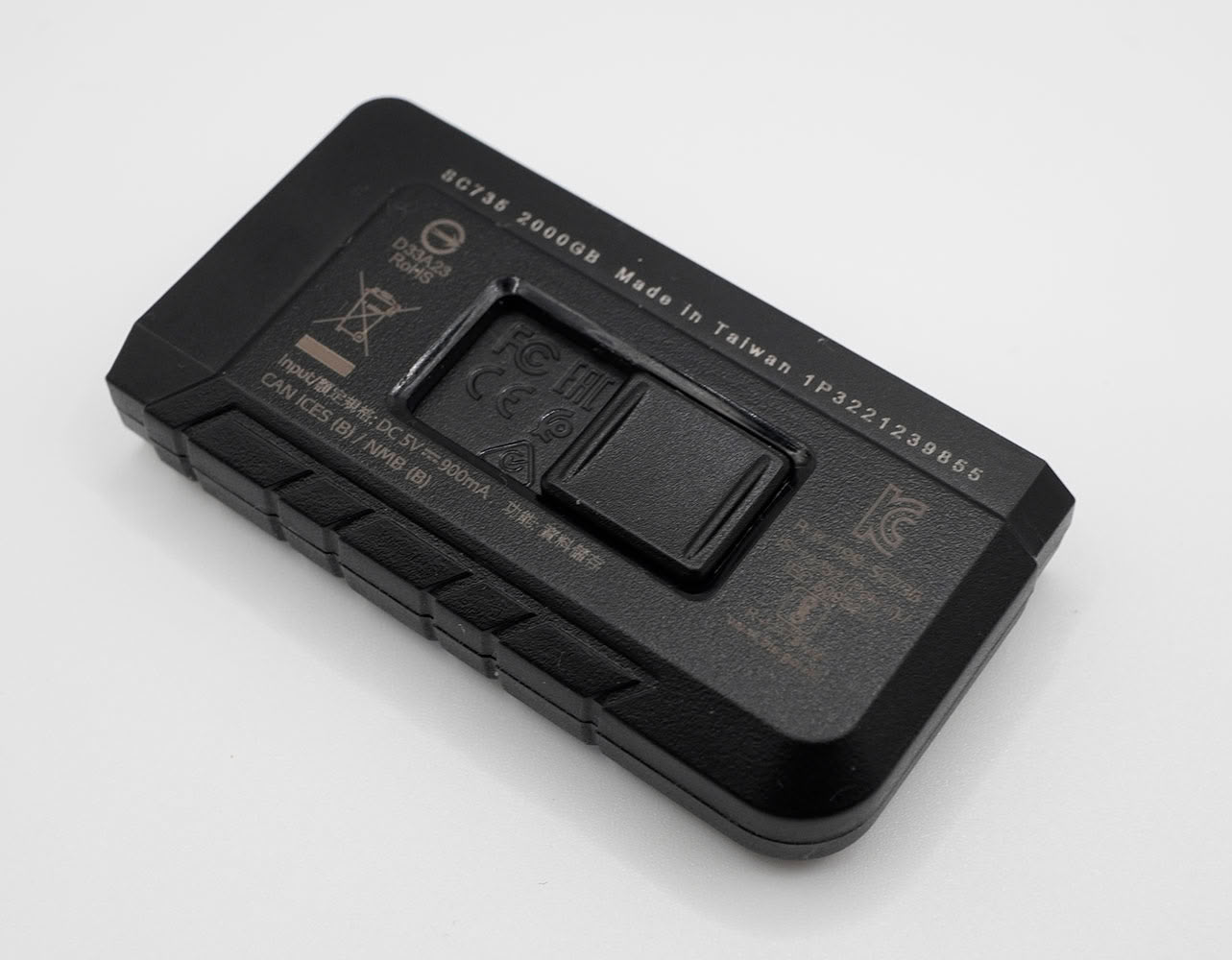
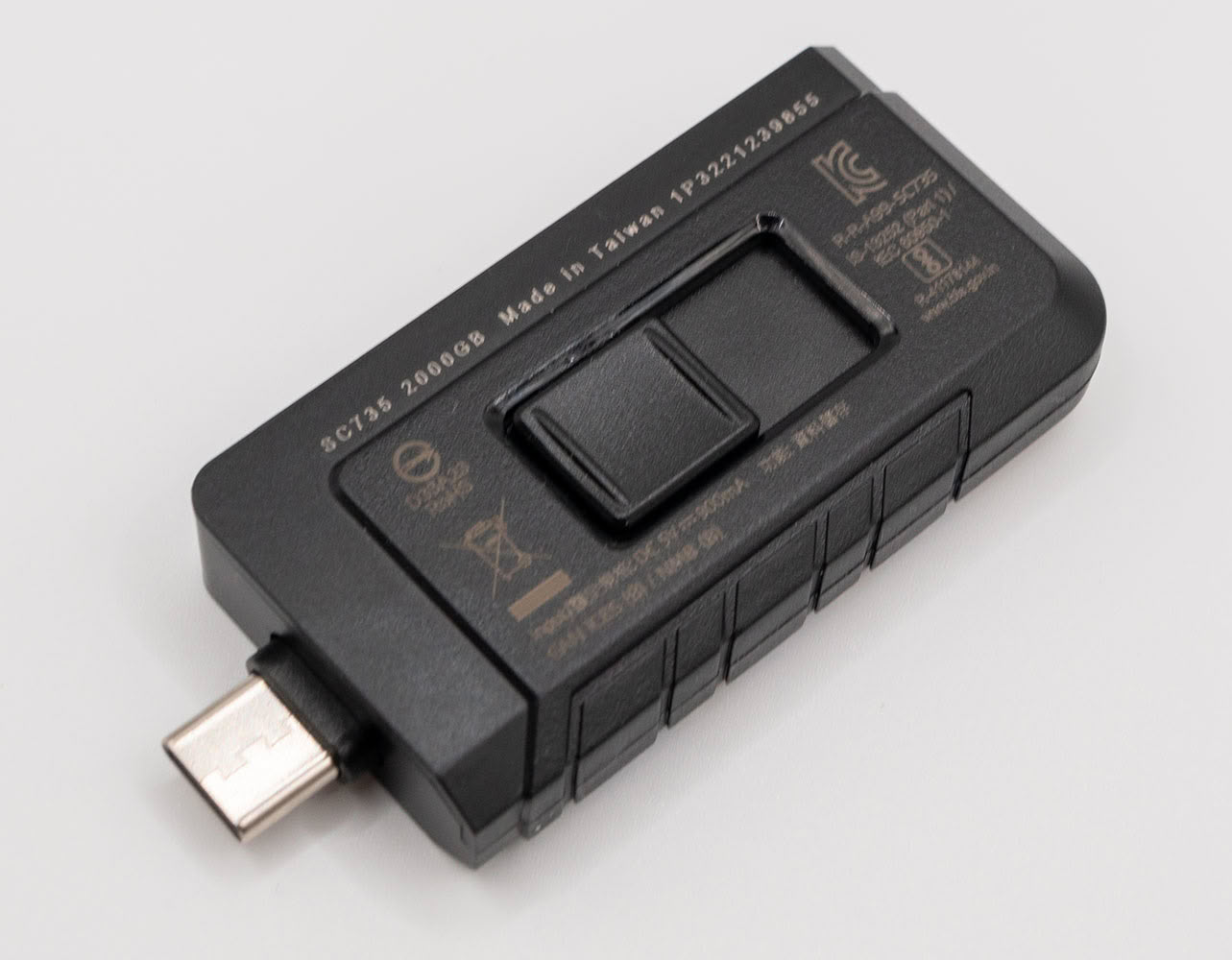
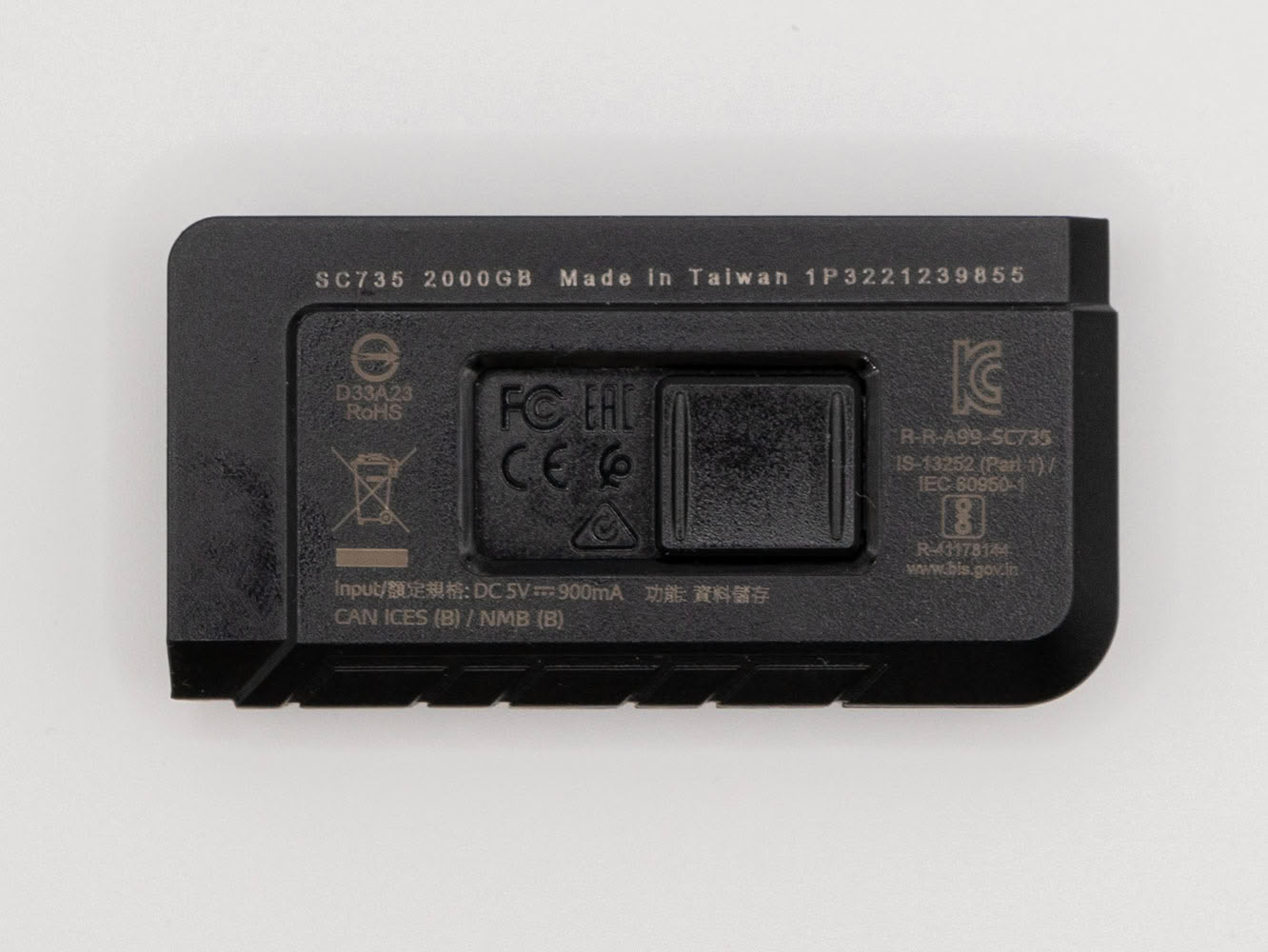
The back side shows you the slider. You press it down with your thumb and slide out the connector all the way to the end to lock it in place. You press it again to unlock and slide back, to retract the connector.
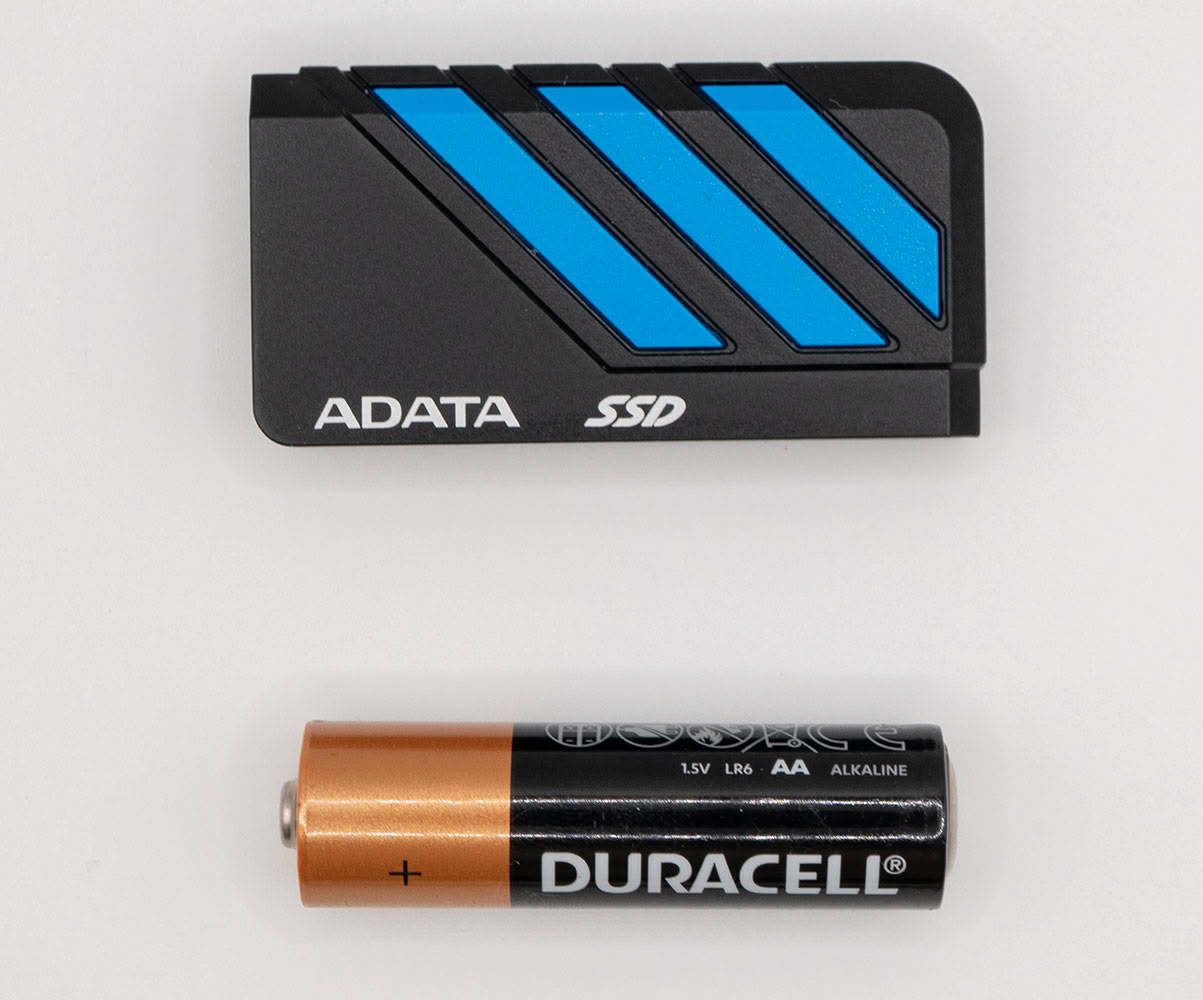
This is how big the drive is next to a common AA battery. It measures 55 mm x 28.5 mm x 12.1 mm (LxWxH).
Teardown
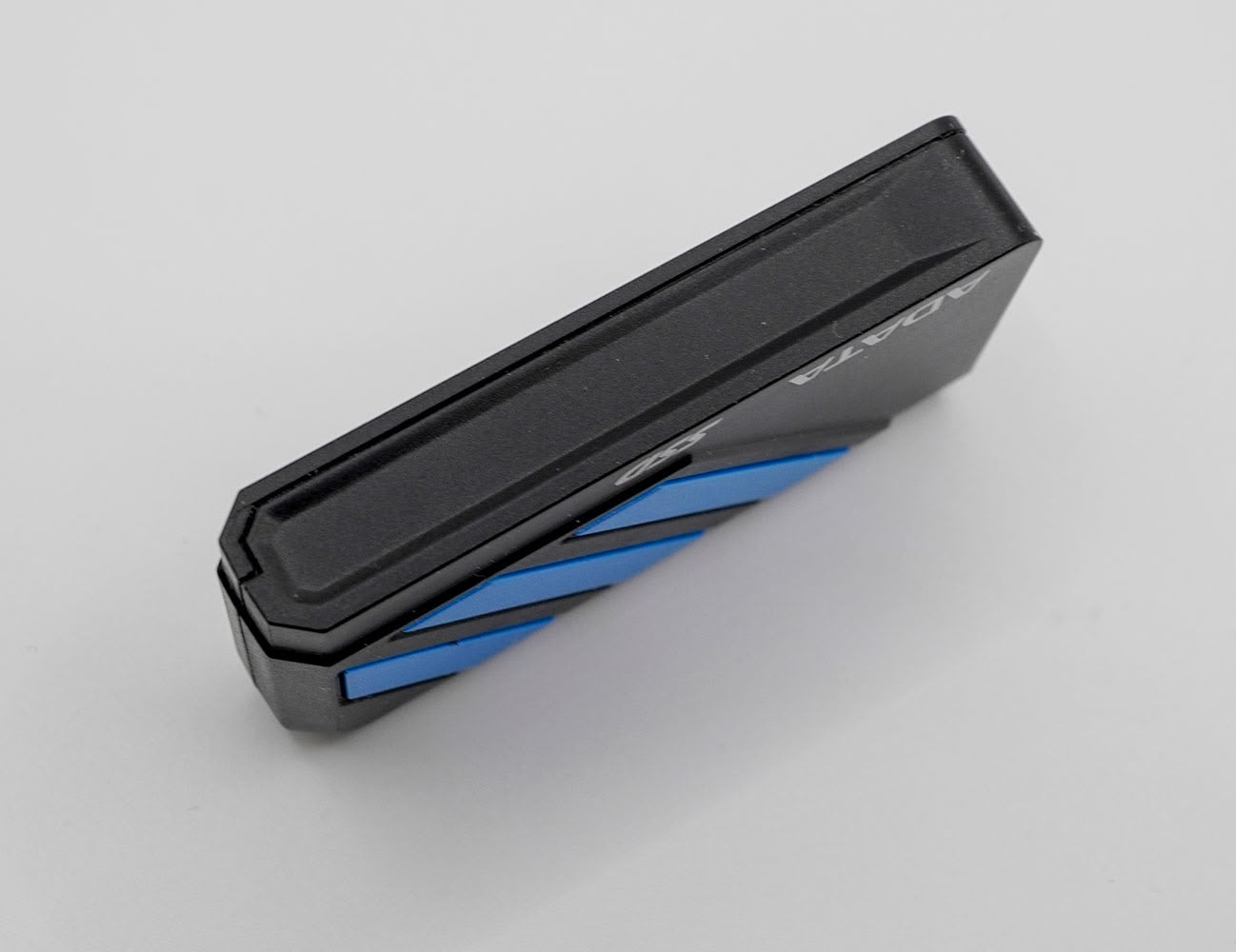
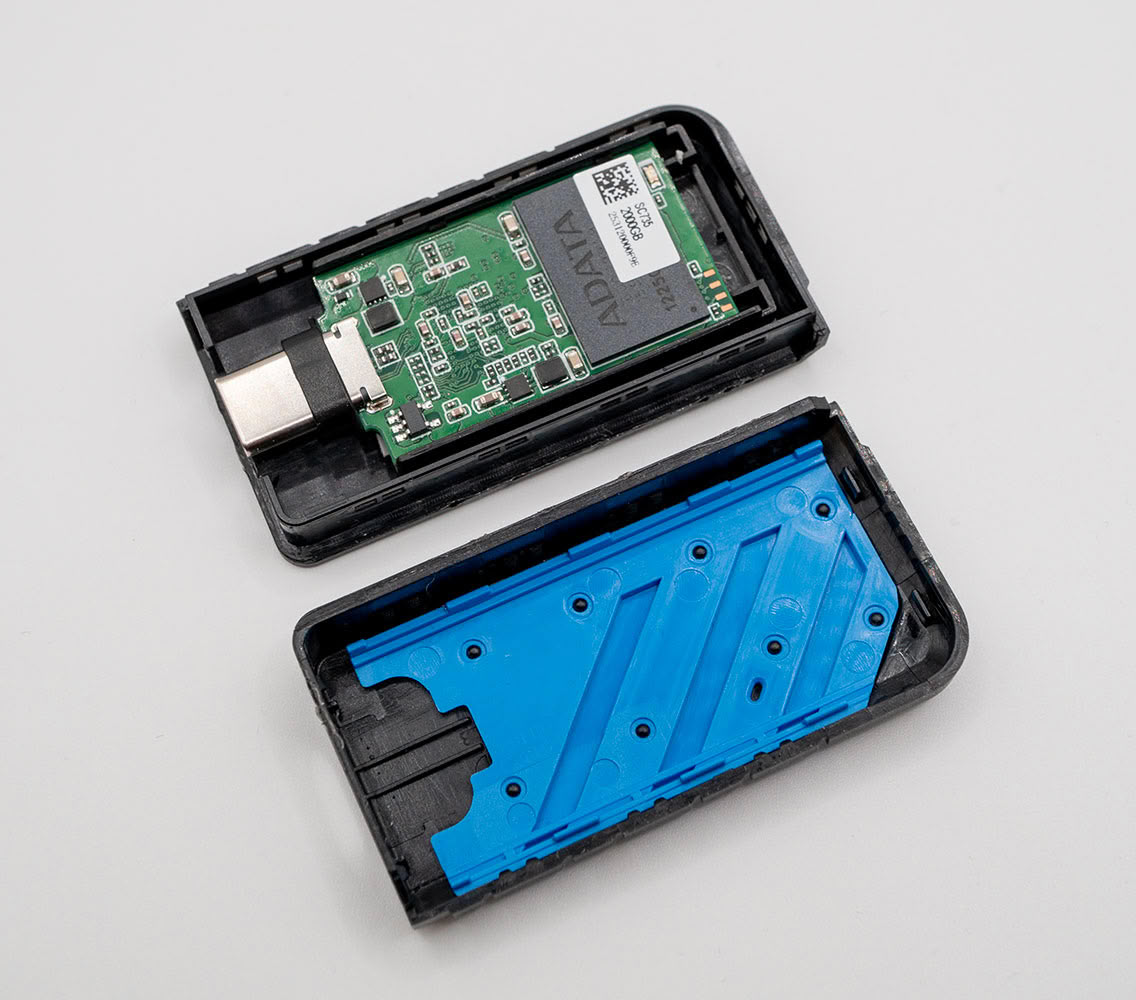
This is probably the easiest drive we've ever disassembled. There's a fairly wide gap between the two halves of the drive. This gap tapers towards the edge, becoming a bit wider. This is where you want to begin prying, and a series of 8 locks hold the two halves in place.
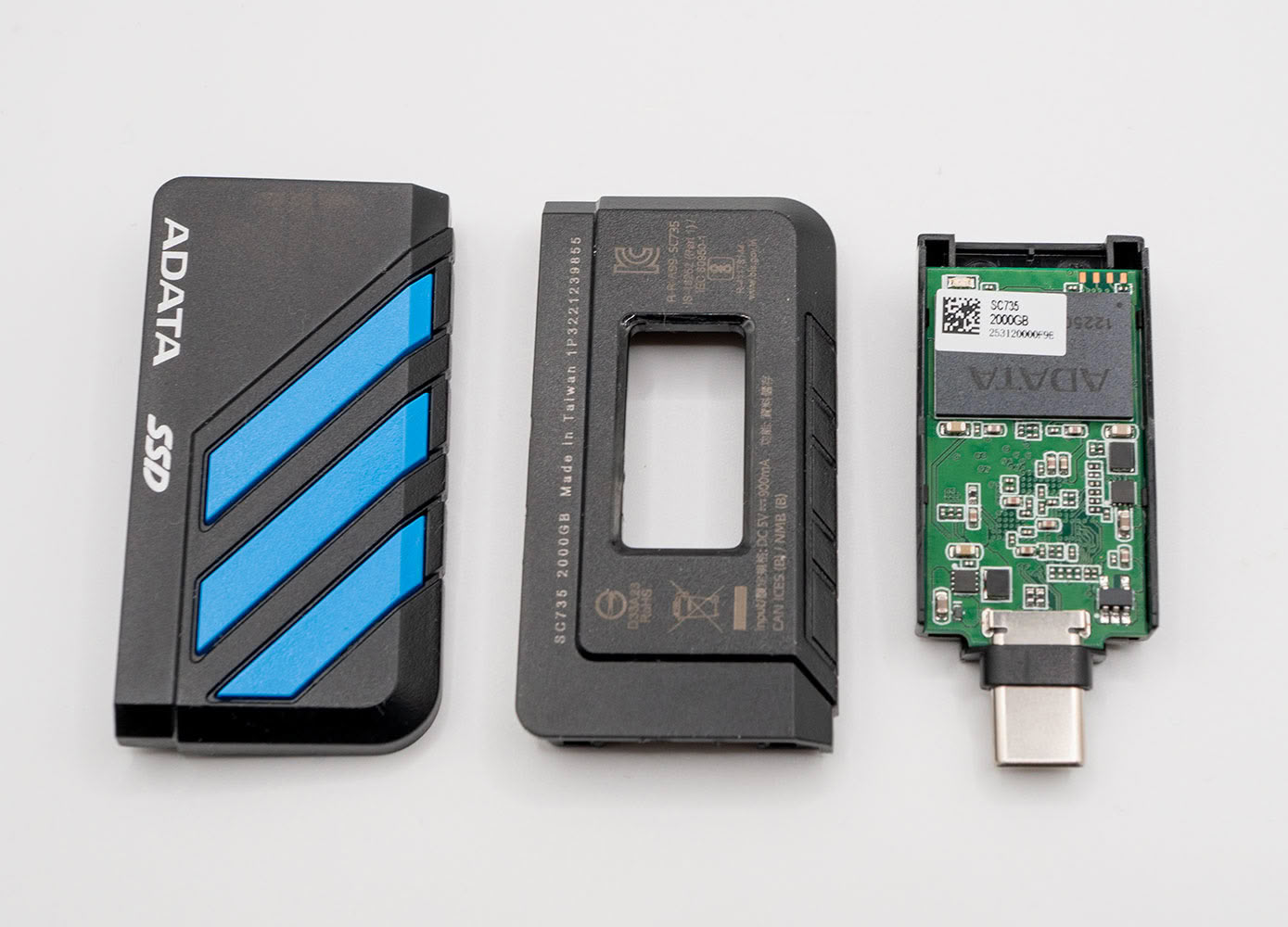
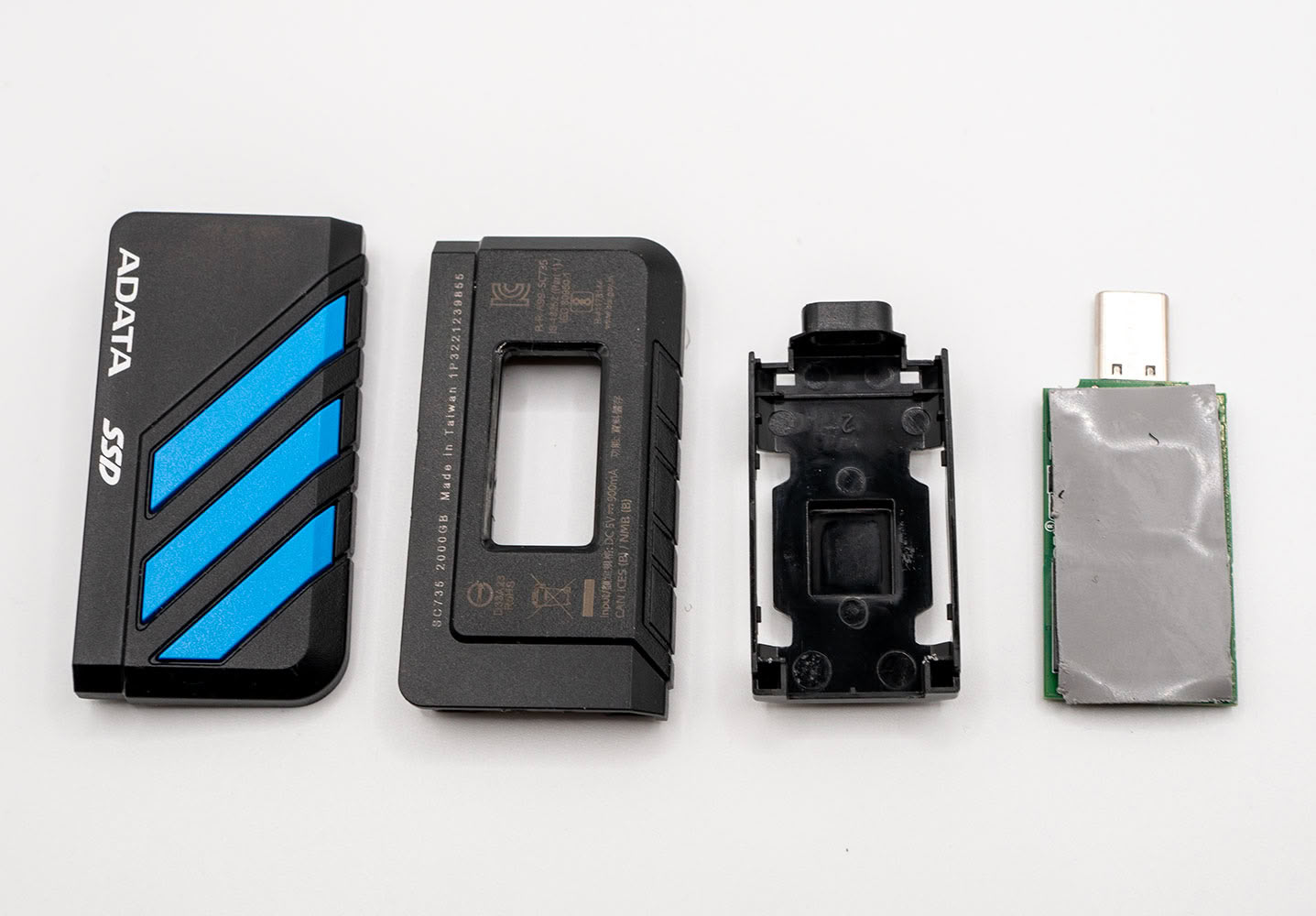
Once the two halves are off, you find the PCB is encased in a further inner plastic frame that forms part of the slider mechanism. One side of the PCB is exposed, while the other side, with the controller, has a thin thermal pad in place. Not sure what this is for, since the drive's body has no metal anywhere.
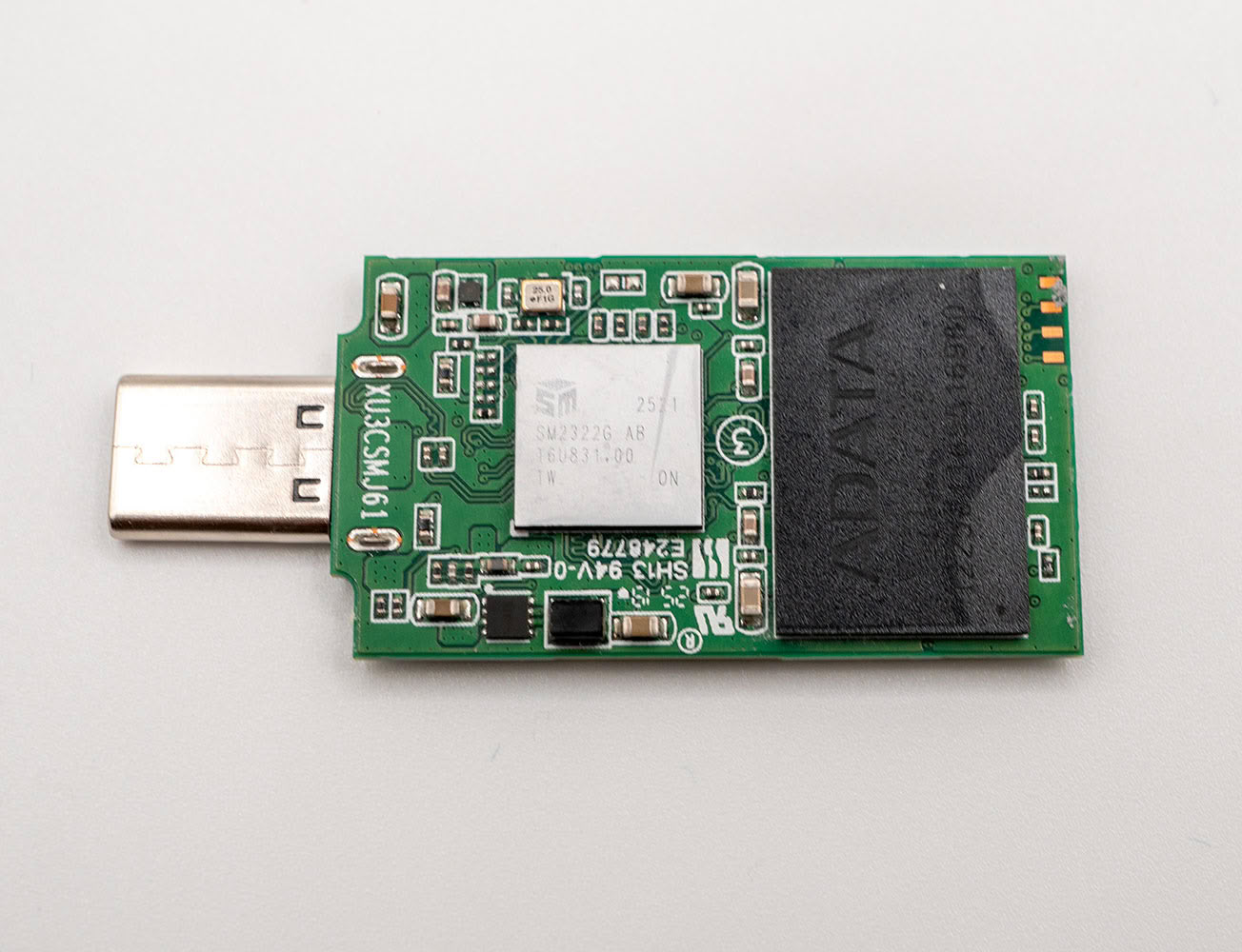
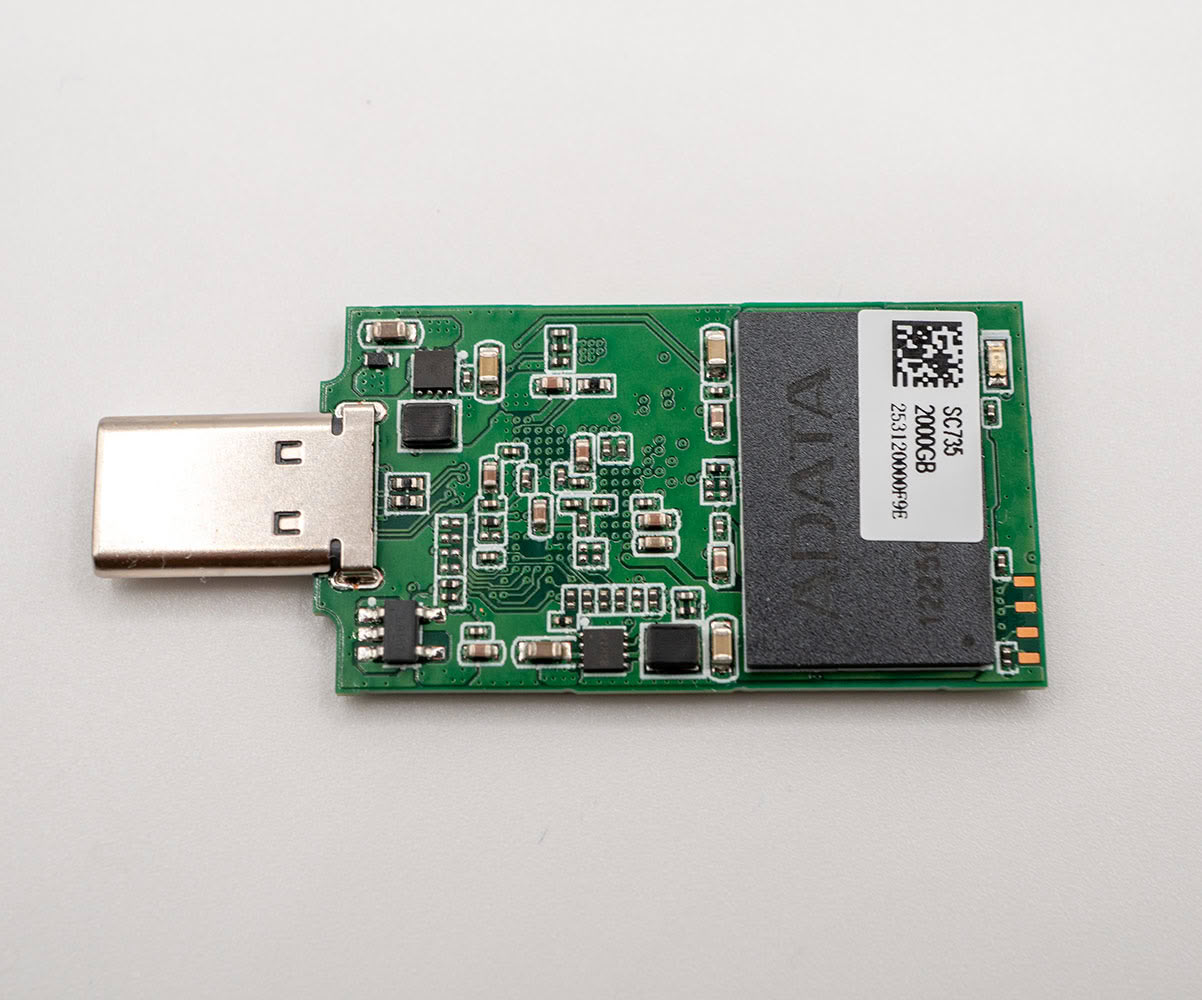
The PCB owes its simplicity to the fully-integrated single-chip controller. There are just two NAND flash chips—one on each side—and the controller; there's no bridge chip.
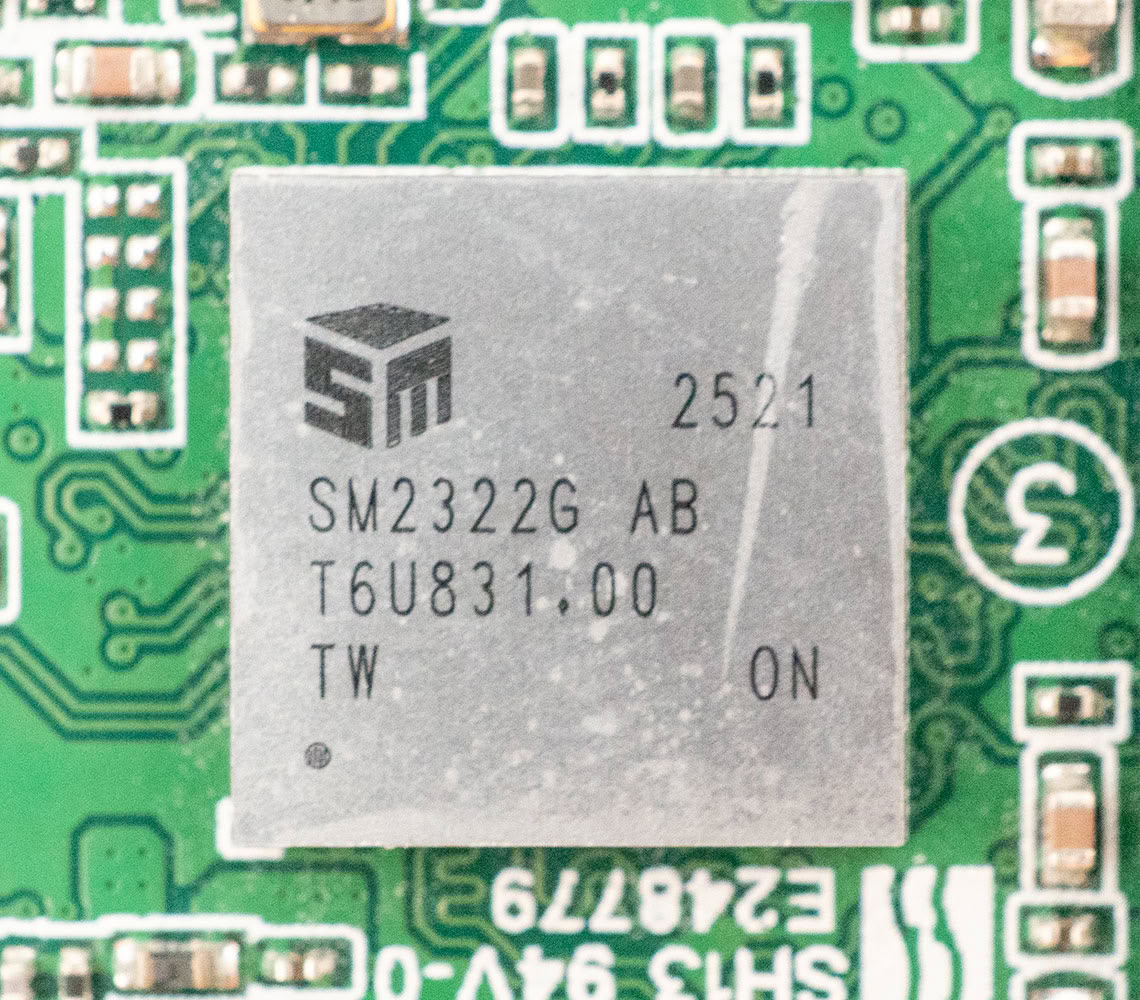
At the heart of the ADATA SC735 is the Silicon Motion SM2322G controller. This is a USB-native portable SSD controller that features 4 NAND flash channels, and a 20 Gbps USB 3.2 Gen 2x2 host interface. However, in this particular drive, ADATA configured it with a 10 Gbps USB 3.2 Gen 2 interface, probably to optimize its thermal characteristics. This exact controller powers the Crucial X10, where it gets its full 20 Gbps interface.
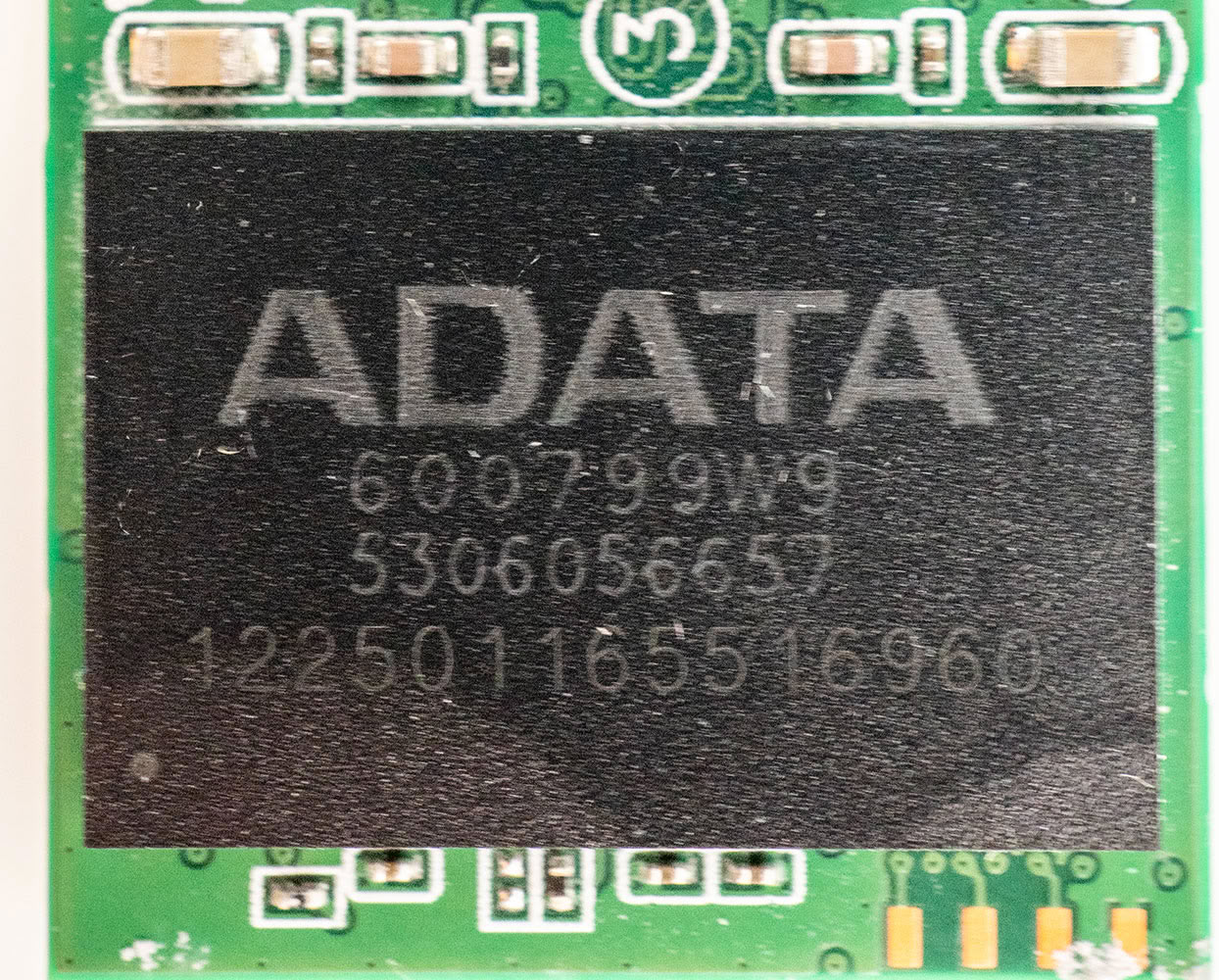
There are two 8 Tb NAND flash chips, one on each side, that make up the drive's 2 TB capacity. This is a rebadged Micron 232-layer 3D QLC NAND flash, specifically the MT29F8T08GQLDHL5-24QA:D. The chip offers a flash channel data-rate of 2400 MT/s, and is widely found in mainstream SSDs, including internal M.2 NVMe Gen 4 drives.
Nov 21st, 2026 04:19 PST
change timezone
Latest GPU Drivers
New Forum Posts
- What's your latest tech Freebie? (86)
- TPU's Nostalgic Hardware Club (22179)
- [Poll] 12V-2x6 Connector Protection: What Are You Using? (WireView / Ampinel / Equalizer / Other / Nothing) (50)
- UPS what one to get? (1)
- Anthrophics IPO (28)
- RX 9000 series GPU Owners Club (2252)
- Windows 11 General Discussion (7743)
- Without Jensen, PC gaming will be (52)
- Zen 3 IF/IMC degradation (242)
- AI generated images... (230)
Popular Reviews
- Microsoft Surface Laptop Ultra Review - The Next-gen Arm Laptop
- Ugreen NASync DXP4800 GT Review
- Corsair RM1200e (Second Generation) Review
- Pulsar Office Tour & First Look at P1 Dual-Sensor Mouse
- Upcoming Hardware Launches 2027 (Updated Nov 2026)
- Acemagic Retro X3 Review
- Biwin Black Opal NV7400 2 TB Review
- AMD Ryzen 7 9800X3D Review - The Best Gaming Processor
- AMD Zen 6 Technical Deep Dive
- Chieftec Iceberg PRO 360 DARK Review
TPU on YouTube
Controversial News Posts
- NVIDIA Co-Founder and CEO Jensen Huang Officially Resigns (491)
- Report: Jensen Huang Eyes NVIDIA Comeback (257)
- Open Letter Asking NVIDIA to Reinstate Jensen Huang Passes 115,000 Signatures (184)
- OpenAI CEO Argues Home PCs Waste the World's Limited DRAM Supply (152)
- NVIDIA Launches Investigation Into Jensen Huang's Relationship With Suspected Chinese Spy (136)
- Intel "Raptor Lake Next" 16-Core and 20-Core CPUs Surface (130)
- Legendary Game Studio BioWare Shuts Down Following EA Layoffs (104)
- NVIDIA GeForce RTX 50-Series Scheduled for up to $500 Price Hike This Week (89)