 16
ADATA XPG SX8000 512 GB Review
(16 Comments) »Introduction

Today, we are reviewing the ADATA SX8000 SSD in its 512 GB variant. ADATA was one of the first players to join the SSD market, with an even longer history in DRAM and general flash memory, like USB storage.
The SX8000 is a mid-range NVMe M.2 based SSD that uses 3D MLC flash with a PCI-Express x4 Gen 3.0 interface. As the controller, ADATA has chosen a Silicon Motion SM2260 with eight flash channels. In addition to a DRAM buffer, the drive also features pSLC (pseudo-SLC), which runs a portion of the MLC flash in SLC mode for increased write performance.
The SX8000 is available in capacities of 128 GB, 256 GB, 512 GB (this review), and 1 TB. Warranty is set to five years for all these models. We reviewed the version with a heatsink, but the same drive is also available without a heatsink.

| Specifications: ADATA XPG SX8000 512 GB | |
|---|---|
| Brand: | ADATA |
| Model: | ASX8000NPC-512GM-C |
| Controller: | Silicon Motion SMI 2260 |
| Flash Type: | Micron (Rebranded), 3D MLC |
| Endurance: | 320 TB total bytes written |
| Form Factor: | M.2 2280 |
| Capacity: | 512 GB (476.9 GB usable) No additional overprovisioning |
| Interface: | PCIe Gen 3 x4, NVMe 1.2 |
| Device ID: | ADATA SX8000NP |
| Firmware: | C2.2.1 |
| Warranty: | Five years |
Packaging and Contents
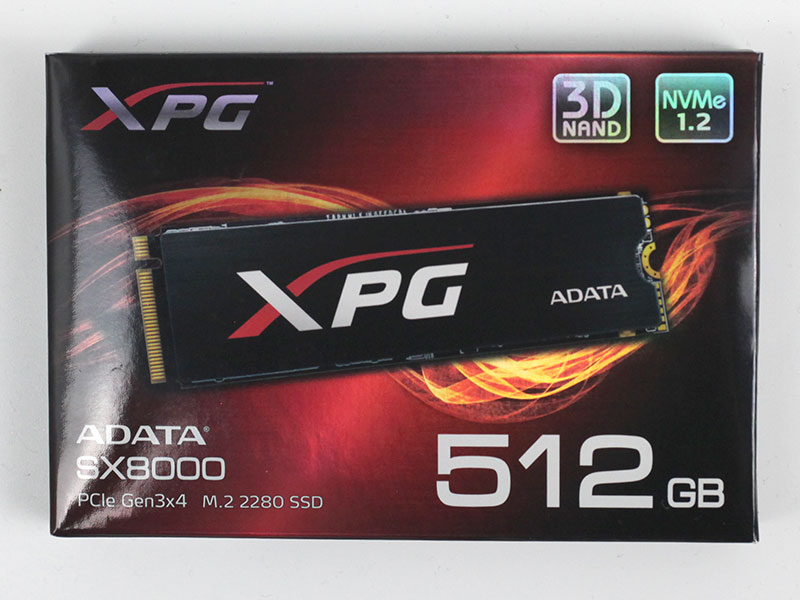
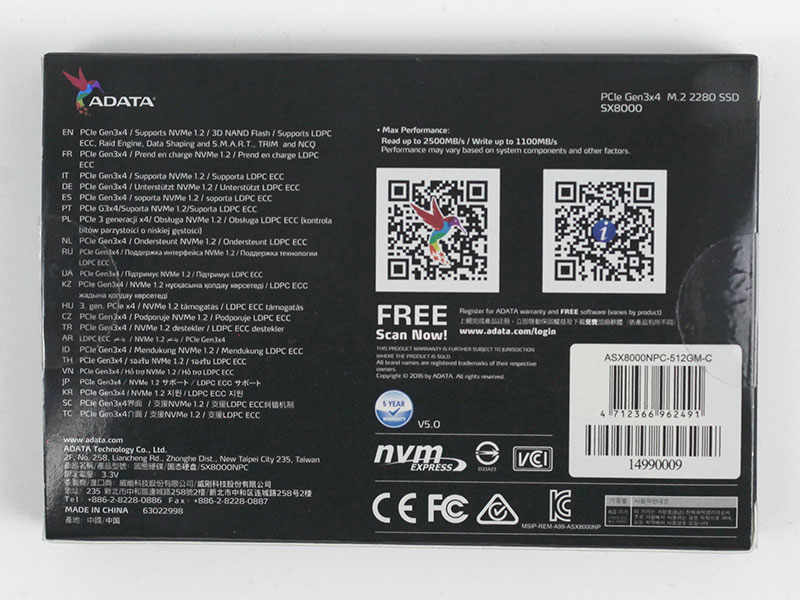
Inside the package you will find just the SSD; no other accessories or documentation is included.
The Drive

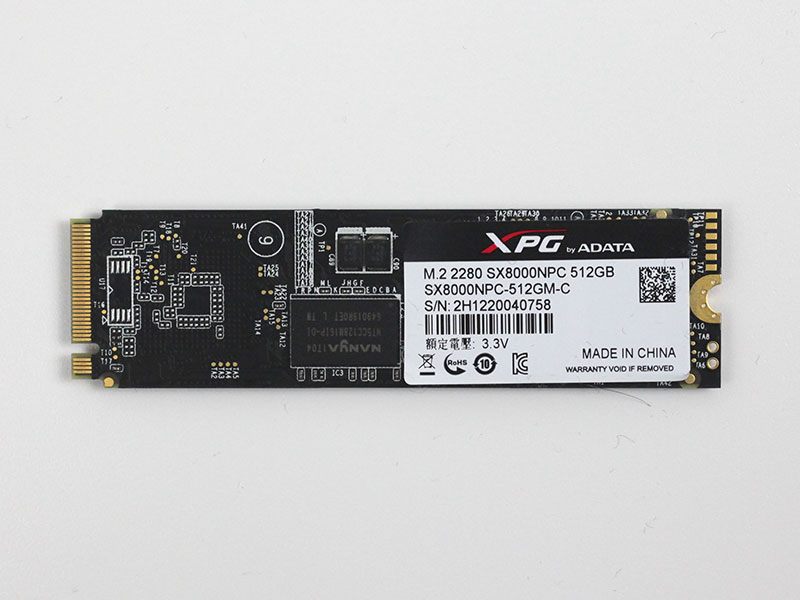
The drive uses the M.2 2280 form factor, which means it is 22 mm wide and 80 mm long. On top of the SSD, ADATA has glued a thin metal heatspreader. You can also find the SX8000 without that heatsink, possibly at slightly reduced pricing.
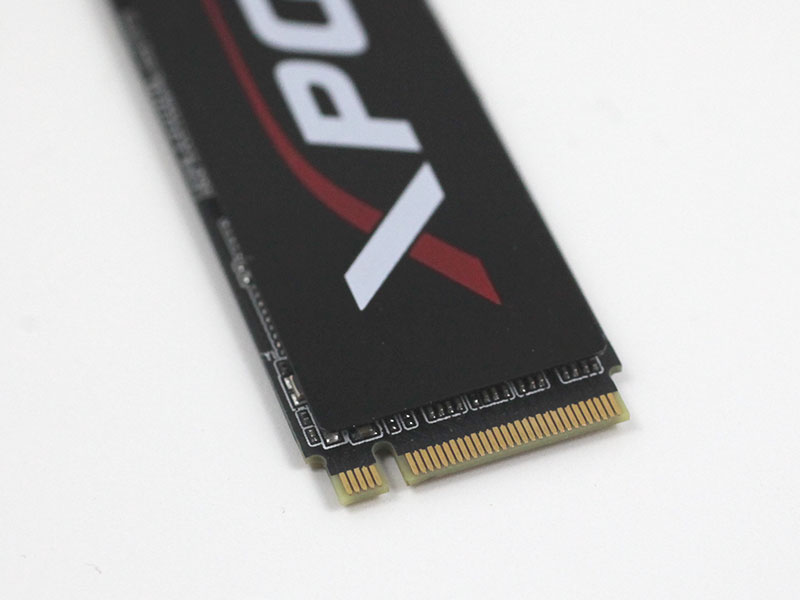
Like most M.2 NVMe SSDs, the ADATA XPG SX8000 uses a PCIe x4 3.0 interface.


I ripped off the heatspreader, which really is just a thin piece of flexible metal that's glued onto the SSD to provide a little bit of cooling for the controller and two flash chips on the front side of the PCB.
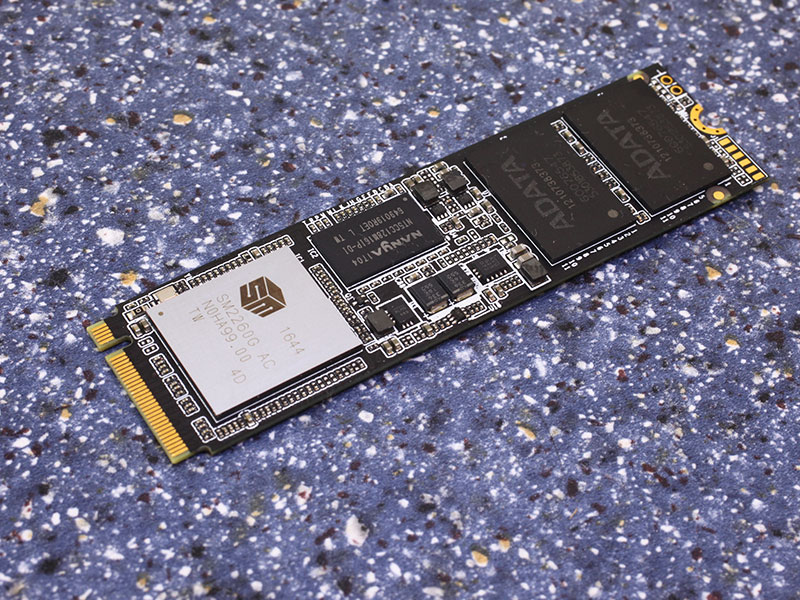
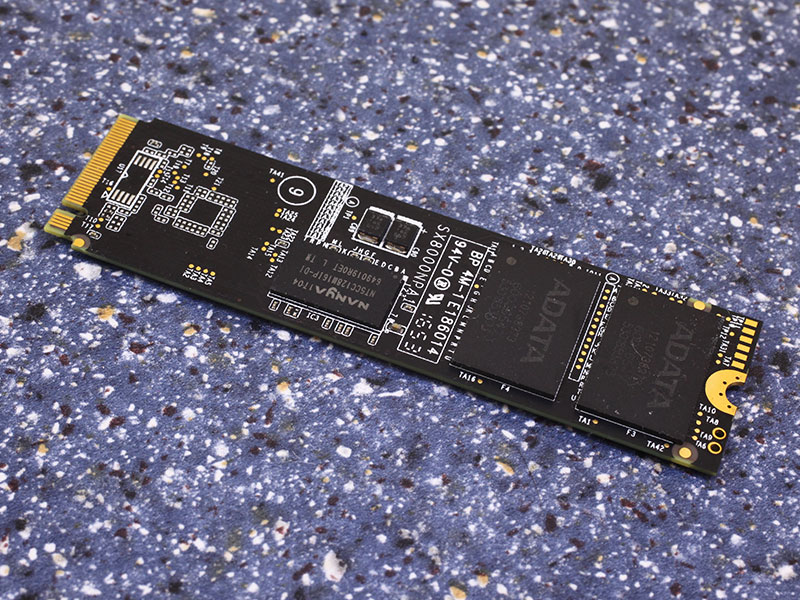
You will find the SSD controller and four flash chips on the PCB. Two DRAM chips are also present to provide the SSD controller with RAM and soak up write bursts.

The Silicon Motion SMI 2260 controller is the company's first PCIe NVMe controller.

The four MLC flash chips are rebranded to show ADATA markings only. My best guess is that these are Micron 3D MLC.
Test Setup
| Test System SSD 2018.1 | |
|---|---|
| CPU: | Intel Core i7-7700K 4.2 GHz (Kaby Lake, 8 MB Cache) |
| Motherboard: | MSI Z270 SLI Plus Intel Z270 |
| Memory: | 16 GB DDR4-3200 16-16-16-36 |
| Cooling: | Cryorig C7 |
| Graphics: | Intel Integrated |
| Software: | Windows 10 64-bit Creators Update |
Our Patreon Silver Supporters can read articles in single-page format.
Nov 19th, 2026 22:40 PST
change timezone
Latest GPU Drivers
New Forum Posts
- Honestly, do you care about GTA VI? (178)
- Anthrophics IPO (10)
- WarpCoreBench scores! (78)
- How to prevent OLED burn damage due to PC freezes or power outtages? (39)
- TPU's Nostalgic Hardware Club (22172)
- RX 7600 + Ryzen 5 5600GT getting the same FPS as my old RX 6500 XT – What am I missing? (5)
- GTA VI (11)
- GPU Temperatures Rise Very Quickly in FurMark – Is This Normal? (18)
- Time to upgrade CPU and MOBO (72)
- Dual B70 or Dual R9700 Pro on Linux (13)
Popular Reviews
- AMD Zen 6 Technical Deep Dive
- Ugreen NASync DXP4800 GT Review
- Acemagic Retro X3 Review
- Upcoming Hardware Launches 2027 (Updated Nov 2026)
- Corsair RM1200e (Second Generation) Review
- Pulsar Office Tour & First Look at P1 Dual-Sensor Mouse
- Biwin Black Opal NV7400 2 TB Review
- Chieftec Iceberg PRO 360 DARK Review
- AMD Ryzen 7 9800X3D Memory Performance Scaling
- AMD Ryzen 7 9800X3D Review - The Best Gaming Processor
TPU on YouTube
Controversial News Posts
- NVIDIA Co-Founder and CEO Jensen Huang Officially Resigns (490)
- Report: Jensen Huang Eyes NVIDIA Comeback (224)
- Open Letter Asking NVIDIA to Reinstate Jensen Huang Passes 115,000 Signatures (184)
- OpenAI CEO Argues Home PCs Waste the World's Limited DRAM Supply (152)
- NVIDIA Launches Investigation Into Jensen Huang's Relationship With Suspected Chinese Spy (136)
- Intel "Raptor Lake Next" 16-Core and 20-Core CPUs Surface (130)
- Legendary Game Studio BioWare Shuts Down Following EA Layoffs (104)
- Dell CEO Says the Memory Shortage Will Get Worse in 2027 (95)