 14
ALLIWAVA GH9 Review
AI Performance »Workstation Performance
SPECviewperf simulates professional workloads from applications like 3ds Max, CATIA, Maya, and SolidWorks. It measures how responsive a system is when working with complex models in CAD, animation, and visualization. Higher scores mean smoother, more responsive performance in that type of workload. Here is a run-down of what each viewset is testing:- 3dsmax-06: based on Autodesk 3ds Max, this stresses general 3D modeling and rendering performance, like moving large objects around in a scene.
- catia-05: derived from Dassault CATIA, widely used in aerospace and automotive design, this highlights CAD-style precision modeling.
- creo-02: from PTC Creo, another engineering design package, this is heavy on assemblies and parametric models.
- maya-05: mirrors Autodesk Maya, which is all about animation, rigging, and visual effects, making it a test of real-time artistic workflows.
- medical-02: simulates medical imaging and visualization (things like rotating MRI or CT scans).
- sw-04: short for SolidWorks, this represents mechanical CAD and engineering visualization, used heavily in product design
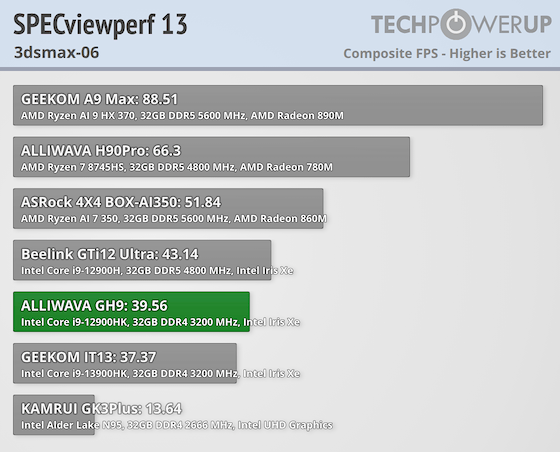
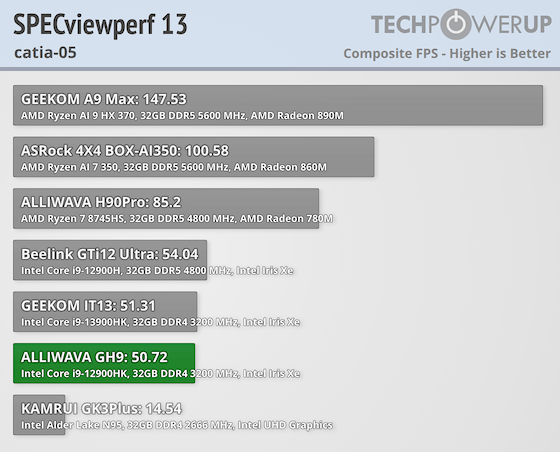
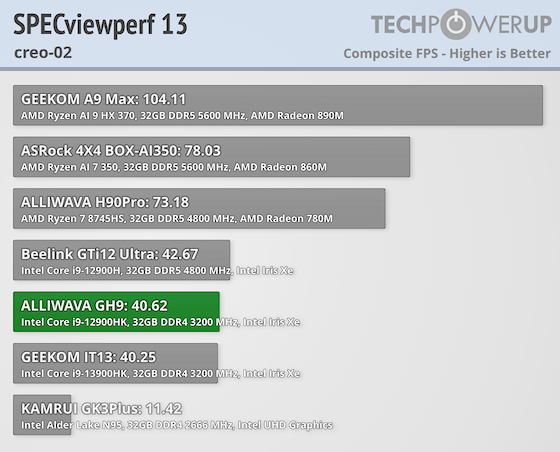
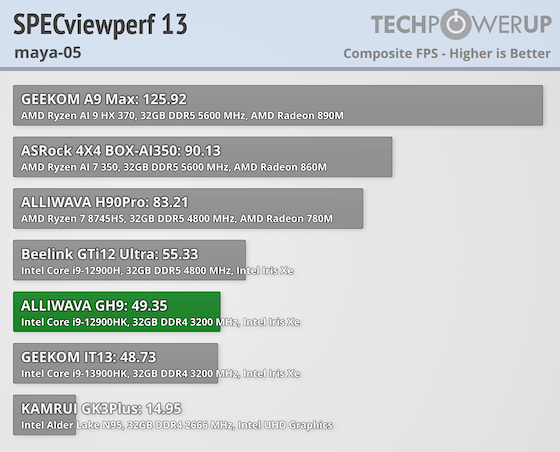
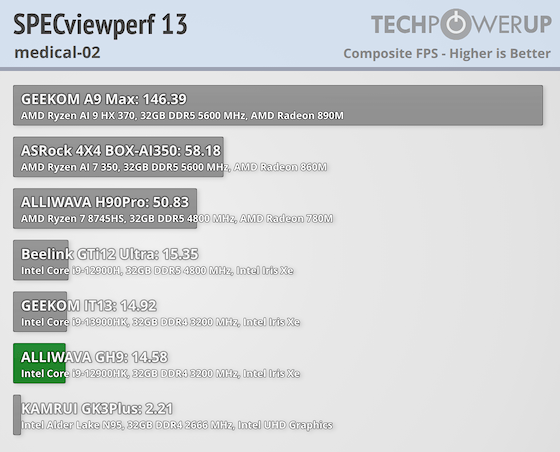
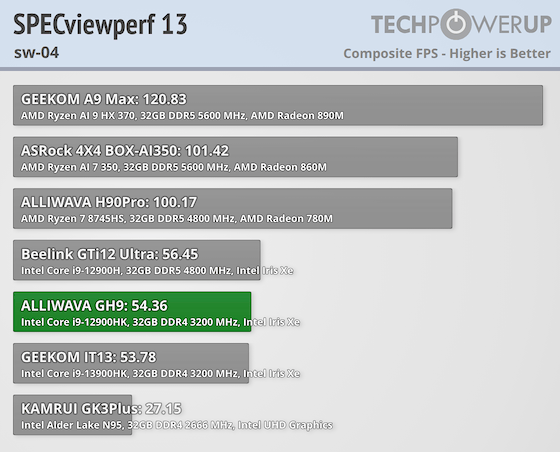
Scores are on the lower end: 39.6 FPS in 3ds Max, 50.7 in CATIA, 40.6 in Creo, 49.3 in Maya, 14.6 in Medical, and 54.3 in SolidWorks. These results underline how Iris Xe struggles with workstation-class graphics, even with a capable CPU. For occasional 3D modeling or CAD review, it works, but professionals should look at newer systems with stronger GPUs.
Nov 24th, 2026 07:20 CST
change timezone
Latest GPU Drivers
New Forum Posts
- Increasing Power Limit? (28)
- Games at first startup always worse why? (0)
- GTA VI (30)
- HP ZBook 17 G3 i7 – black screen and fans running at max speed after switching SSD to GPT (0)
- Strange PC issues with Z690 setup (2)
- How to prevent OLED burn damage due to PC freezes or power outtages? (58)
- Which ryzen am5 cpu ? (201)
- Your PC ATM (36486)
- AI generated images... (234)
- Without Jensen, PC gaming will be (58)
Popular Reviews
- Microsoft Surface Laptop Ultra Review - The Next-gen Arm Laptop
- ASRock X870E Challenger Wi-Fi White Review
- Upcoming Hardware Launches 2027 (Updated Nov 2026)
- Corsair RM1200e (Second Generation) Review
- AMD Ryzen 7 9800X3D Review - The Best Gaming Processor
- AMD Zen 6 Technical Deep Dive
- AMD Ryzen 7 7700X3D Review
- Pulsar Office Tour & First Look at P1 Dual-Sensor Mouse
- Phantom Blade Zero Performance Benchmark Review - 35 GPUs Tested
- Ugreen NASync DXP4800 GT Review
TPU on YouTube
Controversial News Posts
- NVIDIA Co-Founder and CEO Jensen Huang Officially Resigns (492)
- Jensen Huang Reinstated as CEO of NVIDIA (435)
- Report: Jensen Huang Eyes NVIDIA Comeback (281)
- Open Letter Asking NVIDIA to Reinstate Jensen Huang Passes 115,000 Signatures (184)
- OpenAI CEO Argues Home PCs Waste the World's Limited DRAM Supply (152)
- NVIDIA Launches Investigation Into Jensen Huang's Relationship With Suspected Chinese Spy (136)
- Intel "Raptor Lake Next" 16-Core and 20-Core CPUs Surface (130)
- NVIDIA GeForce RTX 50-Series Scheduled for up to $500 Price Hike This Week (89)