 17
ALLIWAVA U58 Review
Value & Conclusion »Power and Noise Levels
Power and efficiency is as important as raw performance to many in a compact system, so I measured how much the U58 draws at idle, under CPU stress, during GPU-heavy tests, and while gaming. I also measured its noise levels while in an idle state and when the system is under a heavy workload.Idle Power Draw
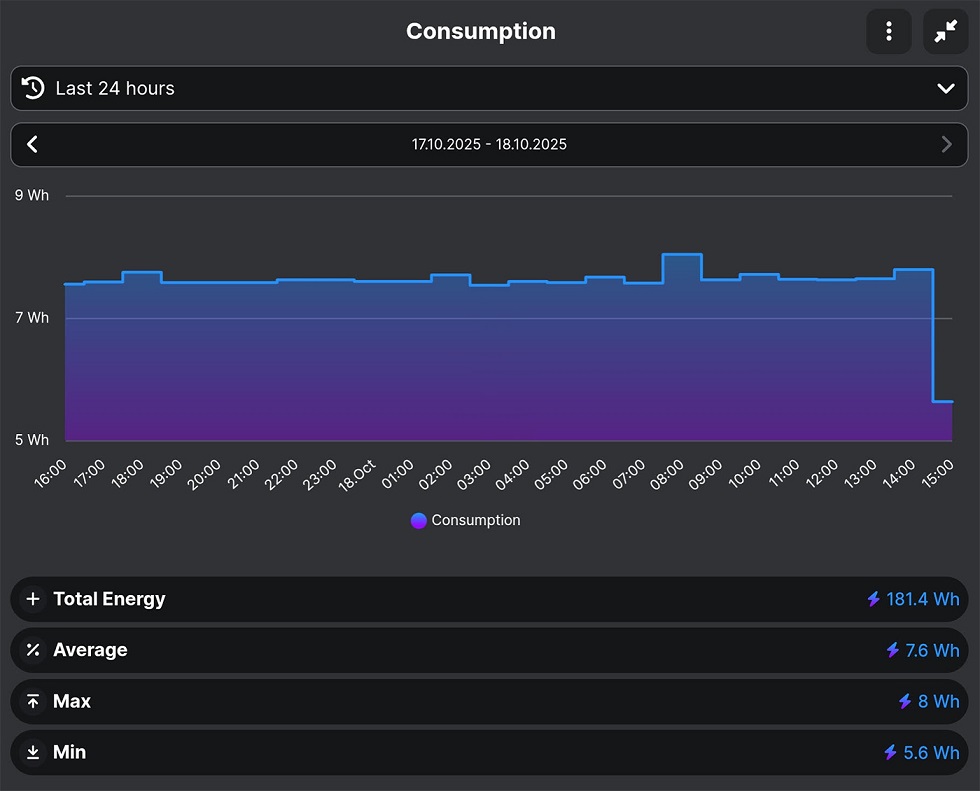
Over a full 24-hour monitoring period, the ALLIWAVA U58 consumed a total of 0.181 kWh, averaging 0.0076 kWh per hour (7.6 W), with brief peaks of 0.008 kWh (8 W) and lows around 0.0056 kWh (5.6 W). The system's power curve stayed remarkably steady throughout the day, showing only slight variations from background activity and scheduled tasks.
At this efficiency level, running the U58 continuously would draw roughly 5.4 kWh per month or about 66 kWh per year, which translates to approximately $7–8 USD annually in typical North American residential electricity rates. This confirms the U58's role as one of the most energy-efficient Mini-PCs in its class, which makes it suitable for 24/7 operation as a home server, HTPC, or quiet office system.
CPU and GPU Power Draw
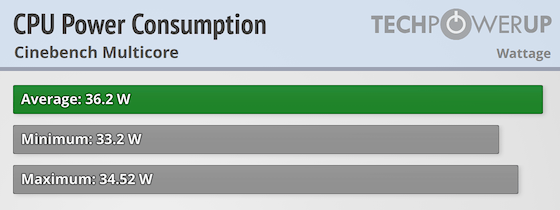
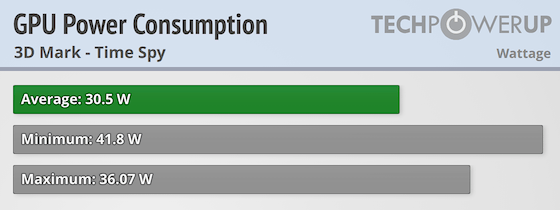
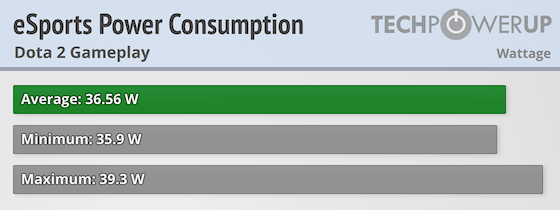
We also tested three real-world power profiles: an esports scenario like Dota 2 that reflects a steady mid-load with brief spikes during big fights, a GPU-intensive pass using Night Raid that stresses the graphics pipeline to reveal scene changes, memory pressure, and thermal headroom, and a CPU-intensive run with Cinebench that hammers all cores continuously to show sustained power delivery, cooling capacity, and how well boost holds over time.
Cinebench Multicore
During CPU-focused workloads, the U58 averaged 36.2 W, with a low of 33.2 W and a peak of 34.5 W. Power delivery stayed steady across the run, showing reliable performance for sustained multicore processing.
eSports gaming (Dota 2)
In Dota 2, the system averaged 36.6 W, dipping slightly to 35.9 W and peaking at 39.3 W. This consistent range shows balanced power usage for light gaming, staying well within expected limits for the Ryzen 7 5825U and Vega 8 pairing.
3DMark Time Spy
The Time Spy run showed a 30.5 W average, 41.8 W minimum, and 36.1 W peak. These figures match what we expect for integrated GPU workloads under moderate to heavy rendering, confirming stable and efficient operation throughout testing.
Here's a full rundown of the power draw for all three profiles:
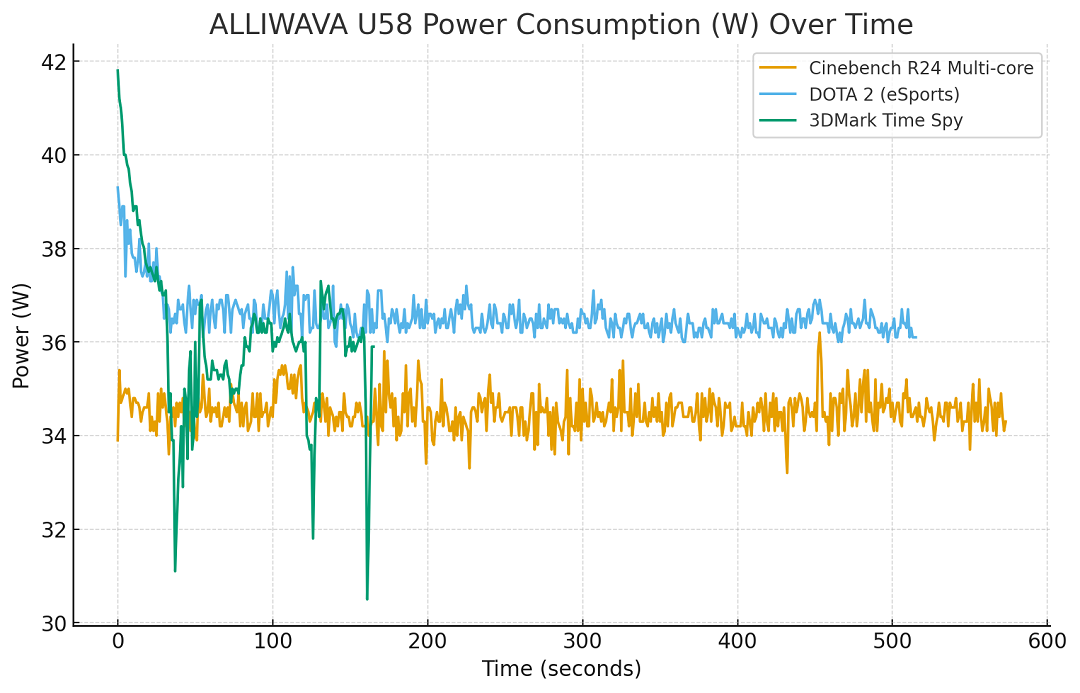
Overall, the ALLIWAVA U58 maintained impressively low and stable power use across all tests, averaging just under 37 W even in GPU-intensive scenarios. At that rate, regular daily usage (around eight hours a day) would cost roughly $13–16 USD per year in electricity, which is remarkably efficient for a Mini-PC of this class. These lower averages compared to systems like the GEEKOM A9 Max are completely normal, as the U58 uses a lower-TDP processor and smaller power envelope designed for silent, efficient operation rather than raw performance.
Noise Levels
Like most Mini-PCs, the U58 is nearly silent at idle or during light use, easily blending into the background noise of an office.Under sustained load with Windows set to Balanced and the stock fan profile active, the system reached a peak noise level of 48.5 dB(A). That remains low for a Mini-PC under load, audible only in very quiet rooms.
Nov 24th, 2026 06:02 CST
change timezone
Latest GPU Drivers
New Forum Posts
- How to prevent OLED burn damage due to PC freezes or power outtages? (58)
- Strange PC issues with Z690 setup (1)
- Increasing Power Limit? (22)
- Which ryzen am5 cpu ? (201)
- Your PC ATM (36486)
- AI generated images... (234)
- Without Jensen, PC gaming will be (58)
- Strange case of Mini itx build with normal gpu, and atx psu (Build Log) (21)
- AMD ULL settings tinkering thread - post settings and Zen pics (87)
- Gacha Games - Discussions, Pulls, Updates, etc. (1163)
Popular Reviews
- Microsoft Surface Laptop Ultra Review - The Next-gen Arm Laptop
- ASRock X870E Challenger Wi-Fi White Review
- Upcoming Hardware Launches 2027 (Updated Nov 2026)
- Corsair RM1200e (Second Generation) Review
- AMD Ryzen 7 9800X3D Review - The Best Gaming Processor
- AMD Zen 6 Technical Deep Dive
- AMD Ryzen 7 7700X3D Review
- Pulsar Office Tour & First Look at P1 Dual-Sensor Mouse
- Phantom Blade Zero Performance Benchmark Review - 35 GPUs Tested
- Ugreen NASync DXP4800 GT Review
TPU on YouTube
Controversial News Posts
- NVIDIA Co-Founder and CEO Jensen Huang Officially Resigns (492)
- Jensen Huang Reinstated as CEO of NVIDIA (430)
- Report: Jensen Huang Eyes NVIDIA Comeback (281)
- Open Letter Asking NVIDIA to Reinstate Jensen Huang Passes 115,000 Signatures (184)
- OpenAI CEO Argues Home PCs Waste the World's Limited DRAM Supply (152)
- NVIDIA Launches Investigation Into Jensen Huang's Relationship With Suspected Chinese Spy (136)
- Intel "Raptor Lake Next" 16-Core and 20-Core CPUs Surface (130)
- NVIDIA GeForce RTX 50-Series Scheduled for up to $500 Price Hike This Week (89)