 21
AMD Radeon HD 6450 512 MB Review
(21 Comments) »Introduction

Last week AMD introduced their Radeon HD 6450, which is based on their all-new Caicos graphics processor. HD 6450 is an evolutionary step forward from HD 5450, improving performance and media playback features. The Caicos GPU comes with 160 shaders which is twice that on the previous-generation HD 5450, which really had a hard time competing with integrated graphics lately. Instead of (G)DDR3 memory, the Radeon HD 6450 also uses fast GDDR5 memory which will help with available memory bandwidth.

AMD Radeon HD 6450 is targeted at the entry-level market with OEMs and office system builders in mind. Support for DirectX 11, EyeFinity and accelerated HD video decode are features that offset it from the integrated graphics competition.
| GeForce 210 | Radeon HD 5450 | GeForce GT 220 | GeForce GT 520 | Radeon HD 6450 | GeForce GT 430 | Radeon HD 5550 | |
| Shader units | 16 | 80 | 48 | 48 | 160 | 96 | 320 |
| ROPs | 4 | 4 | 8 | 4 | 4 | 4 | 8 |
| GPU | GT218 | Cedar | GT216 | GF119 | Caicos | GF108 | Redwood |
| Transistors | 260M | 292M | 486M | Unknown | 370M | 585M | 627M |
| Memory Size | 512 MB | 512 MB | 512 MB | 1024 MB | 1024 MB | 1024 MB | 1024 MB |
| Memory Bus Width | 64 bit | 64 bit | 128 bit | 64 bit | 64 bit | 128 bit | 128 bit |
| Core Clock | 589 MHz | 650 MHz | 625 MHz | 810 MHz | 750 MHz | 700 MHz | 550 MHz |
| Memory Clock | 533 MHz | 800 MHz | 790 MHz | 800 MHz | 900 MHz | 900 MHz | 1000 MHz |
| Price | $40 | $35 | $50 | $60 | $55 | $60 | $60 |
The Card
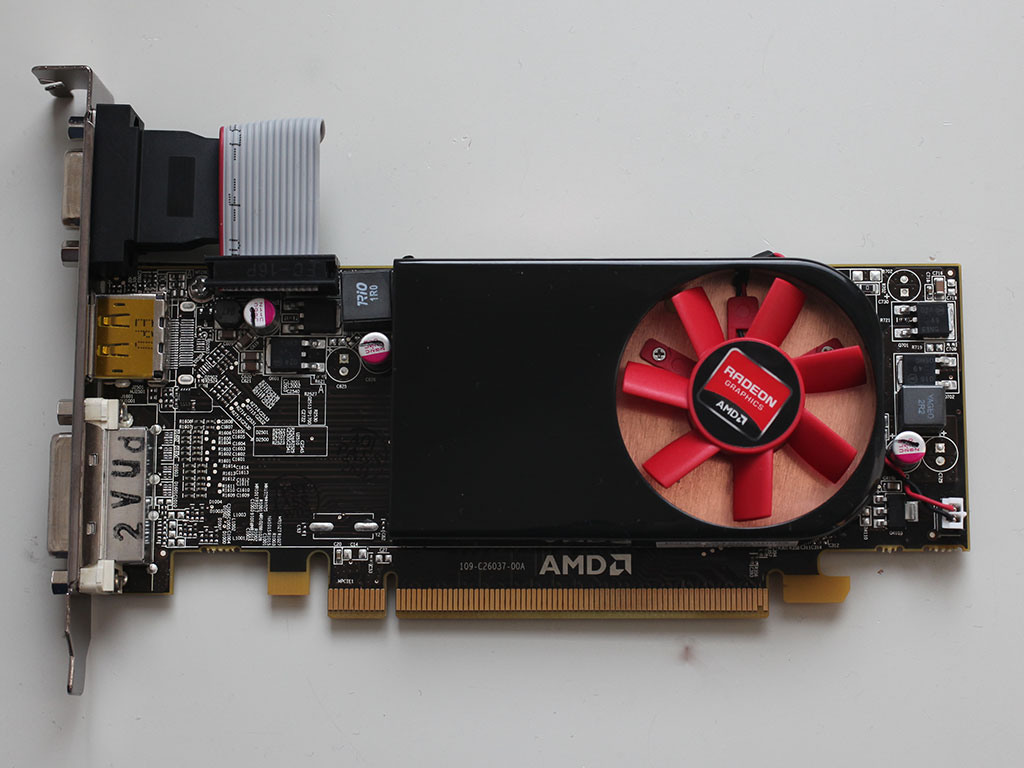

AMD's HD 6450 is an ultra-compact card that can be turned into a low-profile model fitting smaller media PC cases by removing the VGA output. While our AMD sample did not include any low profile brackets I'm sure retail packages will have one.
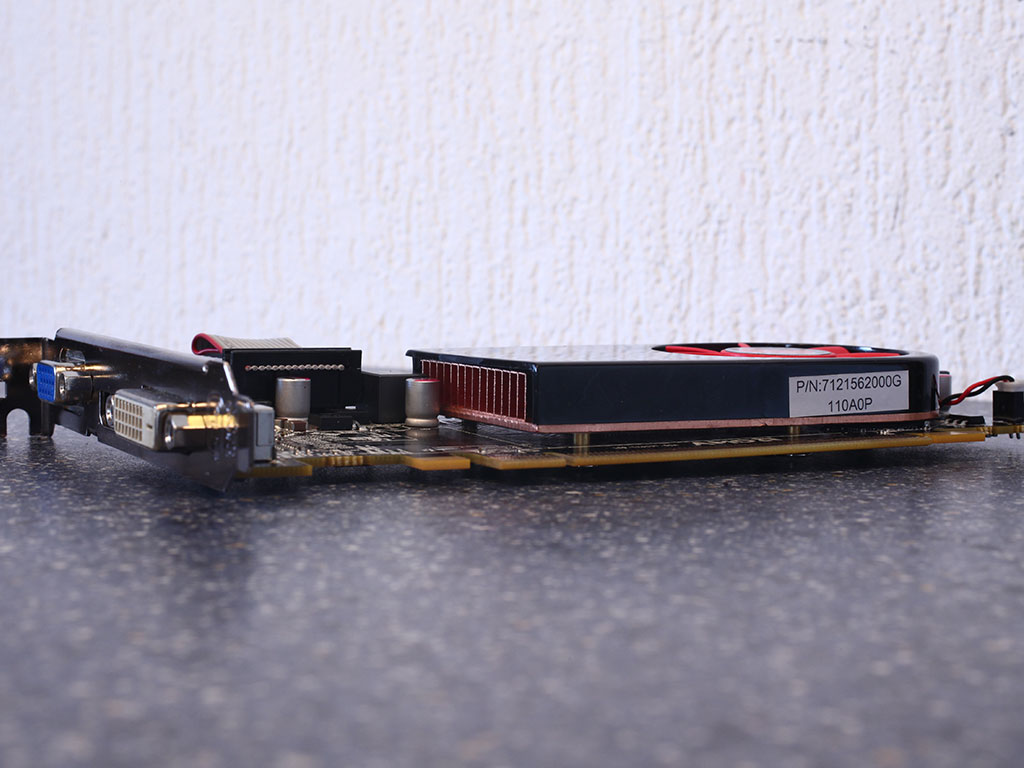
The card requires just a single slot in your system.
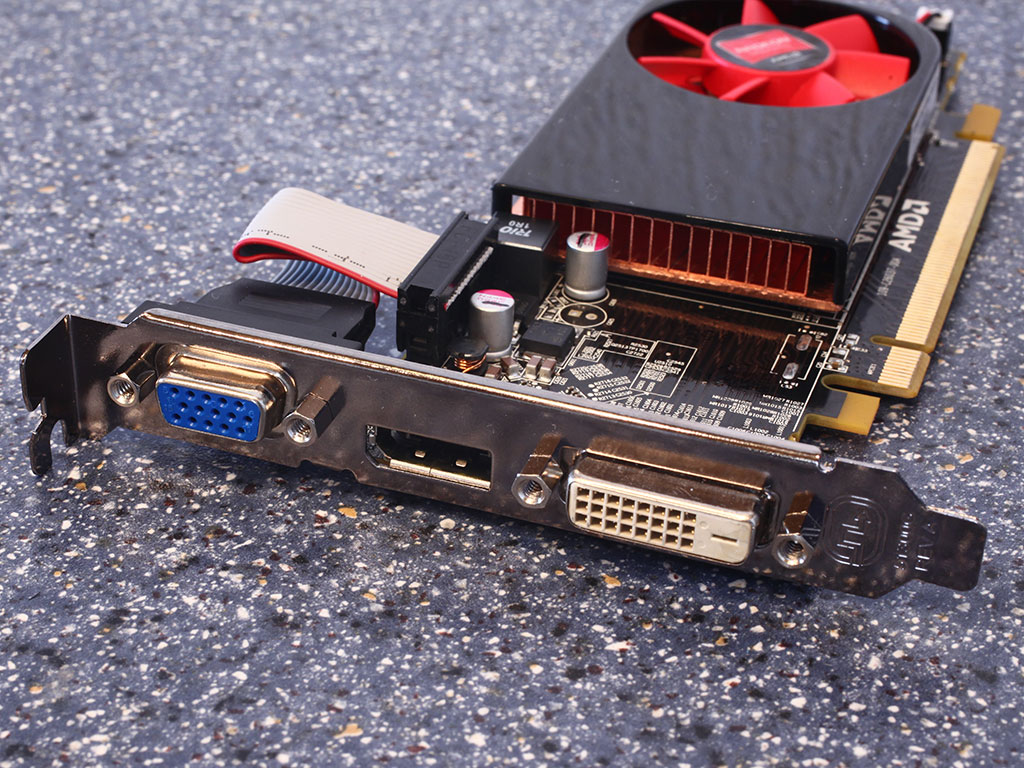
The card has one analog VGA port, one full-size HDMI port and one DVI port. AMD's display output logic is clearly superior to what NVIDIA has to offer at this time. Vendors are free to combine four TMDS links into any output configuration they want (dual-link DVI consuming two links) - and use them all at the same time. AMD has also introduced DisplayPort 1.2 support with their new cards which allows the use of a DisplayPort hub to connect multiple monitors, or daisy chain them together.
An HDMI sound device is also included in the GPU. The HDMI interface is HDMI 1.4a compatible which includes Dolby TrueHD, DTS-HD, AC-3, DTS and up to 7.1 channel audio with 192 kHz / 24-bit output. The new revision also brings support for Blu-ray 3D movies which will become important later this year when we will see first Blu-ray 3D titles shipping.

Even though a CrossFire connector is not present, you can combine two of these cards in CrossFire, which exchanges data via the PCI-Express bus.
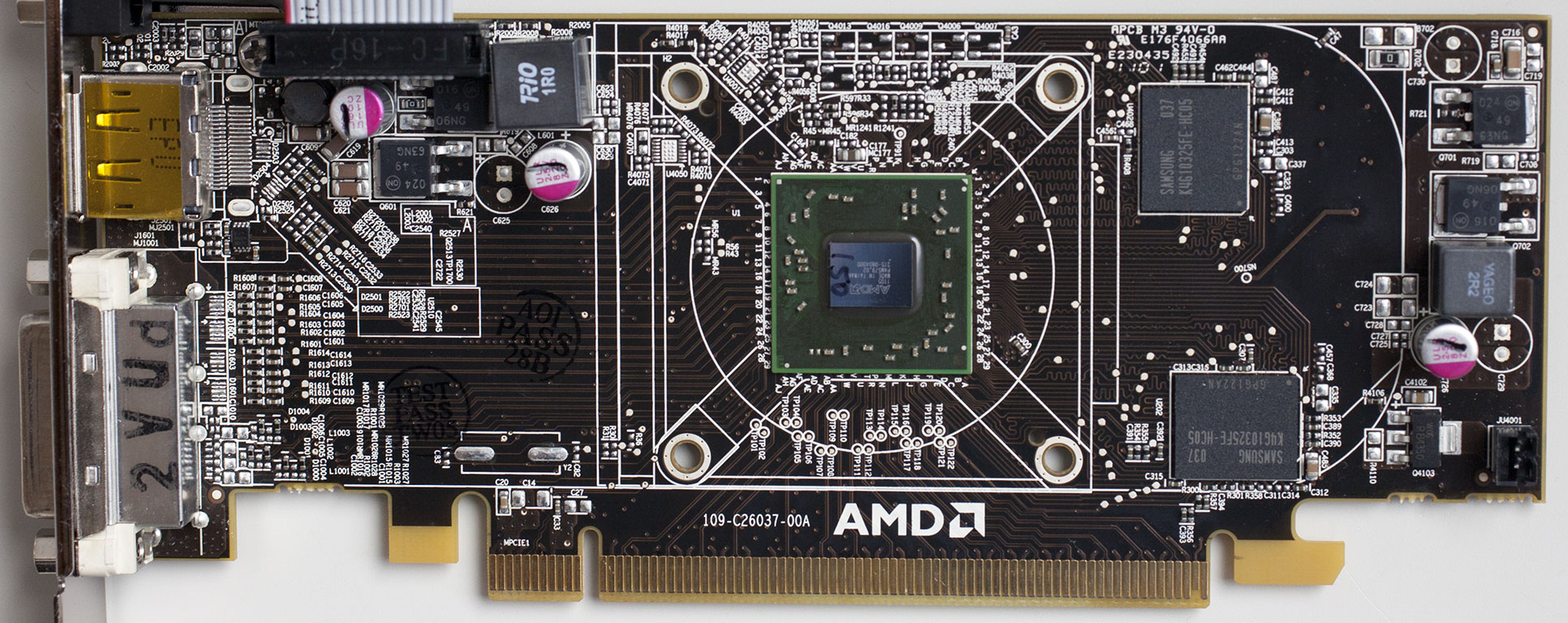
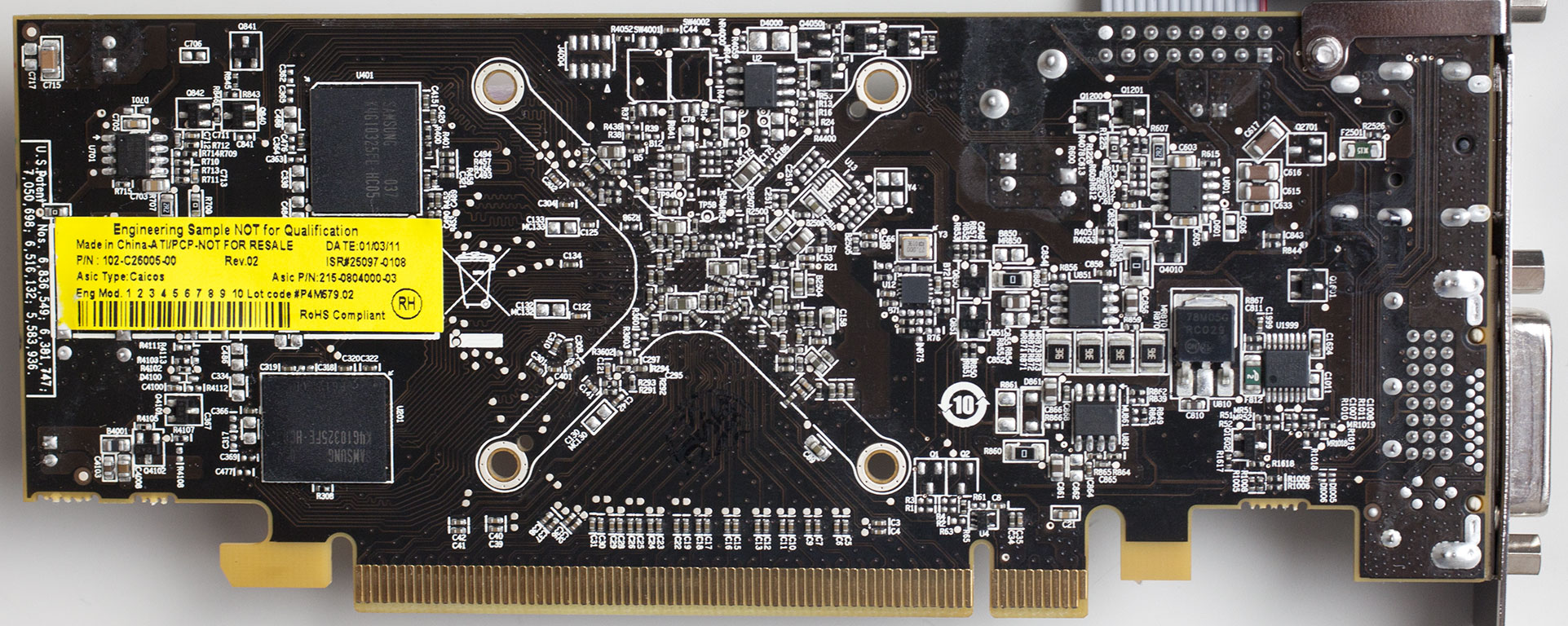
Here are the front and the back of the card, high-res versions are also available (front, back). If you choose to use these images for voltmods etc, please include a link back to this site or let us post your article.
A Closer Look


AMD's cooler is a simple piece of metal, with fins and a fan in the middle, nothing exciting to see here.

Due to the low power design of the card, there is no requirement for an additional PCI-E power connector.

The GDDR5 memory chips are made by Samsung, and carry the model number K4G10325FE-HC05. They are specified to run at 1000 MHz (4000 MHz GDDR5 effective).

APW7165 is a cost effective voltage regulator that doesn't support I2C voltage control or advanced monitoring features.

AMD's Caicos graphics processor is made on a 40 nm process at TSMC Taiwan. It uses approximately 370 million transistors on a die area of 67 mm².
Our Patreon Silver Supporters can read articles in single-page format.
Nov 11th, 2026 17:59 CST
change timezone
New Forum Posts
- When you could finally run Crysis maxed out? (43)
- WarpCoreBench scores! (14)
- Warning for Windows 10 and 11 users running newer AMD GPU drivers (49)
- Bought MAX-P495 - Which model? (29)
- GeekMagic Ultra Smart WiFi Weather Station (3)
- DTS DCH Driver for Realtek HDA [DTS:X APO4 + DTS Interactive] (2809)
- Rare GPUs / Unreleased GPUs (2271)
- Samsung 870 EVO - Beware, certain batches prone to failure! (1486)
- Windows new update 26H2 - Throttlestop (10)
- TPU's F@H Team (20569)
Popular Reviews
- AMD Zen 6 Technical Deep Dive
- Upcoming Hardware Launches 2027 (Updated Nov 2026)
- Gigabyte Z890I Aorus Ultra Review
- XPG NIMBUS PLUS Review - Mid-range Chair With Strong Competitors
- INNOCN 45C1R Review - Two QHD Screens, Zero Bezels
- NZXT H7 RGB+ Review
- Phantom Blade Zero Performance Benchmark Review - 35 GPUs Tested
- Gears of War: E-Day Performance Benchmark Review - 35 GPUs Tested
- NZXT H5 Review
- be quiet! Light Mount TKL Keyboard Review
TPU on YouTube
Controversial News Posts
- OpenAI CEO Argues Home PCs Waste the World's Limited DRAM Supply (152)
- NVIDIA Launches Investigation Into Jensen Huang's Relationship With Suspected Chinese Spy (136)
- Intel "Raptor Lake Next" 16-Core and 20-Core CPUs Surface (130)
- Legendary Game Studio BioWare Shuts Down Following EA Layoffs (104)
- Dell CEO Says the Memory Shortage Will Get Worse in 2027 (95)
- NVIDIA GeForce RTX 50-Series Scheduled for up to $500 Price Hike This Week (89)
- Modder Fits RTX 5090 With Four 8-Pin Connectors, Halving Current per Wire (80)
- AMD Radeon Owners Can Now Run Nearly Every DLSS Feature Through Fan-Made Mod (80)