 0
AQIRYS Magellan Microphone Review - A Complete and Affordable Package
Value & Conclusion »Microphone Performance
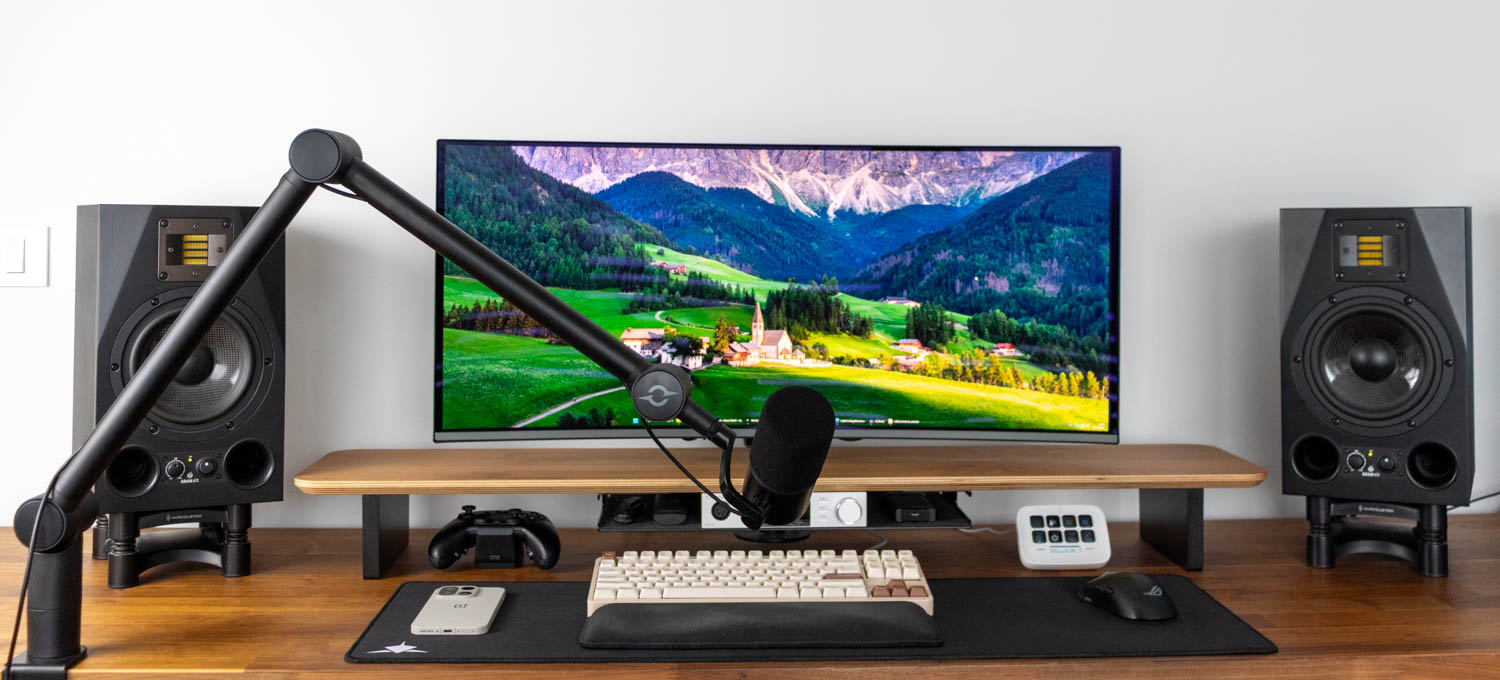
The AQIRYS Magellan features a dynamic capsule with a cardioid pickup pattern. AQIRYS provides limited detail about the capsule itself, so its exact dimensions are not specified, but the manufacturer does publish full operating ranges for both of its outputs. Over USB the stated frequency response is 30 Hz to 18 kHz, while over XLR it is 50 Hz to 17.5 kHz. The microphone has a rated maximum sound pressure level of 103 dB. Sensitivity is specified at about -7 dBFS via USB and -19 dBFS via XLR. When used over USB, the internal A/D section can record at up to 24-bit and 96 kHz. Via XLR the microphone outputs an analog signal, with the listed 24-bit and 192 kHz figures reflecting what a compatible recording chain can accept. The Magellan supports both USB-C and XLR connectivity, so it can work either as a plug-and-play USB microphone or as part of a traditional audio interface setup. This review focuses primarily on its USB-C performance, although pairing it with a quality interface and suitable processing can expand its flexibility. Digging into interfaces and plug-ins is beyond the scope of this review, but anyone experienced in that area already knows how far a capable dynamic microphone can be pushed.
The cardioid polar pattern means that the capsule primarily picks up sound coming from the front, while reducing sound arriving from the sides and even more from the rear. In practice this helps keep room noise, keyboard chatter, and fan noise less audible than with wider pickup patterns, especially if you keep the microphone close to your mouth. A cardioid pattern is ideal when a single speaker is using the microphone, for streaming, solo podcasting, or voiceover work. It is less suitable for multi-person interviews around the same mic. The AQIRYS Magellan is a top-address microphone, so you should aim its top side toward your mouth for best results.
To evaluate the performance of the AQIRYS Magellan, I mounted the microphone on the supplied boom arm and positioned it approximately 10 centimeters from my mouth. The following sample was recorded in a relatively quiet room with some audible traffic noise from a nearby street. Microphone gain in the Windows Sound settings was set to 80 percent. Increasing it to 100 percent made the capsule overly sensitive at this distance and introduced a clear risk of clipping, but it is useful to know that additional headroom is available if you need to work farther from the microphone.
The sample, which I recorded to give you a general idea of the microphone's tonality, presents the AQIRYS Magellan as a microphone with a generally warm tonal balance. The lower midrange is clearly emphasized, which gives voices weight and fullness and helps avoid thin or metallic timbre. Upper mids and treble are present but restrained, so the microphone avoids harshness and excessive sibilance. Listeners who prefer broadcast-style warmth will likely find this tonality appealing, while those looking for extra sparkle and air in the 8–12 kHz region may want to add a small high-shelf boost in post.
Speech intelligibility is solid. Consonants remain distinct and the microphone preserves enough presence for clear articulation. The proximity effect is noticeable at the speaking I've used, which is normal for a close-talked dynamic cardioid microphone. This contributes to the fuller sound. Moving a little farther away or applying a light high-pass filter around 70 to 80 Hz can reduce that effect if needed.
The noise floor is low. Quiet parts of the sample do not reveal distracting self-noise, and room ambience remains faint. Any light background noise present in the room stays behind the voice, indicating effective off-axis rejection.
This sample is already enough to determine that the AQIRYS Magellan performs as expected for a modern dynamic cardioid microphone used at close range and is well suited for streaming, podcasting, and voiceover work.
In this sample the focus is on plosive and sibilance handling, and the Magellan behaves as expected for a close-talked dynamic cardioid microphone. Plosive control is generally good. Strong P and B sounds do trigger short low-frequency bursts, but they do not overload the capsule or cause obvious chuffing. As I've already mentioned, at a distance of about ten centimeters there is some proximity-related bass lift, so very forceful plosives remain audible, but they are far less intrusive than they would be on an unprotected condenser capsule. Speaking slightly off axis further reduces the remaining bursts without hurting tonal balance.
Sibilance is handled even better. S and SH consonants remain controlled and never turn sharp or piercing. The upper-treble energy is somewhat restrained, which keeps sibilance from jumping forward in the mix. This voicing will suit long spoken-word content because it avoids listener fatigue. Users who prefer extra brightness can easily add a high-shelf EQ boost, but the microphone out of the box does not exaggerate sibilants.
In this sample the goal was to evaluate how well the Magellan rejects nearby mechanical keyboard noise while maintaining speech clarity. The microphone was positioned close to the mouth, which plays directly to the strengths of a dynamic cardioid design. The result is that the voice clearly remains in the foreground while keystrokes are audibly pushed to the background. The clicks are still present, as expected with any untreated recording made at a desk, but they sound noticeably quieter and more distant than the spoken voice. Their tonal content is also softened, lacking the sharp high-frequency bite you often hear when using condenser microphones at longer distances. Importantly, speech intelligibility is not compromised. Consonants remain clear and there is no noticeable loss of presence caused by the microphone trying to mask background noise. Even while typing continuously, the voice keeps its warmth and body, and remains easy to follow. The Magellan can't make mechanical keyboards disappear, but it does a good job of prioritizing the voice and keeping keystrokes from becoming distracting.
Nov 13th, 2026 09:18 PST
change timezone
Latest GPU Drivers
New Forum Posts
- To AiO CPU Cooler users? (9)
- TPU's Nostalgic Hardware Club (22153)
- Microsoft Exchange/365 outages? (47)
- Debunking 10-Year-Old Myths: How a Properly Tuned FX-8320 (4.21 GHz) Beats i5-8400, i7-4770, Ryzen 5 1500X, and Even a 4.92 GHz FX-9590 in 3DMark Time (3)
- The TPU Darkroom - Digital SLR and Photography Club (4495)
- Dual B70 or Dual R9700 Pro on Linux (3)
- inside Case Mod gallery, non modded cases are posted? (0)
- Slow SSD read speeds - help! (3)
- I won't download games that are larger than 30–40 GB. (108)
- TechPowerUp Screenshot Thread (MASSIVE 56K WARNING) (4386)
Popular Reviews
- AMD Zen 6 Technical Deep Dive
- Corsair HX1000i Shift Crystal Review
- NZXT C1200 Platinum Review
- Upcoming Hardware Launches 2027 (Updated Nov 2026)
- Montech King 95 3D PRO Review
- NZXT H7 RGB+ Review
- NZXT H5 Review
- Phantom Blade Zero Performance Benchmark Review - 35 GPUs Tested
- XPG NIMBUS PLUS Review - Mid-range Chair With Strong Competitors
- Gigabyte Z890I Aorus Ultra Review
TPU on YouTube
Controversial News Posts
- NVIDIA Co-Founder and CEO Jensen Huang Officially Resigns (358)
- OpenAI CEO Argues Home PCs Waste the World's Limited DRAM Supply (152)
- NVIDIA Launches Investigation Into Jensen Huang's Relationship With Suspected Chinese Spy (136)
- Intel "Raptor Lake Next" 16-Core and 20-Core CPUs Surface (130)
- Legendary Game Studio BioWare Shuts Down Following EA Layoffs (104)
- Dell CEO Says the Memory Shortage Will Get Worse in 2027 (95)
- NVIDIA GeForce RTX 50-Series Scheduled for up to $500 Price Hike This Week (89)
- Modder Fits RTX 5090 With Four 8-Pin Connectors, Halving Current per Wire (80)