 16
ASRock Radeon RX 9070 GRE Steel Legend Review
(16 Comments) »Introduction

The ASRock Radeon RX 9070 GRE Steel Legend is based on AMD's RDNA 4 architecture, targeting the mainstream gaming segment. ASRock is well known for its motherboards and has been a steady presence in the graphics card market for years. Launched originally as a China-exclusive, around May 2025, the RX 9070 GRE slots in between the RX 9060 XT and the RX 9070, offering a cut-down Navi 48 GPU configuration.

The RX 9070 GRE uses AMD's Navi 48 XL GPU with 3,072 stream processors across 48 RDNA 4 compute units, paired with 12 GB of GDDR6 memory on a 192-bit bus, providing 432 GB/s of bandwidth. The "GRE" suffix stands for "Golden Rabbit Edition," a naming convention AMD introduced with the RX 7900 GRE. RDNA 4 brings significant improvements to ray tracing performance—AMD claims up to twice the RT performance per compute unit compared to RDNA 3—along with dedicated AI accelerators built into the compute units for the first time. These AI accelerators are central to AMD's pitch for the card: they power FSR 4, the first version of AMD's upscaling technology that uses on-chip machine learning hardware instead of shader-based algorithms. Previous FSR versions worked on any GPU but were limited in image quality; FSR 4 is designed to close the gap with NVIDIA's DLSS. FSR 4 and frame generation are supported in over 300 games. Priced at "starting at $550," AMD positions the RX 9070 GRE as filling the gap between the RTX 5060 Ti and RTX 5070. The card connects via PCI-Express 5.0 x16 and supports DisplayPort 2.1a UHBR13.5 for high-refresh-rate display output. AMD's dual VCN media engine provides hardware acceleration for AV1, H.265, and H.264 encoding and decoding.
ASRock's Steel Legend implementation features a triple-fan cooler with a robust PCB design, powered by two 8-pin PCIe connectors.
| Price | Cores | ROPs | Core Clock | Boost Clock | Memory Clock | GPU | Transistors | Memory | |
|---|---|---|---|---|---|---|---|---|---|
| Arc B580 | $280 | 2560 | 80 | 2670 MHz | N/A | 2375 MHz | BMG-G21 | 19600M | 12 GB, GDDR6, 192-bit |
| RTX 4060 Ti | $300 | 4352 | 48 | 2310 MHz | 2535 MHz | 2250 MHz | AD106 | 22900M | 8 GB, GDDR6, 128-bit |
| RTX 5060 | $300 | 3840 | 48 | 2280 MHz | 2497 MHz | 1750 MHz | GB206 | 21900M | 8 GB, GDDR7, 128-bit |
| RX 7700 XT | $410 | 3456 | 96 | 2171 MHz | 2544 MHz | 2250 MHz | Navi 32 | 26500M | 12 GB, GDDR6, 192-bit |
| RX 9060 XT | $390 | 2048 | 64 | 2530 MHz | 3130 MHz | 2518 MHz | Navi 44 | 29700M | 16 GB, GDDR6, 128-bit |
| RTX 5060 Ti | $380 | 4608 | 48 | 2407 MHz | 2572 MHz | 1750 MHz | GB206 | 21900M | 8 GB, GDDR7, 128-bit |
| RTX 5060 Ti 16 GB | $520 | 4608 | 48 | 2407 MHz | 2572 MHz | 1750 MHz | GB206 | 21900M | 16 GB, GDDR7, 128-bit |
| RTX 4070 | $500 | 5888 | 64 | 1920 MHz | 2475 MHz | 1313 MHz | AD104 | 35800M | 12 GB, GDDR6X, 192-bit |
| RX 7800 XT | $450 | 3840 | 96 | 2124 MHz | 2430 MHz | 2425 MHz | Navi 32 | 28100M | 16 GB, GDDR6, 256-bit |
| RTX 4070 Super | $600 | 7168 | 80 | 1980 MHz | 2475 MHz | 1313 MHz | AD104 | 35800M | 12 GB, GDDR6X, 192-bit |
| RX 7900 GRE | $630 | 5120 | 160 | 1880 MHz | 2245 MHz | 2250 MHz | Navi 31 | 57700M | 16 GB, GDDR6, 256-bit |
| RTX 4070 Ti | $700 | 7680 | 80 | 2310 MHz | 2610 MHz | 1313 MHz | AD104 | 35800M | 12 GB, GDDR6X, 192-bit |
| RX 9070 GRE | $550 | 3072 | 96 | 1420 MHz | 2790 MHz | 2250 MHz | Navi 48 | 53900M | 12 GB, GDDR6, 192-bit |
| RTX 5070 | $560 | 6144 | 80 | 2325 MHz | 2512 MHz | 1750 MHz | GB205 | 31100M | 12 GB, GDDR7, 192-bit |
| RTX 4070 Ti Super | $900 | 8448 | 96 | 2340 MHz | 2610 MHz | 1313 MHz | AD103 | 45900M | 16 GB, GDDR6X, 256-bit |
| RX 7900 XT | $680 | 5376 | 192 | 2000 MHz | 2400 MHz | 2500 MHz | Navi 31 | 57700M | 20 GB, GDDR6, 320-bit |
| RX 9070 | $580 | 3584 | 128 | 2070 MHz | 2520 MHz | 2518 MHz | Navi 48 | 53900M | 16 GB, GDDR6, 256-bit |
| RX 9070 XT | $630 | 4096 | 128 | 2400 MHz | 2970 MHz | 2518 MHz | Navi 48 | 53900M | 16 GB, GDDR6, 256-bit |
| RTX 5070 Ti | $860 | 8960 | 96 | 2295 MHz | 2452 MHz | 1750 MHz | GB203 | 45600M | 16 GB, GDDR7, 256-bit |
| RX 7900 XTX | $800 | 6144 | 192 | 2300 MHz | 2500 MHz | 2500 MHz | Navi 31 | 57700M | 24 GB, GDDR6, 384-bit |
| RTX 4080 | $1200 | 9728 | 112 | 2205 MHz | 2505 MHz | 1400 MHz | AD103 | 45900M | 16 GB, GDDR6X, 256-bit |
| RTX 4080 Super | $1300 | 10240 | 112 | 2295 MHz | 2550 MHz | 1438 MHz | AD103 | 45900M | 16 GB, GDDR6X, 256-bit |
| RTX 5080 | $1150 | 10752 | 112 | 2295 MHz | 2617 MHz | 1875 MHz | GB203 | 45600M | 16 GB, GDDR7, 256-bit |
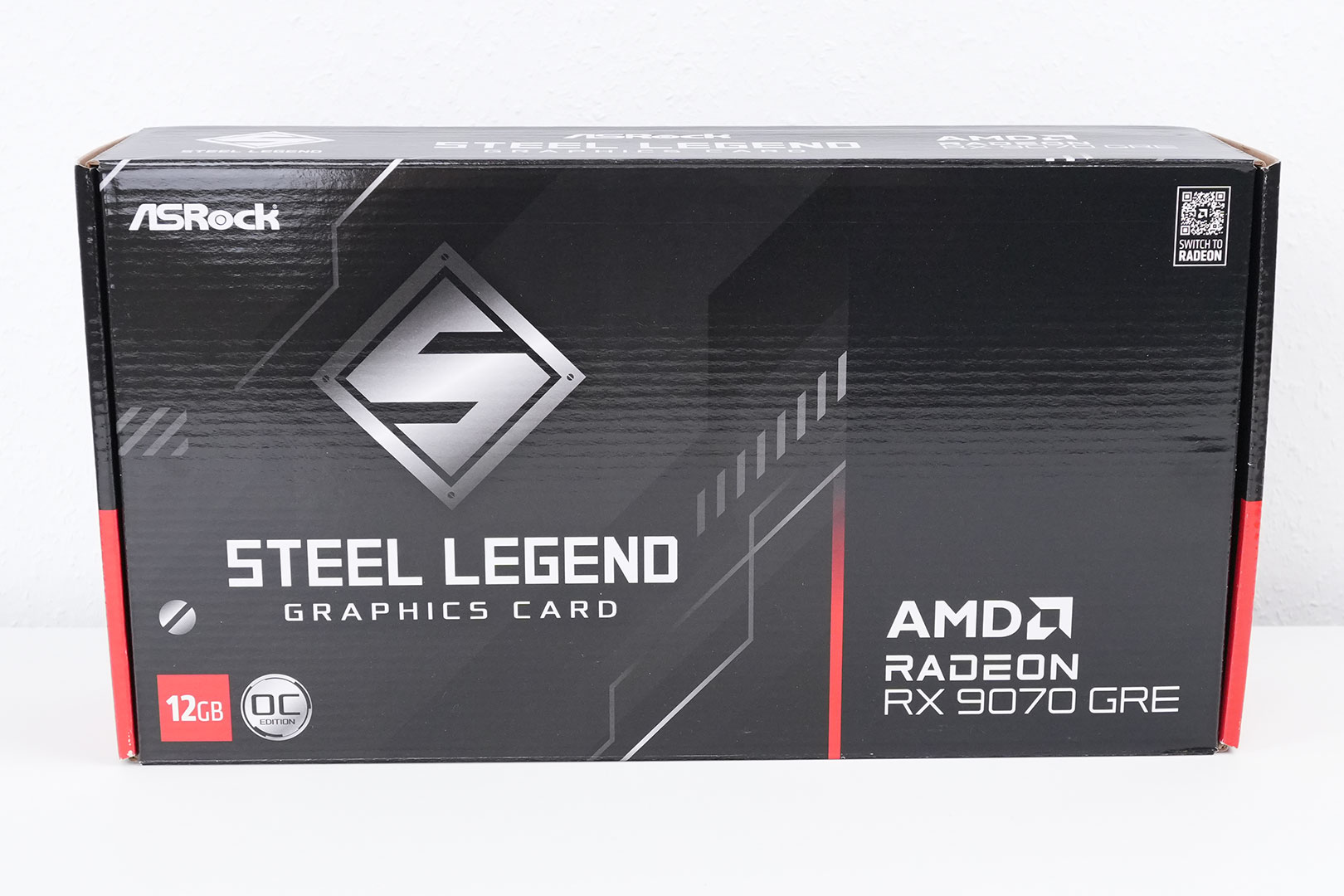
Packaging

The Card
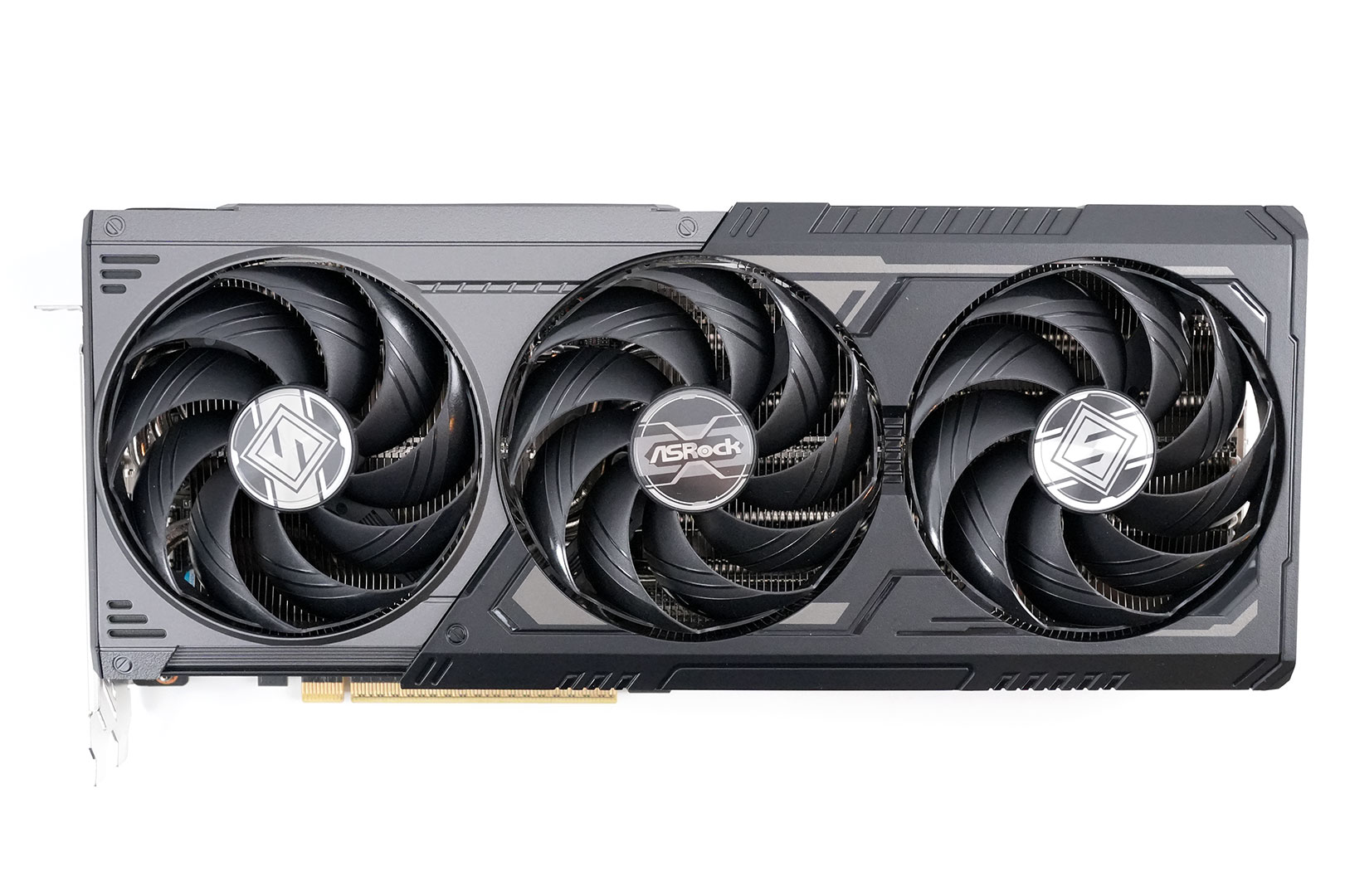

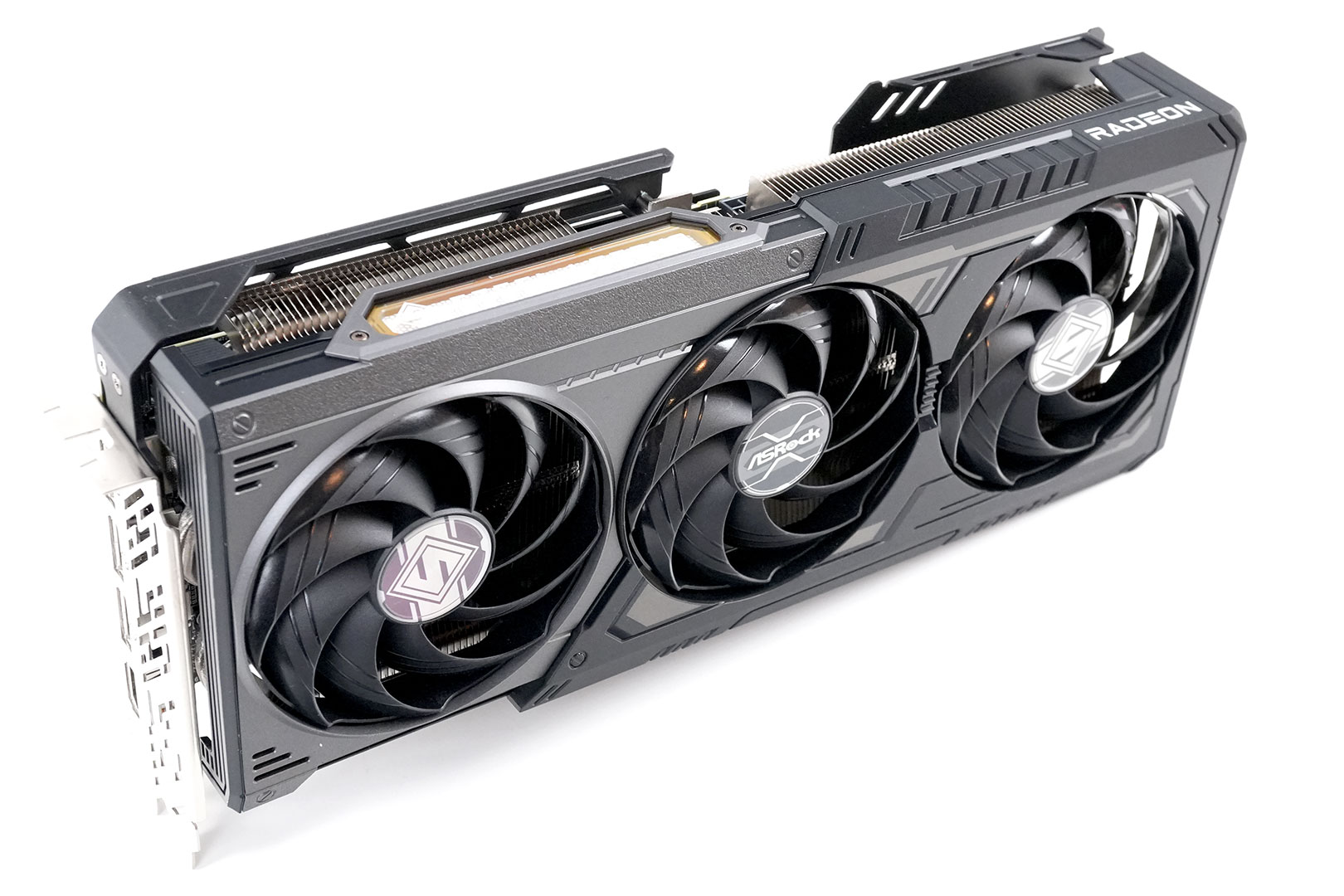
The ASRock RX 9070 GRE Steel Legend features a triple-fan cooler shroud in ASRock's signature Steel Legend design. The backplate carries the Steel Legend branding and circuit-board pattern artwork that the lineup is known for.
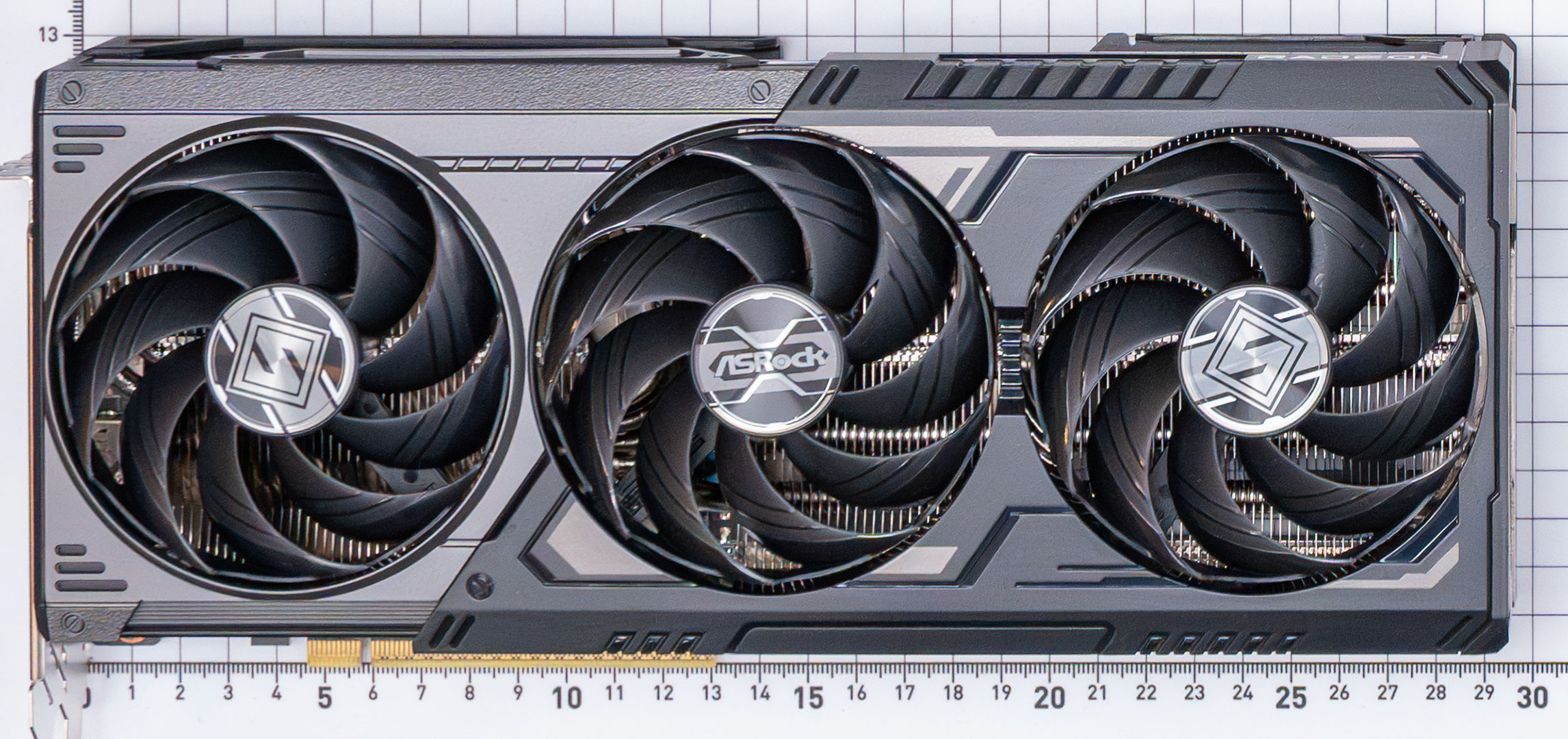

Dimensions of the card are 30.0 × 13.0 cm, and it weighs 1100 g.
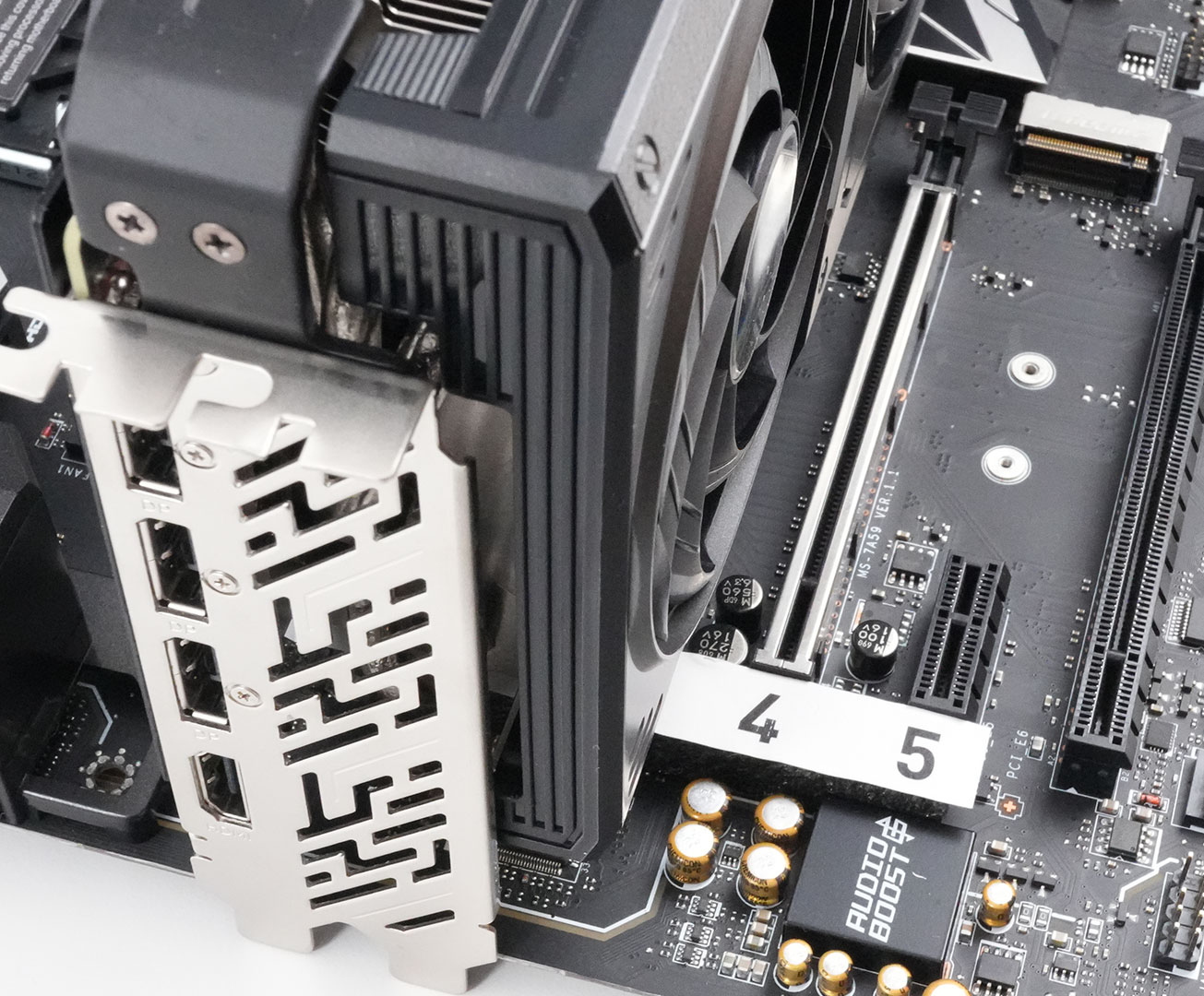
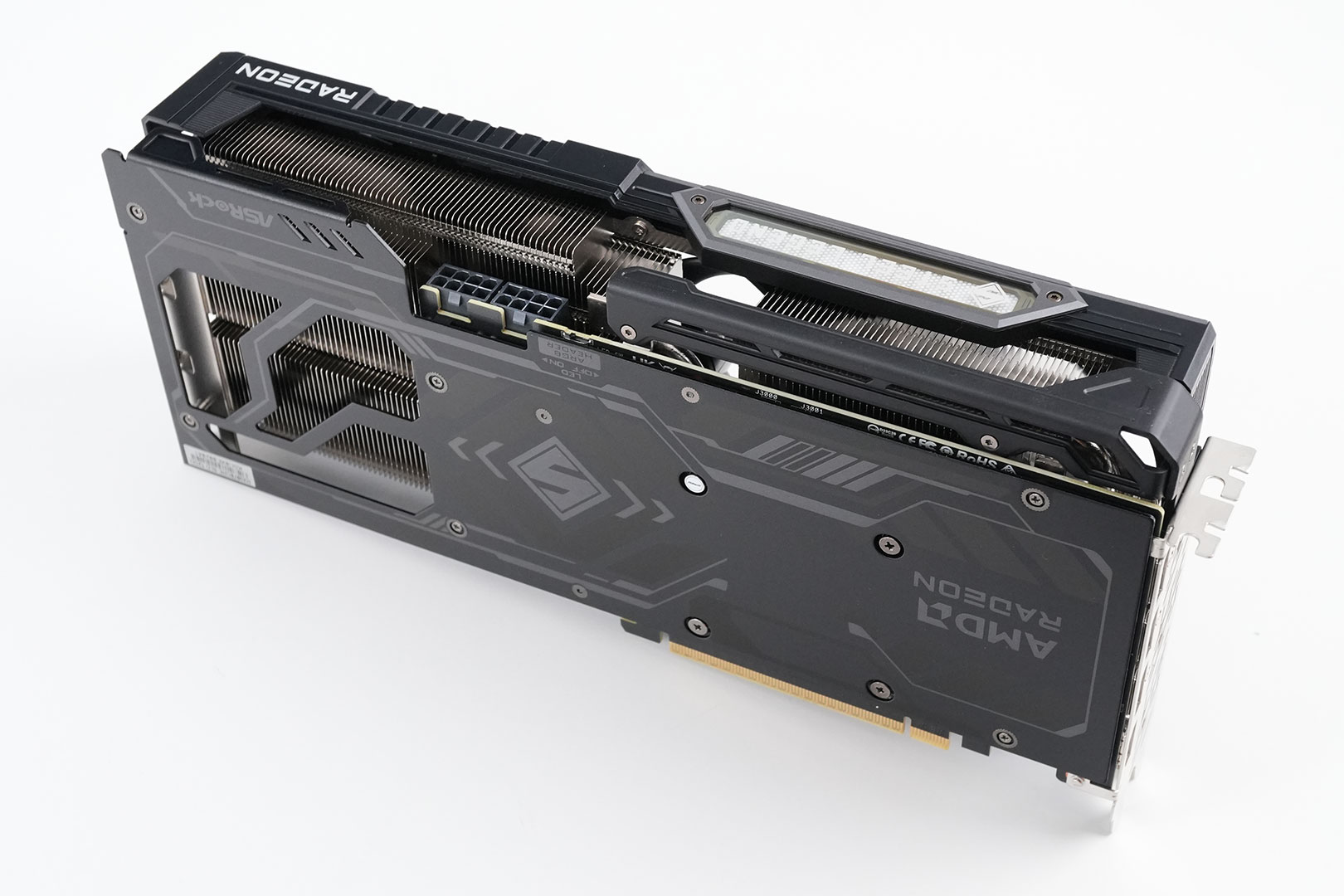
Installation requires three slots in your system. We measured the card's width to be 58 mm.
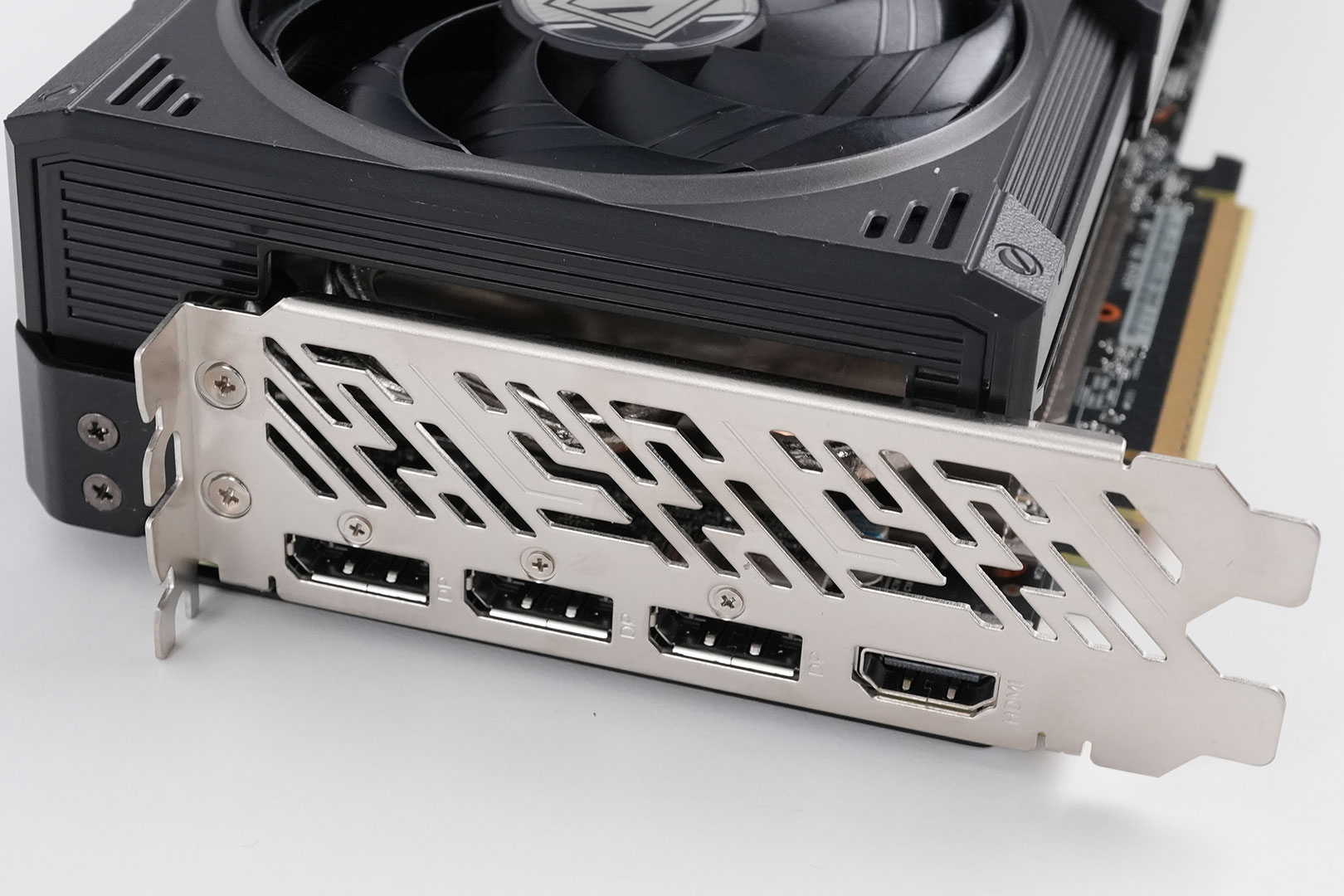
Display connectivity includes three DisplayPort 2.1a ports and one HDMI 2.1b port.
RDNA 4 features a dual VCN media engine with two independent hardware accelerators for encoding and decoding. AMD has improved H.264 and HEVC encoding quality—a long-standing complaint from streamers—and added AV1 B-frame support for better streaming bitrates.
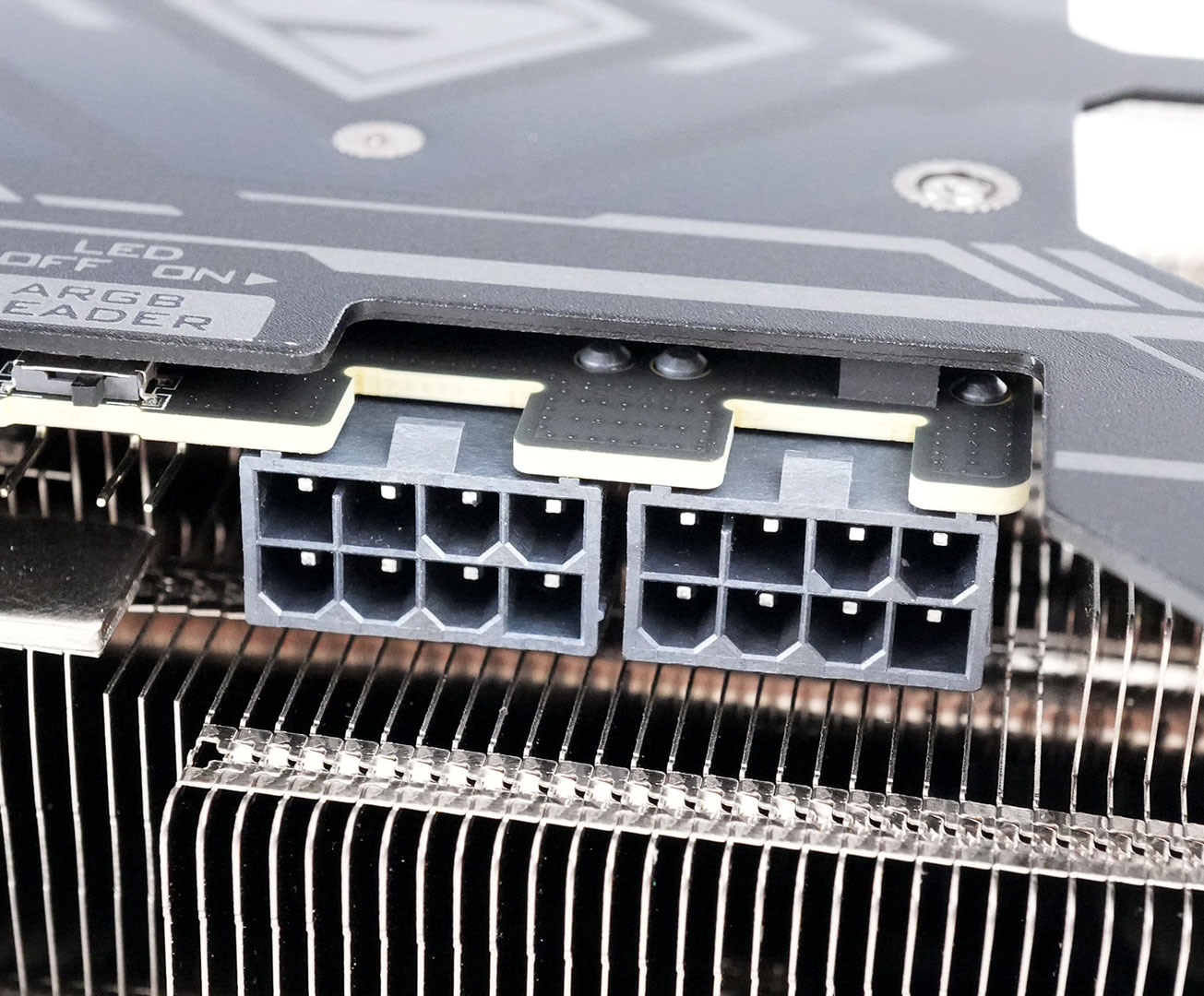
The card uses two 8-pin power connectors, which allow a maximum of 300 W power draw, plus 75 W from the slot. The board power limit is set to 240 W, with the manual adjustment range allowing up to 264 W.
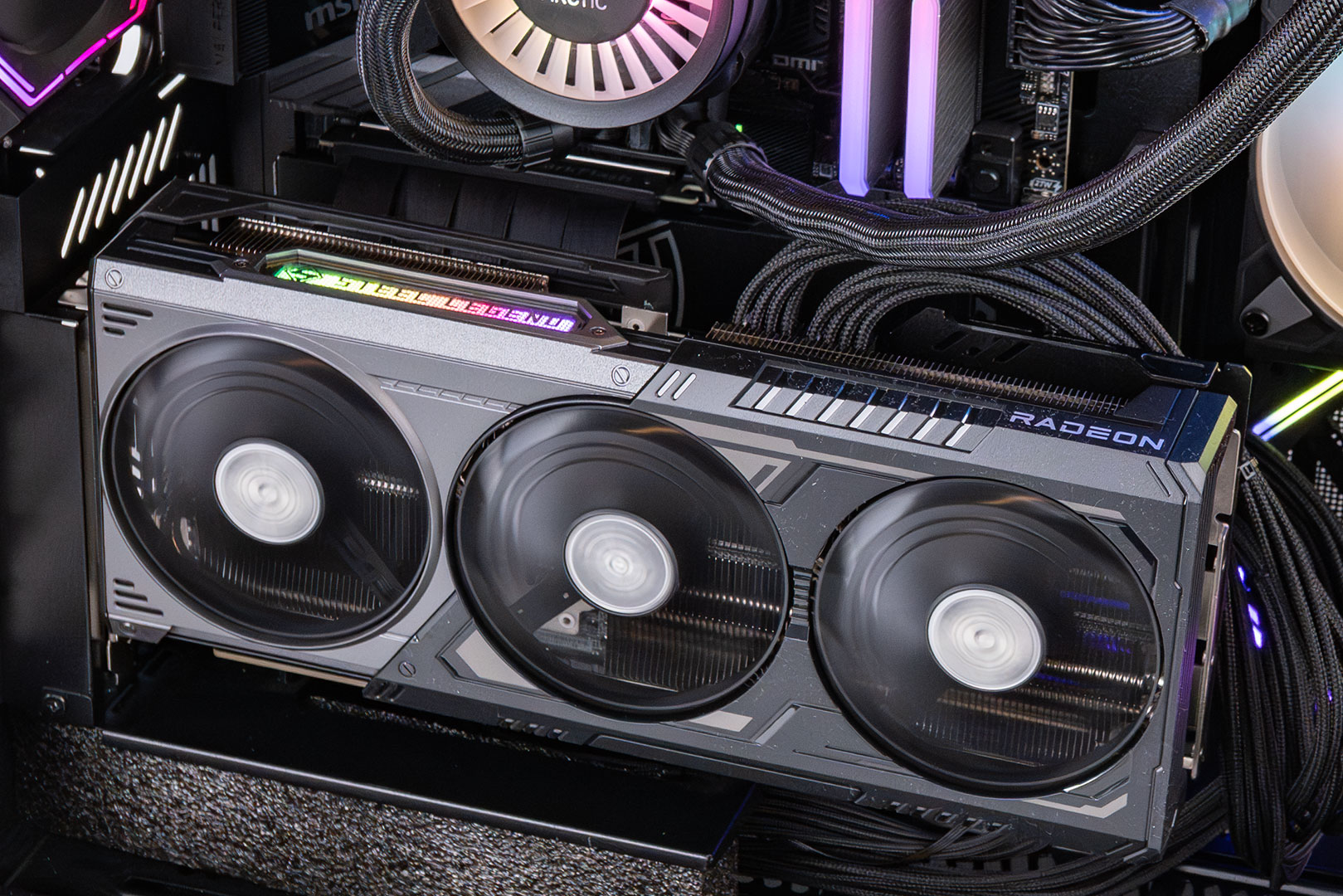
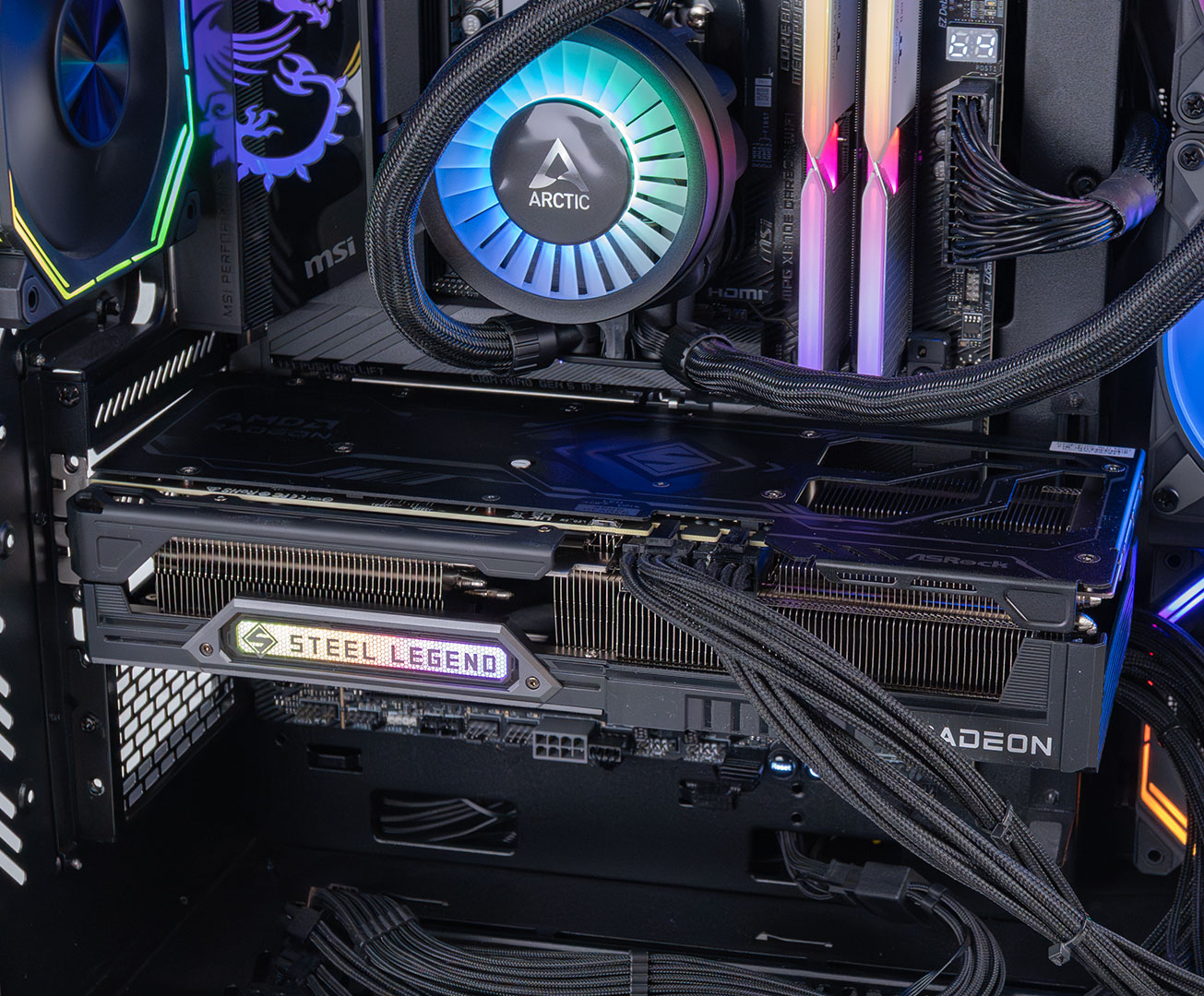
ASRock includes an RGB element running along the top edge of the card, behind the "Steel Legend" logo.
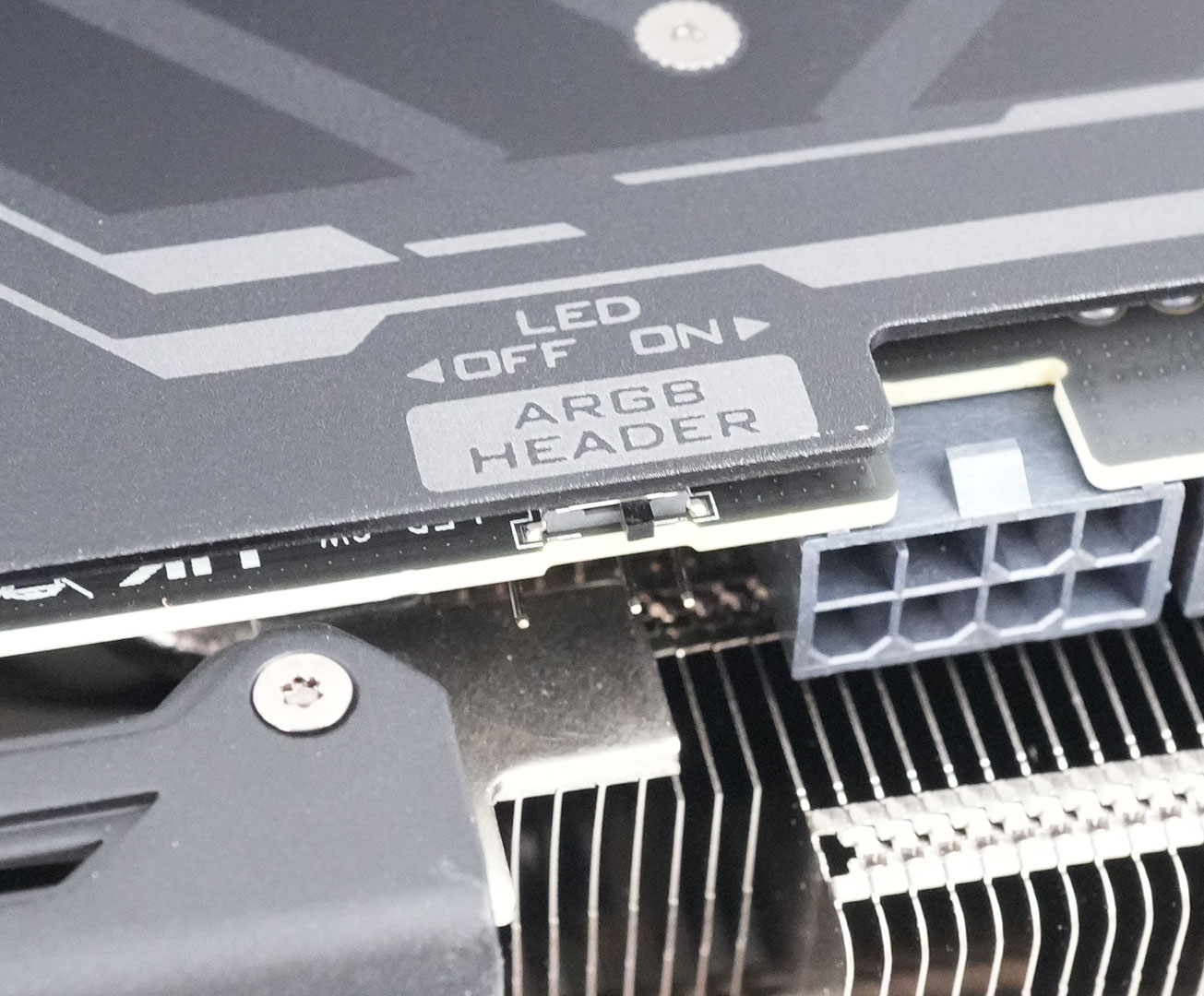
This little switch lets you turn off the lighting instantly, no software required. Right nearby is an ARGB header that lets you sync the card's lighting with the rest of your system.
Teardown
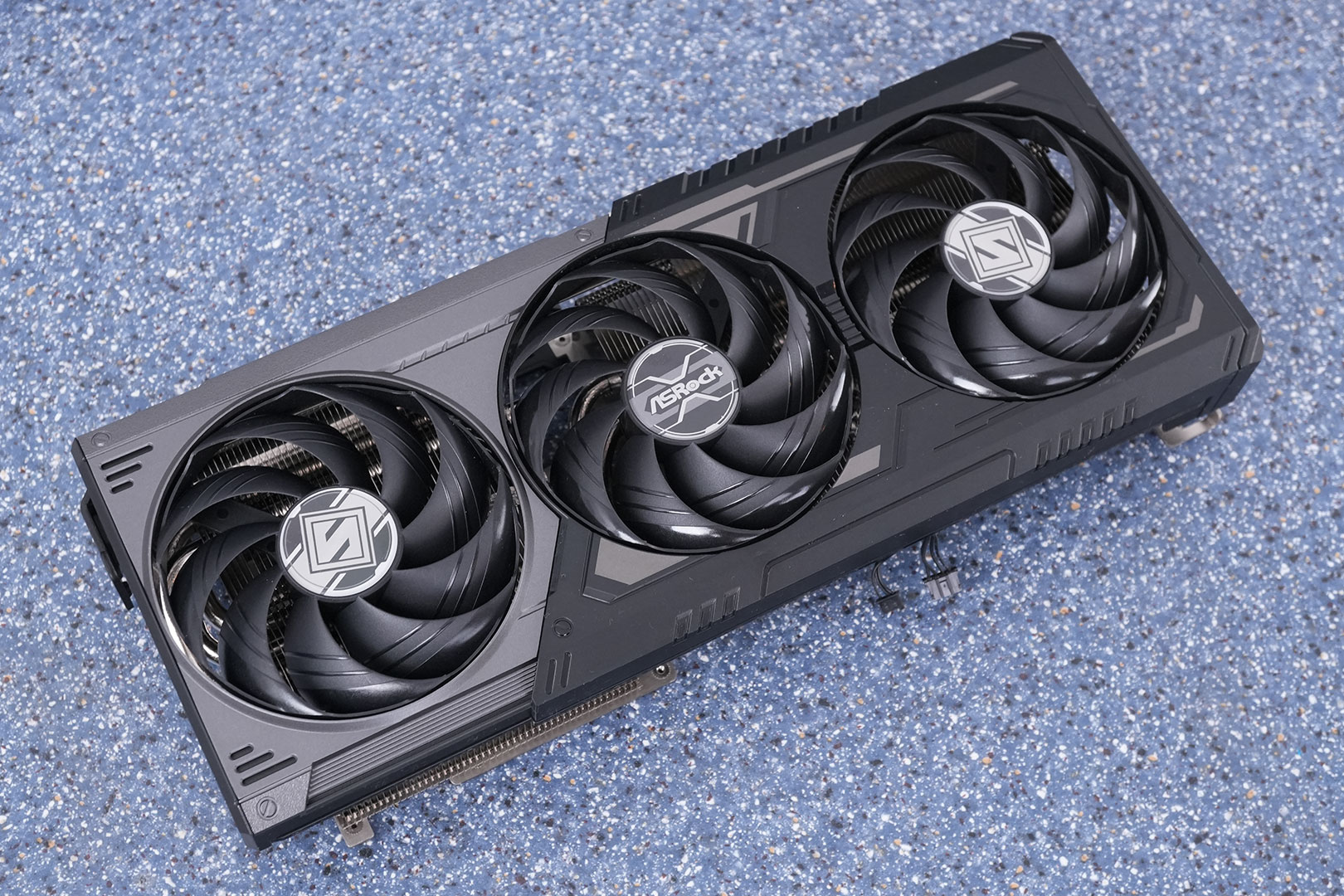
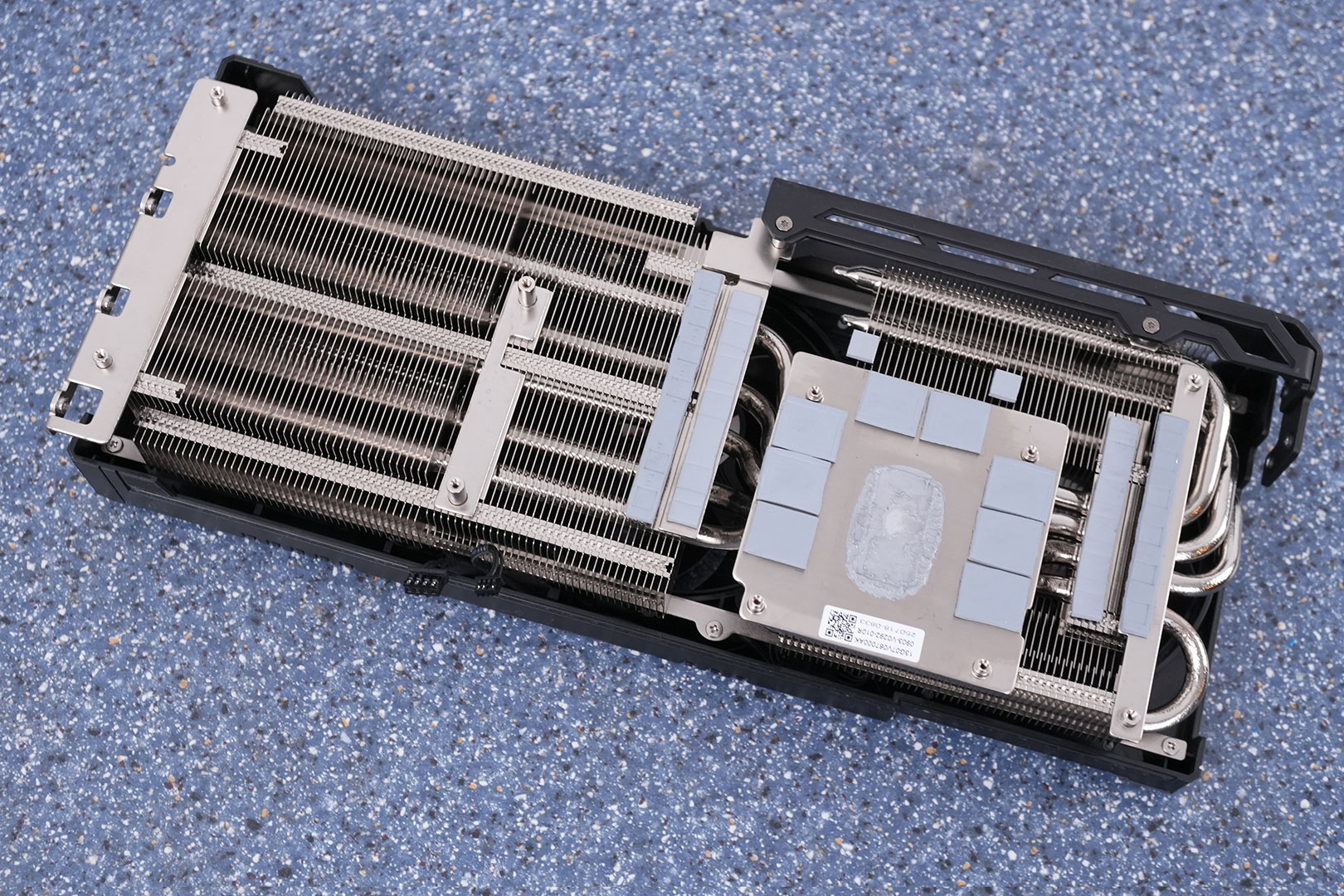
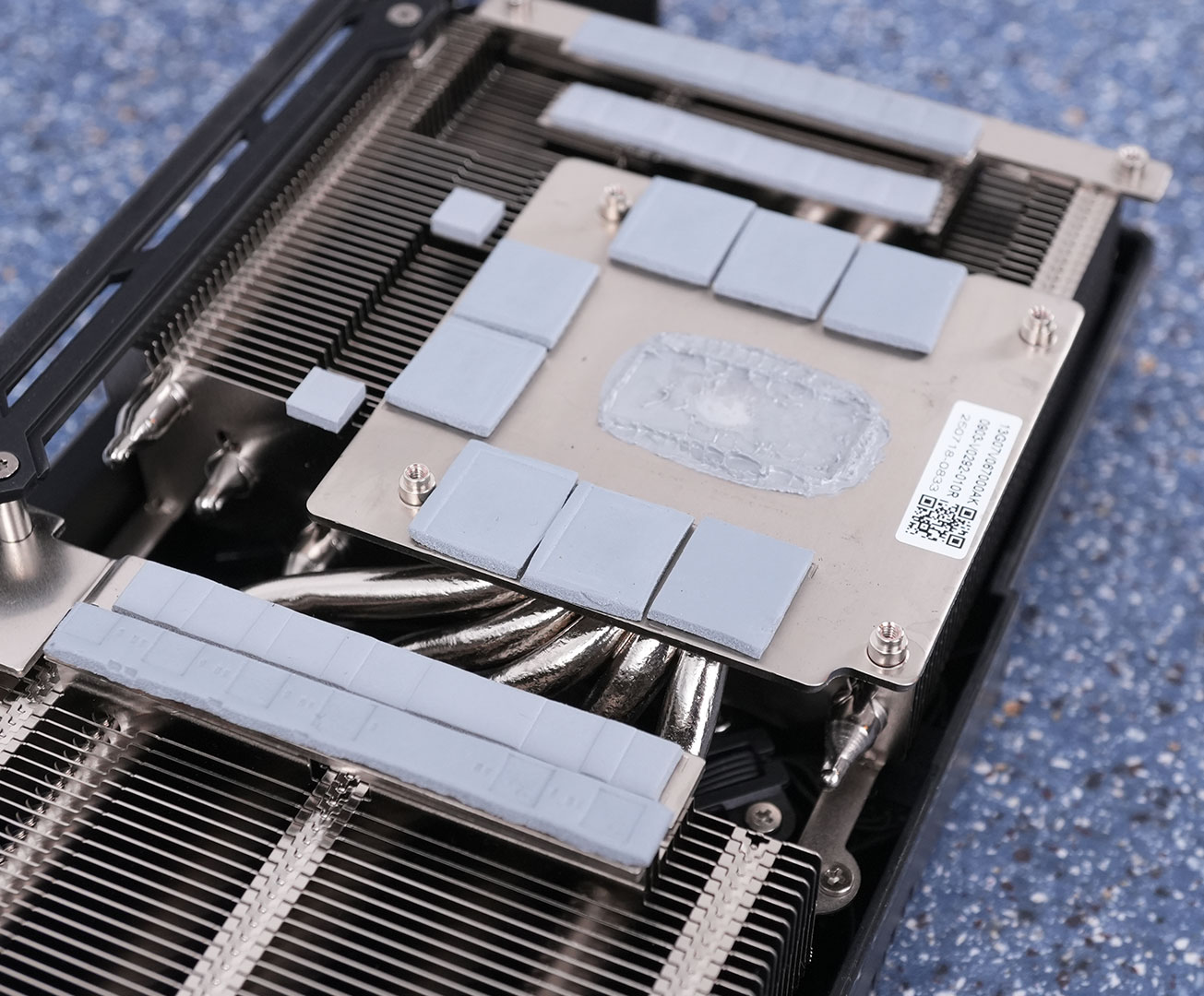
The main cooler uses five heatpipes with a large aluminium fin stack, providing cooling for the GPU, memory and VRM circuitry.
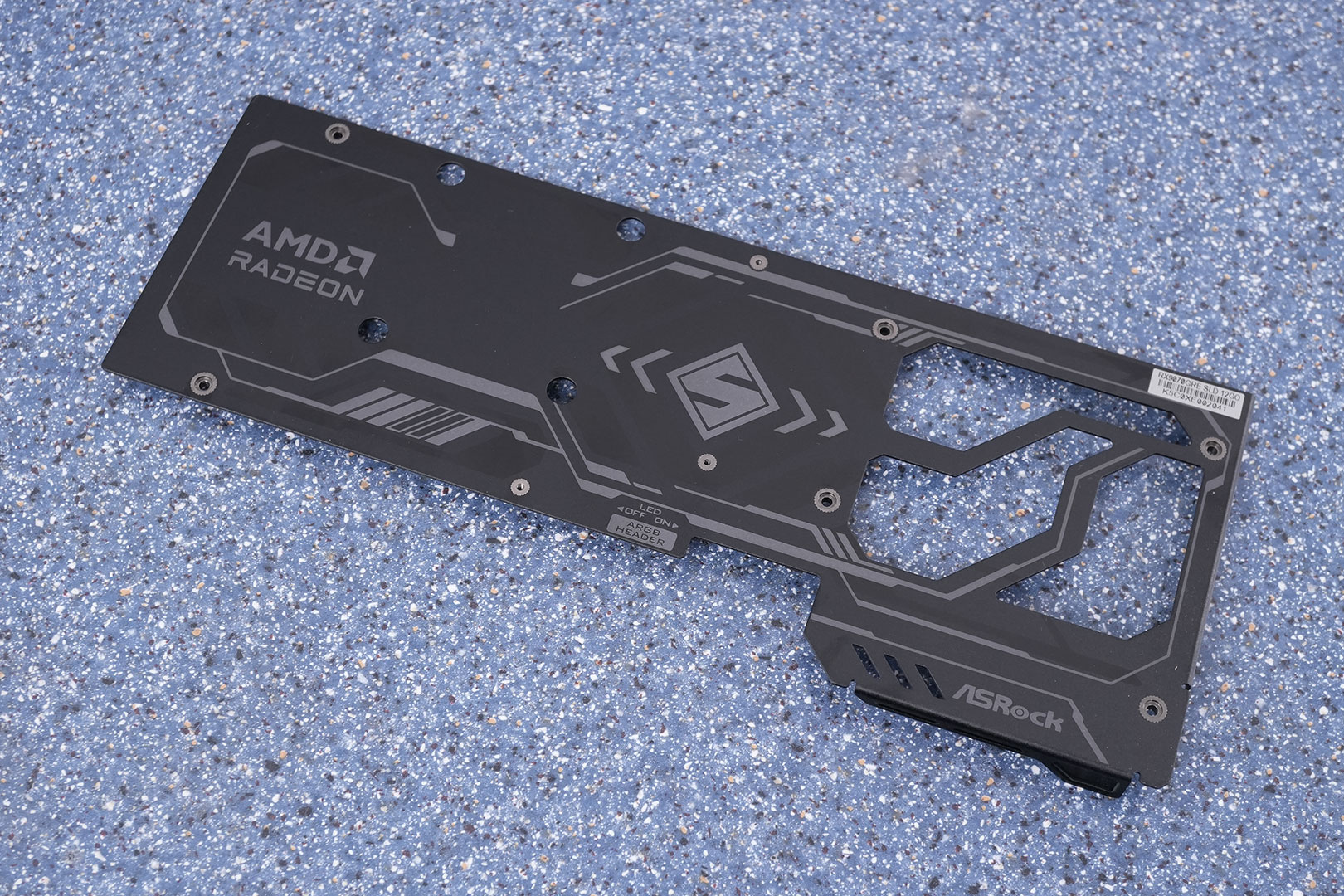
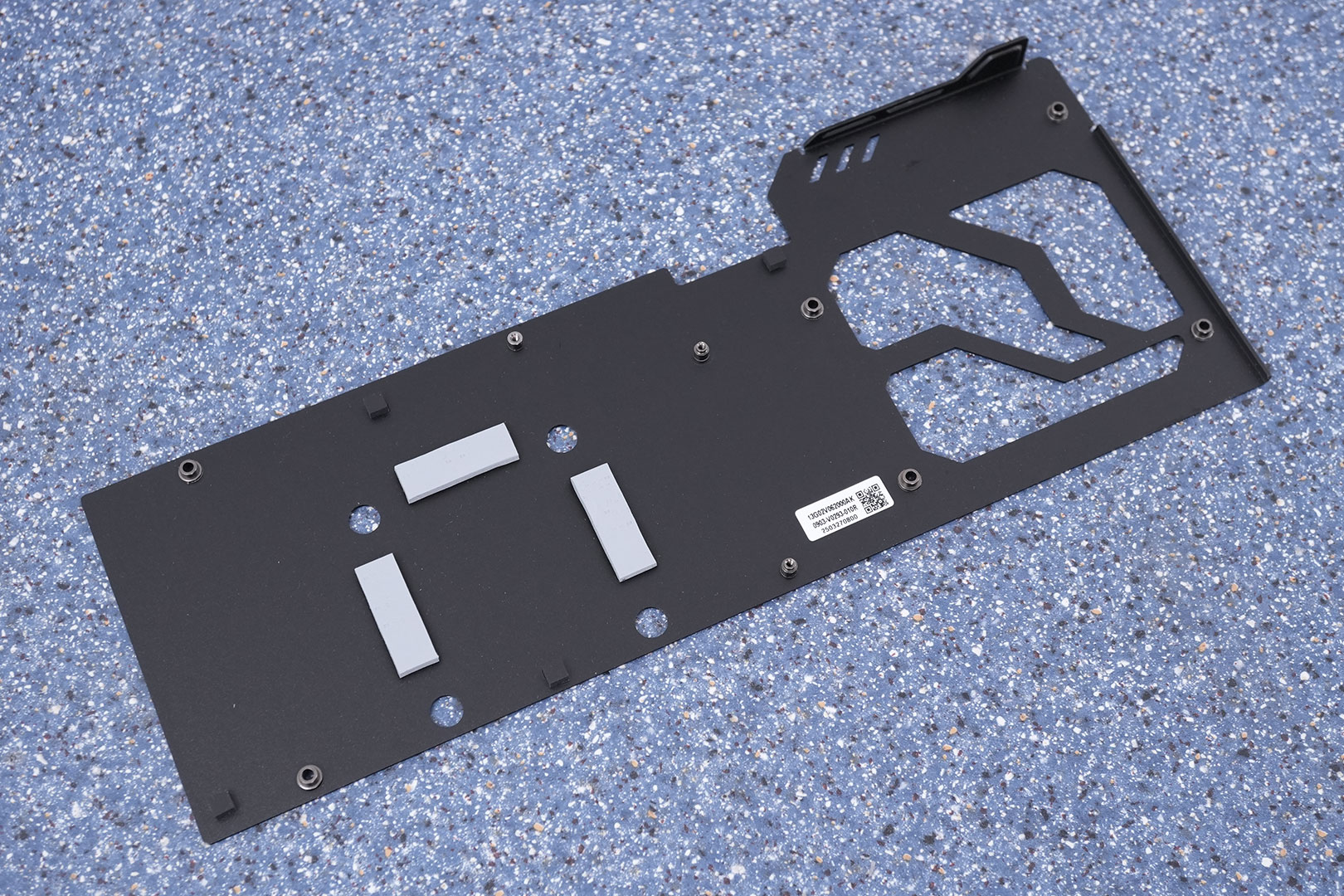
On the back, you'll find a metal backplate with a big cutout to improve airflow.
High-resolution PCB Pictures
These pictures are for the convenience of volt modders and people who would like to see all the finer details on the PCB. Feel free to link back to us and use these in your articles, videos or forum posts.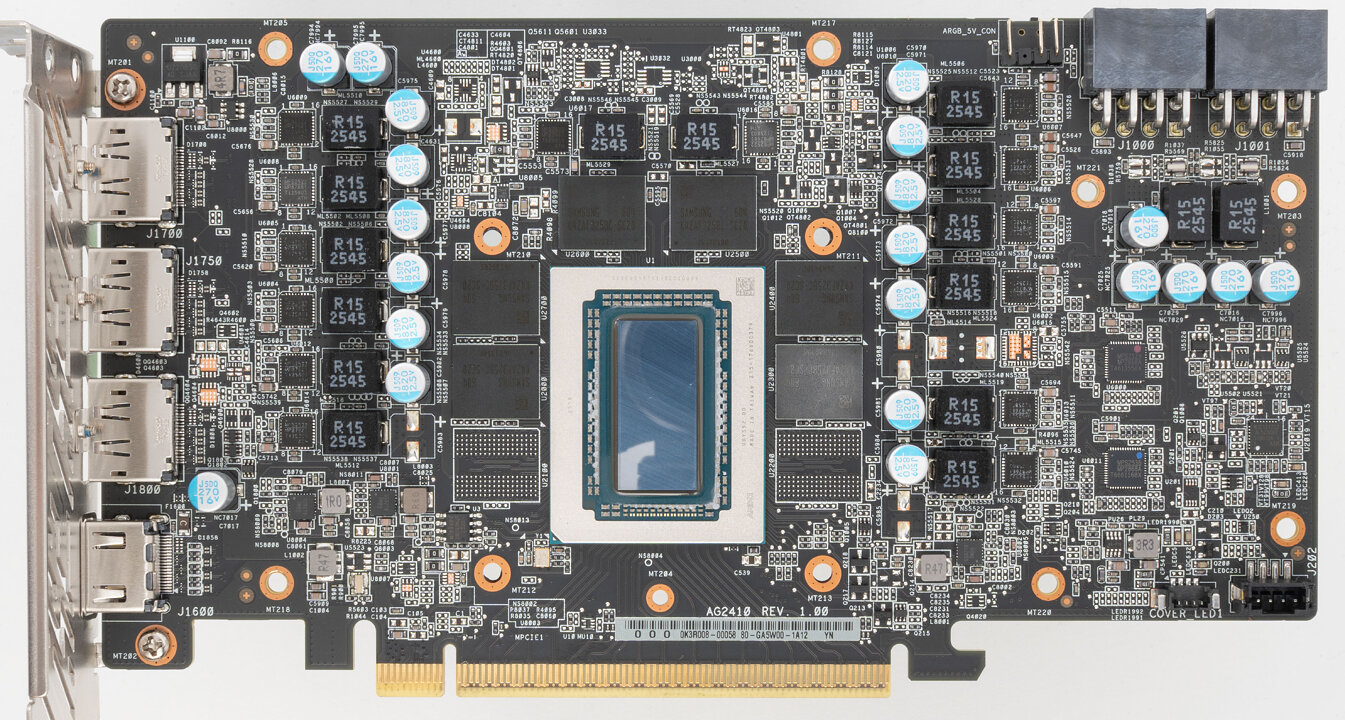
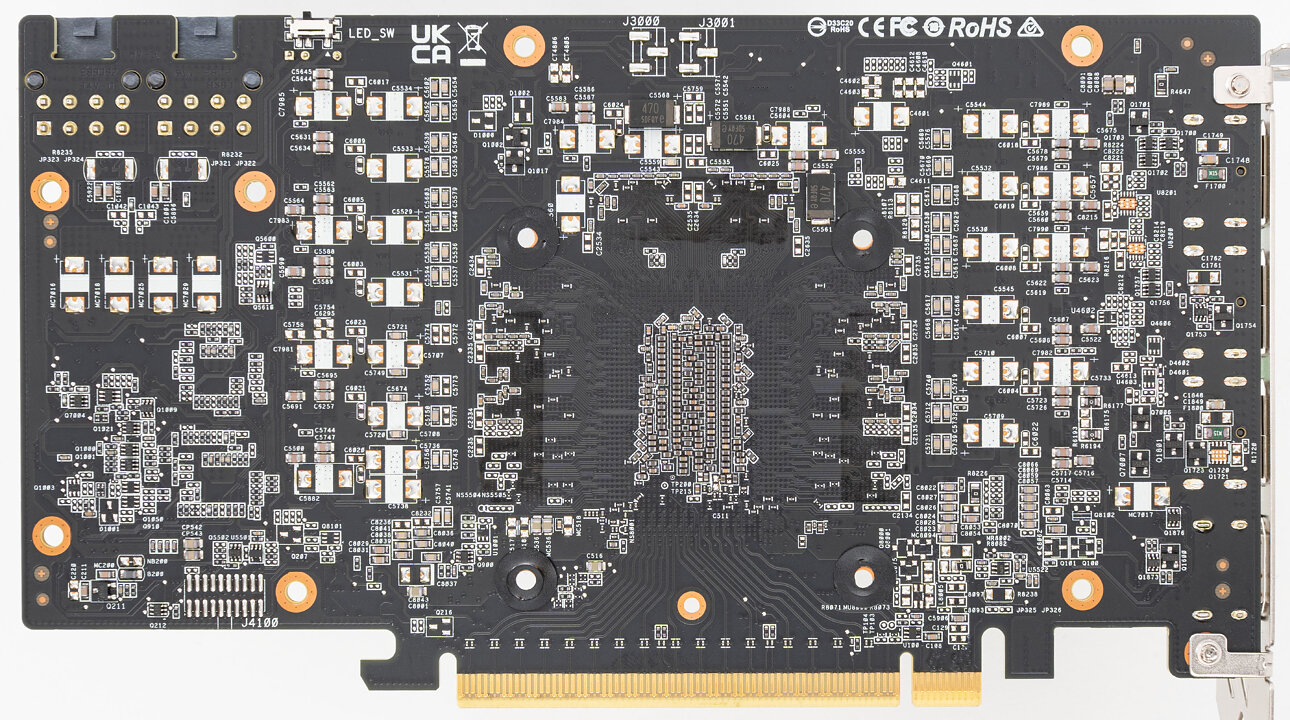
High-resolution versions are also available (front, back).
Circuit Board (PCB) Analysis
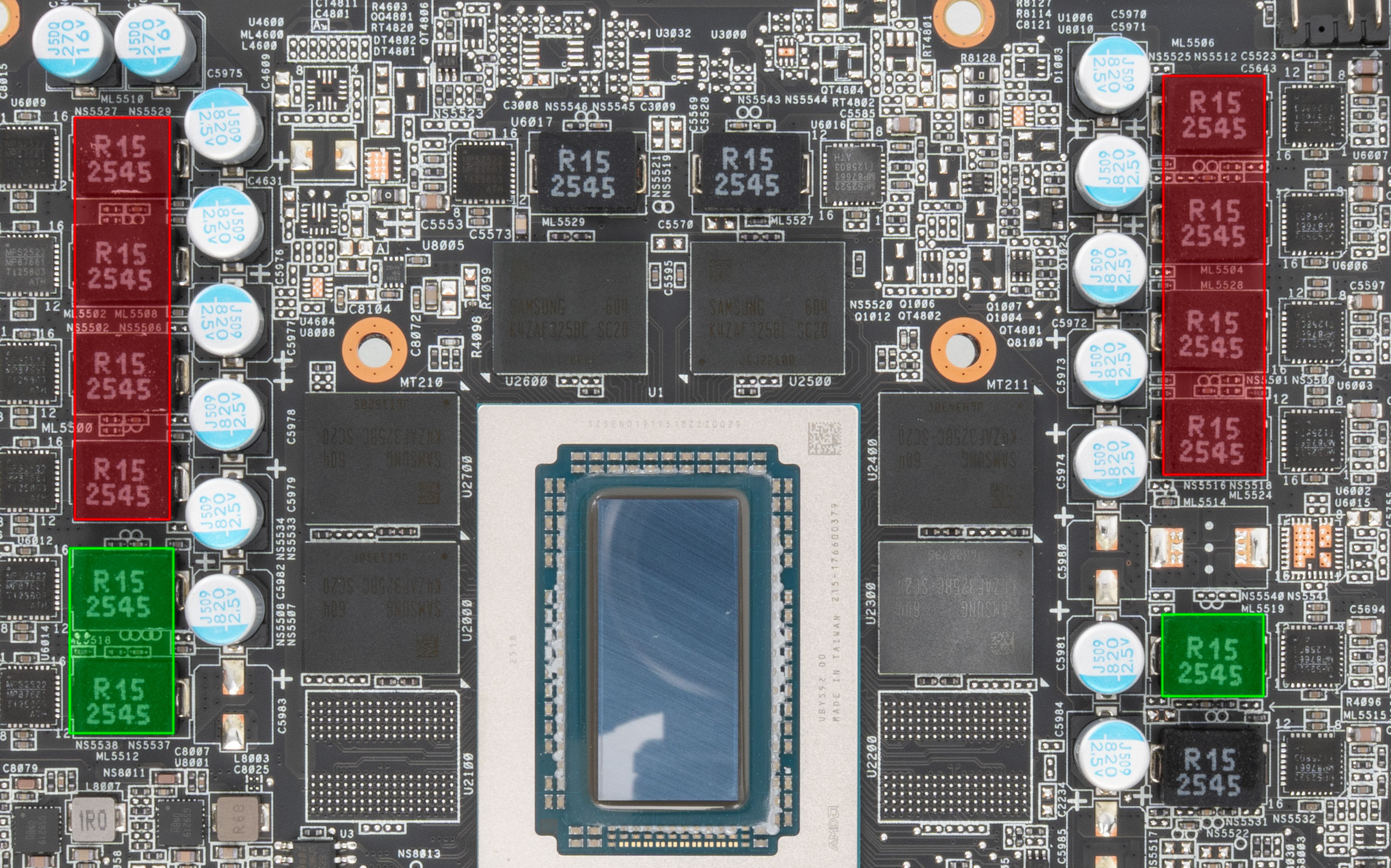
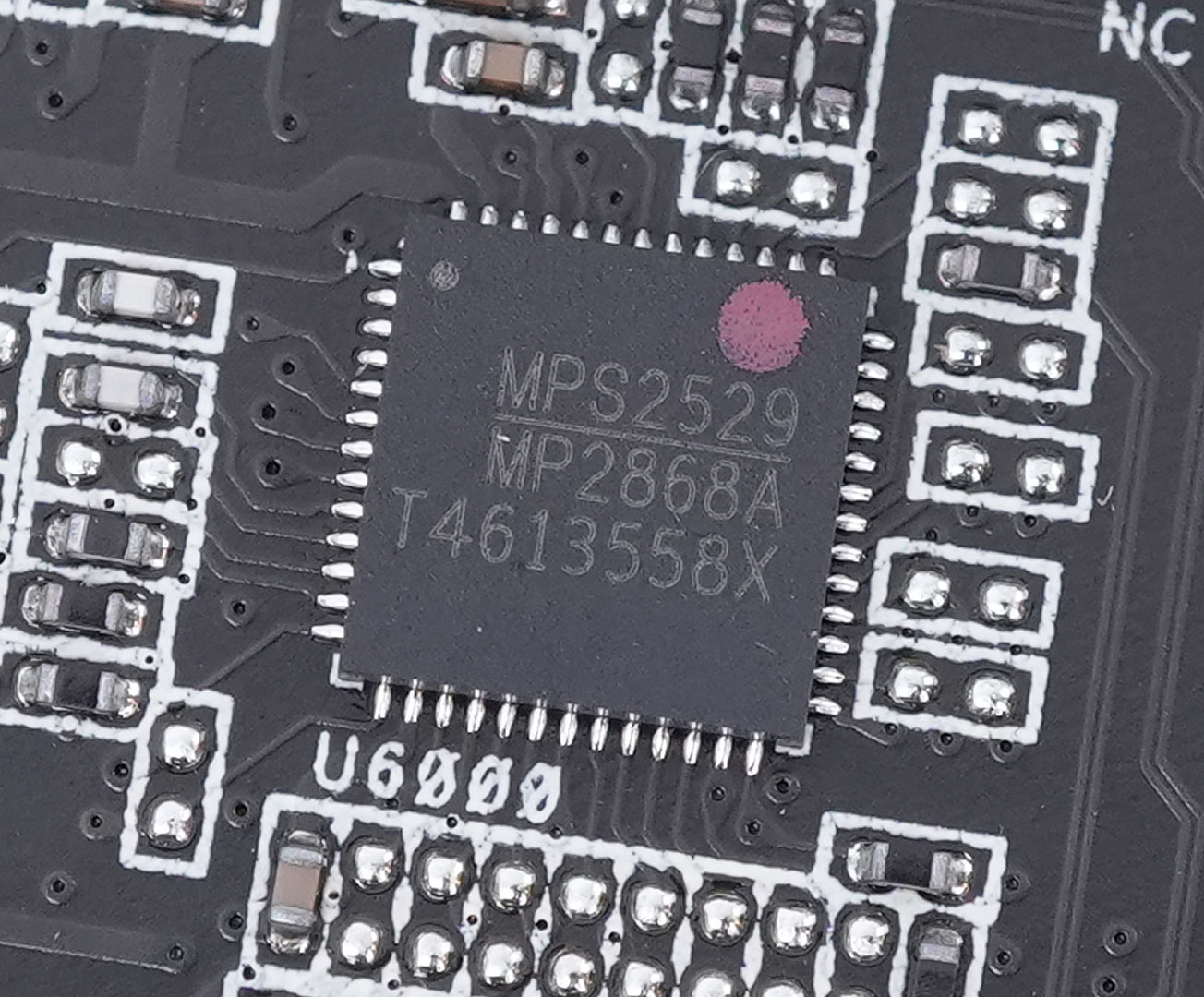
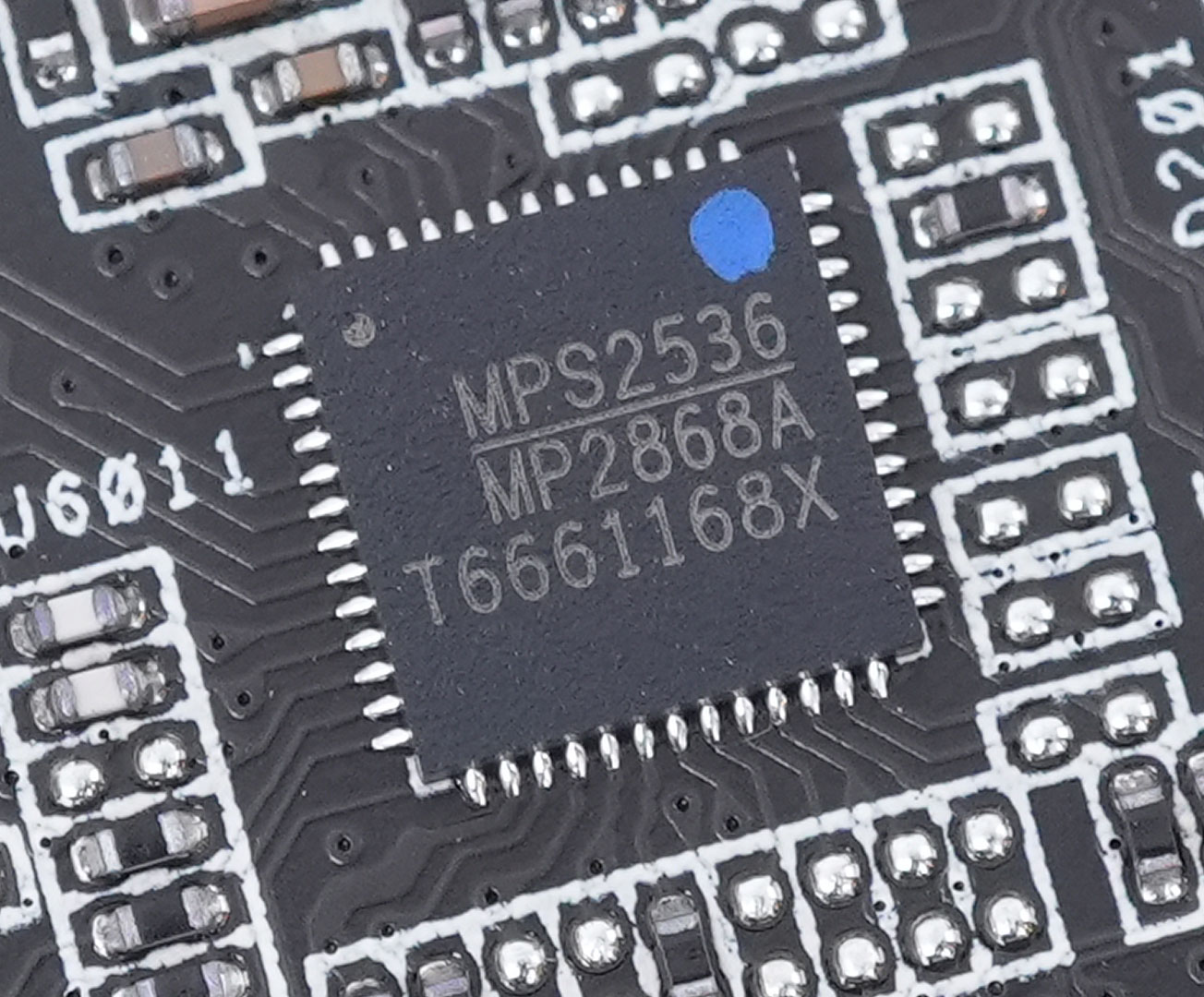
An 8+3 phase VRM powers the GPU. It is managed by a Monolithic Power Systems MP2868A controller.
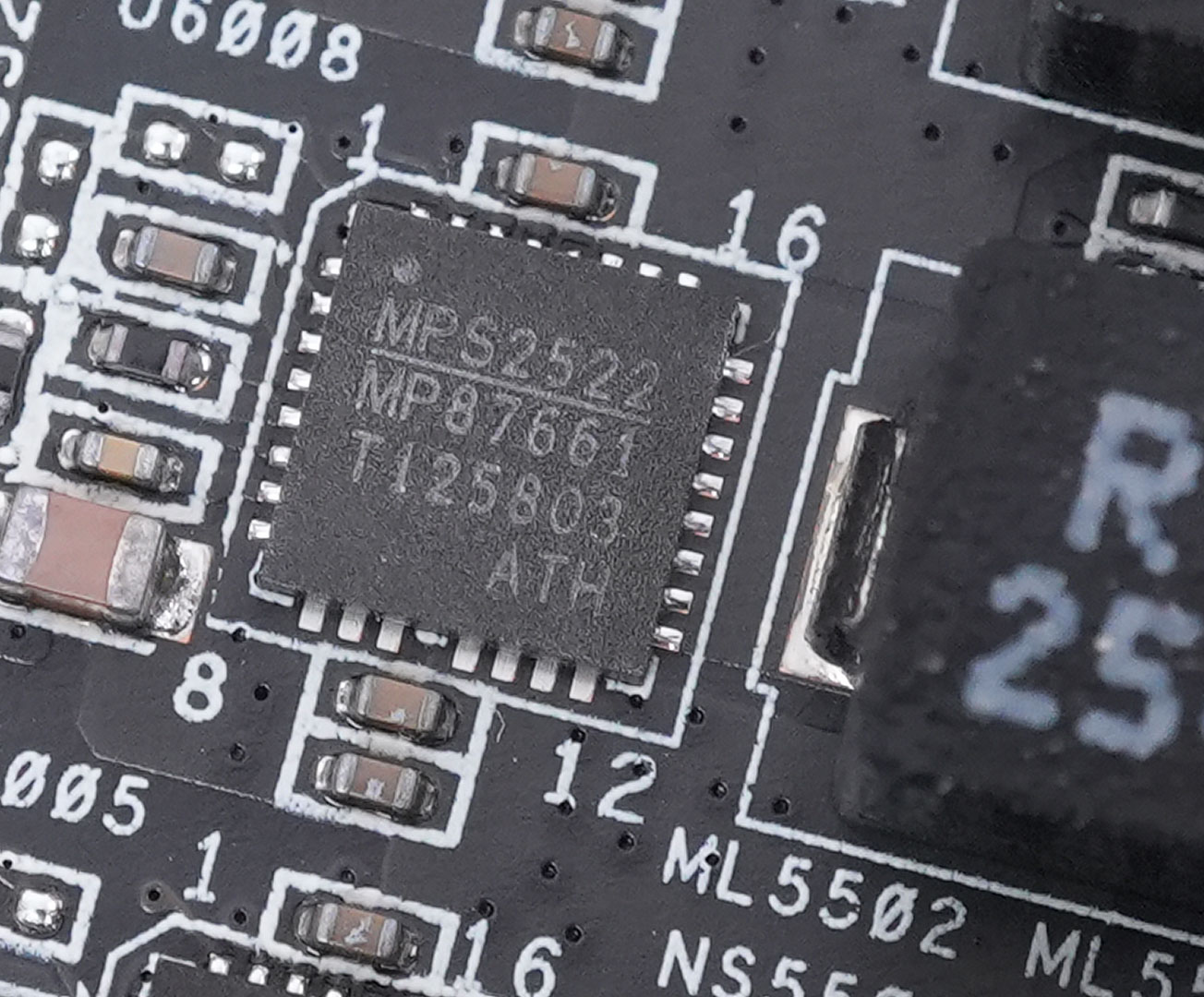
All GPU power phases use Monolithic MPS MP87993 DrMOS with a rating of 50 A.
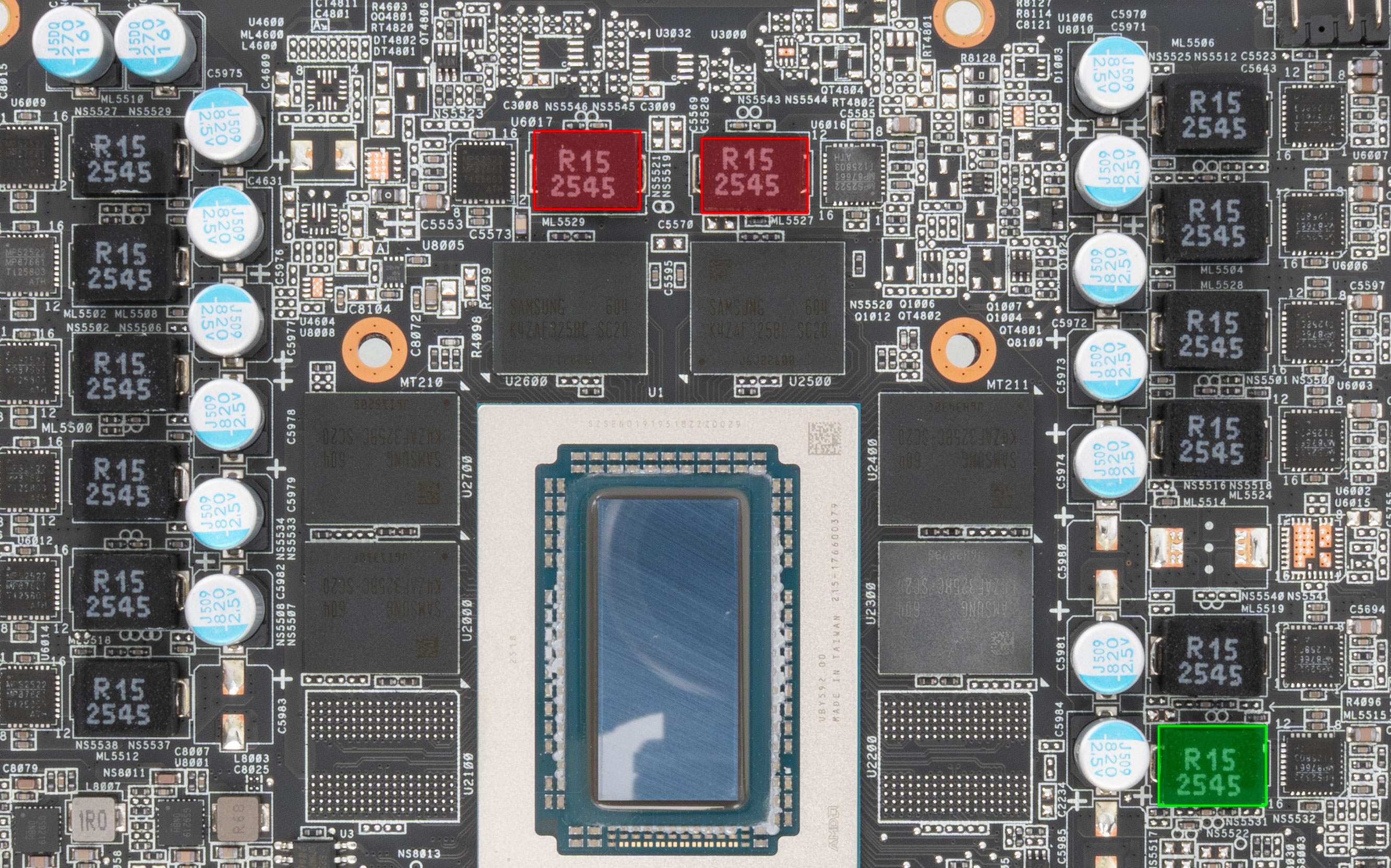
Powering the GDDR6 memory chips is a 2+1 phase VRM driven by a second Monolithic Power Systems MP2868A controller.
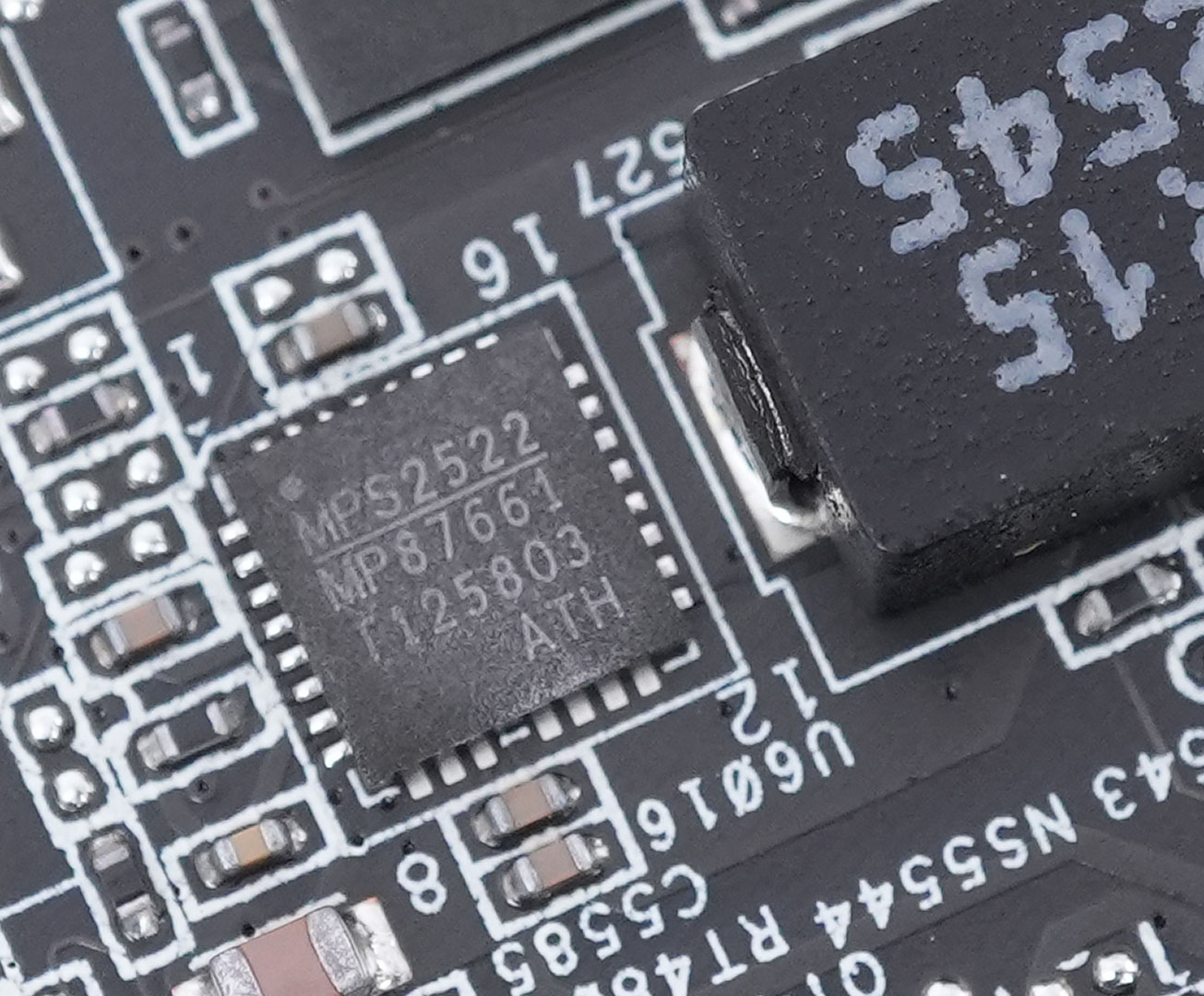
Just like GPU, the memory is handled by Monolithic MP87993 DrMOS chips, too
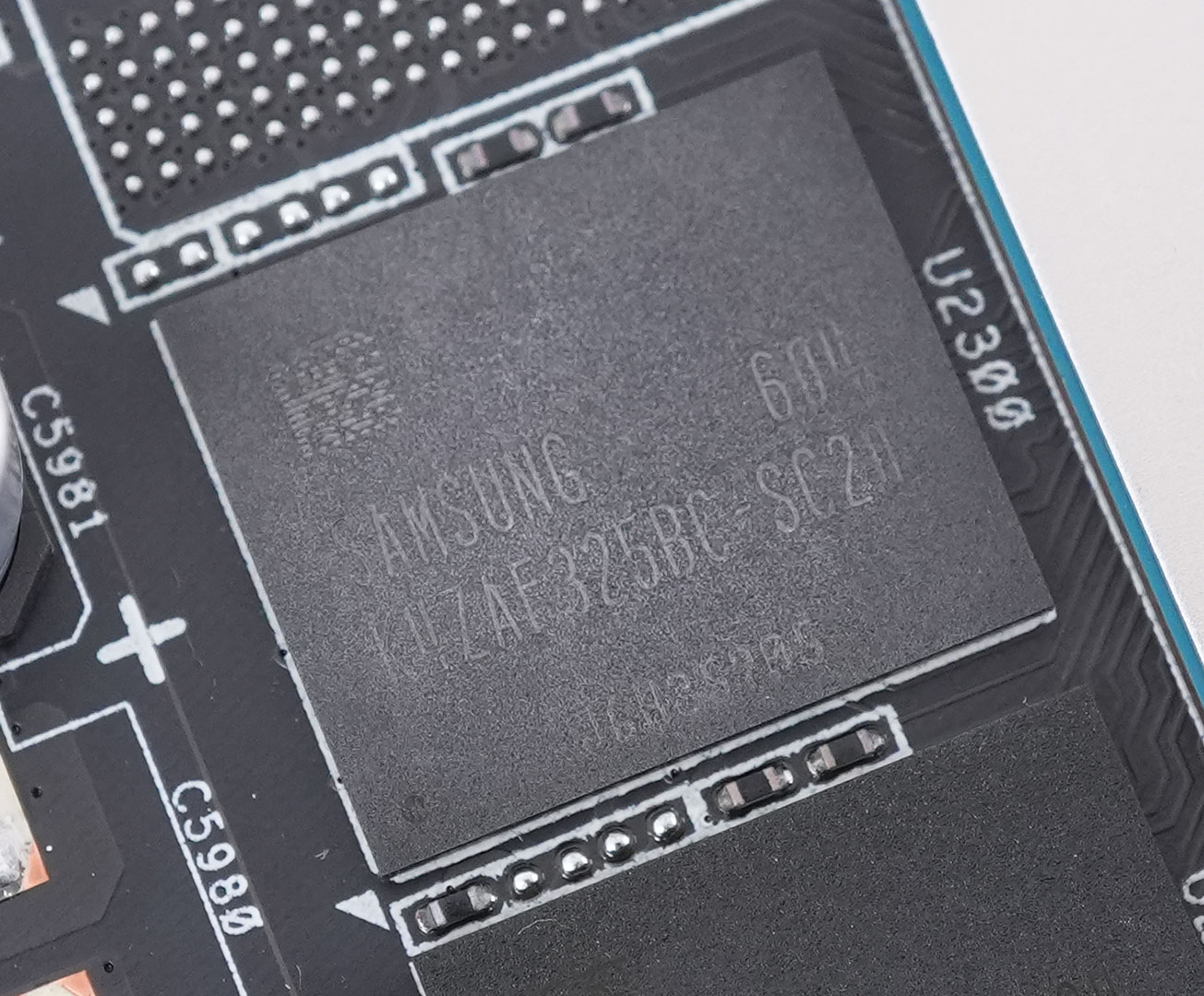
The GDDR6 memory chips are made by Samsung, and bear the model number K4ZAF325BC-SC20, they are rated for 20 Gbps. The Acer Nitro uses Hynix memory, while both the ASRock and Sapphire cards use Samsung.
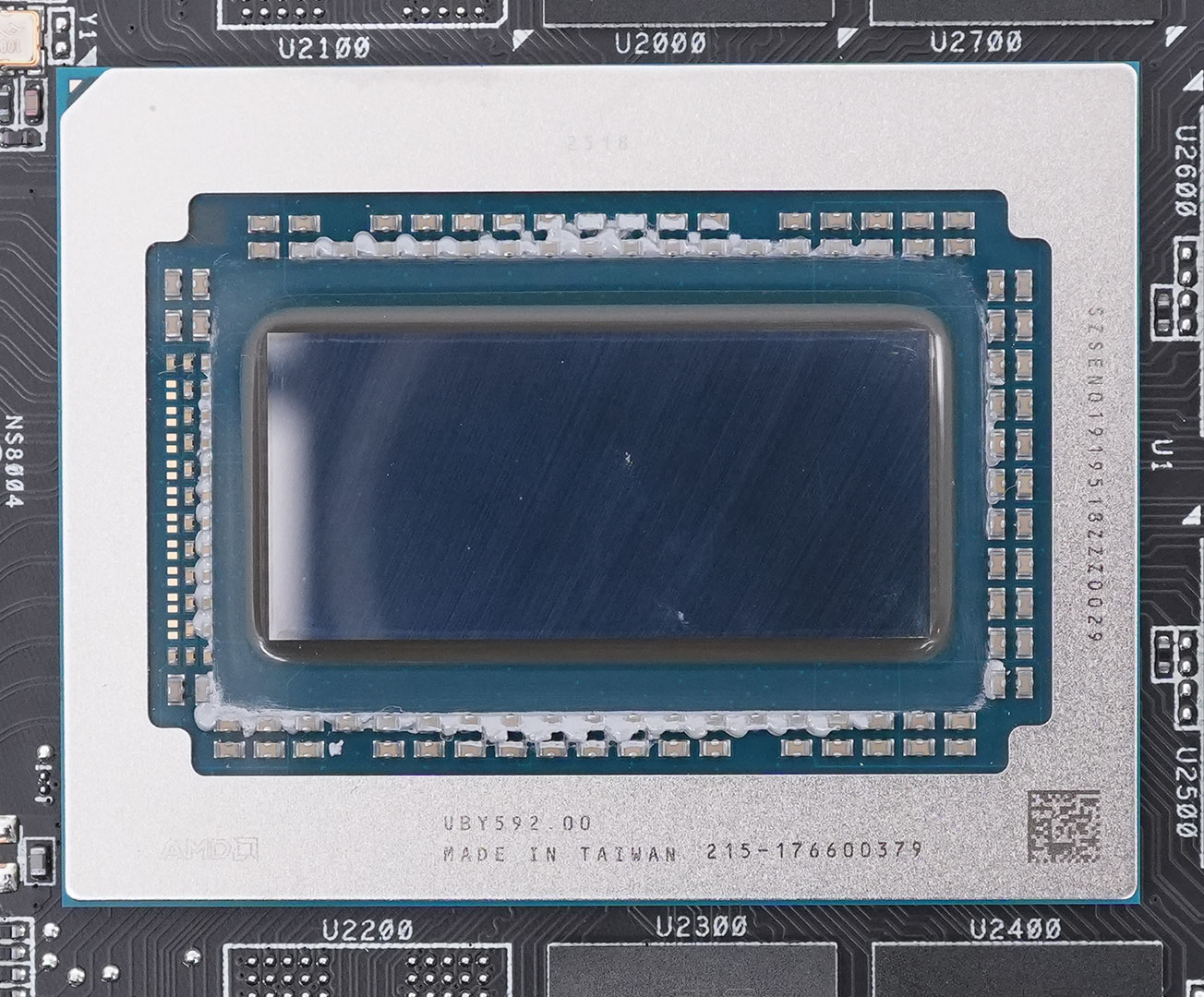
The AMD Navi 48 GPU at the heart of the Radeon RX 9070 GRE is a monolithic die. It is fabricated using a 4 nanometer N4P process at TSMC Taiwan. The die measures 357 mm², and comes with a transistor count of 53.9 billion.
Test System
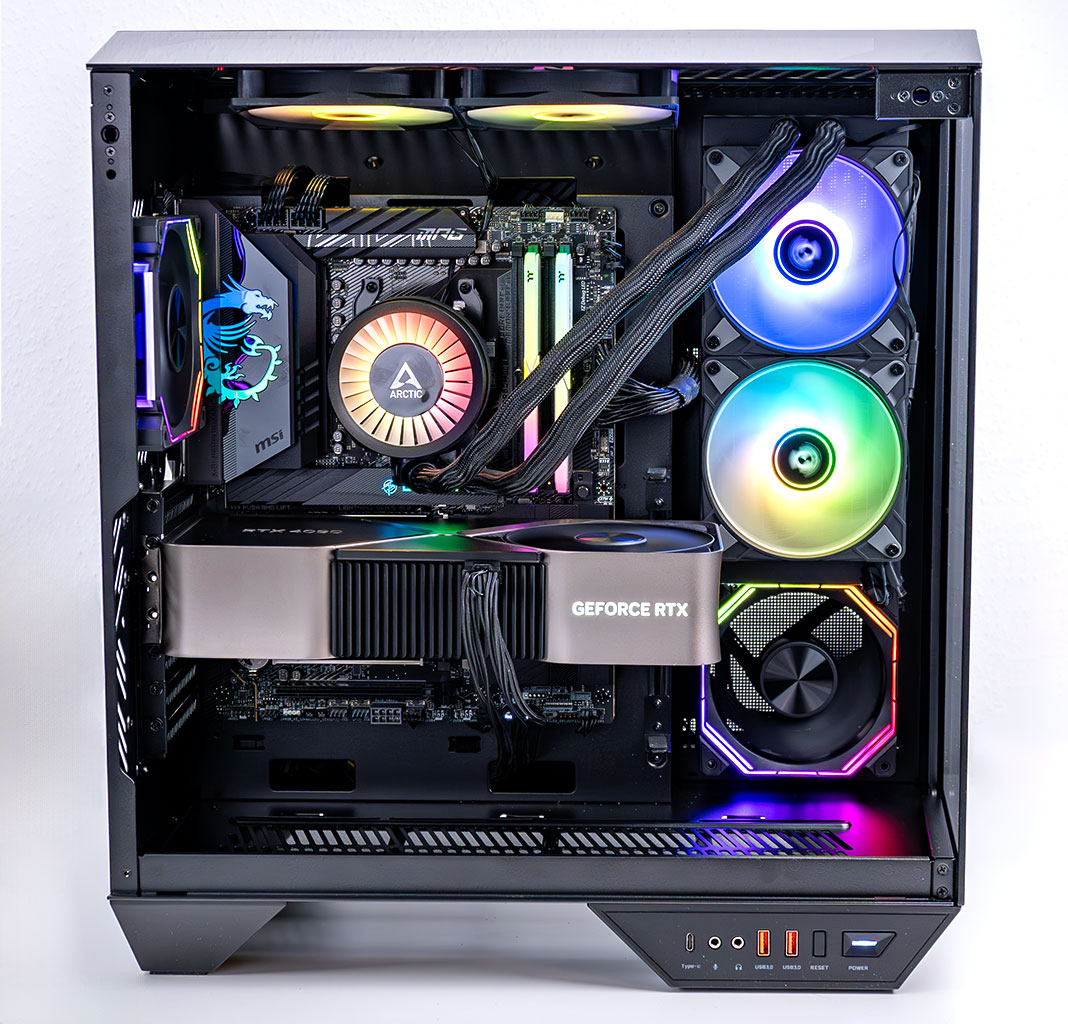
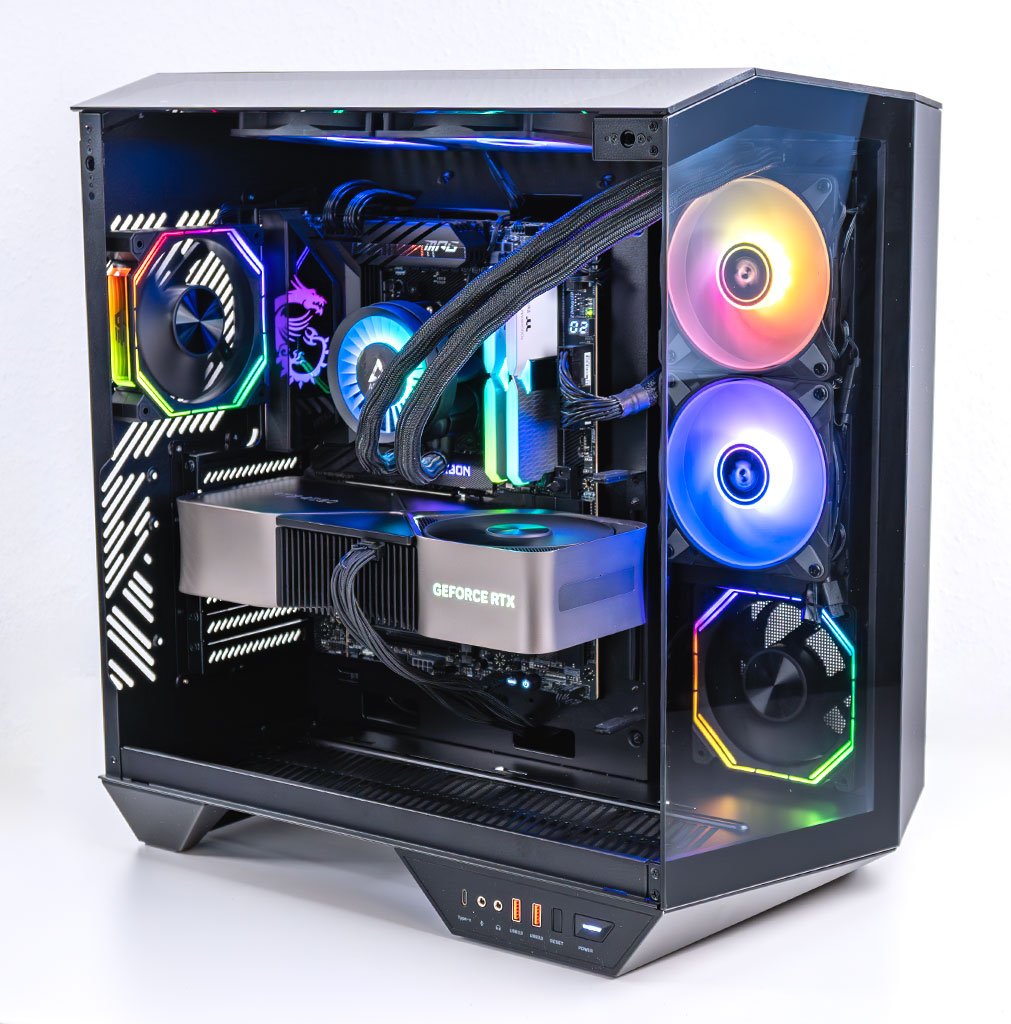
| Test System - GPU 2026 | |
|---|---|
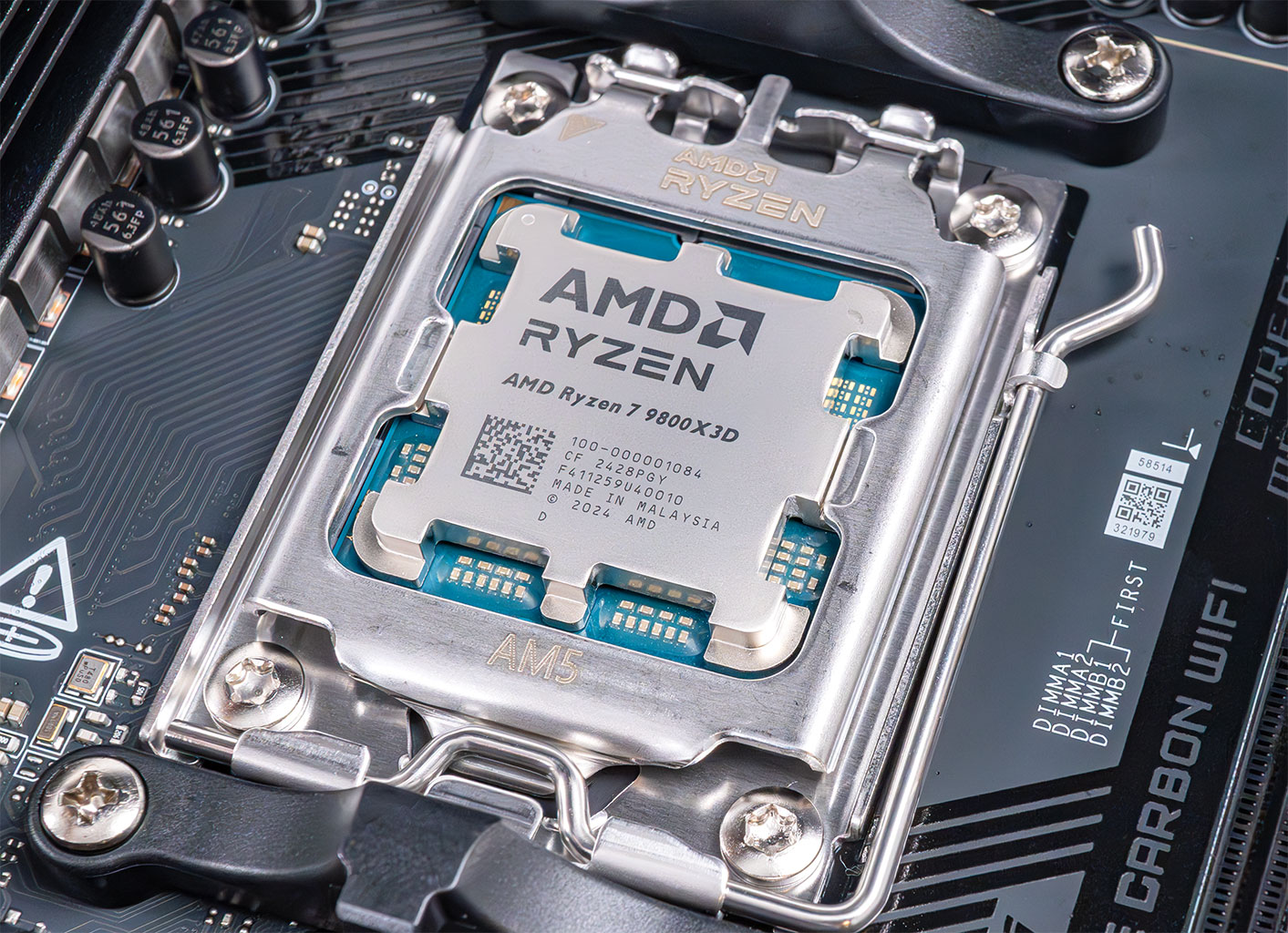
| Processor: | AMD Ryzen 7 9800X3D Zen 5, 5.2 GHz, 8 cores/16 threads |
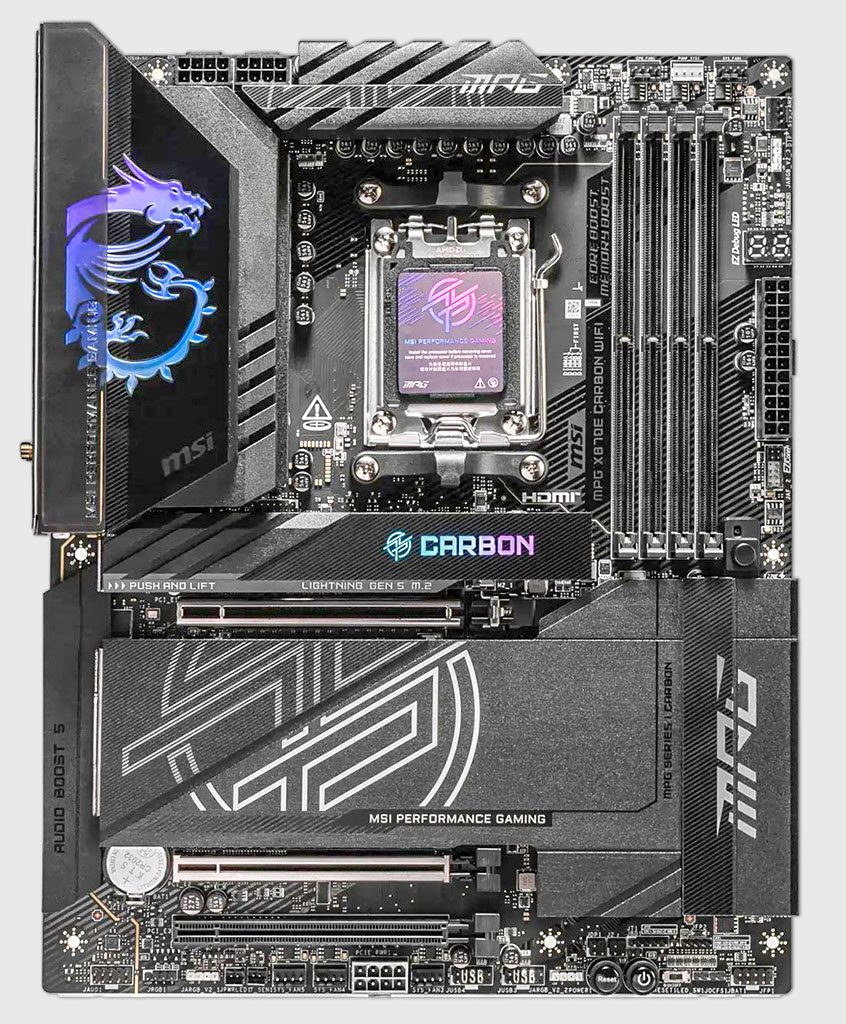
| Motherboard: | MSI X870E Carbon Wi-Fi BIOS 7E49v1A95 |
| Resizable BAR: | Enabled on all tested cards |
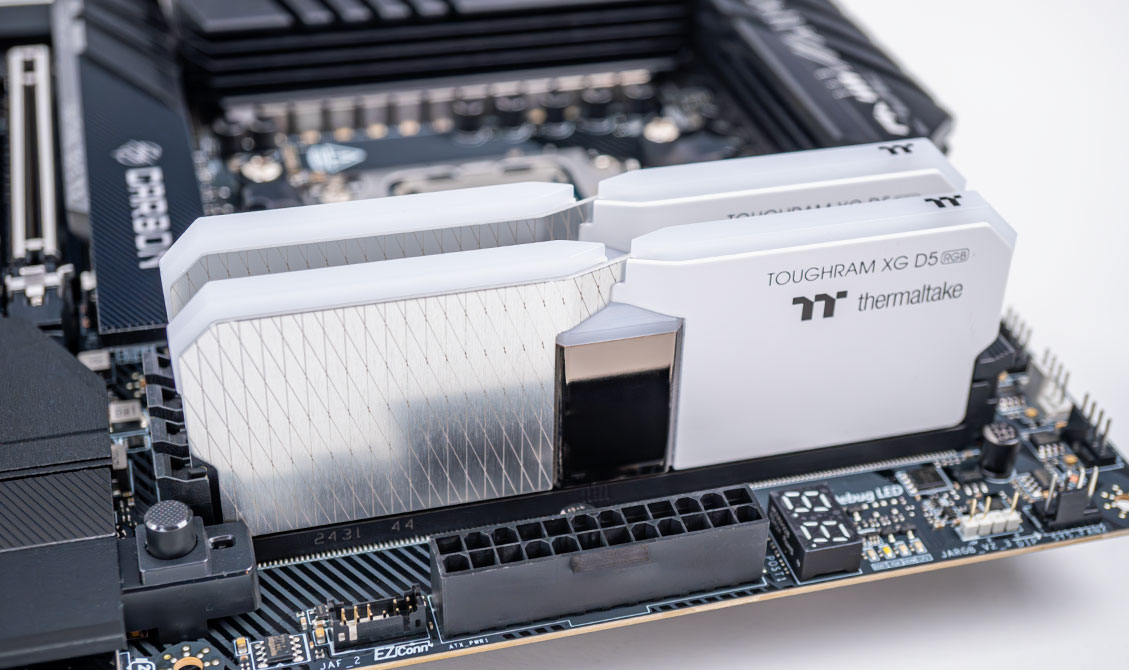
| Memory: | Thermaltake TOUGHRAM XG 2× 16 GB DDR5-6200 28-36-36-76 UCLK 1:1 |
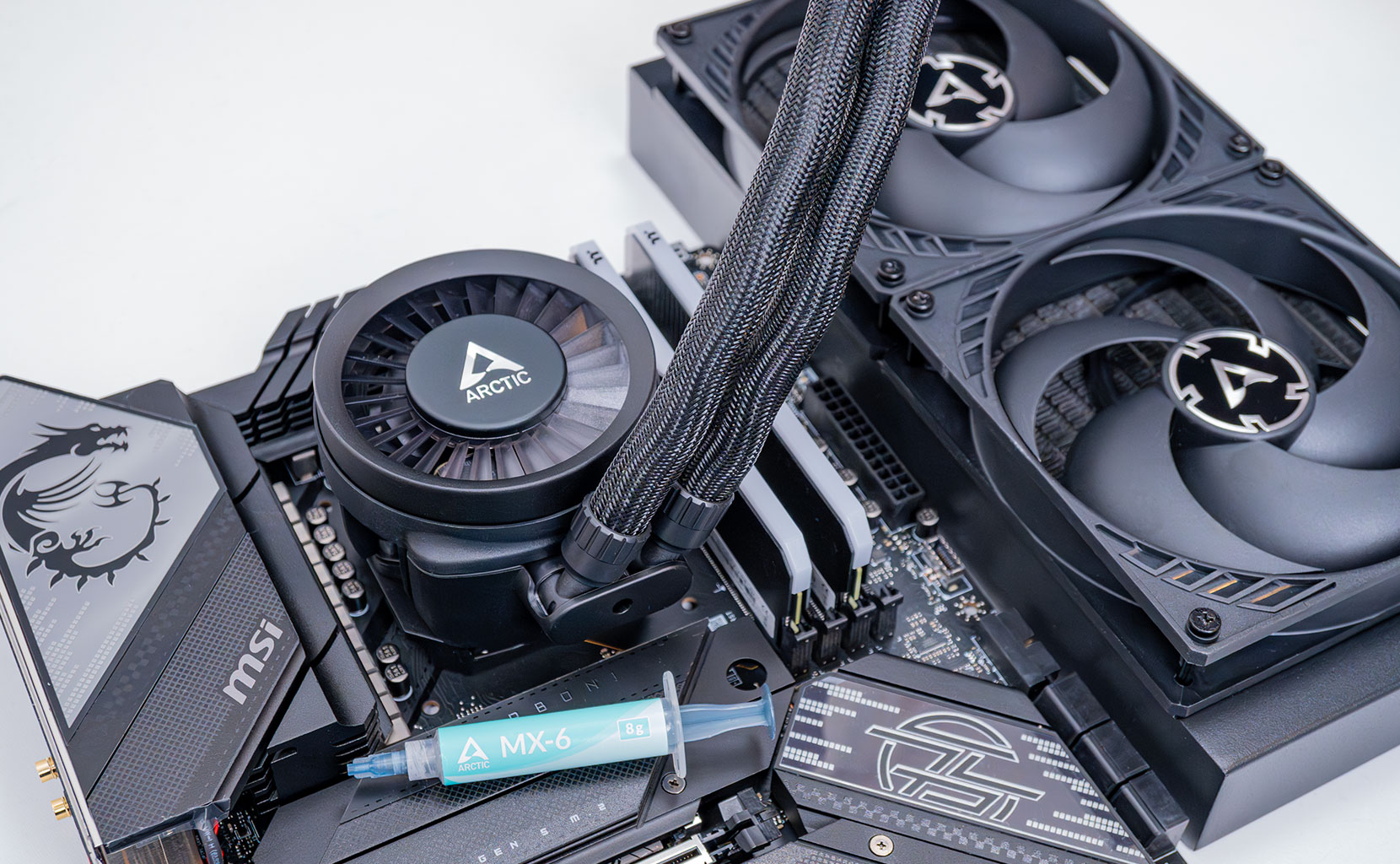
| Cooling: | Arctic Liquid Freezer III 280 mm AIO |
| Thermal Paste: | Arctic MX-6 |
| Storage: | 4 TB M.2 NVMe SSD |
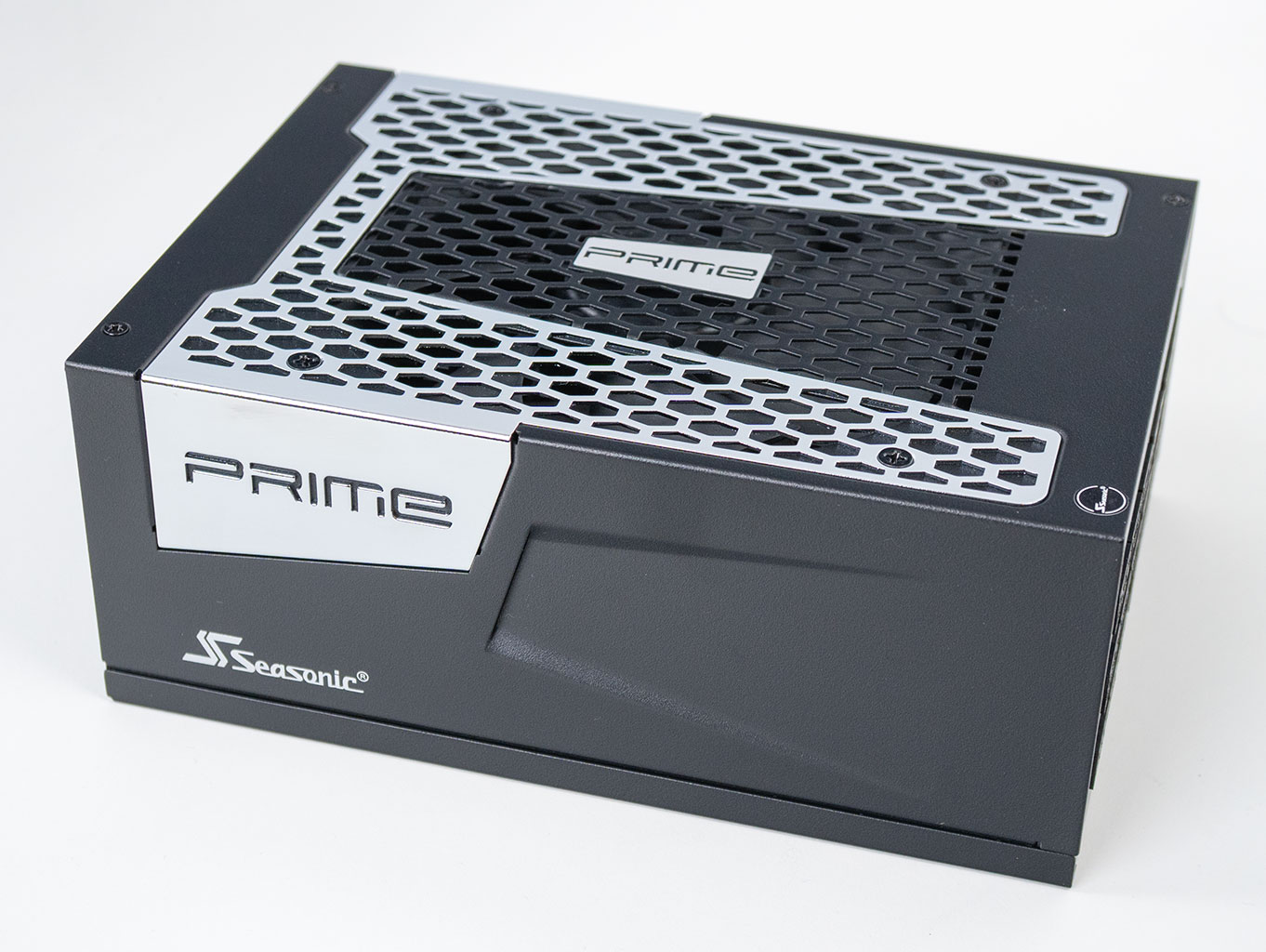
| Power Supply: | Seasonic Prime TX 1600 W ATX 3.1 / 2x 16-pin 12VHPWR |
| Case: | darkFlash DY470 |
| Operating System: | Windows 11 Professional 64-bit 25H2 VBS enabled (Windows 11 default) |
| Drivers: | RX 9070 GRE: 26.5.2 Press Driver NVIDIA: 596.49 WHQL AMD cards: 26.5.2 WHQL Intel: 101.8801 WHQL Date of Retest |
Our Patreon Silver Supporters can read articles in single-page format.
Nov 15th, 2026 07:34 CST
change timezone
Latest GPU Drivers
New Forum Posts
- So where’s y’all’s lowbie or noob finds? Do you think Amazon is to blame for spending 64 dollars on a 35 dollar R36S klone? Is it good or bad? (1)
- Is this anyhow possible, that a GPU (ROG Strix RX480 O8G) can crash the whole PC after "ReFlash" in normal Mode? (2)
- WarpCoreBench scores! (47)
- Optical Disc Drive owners club (216)
- Planning for Prolonged High Prices and Maintaining What You Already Have (73)
- What can the FX 8320 do today? Here is the answer. (55)
- Folding Pie and Milestones!! (10203)
- HP Office Jet 7740 Pro - Supply system problem with replacement cartridge (0)
- Stalker 2 is looking great. (260)
- AI generated images... (228)
Popular Reviews
- AMD Zen 6 Technical Deep Dive
- ASUS ROG Strix B850-I Gaming Wi-Fi7 W Review
- Corsair HX1000i Shift Crystal Review
- Upcoming Hardware Launches 2027 (Updated Nov 2026)
- Montech King 95 3D PRO Review
- NZXT C1200 Platinum Review
- NZXT H7 RGB+ Review
- NZXT H5 Review
- Phantom Blade Zero Performance Benchmark Review - 35 GPUs Tested
- AMD Ryzen 7 9800X3D Review - The Best Gaming Processor
TPU on YouTube
Controversial News Posts
- NVIDIA Co-Founder and CEO Jensen Huang Officially Resigns (411)
- OpenAI CEO Argues Home PCs Waste the World's Limited DRAM Supply (152)
- NVIDIA Launches Investigation Into Jensen Huang's Relationship With Suspected Chinese Spy (136)
- Intel "Raptor Lake Next" 16-Core and 20-Core CPUs Surface (130)
- Legendary Game Studio BioWare Shuts Down Following EA Layoffs (104)
- Dell CEO Says the Memory Shortage Will Get Worse in 2027 (95)
- Open Letter Asking NVIDIA to Reinstate Jensen Huang Passes 115,000 Signatures (91)
- NVIDIA GeForce RTX 50-Series Scheduled for up to $500 Price Hike This Week (89)