 42
ASUS MARS/2DI/4GD3 Dual GeForce GTX 285 4096 MB Review
(42 Comments) »Introduction

Even as the world economy isn't in a great shape, these are some of the best times to buy high-end hardware, simply because the level of competitiveness displayed by the computer hardware industry majors these days is unprecedented. ASUS is determined to lead from the front, with its newest high-end graphics card, out there to make a statement, that people are willing to shell out whatever it takes to have the best.
Today we present our take on the ASUS MARS Dual GeForce GTX 285 4 GB graphics accelerator. With this, ASUS is attempting to make a monster-truck out of an SUV, that which caters to the quintessential computer enthusiast. Specs-wise it goes beyond the the industry's fastest graphics accelerator, the GeForce GTX 295, in featuring two fully-potent GeForce GTX 285 GPUs packed into a dual-GPU design, each accessing 2 GB of memory with its 512-bit wide memory interface. It also attempts to not let common design constants of dual-GPU accelerators, such as limited cooling and overclocking potential, and system interconnect bandwidth get in the way of this being truly enthusiast-grade. What it also does for the first time, is enable a 4-way SLI of GeForce GTX 285 GPUs, when two of them are paired on an SLI-ready PC. Alas ASUS also had to play safe with today's market, and made this a limited-edition product, with only 1000 pieces being made in all.
This product definitely had a long run up before it finally showed up for a review. ASUS completed its design way back in May, but awaited launchpads such as Computex 2009. Delays continued as the company proceeded with mass-production, even as it faced some component shortages. It finally opened up for sales to the enthusiast community in August, and the company is believed to have cleared out "most" of its inventory. In the course of this, what the company managed was two things: build up ample hype around the product, especially based on the grounds that it's faster than the fastest, and is produced in a limited quantity. So it intended to let enthusiasts hold the top spots in scoreboards for a while. Secondly, its launch just about missed being "well timed" since NVIDIA is bracing itself for another onslaught from the red team, at least going by the hype it generated so far. We will factor this in our last word on this silicon monstrosity.
We have seen a couple of references of this card being called "GTX 295" online, this is simply not correct. While it is correct that it is a dual-GPU GeForce 200, all the major specs like ROPs, memory bus width and clocks point toward it being a dual GTX 285.
| Radeon HD 4890 | GeForce GTX 275 | GeForce GTX 280 | Radeon HD 4870 X2 | GeForce GTX 285 | GeForce GTX 295 | ASUS MARS GTX 285 | |
| Shader units | 800 | 240 | 240 | 2x 800 | 240 | 2x 240 | 2x 240 |
| ROPs | 16 | 32 | 32 | 2x 16 | 32 | 2x 28 | 2x 32 |
| GPU | RV790 | GT200 | GT200 | 2x RV770 | GT200b | 2x GT200b | 2x GT200b |
| Transistors | 959M | 1400M | 1400M | 2x 956M | 1400M | 2x 1400M | 2x 1400M |
| Memory Size | 1024 MB | 896 MB | 1024 MB | 2x 1024 MB | 1024 MB | 2x 896 MB | 2x 2048 MB |
| Memory Bus Width | 256 bit | 448 bit | 512 bit | 2x 256 bit | 512 bit | 2x 448 bit | 2x 512 bit |
| Core Clock | 850 MHz | 633 MHz | 602 MHz | 750 MHz | 648 MHz | 576 MHz | 648 MHz |
| Memory Clock | 975 MHz | 1134 MHz | 1107 MHz | 900 MHz | 1242 MHz | 999 MHz | 1152 MHz |
| Price | $249 | $249 | $329 | $429 | $340 | $500 | $1200 |
Packaging & Contents
We received a card only without retail packaging or other accessories. However, rest assured, it is a production board and not an engineering sample.The Card


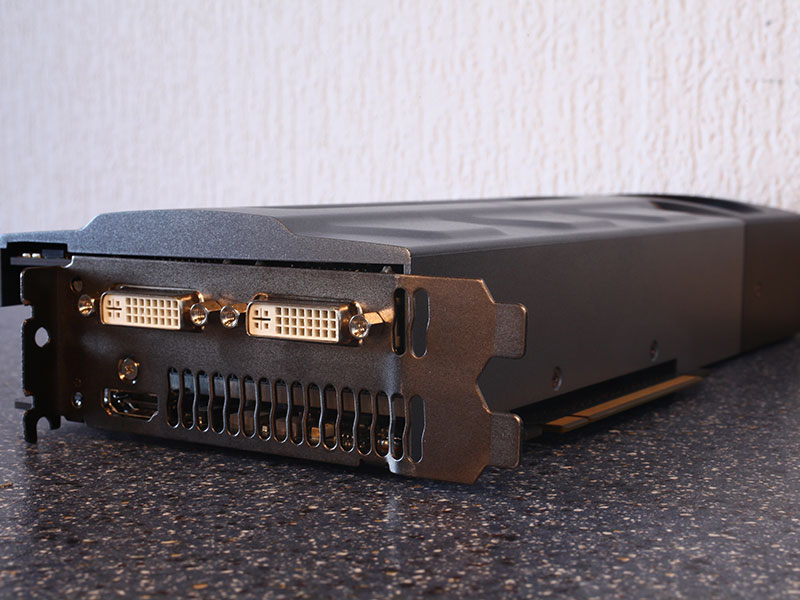
ASUS did away with the brick-like NVIDIA design to use their own cooler shroud which looks mighty good. Those little bulges on the silverish part of the cooler are probably to look like an engine? or six-pack ? Even though it is ultra powerful, ASUS has decided to go with a dual-slot design, probably to allow a large number of users to run this card in an SLI configuration.
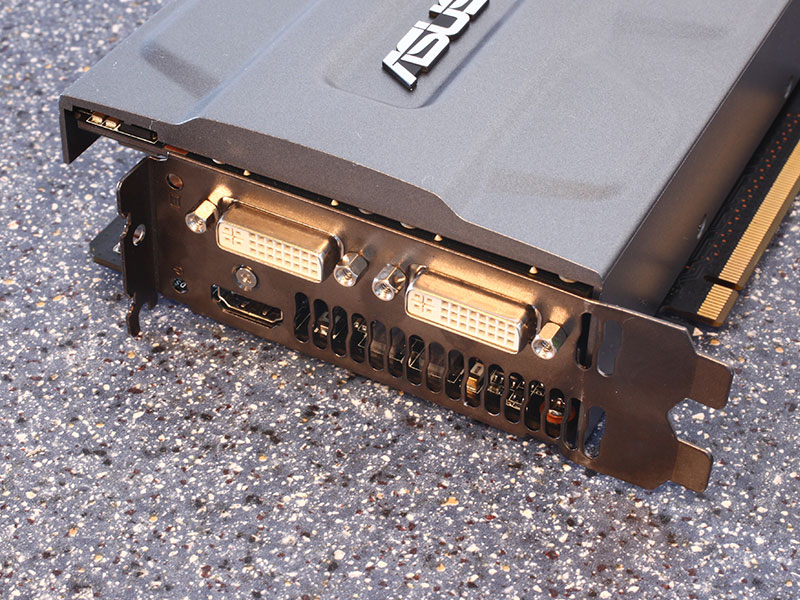
The card has two DVI ports and one HDMI port. Two DVI ports are standard on a high-end card today, the additional HDMI port is realized by using a display output from the second card and routing it to a HDMI output.
For HDMI Audio, NVIDIA requires you to feed an external audio source, for example from your motherboard's on-board audio, to the card via SPDIF cable. AMD on the other hand has integrated a sound device inside their GPUs which is the easier solution for most users.
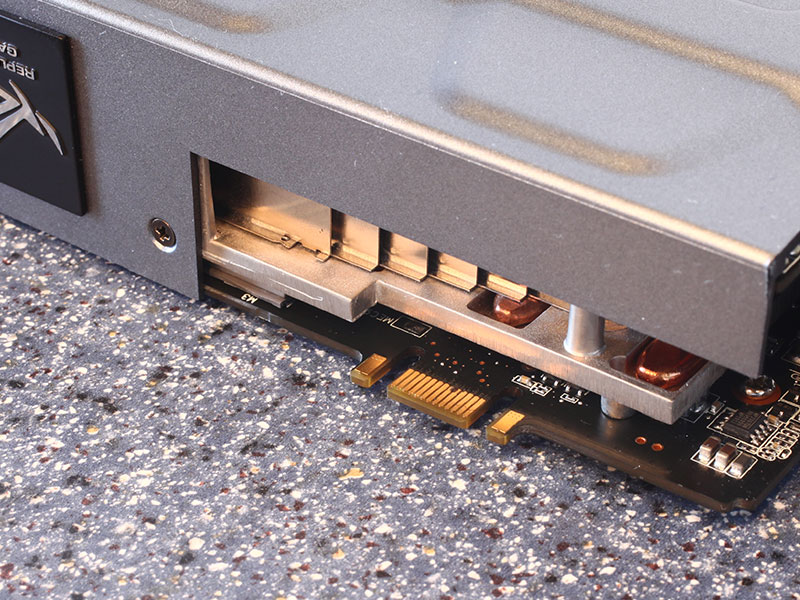
Being able to combine this card in SLI is one of the most important features for the majority of ASUS MARS customers.

Internally both PCBs are connected with two flexible cables that act as a SLI bridge between those two cards. When disassembling the cards, please note that those cables are pin sensitive, you can't rotate them 180°. Look for the triangle on PCB and cable, which is the place where pin 1 goes. It would have been better if ASUS had designed the cable in a way that allows only one orientation to be plugged in. When it happened to me, I disassembled my card four times and thought I broke it. Please also note that the cable is quite long, long enough to fit LN2 cooling or similar without a major headache.
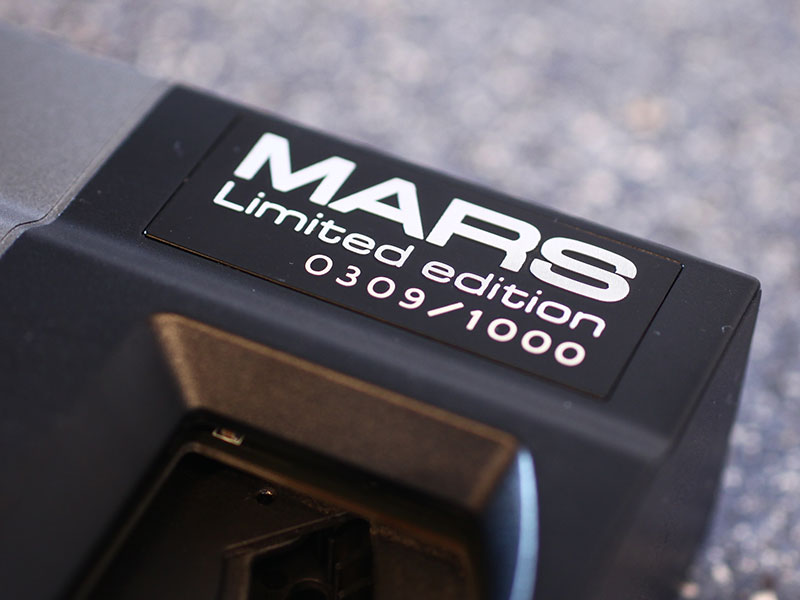
As we all know, the ASUS MARS is a limited edition product. With only 1000 made, some going to the press and most people buying two for SLI, the available supply is going to be quite limited.


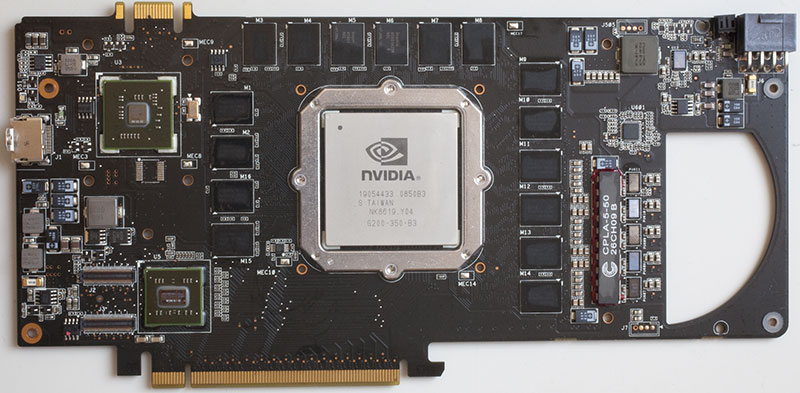
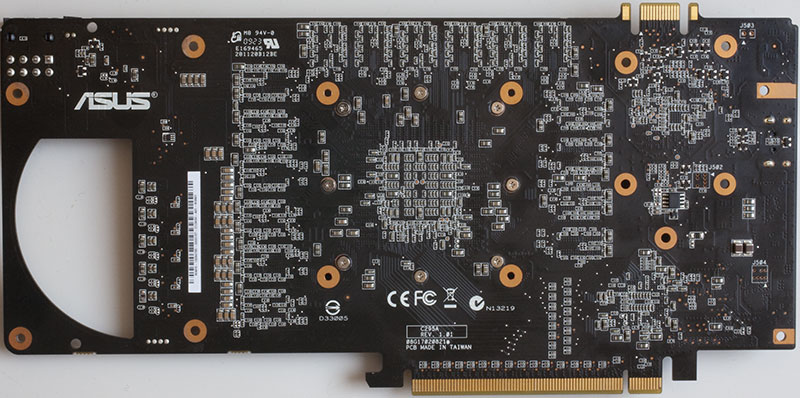
Here are the front and the back of the cards, high-res versions are also available (card 1 front, card 1 back, card 2 front, card 2 back). If you choose to use these images for voltmods etc, please include a link back to this site or let us post your article.
A Closer Look

Even though it looks like it, the holes next to the ASUS logo serve no purpose for the cooler's airflow. However, they help with circulation of air around components that are not actively cooled.

Just like on the GeForce GTX 295 dual PCB, a big metal heatsink is sandwiched between two PCBs to provide cooling for the whole card using a single heatsink and fan only.


The cooling module is essentially the same design like on the GeForce GTX 295 Dual-PCB, even though ASUS tells me that some refinements have been made to improve how the cooler handles the increased heat load.

That's how the card looks after disassembly. Notice the large number of the screws on the left side, I hope I didn't lose any and remember where they all go.

A ROG badge along the top edge of the card symbolizes that this card is part of the ASUS Republic of Gamers lineup - and it looks really nice.

A powerful card like this needs a lot of juice. That's why ASUS has put two 8-pin PCI-E power connectors on these cards. Considering a maximum power draw of over 450W per card this is absolutely necessary.
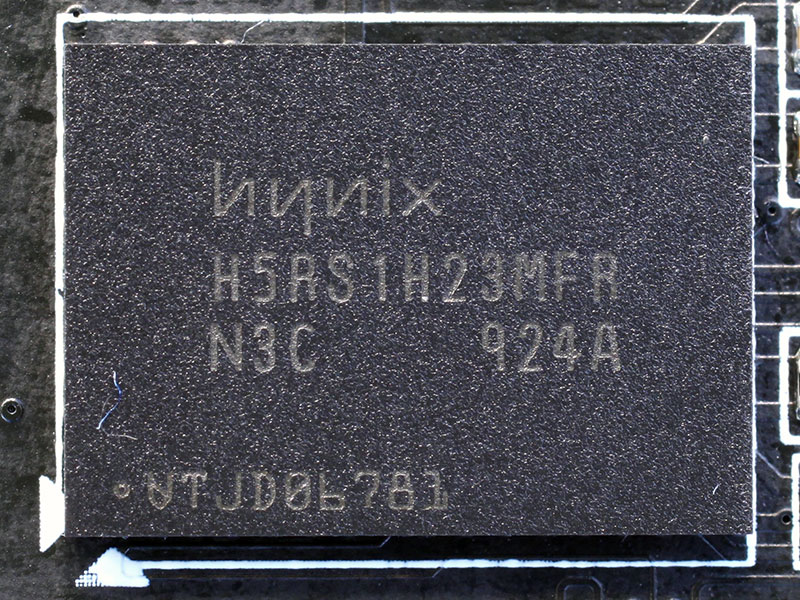
The GDDR3 memory chips are made by Hynix and carry the model number H5RS1H23MFR-N3C. With a cycle time of 0.77 ns, they are specified to run at 1300 MHz (2600 MHz GDDR3 effective). This is the fastest GDDR3 memory that money can buy, ASUS went all out here.
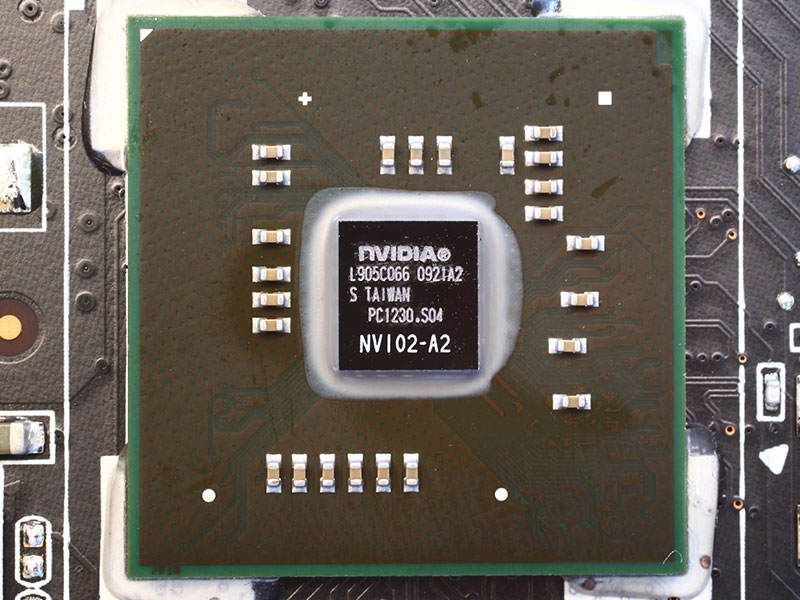

Just like the normal GTX 295, two NVIOs to drive displays...

.. an NForce 200 PCI-Express bridge chip, ...
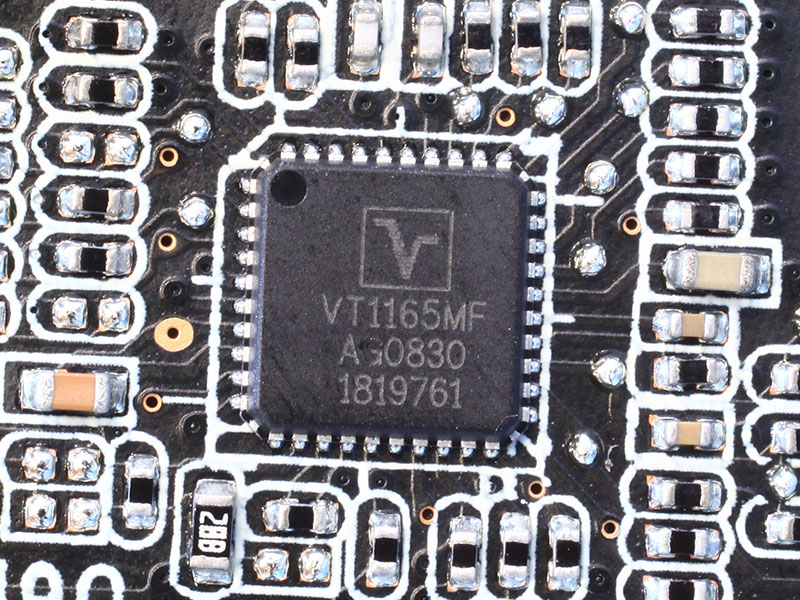
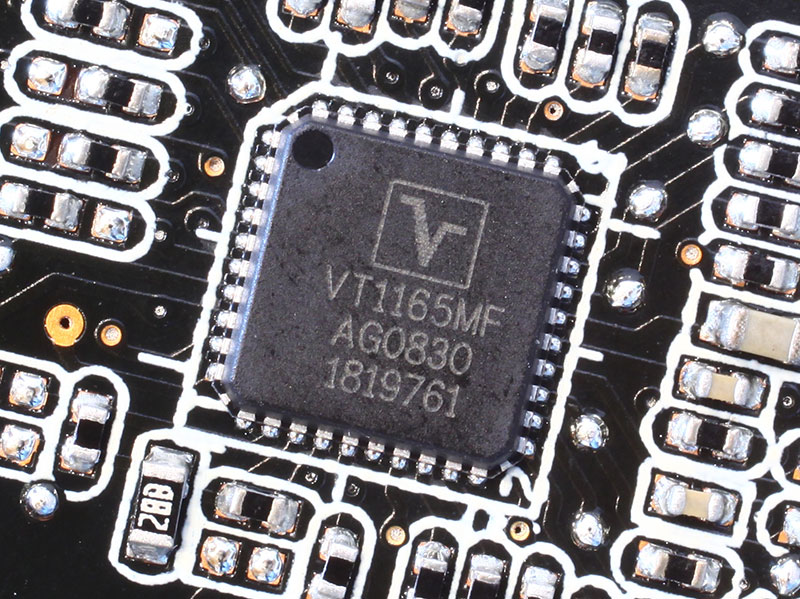
.. and a Volterra I2C software control capable voltage regulator per GPU. Those three are left unchanged from all the other GeForce GTX 295 cards, which is a good choice, there is nothing to improve here.

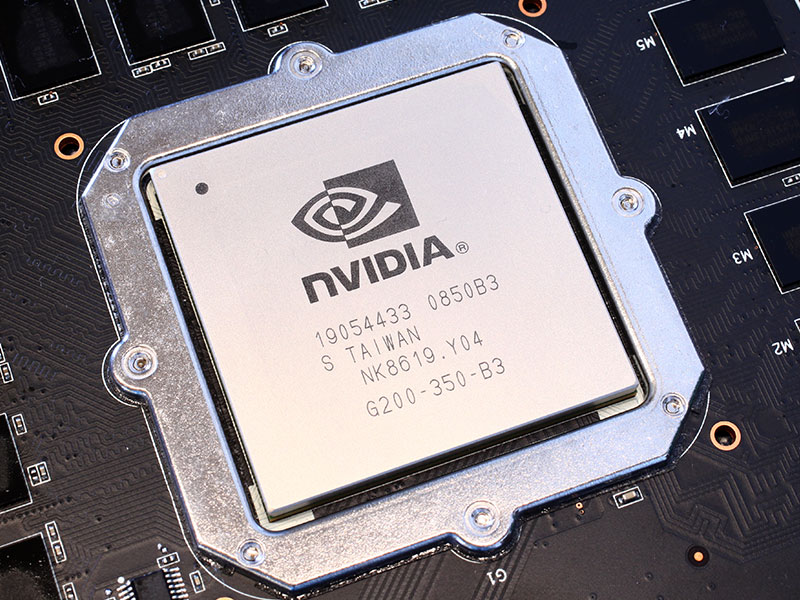
Here you can see NVIDIA's GT200 GPU that powers the GTX 2xx Series. Is is made in a 55 nm process at TSMC Taiwan with 1.4 billion transistors.
Our Patreon Silver Supporters can read articles in single-page format.
Nov 22nd, 2026 23:38 CST
change timezone
Latest GPU Drivers
New Forum Posts
- Last game you purchased? (1416)
- Honestly, do you care about GTA VI? (267)
- Anker SOLIX C2000 Gen 2 + PS400 Solarpanel (1)
- What are you playing? (26241)
- Increasing Power Limit? (9)
- DTS DCH Driver for Realtek HDA [DTS:X APO4 + DTS Interactive] (2818)
- UPS what one to get? (48)
- Your PC ATM (36458)
- Gacha Games - Discussions, Pulls, Updates, etc. (1157)
- Making a game in Godot engine (19)
Popular Reviews
- Microsoft Surface Laptop Ultra Review - The Next-gen Arm Laptop
- Corsair RM1200e (Second Generation) Review
- Upcoming Hardware Launches 2027 (Updated Nov 2026)
- Pulsar Office Tour & First Look at P1 Dual-Sensor Mouse
- Ugreen NASync DXP4800 GT Review
- AMD Ryzen 7 9800X3D Review - The Best Gaming Processor
- AMD Zen 6 Technical Deep Dive
- AMD Ryzen 7 5800X3D 10th Anniversary Review
- Phantom Blade Zero Performance Benchmark Review - 35 GPUs Tested
- Biwin Black Opal NV7400 2 TB Review
TPU on YouTube
Controversial News Posts
- NVIDIA Co-Founder and CEO Jensen Huang Officially Resigns (492)
- Report: Jensen Huang Eyes NVIDIA Comeback (266)
- Open Letter Asking NVIDIA to Reinstate Jensen Huang Passes 115,000 Signatures (184)
- OpenAI CEO Argues Home PCs Waste the World's Limited DRAM Supply (152)
- NVIDIA Launches Investigation Into Jensen Huang's Relationship With Suspected Chinese Spy (136)
- Intel "Raptor Lake Next" 16-Core and 20-Core CPUs Surface (130)
- NVIDIA GeForce RTX 50-Series Scheduled for up to $500 Price Hike This Week (89)
- Intel Razor Lake Gets a 12 P-Core bLLC Chip With No E-Cores, Per Leak (86)