 148
ASUS Radeon RX 6600 XT STRIX OC Review
(148 Comments) »Introduction

While it was announced two weeks ago, only today are we allowed to share our review of the ASUS ROG RX 6600 XT STRIX OC. We have reviews for additional RX 6600 XT cards ready, but due to the AMD NDA regulations, "reviews not managed by AMD aren't allowed to be posted until tomorrow." Aimed solely at the vast majority of those who still game at Full HD (1080p), the RX 6600 XT is designed for AAA gaming at 1080p at conventional refresh rates, or certain e-sports titles at higher refresh rates. The RX 6600 XT meets all DirectX 12 Ultimate logo requirements, meaning it's capable of raytracing. With AMD's recent introduction of FidelityFX Super Resolution (FSR), AMD claims that raytracing with fairly high eye-candy should be possible with this card, made more playable with FSR.
The Radeon RX 6600 XT debuts AMD's smallest GPU of this generation to the desktop consumer graphics segment, the 7 nm Navi 23. Based on the company's latest RDNA 2 graphics architecture, this silicon packs up to 2,048 of the latest-generation graphics cores, up to 32 Ray Accelerators, 128 TMUs, and 32 ROPs. AMD has taken an interesting approach to memory, which should pay big dividends if it ever engages in a price war with NVIDIA in the lower end of this segment: 8 GB is the standard memory size, but over a 128-bit wide GDDR6 memory interface. At a speed of 16 Gbps, this works out to a raw memory bandwidth of 256 GB/s. Giving this a boost is 32 MB of fast Infinity Cache memory located on the GPU die.

Across the fence, the Radeon RX 6600 XT finds competition in the Ampere-based GeForce RTX 3060, which is popular not just because it's the most affordable RTX 30-series card in the retail market, but also since it's the least overpriced option from scalping. Still, the Radeon RX 6600 XT debuts at a not-so-affordable starting MSRP of $379, and there are no reference-design cards, which is why our first review is of this ASUS ROG STRIX card. To put this price into perspective, the RX 6600 XT is about 36% pricier than its predecessor, the RX 5600 XT, which launched at $279, and 283% pricier than the RX 560. Scalpers will certainly drive up prices further because AMD has confirmed that supply of the RX 6600 XT will be challenging after launch. Our estimate based on the current market situation is that RX 6600 XT will end up selling for around $650.
The ASUS ROG STRIX OC RX 6600 XT debuts a brand-new dual-fan cooling solution that retains the design language of the ROG STRIX cards from this generation, but in a more compact form factor. It uses a dense aluminium fin-stack heatsink with four direct-touch heat pipes, two Axial Tech fans, an RGB LED lighting element, and other premium features, like Dual BIOS. It also comes with ASUS's highest factory OC for the RX 6600 XT in the performance-oriented "P-mode" BIOS. The "Q-mode" BIOS is designed for low-noise gaming. ASUS is pricing the ROG STRIX RX 6600 XT O8G at a starting price of $550, so $170 higher than the AMD MSRP.
| Price | Cores | ROPs | Core Clock | Boost Clock | Memory Clock | GPU | Transistors | Memory | |
|---|---|---|---|---|---|---|---|---|---|
| RX 5600 XT | $500 | 2304 | 64 | 1375 MHz | 1560 MHz | 1500 MHz | Navi 10 | 10300M | 6 GB, GDDR6, 192-bit |
| RTX 2060 | $500 | 1920 | 48 | 1365 MHz | 1680 MHz | 1750 MHz | TU106 | 10800M | 6 GB, GDDR6, 192-bit |
| RX 5700 | $750 | 2304 | 64 | 1465 MHz | 1625 MHz | 1750 MHz | Navi 10 | 10300M | 8 GB, GDDR6, 256-bit |
| RTX 2060 Super | $650 | 2176 | 64 | 1470 MHz | 1650 MHz | 1750 MHz | TU106 | 10800M | 8 GB, GDDR6, 256-bit |
| RX Vega 64 | $600 | 4096 | 64 | 1247 MHz | 1546 MHz | 953 MHz | Vega 10 | 12500M | 8 GB, HBM2, 2048-bit |
| RX 5700 XT | $800 | 2560 | 64 | 1605 MHz | 1755 MHz | 1750 MHz | Navi 10 | 10300M | 8 GB, GDDR6, 256-bit |
| RTX 2070 | $650 | 2304 | 64 | 1410 MHz | 1620 MHz | 1750 MHz | TU106 | 10800M | 8 GB, GDDR6, 256-bit |
| RTX 3060 | $550 | 3584 | 48 | 1320 MHz | 1777 MHz | 1875 MHz | GA106 | 13250M | 12 GB, GDDR6, 192-bit |
| RTX 2070 Super | $700 | 2560 | 64 | 1605 MHz | 1770 MHz | 1750 MHz | TU104 | 13600M | 8 GB, GDDR6, 256-bit |
| Radeon VII | $800 | 3840 | 64 | 1400 MHz | 1800 MHz | 1000 MHz | Vega 20 | 13230M | 16 GB, HBM2, 4096-bit |
| RX 6600 XT | $650 MSRP: $380 | 2048 | 64 | 2359 MHz | 2589 MHz | 2000 MHz | Navi 23 | 11060M | 8 GB, GDDR6, 128-bit |
| ASUS RX 6600 XT STRIX OC | $700 MSRP: $550 | 2048 | 64 | 2428 MHz | 2607 MHz | 2000 MHz | Navi 23 | 11060M | 8 GB, GDDR6, 128-bit |
| RTX 2080 | $750 | 2944 | 64 | 1515 MHz | 1710 MHz | 1750 MHz | TU104 | 13600M | 8 GB, GDDR6, 256-bit |
| RTX 2080 Super | $800 | 3072 | 64 | 1650 MHz | 1815 MHz | 1940 MHz | TU104 | 13600M | 8 GB, GDDR6, 256-bit |
| RTX 3060 Ti | $700 | 4864 | 80 | 1410 MHz | 1665 MHz | 1750 MHz | GA104 | 17400M | 8 GB, GDDR6, 256-bit |
| RX 6700 XT | $770 | 2560 | 64 | 2424 MHz | 2581 MHz | 2000 MHz | Navi 22 | 17200M | 12 GB, GDDR6, 192-bit |
| RTX 2080 Ti | $1100 | 4352 | 88 | 1350 MHz | 1545 MHz | 1750 MHz | TU102 | 18600M | 11 GB, GDDR6, 352-bit |
| RTX 3070 | $1000 | 5888 | 96 | 1500 MHz | 1725 MHz | 1750 MHz | GA104 | 17400M | 8 GB, GDDR6, 256-bit |
| RTX 3070 Ti | $1100 | 6144 | 96 | 1575 MHz | 1770 MHz | 1188 MHz | GA104 | 17400M | 8 GB, GDDR6X, 256-bit |
| RX 6800 | $1300 | 3840 | 96 | 1815 MHz | 2105 MHz | 2000 MHz | Navi 21 | 26800M | 16 GB, GDDR6, 256-bit |
Packaging


The Card


ASUS did a great job miniaturizing their latest ROG design language to a much more compact design. The dominating colors are black and various shades of gray. On the back, you'll find a high-quality metal backplate.


Dimensions of the card are 25.5 x 13.5 cm, and it weighs 866 g.


Installation requires three slots in your system.

Display connectivity includes three standard DisplayPort 1.4 and one HDMI 2.1. Display and media capabilities are identical to the rest of the RDNA 2 family.

The card has one 8-pin power input. This configuration is rated for up to 225 W of power draw.

The AMD Radeon RX 6600 series doesn't support multi-GPU. ASUS has placed their dual BIOS switch here. The default setting is "P" for "Performance," and the secondary setting is "Q" for "Quiet Mode."
Teardown


The ASUS RX 6600 XT STRIX OC uses an interesting design we're not seeing very often. The fans and cooler shroud are one assembly, and the heatsink base with the heatpipes and fins are separate. This makes it very easy to replace fans, if they die for whatever reason.
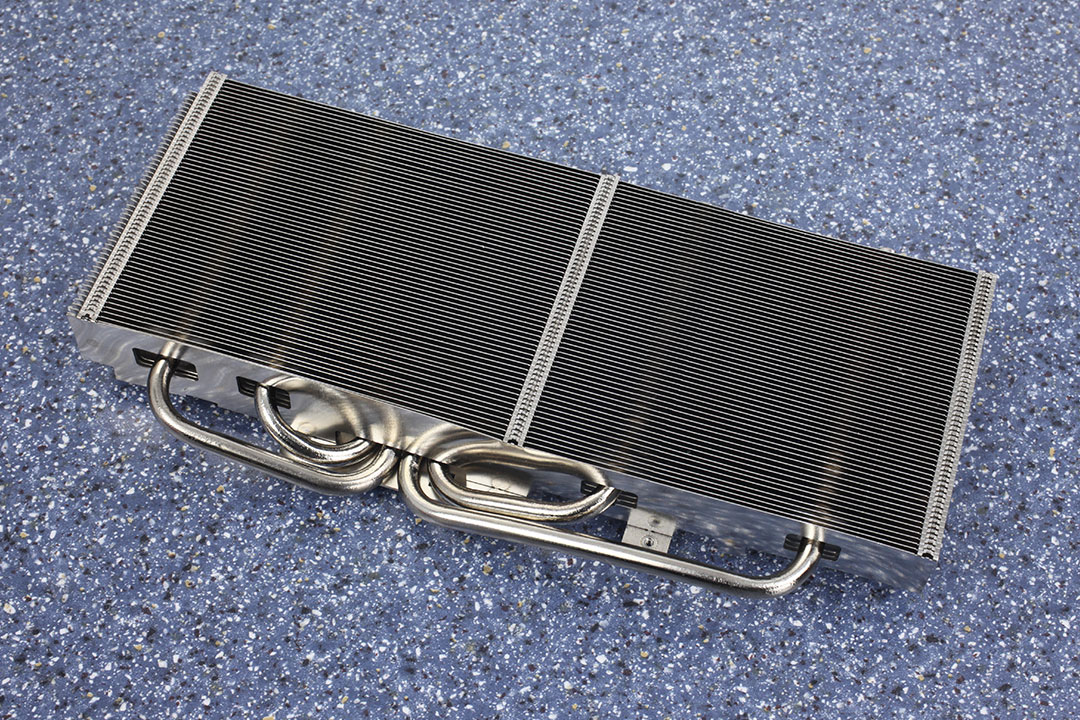

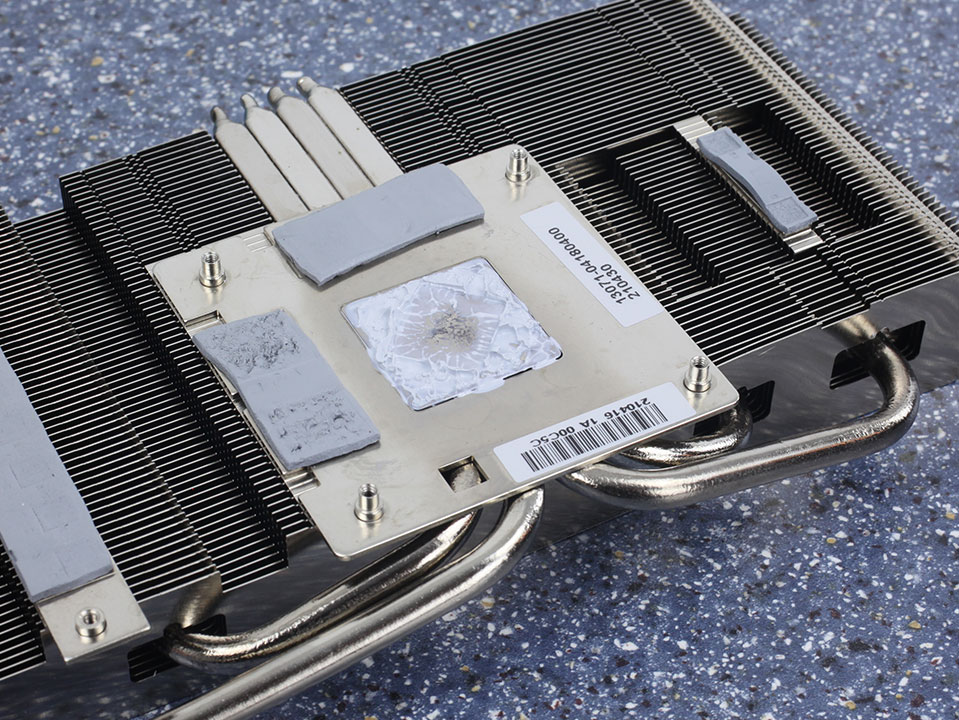
The heatsink provides cooling not only for the GPU, but the VRM circuitry and memory chips, too. The thermal pads for the memory are 1.8 mm thick, and those for the VRM are 2.0 mm thick.

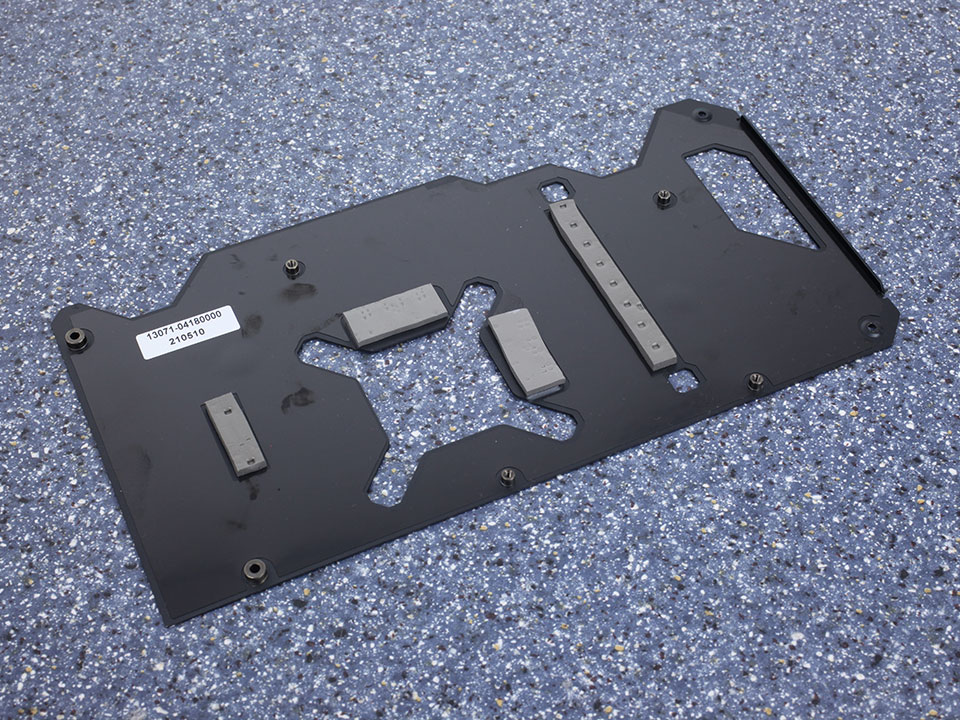
The backplate is made out of metal and protects the card against damage during installation and handling. The thermal pads on the back are 3.7 mm thick.
High-resolution PCB Pictures
These pictures are for the convenience of volt modders and people who would like to see all the finer details on the PCB. Feel free to link back to us and use these in your articles, videos, or forum posts.

High-res versions are also available (front, back).
Our Patreon Silver Supporters can read articles in single-page format.
Nov 21st, 2026 04:41 PST
change timezone
Latest GPU Drivers
New Forum Posts
- WarpCoreBench scores! (88)
- What's your latest tech Freebie? (86)
- TPU's Nostalgic Hardware Club (22179)
- [Poll] 12V-2x6 Connector Protection: What Are You Using? (WireView / Ampinel / Equalizer / Other / Nothing) (50)
- UPS what one to get? (1)
- Anthrophics IPO (28)
- RX 9000 series GPU Owners Club (2252)
- Windows 11 General Discussion (7743)
- Without Jensen, PC gaming will be (52)
- Zen 3 IF/IMC degradation (242)
Popular Reviews
- Microsoft Surface Laptop Ultra Review - The Next-gen Arm Laptop
- Ugreen NASync DXP4800 GT Review
- Corsair RM1200e (Second Generation) Review
- Pulsar Office Tour & First Look at P1 Dual-Sensor Mouse
- Upcoming Hardware Launches 2027 (Updated Nov 2026)
- Acemagic Retro X3 Review
- Biwin Black Opal NV7400 2 TB Review
- AMD Ryzen 7 9800X3D Review - The Best Gaming Processor
- AMD Zen 6 Technical Deep Dive
- Chieftec Iceberg PRO 360 DARK Review
TPU on YouTube
Controversial News Posts
- NVIDIA Co-Founder and CEO Jensen Huang Officially Resigns (491)
- Report: Jensen Huang Eyes NVIDIA Comeback (257)
- Open Letter Asking NVIDIA to Reinstate Jensen Huang Passes 115,000 Signatures (184)
- OpenAI CEO Argues Home PCs Waste the World's Limited DRAM Supply (152)
- NVIDIA Launches Investigation Into Jensen Huang's Relationship With Suspected Chinese Spy (136)
- Intel "Raptor Lake Next" 16-Core and 20-Core CPUs Surface (130)
- Legendary Game Studio BioWare Shuts Down Following EA Layoffs (104)
- NVIDIA GeForce RTX 50-Series Scheduled for up to $500 Price Hike This Week (89)