 13
ASUS ROG GR70 Mini PC Review
(13 Comments) »Introduction

The ROG GR70 is ASUS taking the Mini-PC format and packing it with hardware usually found in a high-end gaming laptop. It stands vertically, has the big ROG side panel and lighting, and uses an RTX 5070 Laptop GPU instead of relying on integrated graphics like most smaller systems. The closest comparison in my charts is the MINISFORUM AtomMan G7 Pro, since both are compact RTX 5070 Laptop systems with chunky external power bricks and enough gaming performance to sit next to a monitor instead of under a desk.
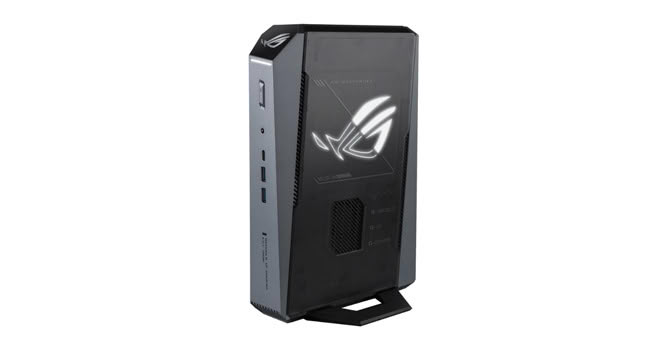
Our pre-production unit reports a Ryzen 9 9955HX3D in HWiNFO, with 16 cores, 32 threads, Zen 5 architecture, and ASUS' listed 70 W cTDP for the GR70 platform. ASUS pairs the closest retail configuration with 32 GB of DDR5-5600 memory in dual-channel, while our review sample shipped with 64 GB. Storage is also split between the retail listing and our sample: ASUS lists a 2 TB PCIe 4.0 SSD for the retail model, while our unit came with a Samsung PM9E1 PCIe Gen 5 SSD.
The RTX 5070 Laptop GPU (8 GB of GDDR7, with a 100 W target and another 15 W available through Dynamic Boost) is where the GR70 becomes especially relevant to our chart set, since the MINISFORUM AtomMan G7 Pro uses the same GPU class alongside Intel's Core i9-14900HX. The NZXT H2 gives us a—much larger—comparison point with its Core Ultra i9-285K and RTX 5080, but the more direct fight is against the AtomMan G7 Pro because both systems use compact hardware to deliver high-end gaming performance.
Connectivity is good for a compact gaming system, with one front USB-C port, two front USB-A ports, four rear USB-A ports, one rear USB4 Type-C port with DisplayPort 1.4, two HDMI 2.1 ports, two DisplayPort 2.1 ports, 2.5GbE, Wi-Fi 7, Bluetooth 5.4, and support for up to five displays at once. It also uses a 330 W external adapter and measures 282.4 by 187.7 by 56.6 mm.
ASUS confirmed a few final spec details during the review process. The RTX 5070 Laptop GPU uses 8 GB of GDDR7, and the final I/O layout is one front USB-C port, two front USB-A ports, four rear USB-A ports, and one rear USB-C port. The rear Type-C port is USB4, not Thunderbolt 4. Our pre-production unit reports a Ryzen 9 9955HX3D in HWiNFO, so I am listing the CPU based on the review unit tested. ASUS also confirmed that the closest retail model is the GR70-N90066AN at $2,800, with the main confirmed difference being memory: our unit has 64 GB, while the highest retail configuration currently ships with 32 GB.
| Specifications | |
|---|---|
| CPU | AMD Ryzen 9 9955HX3D Processor in our review unit 16 cores/32 threads ASUS lists 70 W cTDP for the GR70 platform |
| GPU | Integrated AMD Radeon 610M Graphics NVIDIA GeForce RTX 5070 Laptop GPU 8 GB GDDR7 100 W + 15 W Dynamic Boost |
| Memory | 64 GB DDR5-5600 SO-DIMM in our pre-production review unit Closest retail configuration: 32 GB DDR5-5600, 2x 16 GB Up to 96 GB supported Dual SO-DIMM slots |
| Storage | 2 TB Samsung PM9E1 M.2 NVMe PCIe Gen 5 SSD in our review unit Official retail listing: 2 TB M.2 NVMe PCIe 4.0 SSD M.2 2280 NVMe PCIe 4.0 x4 support M.2 2280 NVMe PCIe 5.0 x4 support |
| Display Outputs | 2x HDMI 2.1, up to 4K@60 Hz 2x DisplayPort 2.1 1x USB4 Type-C with DisplayPort 1.4 Supports up to 5 displays simultaneously |
| Connectivity | Front I/O: 1x USB 3.2 Gen 2 Type-C, 2x USB-A, 3.5 mm audio jack, power button, LED light bar, ROG ARGB LED panel |
| Networking | 2.5 GbE Ethernet Wi-Fi 7 Bluetooth 5.4 |
| Cooling | Custom cooling system |
| Operating System | Windows 11 Home |
| Power Supply | 330 W adapter Power cord |
| Dimensions | 282.4 x 187.7 x 56.6 mm |
| Weight | 2.75 kg |
| Color | Star Grey |
| Accessories | AC adapter Power cord User manual Warranty card |
| Pricing | $2,800 for the closest retail configuration, GR70-N90066AN * Pricing is reflected at the time of publication |
Packaging and Contents
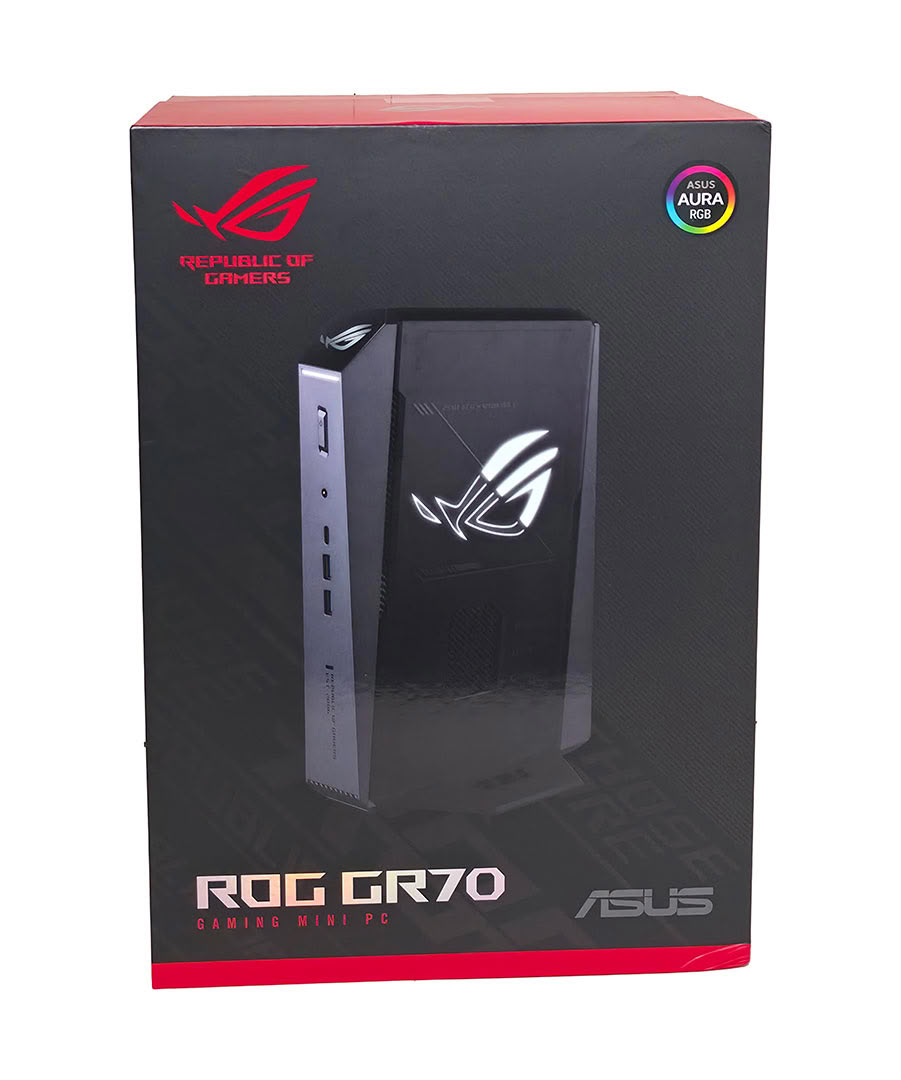
The GR70 comes in a big ROG retail box with the usual black-and-red styling, a photo of the system on the front, Republic of Gamers branding, and an ASUS Aura RGB badge. It looks like a gaming desktop box, which fits because this is a much heavier system than the small office
Mini-PCs I usually handle.
Inside, ASUS uses thick black foam inserts to keep the GR70 locked in place during shipping. The accessory box is tucked underneath the system, so you see it after lifting the main unit out. The system has real heft the moment you pick it up, with ASUS listing the weight at 2.75 kg, or about 6.06 lb. It feels dense and solid.
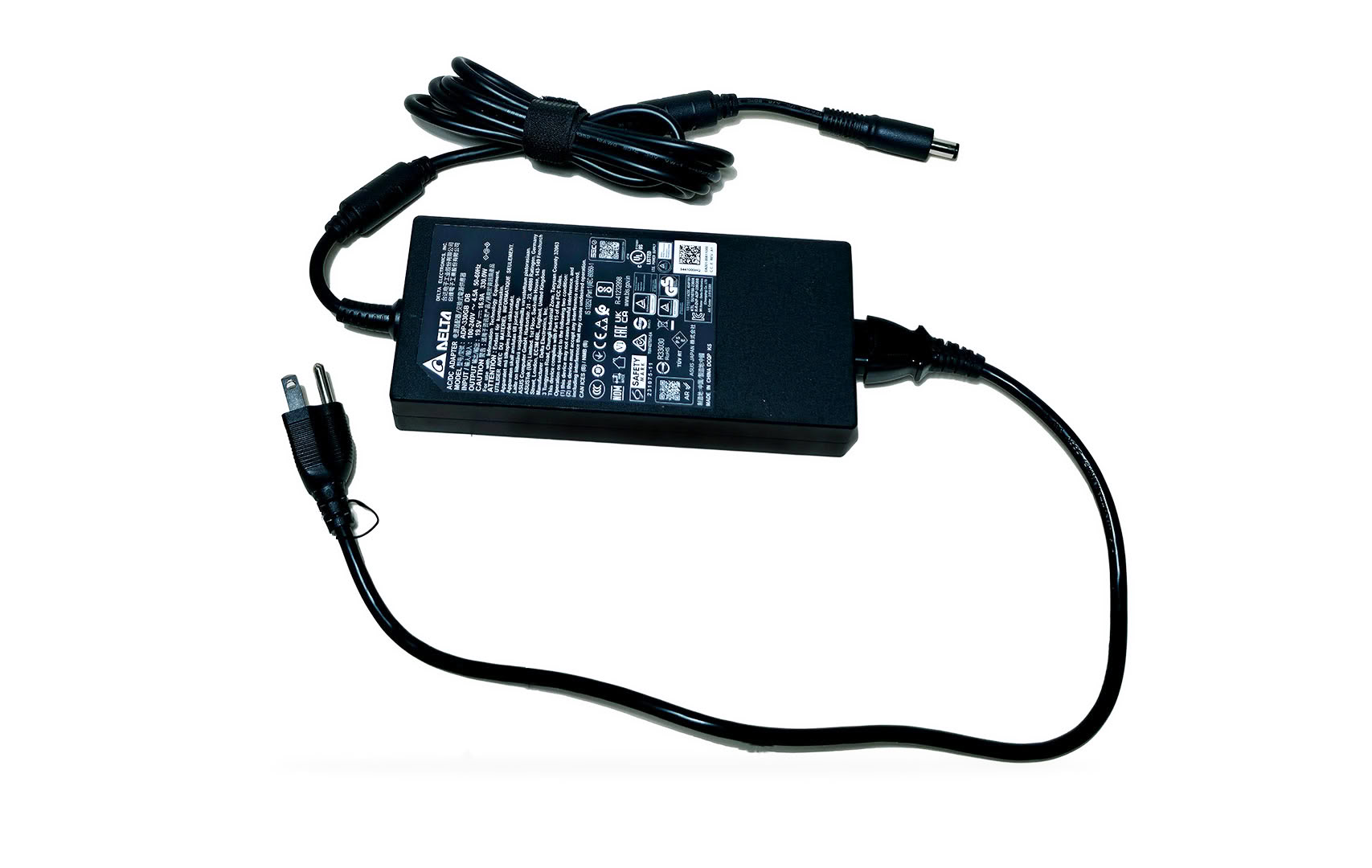
The accessory bundle is basic: a 330 W power adapter, power cord, user manual, and warranty card. There is not much else in the box, but for this type of system, the important piece is really that large power brick.
Design and Build
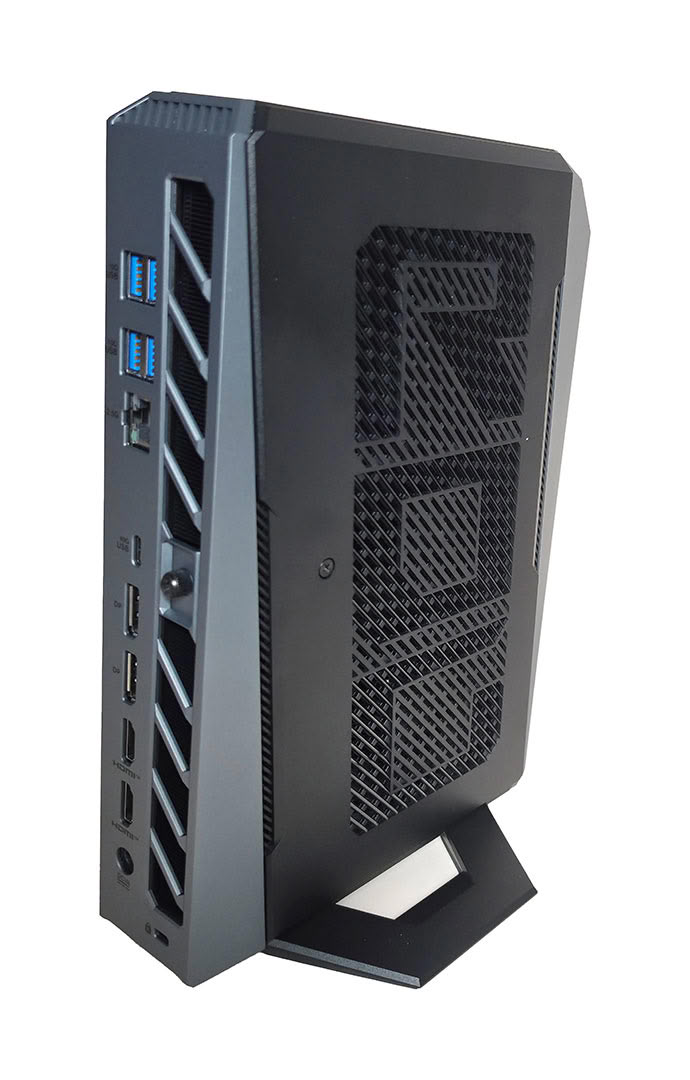
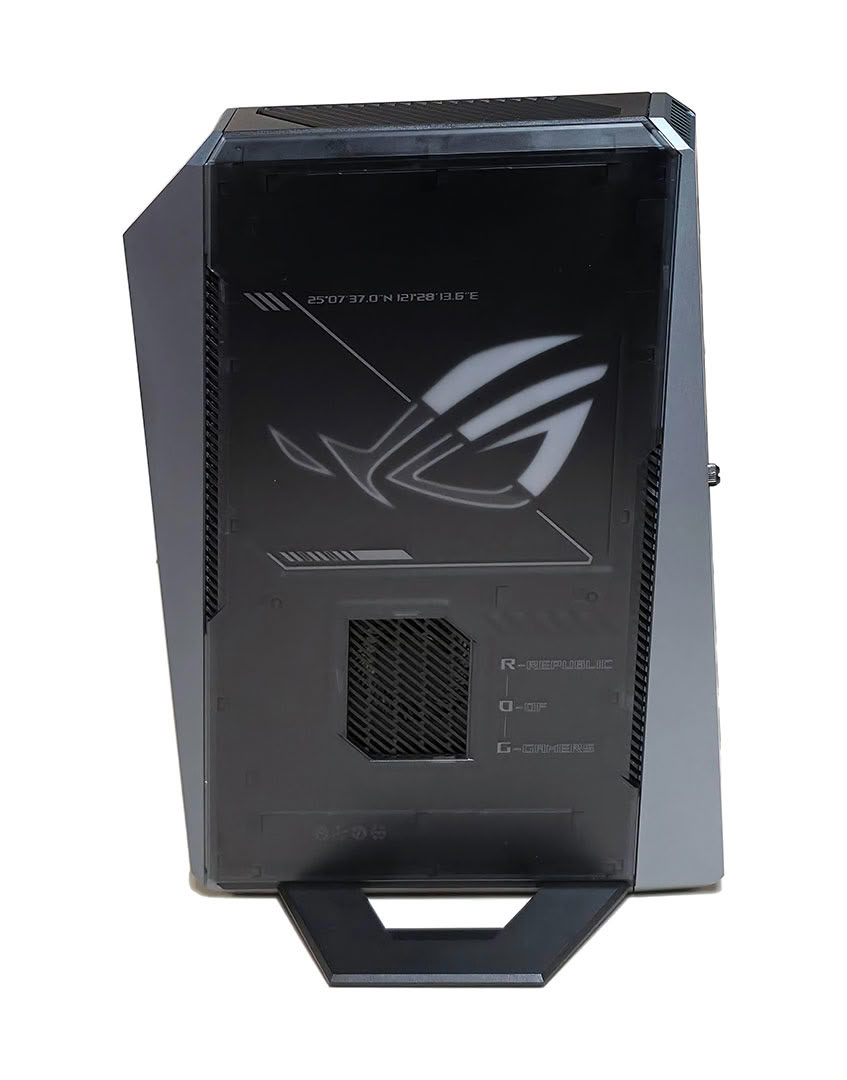
The ASUS ROG GR70 has a much taller and slimmer shape than the square Mini-PCs we usually see, using a vertical layout with a stand instead of a flat desktop footprint. This layout is common for compact systems with discrete graphics because it gives the hardware more room for cooling without taking over the desk. The design looks good overall, with a large ROG logo on the side panel and LED lighting that works nicely against the darker gray frame.
With dimensions of 282.4 mm tall, 187.7 mm deep, and 56.6 mm wide, the GR70 is narrow enough to fit into tighter desk setups while still leaving enough internal volume for higher-power hardware. That extra space is needed because this system uses a Ryzen 9 9955HX3D and an RTX 5070 Laptop GPU rated at 100 W, with another 15 W available through Dynamic Boost. The side venting and rear exhaust give the CPU and GPU a proper airflow path, which is important for a compact system drawing far more power than a typical low-power Mini-PC.
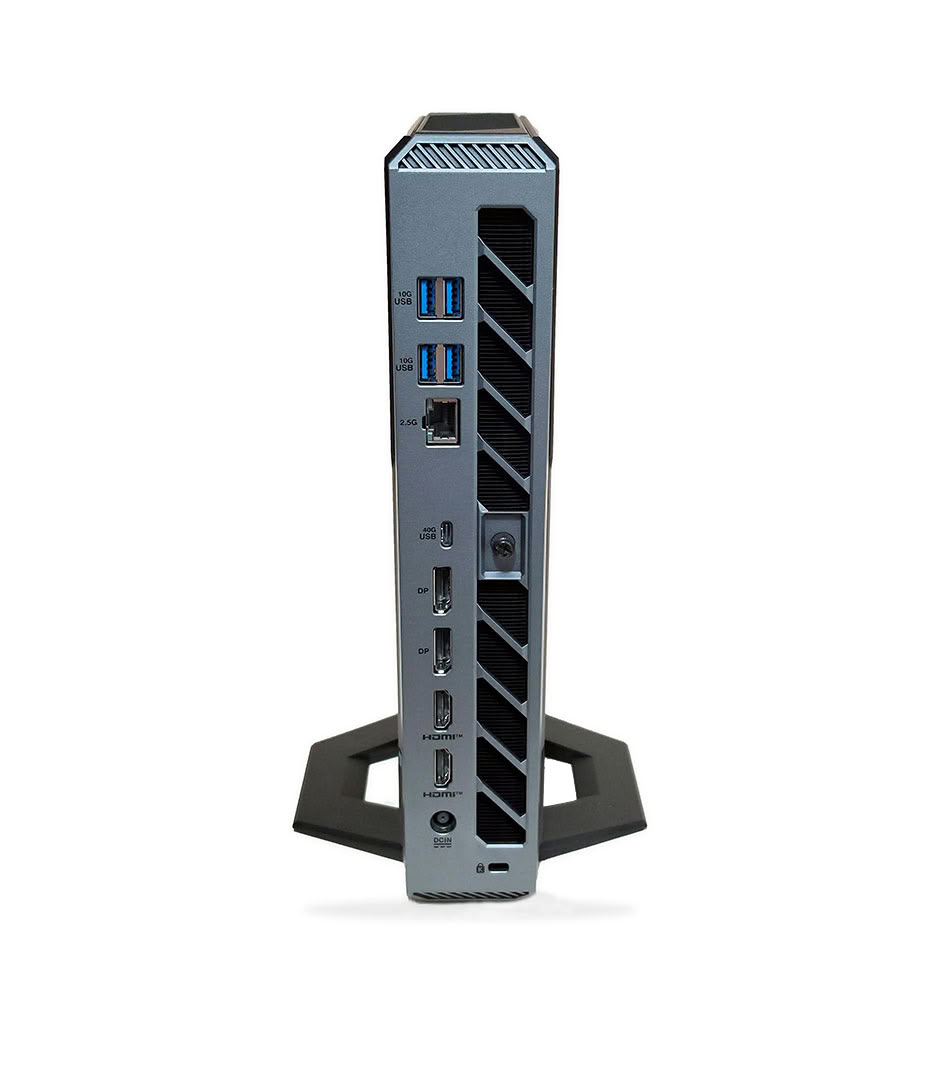
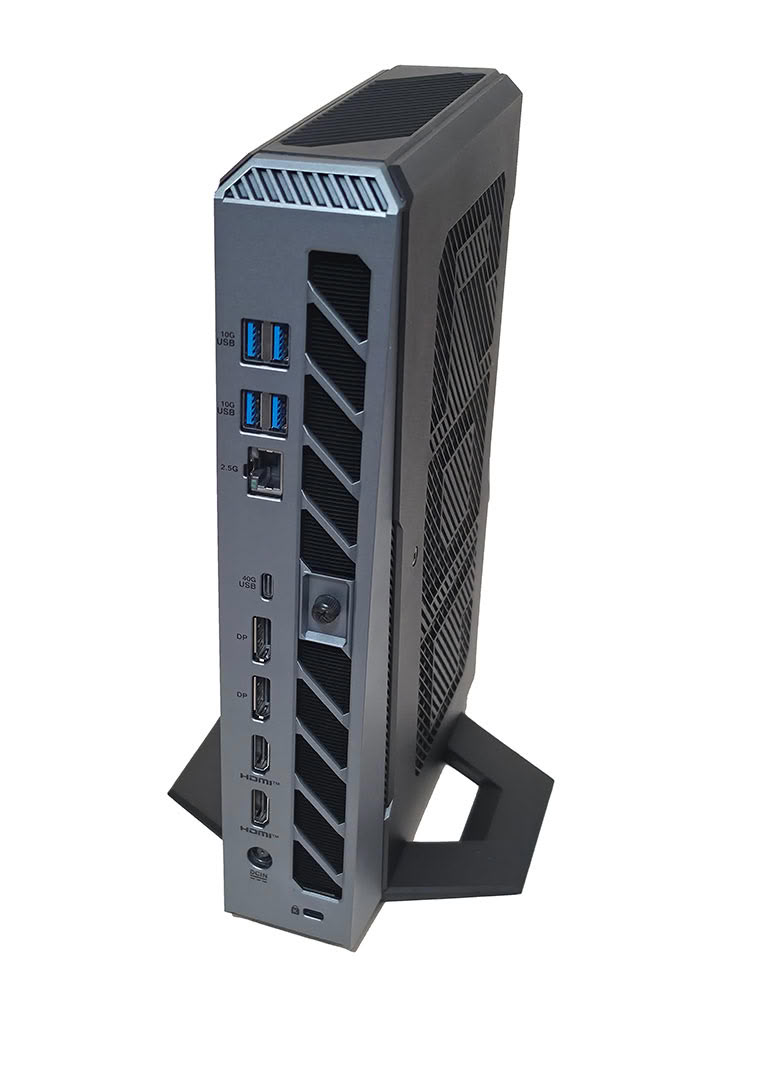
The front I/O is set up for the ports people use most often, including the power button, headset jack, one USB 3.2 Gen 2 Type-C port, and two USB-A ports. Around the back, ASUS includes one USB4 Type-C port with DisplayPort 1.4, four USB-A ports, two HDMI 2.1 ports, two DisplayPort 2.1 ports, 2.5 GbE, DC input, and a Kensington lock slot. ASUS confirmed that the rear Type-C port is USB4, not Thunderbolt 4. It also supports up to five displays at once, giving the GR70 a lot of flexibility for multi-monitor gaming, streaming, productivity, or a heavier desk setup.
Overall, the GR70 feels like a premium ASUS PC. Its shape is similar to the taller, narrower MINISFORUM AtomMan G7 Pro, so let's see what it looks like inside.
Our Patreon Silver Supporters can read articles in single-page format.
Nov 19th, 2026 15:42 CST
change timezone
Latest GPU Drivers
New Forum Posts
- Honestly, do you care about GTA VI? (163)
- Windows 11 General Discussion (7736)
- Current Sales, Bundles, Giveaways (10448)
- Last game you purchased? (1409)
- WarpCoreBench scores! (76)
- Got the EOL 32GB TridentZ 6000 CL26 1.4V (12)
- Dell Workstation Owners Club (3516)
- Making a game in Godot engine (4)
- DTS DCH Driver for Realtek HDA [DTS:X APO4 + DTS Interactive] (2815)
- Security Apps (2)
Popular Reviews
- Acemagic Retro X3 Review
- Ugreen NASync DXP4800 GT Review
- Upcoming Hardware Launches 2027 (Updated Nov 2026)
- Pulsar Office Tour & First Look at P1 Dual-Sensor Mouse
- AMD Zen 6 Technical Deep Dive
- Biwin Black Opal NV7400 2 TB Review
- Sapphire Radeon RX 7700 XT Pure Review
- Sapphire Radeon RX 7700 XT Pulse Review
- AMD Ryzen 7 9800X3D Review - The Best Gaming Processor
- Chieftec Iceberg PRO 360 DARK Review
TPU on YouTube
Controversial News Posts
- NVIDIA Co-Founder and CEO Jensen Huang Officially Resigns (488)
- Report: Jensen Huang Eyes NVIDIA Comeback (223)
- Open Letter Asking NVIDIA to Reinstate Jensen Huang Passes 115,000 Signatures (184)
- OpenAI CEO Argues Home PCs Waste the World's Limited DRAM Supply (152)
- NVIDIA Launches Investigation Into Jensen Huang's Relationship With Suspected Chinese Spy (136)
- Intel "Raptor Lake Next" 16-Core and 20-Core CPUs Surface (130)
- Legendary Game Studio BioWare Shuts Down Following EA Layoffs (104)
- Dell CEO Says the Memory Shortage Will Get Worse in 2027 (95)