 18
ASUS ROG Strix B850-F Gaming Wi-Fi7 Neo Review
(18 Comments) »Value and Conclusion
- The ASUS ROG Strix B850-F Gaming Wi-Fi7 Neo is available for US$320
- Decent VRM temperatures
- Top M.2 port cools PCIe Gen 5 SSDs effectively
- USB 3.2 Gen 2x2 20 Gbps Type-C header
- All four M.2 ports feature tool-free heatsinks
- Excellent EFI and software
- Minimal bandwidth sharing
- Decent number of Type-A USB ports
- Effective remote GPU release mechanism
- Thermistor probe header
- Power button
- 512 Mbit/64 MB BIOS with integrated Wi-Fi driver
- Expensive for a B850 motherboard
- Only two SATA ports
- Only one video output
- Fan headers limited to 12 W/1 A
- Underside M.2 heatsink's thermal pads don't align with all SSDs
- No underside SSD cooling for lower PCIe Gen 5 M.2 port
- No reset button or LED POST code display
- Lower M.2 heatsink blocked by dual-slot and thicker GPUs
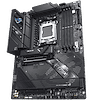
The majority of refreshed motherboards for AMD's 800-series chipsets have on the whole been disappointing, mostly in terms of value. Their predecessors are usually still available and often for significantly lower price tags with not much added other than tweaked bandwidth sharing and a larger BIOS. How does the ASUS ROG Strix B850-F Gaming Wi-Fi7 Neo fare against its predecessor though? Well, the older model has received a price cut and can be had for up to $50 less. However, while that's a sizable saving, there are some significant upgrades here. Firstly, the lower M.2 heatsink is now completely tool-free and much easier to use. The front Type-C header now offers USB 3.2 Gen 2x2 20 Gbps support rather than slower USB 3.2 Gen 2 10 Gbps, and the Ethernet controller sees a similar doubling in speed from 2.5 Gbps to 5 Gbps. The new board has more higher-speed USB ports on the rear I/O panel too as well as a second USB 3.0 header. Finally, there is the larger 512 Mbit (64 MB) BIOS, although aside from an integrated Wi-Fi driver, this doesn't provide much of an advantage for now. Bandwidth sharing hasn't been improved, not that it was much of an issue to start with, and it's mainly boards that saw lanes cut from the primary PCIe slot that benefited, instead, seeing bandwidth shared with the USB4 ports instead. As they're not present here, this problem doesn't exist.
The argument to buy it over its predecessor is one of the stronger ones we've seen recently, but how does it compare to the competition? This ranges from other B850 boards, but also to X870 too, with excellent options such as the ASRock Phantom Gaming X870 Riptide Wi-Fi offering additional features such as USB4, two extra SATA ports and good SSD and VRM thermals for just $180. However, its EFI and software are far inferior, and it lacks a lot of the ROG Strix B850-F Gaming Wi-Fi7 Neo's creature comforts.
A more balanced option is the MSI MAG X870E Tomahawk Max Wi-Fi, which is available for just $260. Again, being X870E, it offers USB4 and extra bandwidth, but also has 27 W power delivery over its USB 3.2 Gen 2x2 20 Gbps Type-C header, additional power over several fan headers, two extra SATA ports and three video outputs.
If you're an ASUS fan then the ASUS TUF Gaming B850-Pro Wi-Fi7 W Neo is also worth a look. It retails for around $80 less, but still offers the new larger BIOS, and same EFI and software as well as a USB 3.2 Gen 2x2 20 Gbps Type-C header, while the Gigabyte B850 Aorus Elite Wi-Fi7 is also cheaper and offers a similar specification.
ASRock has some very strong motherboards for budget B850 options too, with the ASRock B850 Steel Legend Wi-Fi being a favorite with solid performance and despite its $170 price tag, still includes decent audio, a 20 Gbps Type-C front panel header, thermistor header, four SATA ports and Wi-Fi 7. Again, though, the ASUS board has faster Ethernet and much better software and EFI as well as more modern DIY-focused features.
At similar or slightly higher prices we have stiffer competition in terms of features. The Gigabyte X870E Aorus Pro X3D Ice might not have the prowess in EFI and software departments, but it offers excellent VRM and SSD cooling, higher fan header power, a massive 65 W power delivery over its Type-C header, USB4, four SATA ports, three rear video outputs and extra overclocking and testing tools too, such as an LED POST code display and reset button. At $340, it's only $20 more than the ASUS board too.
In isolation, then, against other ASUS boards, the ROG Strix B850-F Gaming Wi-Fi7 Neo fares relatively well, arguably bridging much of the price gap between it and its predecessor thanks to some upgrades and offers decent VRM and SSD temperatures, although we have seen better from cheaper options. With the latest ASUS EFI and software, it's an imposing package for the competition, that struggle to match all of its strengths.
However, while it's a good all-rounder, there are certainly much better-equipped options for a little more cash, and plenty of ways to get a similar specification but for a lot less. For ASUS fans, though, or for those that want useful software or will spend a lot of time in the EFI, this Neo still represents a good balance of performance and features. It's just a little pricey.

The argument to buy it over its predecessor is one of the stronger ones we've seen recently, but how does it compare to the competition? This ranges from other B850 boards, but also to X870 too, with excellent options such as the ASRock Phantom Gaming X870 Riptide Wi-Fi offering additional features such as USB4, two extra SATA ports and good SSD and VRM thermals for just $180. However, its EFI and software are far inferior, and it lacks a lot of the ROG Strix B850-F Gaming Wi-Fi7 Neo's creature comforts.
A more balanced option is the MSI MAG X870E Tomahawk Max Wi-Fi, which is available for just $260. Again, being X870E, it offers USB4 and extra bandwidth, but also has 27 W power delivery over its USB 3.2 Gen 2x2 20 Gbps Type-C header, additional power over several fan headers, two extra SATA ports and three video outputs.
If you're an ASUS fan then the ASUS TUF Gaming B850-Pro Wi-Fi7 W Neo is also worth a look. It retails for around $80 less, but still offers the new larger BIOS, and same EFI and software as well as a USB 3.2 Gen 2x2 20 Gbps Type-C header, while the Gigabyte B850 Aorus Elite Wi-Fi7 is also cheaper and offers a similar specification.
ASRock has some very strong motherboards for budget B850 options too, with the ASRock B850 Steel Legend Wi-Fi being a favorite with solid performance and despite its $170 price tag, still includes decent audio, a 20 Gbps Type-C front panel header, thermistor header, four SATA ports and Wi-Fi 7. Again, though, the ASUS board has faster Ethernet and much better software and EFI as well as more modern DIY-focused features.
At similar or slightly higher prices we have stiffer competition in terms of features. The Gigabyte X870E Aorus Pro X3D Ice might not have the prowess in EFI and software departments, but it offers excellent VRM and SSD cooling, higher fan header power, a massive 65 W power delivery over its Type-C header, USB4, four SATA ports, three rear video outputs and extra overclocking and testing tools too, such as an LED POST code display and reset button. At $340, it's only $20 more than the ASUS board too.
In isolation, then, against other ASUS boards, the ROG Strix B850-F Gaming Wi-Fi7 Neo fares relatively well, arguably bridging much of the price gap between it and its predecessor thanks to some upgrades and offers decent VRM and SSD temperatures, although we have seen better from cheaper options. With the latest ASUS EFI and software, it's an imposing package for the competition, that struggle to match all of its strengths.
However, while it's a good all-rounder, there are certainly much better-equipped options for a little more cash, and plenty of ways to get a similar specification but for a lot less. For ASUS fans, though, or for those that want useful software or will spend a lot of time in the EFI, this Neo still represents a good balance of performance and features. It's just a little pricey.
Nov 18th, 2026 13:24 PST
change timezone
Latest GPU Drivers
New Forum Posts
- Can i play GTA 6 now? (Joke) (5)
- Very unusual two gaming-pc scenarios. (11)
- Dell Workstation Owners Club (3513)
- Any other old-timers here planning to play WoW Forever? (151)
- Time to upgrade CPU and MOBO (33)
- The Filthy, Rotten, Nasty, Helpdesk-Nightmare picture clubhouse (2876)
- WarpCoreBench scores! (67)
- Honestly, do you care about GTA VI? (144)
- Acer Predator BiFrost Radeon RX 9070 OC (9)
- DTS DCH Driver for Realtek HDA [DTS:X APO4 + DTS Interactive] (2814)
Popular Reviews
- Acemagic Retro X3 Review
- Upcoming Hardware Launches 2027 (Updated Nov 2026)
- AMD Zen 6 Technical Deep Dive
- ASUS ROG Strix B850-I Gaming Wi-Fi7 W Review
- Corsair HX1000i Shift Crystal Review
- Biwin Black Opal NV7400 2 TB Review
- Chieftec Iceberg PRO 360 DARK Review
- AMD Ryzen 7 9800X3D Review - The Best Gaming Processor
- Phantom Blade Zero Performance Benchmark Review - 35 GPUs Tested
- Pulsar Office Tour & First Look at P1 Dual-Sensor Mouse
TPU on YouTube
Controversial News Posts
- NVIDIA Co-Founder and CEO Jensen Huang Officially Resigns (478)
- Report: Jensen Huang Eyes NVIDIA Comeback (187)
- Open Letter Asking NVIDIA to Reinstate Jensen Huang Passes 115,000 Signatures (184)
- OpenAI CEO Argues Home PCs Waste the World's Limited DRAM Supply (152)
- NVIDIA Launches Investigation Into Jensen Huang's Relationship With Suspected Chinese Spy (136)
- Intel "Raptor Lake Next" 16-Core and 20-Core CPUs Surface (130)
- Legendary Game Studio BioWare Shuts Down Following EA Layoffs (104)
- Dell CEO Says the Memory Shortage Will Get Worse in 2027 (95)