 18
ASUS ROG Strix B850-F Gaming Wi-Fi7 Neo Review
Component Analysis »Board Layout
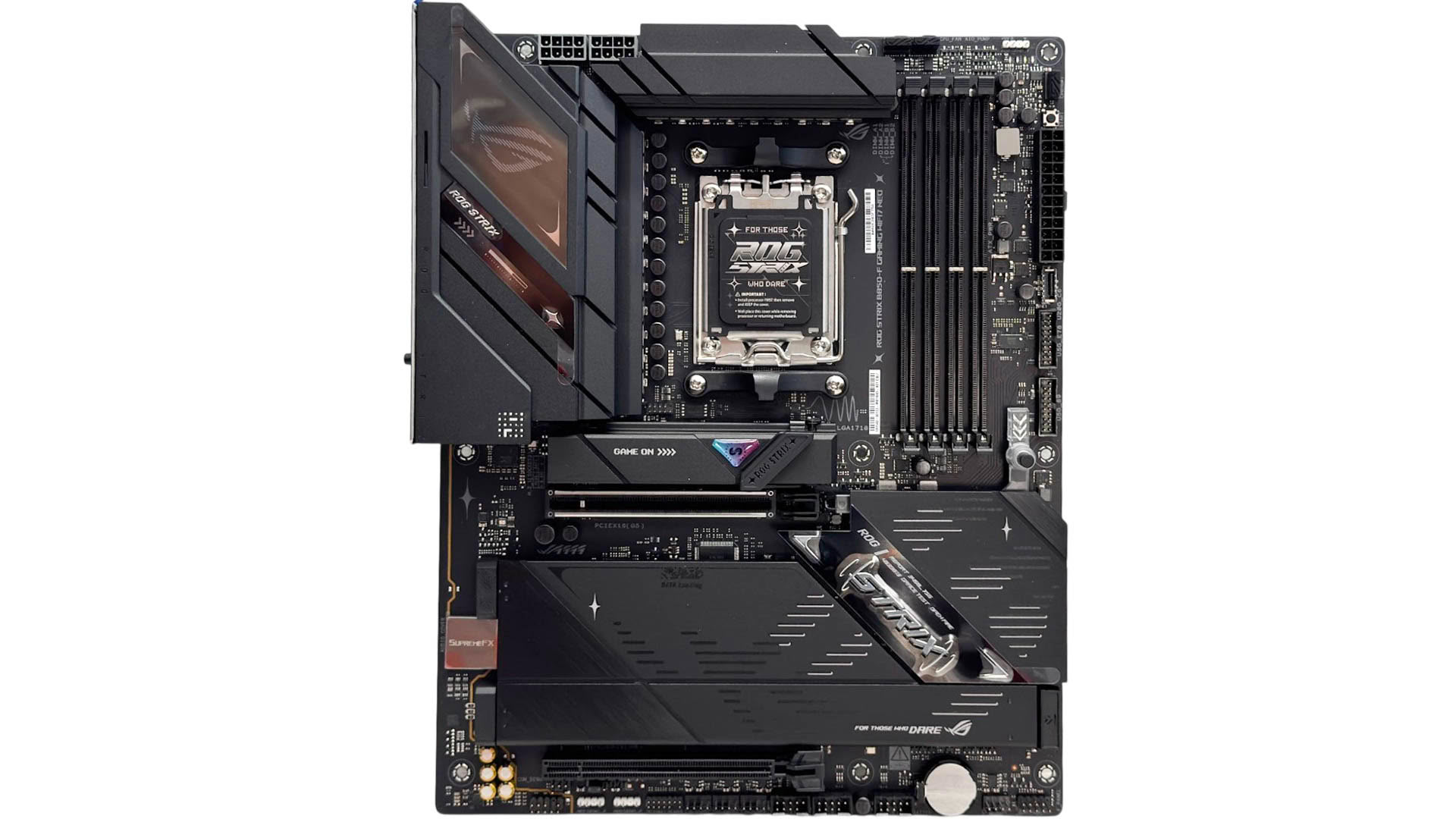
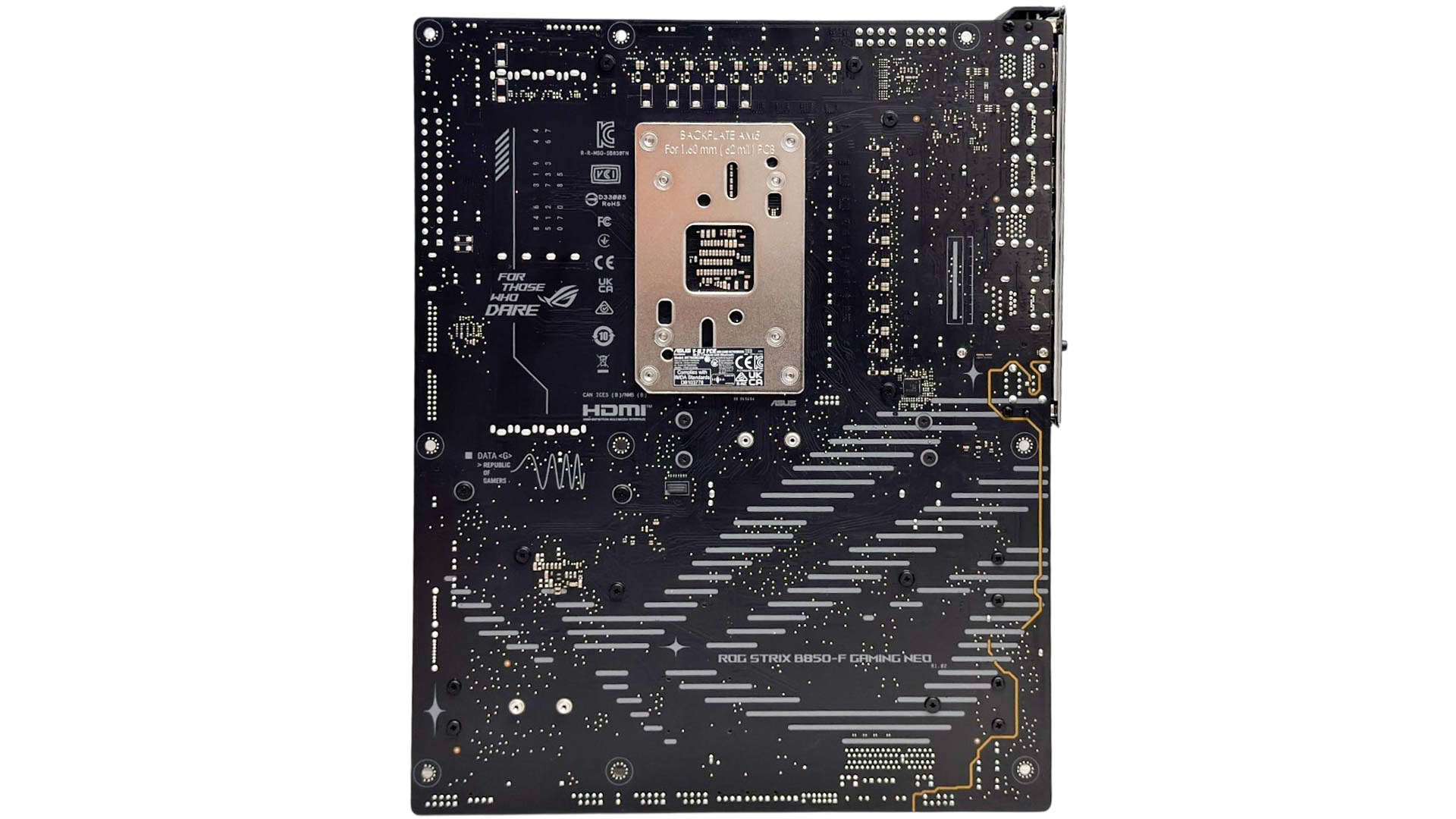
There are some very clear similarities between this board and its predecessor with an identical VRM heatsink array and very similar M.2 and chipset heatsinks too. The VRM shroud offers an RGB lighting display like the original plus the new model retains the pair of PCIe slots. As with the previous model, there's no backplate, but this isn't typically included on ASUS motherboards outside the more expensive Crosshair range.
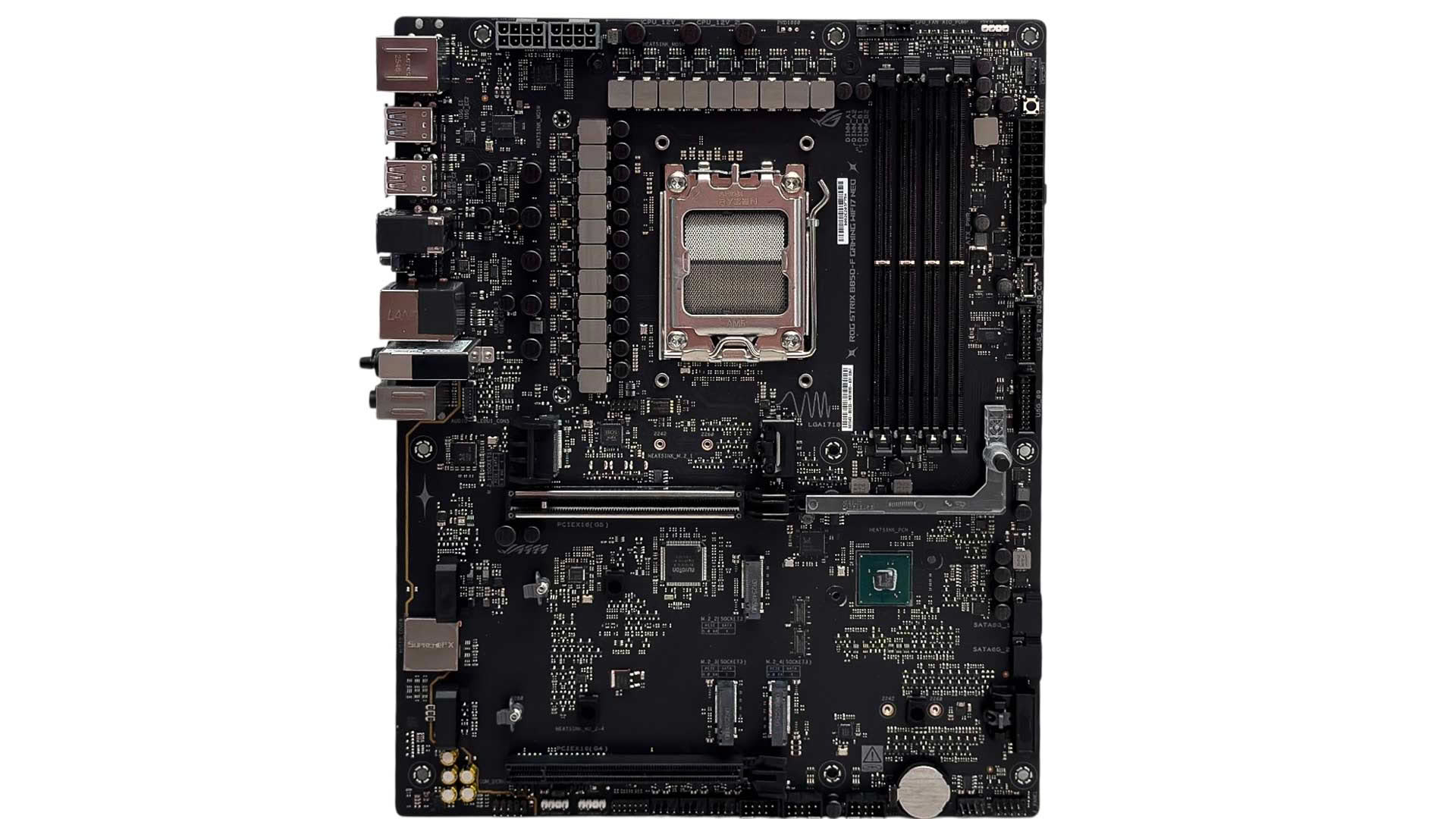
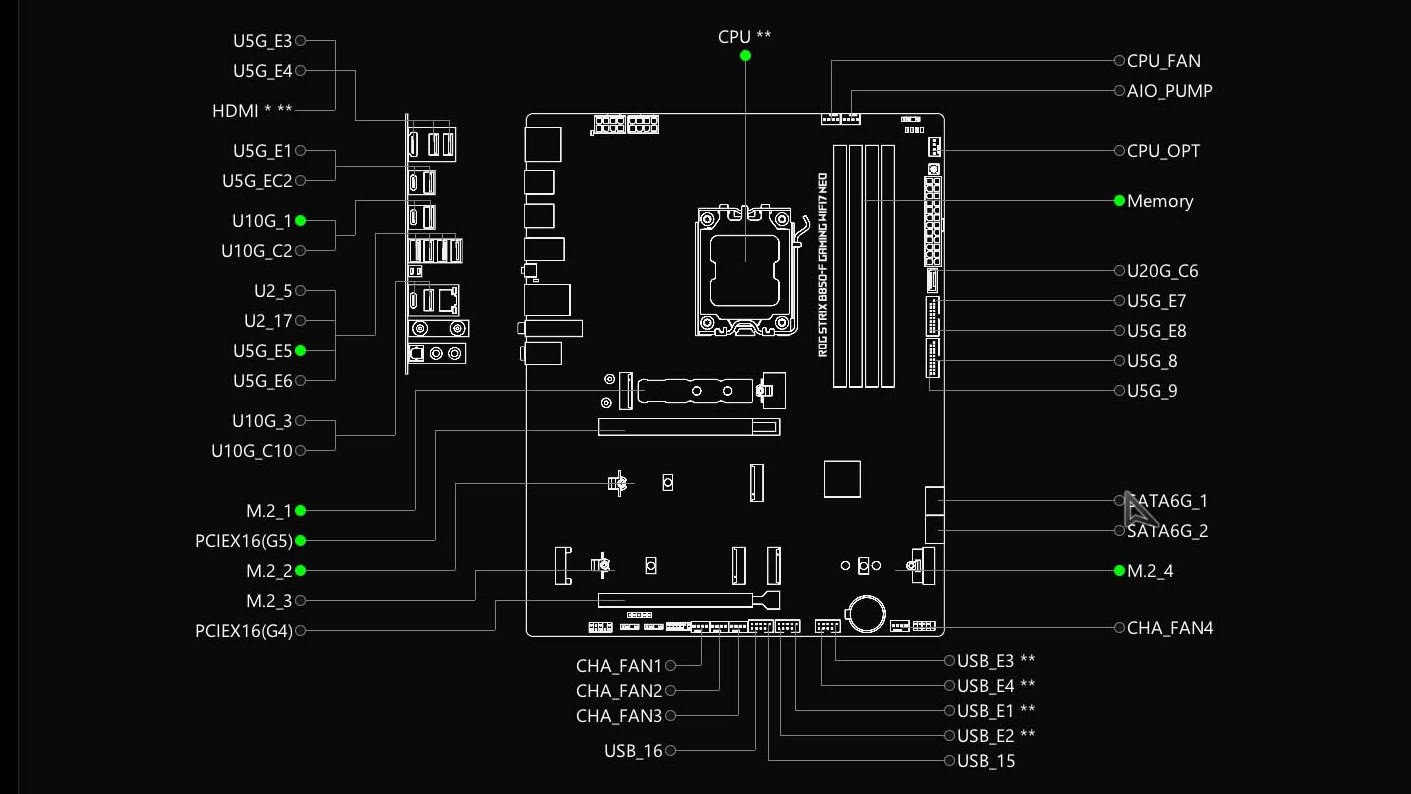
The PCB layout is largely the same with a few minor changes, most notably being the move from the button-less PCIe Slot Q-Release Slim to button-equipped PCIe Slot Q-Release, making releasing your graphics card much easier and more intuitive. With USB4 being absent, bandwidth sharing is limited to just the third M.2 port, which has four PCIe Gen 4 lanes that are shared with the lower PCIe slot. If the latter is used the M.2 port will be disabled. The top two M.2 ports support PCIe Gen 5 and can be used at the same time without sharing bandwidth with any other components.
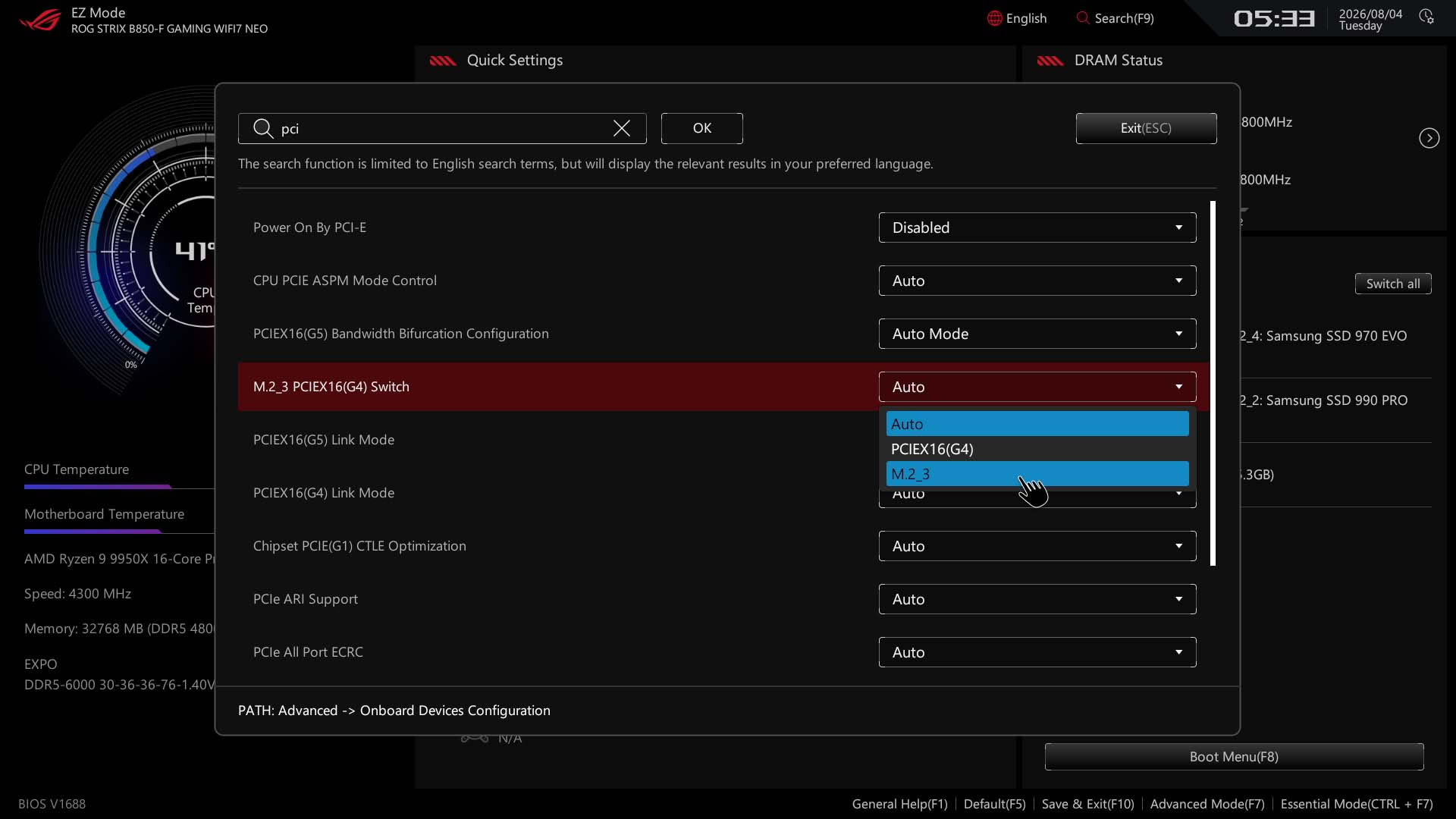
To ensure full bandwidth goes to a PCIe device in the lower slot or to the third M.2 port, a switch is available in the EFI to force the PCIe lanes to one or the other.
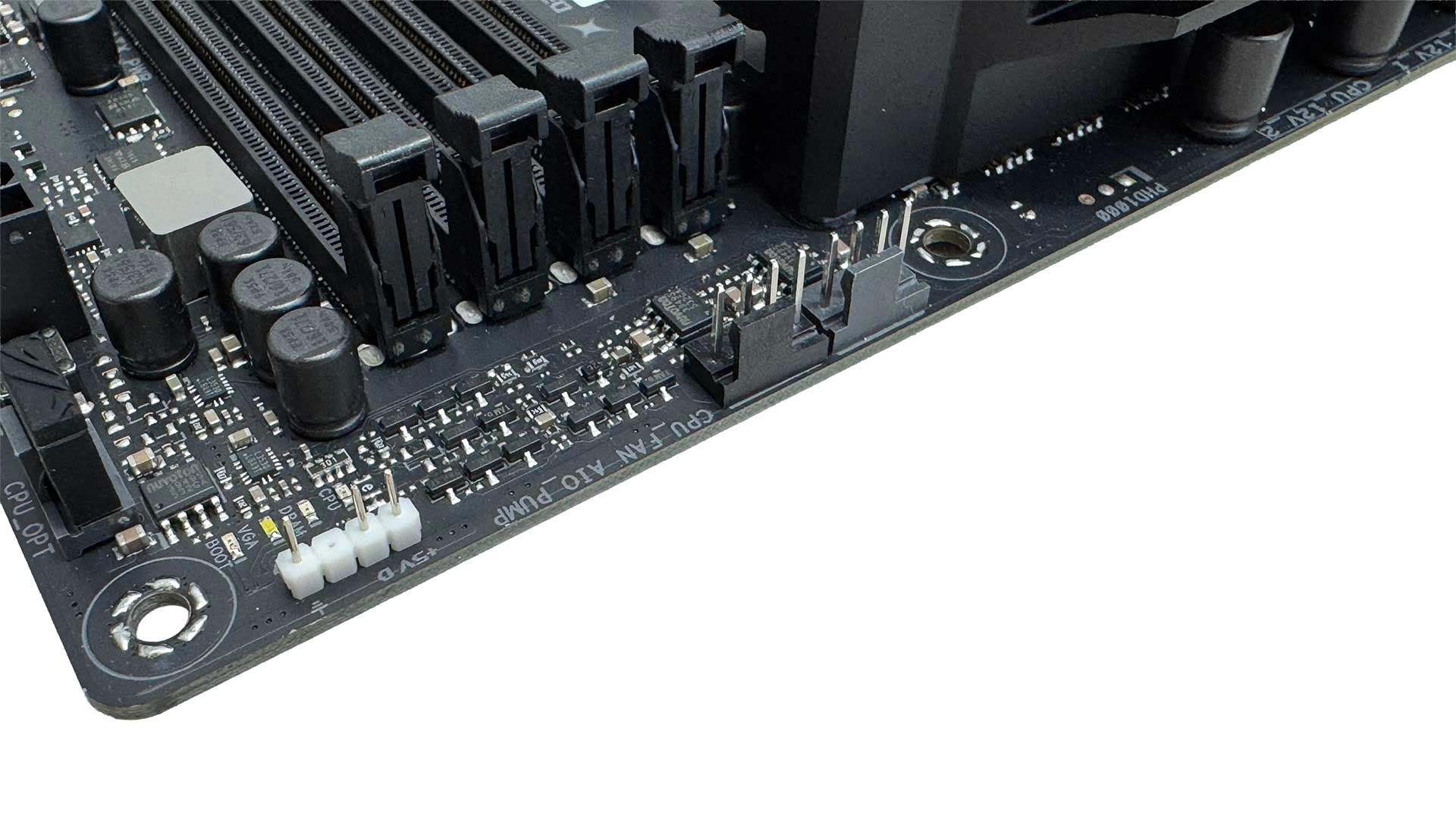
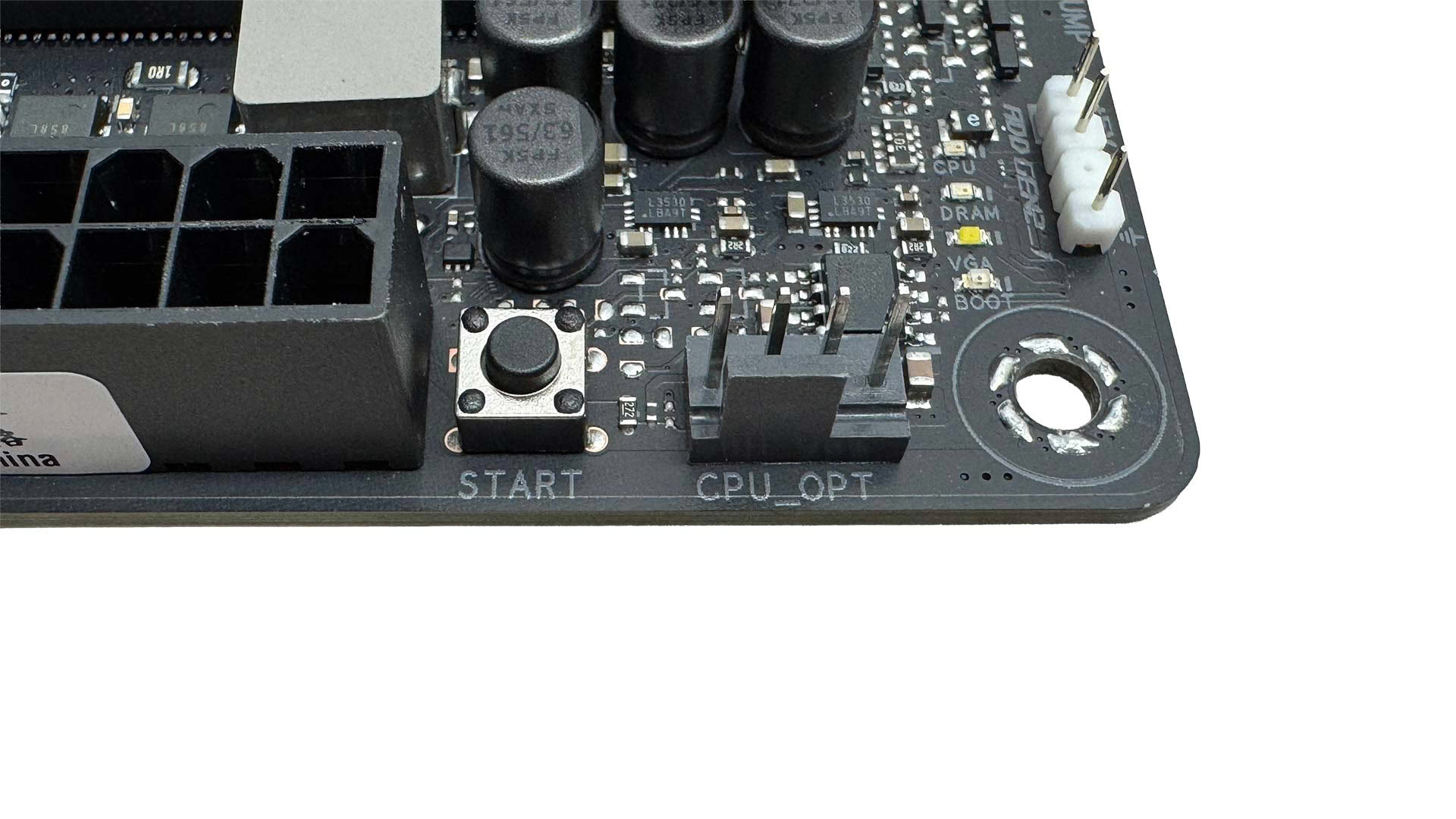
There are seven 4-pin fan headers in total, which is a decent number, but all are limited to just 12 W/1 A. This does mean you'll need to pay careful attention to the power draw when powering fans from a single header. Ideally we'd like to see at least one header that offers 24 W for this flexibility. Three are located in the top right corner along with a 3-pin ARGB header and power button.
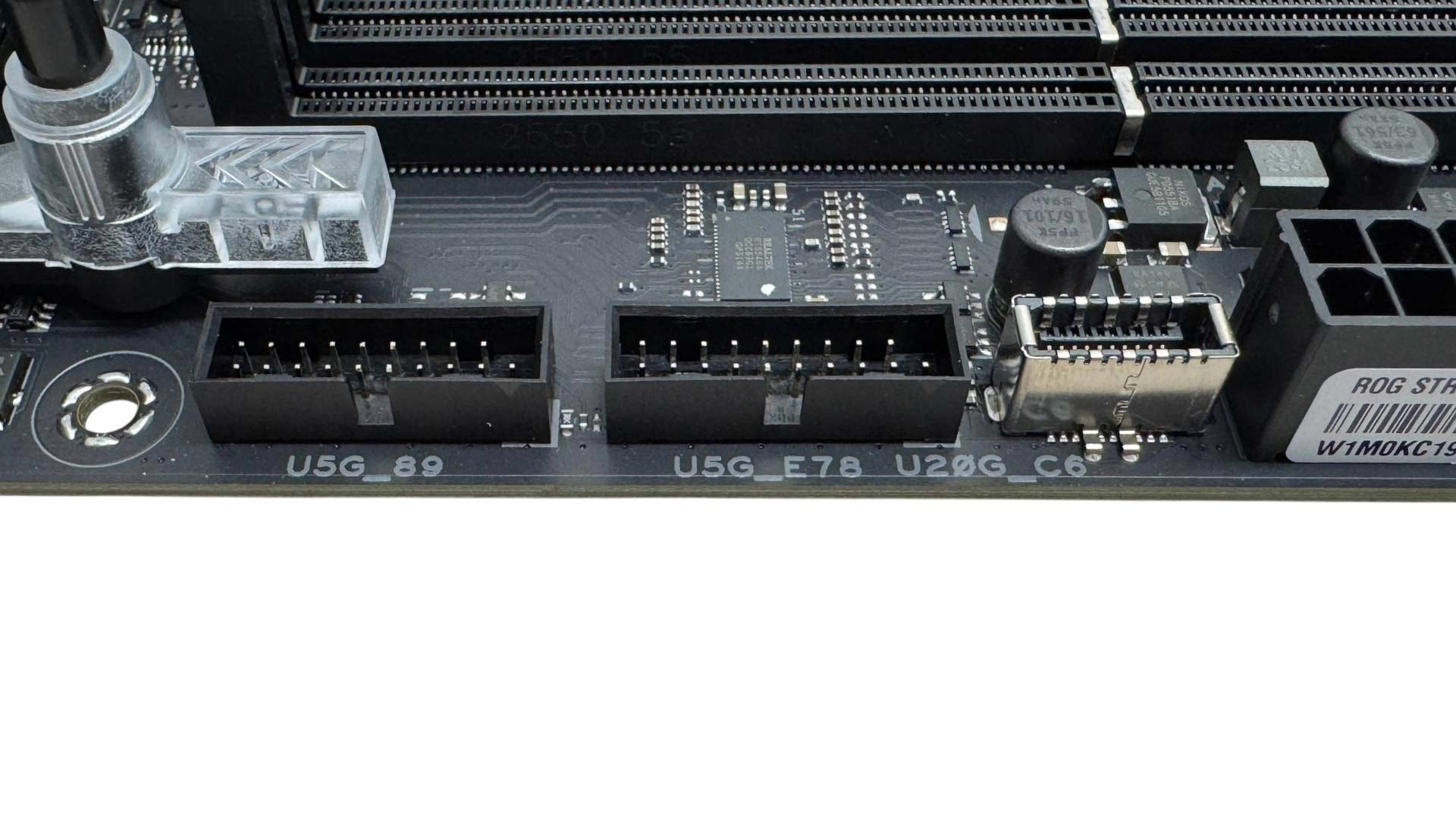
There's an additional USB 3.0 header on the new board bringing the total to two and the Type-C USB header has received an upgrade too, boosting the speed from USB 3.2 Gen 2 10 Gbps to USB 3.2 Gen 2x2 20 Gbps, although there's still no enhanced power delivery.
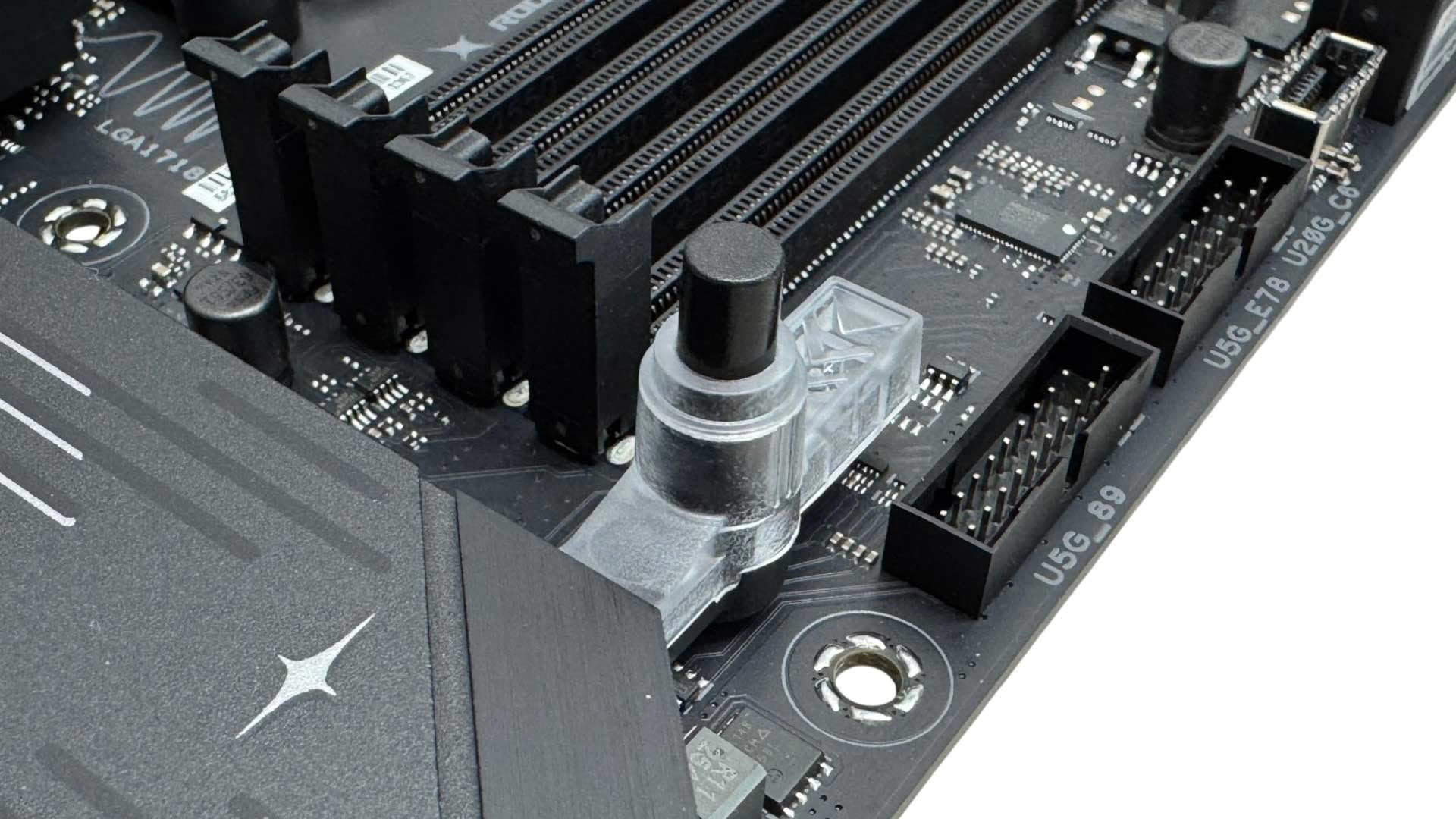
Previously, PCIe Slot Q-Release slim required you to lift your GPU up from one end and this did lead to some cards being damaged, as well as it not being a particularly intuitive way of releasing it. Thankfully, ASUS has seen sense and new boards come equipped with button-operated PCIe Slot Q-Release. This is a simple push-to-release mechanism, with your GPU automatically locking in place as usual.
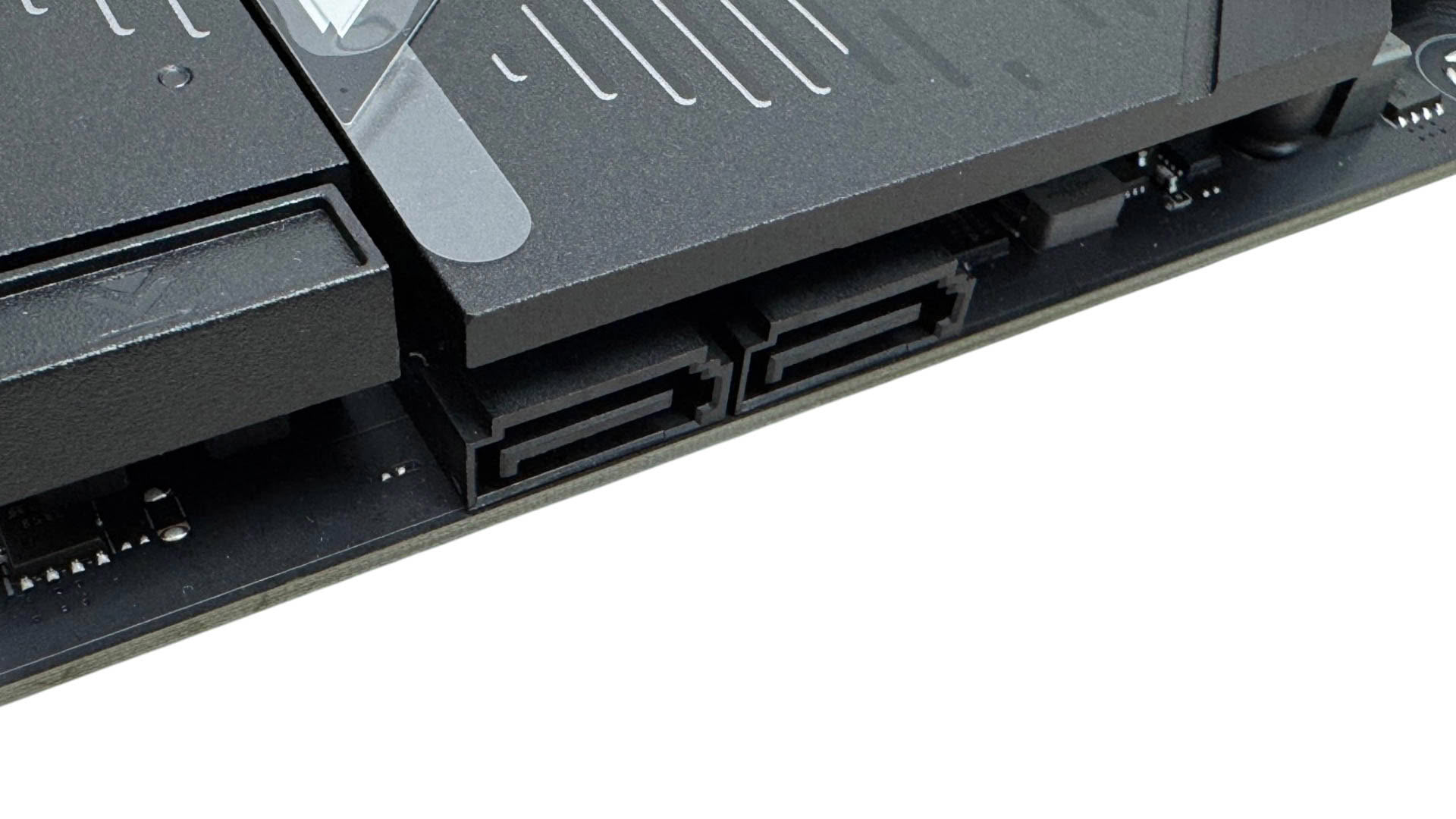
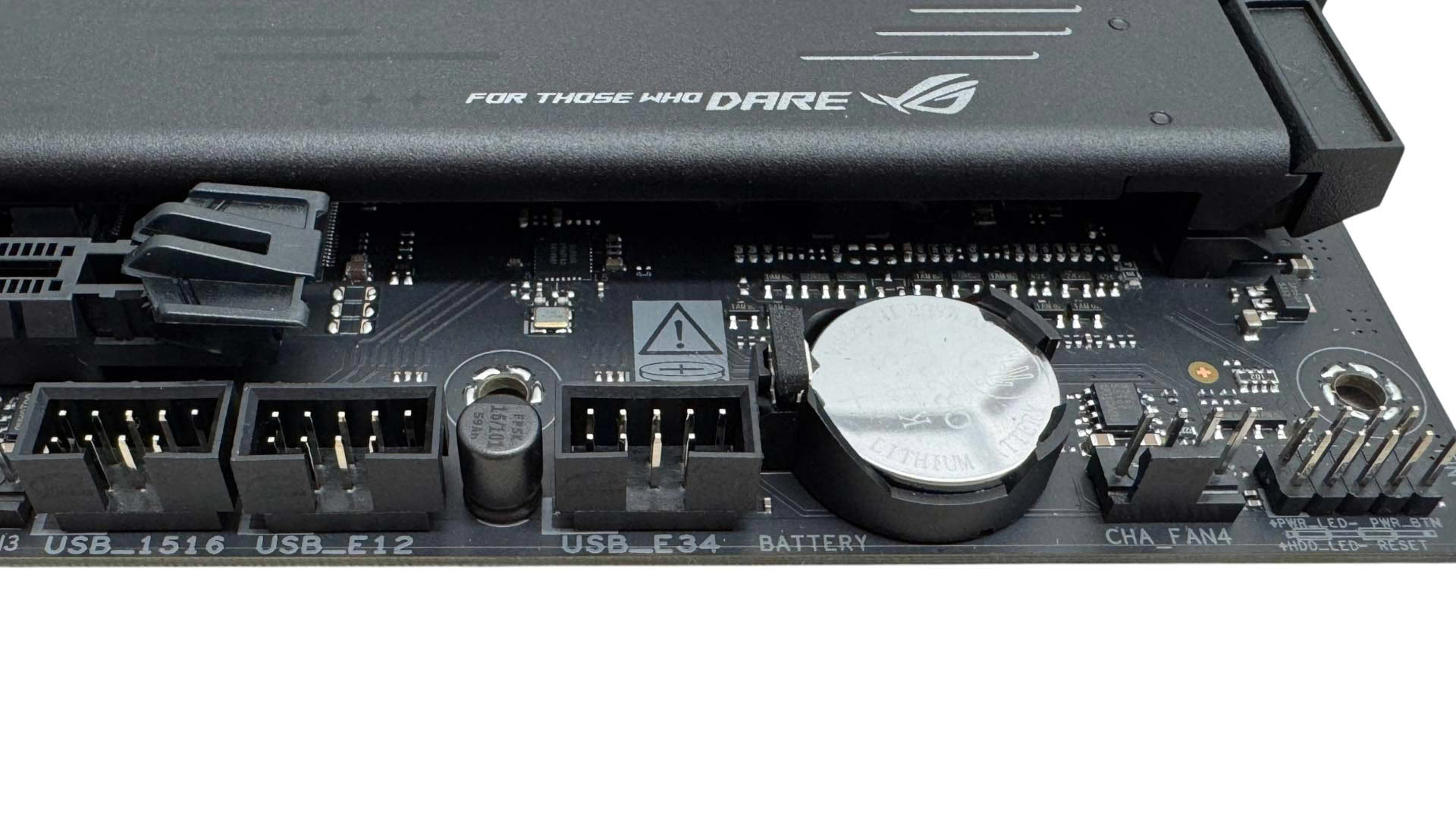
A recent trend with motherboards at this price and below is cutting the usual four SATA ports to just two, and that's the case here. We'd probably still expect four from products above $350, but below this the likelihood is you'll be using M.2 SSDs and perhaps a hard disk or two. In the bottom right corner we have an easily accessible CMOS battery, another fan header and three USB 2.0 headers.
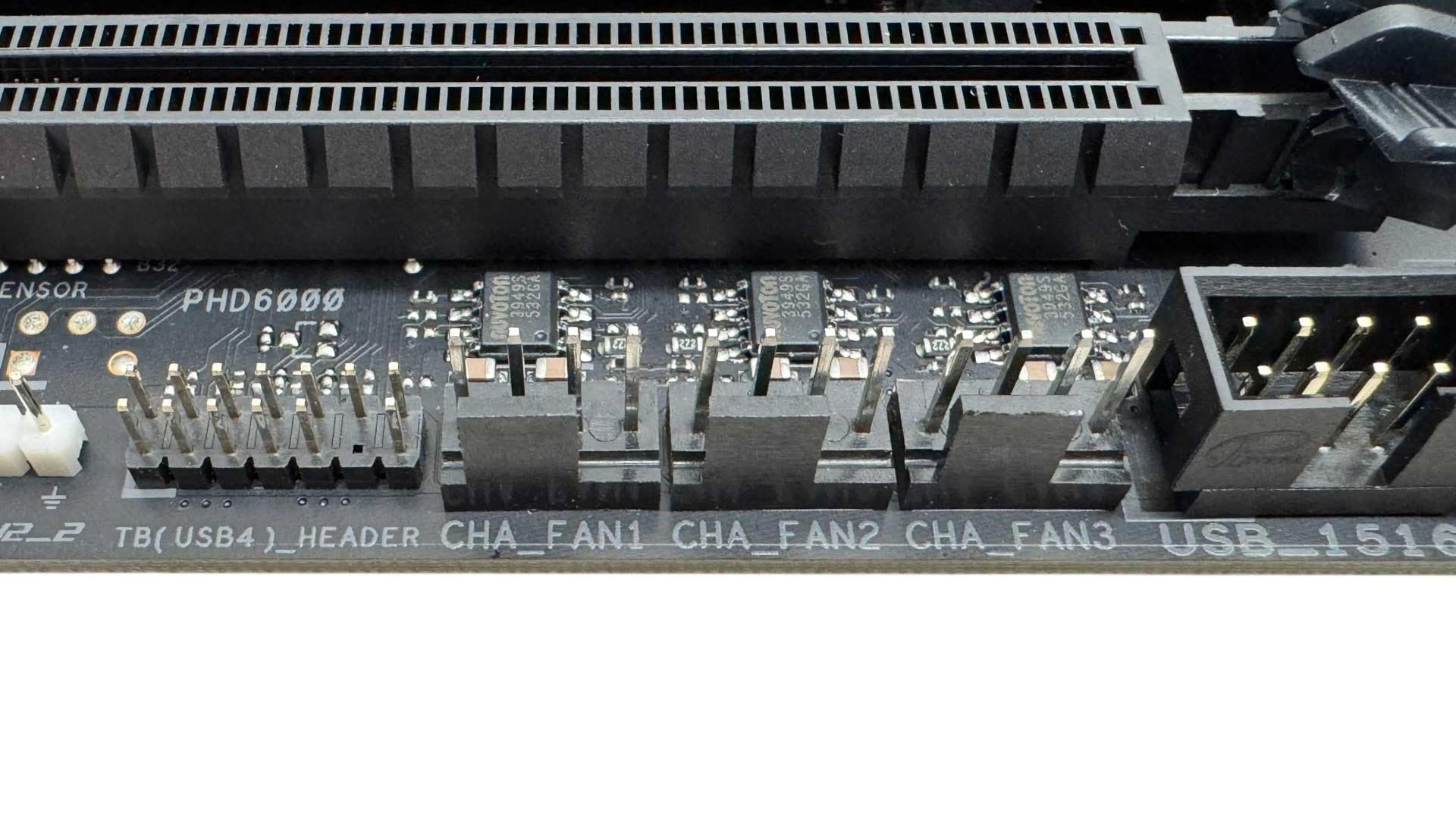
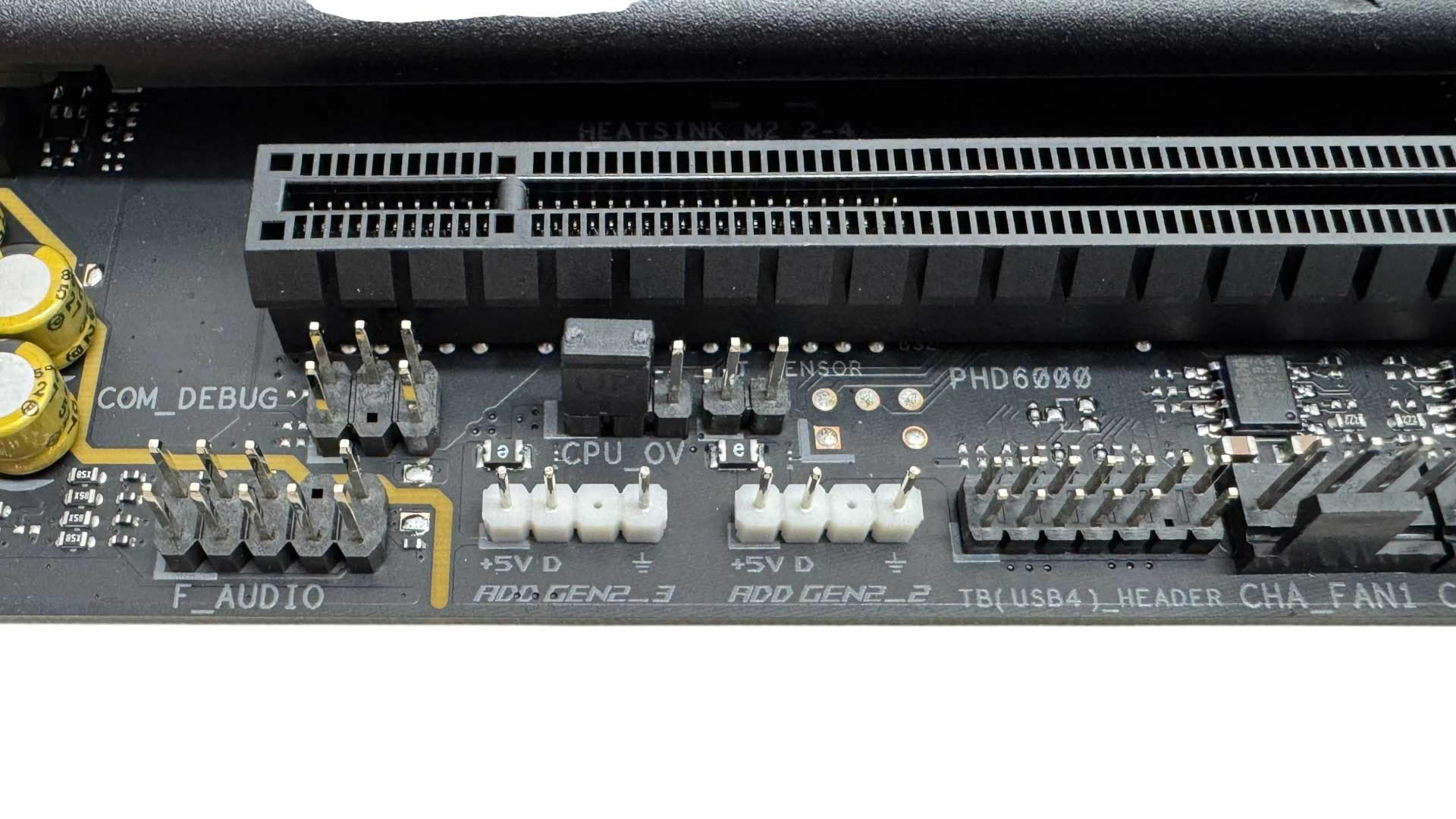
Moving along the lower edge there are the three remaining fan headers, along with another pair of 3-pin ARGB headers and also a 2-pin thermistor probe header and CPU over-volt jumper.
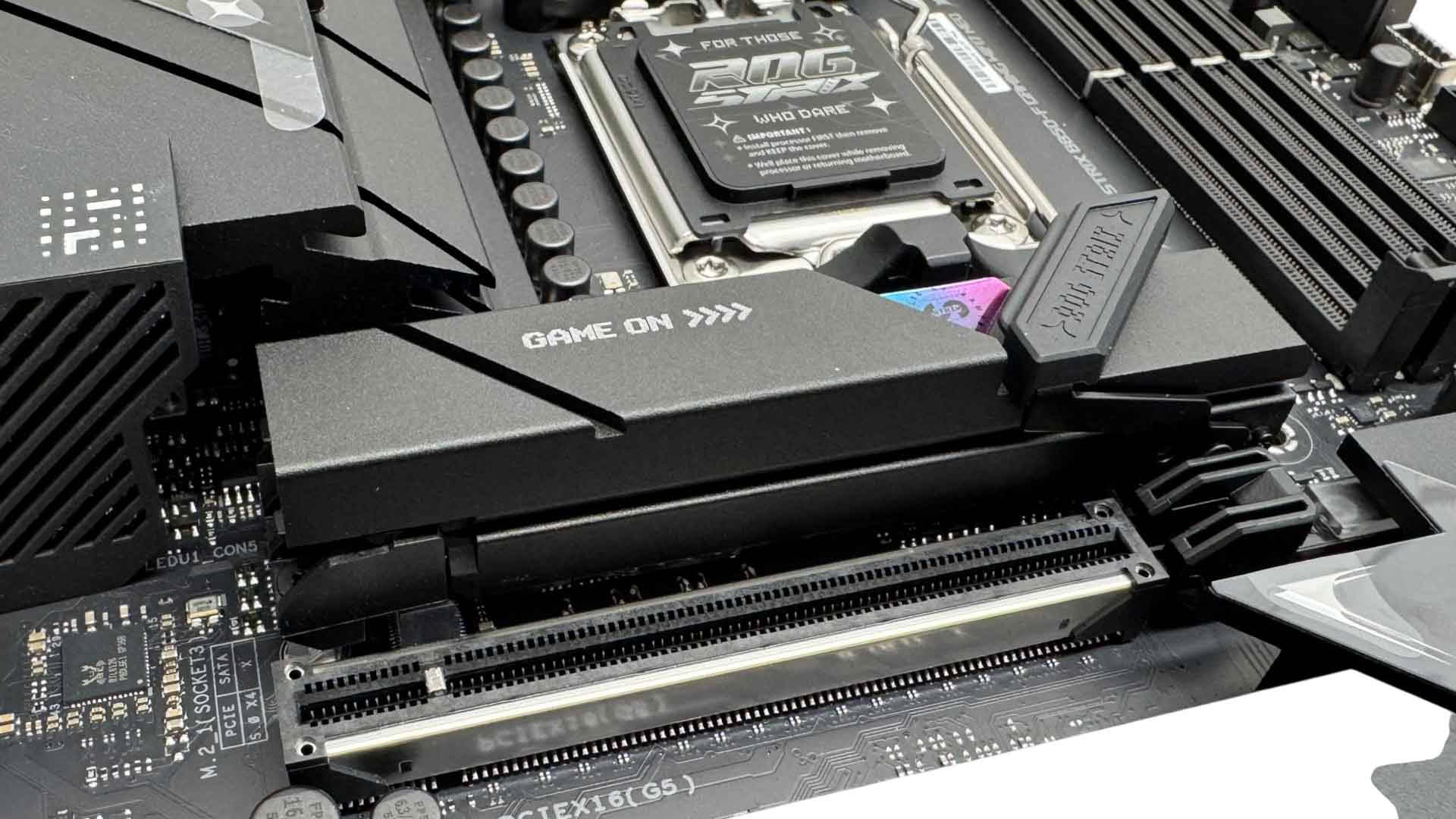
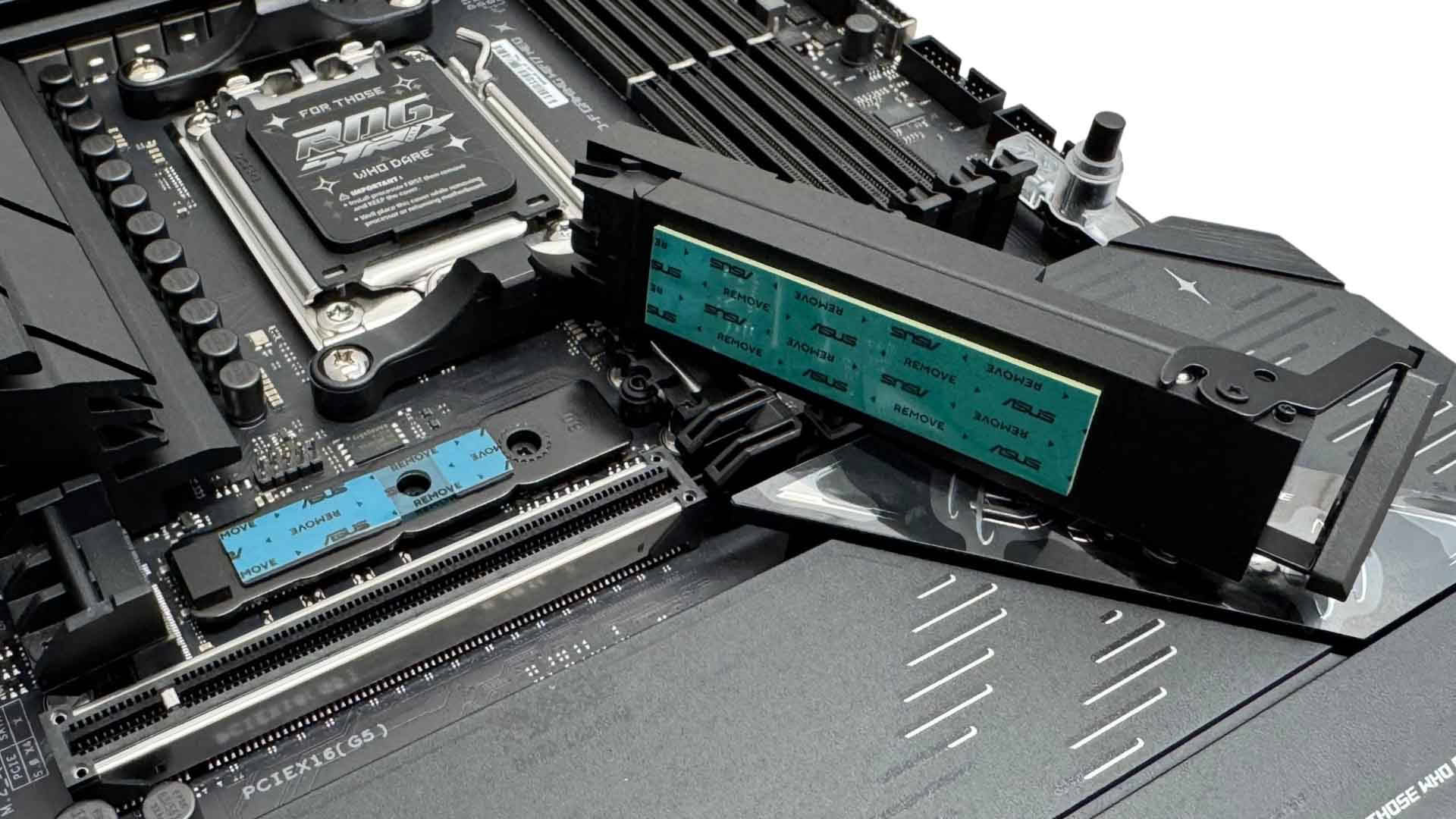
There are four M.2 ports in total, split equally between PCIe Gen 5 and Gen 4. The first two are the former with the top slot benefitting from upper and lower heatsinks for double-sided SSDs along with a reasonably chunky tool-free heatsink. As usual with ASUS boards, you must use included rubber supports for single-sided SSDs and you may find you need to adjust the underside thermal pads to fit your SSD.
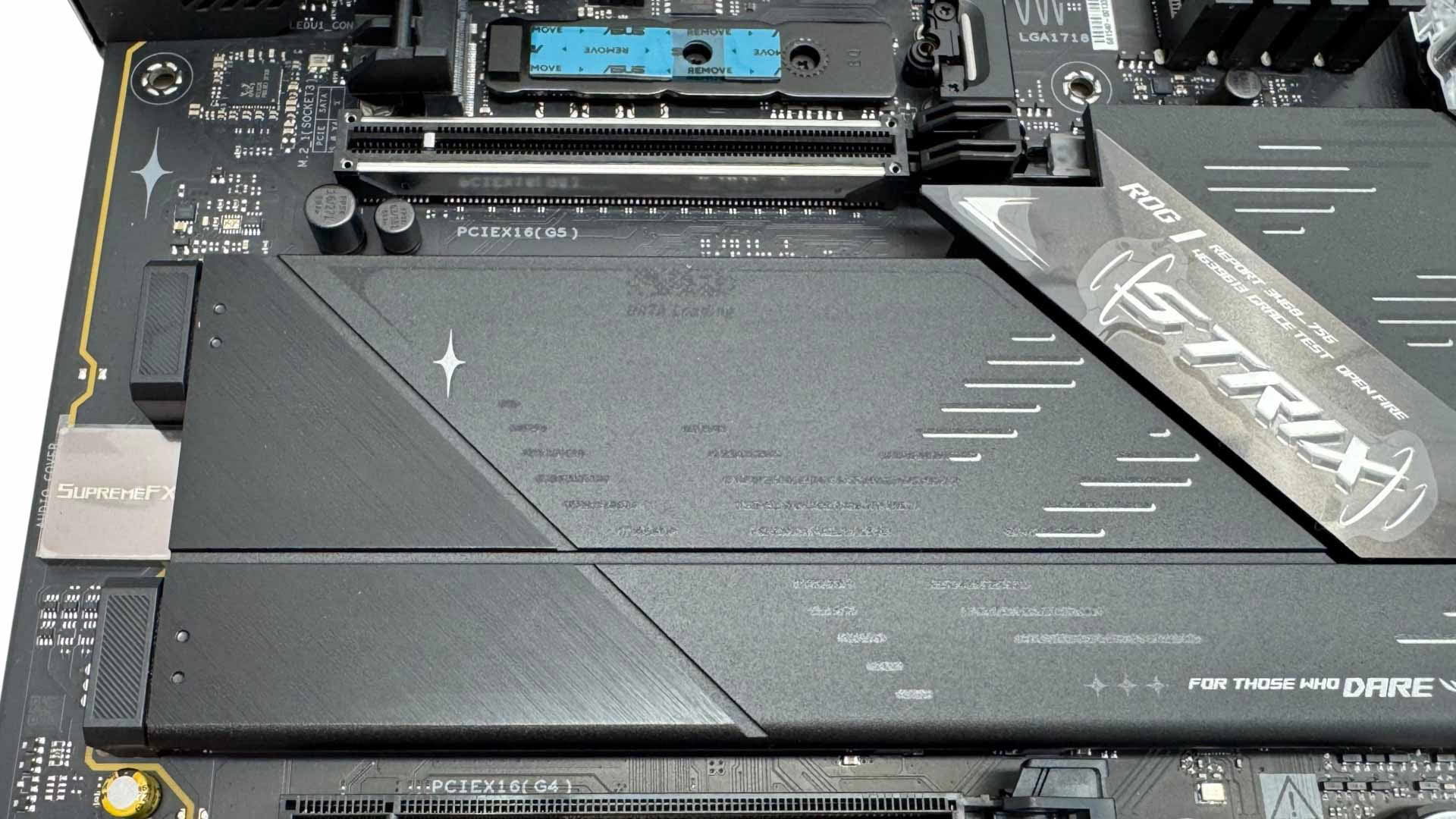
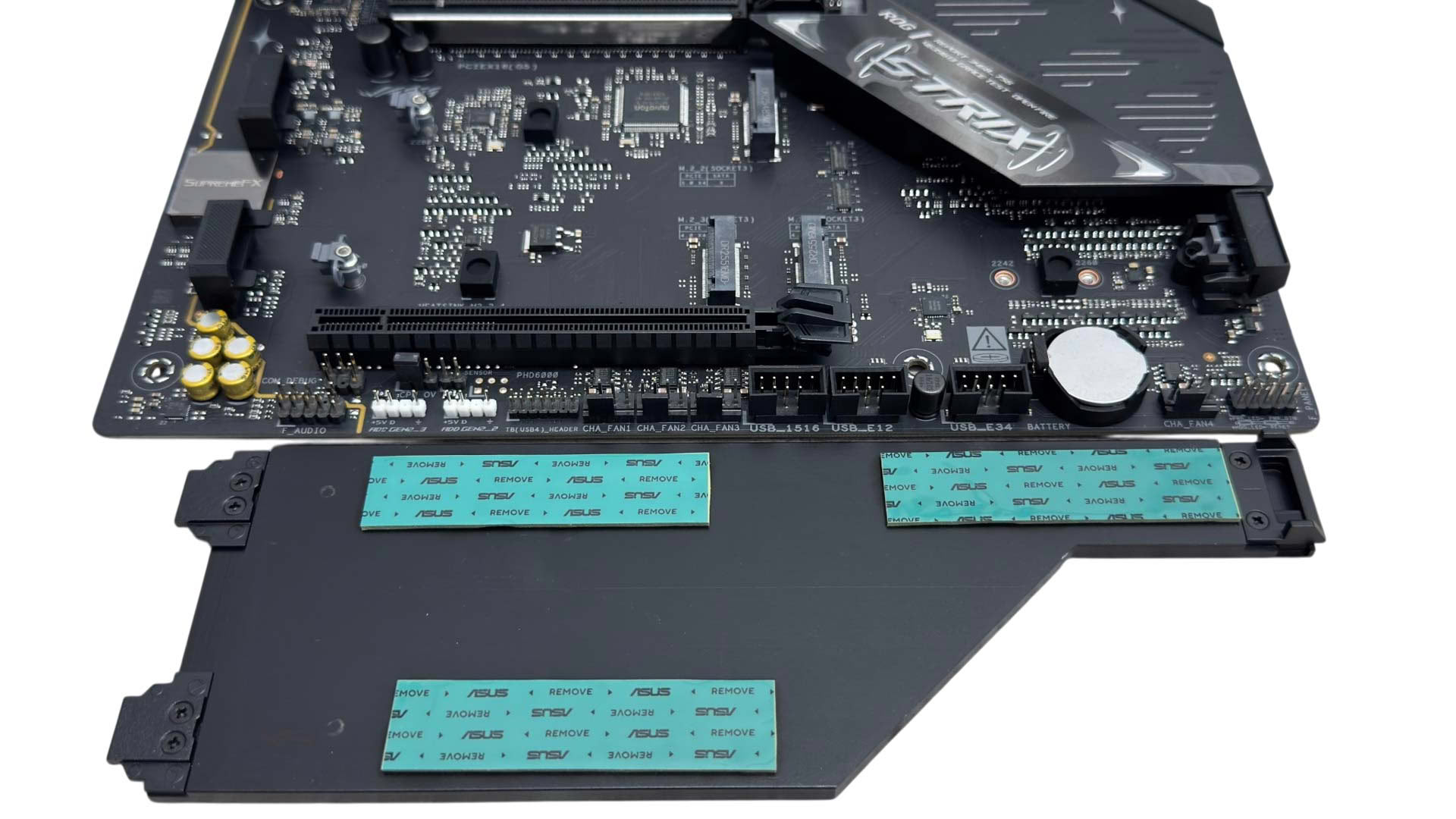
The other three ports are cooled by a single heatsink, with a tool-free upgrade here from the previous model meaning you don't have to deal with four fiddly screws, making the whole process far quicker and easier. Sadly the top port here—which is PCIe Gen 5—lacks underside cooling, so you'll need to make sure your SSD is single-sided. While the single tool-free heatsink is welcome, the previous model did have the benefit of the lower portion being separate and not being blocked by GPUs. As it stands, unless you have a single-slot GPU, you'll need to remove it to uninstall the lower heatsink and access any of the lower three M.2 ports.
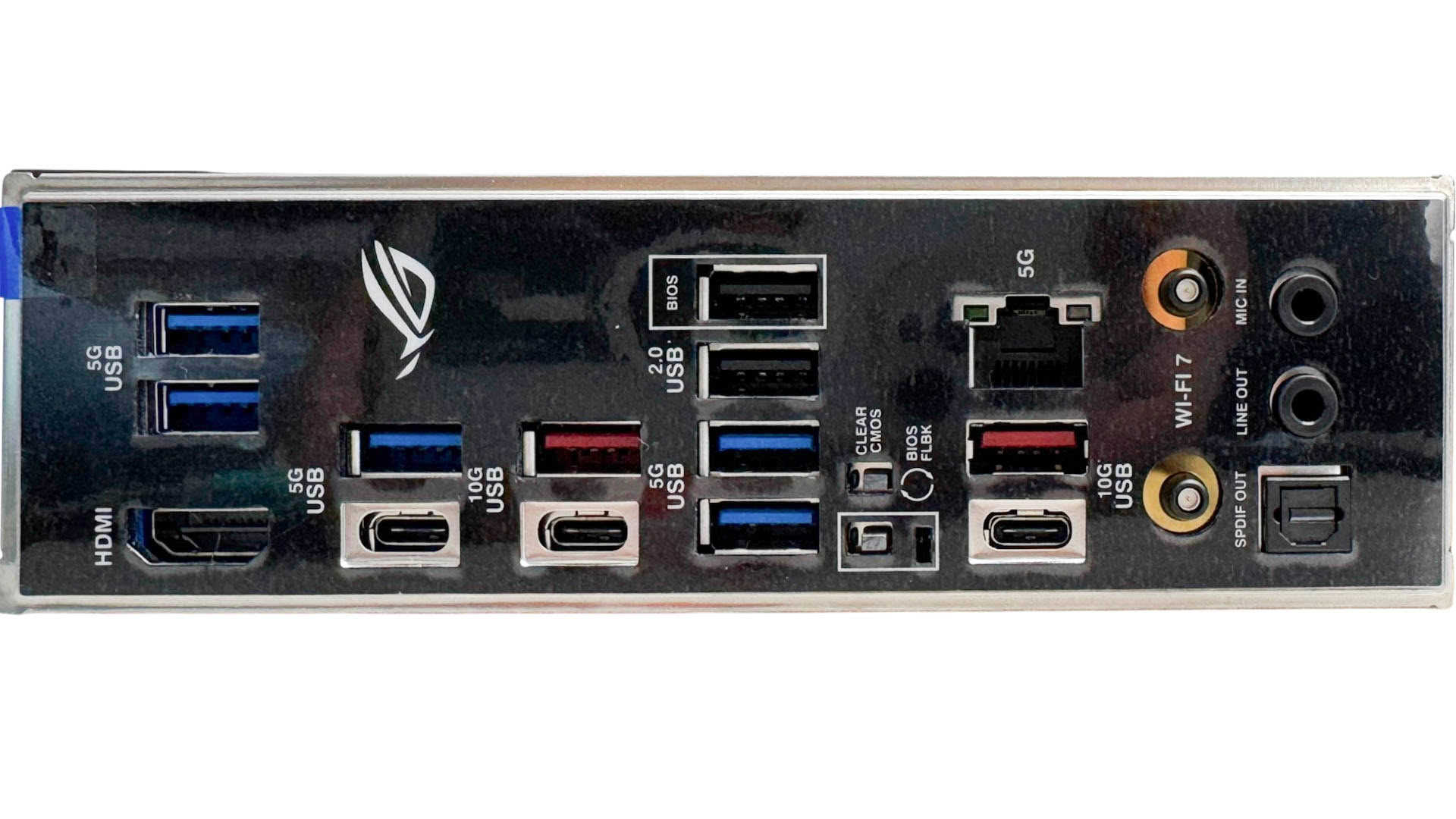
The rear I/O panel is an upgrade in some ways, but not in others. We have the same CMOS clear and USB BIOS flashback buttons and ASUS Q-Antenna connectors for the onboard Wi-Fi 7 module, along with audio jacks and optical output. However, the old board benefited from two video outputs and ten Type-A USB ports, while the new model has a single video output and nine Type-A ports. However, it does benefit from an extra Type-C port and sees a doubling of network speed with 5 Gbps Ethernet.
Nov 18th, 2026 13:50 PST
change timezone
Latest GPU Drivers
New Forum Posts
- Honestly, do you care about GTA VI? (145)
- What are you playing? (26234)
- Can i play GTA 6 now? (Joke) (6)
- Very unusual two gaming-pc scenarios. (12)
- Dell Workstation Owners Club (3513)
- Any other old-timers here planning to play WoW Forever? (151)
- Time to upgrade CPU and MOBO (33)
- The Filthy, Rotten, Nasty, Helpdesk-Nightmare picture clubhouse (2876)
- WarpCoreBench scores! (67)
- Acer Predator BiFrost Radeon RX 9070 OC (9)
Popular Reviews
- Acemagic Retro X3 Review
- Upcoming Hardware Launches 2027 (Updated Nov 2026)
- AMD Zen 6 Technical Deep Dive
- ASUS ROG Strix B850-I Gaming Wi-Fi7 W Review
- Corsair HX1000i Shift Crystal Review
- Biwin Black Opal NV7400 2 TB Review
- Chieftec Iceberg PRO 360 DARK Review
- AMD Ryzen 7 9800X3D Review - The Best Gaming Processor
- Pulsar Office Tour & First Look at P1 Dual-Sensor Mouse
- Phantom Blade Zero Performance Benchmark Review - 35 GPUs Tested
TPU on YouTube
Controversial News Posts
- NVIDIA Co-Founder and CEO Jensen Huang Officially Resigns (478)
- Report: Jensen Huang Eyes NVIDIA Comeback (187)
- Open Letter Asking NVIDIA to Reinstate Jensen Huang Passes 115,000 Signatures (184)
- OpenAI CEO Argues Home PCs Waste the World's Limited DRAM Supply (152)
- NVIDIA Launches Investigation Into Jensen Huang's Relationship With Suspected Chinese Spy (136)
- Intel "Raptor Lake Next" 16-Core and 20-Core CPUs Surface (130)
- Legendary Game Studio BioWare Shuts Down Following EA Layoffs (104)
- Dell CEO Says the Memory Shortage Will Get Worse in 2027 (95)