 30
be quiet! Dark Power 12 850 W Review - Titanium Silence
(30 Comments) »Introduction

We would like to thank be quiet! for supplying the review sample.

The be quiet! Dark Power 12 line consists of three models with capacities ranging from 750 W to 1000 W. This line is essentially a lower-wattage extension of the flagship Dark Power 12 Pro line, which allows for lower prices. All three members are Titanium-certified by both 80 PLUS and Cybenetics and utilize a fully modular cable design. The OEM is FSP, and the platform uses a cutting-edge design of a bridgeless PFC and full-bridge rectification on the primary side, synchronous rectification, and DC-DC converters for the generation of the minor rails. It has been quite a while since I last encountered a bridgeless PFC, especially in this wattage category. Furthermore, with active rectifiers, energy losses are restricted, which boosts efficiency considerably.
Similar to the Pure Power 11 FM unit I recently evaluated, the Dark Power 12 850 W has multiple +12 V rails, four to be exact. If you don't want to mess with multiple +12 V rails, you can combine them into a powerful +12 V rail over a switch be quiet! calls "overclocking key."
The frameless fan design for enhanced airflow and lower noise output is also used with these non-Pro offerings. General build quality is high, and with the good parts FSP used for the platform, the provided warranty is ten years long. Moreover, all units support Windows Modern Standby, which instantly wakes the system up from sleep if the rest of the hardware is compatible.
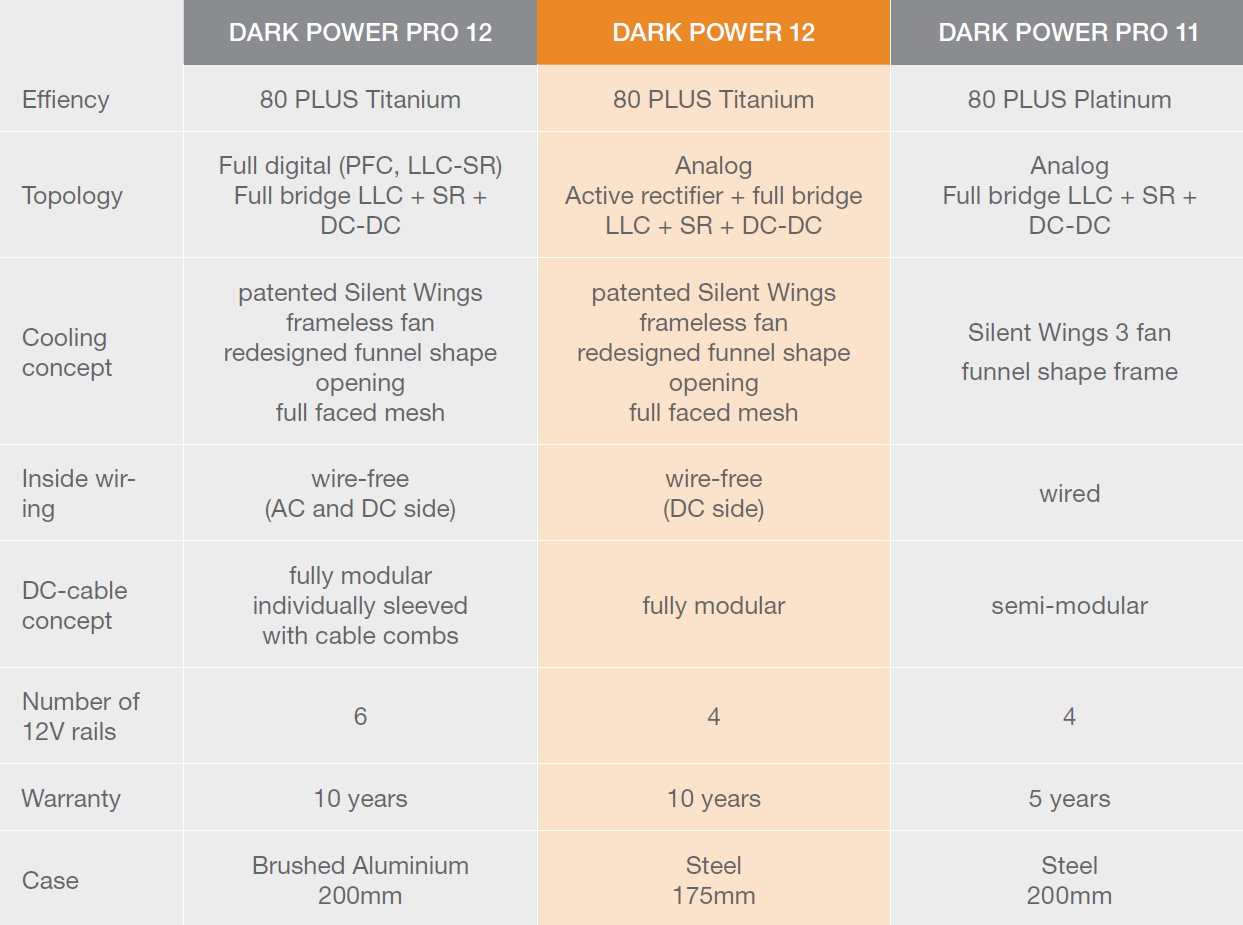
All differences between the Dark Power Pro 12, Dark Power 12, and Dark Power 11 lines are depicted in the table above. According to be quiet!, the Pro 12 line uses a fully digital platform, but it is actually only a semi-digital design.
Specifications
| Features & Specifications | |
|---|---|
| Max. DC Output | 850 W |
| PFC | Active PFC |
| Efficiency | 80 PLUS Titanium, Cybenetics Titanium |
| Noise | Cybenetics A+ (15–20 dBA) |
| Modular | Yes (fully) |
| Intel C6/C7 Power State Support | Yes |
| Operating Temperature | 0–50 °C |
| Protections | Over Voltage Protection Under Voltage Protection Over Power Protection Over Temperature Protection Over Current Protection Short Circuit Protection |
| Cooling | 135mm fluid dynamic bearing fan (BQ SIW3-13525-HF) |
| Semi-Passive Operation | No |
| Dimensions (W x H x D) | 150 x 85 x 175 mm |
| Weight | 2.05 kg (4.52 lb) |
| Compliance | ATX12V v2.53, EPS 2.92 |
| Warranty | 10 years |
| Price at Time of Review (excl. VAT) | $239.99 |
| Power Specifications | ||||||||||
|---|---|---|---|---|---|---|---|---|---|---|
| Rail | 3.3 V | 5 V | 12 V1 | 12 V2 | 12 V3 | 12 V4 | 5 VSB | -12 V | ||
| Max. Power | 24 A | 24 A | 30 A | 30 A | 35 A | 35 A | 3 A | 0.5 A | ||
| 120 W | 840 W | 15 W | 6 W | |||||||
| Total Max. Power | 850 W | |||||||||
| Power Distribution | |
|---|---|
| 12V1 | ATX, Peripheral |
| 12V2 | EPS |
| 12V3 | 2x PCIe (first column) |
| 12V4 | 2x PCIe (second column) |
Photos

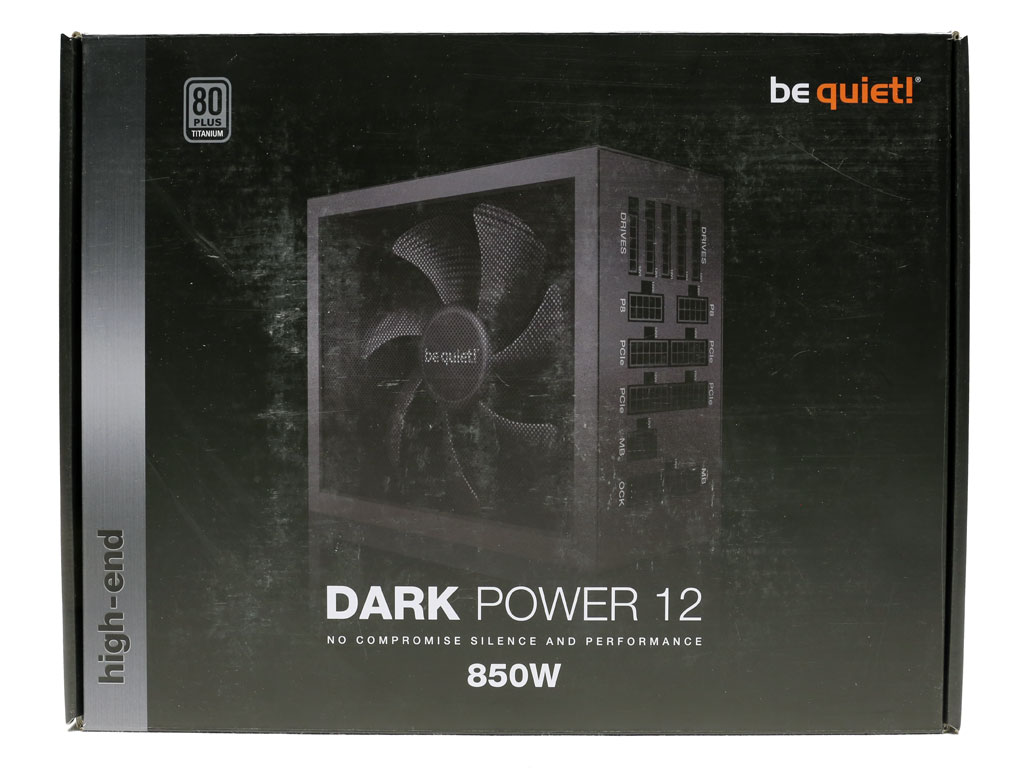
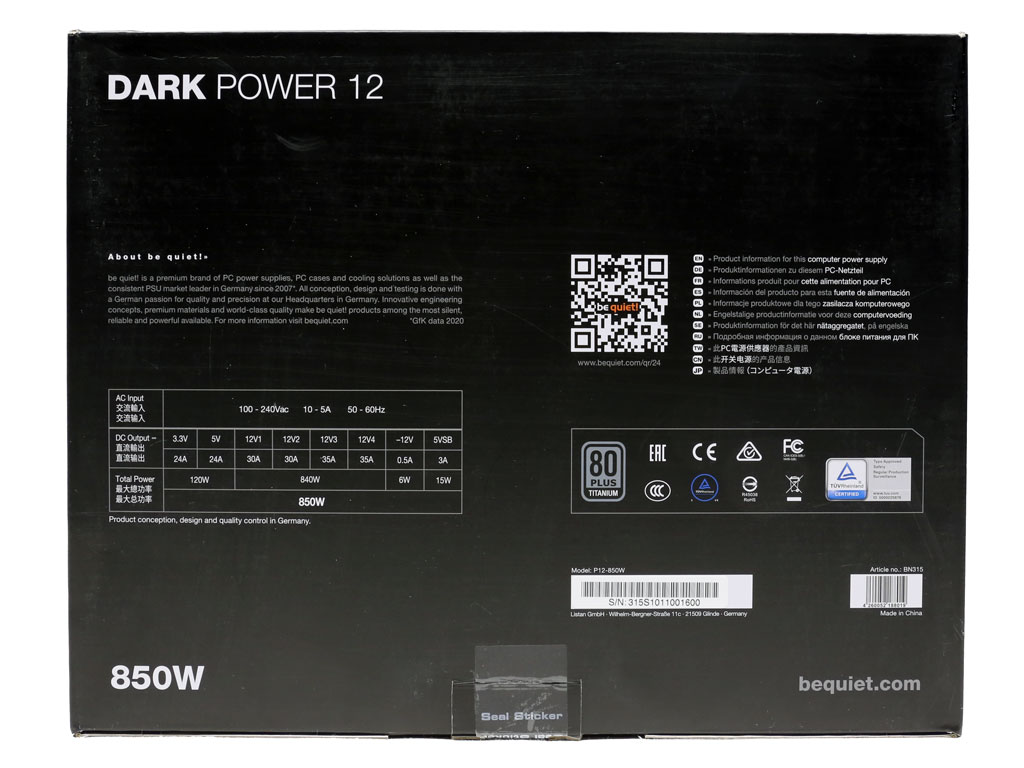
The box is quite large and heavy. At its face is a photo of the PSU with the modular panel exposed. Unfortunately, around the back, not much information is available. If you want more information about the product, scan the QR code.
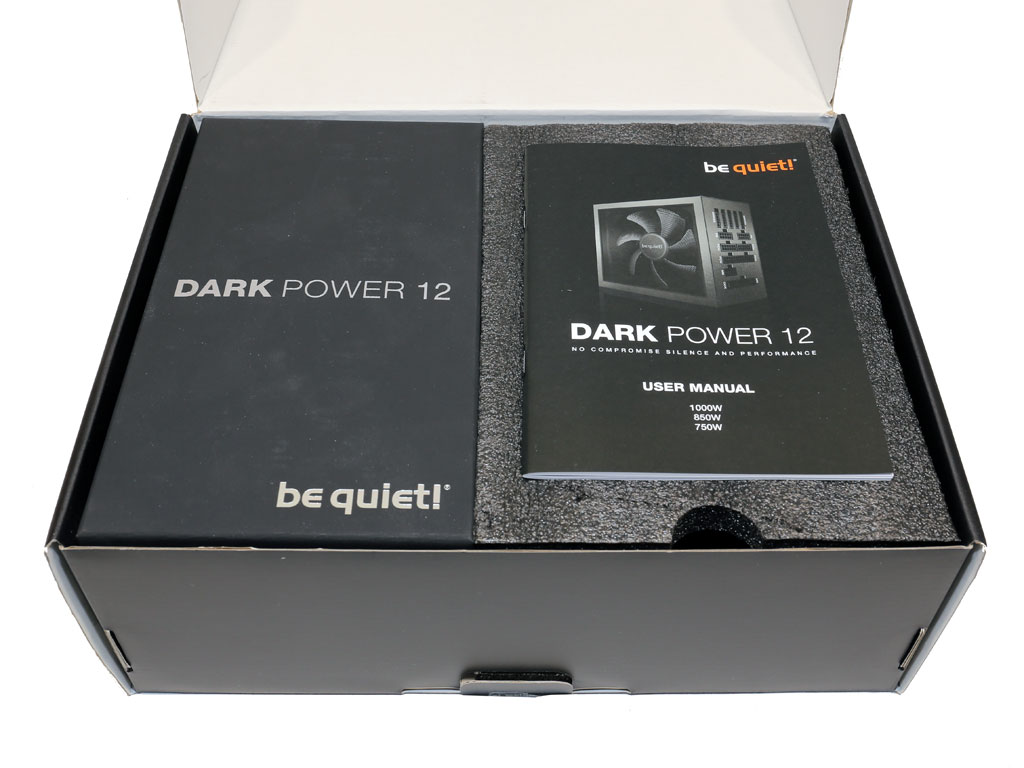
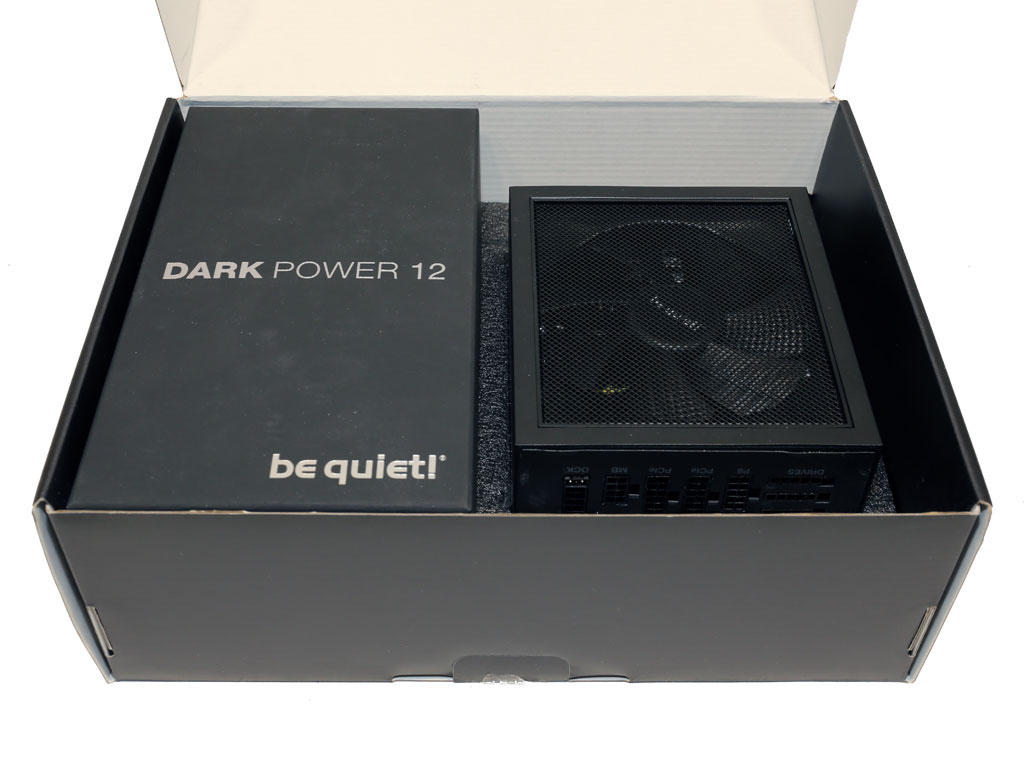
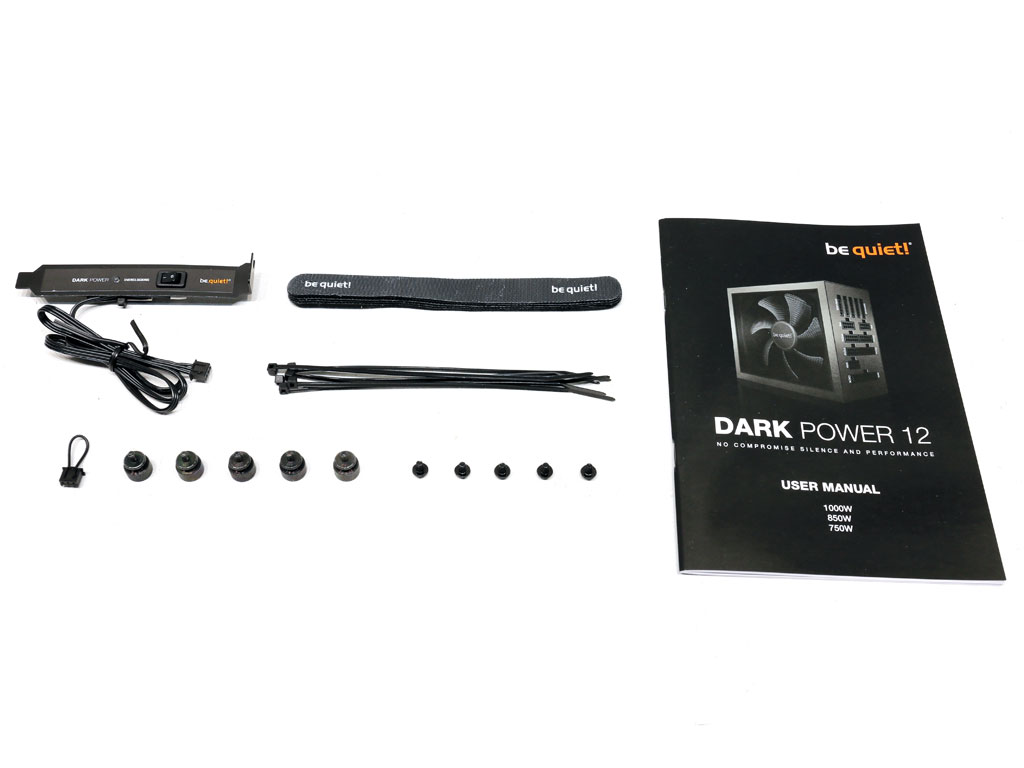
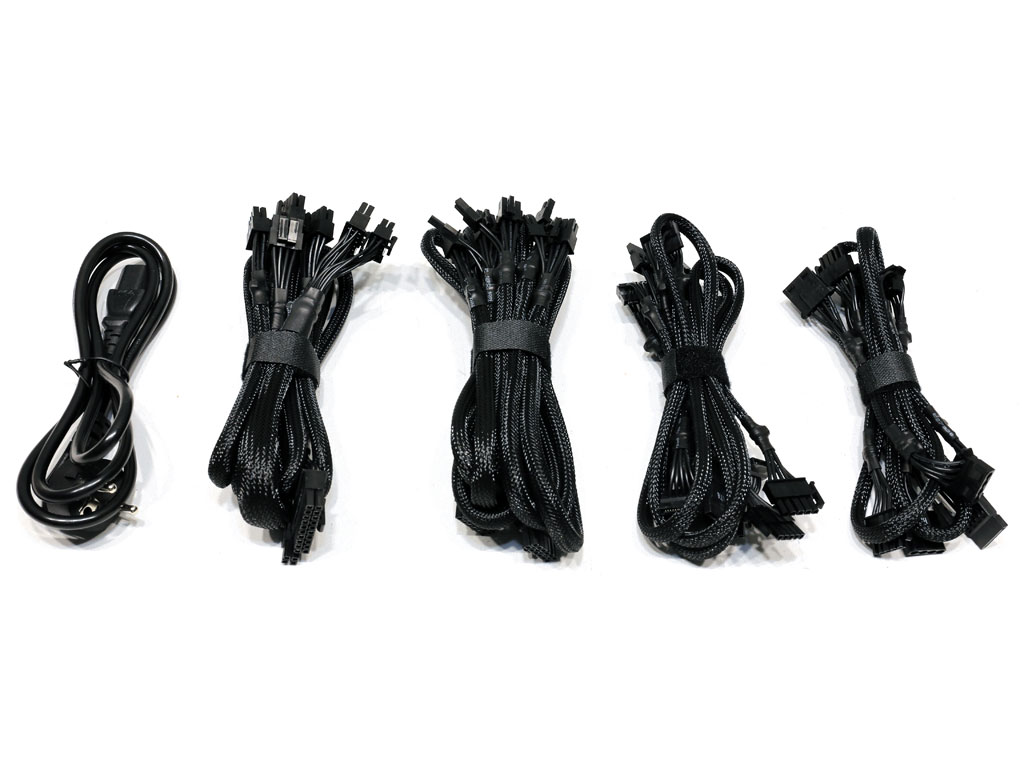
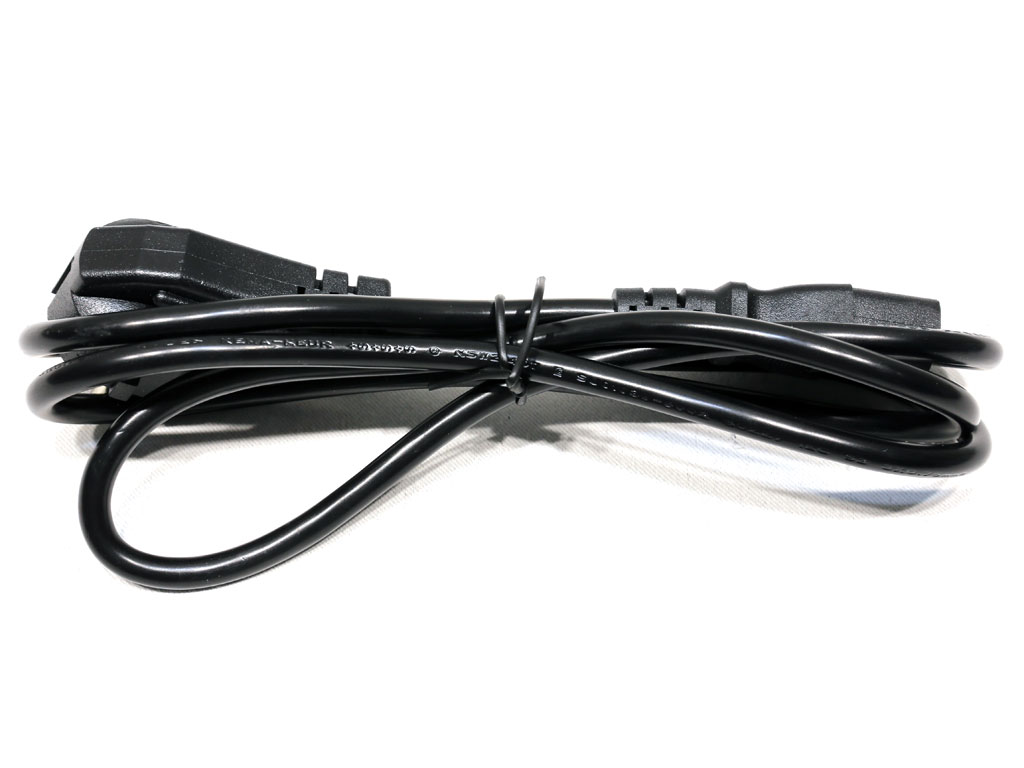
Protection inside the box is good since the PSU is surrounded by packing foam. Additionally, the bundle is rich, including several Velcro straps and zip ties.
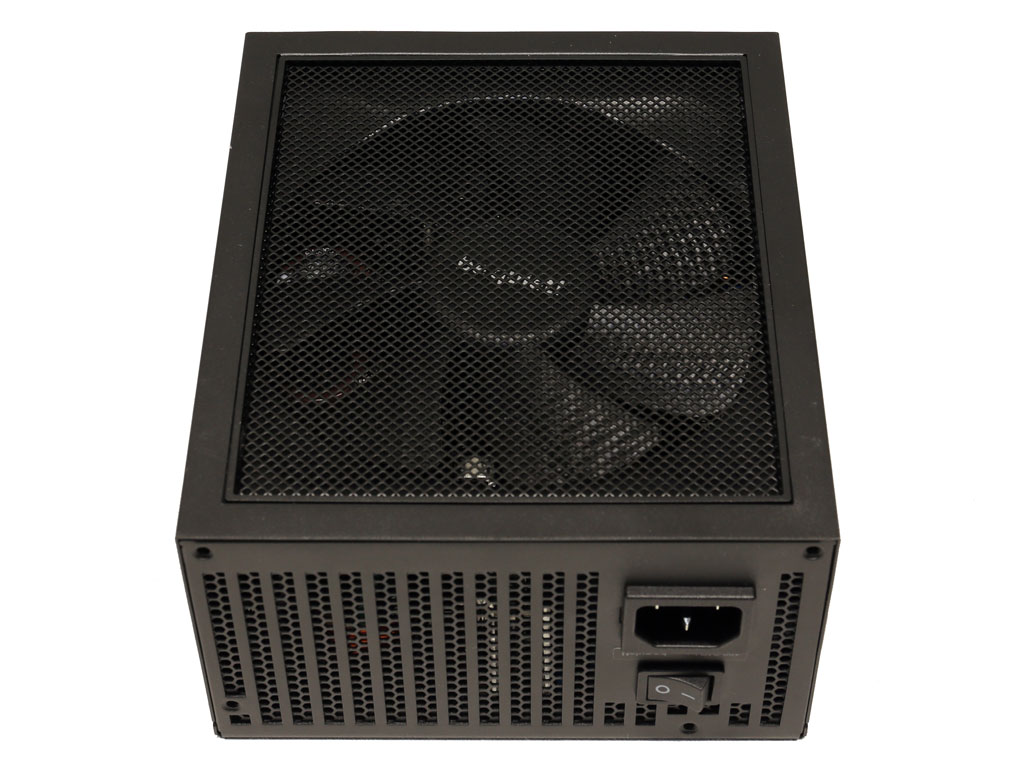


External build quality is topnotch. The PSU might not have the brushed aluminium finish of the Dark Power Pro 12 models, but the finish is still nice.
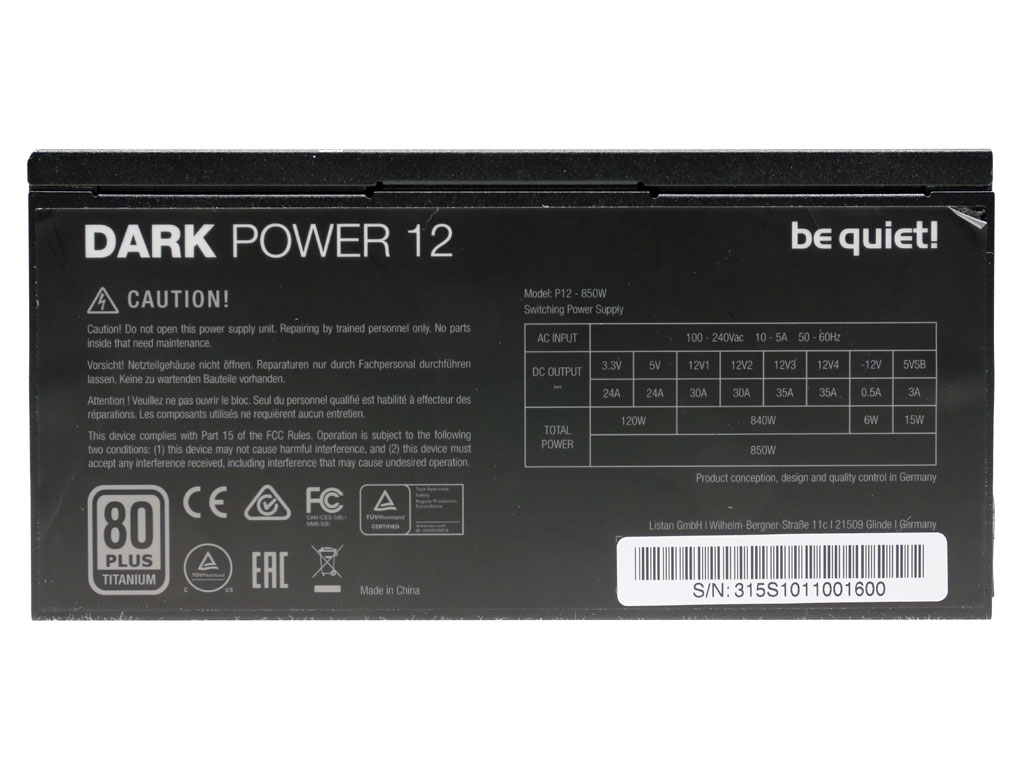
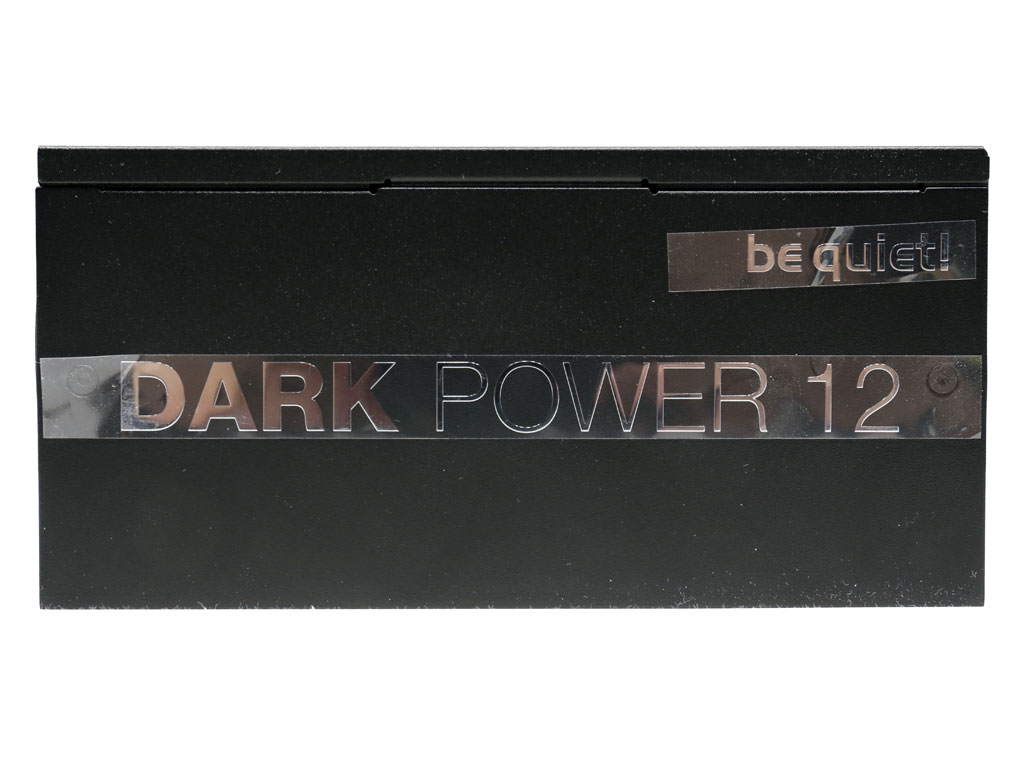

The power specifications label entirely covers one of the PSU's sides.
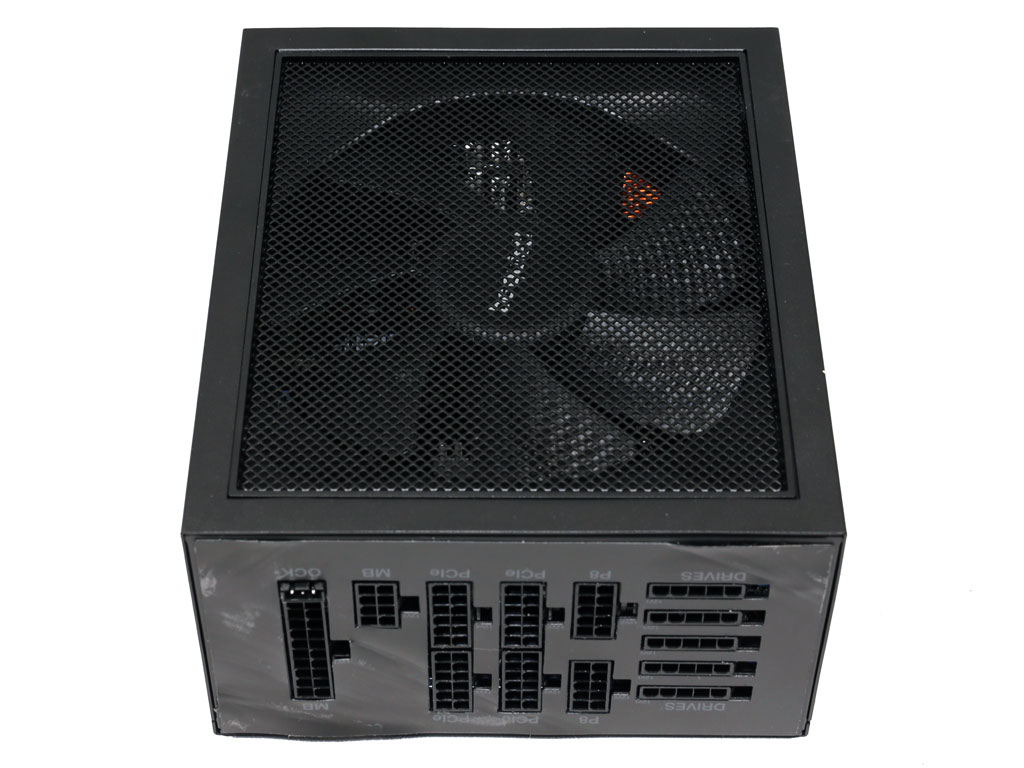

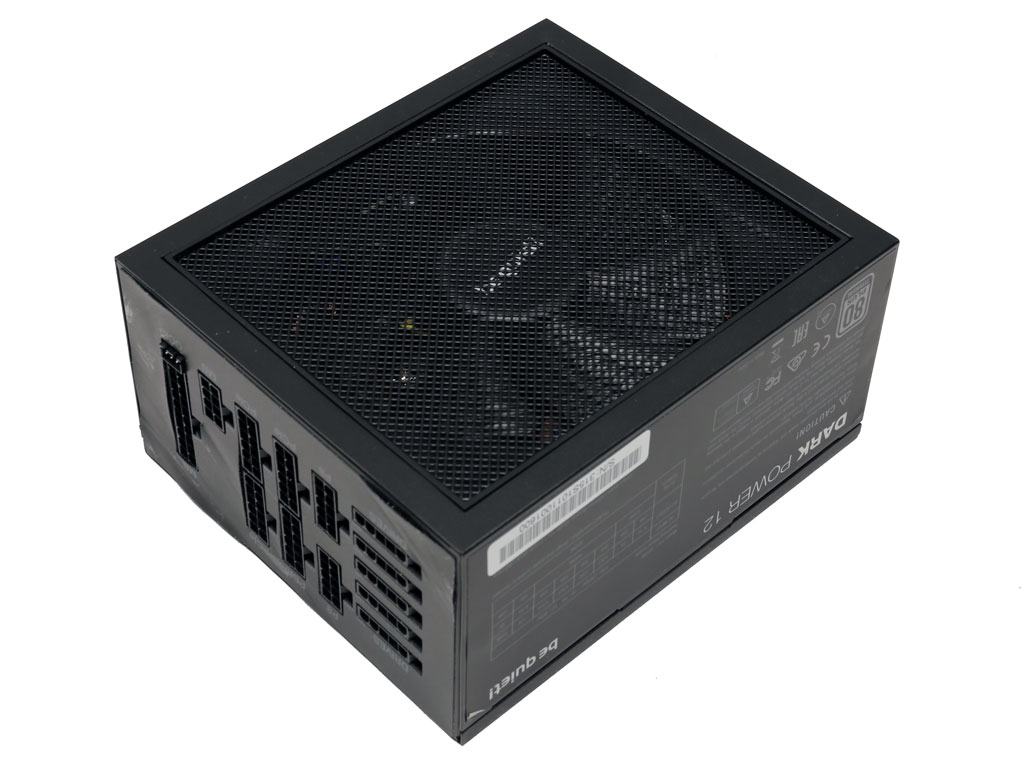
The modular panel has 14 sockets, the smallest one of which is for the overclocking key.
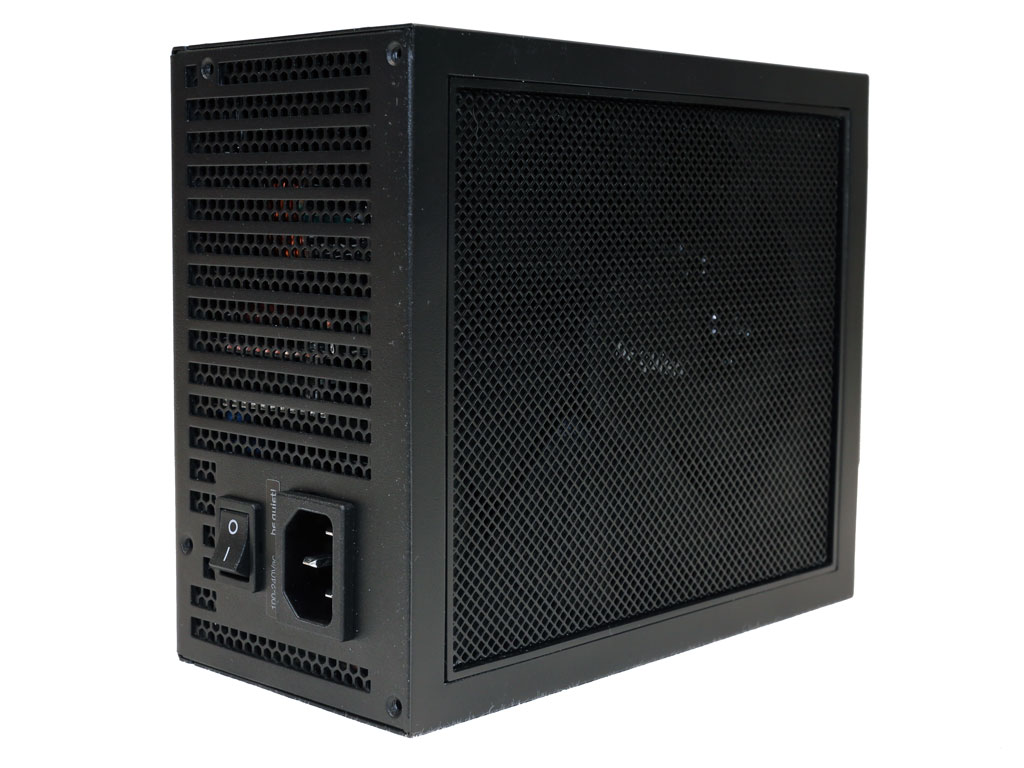
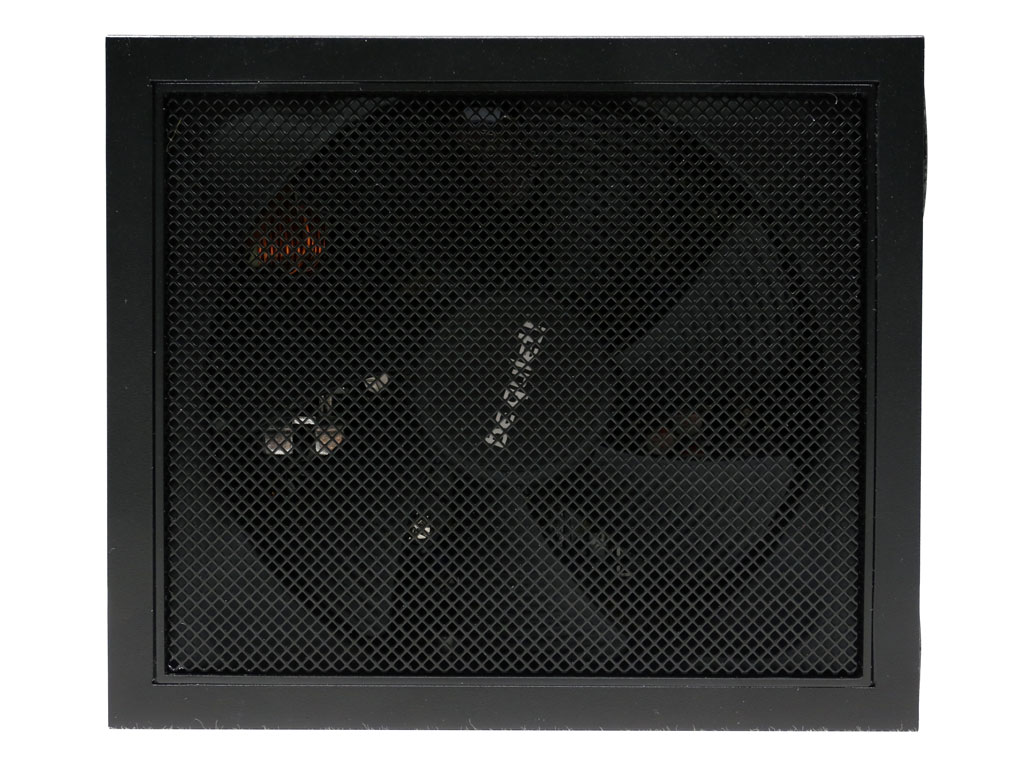

The fan grill is a bit restrictive.
Cables and Connectors
| Modular Cables | ||||
|---|---|---|---|---|
| Description | Cable Count | Connector Count (Total) | Gauge | In-Cable Capacitors |
| ATX connector 20+4 pin (600 mm) | 1 | 1 | 18-22AWG | No |
| 8 pin EPS12V (700 mm) | 1 | 1 | 16AWG | No |
| 4+4 pin EPS12V (700 mm) | 1 | 1 | 16AWG | No |
| 2x (6+2) pin PCIe (600 mm) | 3 | 6 | 16-18AWG | No |
| SATA (600 mm+150 mm+150 mm+150 mm) | 1 | 4 | 18AWG | No |
| SATA (600 mm+150 mm+150 mm) | 2 | 6 | 18AWG | No |
| SATA (600 mm+150 mm) / 4-pin Molex (+150 mm+150 mm) / FDD (+150 mm) | 1 | 2 / 2 / 1 | 18-20AWG | No |
| 4-pin Molex (600 mm+150 mm+150 mm) | 1 | 1 | 18AWG | No |
| Overclocking jumper (620 mm) | 1 | 1 | 24AWG | No |
| AC Power Cord (1370 mm) - C13 coupler | 1 | 1 | 18AWG | - |
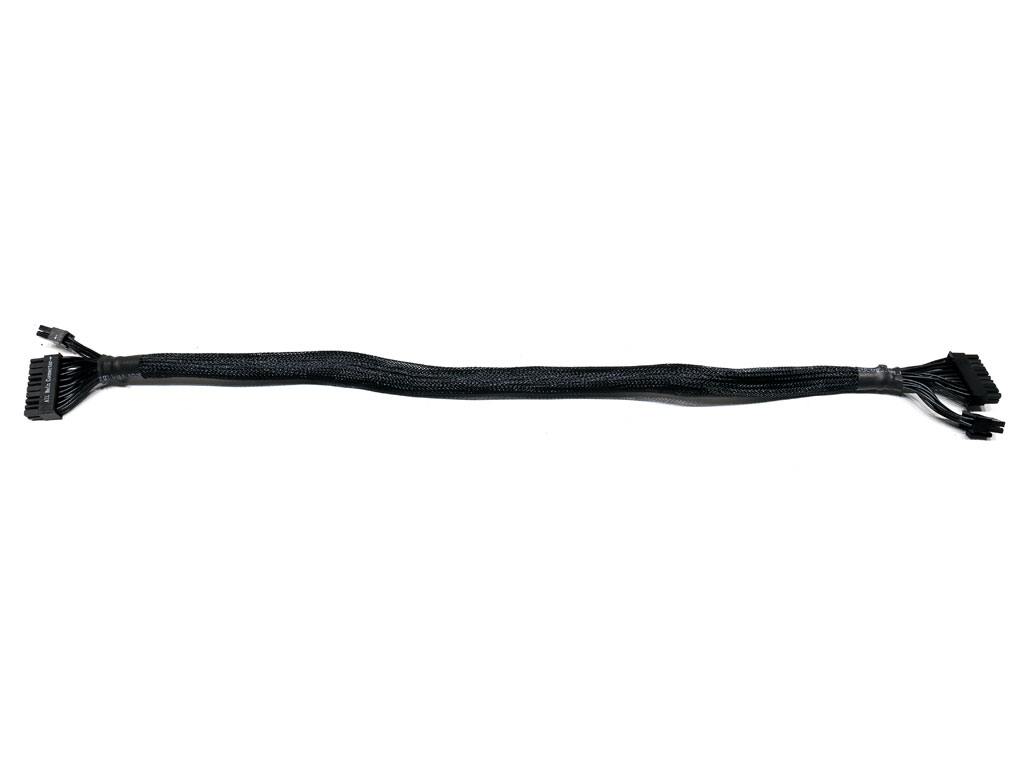


All cables are long, fully sleeved, and black. There are two EPS and six PCIe connectors in total. Good about the latter is that they are on separate cables, so voltage drops won't be as high as with cables with two PCIe connectors.
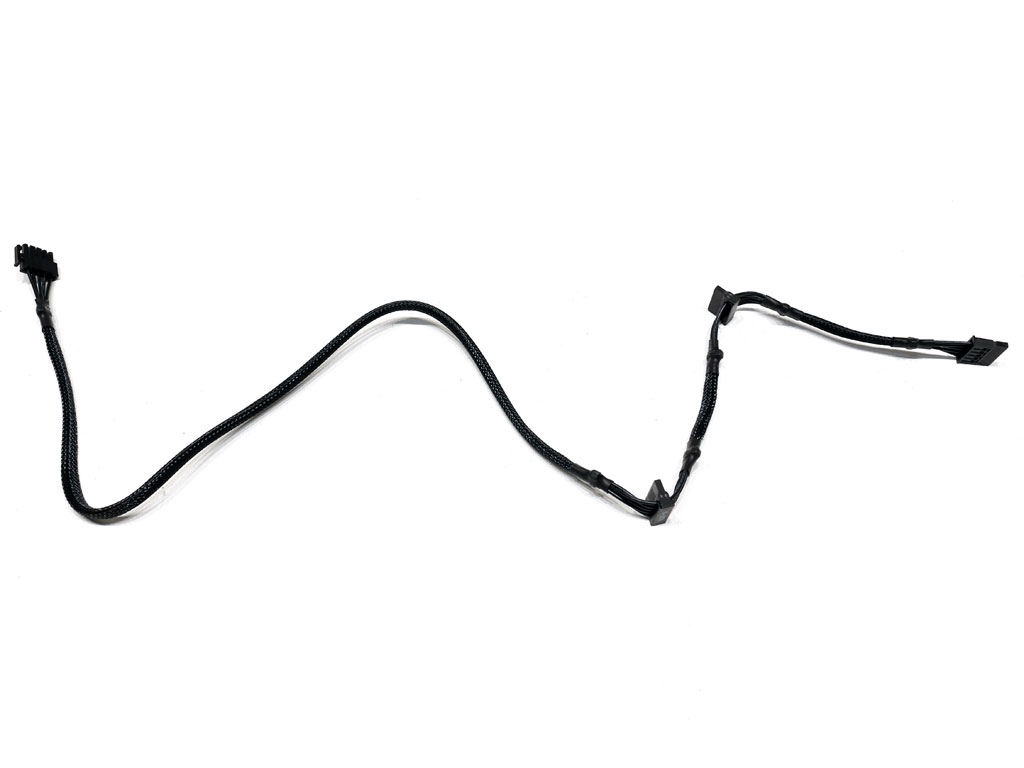

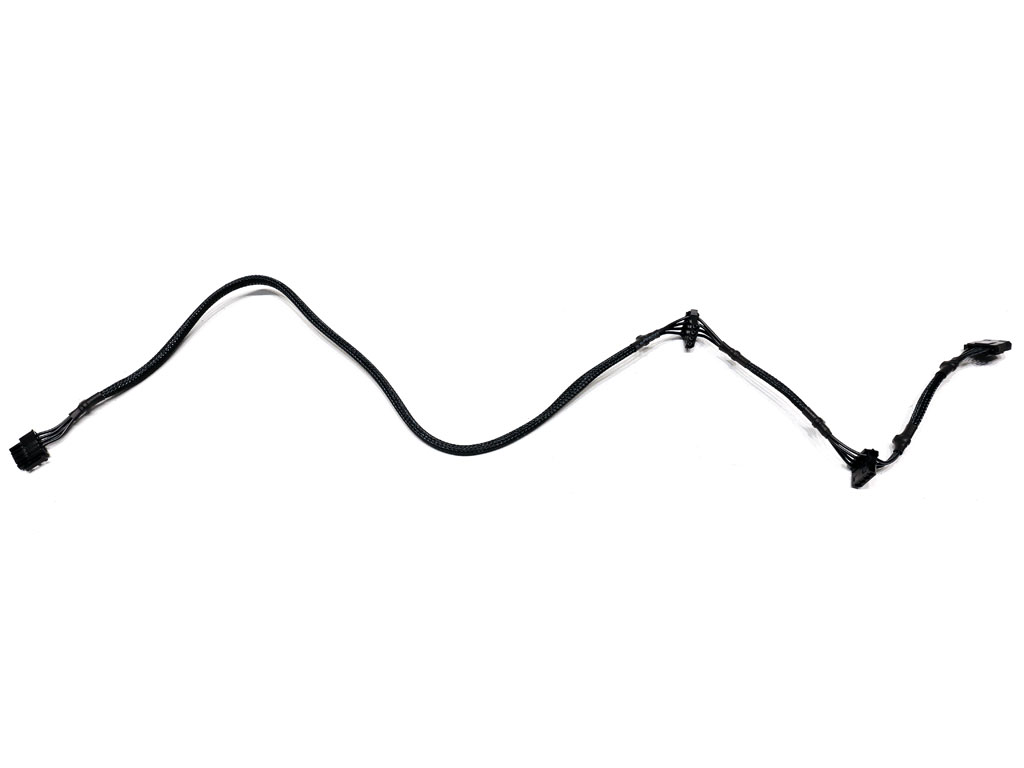
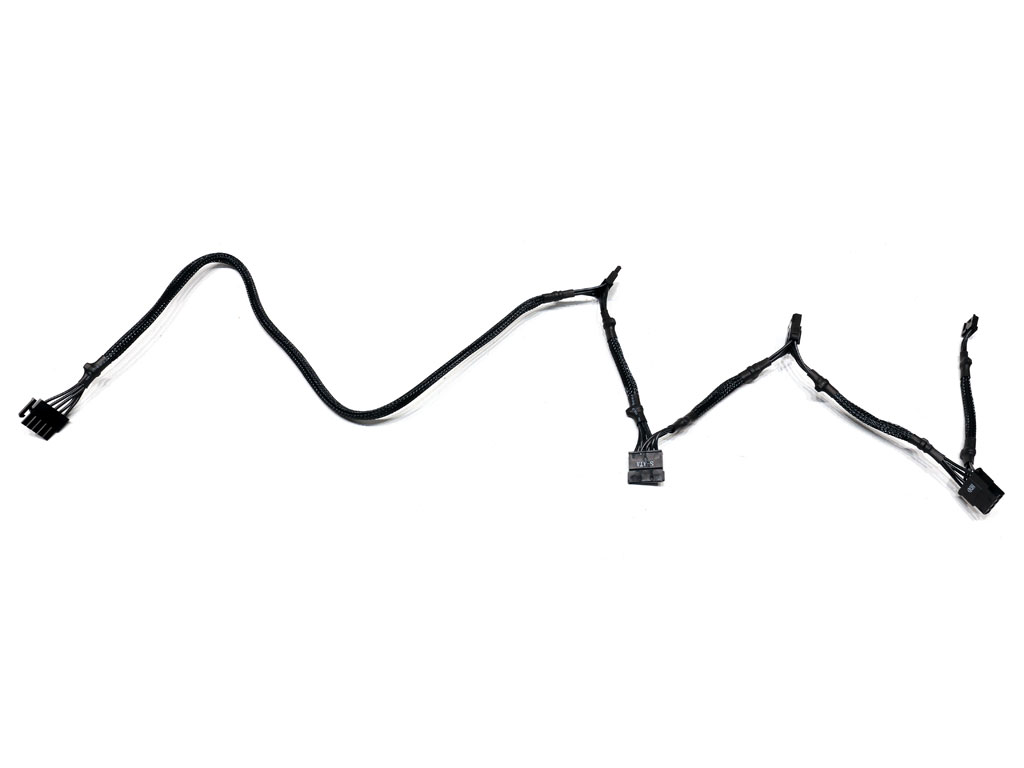
At 150 mm, the distance between peripheral connectors is adequate.
Component Analysis
Before reading this page, we strongly suggest a look at this article, which will help you understand the insides of a PSU better.| be quiet! Dark power 12 850W Parts Description | |
|---|---|
| General Data | |
| Manufacturer (OEM) | FSP |
| PCB Type | Double-Sided |
| Primary Side | |
| Transient Filter | 4x Y caps, 3x X caps, 2x CM chokes, and 1x MOV |
| Rectifier(s) (Standby Mode) | 4x Diodes Incorporated S3M (800 V, 15 A @ 100 °C) |
| Active Rectifier(s) | 4x Infineon IPB60R060P7 (600 V, 30 A @ 100 °C, Rds (on): 0.06 ohm) |
| Inrush Current Protection | NTC thermistor (SCK-056) & relay |
| APFC MOSFETs | 2x Infineon IPA60R120P7 (600 V, 16 A @ 100 °C, Rds (on): 0.12 ohm) |
| APFC Boost Diode | 2x CREE C3D06060 (600 V, 6 A @ 154 °C) |
| Bulk Cap(s) | 1x Nippon Chemi-Con (420 V, 470 uF, 2,000 h @ 105 °C KMZ) & 1x Nippon Chemi-Con (420 V, 330 uF, 2,000 h @ 105°C, KMR) |
| Main Switchers | 4x Alpha & Omega AOTF190A60CL (600 V, 12 A @ 100 °C, Rds (on): 0.19 ohm) |
| IC Driver | 2x Silicon Labs Si8233BD |
| APFC Controller | Infineon ICE2PCS02 |
| Switching Controller | Champion CM6901T2X |
| Topology | Primary Side: bridgeless APFC, full-bridge & LLC converter Secondary Side: synchronous rectification & DC-DC converters |
| Secondary Side | |
| +12 V MOSFETs | 4x Toshiba TPHR8504PL (40 V, 150 A, Rds (on): 0.85 mOhm) |
| +5 V & +3.3 V | DC-DC Converters: 6x Infineon BSC0901NS (30 V, 94 A @ 100 °C, Rds (on): 1.9 mOhm) PWM Controllers: ANPEC APW7159C |
| Filtering Capacitors | Electrolytic: |
| Supervisor IC | Weltrend WT7527RA (OCP, OVP, UVP, SCP, PG) |
| Fan Controller | APW9010 |
| Fan Model | be quiet! Silent Wings BQSIW3-13525-HF (135 mm, 12 V, 0.56 A, 1800 RPM; fluid dynamic bearing fan) |
| 5VSB Circuit | |
| Rectifier(s) | 1x Nexperia PSMN2R0-30YL (30 V, 100 A @ 100 °C, Rds (on): 3.3 mOhm) FET 1x CET CEB04N7G (700 V, 4 A, Rds (on): 3.3 ohm) FET 1x P15L50 SBR |
| Standby PWM Controller | Grenergy GR8837C |
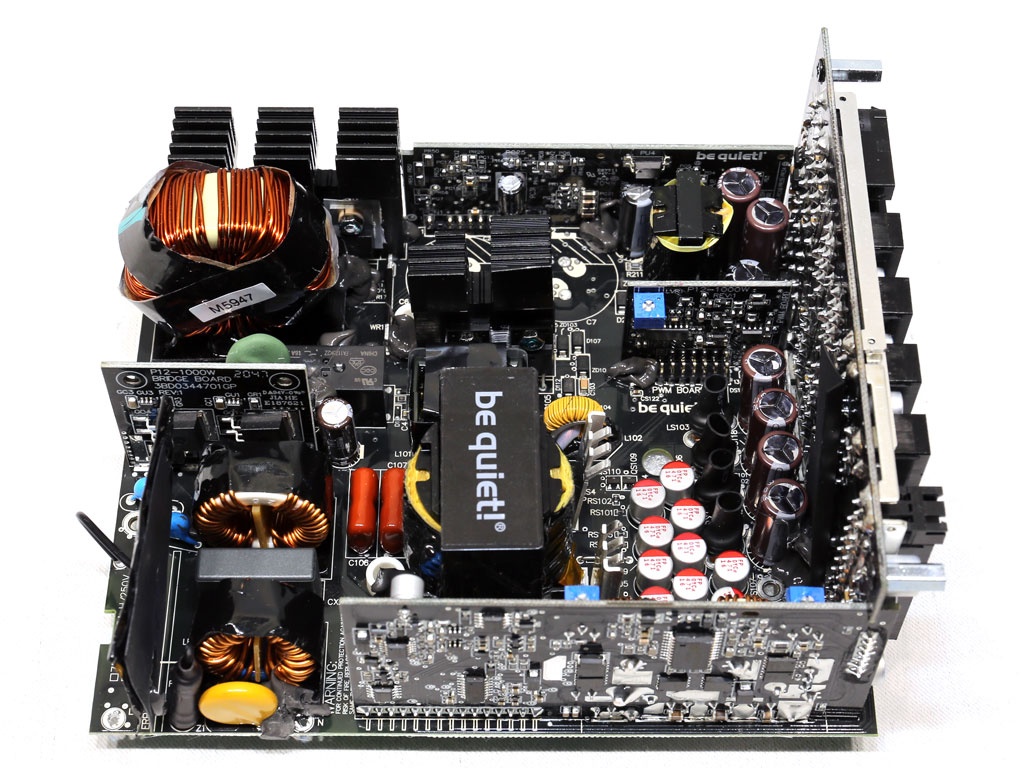
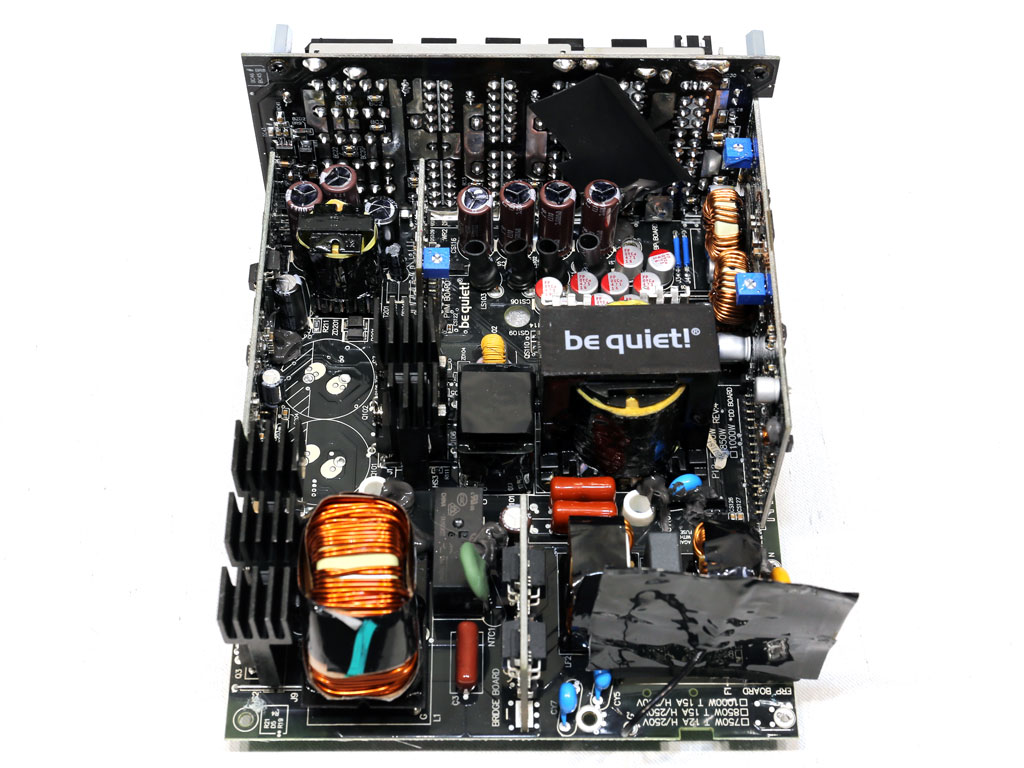
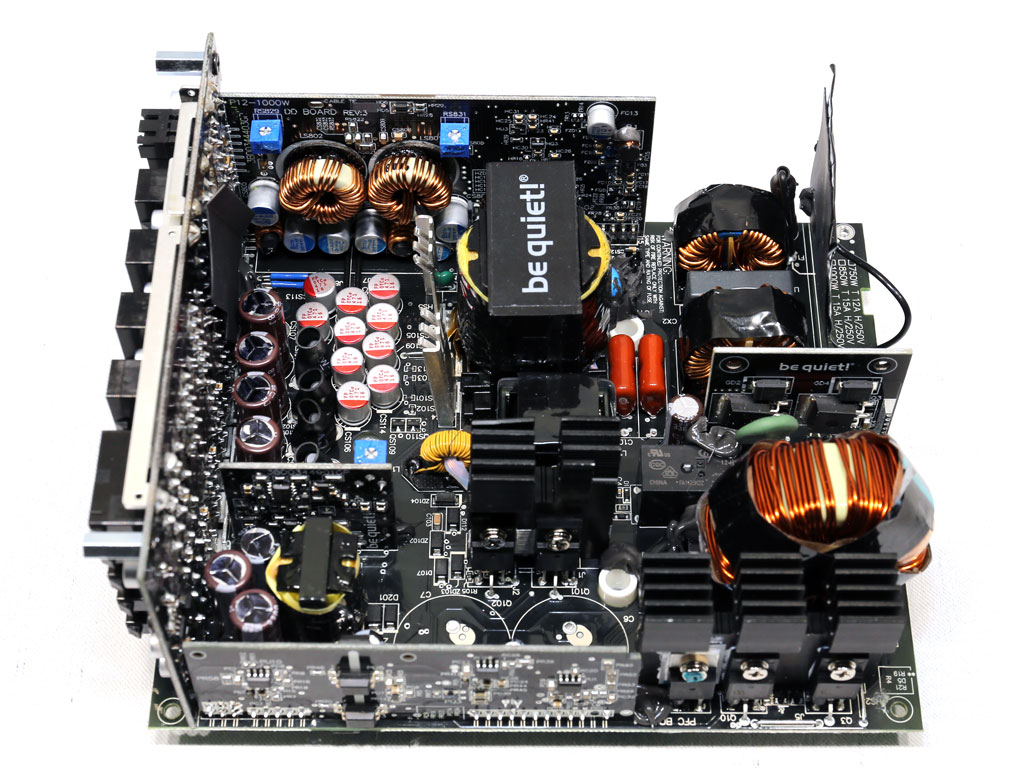
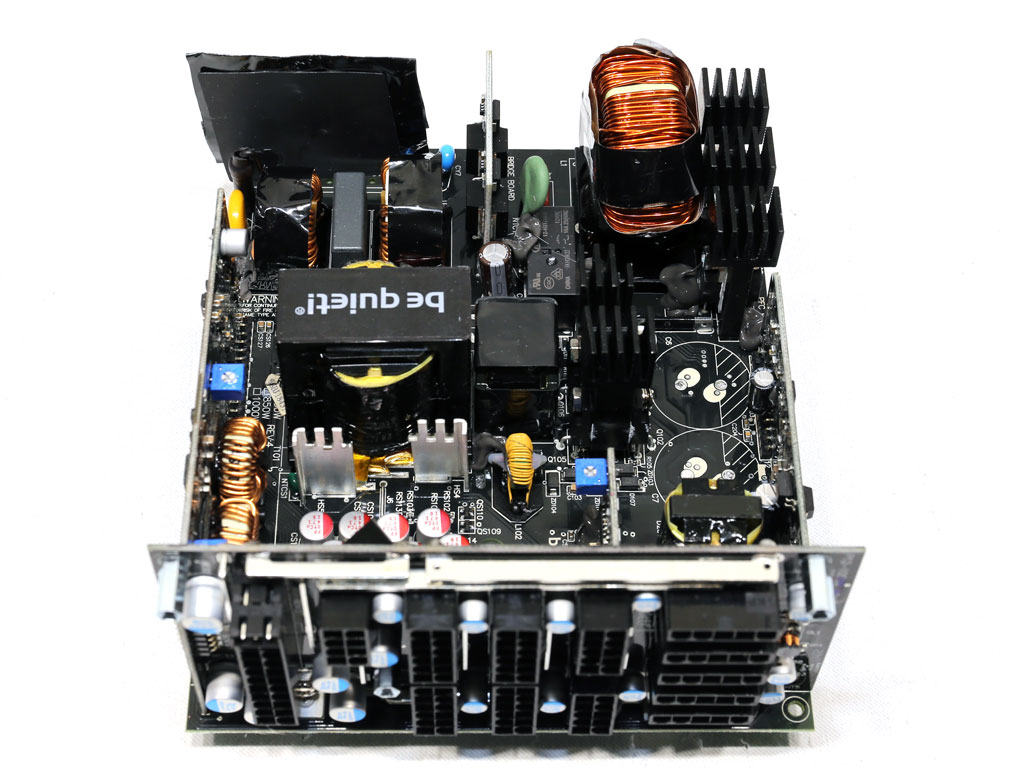
This is an interesting platform by FSP. There are no heat sinks on the secondary side, which reminds me of CWT designs since the FETs that regulate the +12 V rail are on the solder side of the main PCB. FSP used many daughter-boards to increase clearances between parts installed on the main PCB. This improves airflow, and the fan doesn't have to spin at high speeds to cool down the parts. The bridgeless APFC is something you won't readily find in this category because of the higher implementation cost. It provides significant energy savings, however. The next step would be to utilize a totem-pole APFC converter, but doing so necessitates a fully digital design.
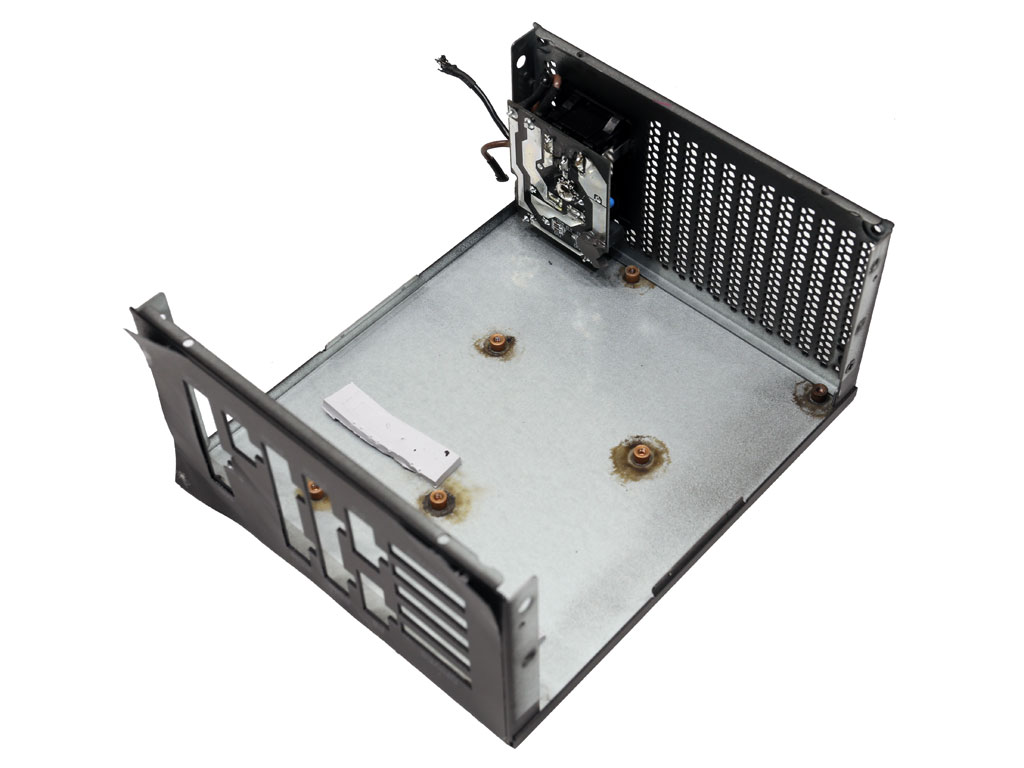
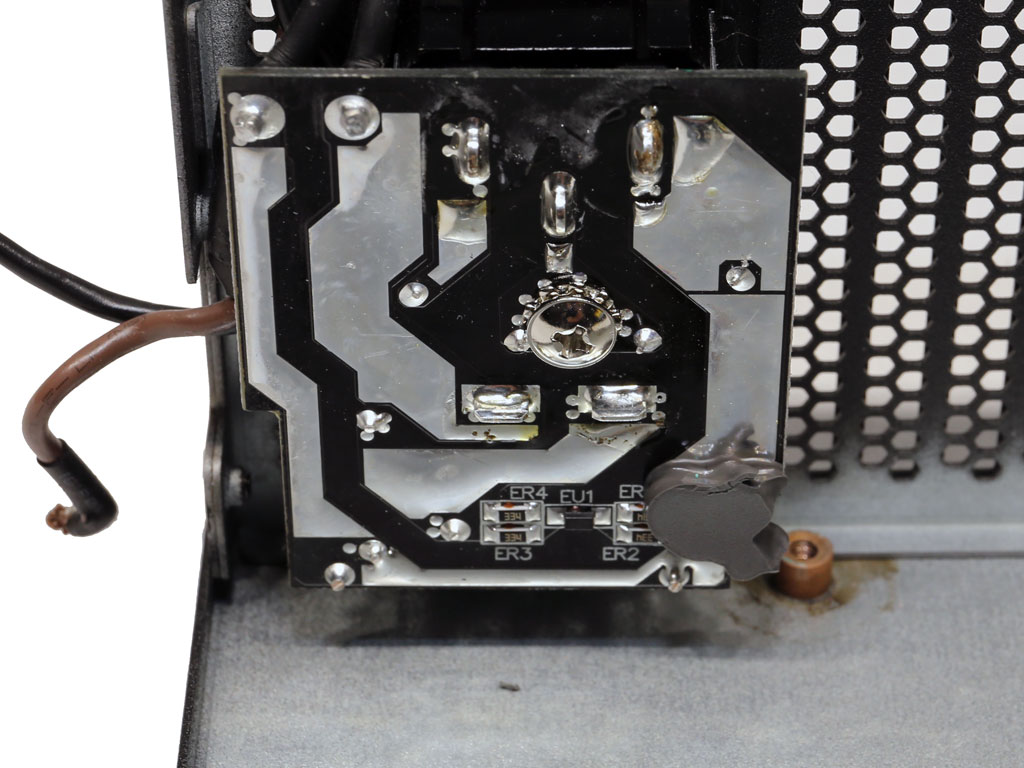
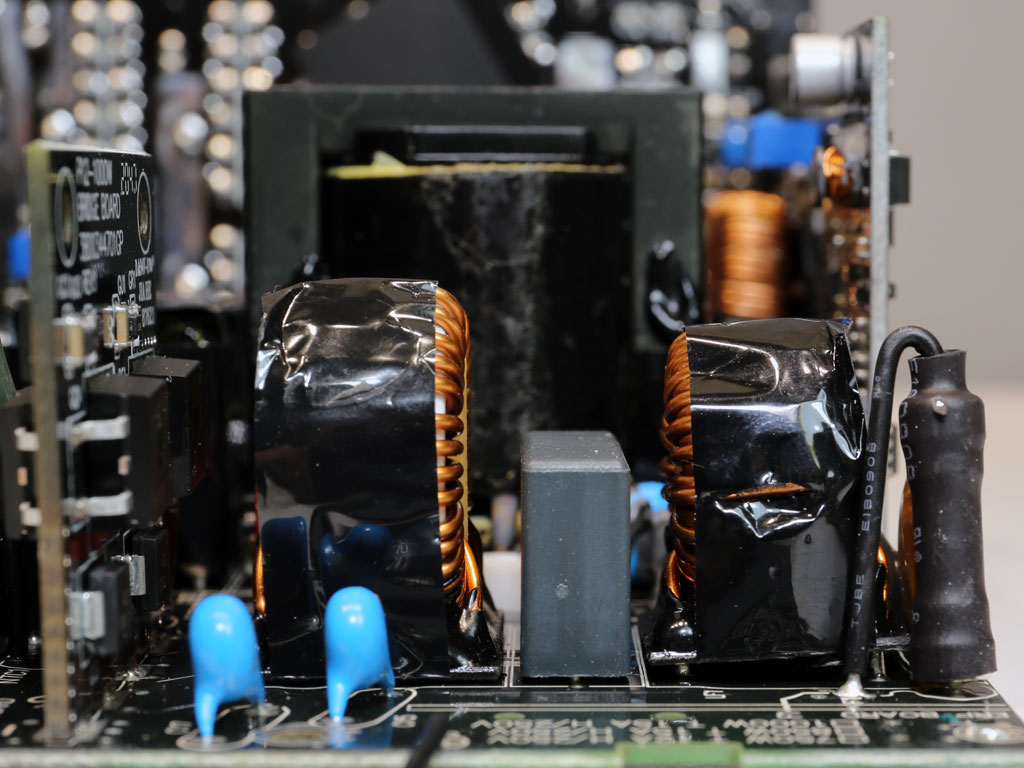
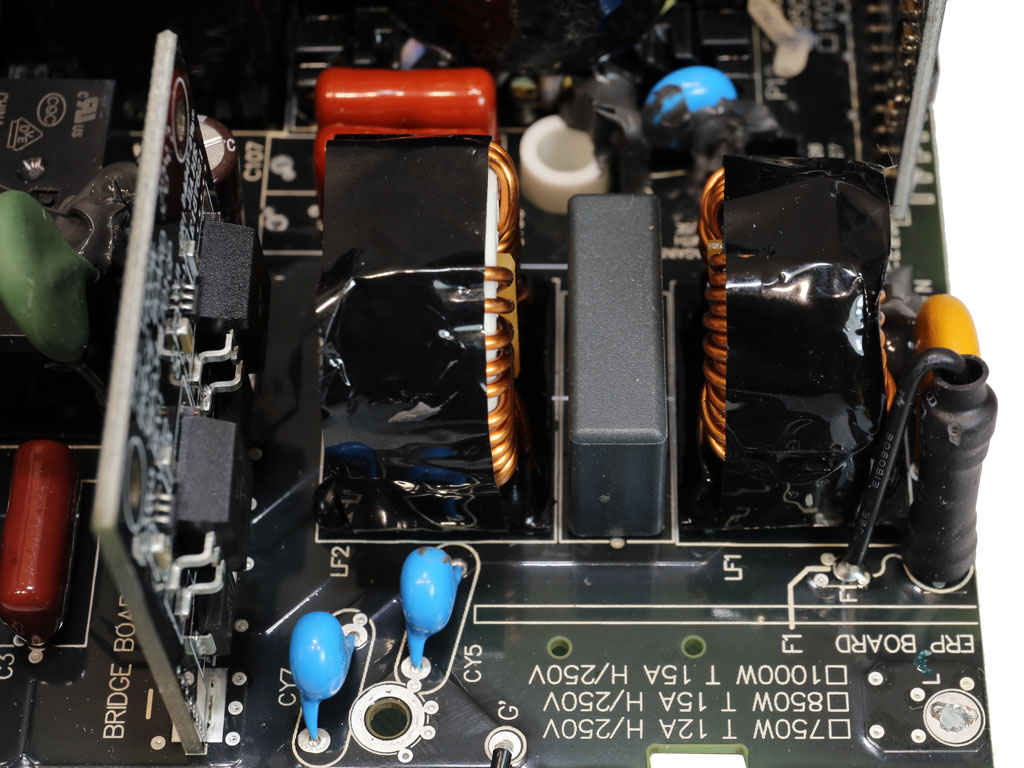
The transient/EMI filter stages include all the necessary components.
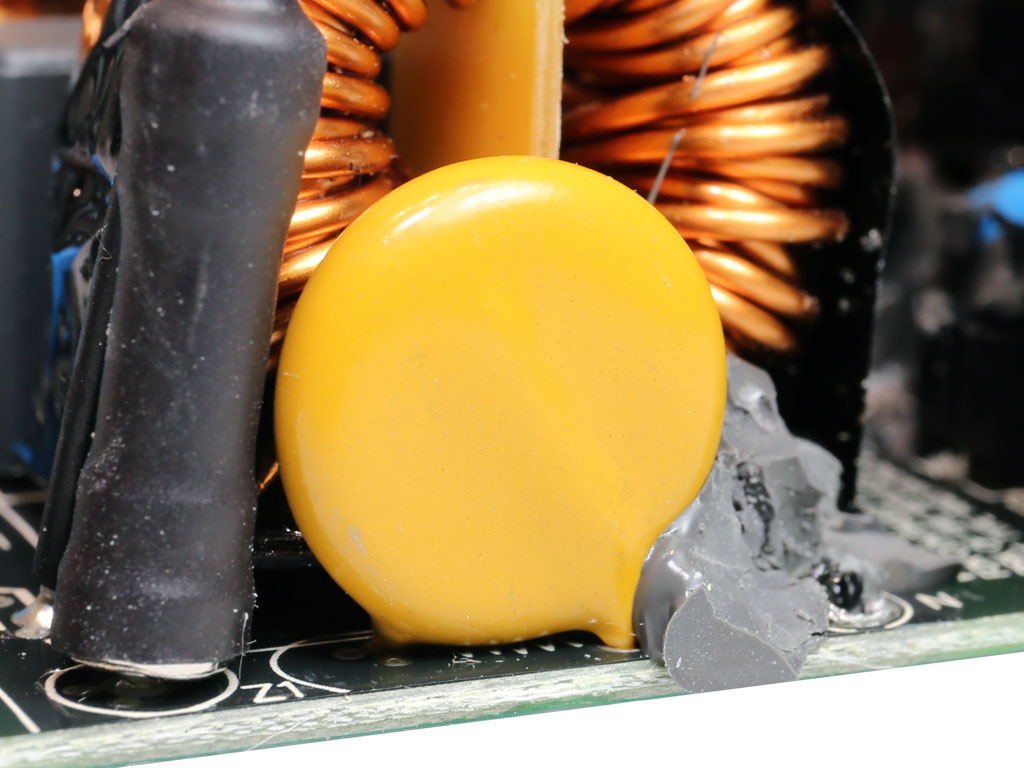
The MOV is not covered in heat shrink. I guess FSP is absolutely certain it won't be damaged and blow apart inside the PSU.

The NTC thermistor and bypass relay combination is for suppressing large inrush currents.
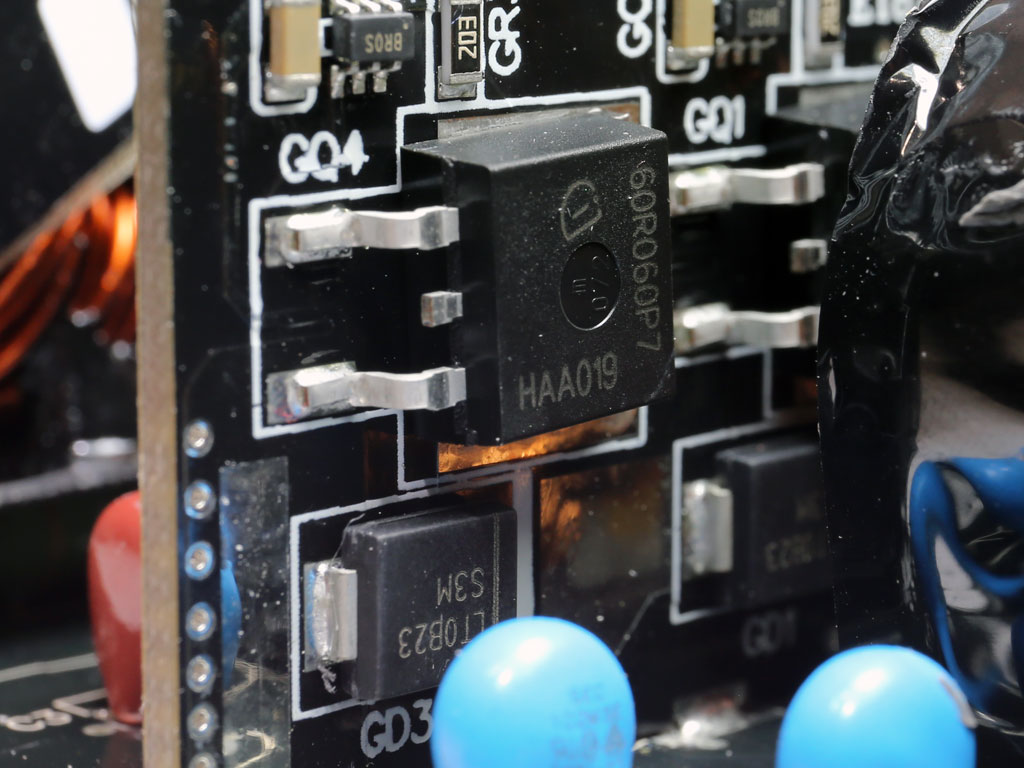
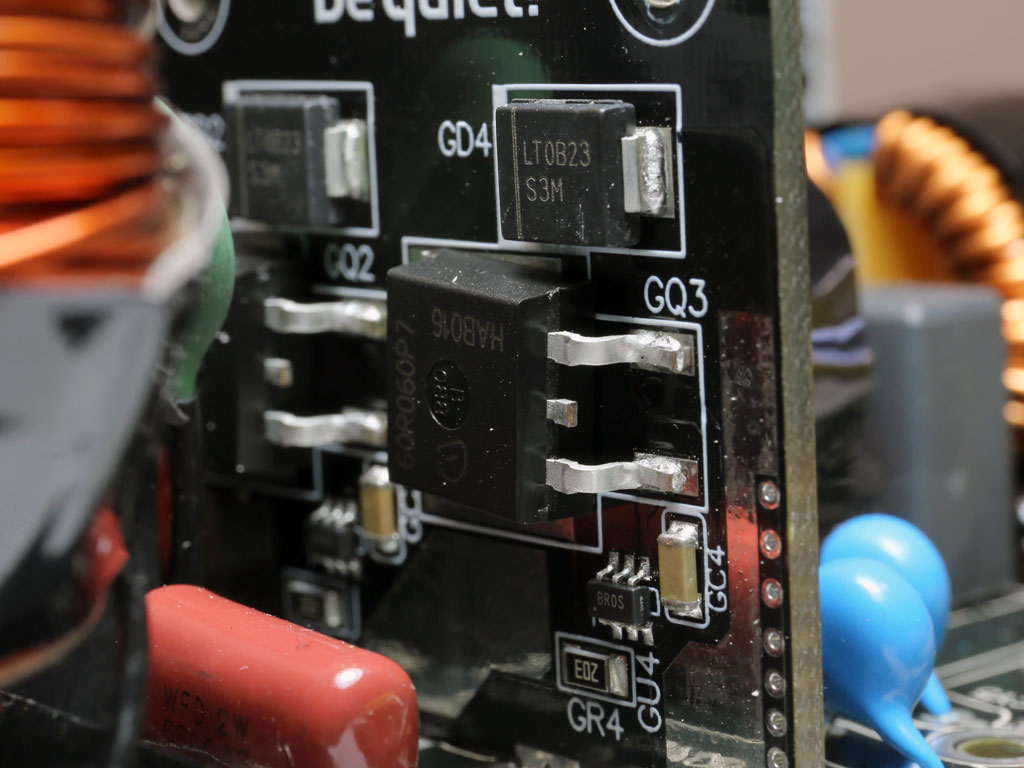
Instead of bridge rectifiers, FETs to fully rectify the incoming AC signal are used. The diodes shown in the photos above are for the independent standby circuit.
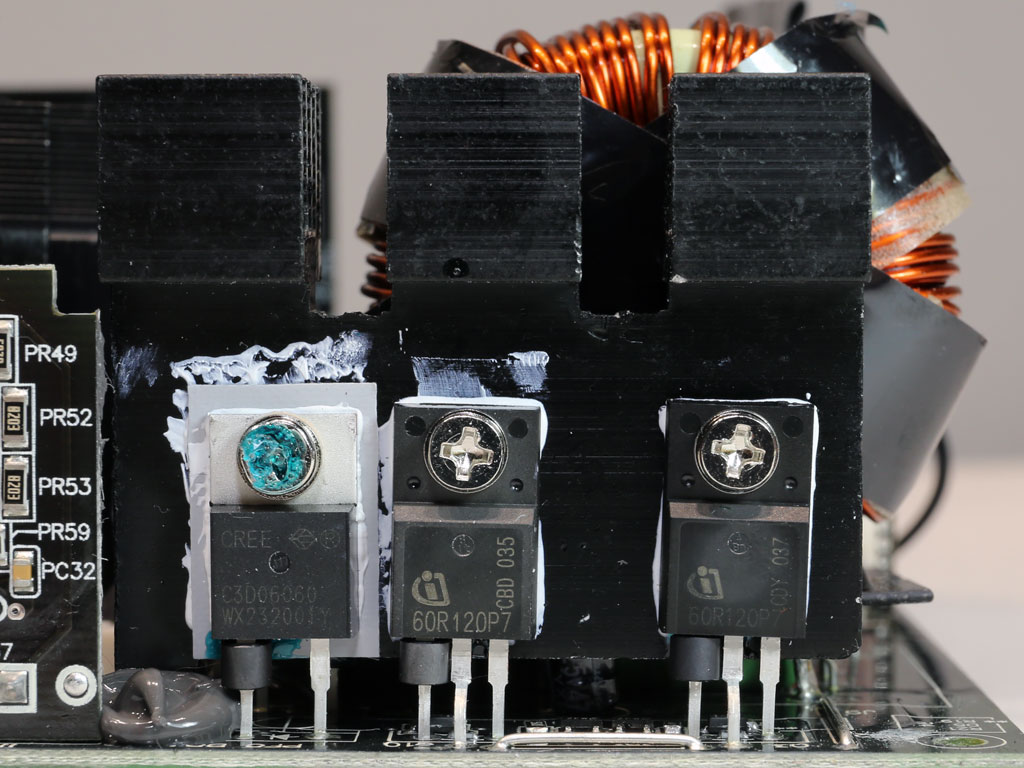
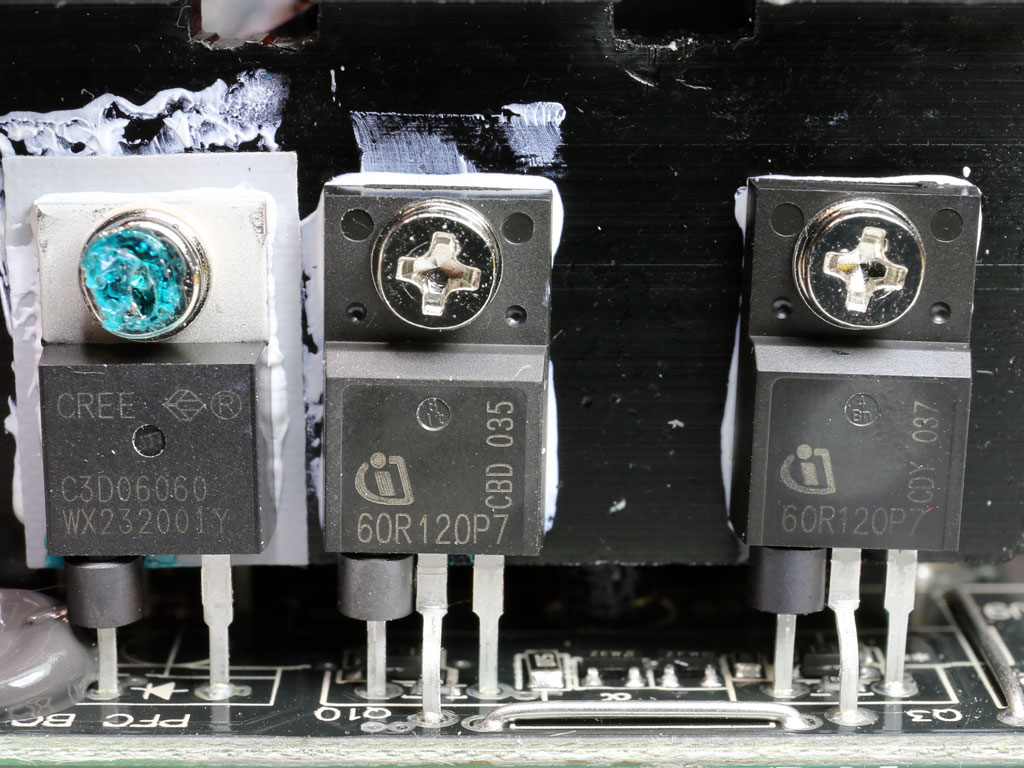
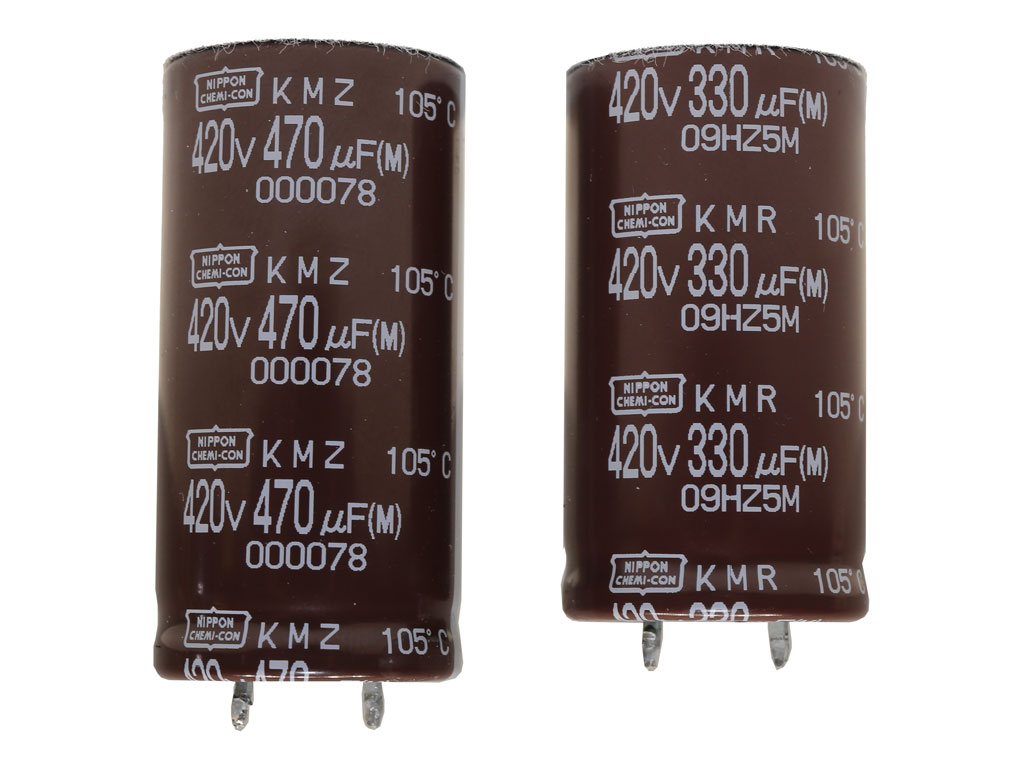
The APFC converter uses two Infineon FETs and a pair of CREE boost diodes. The bulk caps are by Chemi-Con and have enough combined capacity to provide a hold-up time of over 17 ms.
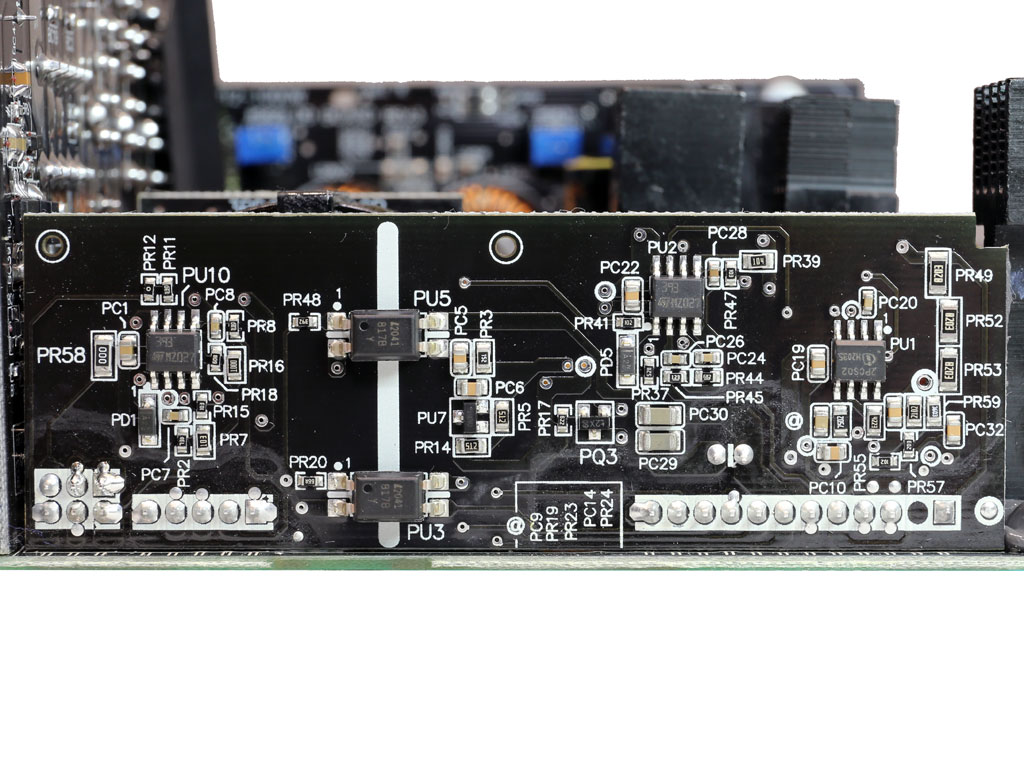
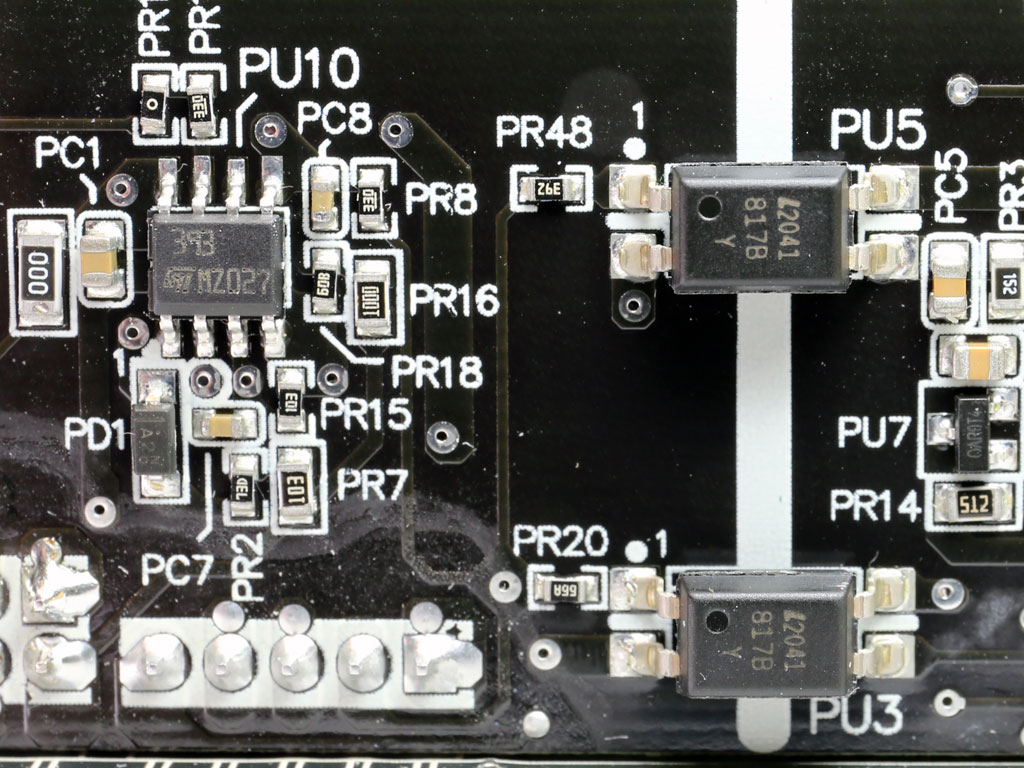
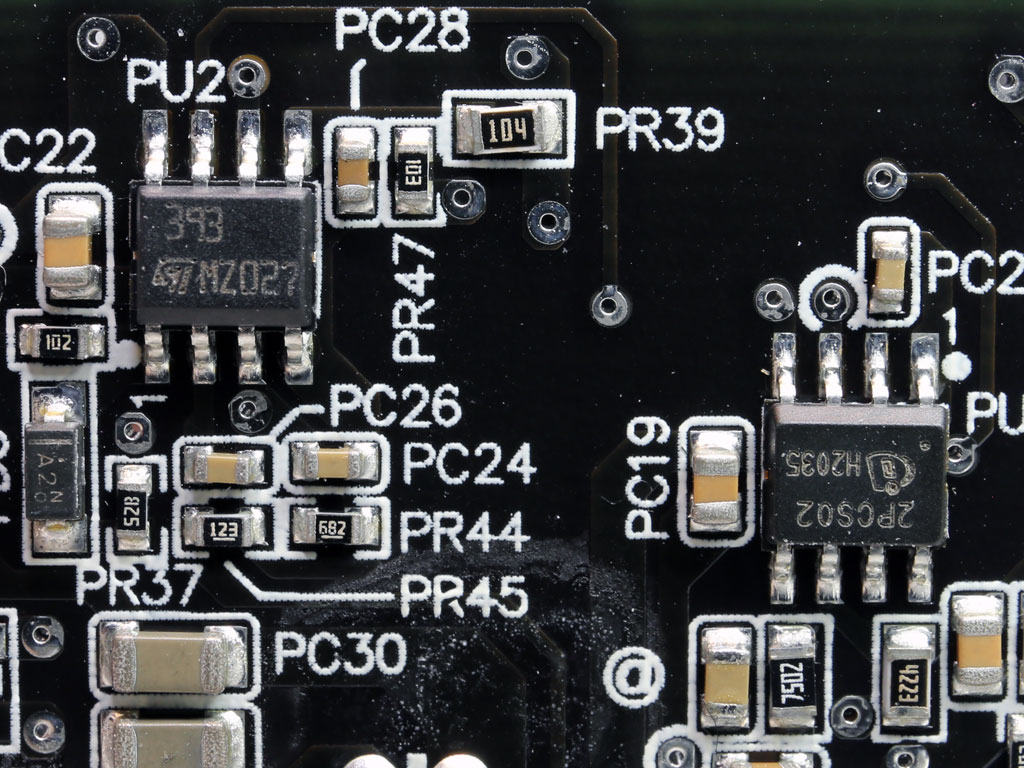
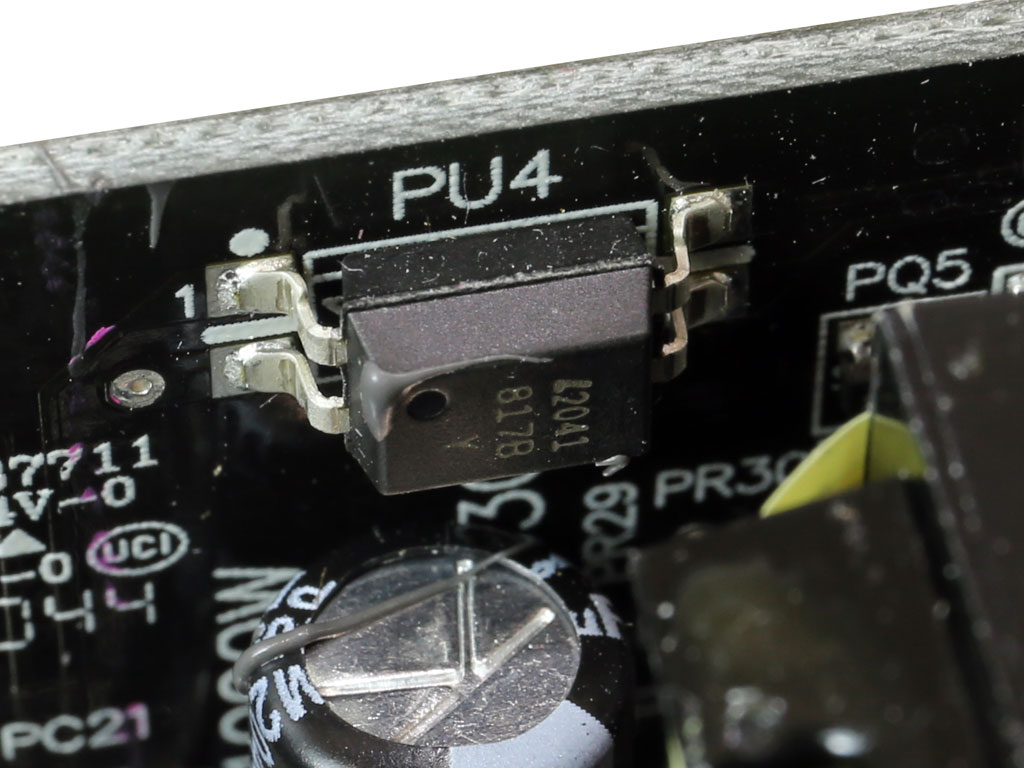
The APFC controller is an Infineon ICE2PCS02 IC, installed on a daughter-board.
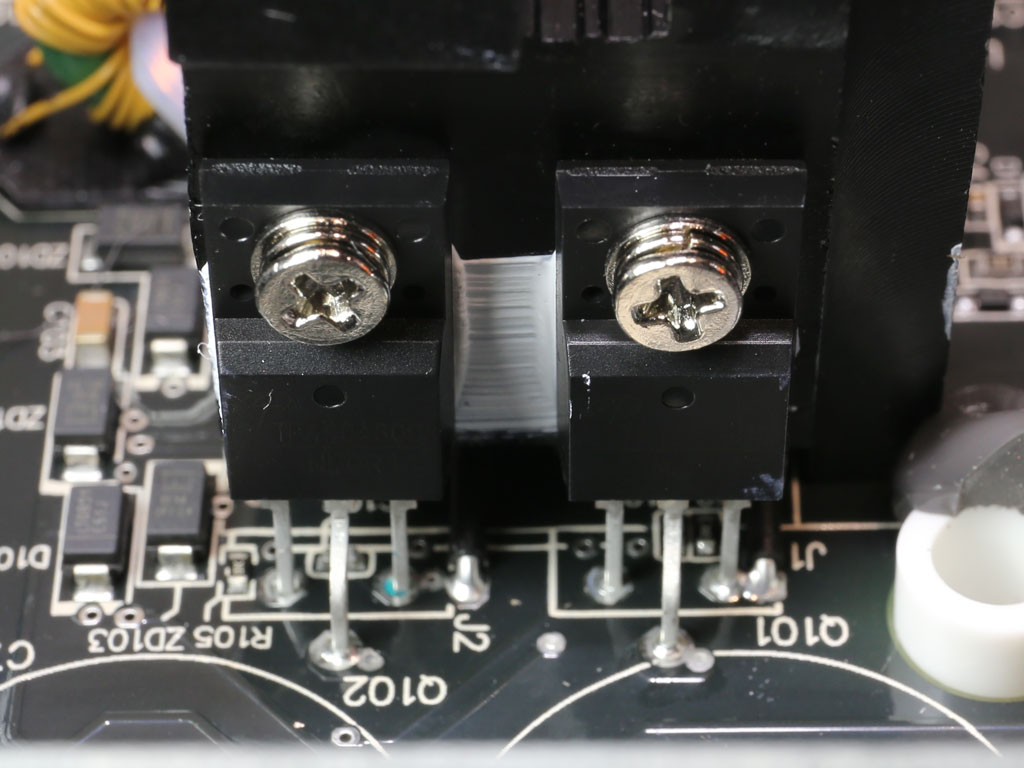
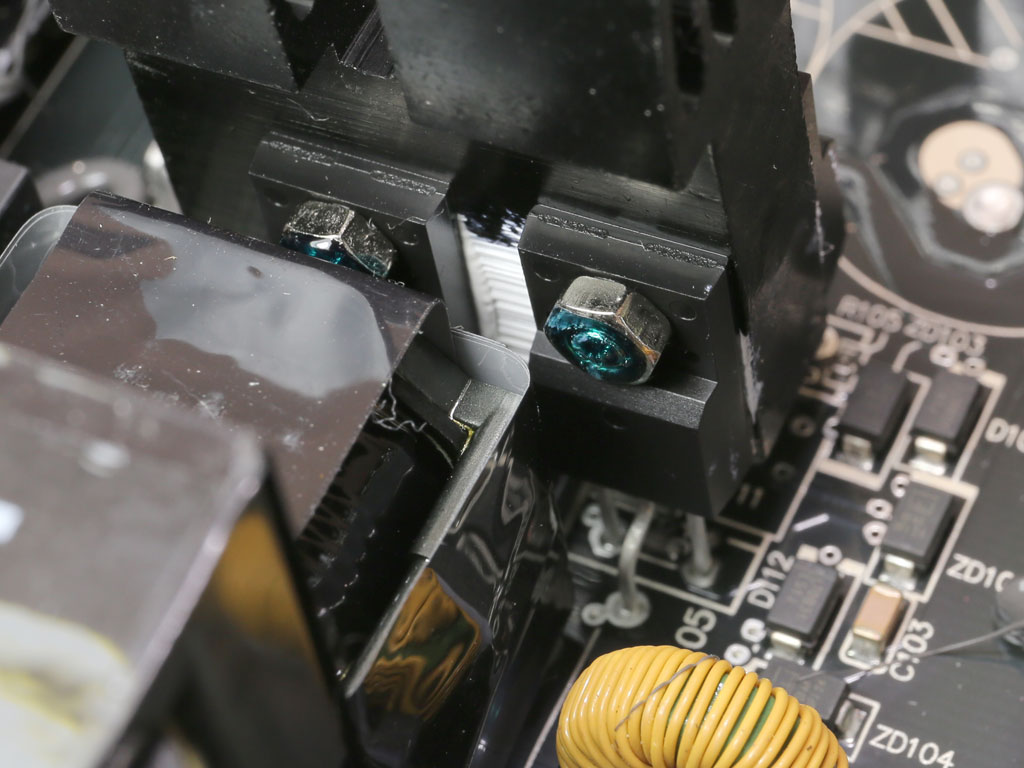
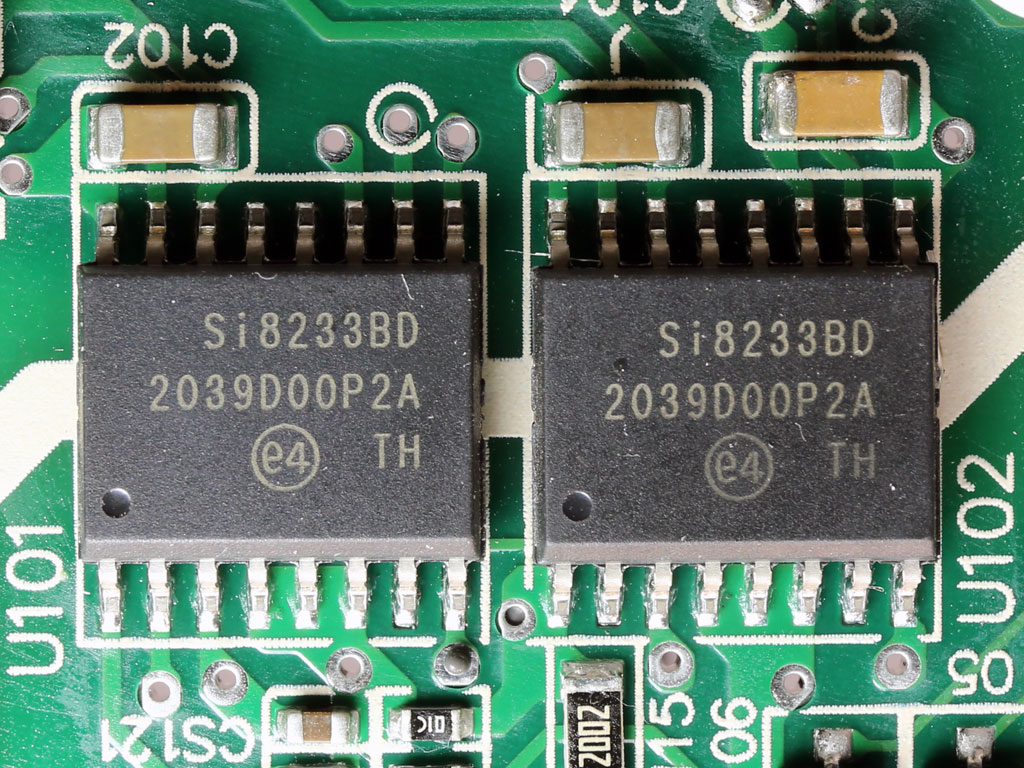
The main FETs are installed in a full-bridge topology. Two Silicon Labs Si8233BD ICs are used to drive these.
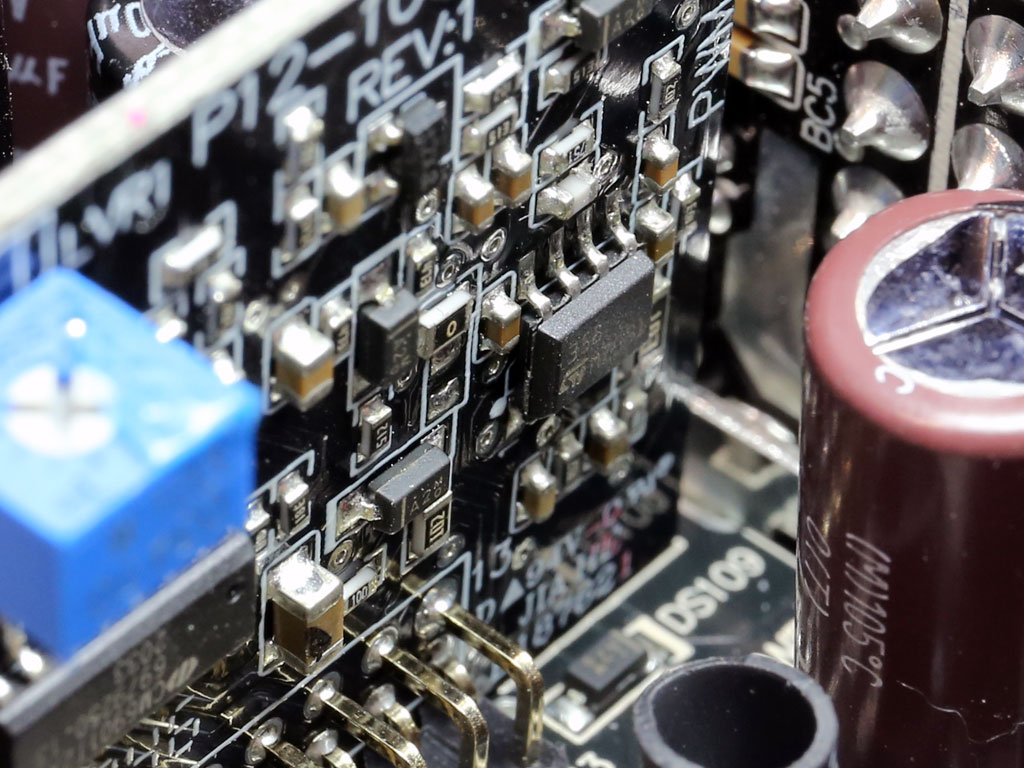
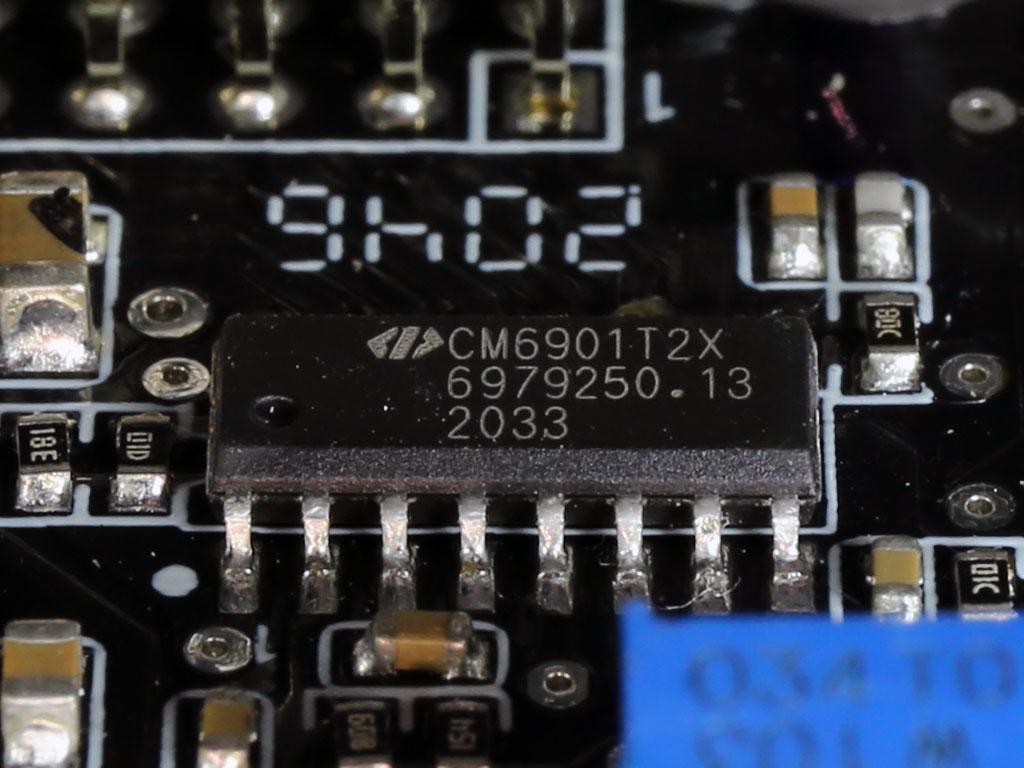
The LLC resonant controller is a Champion CU6901T2X.
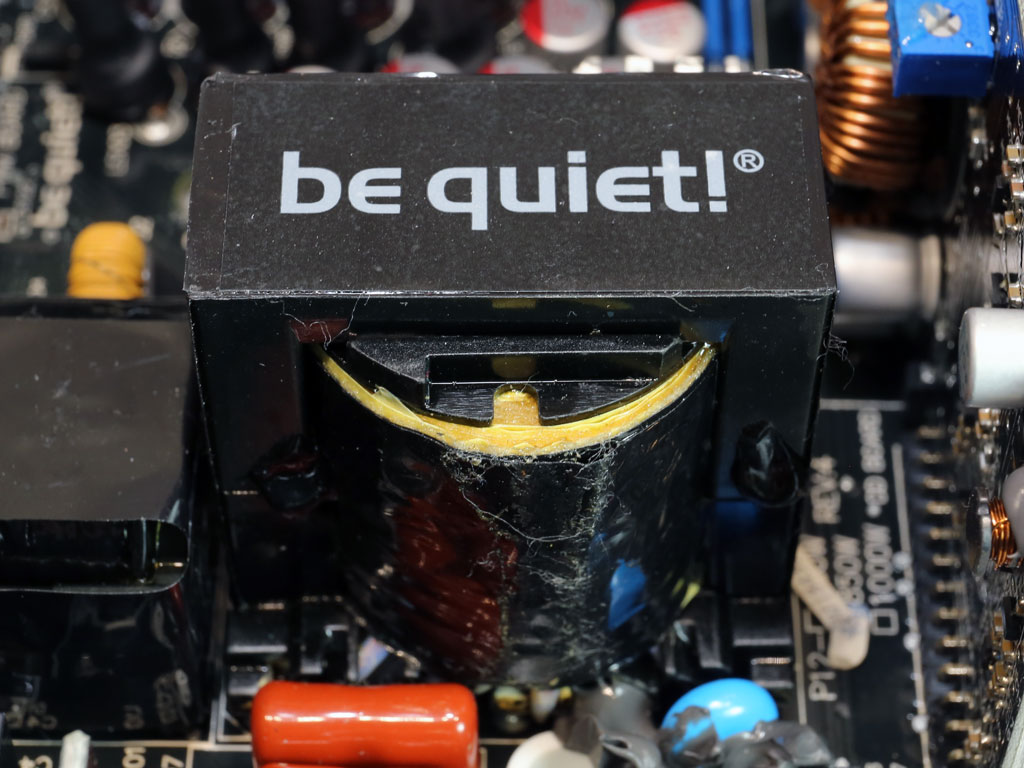
The unit's main transformer is positioned far from the electrolytic filtering caps on the secondary side, which is good because it prevents its high operating temperature from straining those caps.
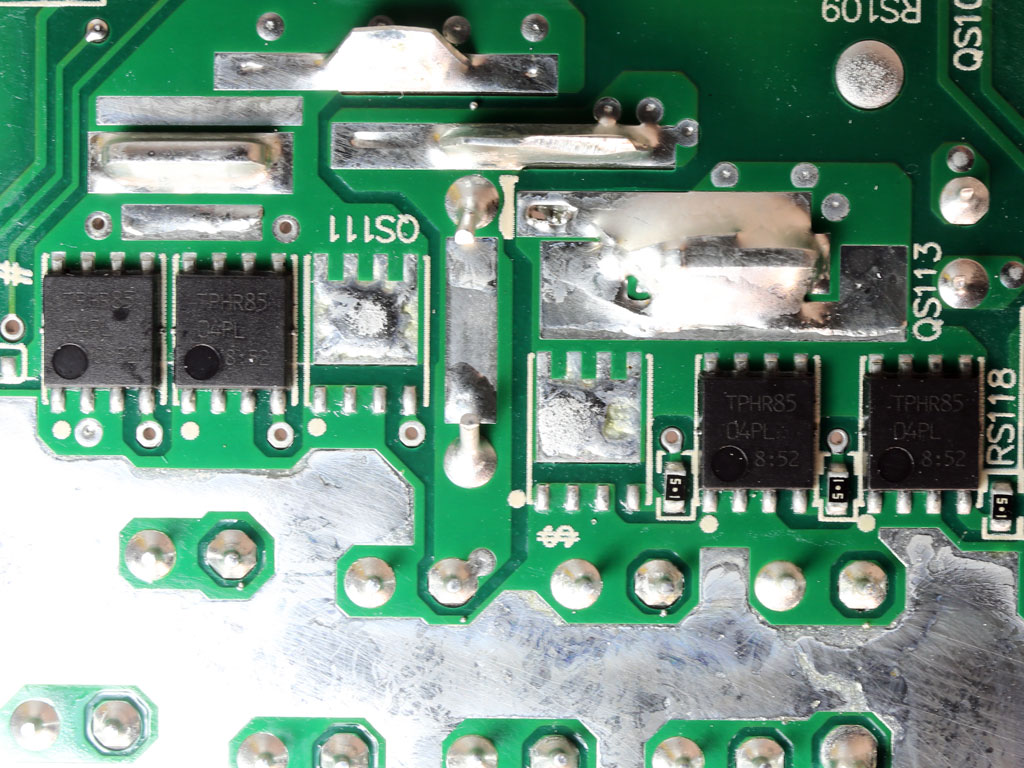
The FETs that regulate the +12 V rail are installed on the solder side of the main PCB.
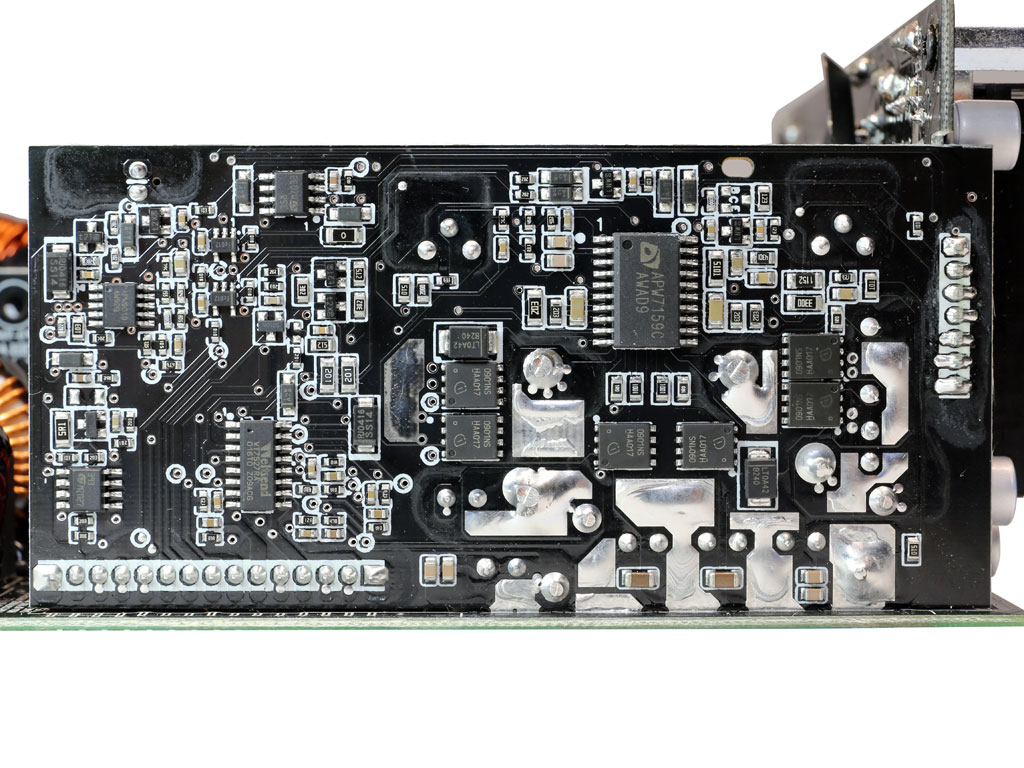
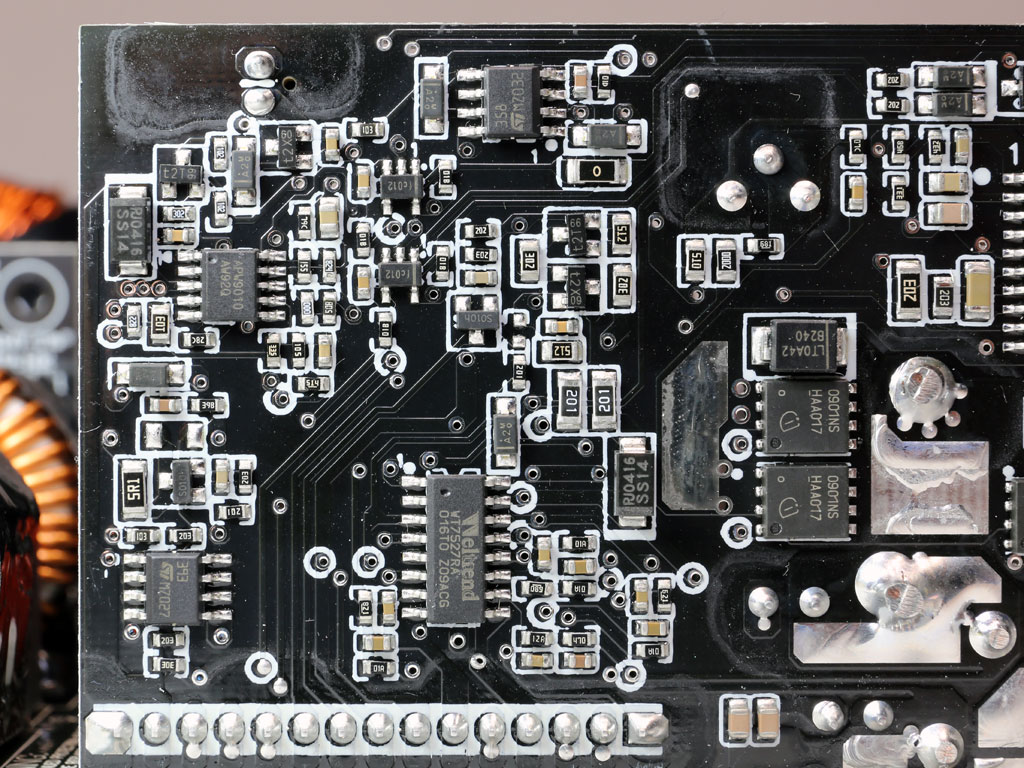
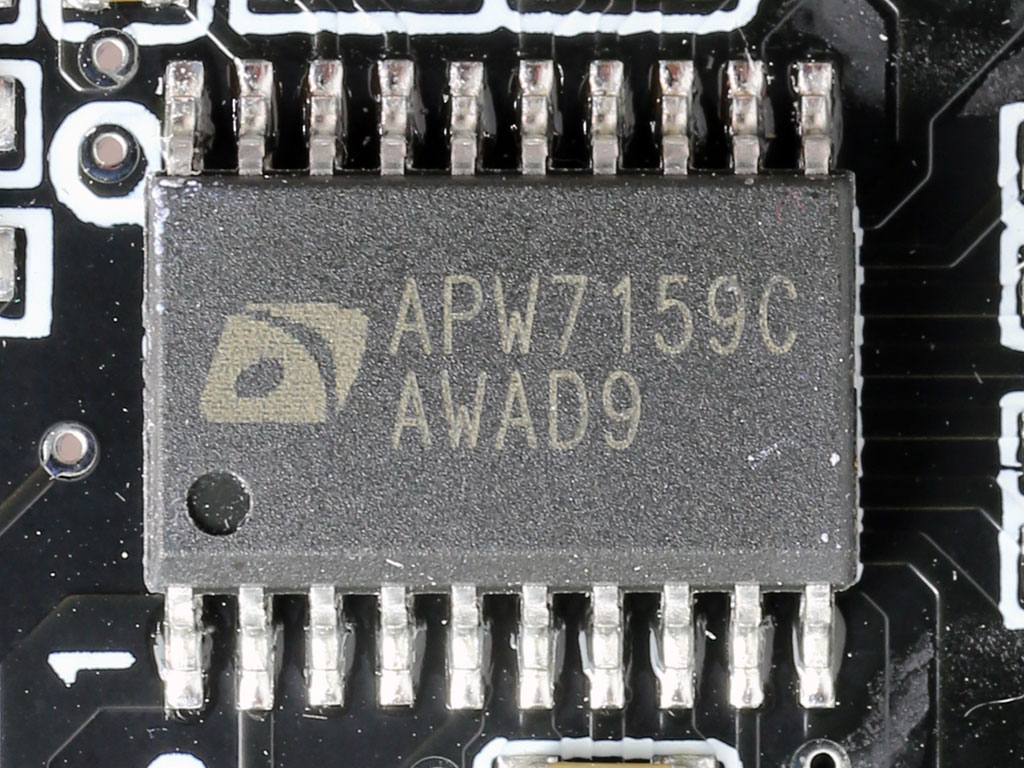
Two DC-DC converters generate the minor rails. They use six Infineon FETs, and their joint PWM controller is an Anpec APW7159C. I also found the supervisor IC, a Weltrend WT7527RA, on the same board as the VRMs.
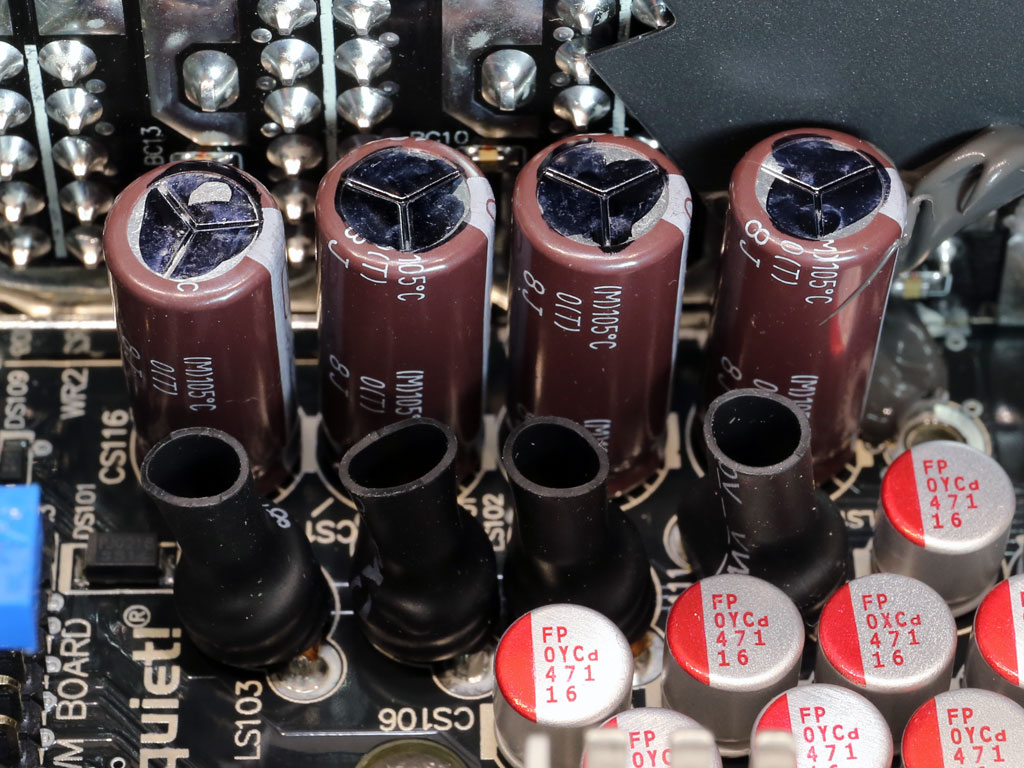
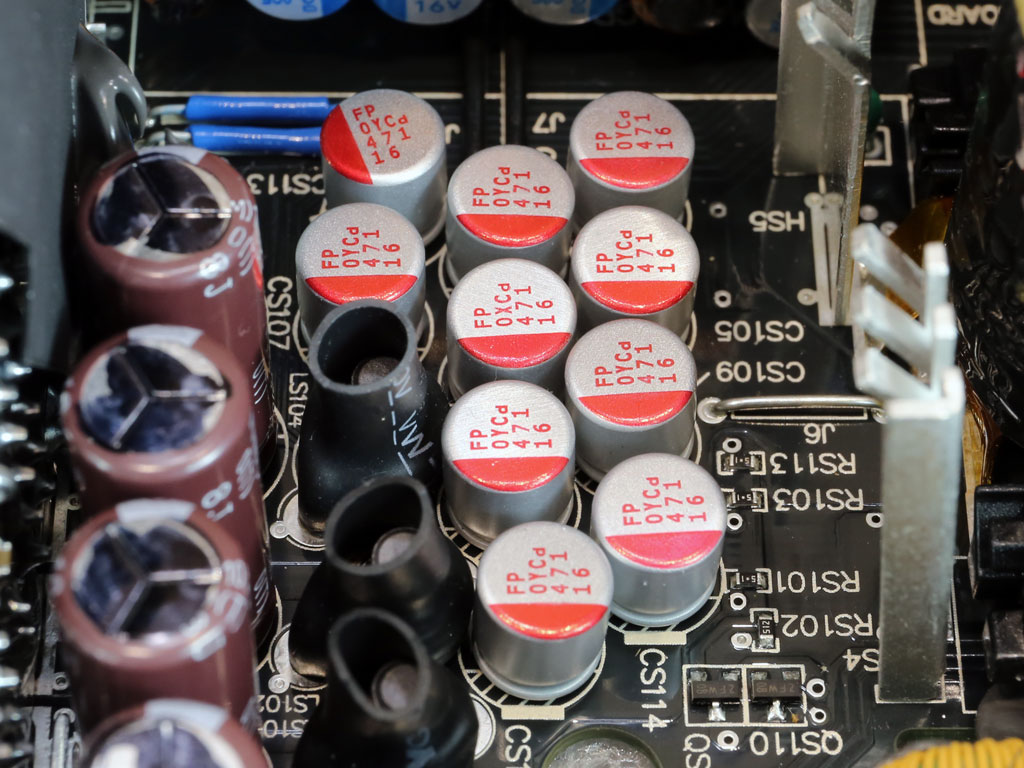
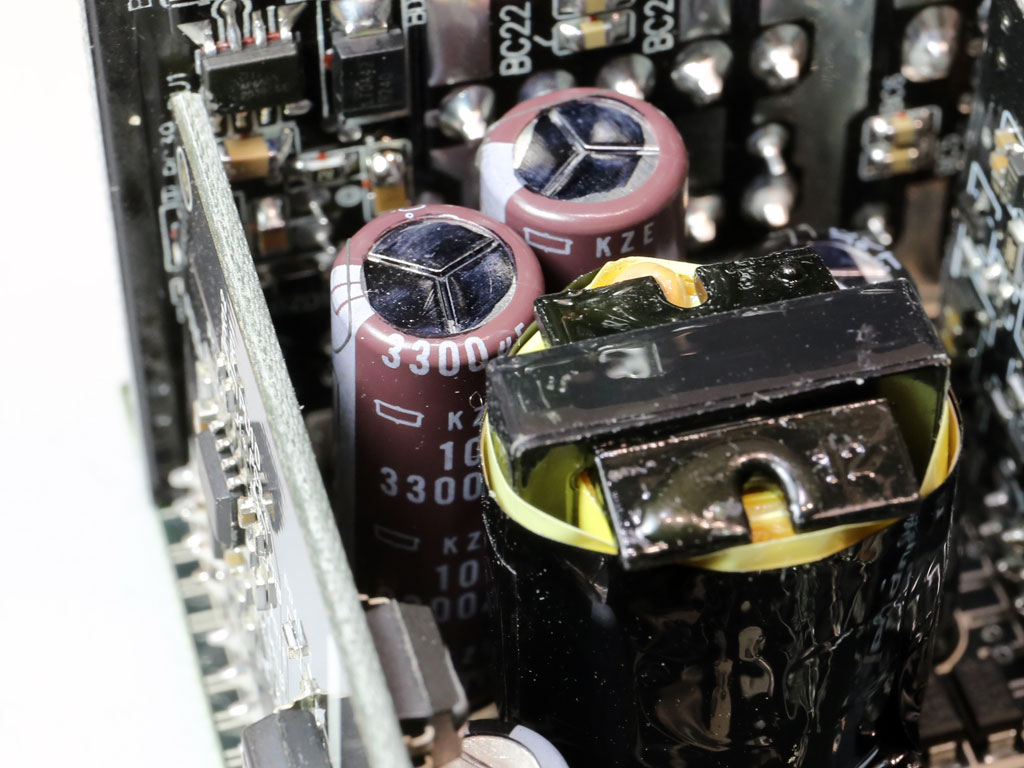
The filtering caps are provided by Japanese manufacturers Chemi-Con and Rubycon. Besides electrolytic caps, a large number of polymer ones are also used for ripple-filtering purposes.
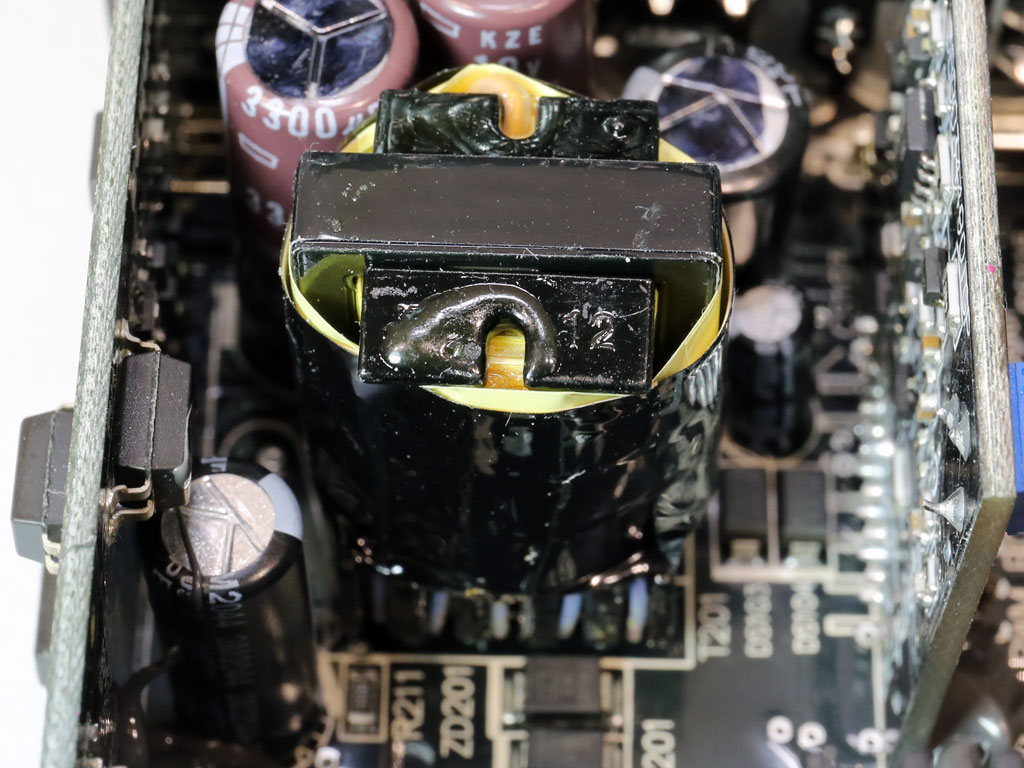
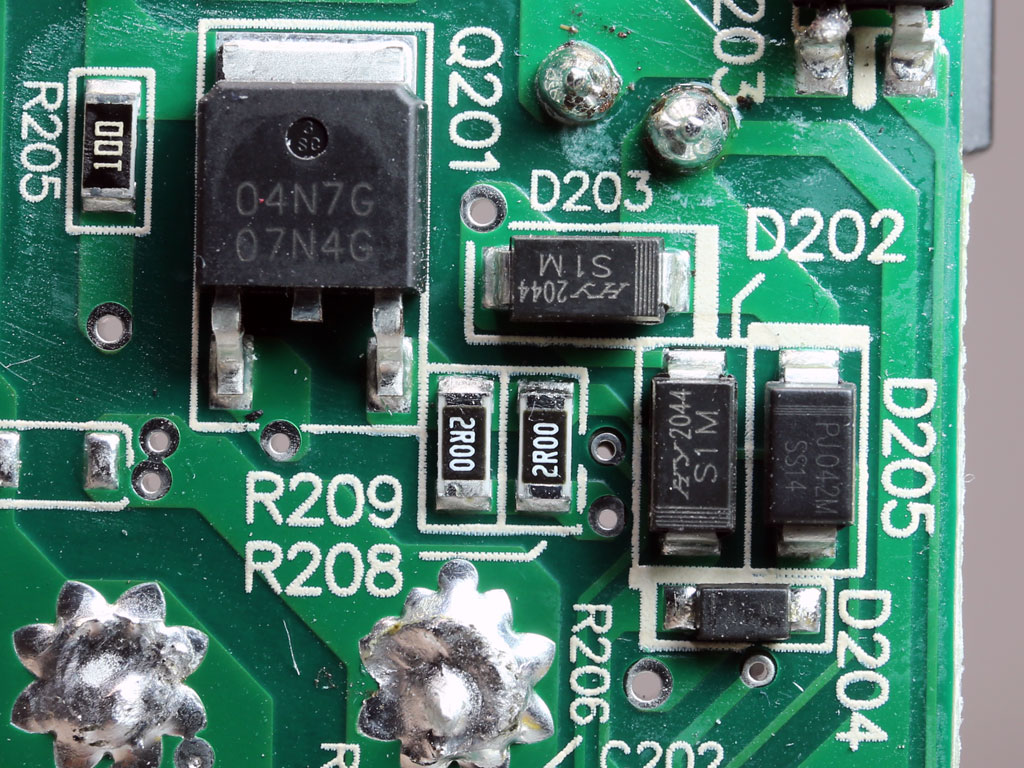
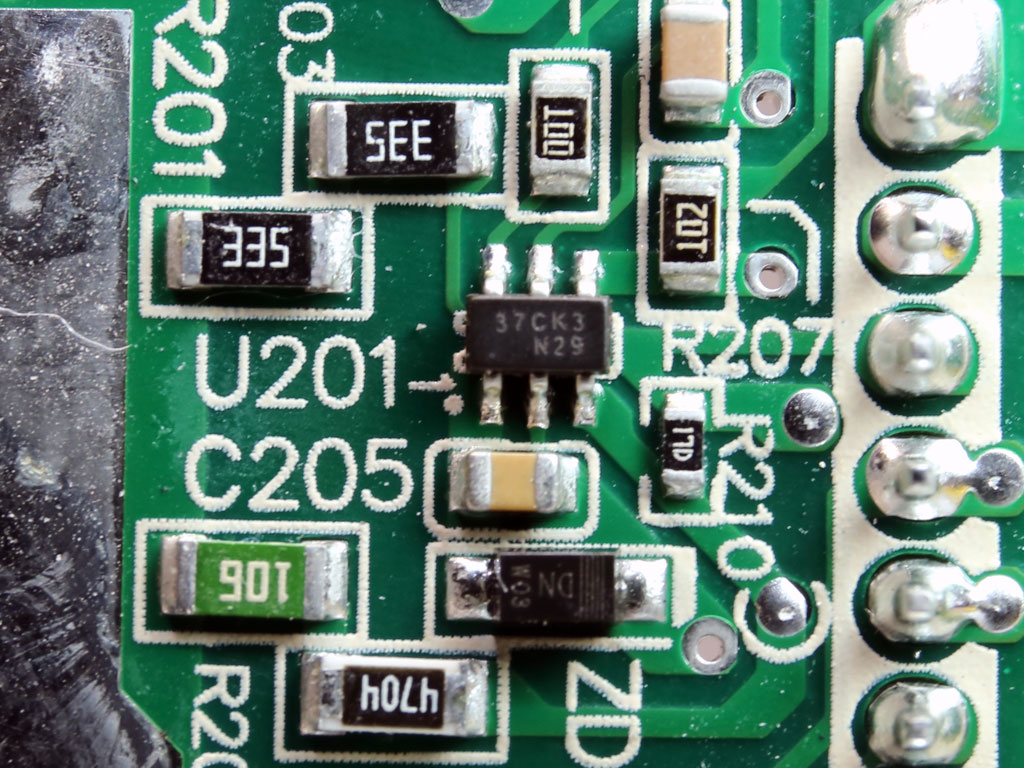
The 5VSB circuit uses a CET CEB04N7G FET on its primary side and a Nexperia PSMN2R0-30YL FET on its secondary side, and the standby PWM controller is a Grenergy GR8837C IC.
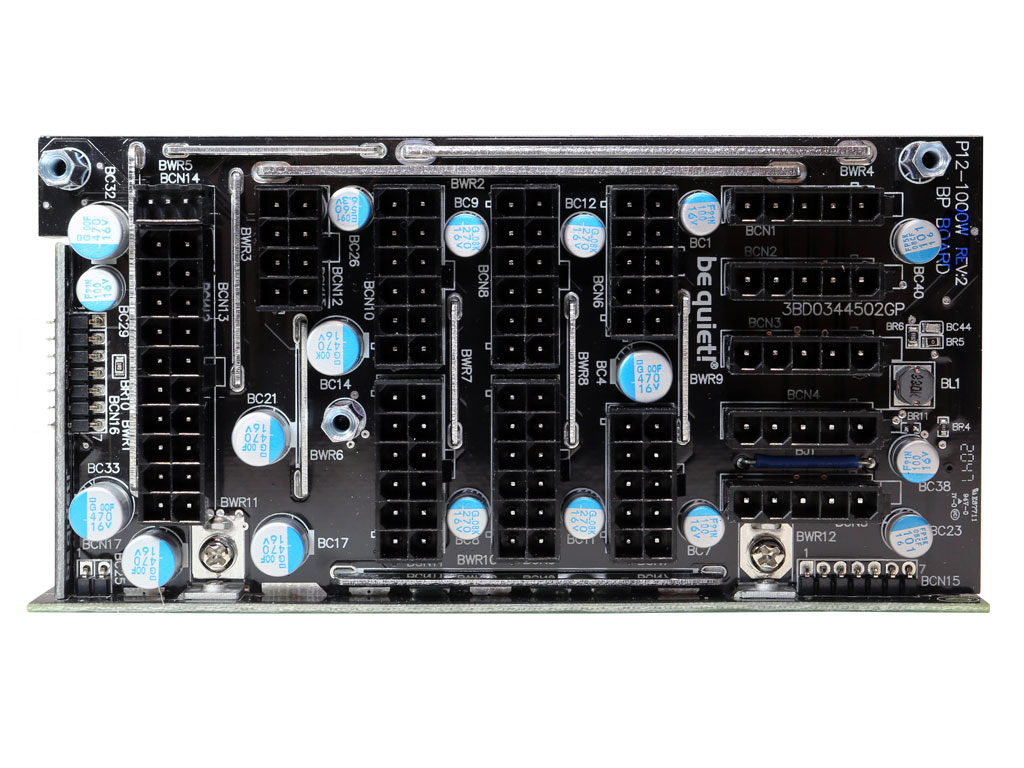
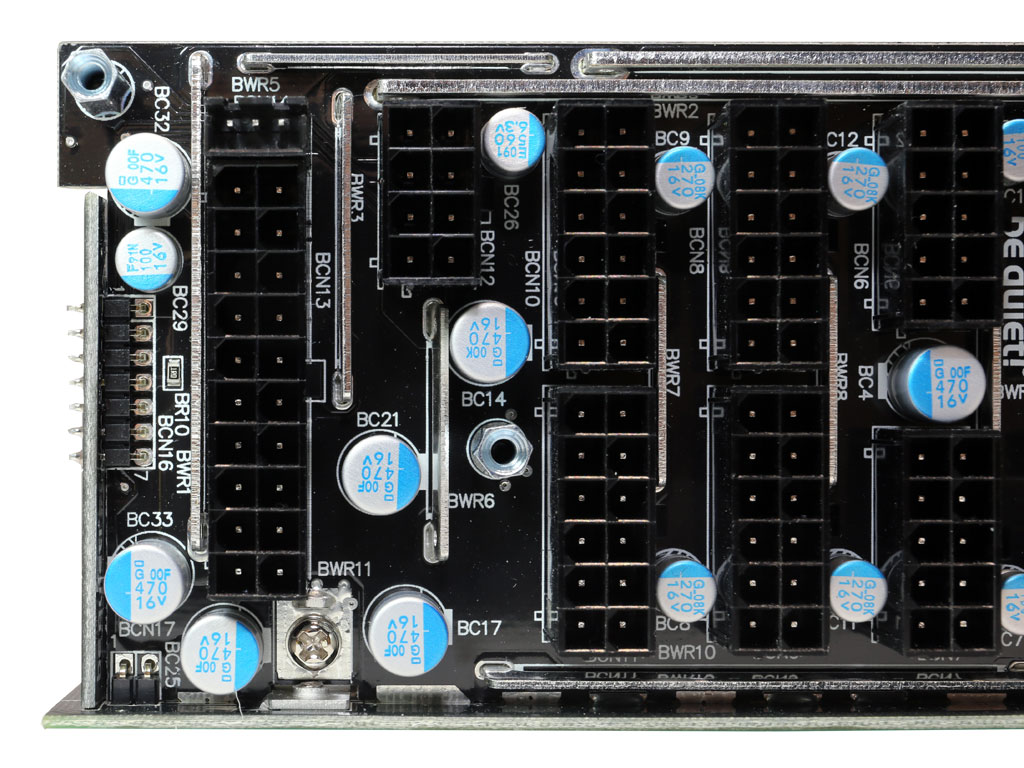
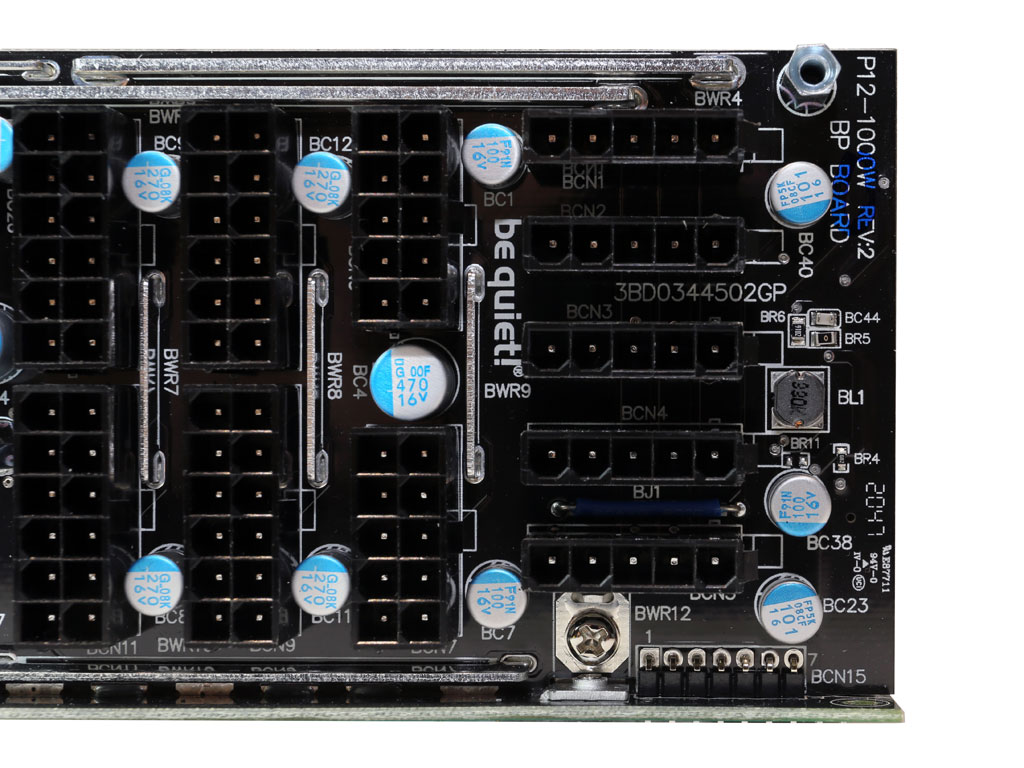
Polymer caps cover the face of the modular PCB.
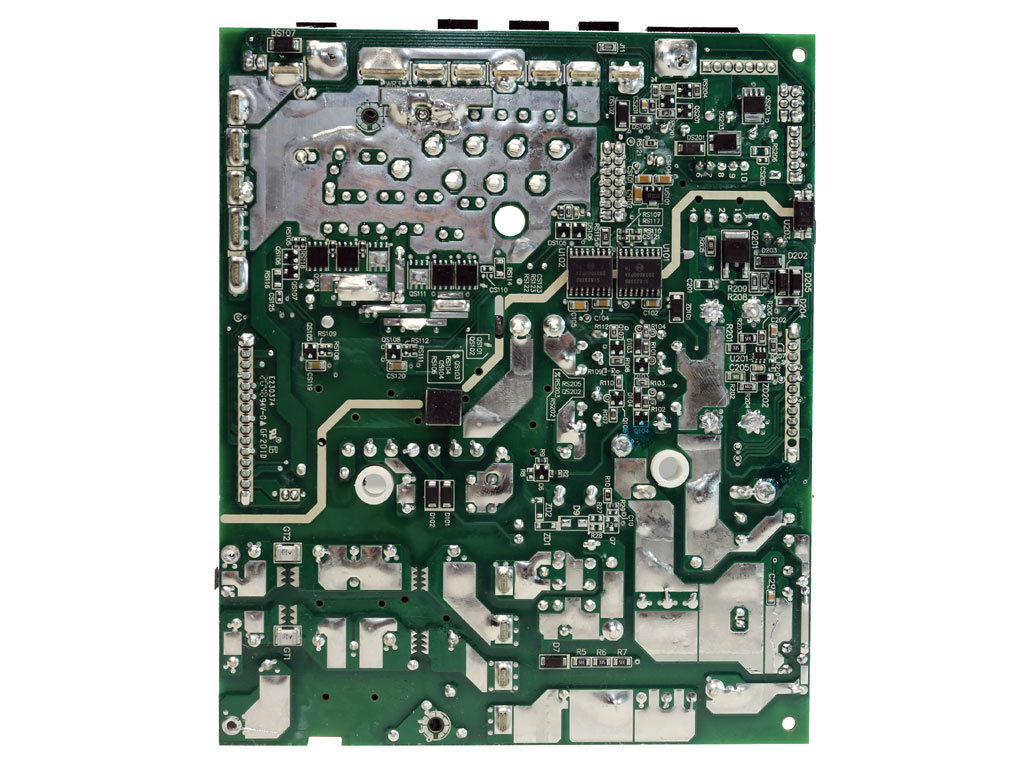
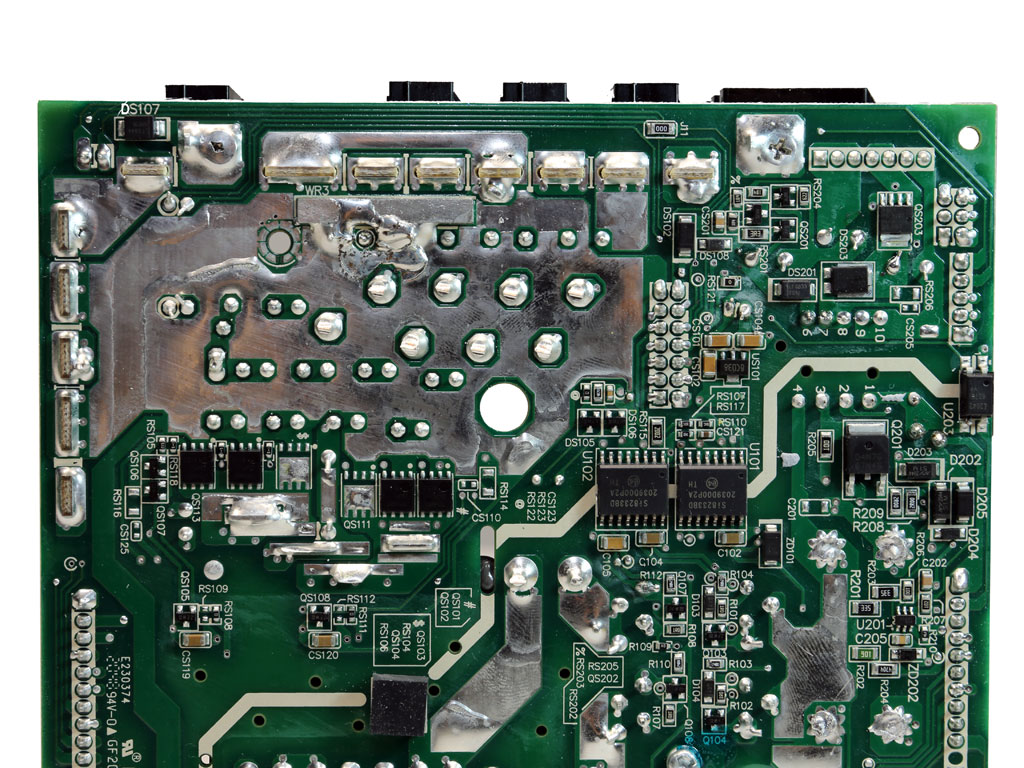
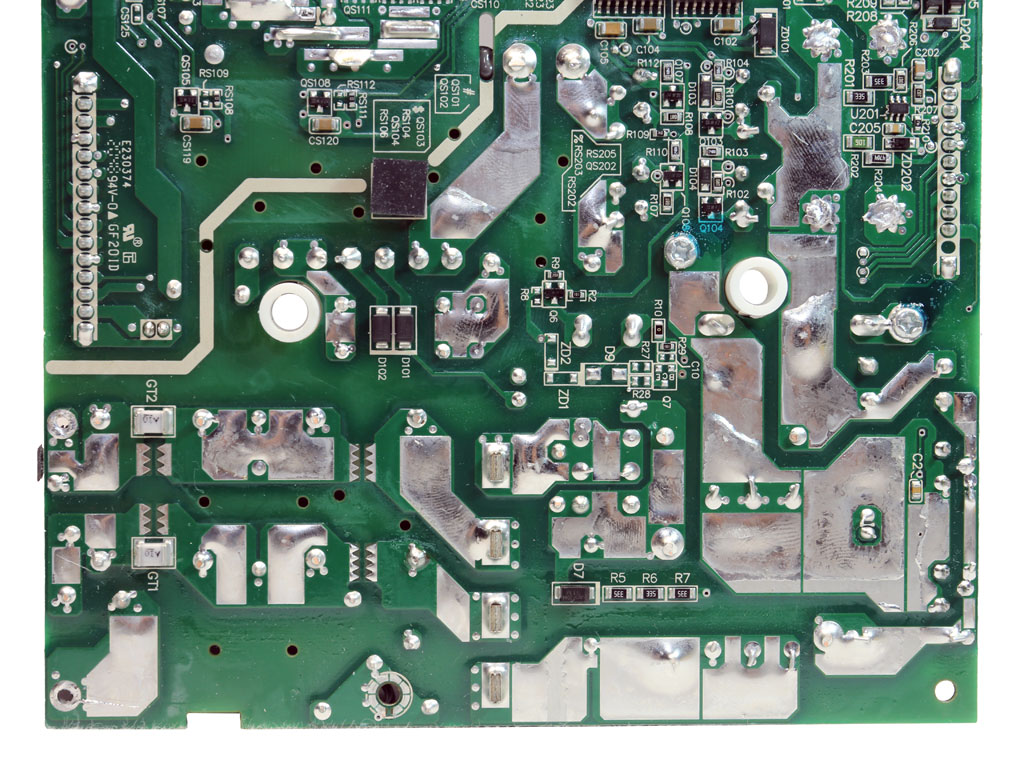
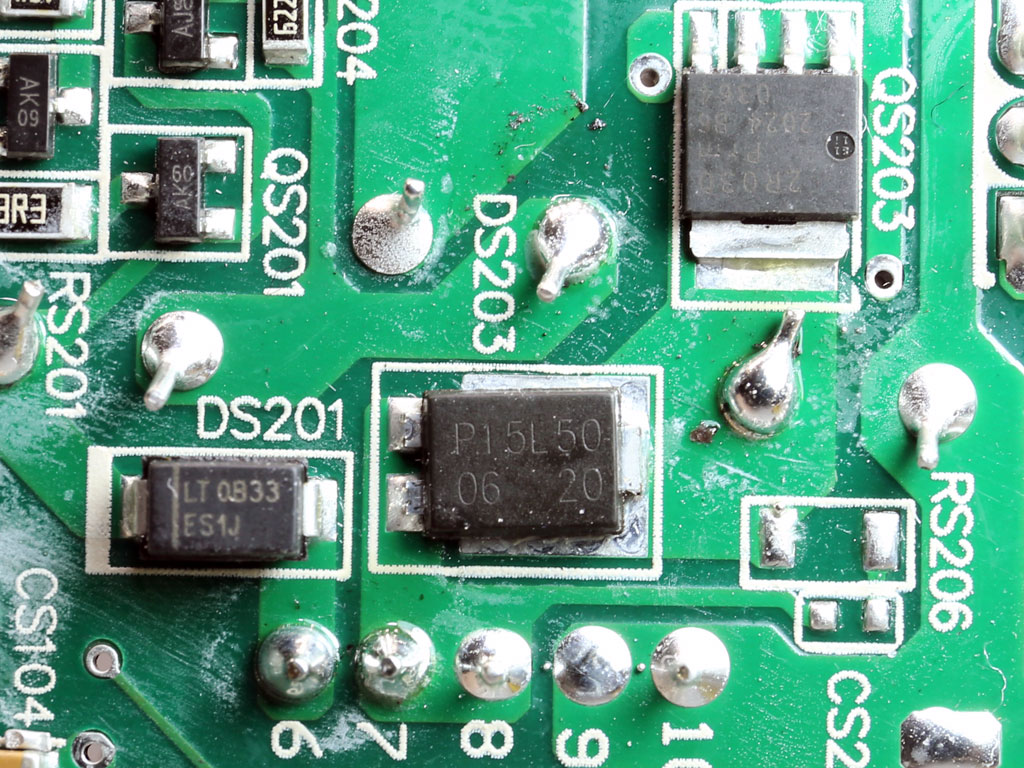
Soldering quality is decent, but definitely not the best I have seen from FSP.
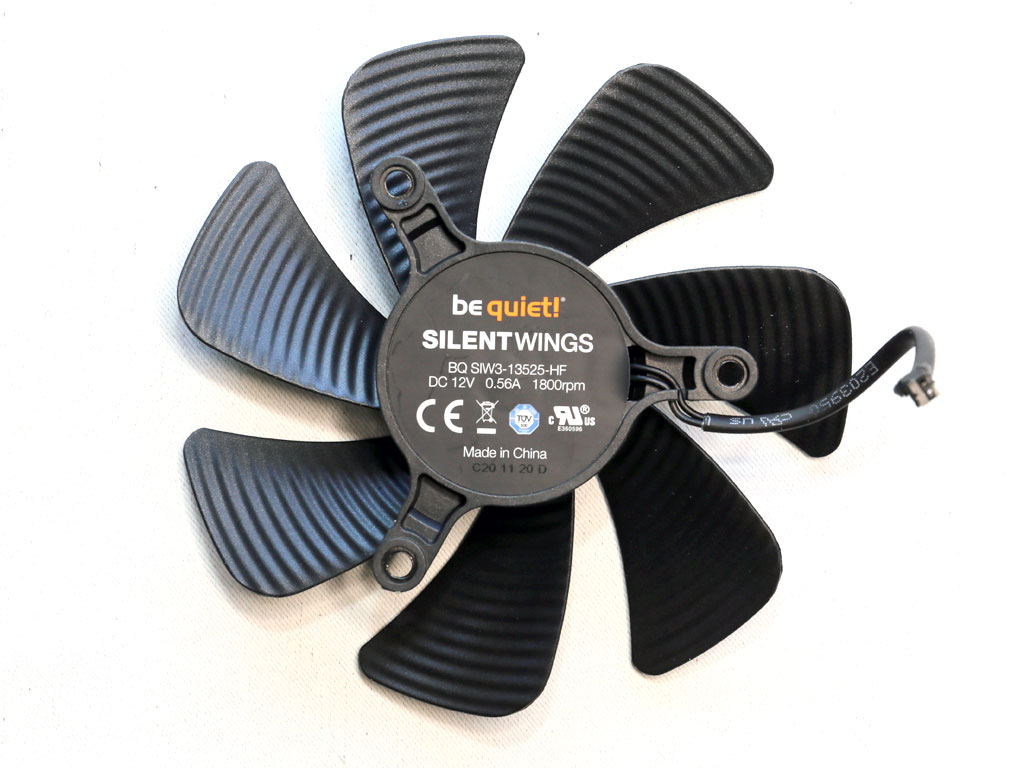
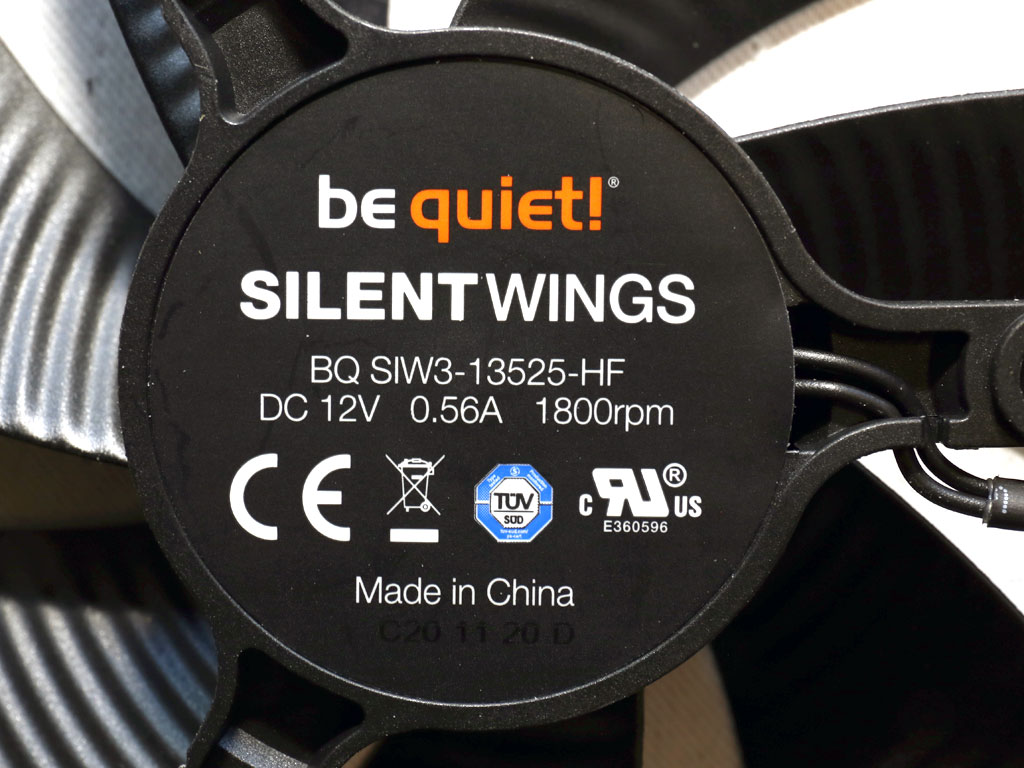
The cooling fan is a be quiet! BQ SIW3-13525-HF. It has a diameter of 135 mm and uses a fluid dynamic bearing. Its frameless design increases airflow while keeping noise output low.
Our Patreon Silver Supporters can read articles in single-page format.
Nov 20th, 2026 10:36 PST
change timezone
Latest GPU Drivers
New Forum Posts
- What's your latest tech Freebie? (79)
- Tell me about your favourite graphics card (85)
- Windows 11 General Discussion (7742)
- GTA VI (19)
- Anthrophics IPO (13)
- How to prevent OLED burn damage due to PC freezes or power outtages? (42)
- RX 7600 + Ryzen 5 5600GT getting the same FPS as my old RX 6500 XT – What am I missing? (19)
- RX 9000 series GPU Owners Club (2244)
- [Poll] 12V-2x6 Connector Protection: What Are You Using? (WireView / Ampinel / Equalizer / Other / Nothing) (49)
- Very unusual two gaming-pc scenarios. (28)
Popular Reviews
- AMD Zen 6 Technical Deep Dive
- Ugreen NASync DXP4800 GT Review
- Corsair RM1200e (Second Generation) Review
- Acemagic Retro X3 Review
- Upcoming Hardware Launches 2027 (Updated Nov 2026)
- Pulsar Office Tour & First Look at P1 Dual-Sensor Mouse
- Microsoft Surface Laptop Ultra Review - The Next-gen Arm Laptop
- Biwin Black Opal NV7400 2 TB Review
- AMD Ryzen 7 9800X3D Memory Performance Scaling
- AMD Ryzen 7 9800X3D Review - The Best Gaming Processor
TPU on YouTube
Controversial News Posts
- NVIDIA Co-Founder and CEO Jensen Huang Officially Resigns (490)
- Report: Jensen Huang Eyes NVIDIA Comeback (245)
- Open Letter Asking NVIDIA to Reinstate Jensen Huang Passes 115,000 Signatures (184)
- OpenAI CEO Argues Home PCs Waste the World's Limited DRAM Supply (152)
- NVIDIA Launches Investigation Into Jensen Huang's Relationship With Suspected Chinese Spy (136)
- Intel "Raptor Lake Next" 16-Core and 20-Core CPUs Surface (130)
- Legendary Game Studio BioWare Shuts Down Following EA Layoffs (104)
- Dell CEO Says the Memory Shortage Will Get Worse in 2027 (95)