 23
Biwin Black Opal DW100 RGB DDR5-6000 32 GB CL28 Review
(23 Comments) »Value and Conclusion
- The 32 GB (2x 16 GB) Biwin Black Opal DW100 RGB DDR5-6000 kit is available for around US$??
- Single-Rank DIMMs for higher compatibility
- "Sweet Spot" for AMD Zen 4/5 users
- Dual 6000 MT/s Profiles (XMP/EXPO) 1.40 V
- Good for Intel 12/13/14th Gen CPUs
- Unified RGB lighting
- Quality Thermal strip on ICs
- Thermal pad on PMIC
- Heavy heatspreaders
- 10-Layer PCB
- High Z-Height (50 mm)
- Low US Market Availability
Now that we have benchmarked this memory, it is time to put everything into perspective. We will go over which platform this memory kit is best suited for, what BIWIN could improve upon to make a better product, and finish up on a positive note. Let's begin with system compatibility before we explore gaming performance. Regular readers of our memory reviews will likely see some repeated suggestions. While our advice might not be the perfect fit for every CPU, there are a few overarching guidelines to consider. In this review, we have a 6000 MT/s (DDR5-6000) memory kit. For Intel systems, this has been a dependable and "safe" choice, as compatibility wasn't a major issue even when DDR5 first appeared in 2021 with Intel's 12th gen Alder Lake processors.
That brings us to AMD, where memory support can get a bit complex based on your configuration. AMD has made significant strides with its AGESA updates, enhancing compatibility with four DIMMs, dual-rank DIMMs, and speeds exceeding 6600 MT/s in recent years. For AMD's non-3D V-Cache CPUs, a simple rule for Ryzen 7000 and 9000 series is to target the highest frequency and lowest primary timings achievable, without shifting the CPU memory controller to a 2:1 ratio (UCLK:MCLK/2), as this might introduce a minor latency penalty.
When it comes to gaming performance, DDR5-6000 hits the "sweet spot" for AMD's Zen 4 and 5 CPUs. It's the perfect match for these CPUs, thanks to its balance of plug-and-play compatibility and an impressive price-to-performance ratio. This makes the Biwin Black Opal DW100 RGB DDR5-6000 CL28 a top pick for PC enthusiasts using the AMD platform. On the Intel side with the 12th, 13th, and 14th generation CPUs, the emphasis shifts toward raw bandwidth. JEDEC has already released specifications for 7200 MT/s, and native CPU support is on the horizon for the next generation. While this might suggest that 6000 MT/s is becoming outdated for Intel, the real-world performance will depend on the specific games and resolutions you use, which will ultimately dictate the best price-to-performance ratio for your setup.
To wrap up this review, let's highlight some key aspects. BIWIN manages to match its CAS 26 counterpart with impressive finesse. This is largely due to its slightly lower timings for the rest of the primaries. In various gaming benchmarks, it achieved performance comparable to the CL32 6400 MT/s results. Such a subtle difference in latency can result in noticeable improvements in the 1% lows, giving BIWIN an edge in situations where every millisecond matters. Additionally, the Black Opal DW100 series from BIWIN includes a high-quality thermal pad on the DRAM ICs, and robust heat spreaders, providing extra thermal headroom for those interested in overclocking.
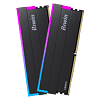
When it comes to design, aesthetics are always subjective. BIWIN has chosen a minimalist approach for the heat spreader flair, instead focus is about emphasizing presentation. The 50 mm Z-Height might pose challenges for some CPU cooling setups, but the trade-off is enhanced unified RGB lighting and offers more surface area for thermal heat dissipation. Although we haven't received an official MSRP for the US market, it's anticipated to be competitively priced with other premium offerings. Overall, the Biwin Black Opal DW100 RGB DDR5-6000 CL28 is highly recommended for AMD systems due to its build quality and top tier performance. For Intel systems, it remains a viable option, though it should be considered on a case-by-case basis.


That brings us to AMD, where memory support can get a bit complex based on your configuration. AMD has made significant strides with its AGESA updates, enhancing compatibility with four DIMMs, dual-rank DIMMs, and speeds exceeding 6600 MT/s in recent years. For AMD's non-3D V-Cache CPUs, a simple rule for Ryzen 7000 and 9000 series is to target the highest frequency and lowest primary timings achievable, without shifting the CPU memory controller to a 2:1 ratio (UCLK:MCLK/2), as this might introduce a minor latency penalty.
When it comes to gaming performance, DDR5-6000 hits the "sweet spot" for AMD's Zen 4 and 5 CPUs. It's the perfect match for these CPUs, thanks to its balance of plug-and-play compatibility and an impressive price-to-performance ratio. This makes the Biwin Black Opal DW100 RGB DDR5-6000 CL28 a top pick for PC enthusiasts using the AMD platform. On the Intel side with the 12th, 13th, and 14th generation CPUs, the emphasis shifts toward raw bandwidth. JEDEC has already released specifications for 7200 MT/s, and native CPU support is on the horizon for the next generation. While this might suggest that 6000 MT/s is becoming outdated for Intel, the real-world performance will depend on the specific games and resolutions you use, which will ultimately dictate the best price-to-performance ratio for your setup.
To wrap up this review, let's highlight some key aspects. BIWIN manages to match its CAS 26 counterpart with impressive finesse. This is largely due to its slightly lower timings for the rest of the primaries. In various gaming benchmarks, it achieved performance comparable to the CL32 6400 MT/s results. Such a subtle difference in latency can result in noticeable improvements in the 1% lows, giving BIWIN an edge in situations where every millisecond matters. Additionally, the Black Opal DW100 series from BIWIN includes a high-quality thermal pad on the DRAM ICs, and robust heat spreaders, providing extra thermal headroom for those interested in overclocking.
When it comes to design, aesthetics are always subjective. BIWIN has chosen a minimalist approach for the heat spreader flair, instead focus is about emphasizing presentation. The 50 mm Z-Height might pose challenges for some CPU cooling setups, but the trade-off is enhanced unified RGB lighting and offers more surface area for thermal heat dissipation. Although we haven't received an official MSRP for the US market, it's anticipated to be competitively priced with other premium offerings. Overall, the Biwin Black Opal DW100 RGB DDR5-6000 CL28 is highly recommended for AMD systems due to its build quality and top tier performance. For Intel systems, it remains a viable option, though it should be considered on a case-by-case basis.
Nov 26th, 2026 13:02 CST
change timezone
Latest GPU Drivers
New Forum Posts
- TPU's WCG/BOINC Team (34808)
- UPS what one to get? (75)
- ASUS Prime 5060 ti 16gb x4 instead of x8 PCIe (6)
- WarpCoreBench scores! (109)
- Using sodimm+adapter instead of full size dimm DDR5? (101)
- Nvidia Driver Constantly writing to SSD FIX (Read the Post) (0)
- What's your main Black Friday / Cyber Monday purchase? (22)
- Radeon driver death (5)
- Making a game in Godot engine (22)
- Current Sales, Bundles, Giveaways (10452)
Popular Reviews
- ASRock X870E Challenger Wi-Fi White Review
- VZMORE AX9 Max Review
- Upcoming Hardware Launches 2027 (Updated Nov 2026)
- Microsoft Surface Laptop Ultra Review - The Next-gen Arm Laptop
- AMD Ryzen 7 9800X3D Review - The Best Gaming Processor
- AMD Zen 6 Technical Deep Dive
- Phantom Blade Zero Performance Benchmark Review - 35 GPUs Tested
- Corsair RM1200e (Second Generation) Review
- Montech CyberFlow ARGB 360 Review
- Pulsar Office Tour & First Look at P1 Dual-Sensor Mouse
TPU on YouTube
Controversial News Posts
- Jensen Huang Reinstated as CEO of NVIDIA (598)
- NVIDIA Co-Founder and CEO Jensen Huang Officially Resigns (492)
- Report: Jensen Huang Eyes NVIDIA Comeback (281)
- Open Letter Asking NVIDIA to Reinstate Jensen Huang Passes 115,000 Signatures (184)
- OpenAI CEO Argues Home PCs Waste the World's Limited DRAM Supply (152)
- NVIDIA Launches Investigation Into Jensen Huang's Relationship With Suspected Chinese Spy (136)
- Intel Razor Lake Gets a 12 P-Core bLLC Chip With No E-Cores, Per Leak (94)
- NVIDIA GeForce RTX 50-Series Scheduled for up to $500 Price Hike This Week (89)