 26
Corsair MP700 Pro XT 2 TB Review
(26 Comments) »Introduction

Corsair is a US-based peripherals and hardware company founded in 1994. It is now one of the leading manufacturers for gaming gear, with a portfolio spanning nearly every component you could need: DRAM memory modules, flash SSDs, keyboards, mice, cases, cooling, and much more.
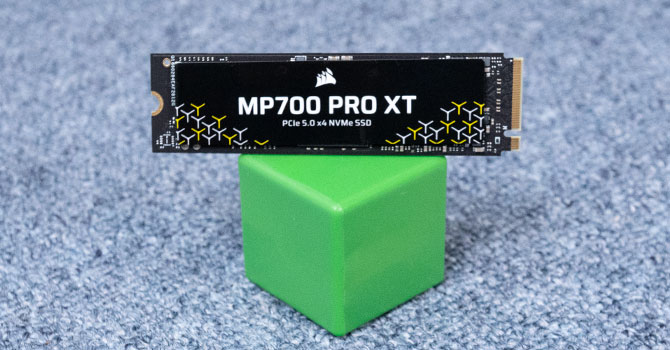
Just a few weeks ago we tested the Engineering Sample version of the new Phison E28 controller—today we have a review of the shipping version that's available widely. Back in 2022, Phison's E26 controller was the first high-end PCI-Express 5.0 controller for the consumer space. It finally offered speeds faster than Gen 4 for gamers and has been used on famous SSDs like the Corsair MP700 Pro, Crucial T705, ADATA Legend 970, and many others. The E28 on the Corsair SSD in this review is the successor to the E26. It is built on a 6 nanometer process at TSMC Taiwan and has been optimized for energy-efficient operation. For maximum performance the drive includes a physical DRAM cache chip. The NAND flash is Kioxia BiCS8 TLC with 218 layers, which means it matches the hardware configuration of our Engineering Sample drive exactly.
The MP700 Pro XT is available in capacities of 1 TB ($160), 2 TB ($250) and 4 TB ($460). The endurance is set to 700 TBW, 1400 TBW and 2800 TBW respectively. Corsair includes a five-year warranty with the MP700 Pro XT SSD.
| Specifications: Corsair MP700 Pro XT 2 TB SSD | |
|---|---|
| Brand: | Corsair |
| Model: | CSSD-F20GBMP700PXNH |
| Capacity: | 2000 GB (1862 GB usable) 48 GB additional overprovisioning |
| Controller: | Phison E28 |
| Flash: | TLC, Kioxia BiCS8, 218-layers T8BIGB5A2V |
| DRAM: | 2 GB Hynix LPDDR4-4266 H54G46CYRBX-267 |
| Endurance: | 1400 TBW |
| Form Factor: | M.2 2280 |
| Interface: | PCIe Gen 5 x4, NVMe 2.0 |
| Device ID: | Corsair MP700 PRO XT |
| Firmware: | ESFM10.1 |
| Warranty: | Five Years |
| Price at Time of Review: | $250/$125 per TB |
The Drive
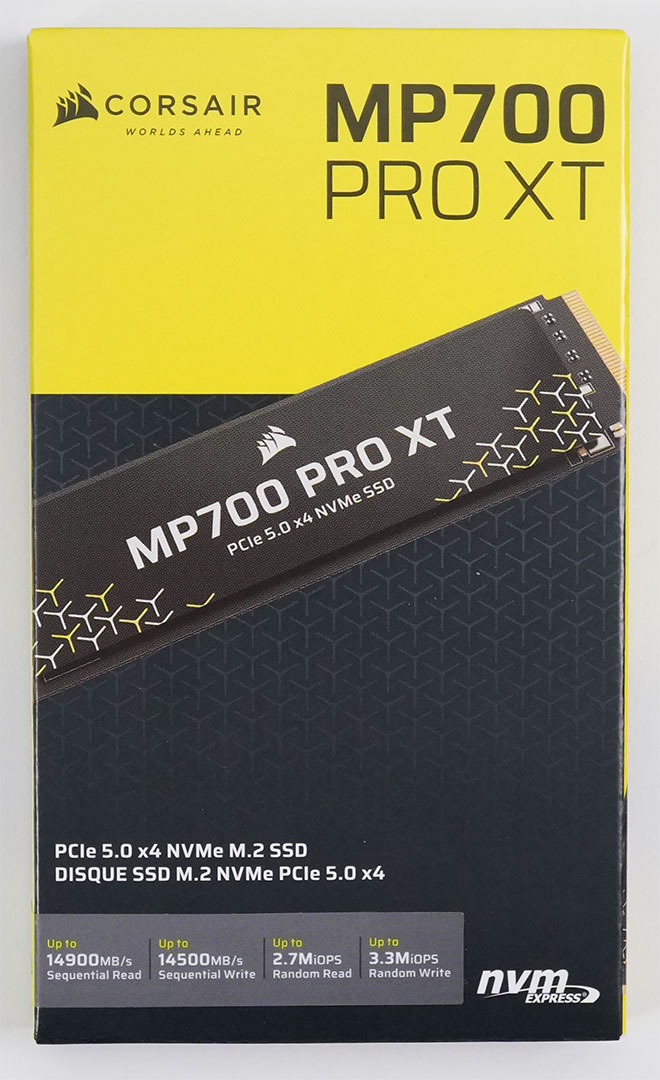
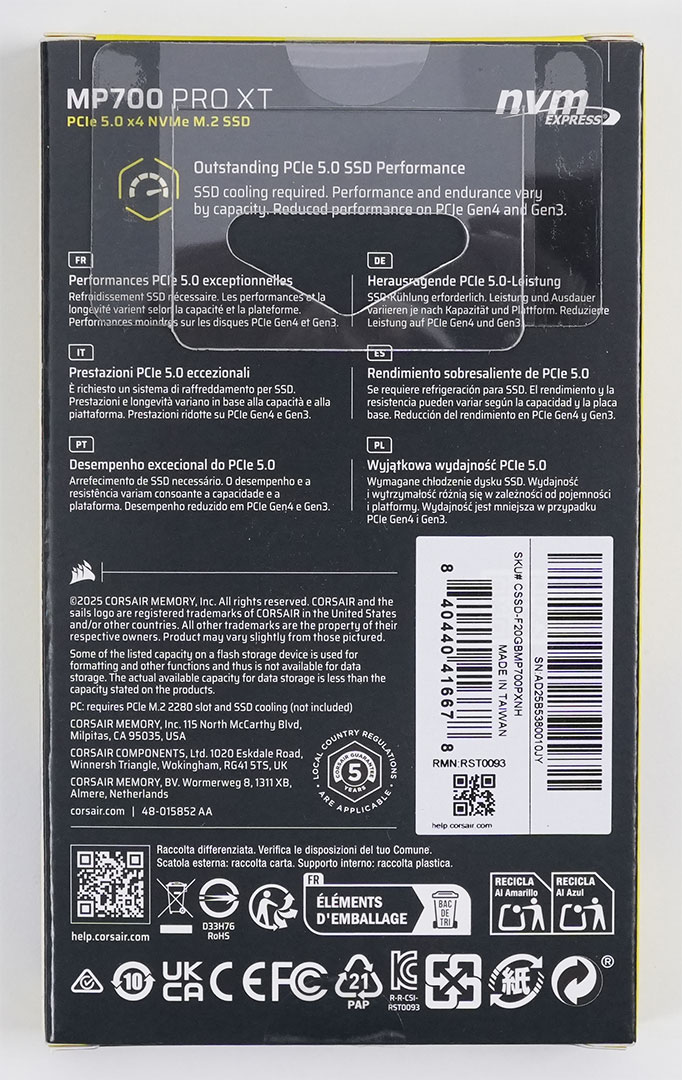
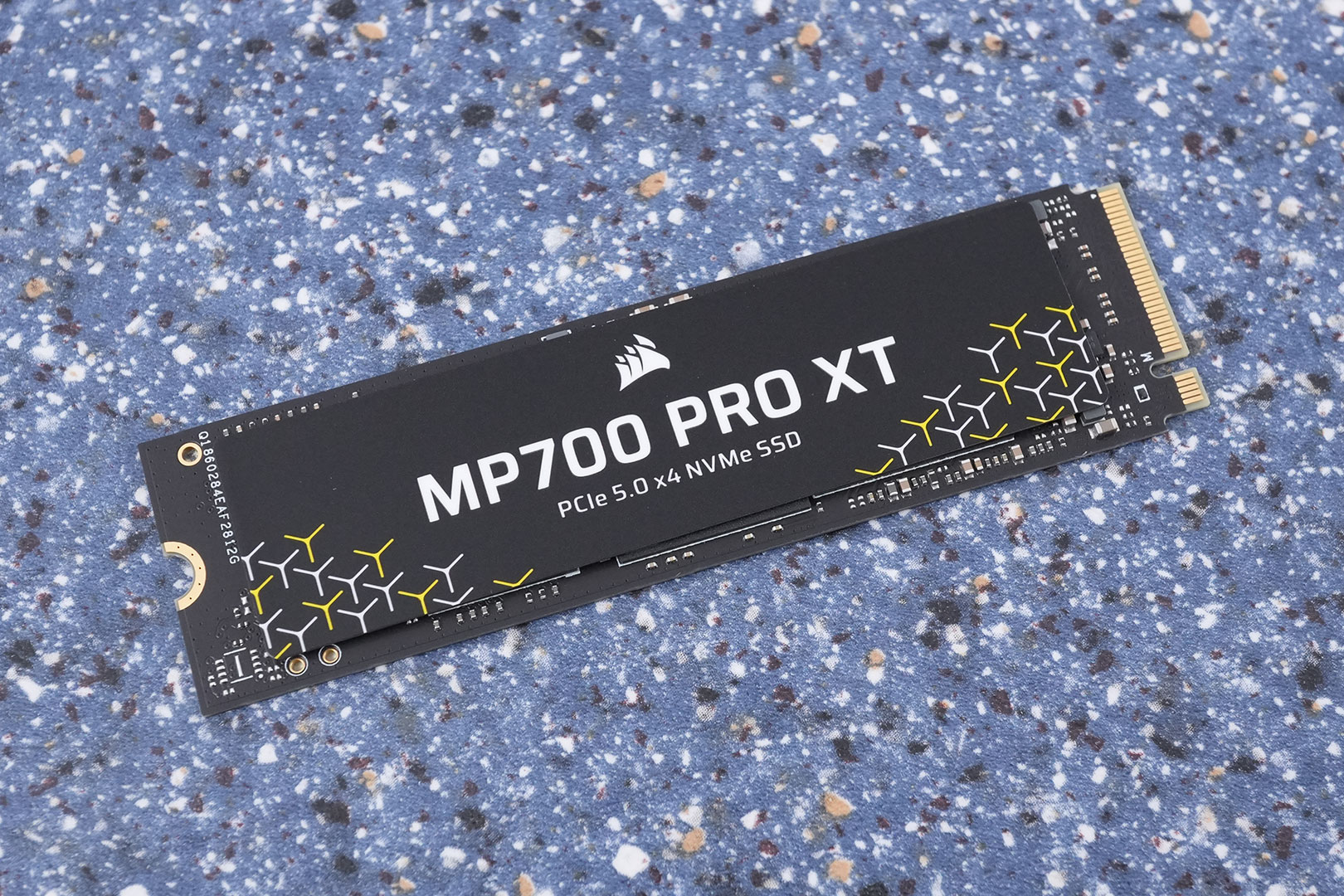
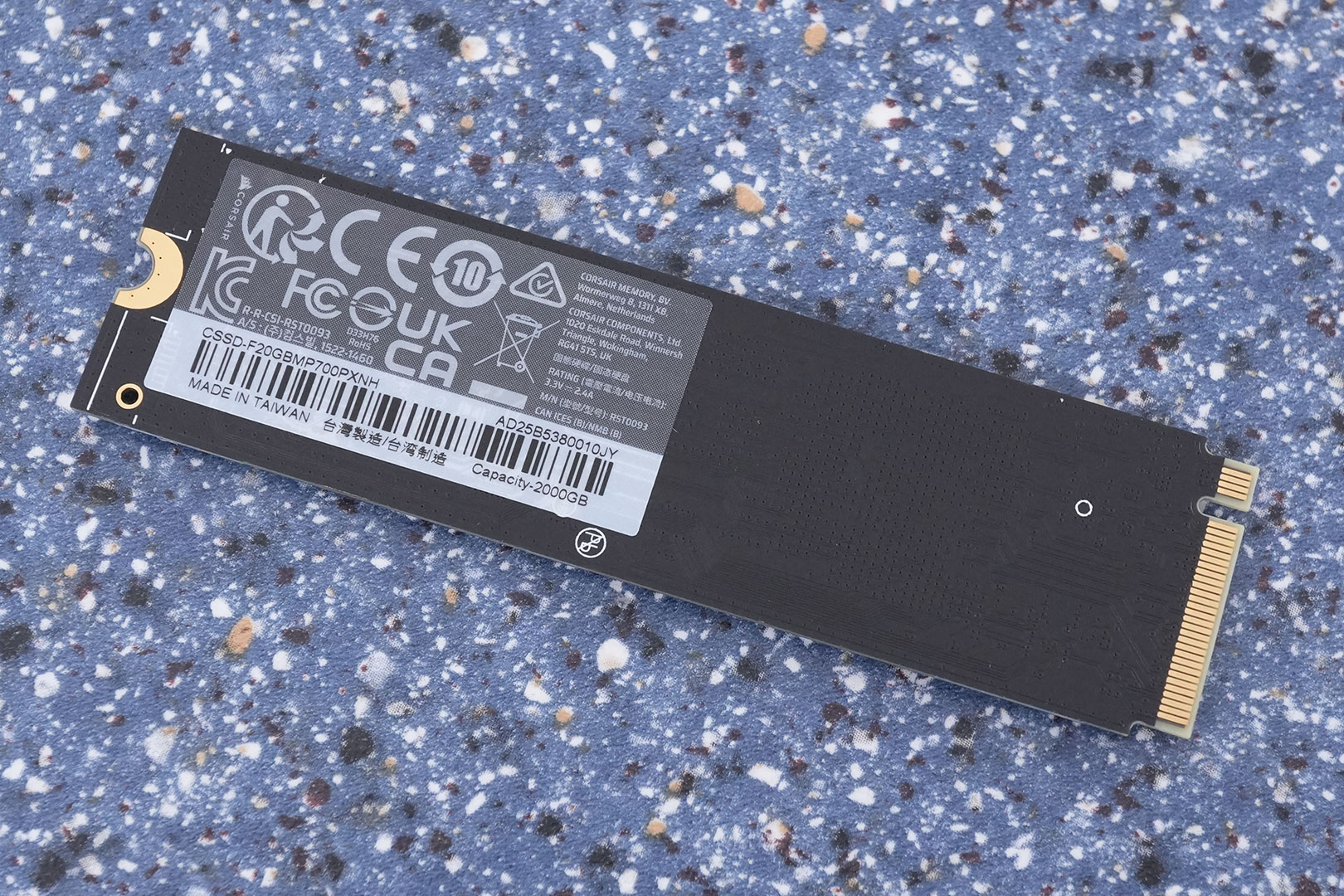
The drive is designed for the M.2 2280 form factor, which makes it 22 mm wide and 80 mm long.
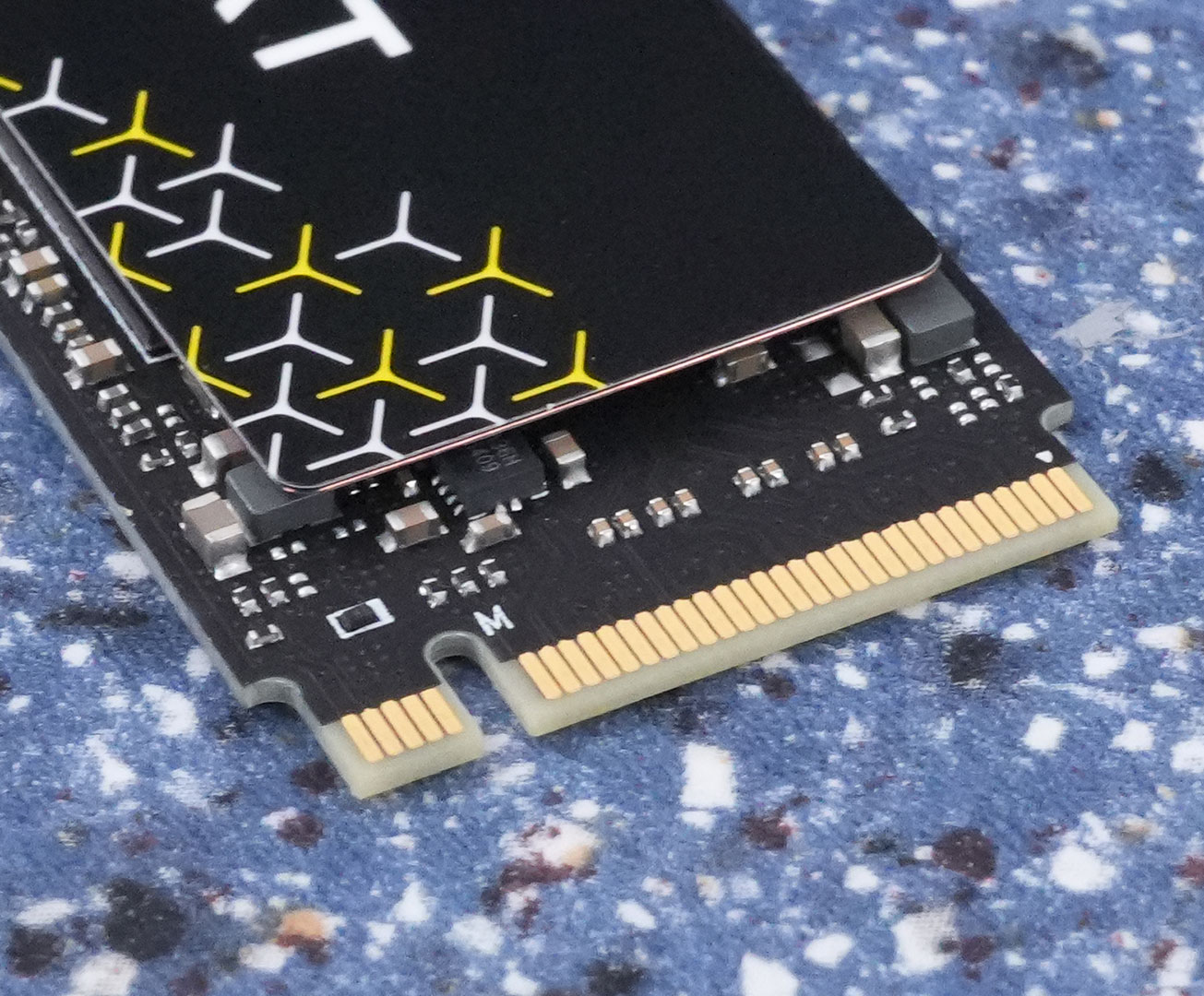
PCI-Express 5.0 x4 is used as the host interface to the rest of the system, which doubles the theoretical bandwidth compared to PCIe 4.0 x4.
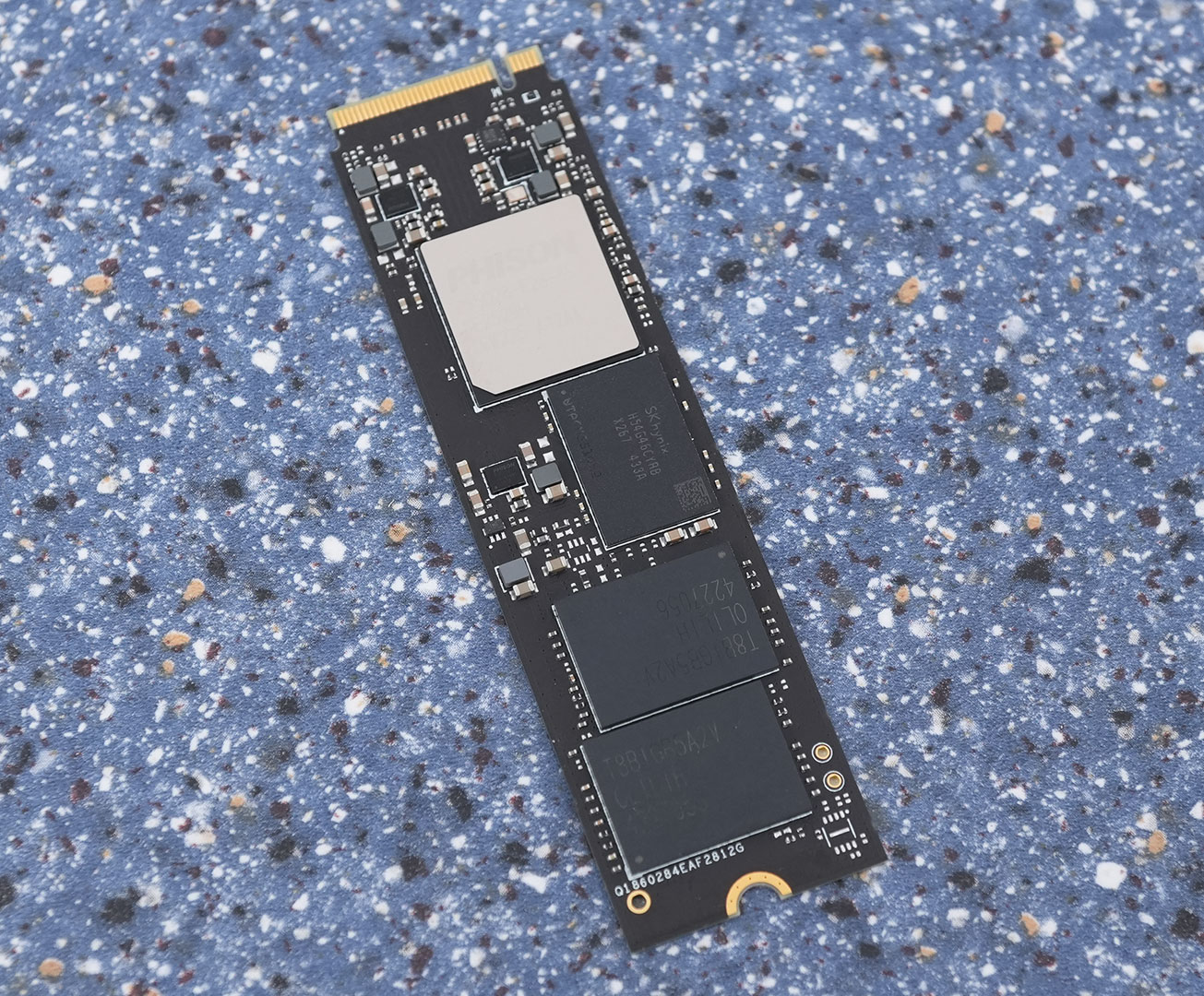
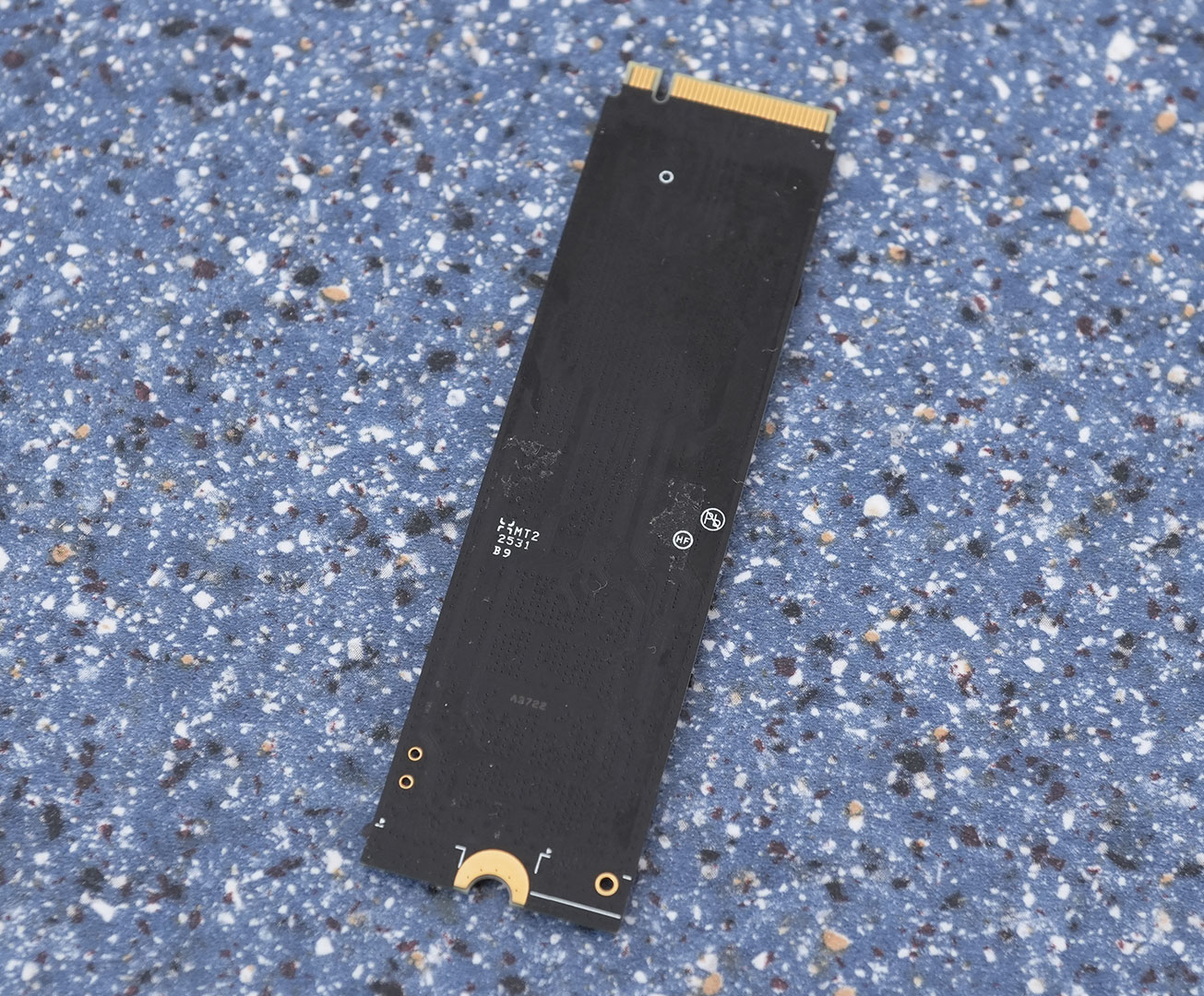
On the PCB you'll find the controller, two flash chips and a DRAM cache chip.
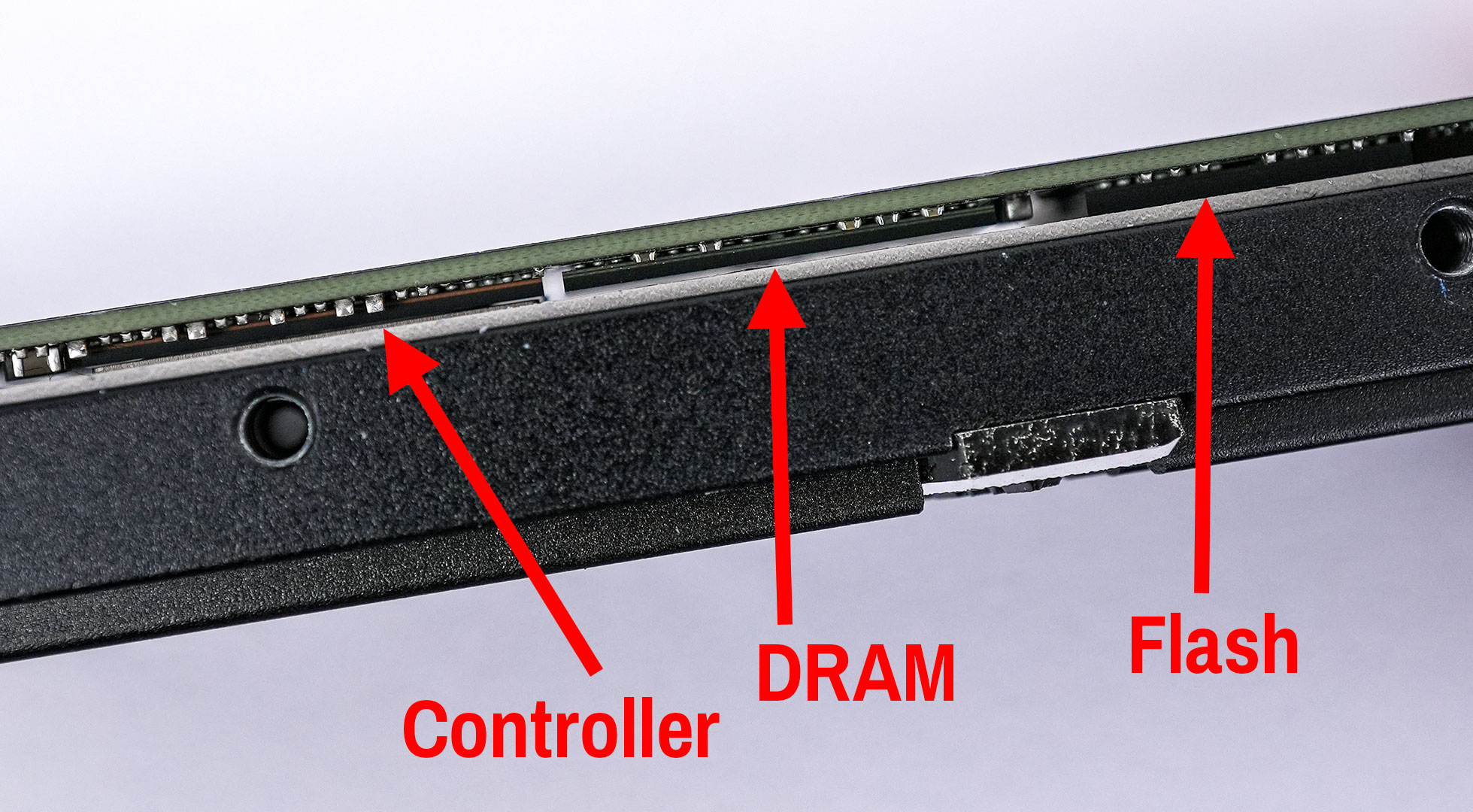
Just like on their other recent controllers, Phison ensured that the Z-Height of the controller package matches the NAND flash height, ensuring an even heatsink application. As a result, the DRAM cache doesn't come into contact with the heatsink, which is not an issue because it doesn't get very hot.
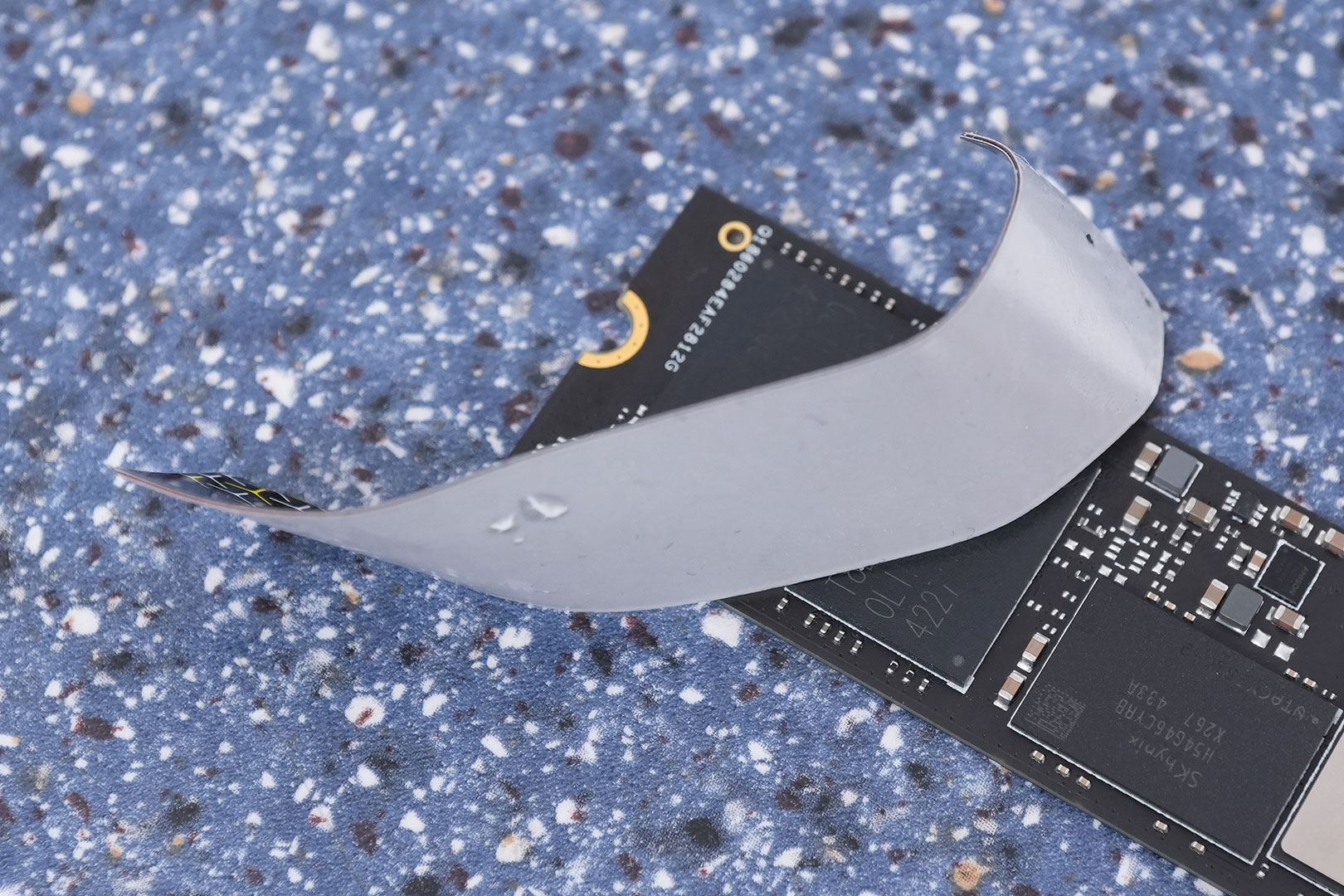
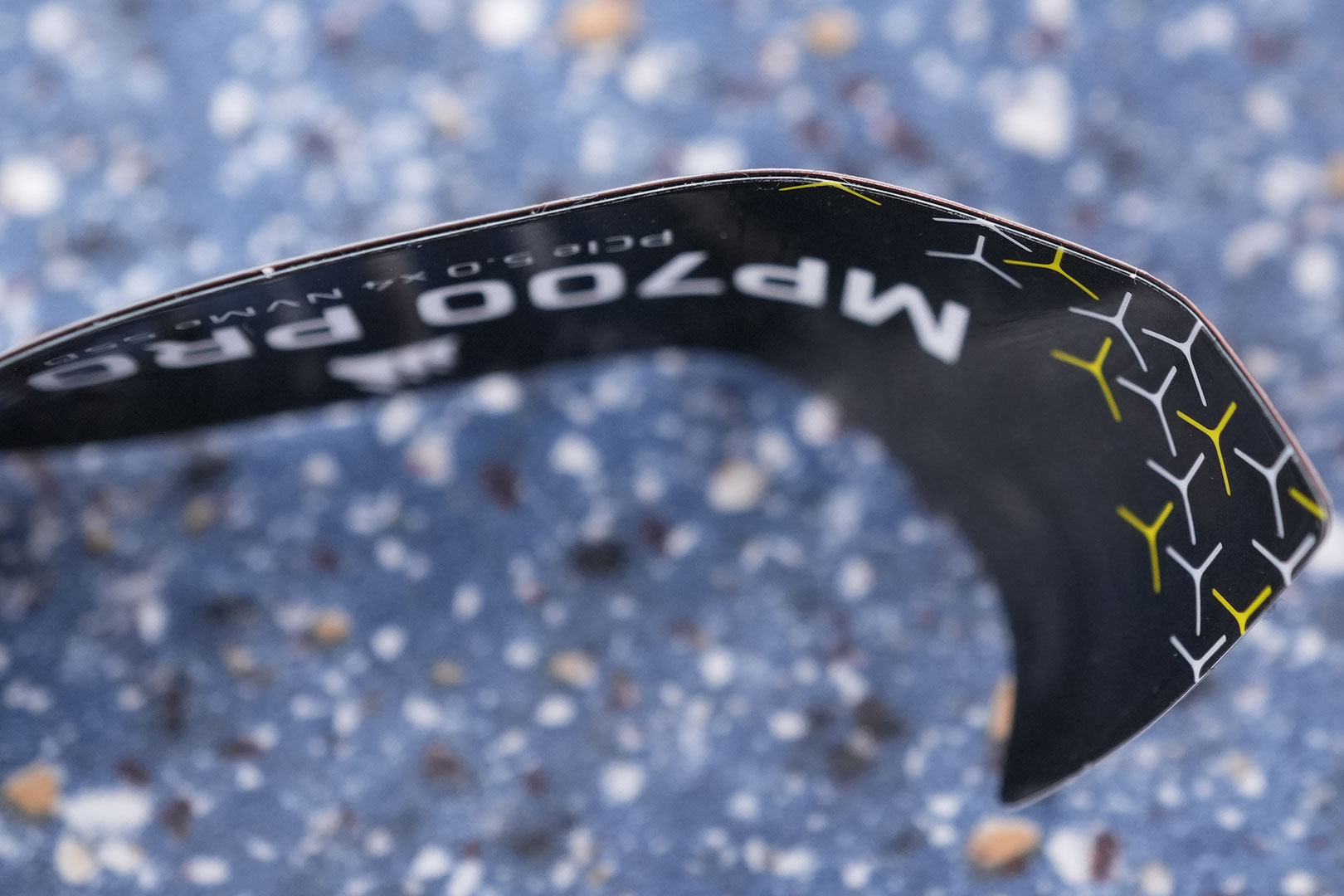

Corsair is shipping their drive without a heatsink. The installed sticker has a copper core, so it acts as a tiny heat spreader. Due to its small mass, its ability to absorb heat is limited though.
Chip Component Analysis
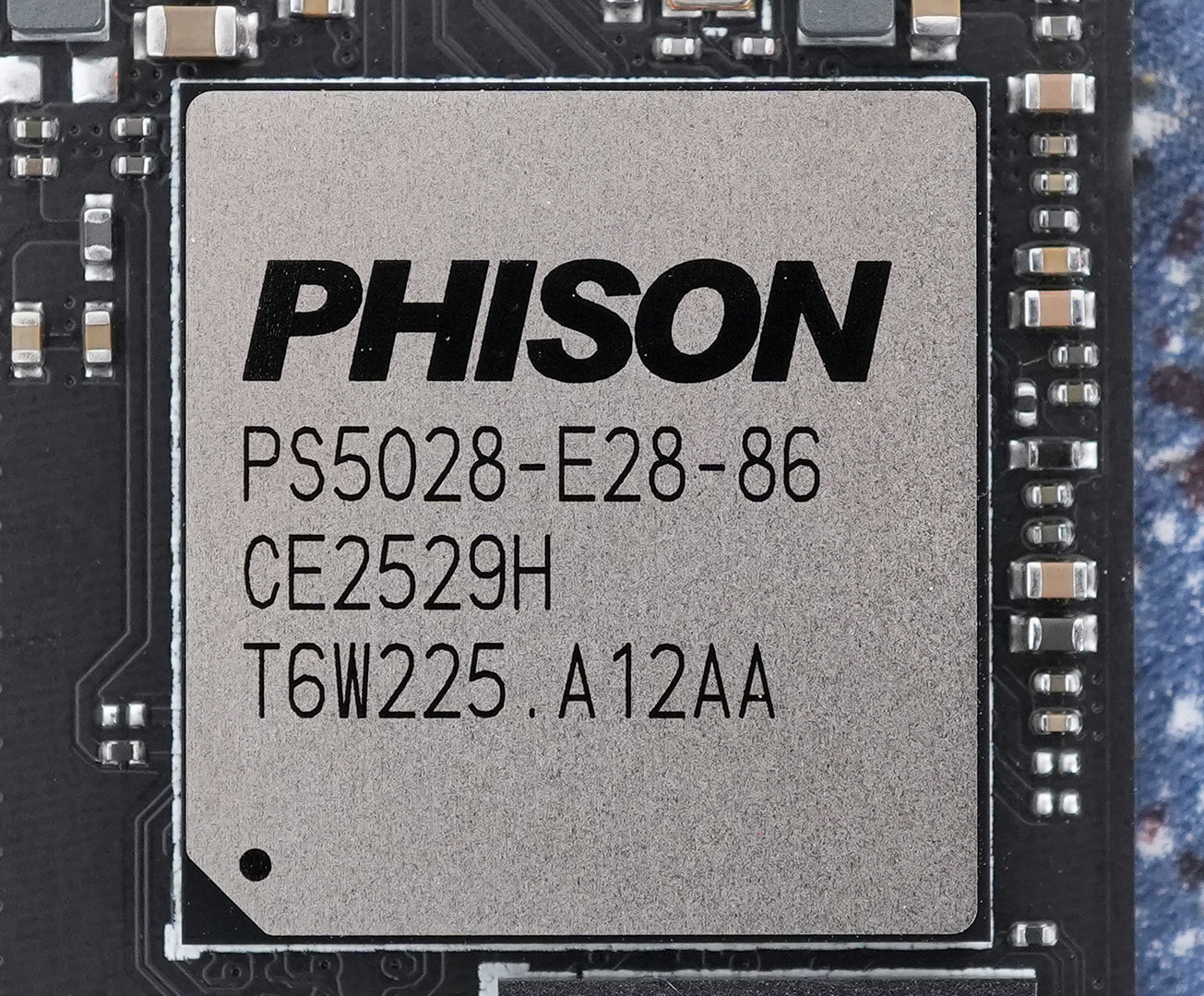
The Phison E28 controller is the third PCI-Express 5.0 controller developed by the company for consumer purposes. It succeeds the high-end E26, providing PCIe 5.0 x4 support and utilizing eight flash channels. Phison is fabricating the controller using a 6 nanometer process at TSMC Taiwan.
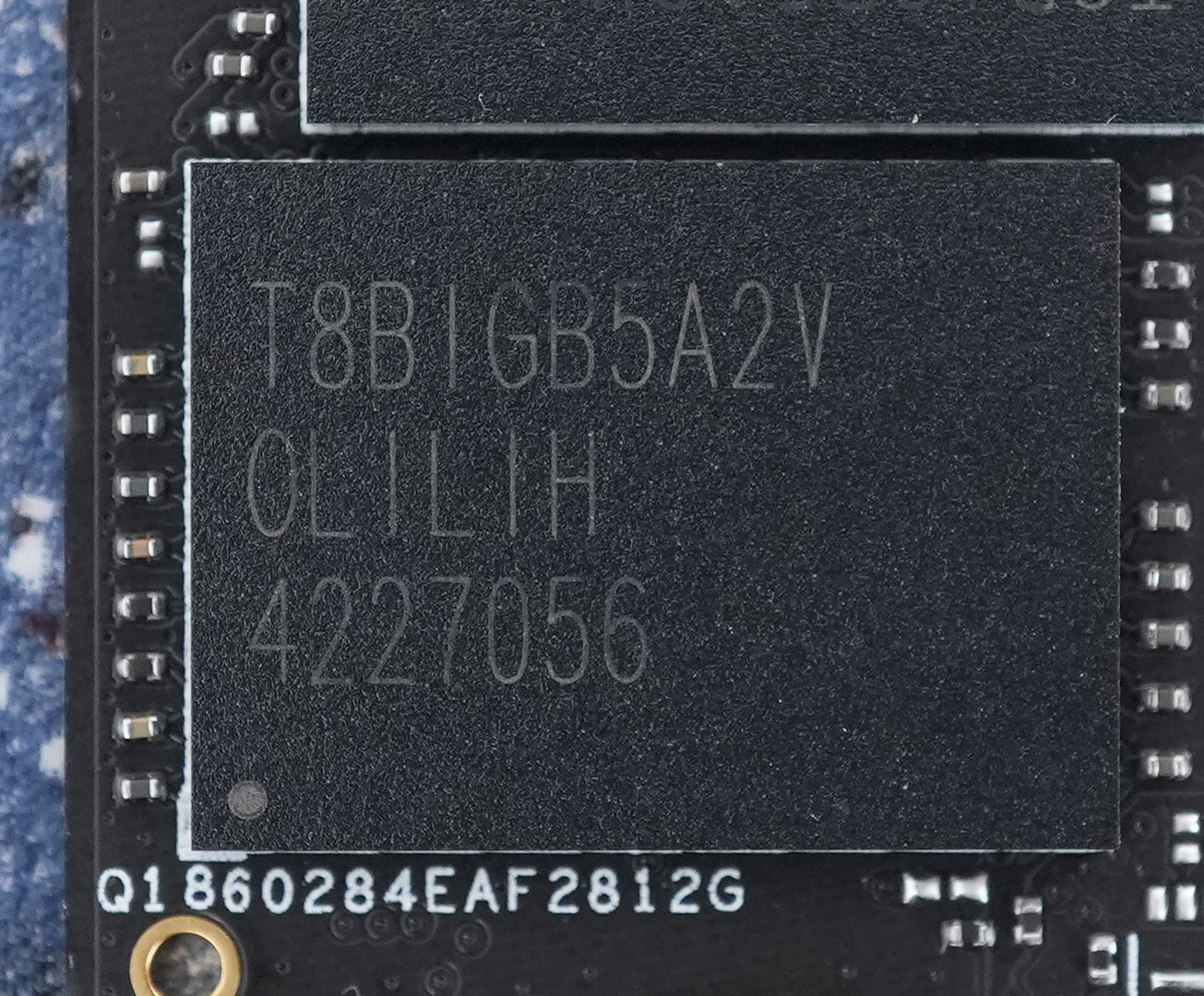
The two flash chips are Kioxia BiCS8 218-layer 3D TLC NAND. Each chip has a capacity of 1 TB.
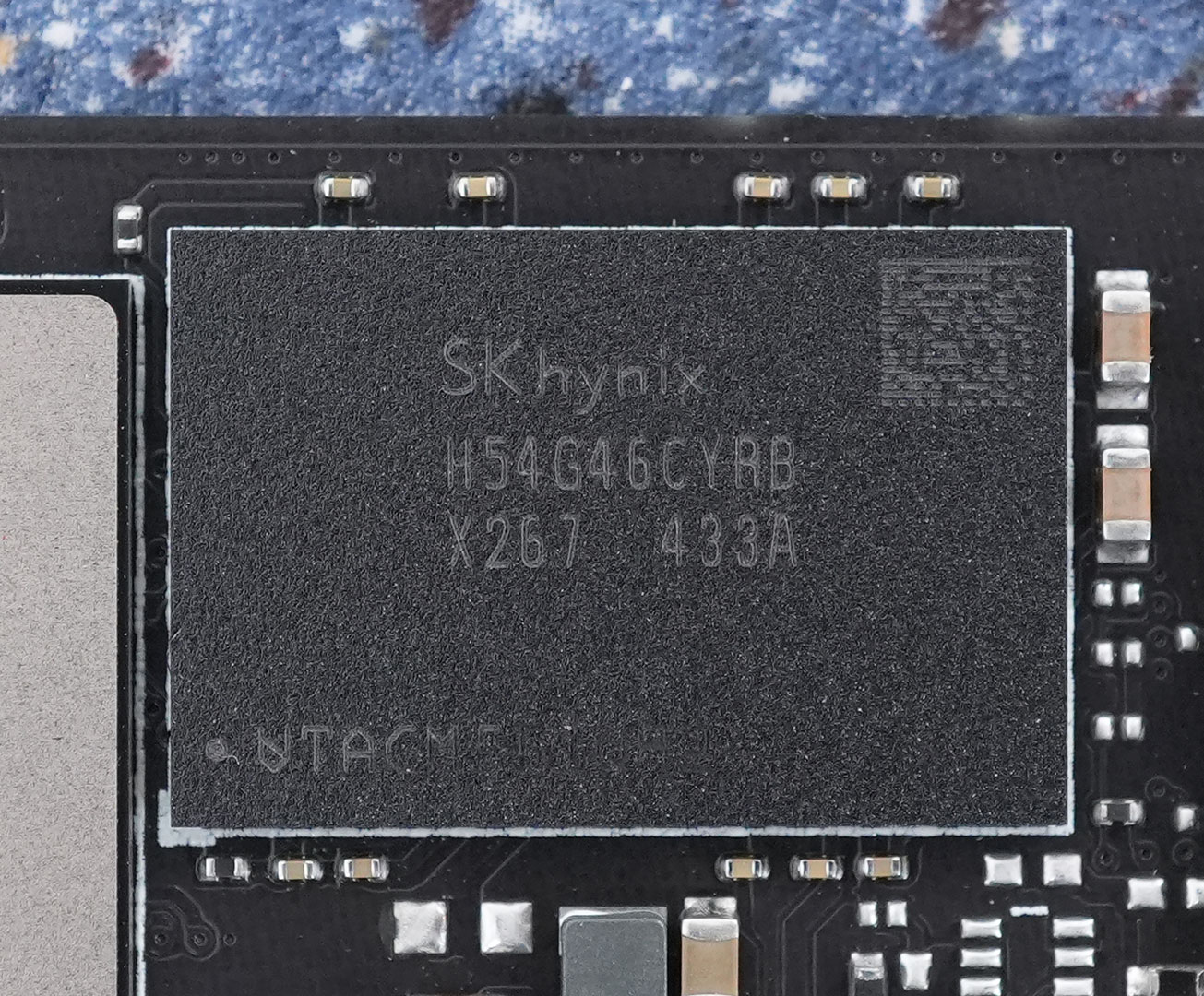
The Hynix DRAM cache chip has a capacity of 2 GB and runs at LPDDR4-4266.
Test Setup
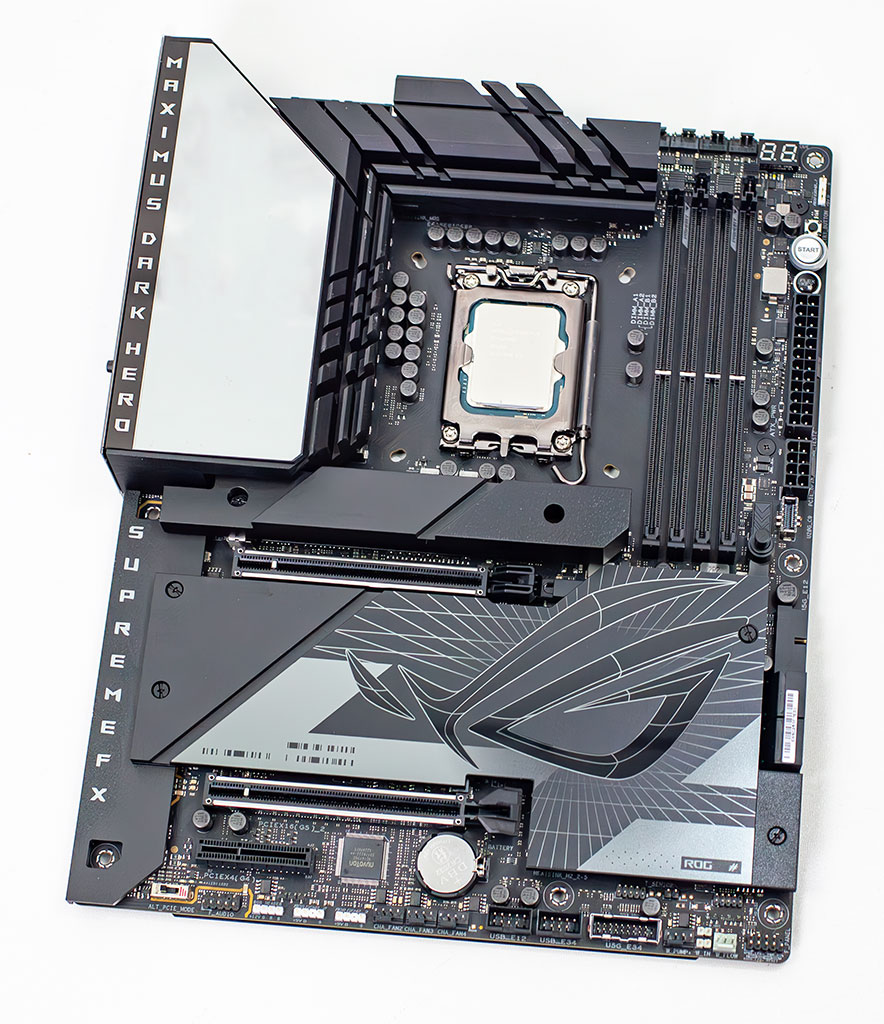
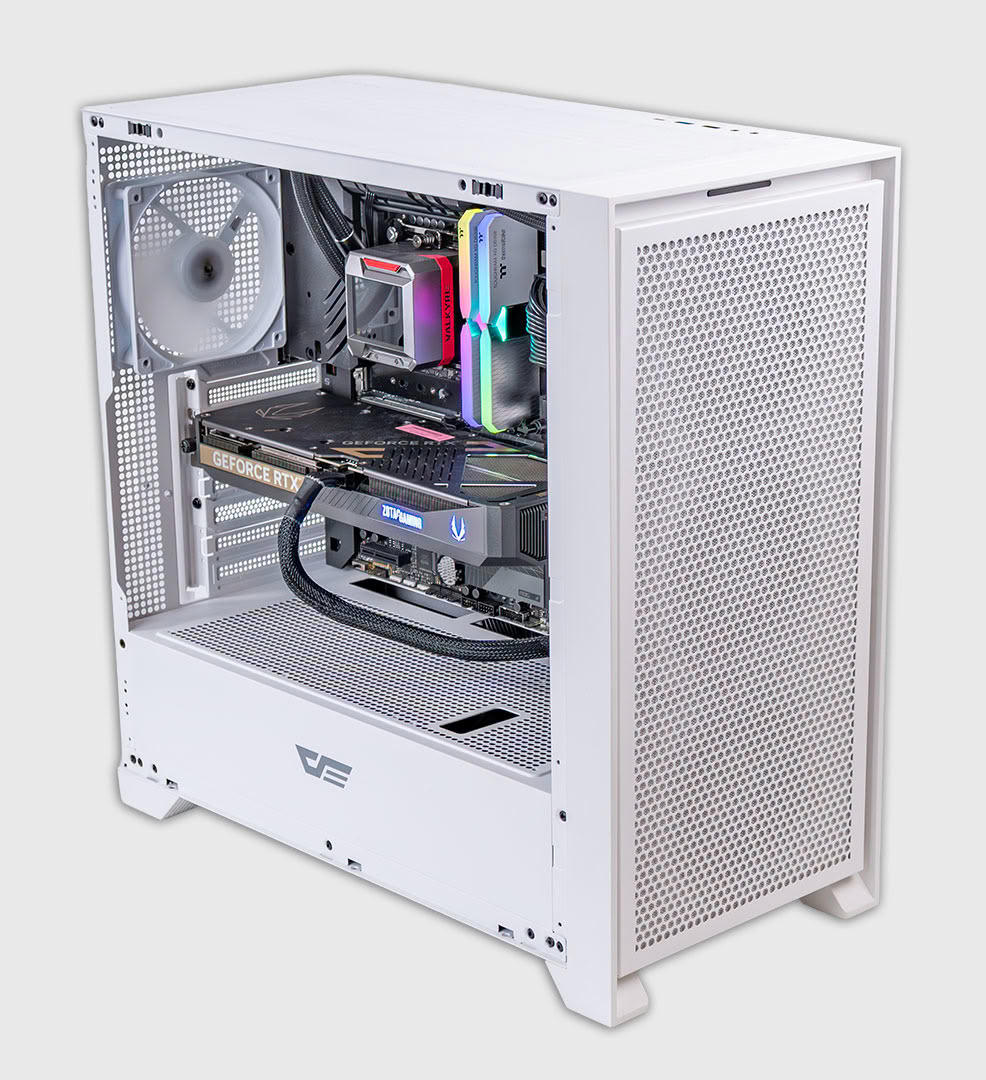
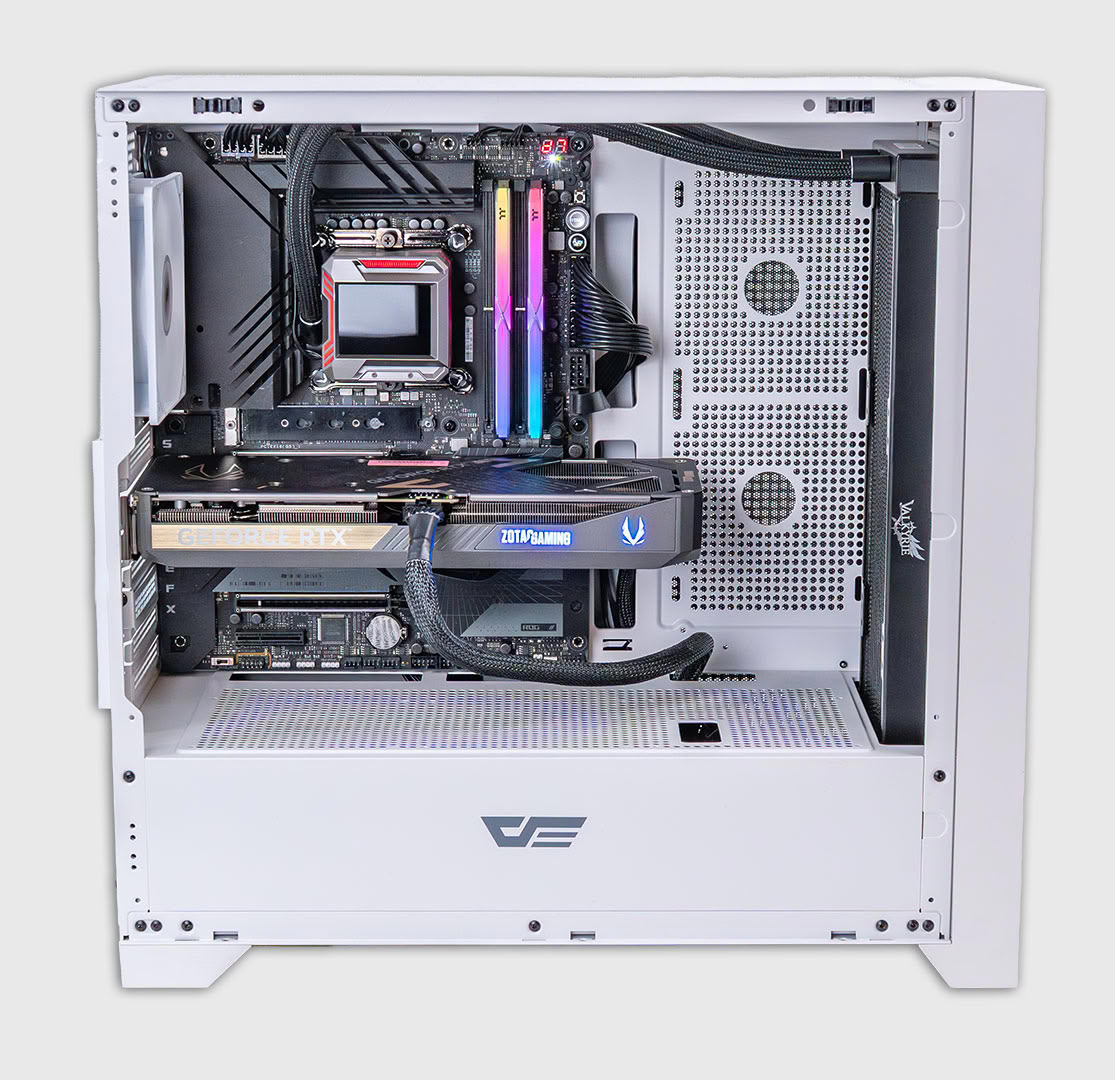
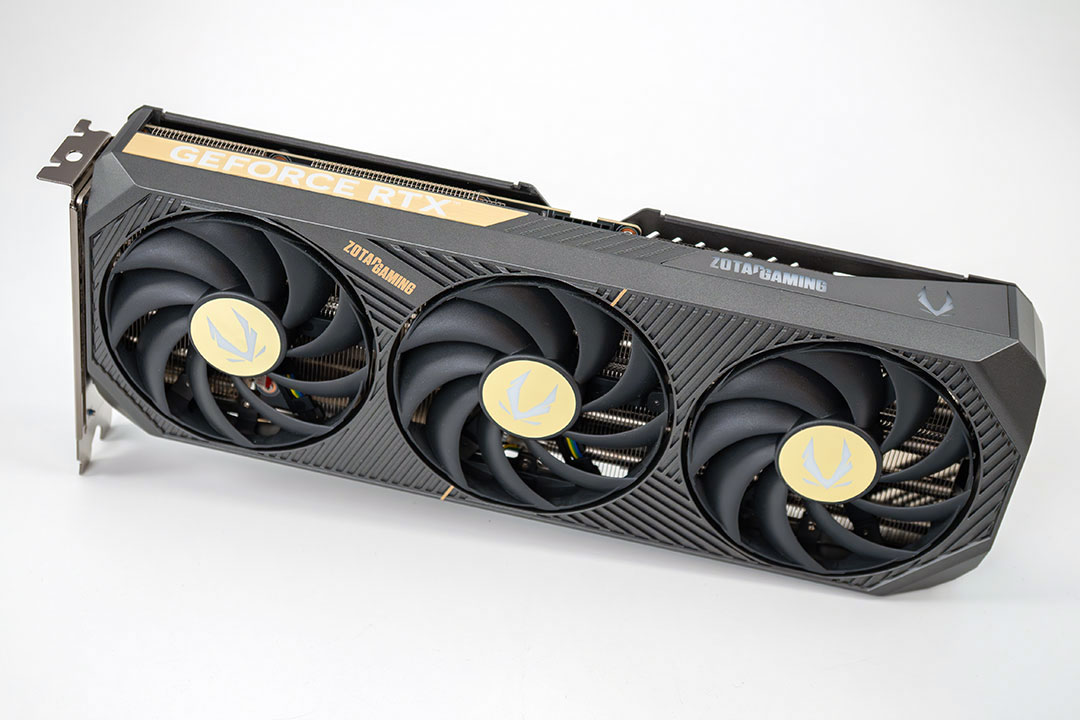
| Test System SSD 2024 | |
|---|---|
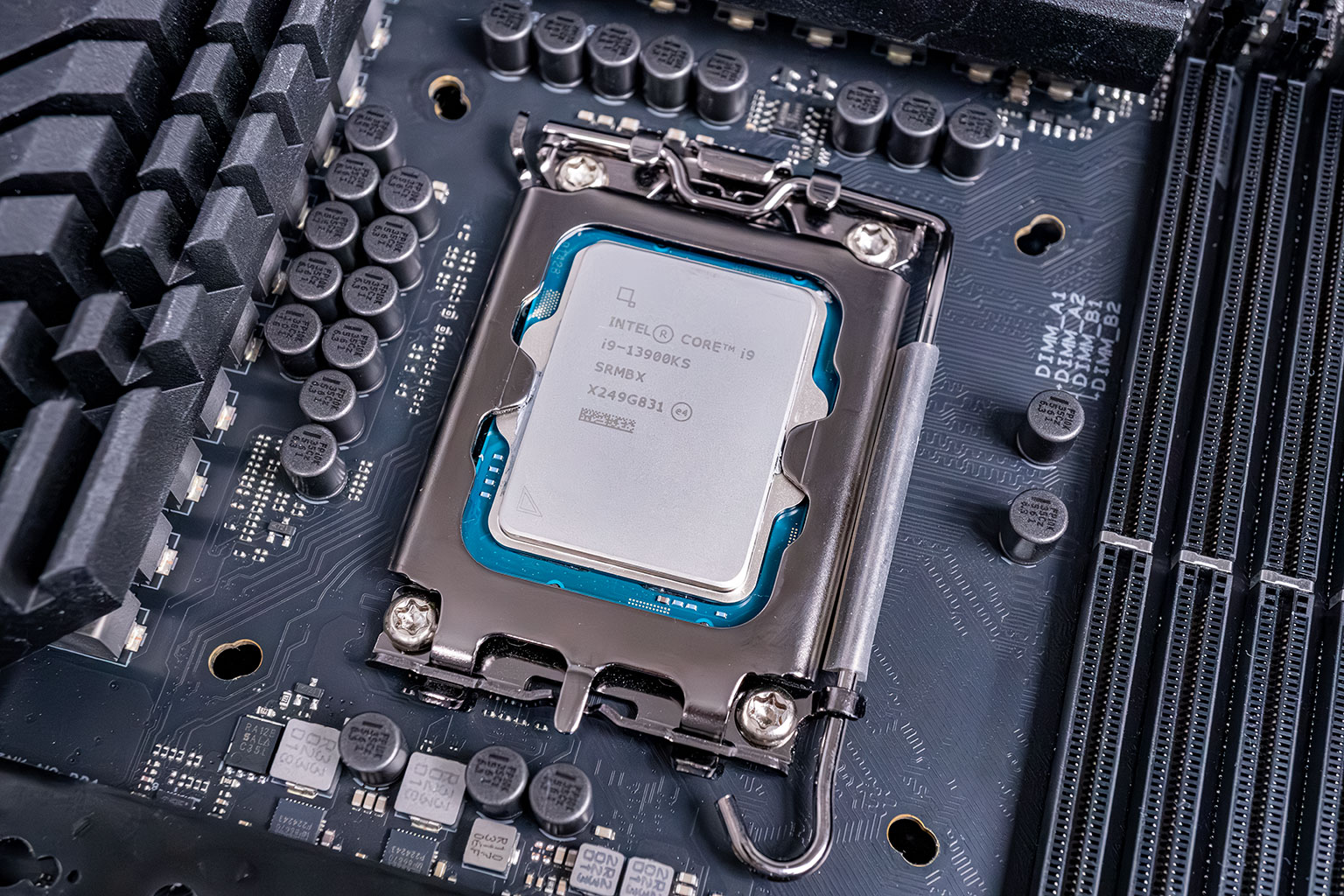
| Processor: | Intel Core i9-13900KS Raptor Lake 6.0 GHz, 8+16 cores / 32 threads |
| Motherboard: | ASUS ROG Z790 Dark Hero BIOS 1102 |
| Memory: | 2x 16 GB DDR5-6000 |
| Graphics: | Zotac GeForce RTX 5070 Solid |
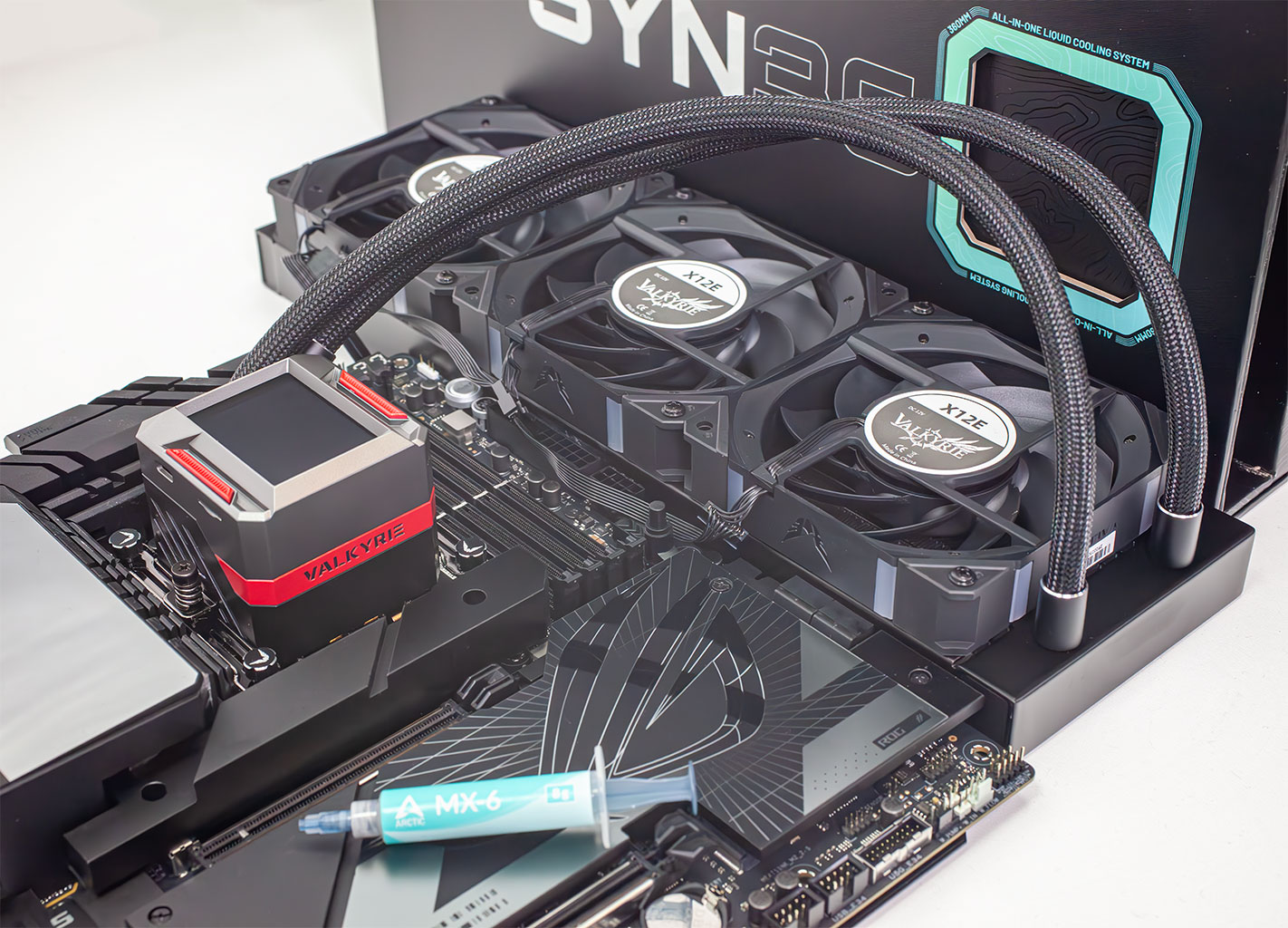
| Cooling: | Valkyrie Syn 360 mm AIO |
| Thermal Paste: | Arctic MX-6 |
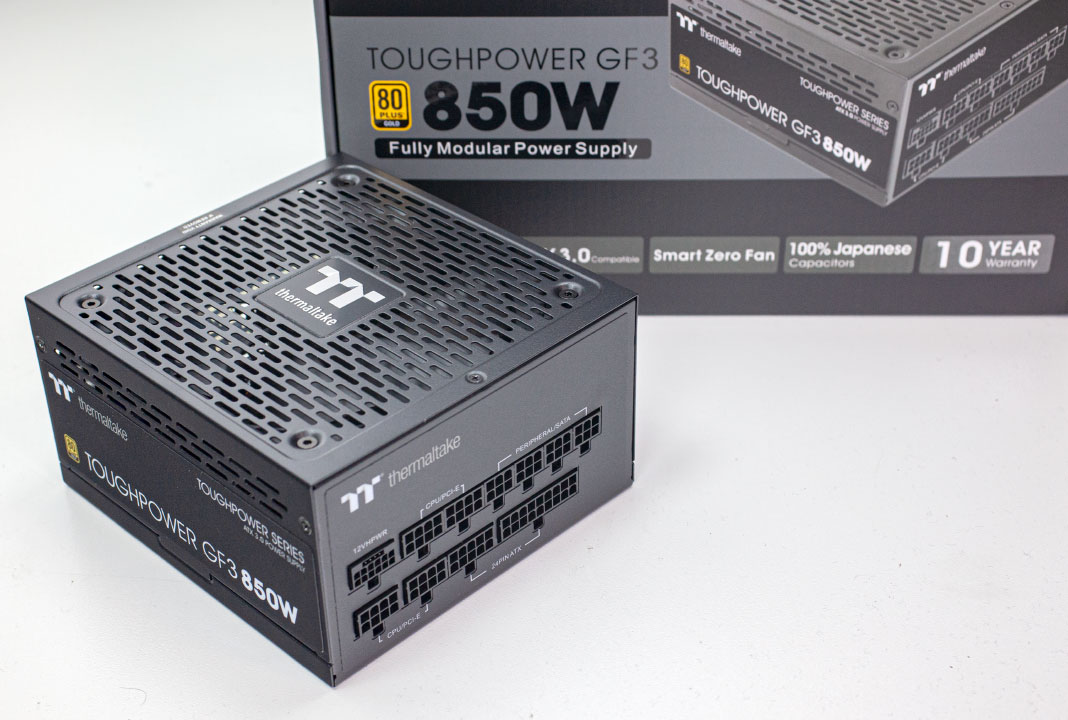
| Power Supply: | Thermaltake Toughpower GF3 850 W ATX 3.0 / 16-pin 12VHPWR |
| Case: | darkFlash DRX70 White |
| Operating System: | Windows 11 Professional 64-bit 23H2 VBS enabled (Windows 11 default) |
| Drivers: | NVIDIA: 552.12 WHQL |
Synthetic Testing
- Tests are run with a 20-second-long warm-up time (result recording starts at second 21).
- Between each test, the drive is left idle for 60 seconds, to allow it to flush and reorganize its internal data.
- All write requests contain random, incompressible data.
- Disk cache is flushed between all tests.
- During these tests, M.2 drives are tested with additional active fan-cooling, to ensure thermal throttling can't happen.
Real-life Testing
- After initial configuration and installation, a disk image is created; it is used to test every drive.
- Automated updates are disabled for the OS and all programs. This ensures that—for every review—each drive uses the same settings, without interference from previous testing.
- Our disk image consumes around 700 GB—partitions are resized to fill all available space on the drive.
- All drives are filled with random data to 85% of their capacity. This is intentional, to run the drive in realistic operating conditions—nobody uses a nearly-empty SSD in their system. It also puts additional stress on the pseudo-SLC cache subsystem, because there is less free NAND space to work with.
- Partitions are aligned properly.
- Disk cache is flushed between all tests.
- In order to minimize random variation, each real-life performance test is run several times, with reboots between tests to minimize the impact of disk cache.
- All application benchmarks run the actual application and do not replay any disk traces.
- Our real-life testing data includes performance numbers for a typical high-performance HDD, using results from a Western Digital WD Black 1 TB 7200 RPM 3.5" SATA. HDDs are significantly slower than SSDs, which is why we're not putting the result in the chart, as that would break the scaling, making the SSDs indistinguishable in comparison. Instead, we've added the HDD performance numbers in the title of each test entry.
- During these tests, M.2 drives are tested with additional active fan-cooling, to ensure thermal throttling can't happen.
Comparison Drives
We compare the tested drive to a wide selection of SSDs currently available on the market. Besides popular drives, our focus is also on including common controller and flash type combinations.| Controller | Channels | Flash | DRAM | Interface | |
|---|---|---|---|---|---|
| ADATA SX8200 Pro 1 TB | Silicon Motion SM2262ENG | 8 | TLC/Micron | Yes | PCIe 3.0 x4 |
| Corsair MP400 2 TB | Phison E12S | 8 | QLC/Micron | Yes | PCIe 4.0 x4 |
| Corsair MP600 Elite 2 TB | Phison E27 | 4 | TLC/Toshiba | No | PCIe 4.0 x4 |
| Corsair MP700 Pro 2 TB | Phison E26 | 8 | TLC/Micron | Yes | PCIe 5.0 x4 |
| Crucial BX500 1 TB | Silicon Motion SM2258XT | 4 | TLC/Micron | No | SATA |
| Crucial MX500 1 TB | Silicon Motion SM2258H | 4 | TLC/Micron | Yes | SATA |
| Crucial P1 1 TB | Silicon Motion SM2263ENG | 8 | QLC/Micron | Yes | PCIe 3.0 x4 |
| Crucial P5 1 TB | Micron DM01B2 | 8 | TLC/Micron | Yes | PCIe 3.0 x4 |
| Crucial P5 Plus 1 TB | Micron DM02A1 | 8 | TLC/Micron | Yes | PCIe 4.0 x4 |
| Crucial T500 2 TB | Phison E25 | 4 | TLC/Micron | Yes | PCIe 4.0 x4 |
| Crucial T710 2 TB | Silicon Motion SM2508 | 8 | TLC/Micron | Yes | PCIe 5.0 x4 |
| Hynix Gold P31 2 TB | Hynix ACNT038 | 8 | TLC/Hynix | Yes | PCIe 3.0 x4 |
| Hynix P51 Platinum 2 TB | Hynix ACNT093 | 8 | TLC/Hynix | Yes | PCIe 5.0 x4 |
| Kingston Fury Renegade G5 2 TB | Silicon Motion SM2508 | 8 | TLC/Kioxia | Yes | PCIe 5.0 x4 |
| Kingston KC3000 2 TB | Phison E18 | 8 | TLC/Micron | Yes | PCIe 4.0 x4 |
| Kingston NV2 1 TB | Phison E21 | 4 | TLC/Toshiba | No | PCIe 4.0 x4 |
| Kioxia Exceria Plus G4 2 TB | Phison E31 | 4 | TLC/Kioxia | No | PCIe 5.0 x4 |
| Lexar NM710 2 2 TB | Maxiotech MAP1602A | 4 | TLC/YMTC | No | PCIe 4.0 x4 |
| Lexar NM790 2 2 TB | Maxiotech MAP1602A | 4 | TLC/YMTC | No | PCIe 4.0 x4 |
| MSI Spatium M450 1 TB | Phison E19 | 4 | TLC/Micron | No | PCIe 4.0 x4 |
| Neo Forza NFP495 2 TB | TenaFE TC2201 | 4 | TLC/YMTC | No | PCIe 4.0 x4 |
| Samsung 860 EVO 1 TB | Samsung MJX | 8 | TLC/Samsung | Yes | SATA |
| Samsung 870 QVO 1 TB | Samsung MKX | 8 | QLC/Samsung | Yes | SATA |
| Samsung 970 EVO Plus 1 TB | Samsung Phoenix | 8 | TLC/Samsung | Yes | PCIe 3.0 x4 |
| Samsung 980 1 TB | Samsung Pablo | 8 | TLC/Samsung | Yes | PCIe 3.0 x4 |
| Samsung 980 Pro 1 TB | Samsung Elpis | 8 | TLC/Samsung | Yes | PCIe 4.0 x4 |
| Samsung 990 Pro 2 TB | Samsung Pascal | 8 | TLC/Samsung | Yes | PCIe 4.0 x4 |
| Samsung 9100 Pro 2 TB | Samsung Presto | 8 | TLC/Samsung | Yes | PCIe 5.0 x4 |
| Seagate Barracuda 120 1 TB | Phison S12 | 8 | TLC/Intel | Yes | SATA |
| Seagate FireCuda 510 1 TB | Phison E12 | 8 | TLC/Toshiba | Yes | PCIe 3.0 x4 |
| Solidigm P44 Pro 2 TB | SK hynix ACNS075 | 8 | TLC/Hynix | Yes | PCIe 4.0 x4 |
| WD Black SN5100 2 TB | Sandisk A101-000103 | 4 | QLC/Sandisk | No | PCIe 4.0 x4 |
| WD Black SN7100 2 TB | Sandisk A101-000172 | 4 | TLC/Sandisk | No | PCIe 4.0 x4 |
| WD Black SN8100 2 TB | Silicon Motion SM2508 | 8 | TLC/Sandisk | Yes | PCIe 5.0 x4 |
| WD Black SN770 1 TB | Sandisk 20-82-10081 | 4 | TLC/Sandisk | No | PCIe 4.0 x4 |
| WD Black SN850 1 TB | Sandisk 20-82-10035 | 8 | TLC/Sandisk | Yes | PCIe 4.0 x4 |
| WD Black SN850X 2 TB | Sandisk 20-82-20035-B2 | 8 | TLC/Kioxia | Yes | PCIe 4.0 x4 |
| WD Blue SN570 1 TB | Sandisk 20-82-10023 | 4 | TLC/Sandisk | No | PCIe 3.0 x4 |
| WD Blue SN580 1 TB | Sandisk 20-82-10082 | 4 | TLC/Sandisk | No | PCIe 4.0 x4 |
| XPG Atom 50 2 TB | Silicon Motion SM2269 | 4 | TLC/Micron | No | PCIe 4.0 x4 |
| XPG Gammix S70 Blade 2 TB | InnoGrit IG5236 | 8 | TLC/Micron | Yes | PCIe 4.0 x4 |
Our Patreon Silver Supporters can read articles in single-page format.
Nov 16th, 2026 07:16 CST
change timezone
Latest GPU Drivers
New Forum Posts
- The Official Linux/Unix Desktop Screenshots Megathread (915)
- GPU Temperatures Rise Very Quickly in FurMark – Is This Normal? (17)
- Can you guess Which game it is? (327)
- no OpenGL showing support when... (11)
- Without Jensen, PC gaming will be (2)
- The Official Thermal Interface Material thread (2302)
- no "PhysX" workable (15)
- Asus Maximus hero z890 latest Bios 3410 (0)
- What can the FX 8320 do today? Here is the answer. (63)
- Advice for my PC upgrade (6)
Popular Reviews
- ASUS ROG Strix B850-I Gaming Wi-Fi7 W Review
- Corsair HX1000i Shift Crystal Review
- AMD Zen 6 Technical Deep Dive
- Upcoming Hardware Launches 2027 (Updated Nov 2026)
- Montech King 95 3D PRO Review
- NZXT C1200 Platinum Review
- Phantom Blade Zero Performance Benchmark Review - 35 GPUs Tested
- AMD Ryzen 7 9800X3D Review - The Best Gaming Processor
- NZXT H7 RGB+ Review
- NZXT H5 Review
TPU on YouTube
Controversial News Posts
- NVIDIA Co-Founder and CEO Jensen Huang Officially Resigns (431)
- Open Letter Asking NVIDIA to Reinstate Jensen Huang Passes 115,000 Signatures (184)
- OpenAI CEO Argues Home PCs Waste the World's Limited DRAM Supply (152)
- NVIDIA Launches Investigation Into Jensen Huang's Relationship With Suspected Chinese Spy (136)
- Intel "Raptor Lake Next" 16-Core and 20-Core CPUs Surface (130)
- Legendary Game Studio BioWare Shuts Down Following EA Layoffs (104)
- Dell CEO Says the Memory Shortage Will Get Worse in 2027 (95)
- NVIDIA GeForce RTX 50-Series Scheduled for up to $500 Price Hike This Week (89)