 3
DAREU A950 Wing Review
Sensor & Performance »Build Quality
Overall build quality is solid. When shaking the mouse, a rattle presumably comes from the scroll wheel. When applying lateral pressure, no creaking or flexing of the shell can be observed. Activating the side buttons by squeezing the sides is impossible. Lastly, accidental clicks when slamming down the mouse do not occur.Buttons

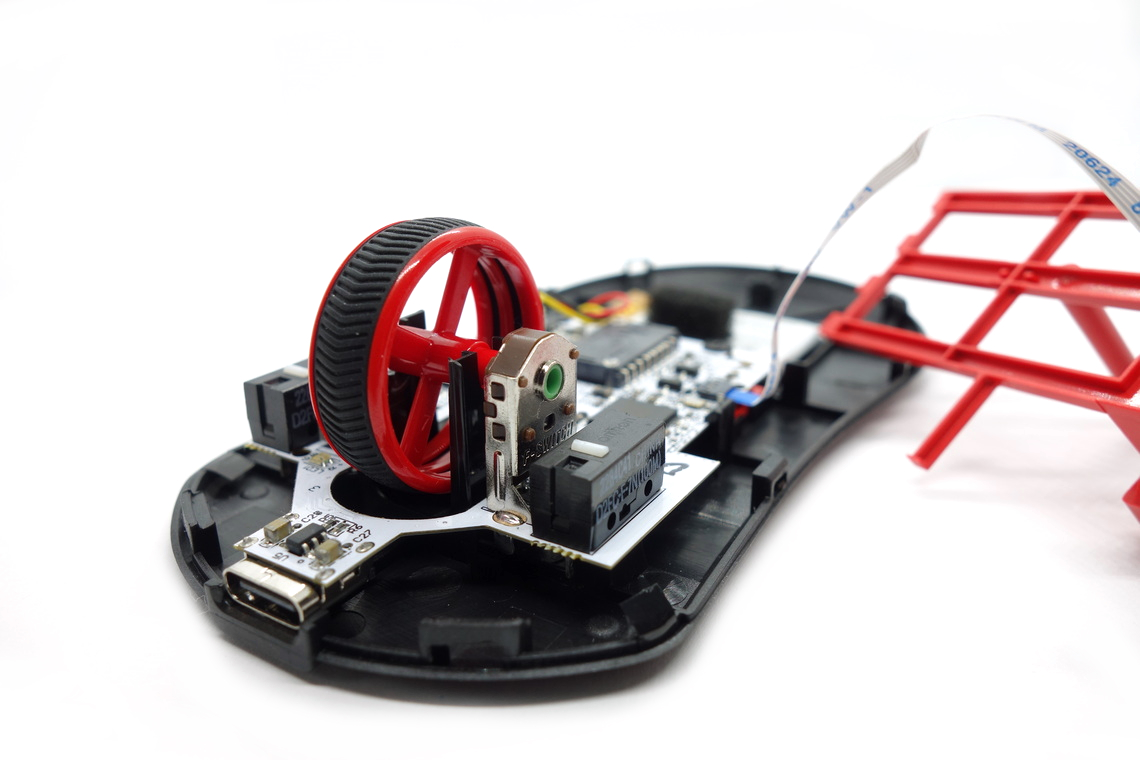
Main buttons on the A950 Wing are good. Pre-travel is moderate and post-travel is high, resulting in a fairly firm and snappy button response. Being visually separated from the shell, button movement is moderate when provoked. Button stiffness is medium. A pair of Omron D2FC-F-7N (100 M) (China) switches are used.


Side buttons are decent. Pre-travel is low, but post-travel is high to where the buttons can be pushed into the shell in their entirety. The actuation point is even across the entirety of these. Button size and placement are good, as actuation is possible rather easily by rolling one's thumb across. A set of low-profile, 2-pin Huano switches (white plunger) are used for these.
A slider switching between on and off-state is found at the bottom, which works fine.
Scroll Wheel

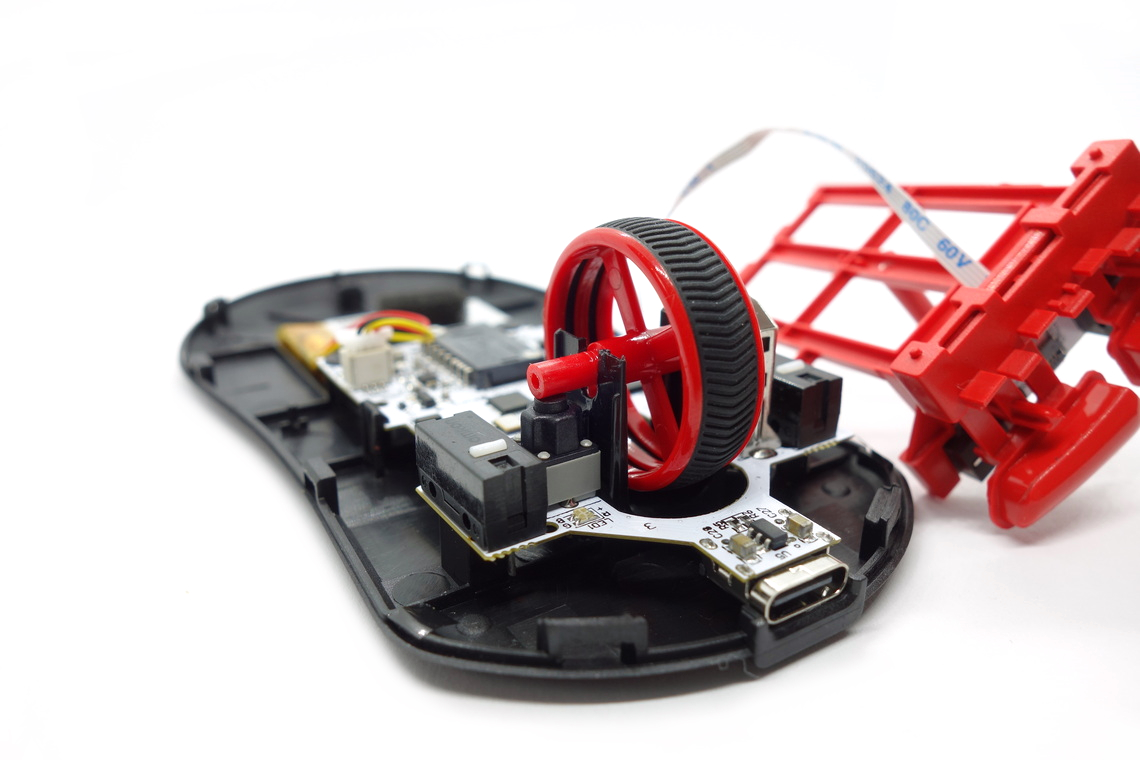
The scroll wheel is good. Noise levels are somewhat elevated, and tactility is above average, as the individual steps are rather well-separated. The encoder comes from F-Switch (brown, green core) and has a height of 11 mm. The middle (scroll wheel) click requires medium force for actuation. A seemingly unbranded tactile switch (black plunger) is used here.
Surface
The A950 Wing has a matte surface all over. Grip is fine, and it doesn't attract fingerprints or dirt too much. It is easy to clean, and there are barely any signs of wear left after doing so. All in all, very good materials.Button Sound Test
Disassembly
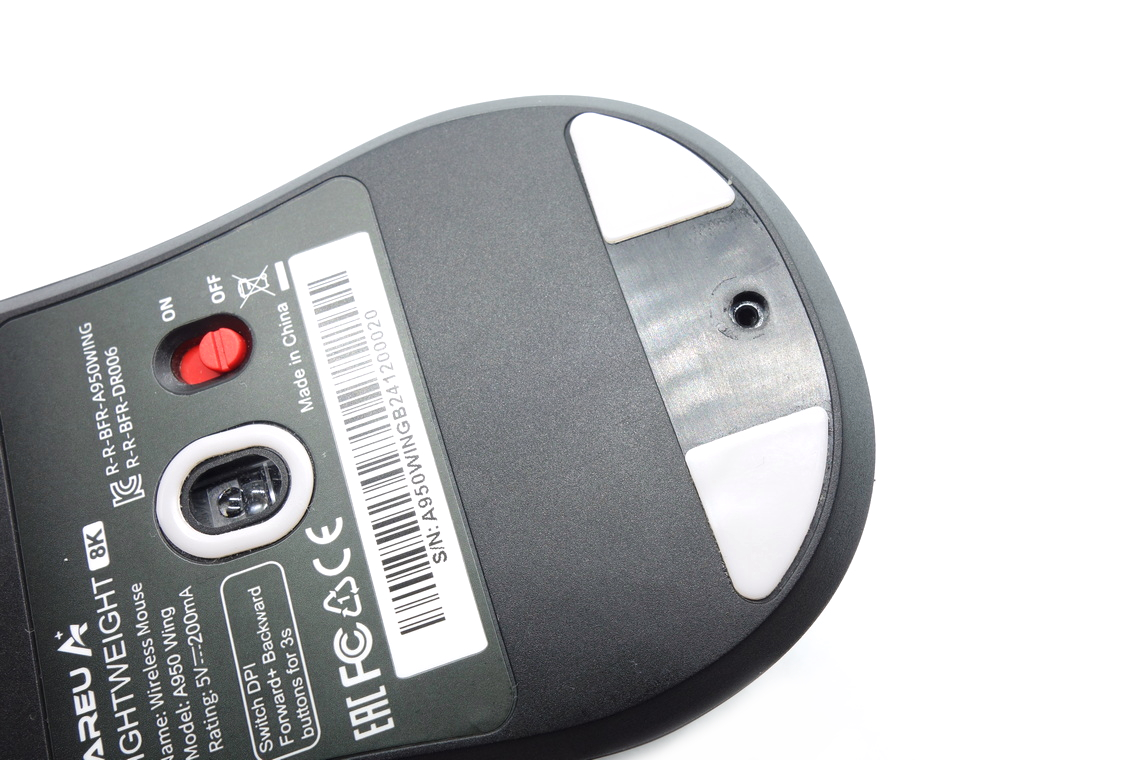
Disassembling the A950 Wing is moderately difficult. Only a single screw needs to be removed, which is located at the rear below the QC sticker. In addition, eight clips arranged around the base need to dislodged, which can be tricky, and requires wedging a credit card (or similar) in to succeed.
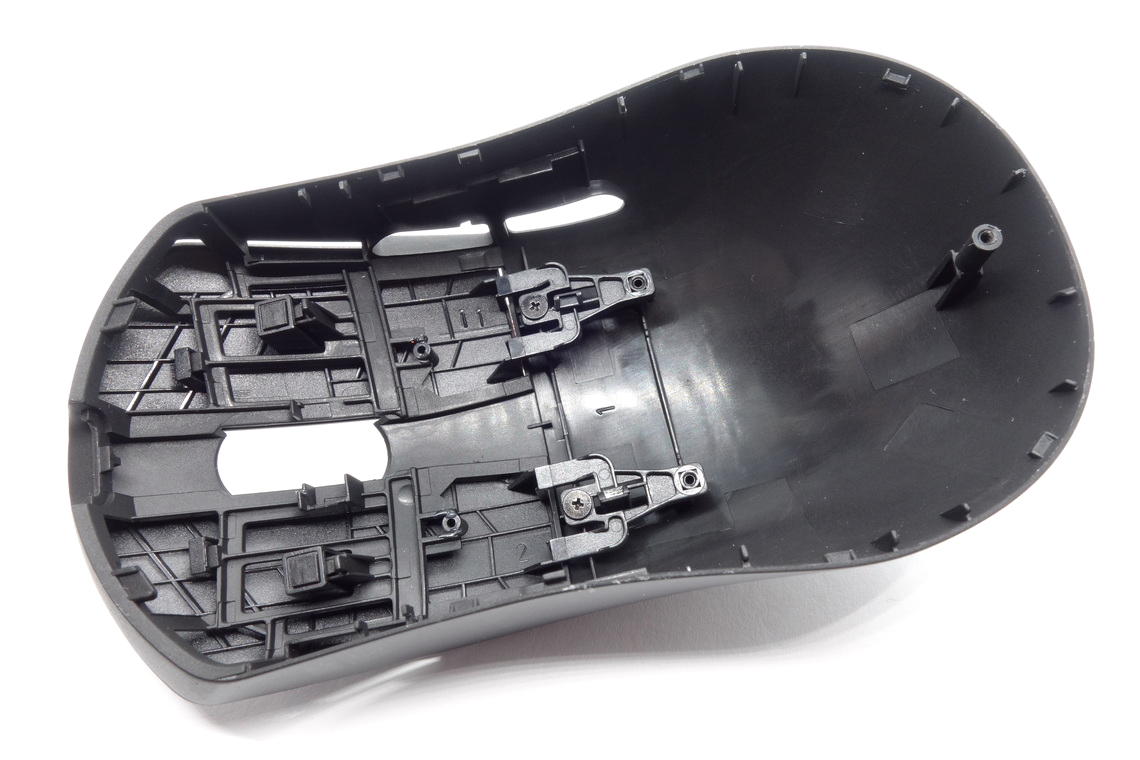
The internal design is highly efficient. The side buttons sit on their own PCB connected through a ribbon cable and clipped into a plastic assembly wedged into the top shell, providing structural support. The battery is stuck to the rear. The main PCB is very thin and compact, and affixed to the bottom with three screws and two clips. However, the front isn't secured at all, which is why the front holding the USB plug can be moved vertically to a significant degree. Two MCUs are used: a WCH CH32V305 GBU6, which provides a USB high-speed PHY and whose datasheet can be found here, along with a Nordic nRF52840 for wireless communication, whose datasheet is found here. Production date of the main PCB is the 48th week of 2024.
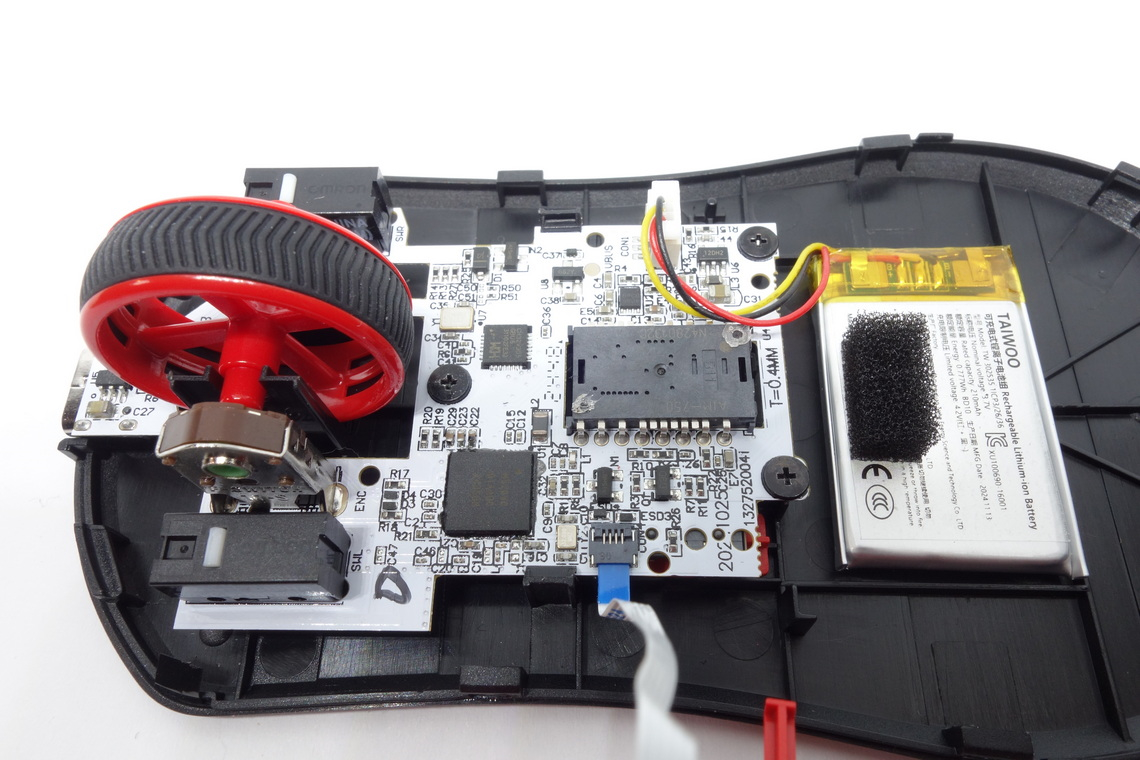
As for the soldering and general quality of the PCB, I'm unable to find any noteworthy flaws.
Nov 27th, 2026 04:00 CST
change timezone
Latest GPU Drivers
New Forum Posts
- Mouse Pad advice - Shidenkai out of production? (8)
- Using sodimm+adapter instead of full size dimm DDR5? (103)
- SABRENT AIC's (no bifurcation) Black Friday deals (0)
- What's your main Black Friday / Cyber Monday purchase? (27)
- Found Out Why My FygoOS Transfers Were Stuck at 11 MB/s (0)
- Wireless Internet sharing between PC and router both-ways, is it possible? (28)
- X79 and/or rampage IV OC'ing thread for those of us still left.... (2461)
- Will zen 6 mobos have anything extra vs current ones? (63)
- Dell Dimension E510 Retro Gaming PC Upgrade & Modification (3)
- Gacha Games - Discussions, Pulls, Updates, etc. (1166)
Popular Reviews
- VZMORE AX9 Max Review
- Upcoming Hardware Launches 2027 (Updated Nov 2026)
- ASRock X870E Challenger Wi-Fi White Review
- AMD Ryzen 7 9800X3D Review - The Best Gaming Processor
- Microsoft Surface Laptop Ultra Review - The Next-gen Arm Laptop
- AMD Zen 6 Technical Deep Dive
- Montech CyberFlow ARGB 360 Review
- Phantom Blade Zero Performance Benchmark Review - 35 GPUs Tested
- Corsair RM1200e (Second Generation) Review
- Pulsar Office Tour & First Look at P1 Dual-Sensor Mouse
TPU on YouTube
Controversial News Posts
- Jensen Huang Reinstated as CEO of NVIDIA (617)
- NVIDIA Co-Founder and CEO Jensen Huang Officially Resigns (492)
- Report: Jensen Huang Eyes NVIDIA Comeback (281)
- Open Letter Asking NVIDIA to Reinstate Jensen Huang Passes 115,000 Signatures (184)
- OpenAI CEO Argues Home PCs Waste the World's Limited DRAM Supply (152)
- NVIDIA Launches Investigation Into Jensen Huang's Relationship With Suspected Chinese Spy (136)
- Intel Razor Lake Gets a 12 P-Core bLLC Chip With No E-Cores, Per Leak (94)
- NVIDIA GeForce RTX 50-Series Scheduled for up to $500 Price Hike This Week (89)