 7
Dream Machines DM8 Mini Pro Review
Sensor & Performance »Build Quality
Overall build quality is very solid. There is no rattle when shaking the mouse. When applying lateral pressure, no creaking or flexing of the shell can be observed. Activating the side buttons by squeezing the sides is impossible. Lastly, accidental clicks when slamming down the mouse do not occur unless debounce time is set to 0 ms.Buttons
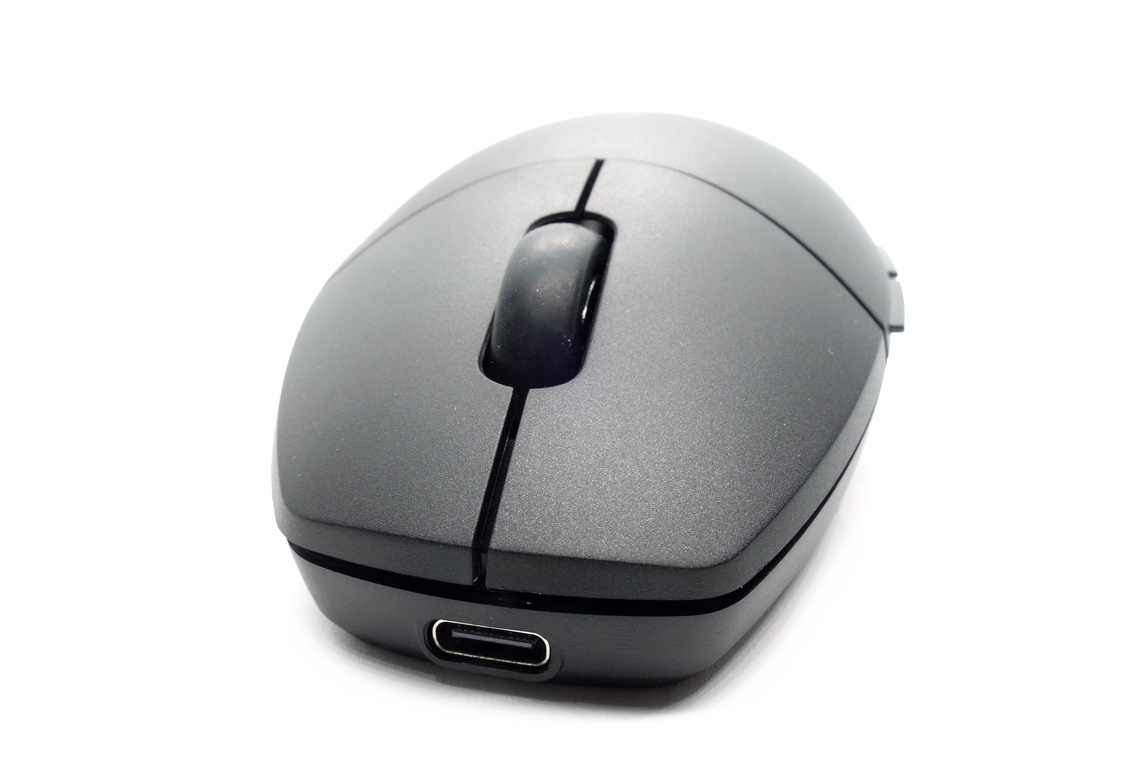
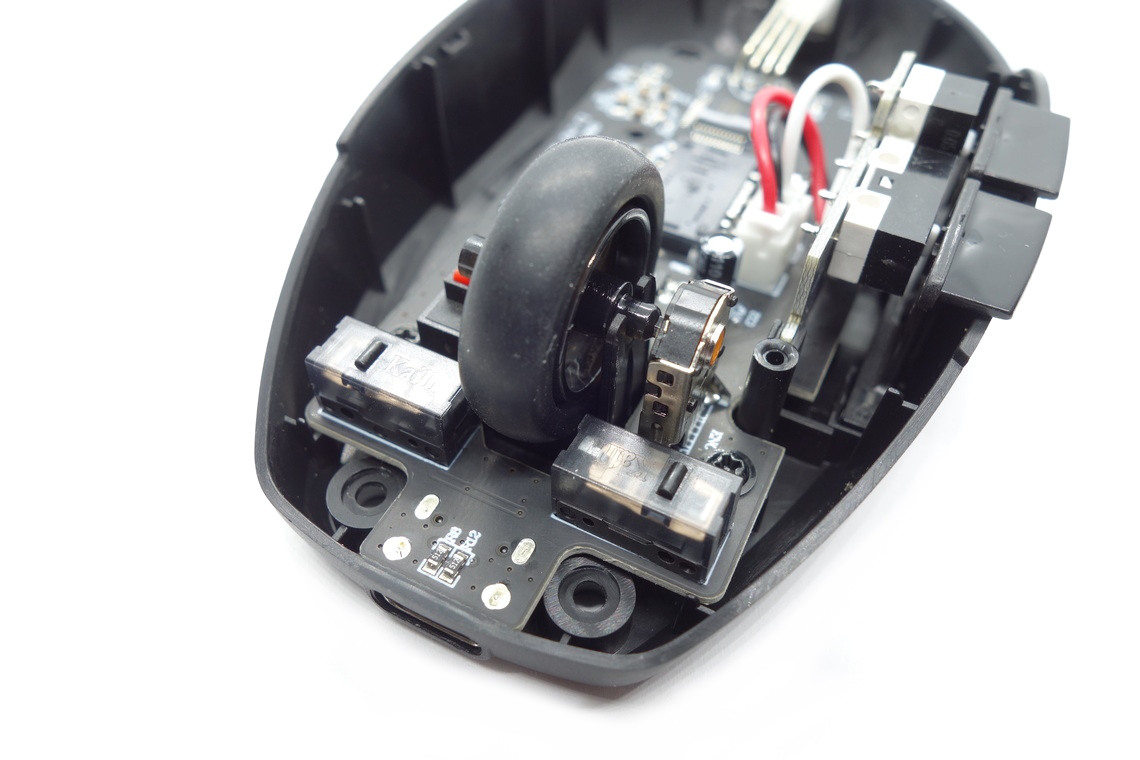
Main buttons on the DM8 Mini Pro are good. On the left button, pre-travel is very low and post-travel moderate, whereas on the right button, pre-travel is moderate and post-travel very low, though button response is firm and snappy nonetheless. Being visually separated from the shell, button movement is moderate to high when provoked. Button stiffness is medium. A pair of Kailh GM 8.0 switches are used.
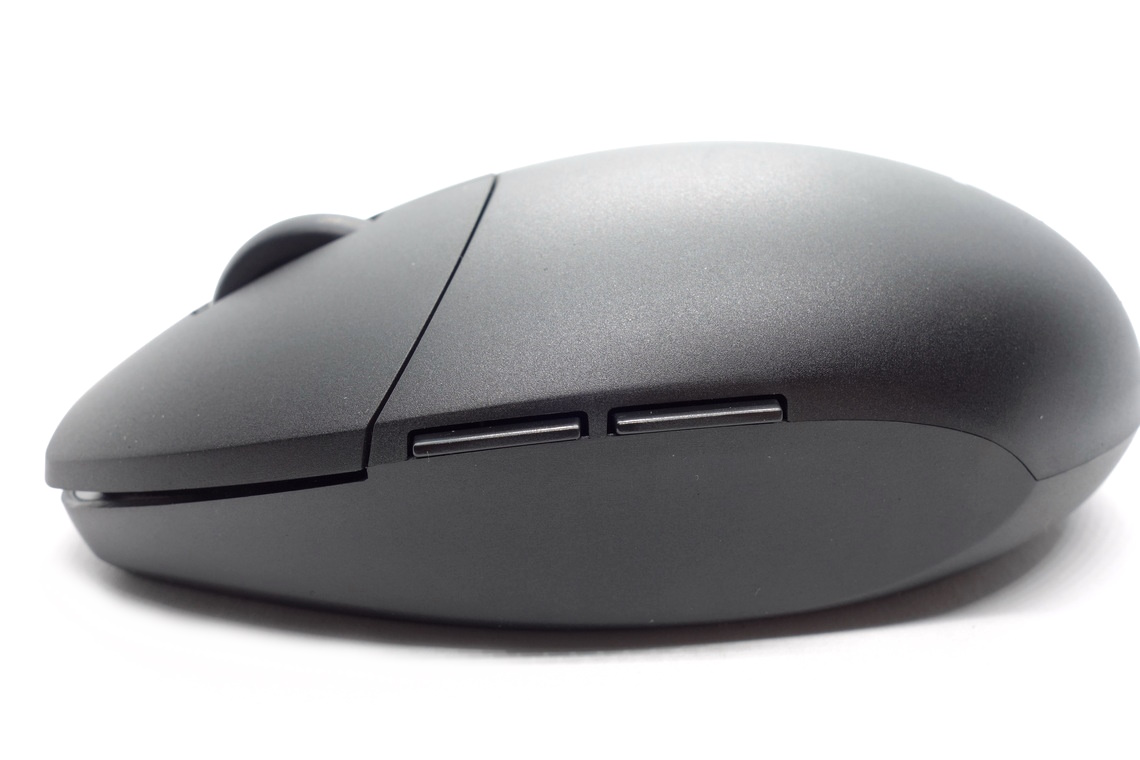
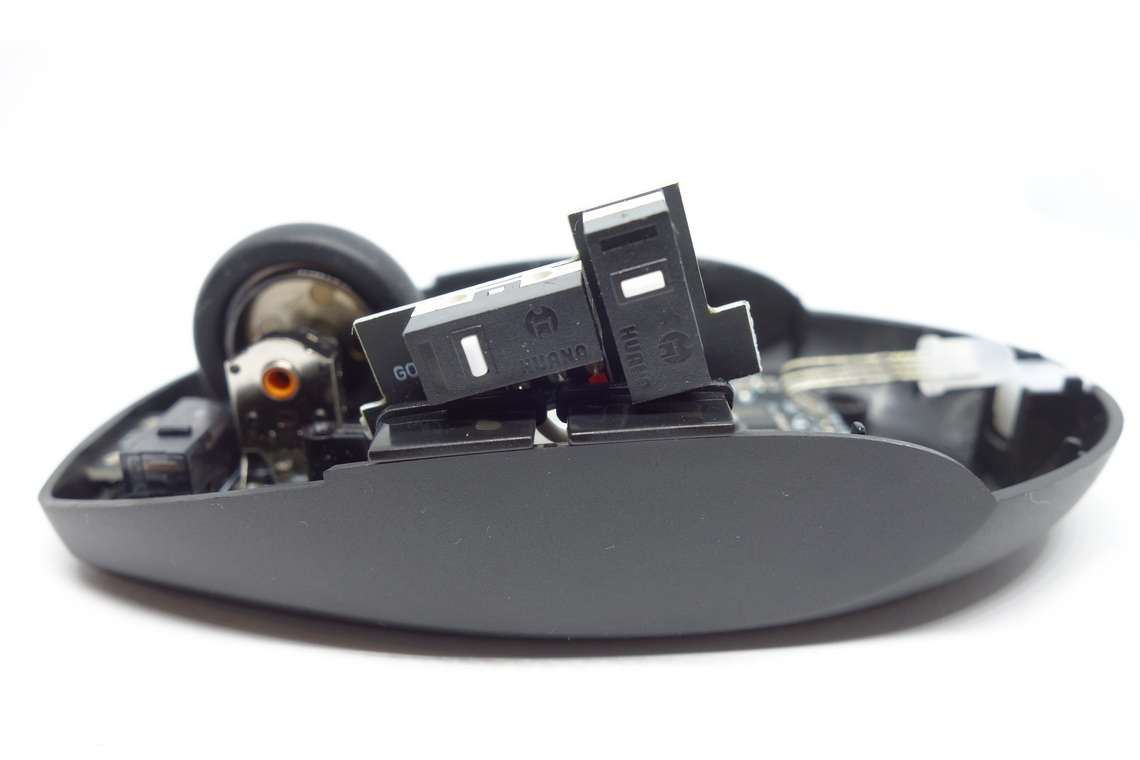
Side buttons are good to very good. Pre- and post-travel are low for the most part, resulting in fairly pleasant actuation. The actuation point is even across the entirety of these. Button size and placement are good, as actuation is possible rather easily by rolling one's thumb across. A set of Huano switches (white plunger) are used for these.
At the bottom of the mouse is a button for cycling through the set CPI levels, which works just fine.
Scroll Wheel
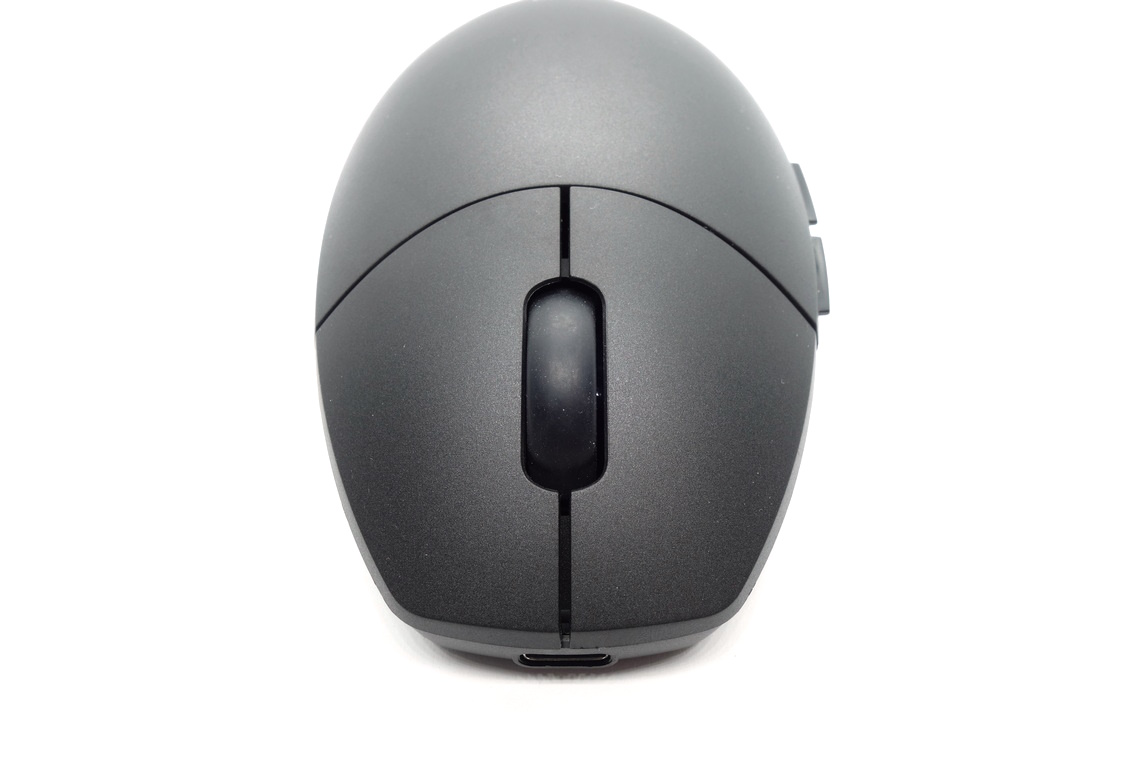
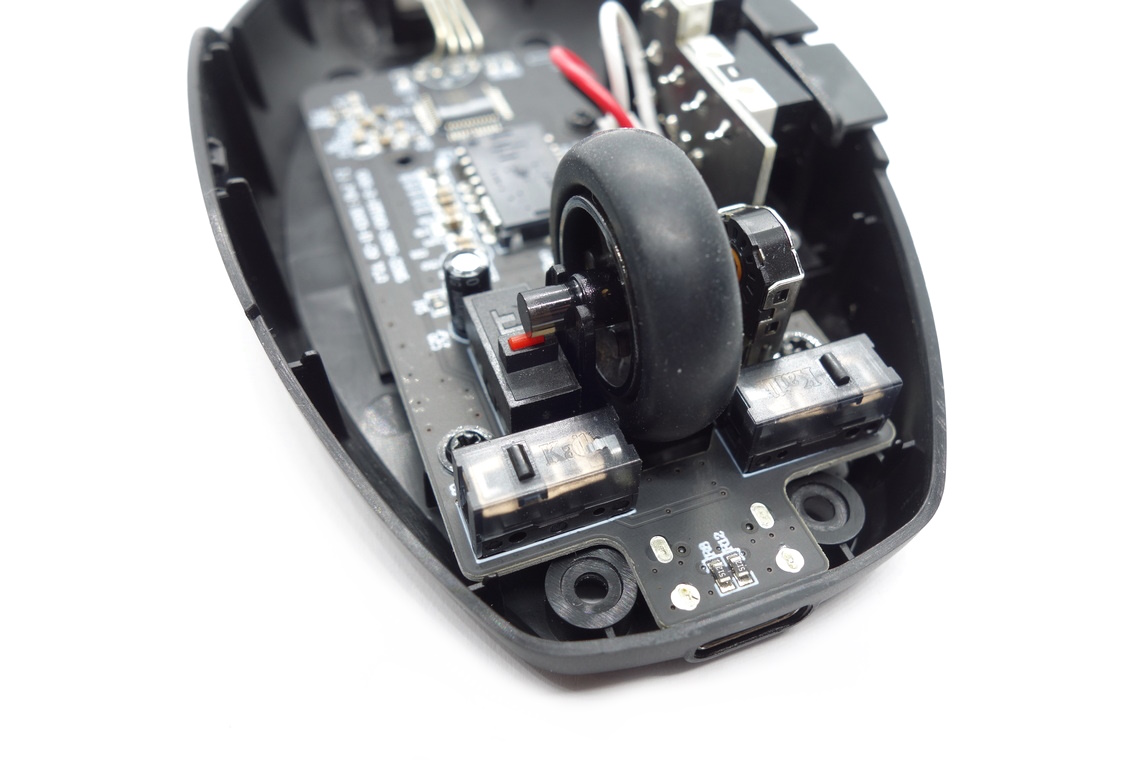
The scroll wheel is decent to good. Noise levels are high when scrolling up in particular, but tactility is above average, as the individual steps are fairly distinct. The encoder comes from F-Switch (black, orange core) and has a height of 11 mm. The middle (scroll wheel) click requires high force for actuation. A switch from a company named "Lucu" (red plunger) is used for this one.
Surface
The DM8 Mini Pro has a matte surface all over. Grip is fine, and it doesn't attract fingerprints or dirt too much. It is fairly easy to clean, and there are barely any signs of wear left after doing so. All in all, very good materials.Button Sound Test
Disassembly
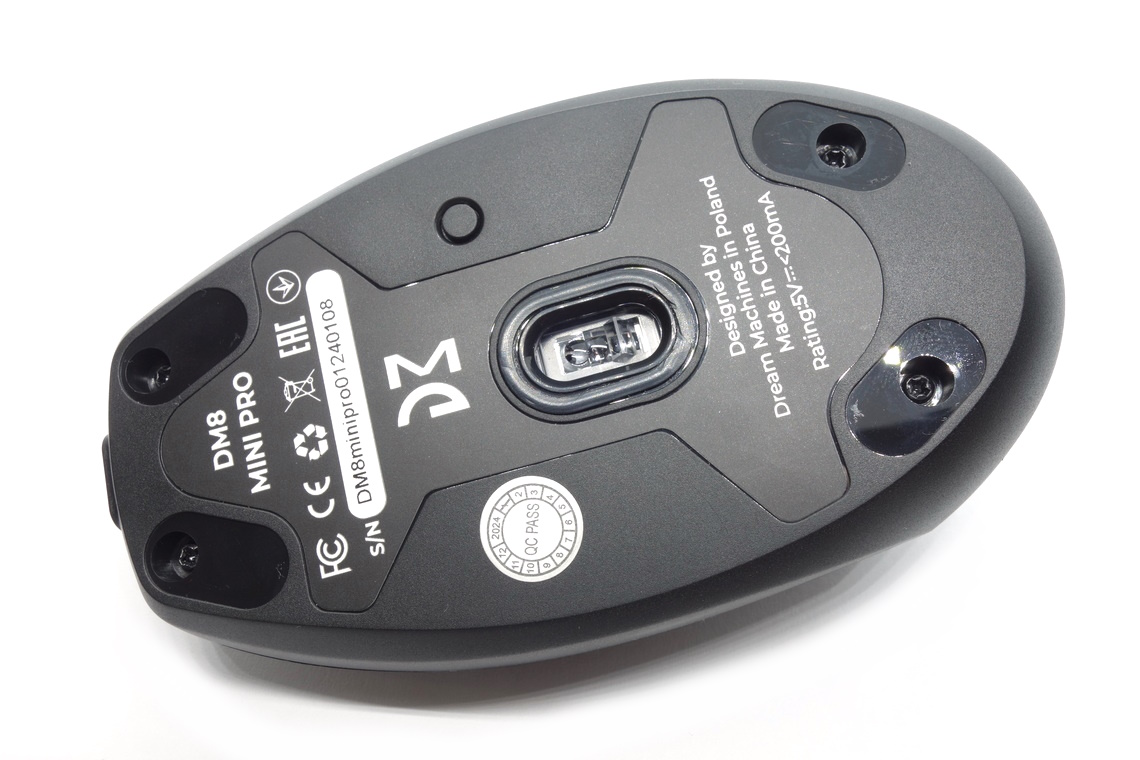
Disassembling the DM8 Mini Pro is very easy. The screws are found beneath the front and rear skates. After removing those, the top shell may simply be taken off.
The internal design is somewhat inefficient. The side buttons sit on their own PCB slotted into two posts part of the bottom shell and connected to the main PCB through a 3-pin connector. Three screws are used to affix the moderately thin yet needlessly spacious main PCB to the bottom shell. The MCU is a Holtek HT68FB560, whose datasheet can be found here.
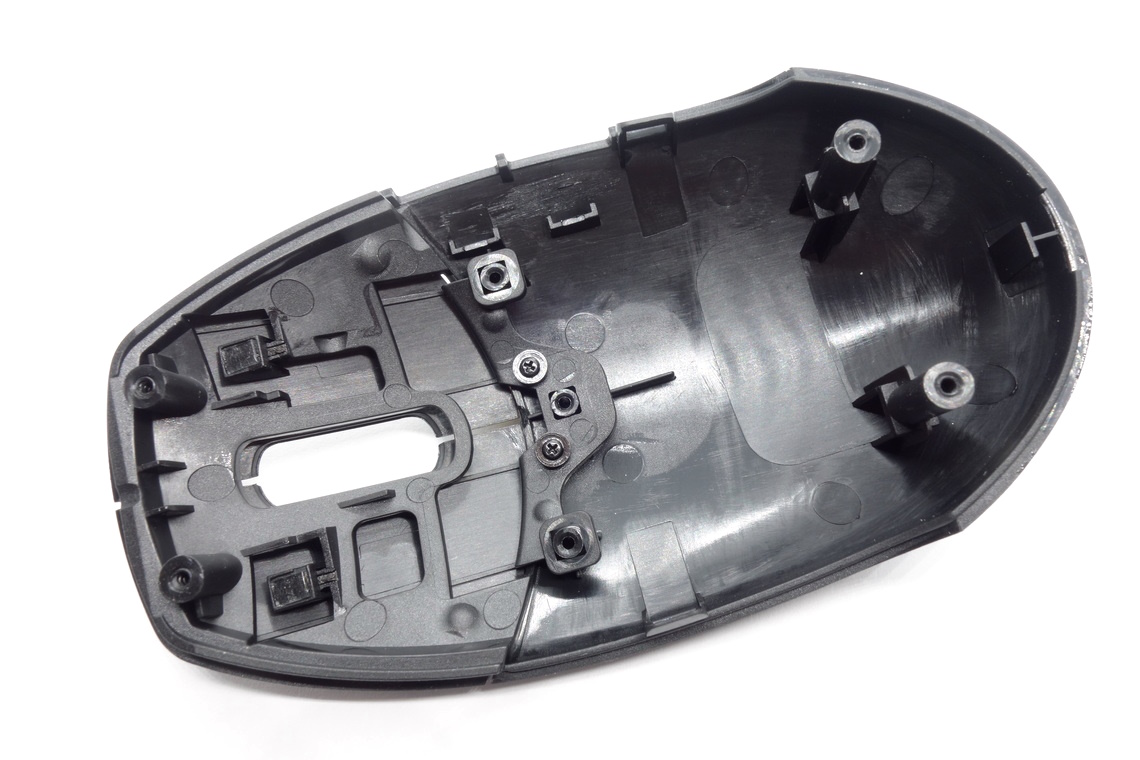
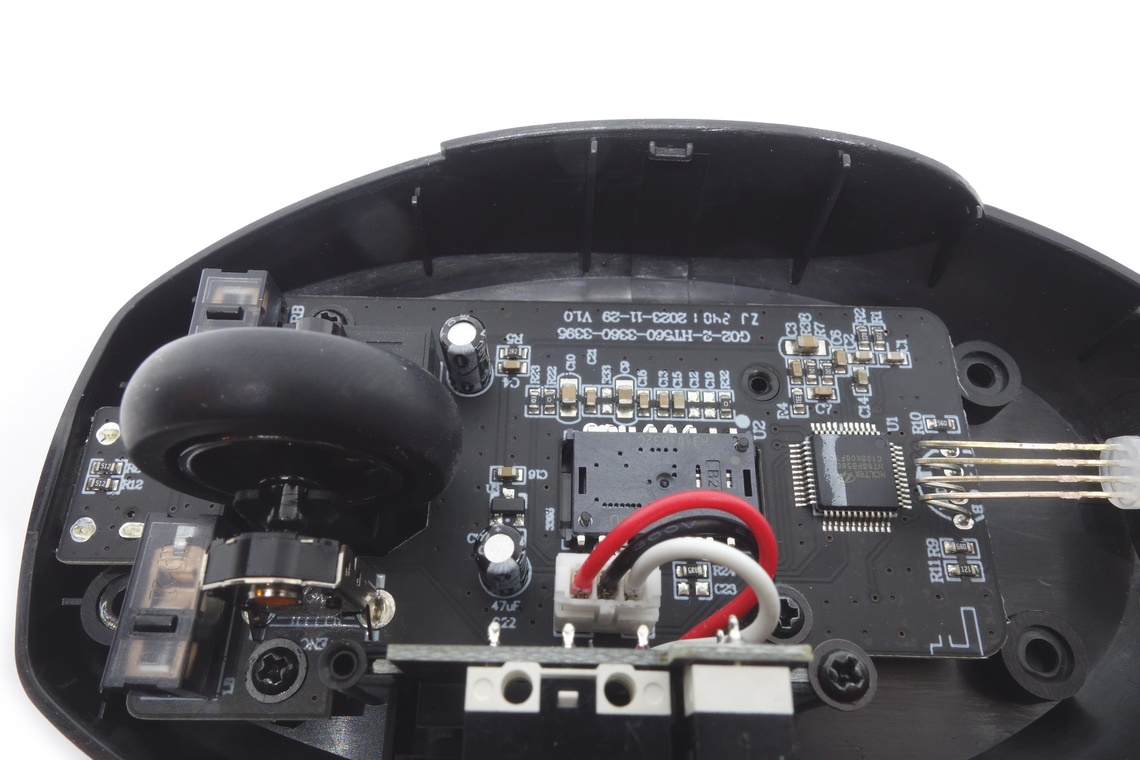
As for the soldering and general quality of the PCB, I'm unable to find any noteworthy flaws. Somewhat curiously, of the six screw posts available for the main and side-button PCBs, only four are actually used.
Nov 15th, 2026 08:23 CST
change timezone
Latest GPU Drivers
New Forum Posts
- budget home NAS – X79, X99 or another platform? (148)
- What generation of Wi-Fi do you use at home (98)
- I'll flash a ASUS ROG Strix RX480 O8G in Cause of Code 43, as a Newbie (5)
- Honestly, do you care about GTA VI? (58)
- Recommendations Wanted - Affordable Enterprise SSD for Boot (4)
- Is this anyhow possible, that a GPU (ROG Strix RX480 O8G) can crash the whole PC after "ReFlash" in normal Mode? (2)
- WarpCoreBench scores! (47)
- So where’s y’all’s lowbie or noob finds? Do you think Amazon is to blame for spending 64 dollars on a 35 dollar R36S klone? Is it good or bad? (0)
- Optical Disc Drive owners club (216)
- Planning for Prolonged High Prices and Maintaining What You Already Have (73)
Popular Reviews
- AMD Zen 6 Technical Deep Dive
- ASUS ROG Strix B850-I Gaming Wi-Fi7 W Review
- Corsair HX1000i Shift Crystal Review
- Upcoming Hardware Launches 2027 (Updated Nov 2026)
- Montech King 95 3D PRO Review
- NZXT C1200 Platinum Review
- NZXT H7 RGB+ Review
- NZXT H5 Review
- Phantom Blade Zero Performance Benchmark Review - 35 GPUs Tested
- AMD Ryzen 7 9800X3D Review - The Best Gaming Processor
TPU on YouTube
Controversial News Posts
- NVIDIA Co-Founder and CEO Jensen Huang Officially Resigns (412)
- OpenAI CEO Argues Home PCs Waste the World's Limited DRAM Supply (152)
- NVIDIA Launches Investigation Into Jensen Huang's Relationship With Suspected Chinese Spy (136)
- Intel "Raptor Lake Next" 16-Core and 20-Core CPUs Surface (130)
- Legendary Game Studio BioWare Shuts Down Following EA Layoffs (104)
- Open Letter Asking NVIDIA to Reinstate Jensen Huang Passes 115,000 Signatures (98)
- Dell CEO Says the Memory Shortage Will Get Worse in 2027 (95)
- NVIDIA GeForce RTX 50-Series Scheduled for up to $500 Price Hike This Week (89)