 32
ECS GANK MACHINE Z87H3-A2X EXTREME (Intel LGA 1150) Review
Value & Conclusion »Overclocked Performance Summary
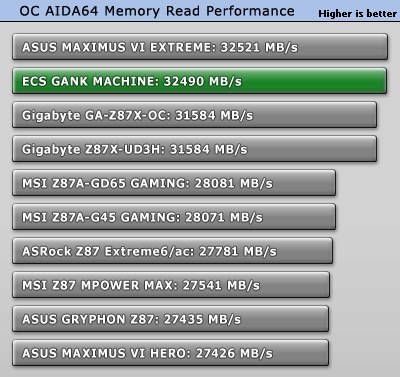
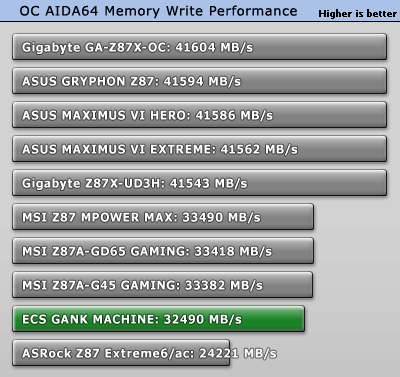
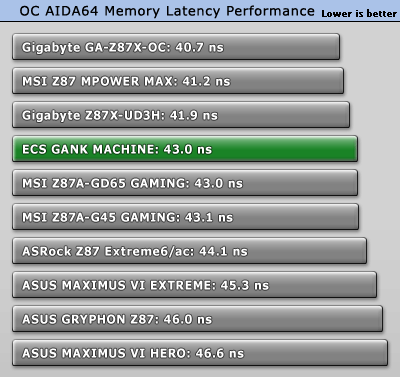
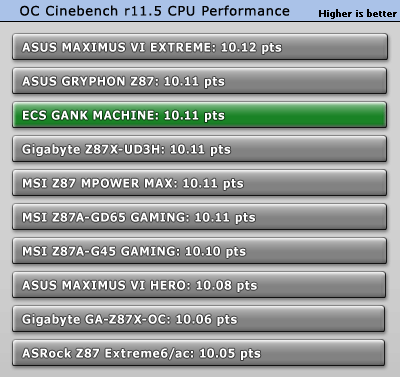
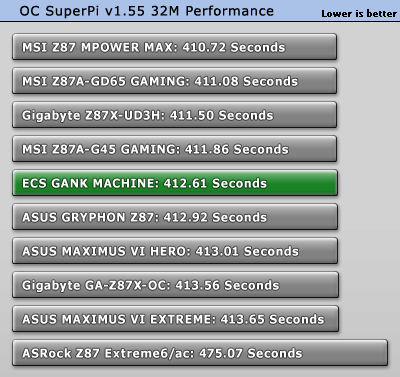
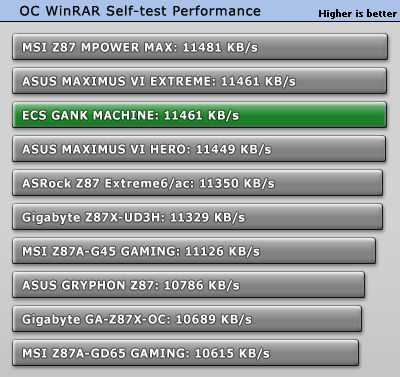
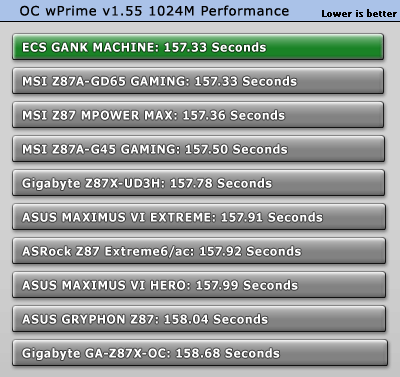
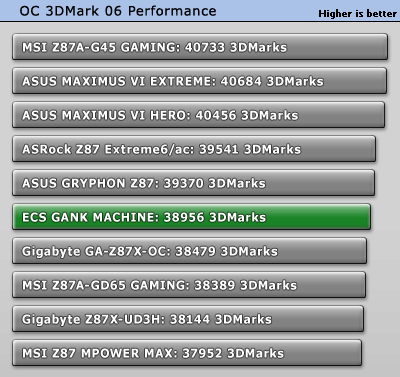
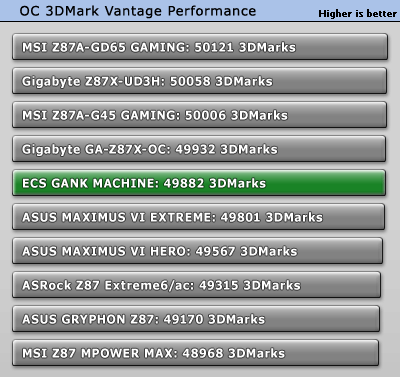
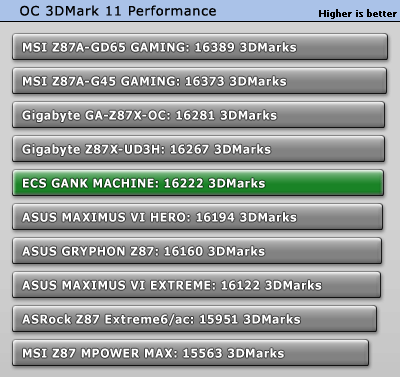
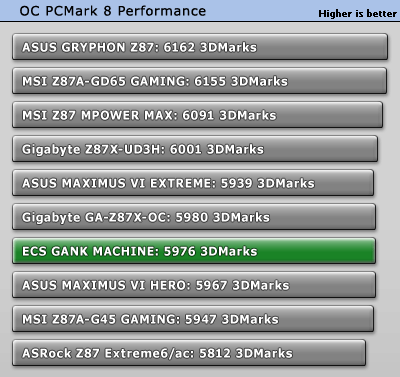
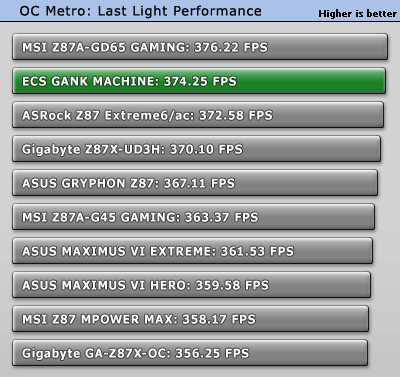
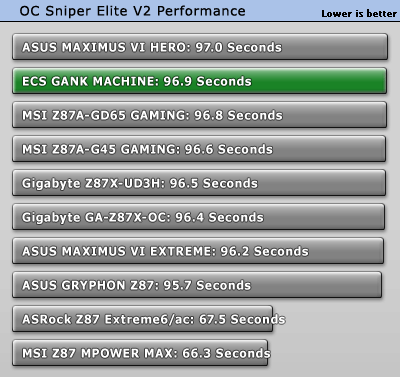
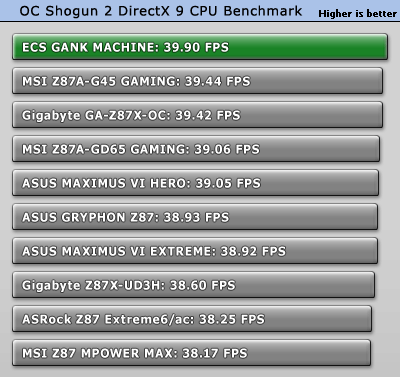
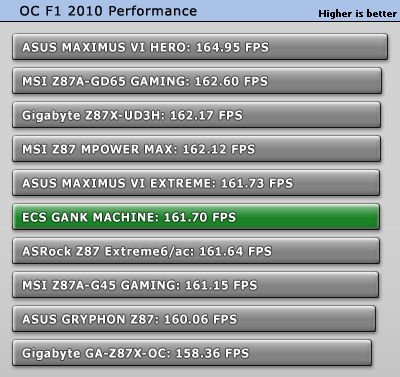
I have really changed how I do my overclock testing with motherboards. Every single test you see in the main section is repeated in the section that follows, including power consumption. As I test more products, a good picture of overclocking efficiency should emerge, which should prove interesting when it comes to those products that are 100% overclocking-oriented. I have grouped the results into sections here, and all Intel products are tested with 4.6 GHz CPU speed. Memory speeds vary depending on the platform's ability. I will report it here if a board fails to pass one of these tests, I need to increase voltages, or am perhaps allowed to drop voltages.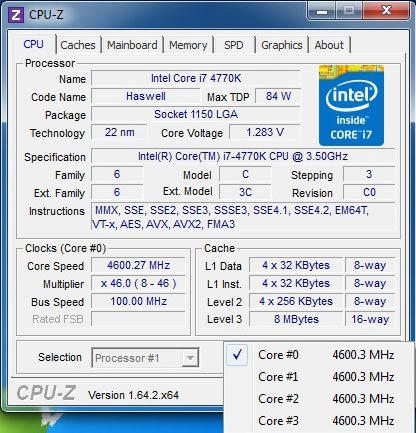
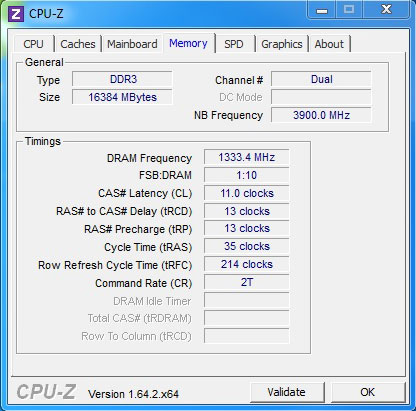
The ECS GANK MACHINE was not built to break benchmarking world records, but it WAS built to provide a stable platform for gaming while being overclocked. And at that, the ECS GANK MACHINE actually fares pretty well, with none of the problems or strange behavioral patterns you might expect from an ECS product. I was in fact confounded by the lack of issues while overclocking as I expected at least some memory issues, or any issues at all...but the ECS GANK MACHINE did everything I asked of it and seemed to ask for more. I could almost feel the shark-shaped heatsink swallow the heat my overclocks produced as I pushed it with ease once the board revealed an insatiable appetite for heat, and although there is a small fan stuffed into the shark's mouth, it barely made a peep while swallowing the heat I provided it with. The ECS GANK MACHINE supported my reference 4.6 GHz overclock with my Intel I7-4770K test chip after just a few changes in BIOS, just as it should be, while simply enabling the XMP option in BIOS had my G.Skill DIMMs screaming along with full stability at their default 2666 MHz, something past ECS products were not always capable of. Everything worked and worked well.
AIDA64

CPU OC Performance


3D-Oriented OC Performance
3DMark06 and 3DMark Vantage
3DMark11 and PCMark 07
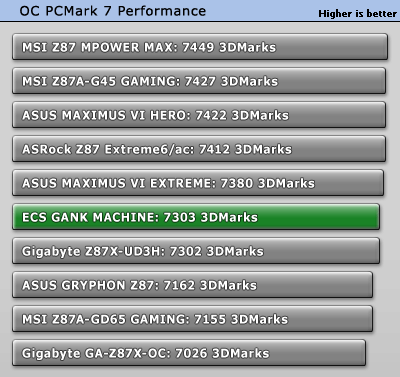
3DMark and PCMark8
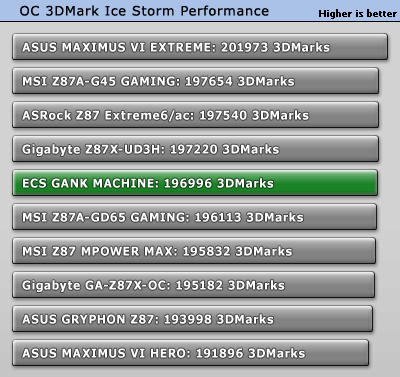
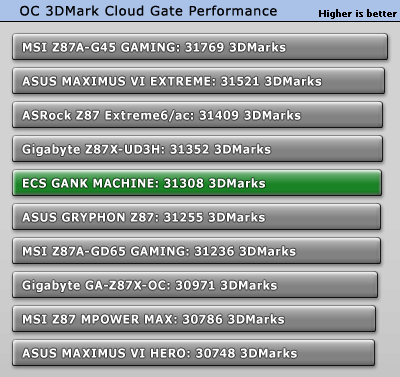
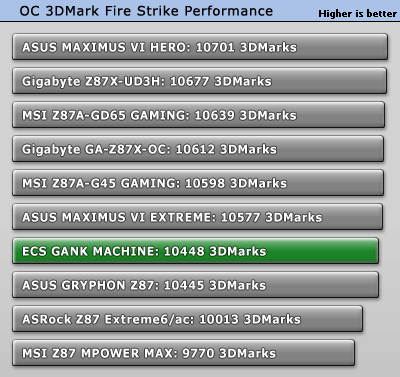
Metro: Last Light
Sniper Elite V2
Shogun 2
F1 2010
Nov 19th, 2026 18:10 CST
change timezone
Latest GPU Drivers
New Forum Posts
- Building a hardware monitor, diagnostics and benchmark tool – would you use it? (29)
- Dual B70 or Dual R9700 Pro on Linux (11)
- How to prevent OLED burn damage due to PC freezes or power outtages? (30)
- TPU's Nostalgic Hardware Club (22170)
- Security Apps (3)
- Got the EOL 32GB TridentZ 6000 CL26 1.4V (12)
- Honestly, do you care about GTA VI? (167)
- Dell Workstation Owners Club (3517)
- Making a game in Godot engine (6)
- Introducing DST Bench : one of the most advanced disk benchmark and storage analyzer real-time software (6)
Popular Reviews
- AMD Zen 6 Technical Deep Dive
- Ugreen NASync DXP4800 GT Review
- Acemagic Retro X3 Review
- Upcoming Hardware Launches 2027 (Updated Nov 2026)
- Pulsar Office Tour & First Look at P1 Dual-Sensor Mouse
- Biwin Black Opal NV7400 2 TB Review
- Corsair RM1200e (Second Generation) Review
- Chieftec Iceberg PRO 360 DARK Review
- AMD Ryzen 7 9800X3D Review - The Best Gaming Processor
- AMD Ryzen 7 9800X3D Memory Performance Scaling
TPU on YouTube
Controversial News Posts
- NVIDIA Co-Founder and CEO Jensen Huang Officially Resigns (489)
- Report: Jensen Huang Eyes NVIDIA Comeback (223)
- Open Letter Asking NVIDIA to Reinstate Jensen Huang Passes 115,000 Signatures (184)
- OpenAI CEO Argues Home PCs Waste the World's Limited DRAM Supply (152)
- NVIDIA Launches Investigation Into Jensen Huang's Relationship With Suspected Chinese Spy (136)
- Intel "Raptor Lake Next" 16-Core and 20-Core CPUs Surface (130)
- Legendary Game Studio BioWare Shuts Down Following EA Layoffs (104)
- Dell CEO Says the Memory Shortage Will Get Worse in 2027 (95)