 1
Einarex Prisma S800 Review
Review System Setup »A Closer Look - Inside
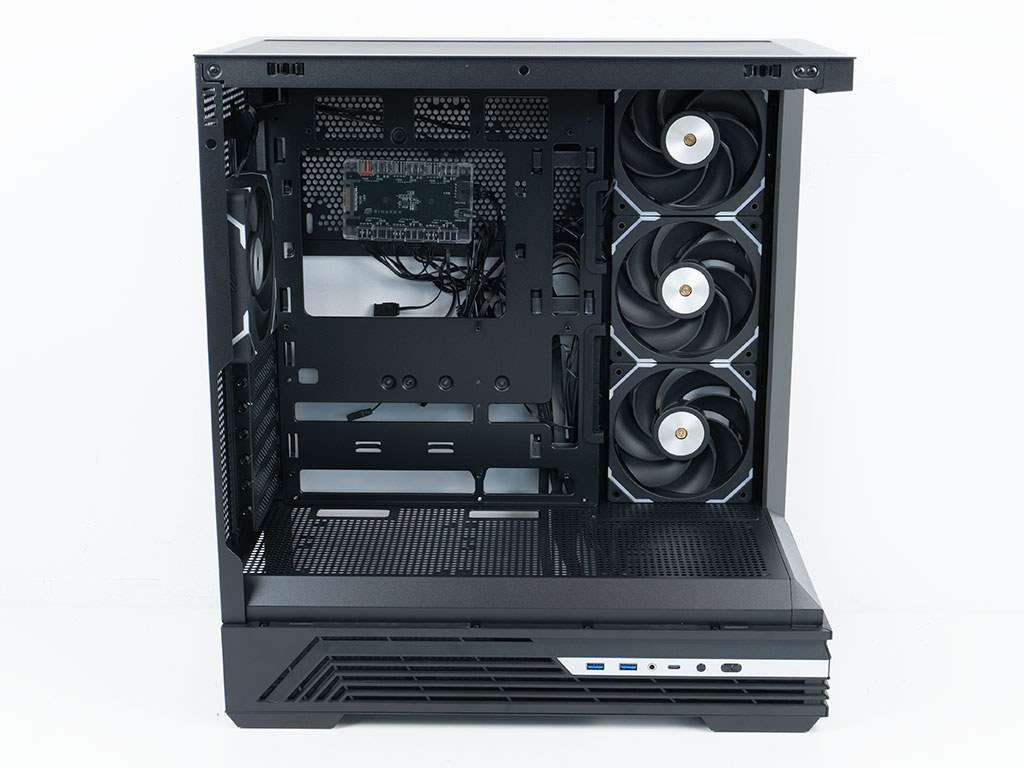
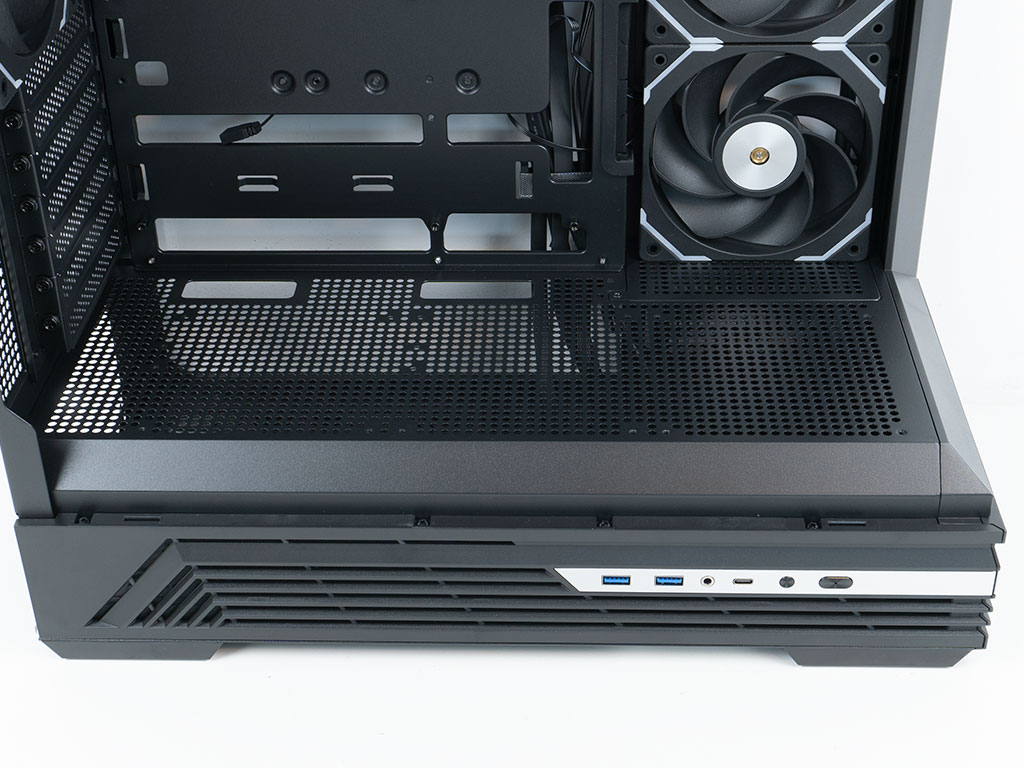
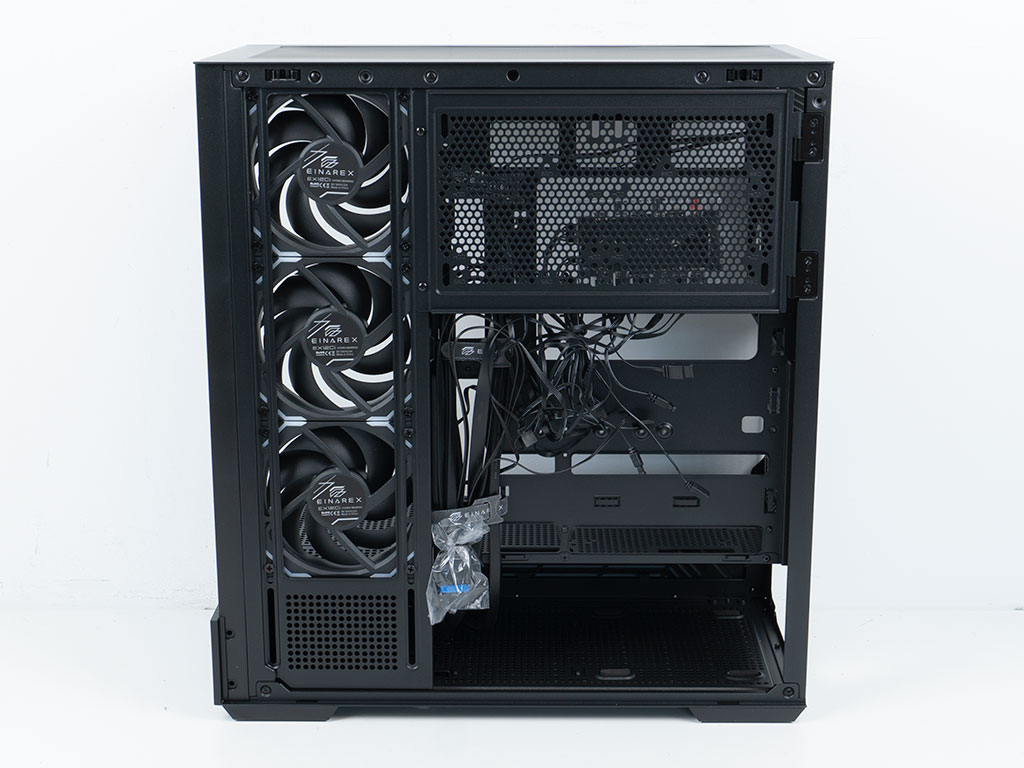
To gain access to the interior, you may simply pull all the panels off the chassis, as they are all held in place by push-pins. Even with these off, the Einarex Prisma S800 doesn't flex and feels sturdy enough to be handled with confidence during the system assembly process. The motherboard tray provides all the required cutouts to accommodate BTF equipped motherboards, and the all metal shroud cover has mounting holes for three 120 mm fans and those needed for securing a GPU ribbon cable. Einarex even went as far as to provide a small cover for the side intake, which is a nice touch. Two compact cutouts at the back allow for cable routing. While these lack grommets, that is not a big deal due to the mirrored glass, as you would never notice. On the backside, you can clearly see a bit of a cable mess from the four fans. The ARGB controller comes with two metal plates embedded and Einarex has used individual unsecured magnet pucks to act as a mechanism to hold it in place. That doesn't work well in holding the controller in place, unfortunately. Einarex could have glued those to the controller housing to reduce the number of moving parts at least.
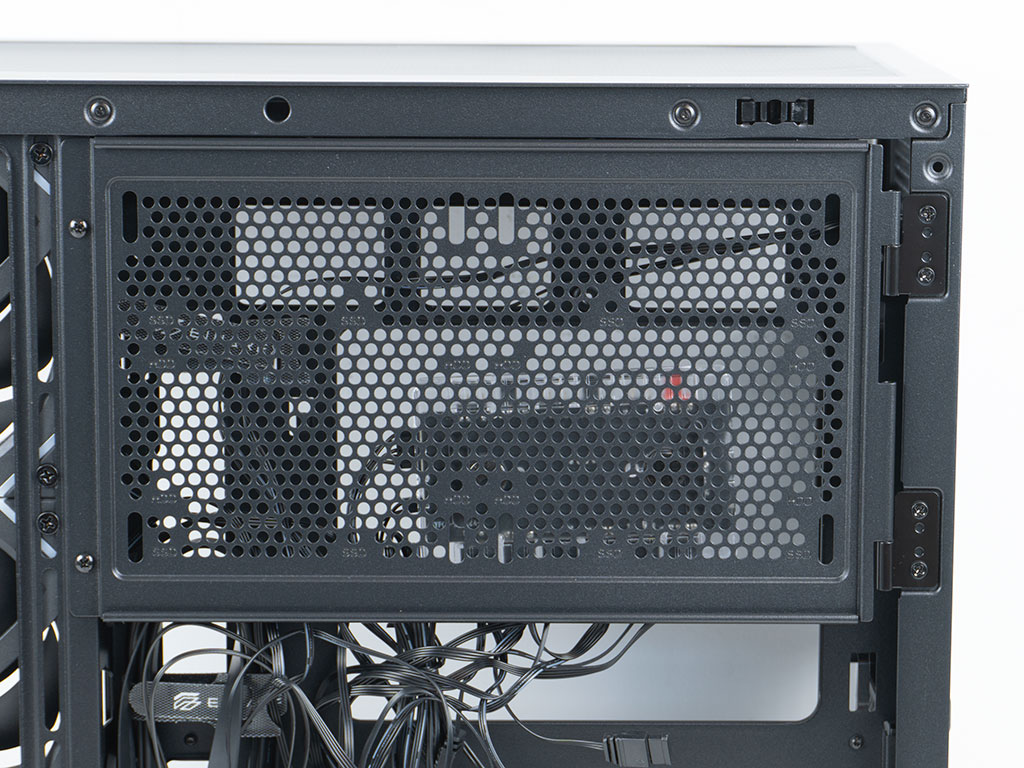
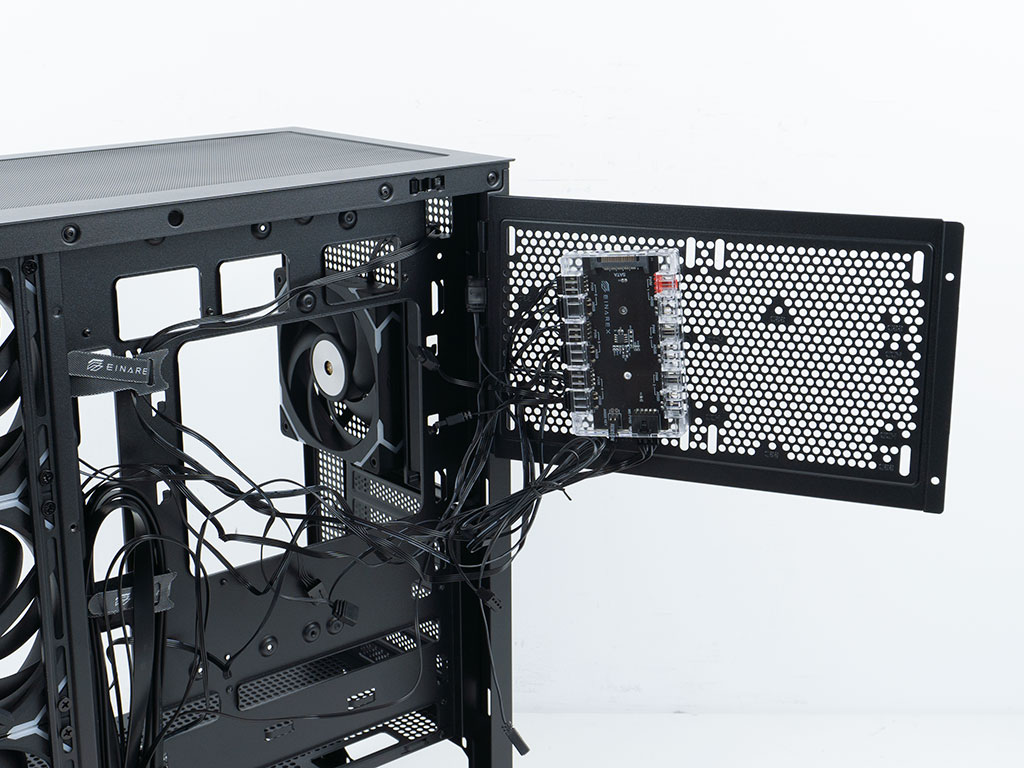
Out of the box, the ARGB controller is placed on the HDD mounting plate, which is hinged for easy access. That plate can technically hold up to two 2.5 or 3.5" drives, but one spot is taken up be the controller, and—as we will see later on—these won't be usable for 3.5" drives when utilizing a BTF equipped motherboard, even if you place the controller elsewhere.
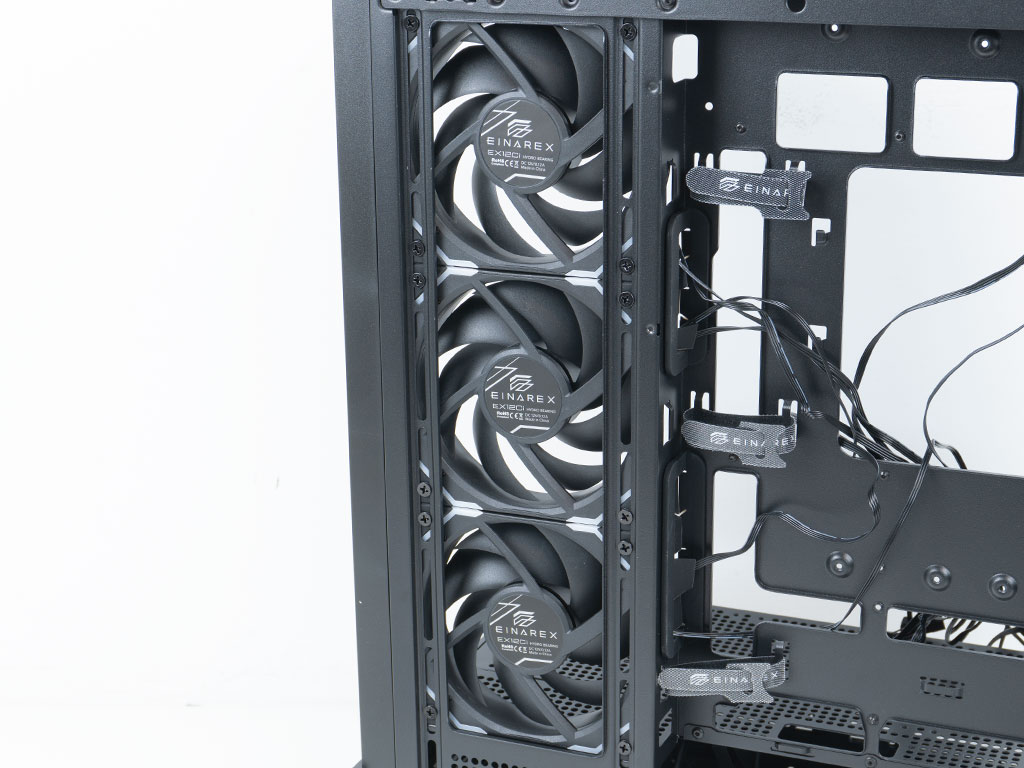
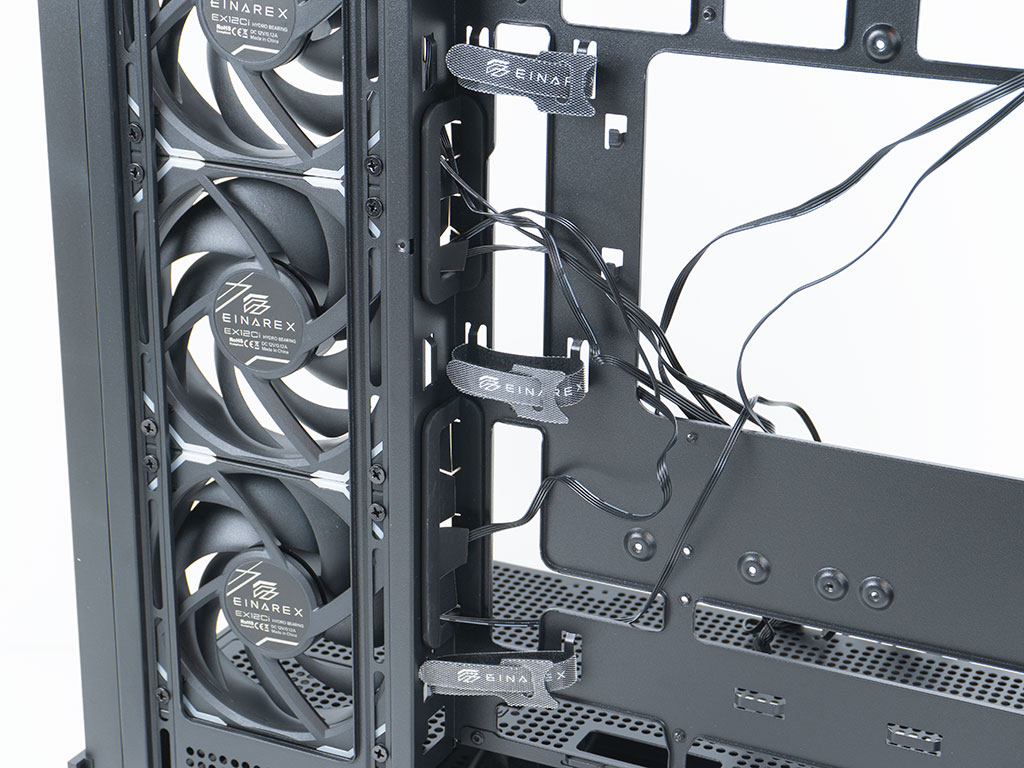
On the backside, in the front, you can clearly see the three reverse bladed ARGB equipped PWM fans set to pull in air through the side. Next to these are three Einarex branded Velcro strips to complement the corner grommets.
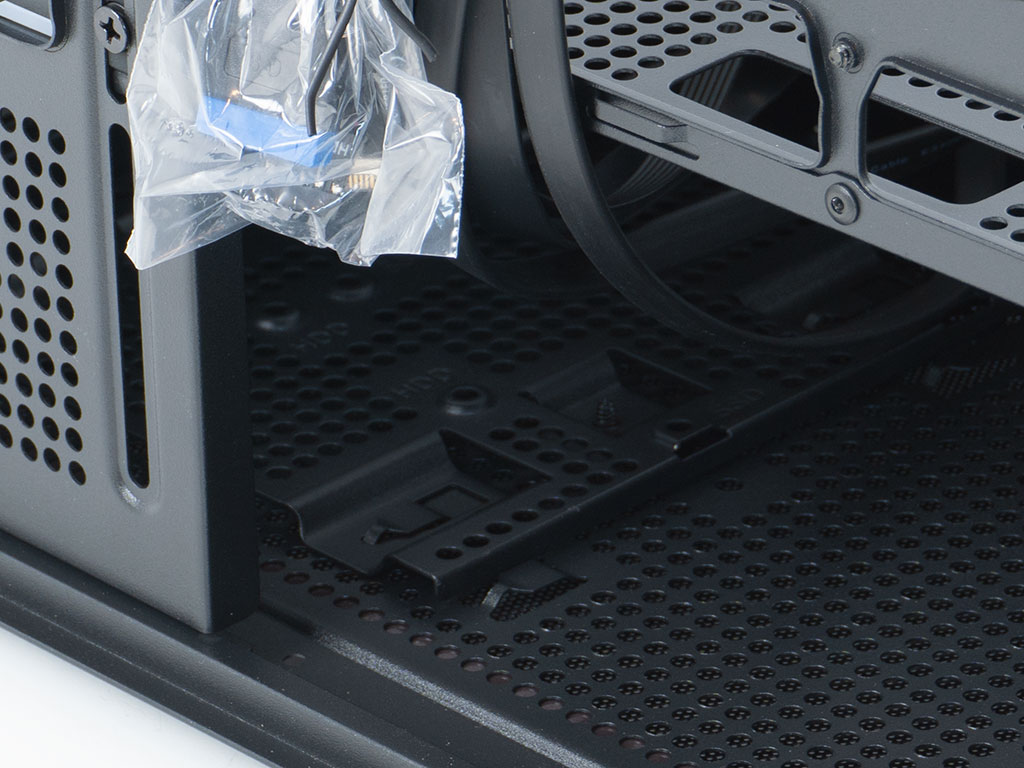
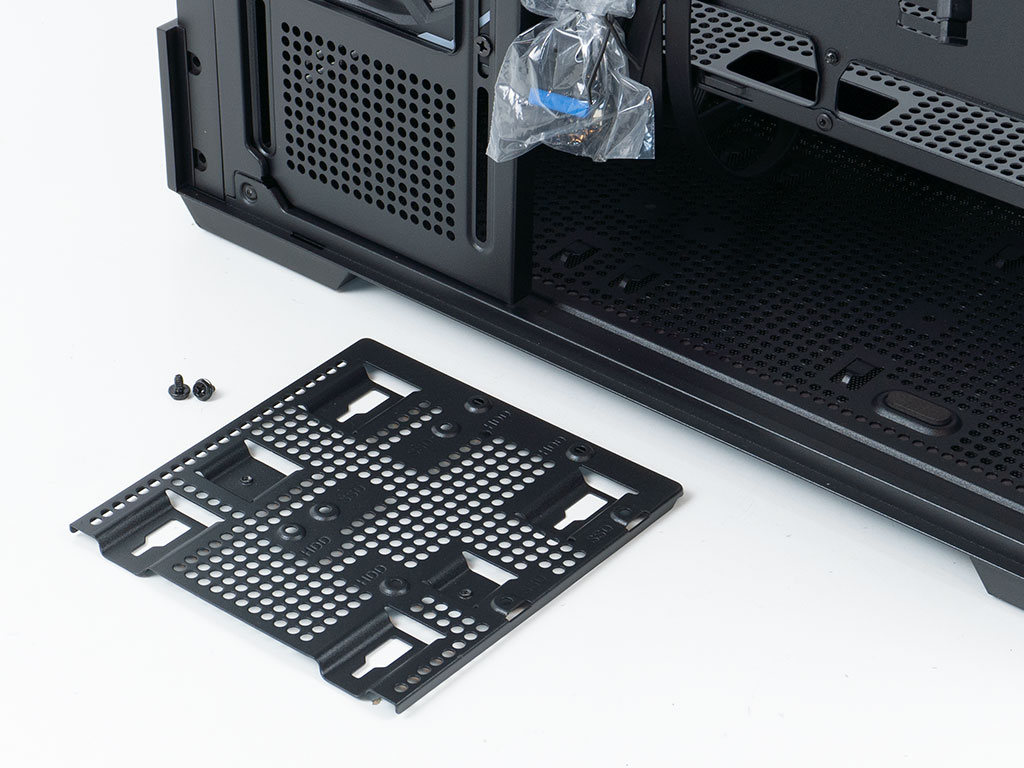
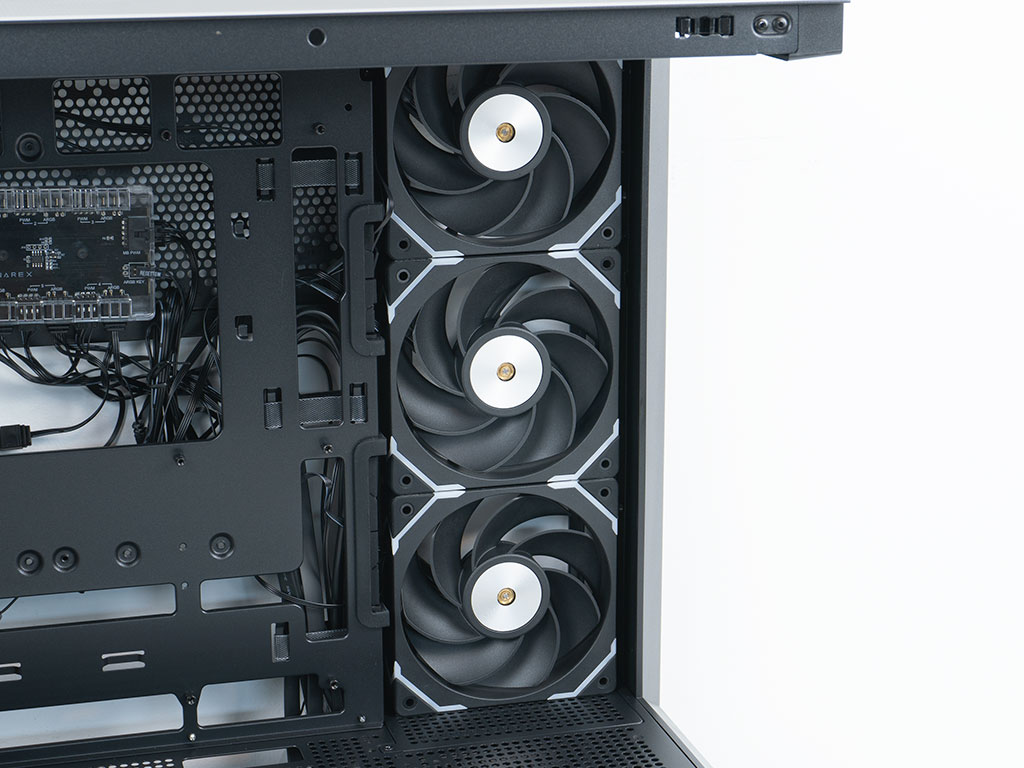
Underneath the metal shroud in the front and somewhat hidden by the plate holding the fans in place, you will find that removable HDD storage plate. It gives you the ability to add one more drive of any size to the build with its connector facing towards the PSU, so that you should still be able to access the connectors once inserted. That is a nice touch, but Einarex could have provided more storage by opting for a cage instead of a tray while retaining the same drive placement direction. The three inverse fans sport ARGB elements in the slightly thicker than usual frames and thanks to the overall design, you can't see any wiring, thus making for a very clean look.
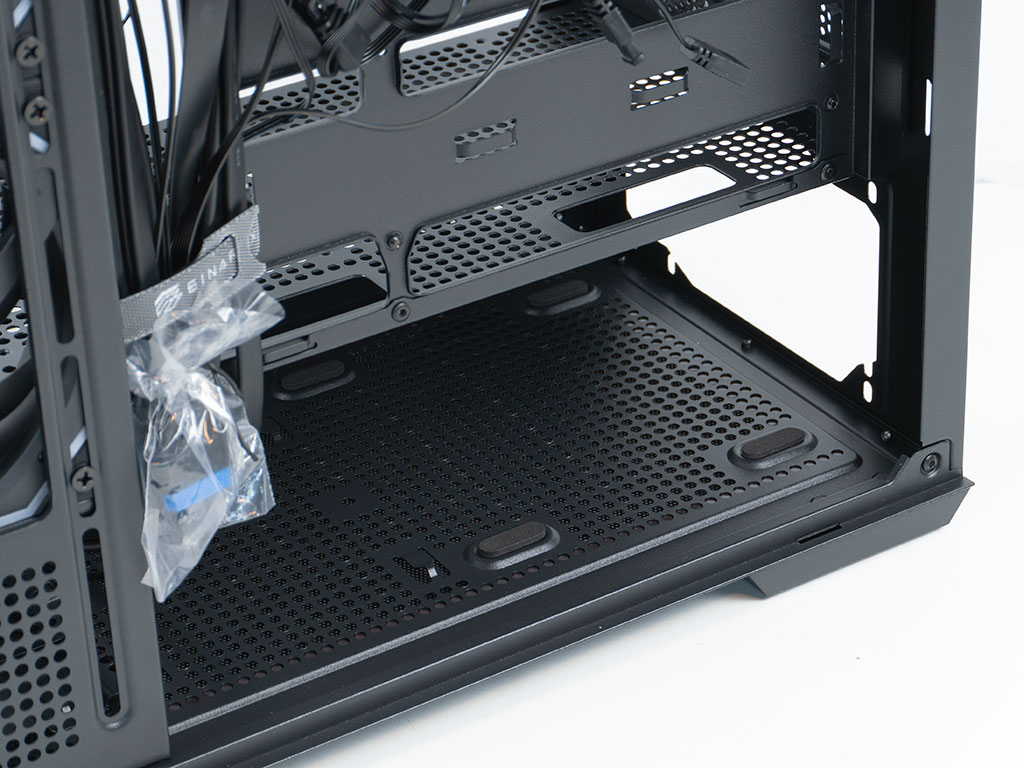
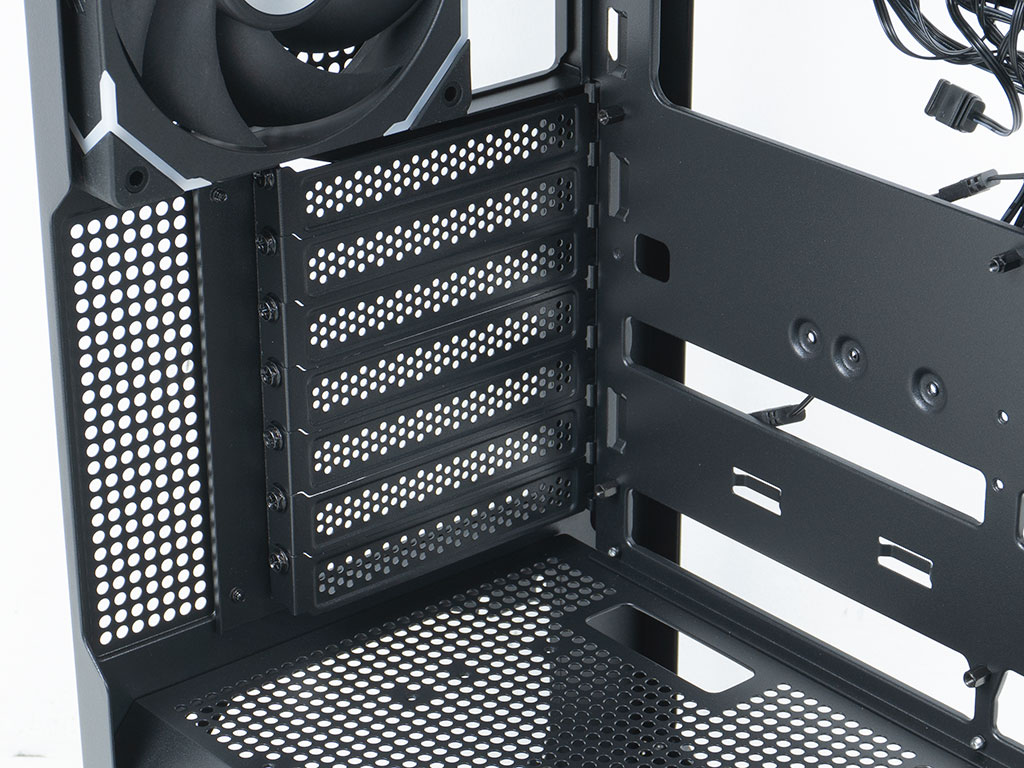
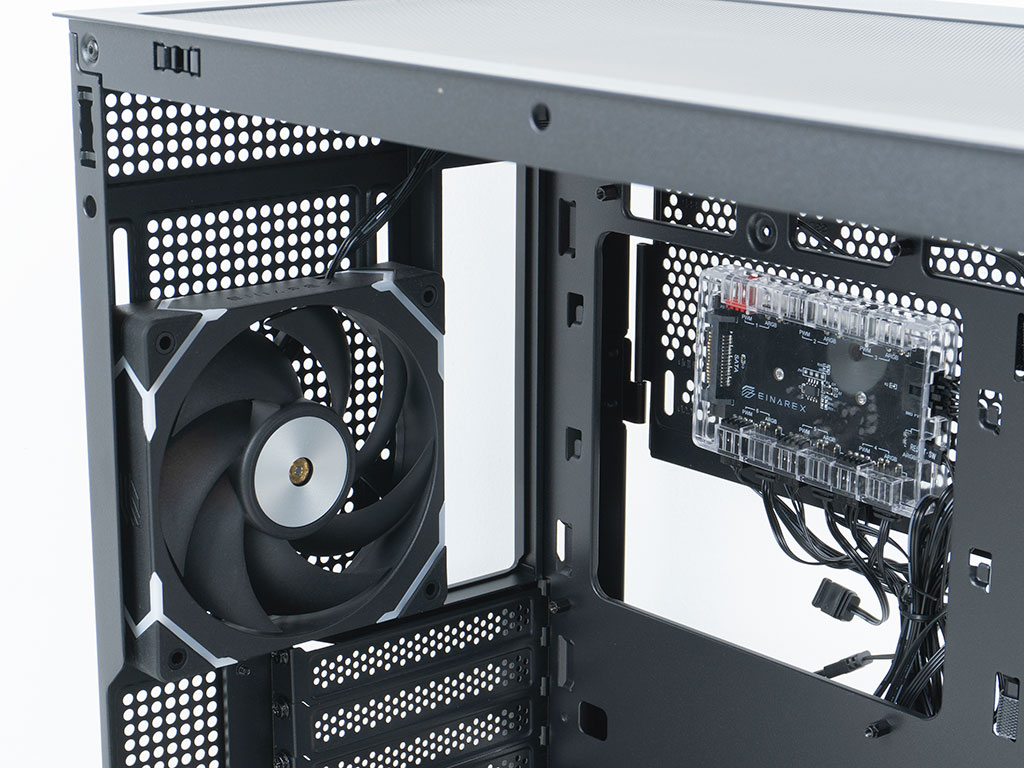
In the rear, the PSU bay is equipped with four foam pads for the unit to sit on. The shroud of the chassis is high enough, so you have plenty of space to slide the unit in even if you pre-routed wires to the motherboard already. The Prisma S800 can hold a power supply of up to 230 mm in length, so more than enough for even the most demanding setups. Above that, there are the seven expansion slots. Each reusable cover is held in place by a classic screw and the whole frame comes with four screws to allow you to rotate it. Doing so will give you four accessible vertical slots, meaning the case can easily hold triple-slot cards. At the very top, there is that fourth ARGB equipped fan set to push air out the back, with its wiring nicely pre-routed out of sight as well.
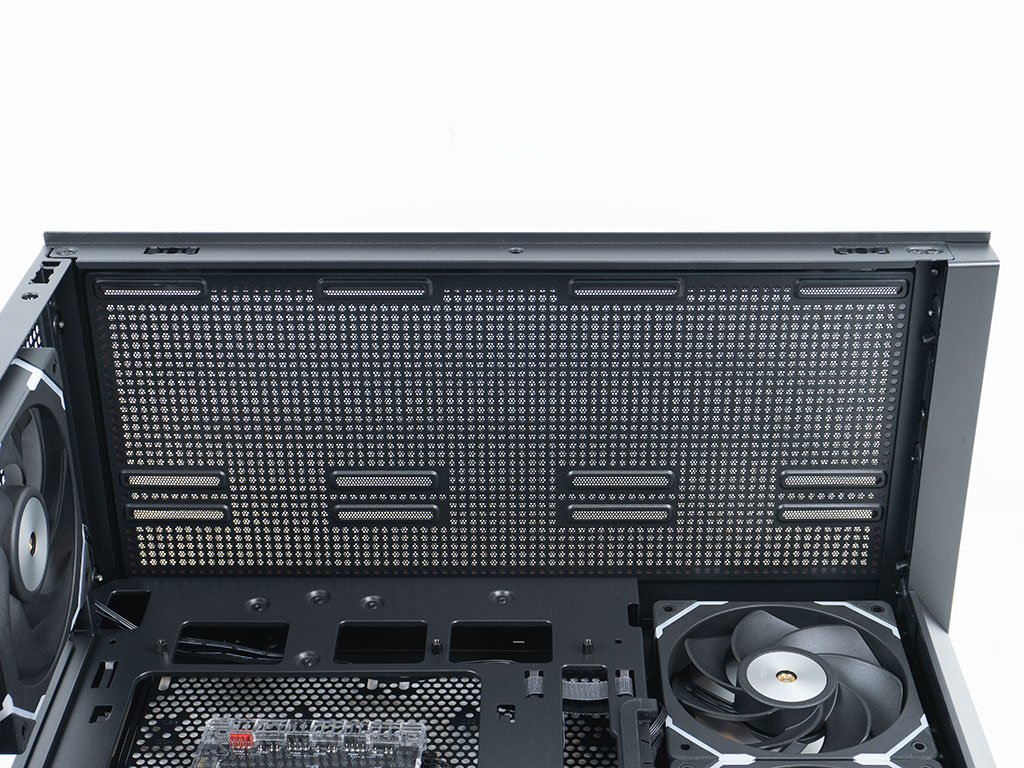
Taking a look at the ceiling, there is clearly sufficient clearance for an AIO even if you were to opt for the wider 280 mm variants. The side fans don't protrude past the edge of the motherboard tray, which also means that you will be able to go as far as to fill the Prisma S800 with a total of three 360 AIOs without issue.

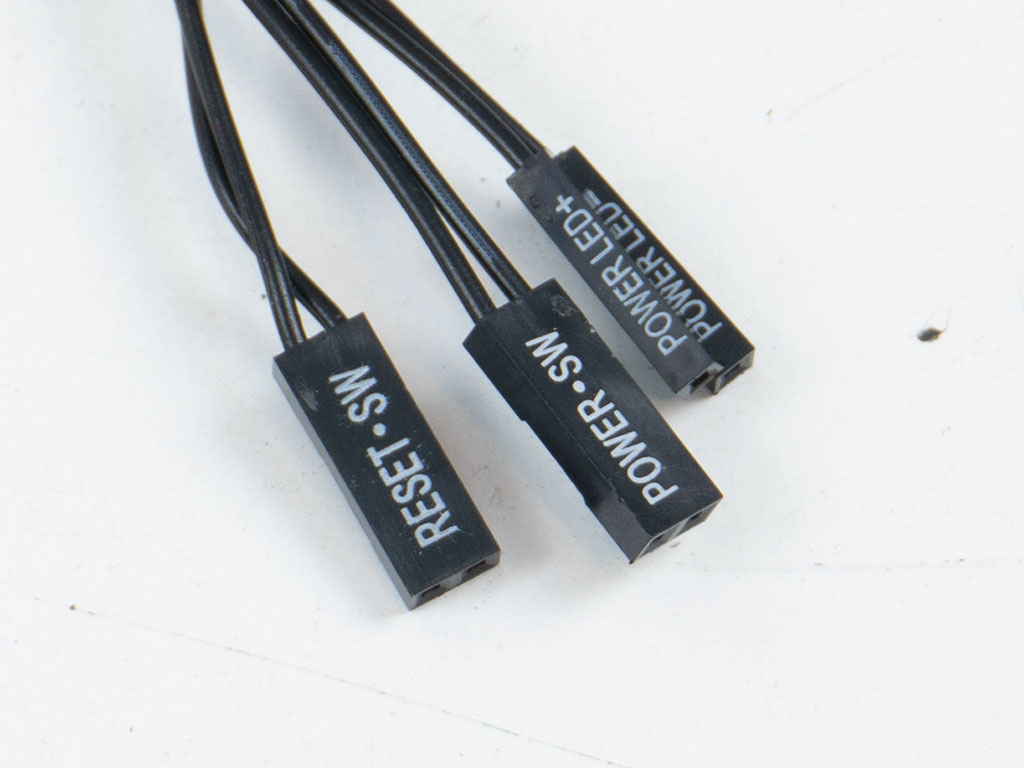
All the wires within the Einarex Prisma S800 are black to match the overall color of the chassis. Both USB variants also employ flat-band cables, allowing for tighter bend radii. The motherboard headers are of the classic, separated kind. The reset wiring is clearly labeled as such, but actually comes connected to the ARGB controller out-of-the-box.
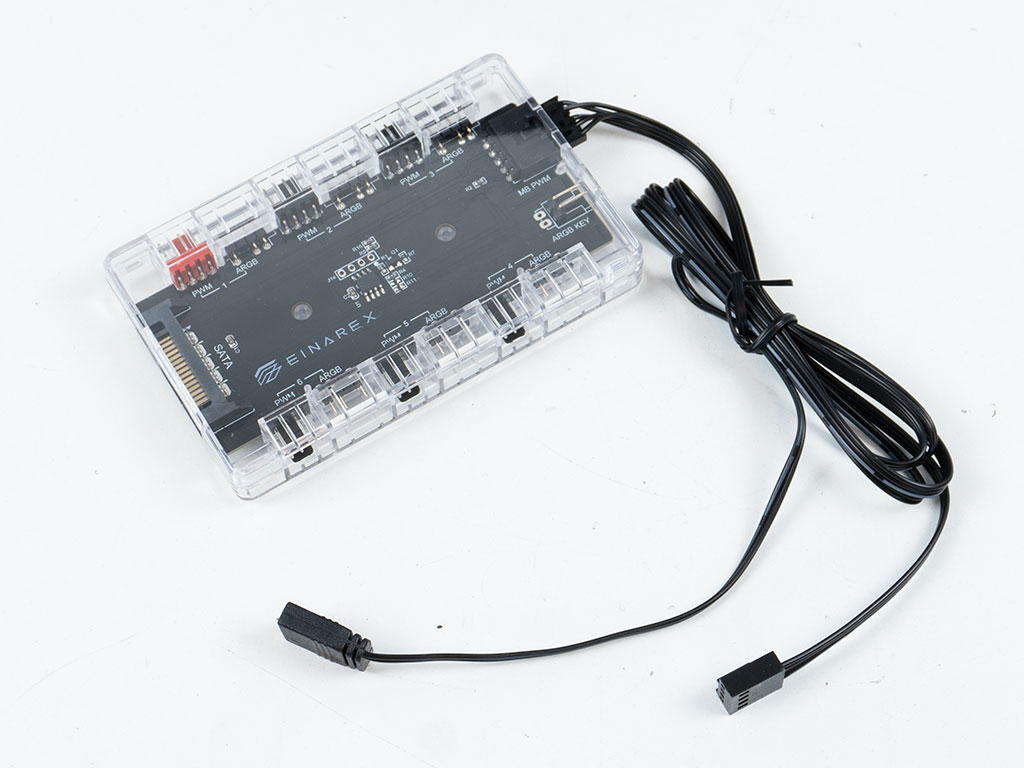
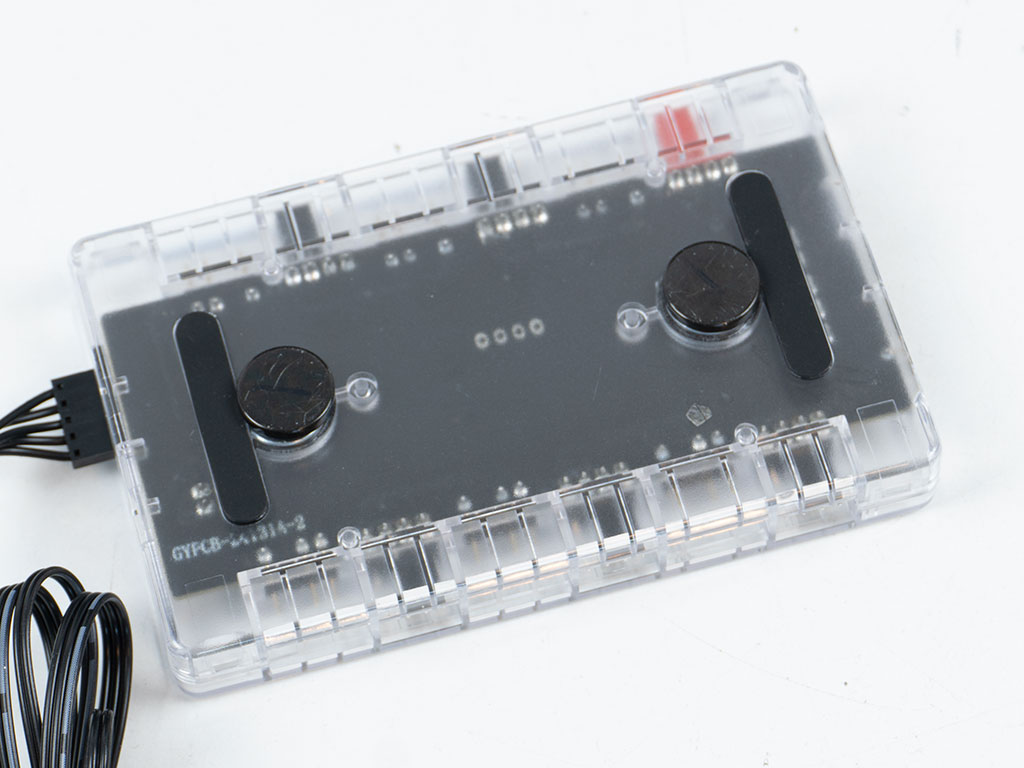
Speaking of the controller, it is a fully-fledged self-contained and branded unit. In other words, something that Einarex could package up and sell if they wanted to. It is universal and thus perfectly suited for any build out there, not just their own. The clear casing is a nice touch, allowing you to see the six possible ARGB and PWM connectors. A red header marks the one that needs to be used as it acts as the PWM master to all the other fans. Interestingly enough, Enermax pre-connects all fans but didn't use that required port, so we will make sure to do so. Here you can also see the separate magnetic pucks that are used to secure the unit. These tend to stay on place on the case body if you move the controller.
Nov 25th, 2026 16:24 CST
change timezone
Latest GPU Drivers
New Forum Posts
- TPU's Nostalgic Hardware Club (22207)
- Which ryzen am5 cpu ? (217)
- UPS what one to get? (74)
- More Nova Lake specs (5)
- Share your CPUZ Benchmarks! (2680)
- X79 and/or rampage IV OC'ing thread for those of us still left.... (2457)
- Asus Rog Maximus Z890 Extreme. (Various questions). (38)
- Can you guess Which game it is? (362)
- Claude credits purchased on or after Dec. 7 now have an expiry date (13)
- Adventure: Running 8/9th gen Coffee Lake CPUs on Z170 motherboard (ASUS Maximus VIII Ranger) (393)
Popular Reviews
- ASRock X870E Challenger Wi-Fi White Review
- Microsoft Surface Laptop Ultra Review - The Next-gen Arm Laptop
- VZMORE AX9 Max Review
- Upcoming Hardware Launches 2027 (Updated Nov 2026)
- AMD Ryzen 7 9800X3D Review - The Best Gaming Processor
- AMD Zen 6 Technical Deep Dive
- Corsair RM1200e (Second Generation) Review
- Phantom Blade Zero Performance Benchmark Review - 35 GPUs Tested
- Pulsar Office Tour & First Look at P1 Dual-Sensor Mouse
- Ocypus lota P1000 Review
TPU on YouTube
Controversial News Posts
- Jensen Huang Reinstated as CEO of NVIDIA (570)
- NVIDIA Co-Founder and CEO Jensen Huang Officially Resigns (492)
- Report: Jensen Huang Eyes NVIDIA Comeback (281)
- Open Letter Asking NVIDIA to Reinstate Jensen Huang Passes 115,000 Signatures (184)
- OpenAI CEO Argues Home PCs Waste the World's Limited DRAM Supply (152)
- NVIDIA Launches Investigation Into Jensen Huang's Relationship With Suspected Chinese Spy (136)
- Intel "Raptor Lake Next" 16-Core and 20-Core CPUs Surface (130)
- Intel Razor Lake Gets a 12 P-Core bLLC Chip With No E-Cores, Per Leak (94)