 5
FiiO BTR17 Portable Bluetooth DAC and Headphones Amplifier Review
(5 Comments) »Introduction

With IEMs and more portable headphones releasing every day, the market for portable sources has never been bigger. There's so much competition now, be it from wired-only DAC/amps to wireless ones to even standalone music players (DAPs). These come in a variety of sizes too, with some going large to have more room for specialized features, such as the xDuoo XD05T DAC with tube amplifiers we recently saw, or even the FiiO Q7 and Q15 that offer flagship desktop-class DACs in your hands. Most portable sources are much smaller though, and several have gone the Bluetooth route to allow a wireless connection to your phone or PC. FiiO has been involved in this from the beginning, with the BTR5 from a few years ago being a stepping stone for what was to come later.

Today we take a closer look at the FiiO BTR17, which follows FiiO's new product naming scheme—it's the direct replacement for the older BTR7, and the next generation version will be called the BTR27 to help clarify things. I first saw this tiny thing at FiiO's booth in the Shenzhen International Audio Show this past September, before having the opportunity to spend more time with it when I visited FiiO's industrial park a few days later. The BTR17 comes in two color options—black and blue—with both being identical otherwise. It's a pocketable DAC/amp with several key features, including connecting to your phone wirelessly, having a desktop mode with more output power when powered simultaneously during use, the ability to use as a USB DAC/amp as needed, built-in EQ with the option to have custom EQ modes stored, and fantastic PEQ customization both via FiiO's mobile app and a recently developed desktop EQ configurator too. The BTR17 does feel quite feature-rich, so let's see how it fares in our review which begins with a look at the product specifications below, so be sure to click the images twice to fully open it and go through all the details. Thanks to FiiO for providing a review sample to TechPowerUp!
Specifications
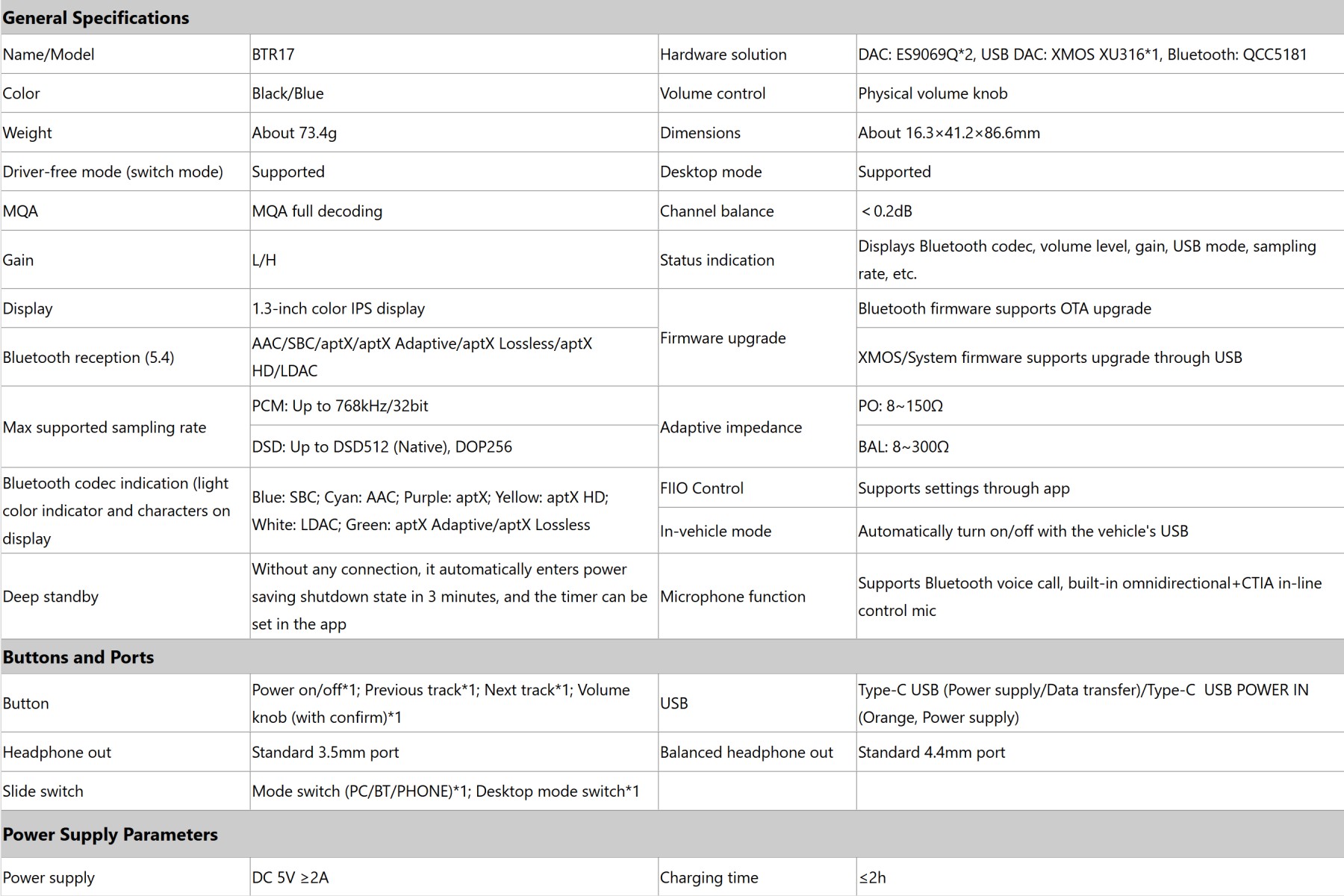
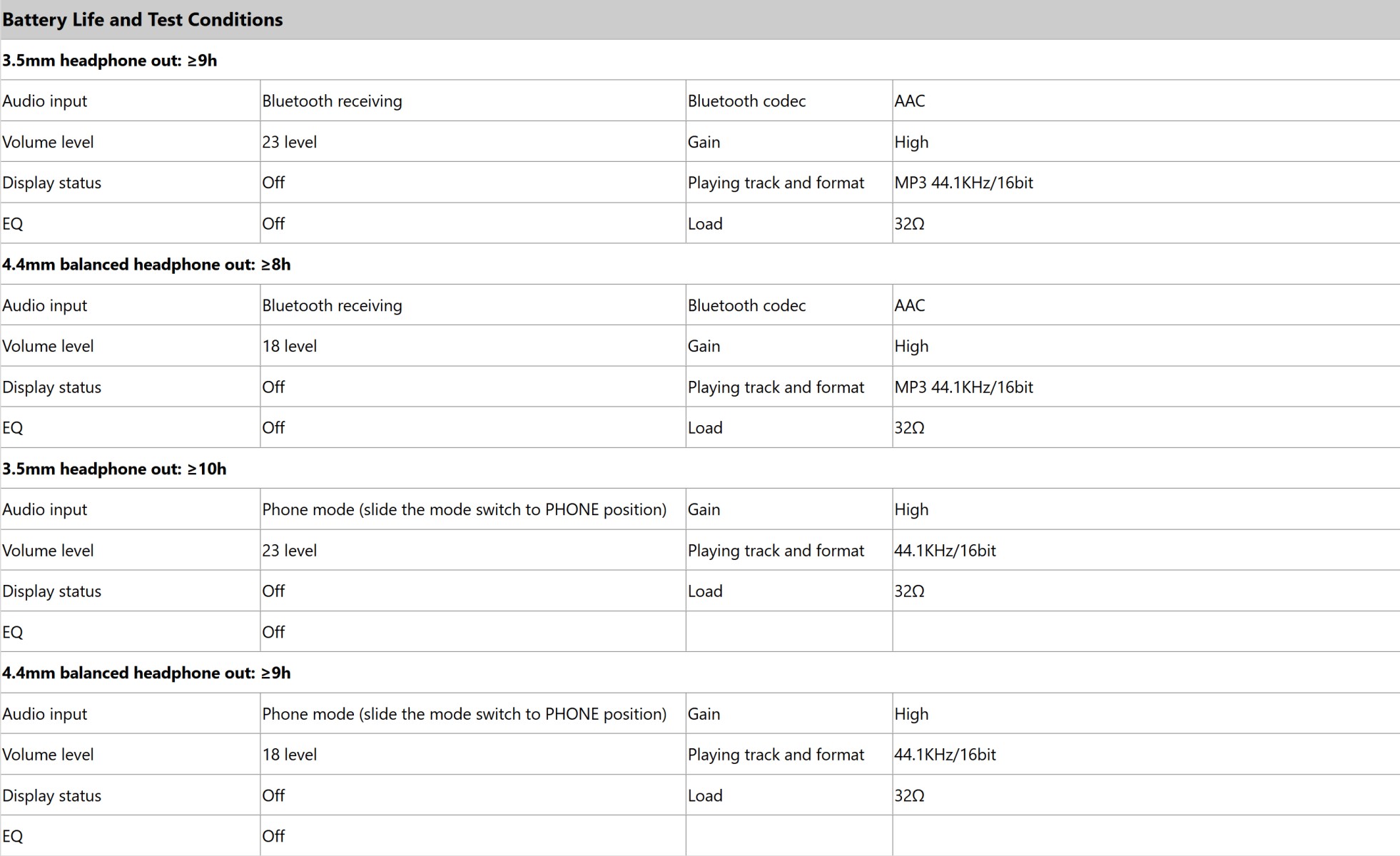
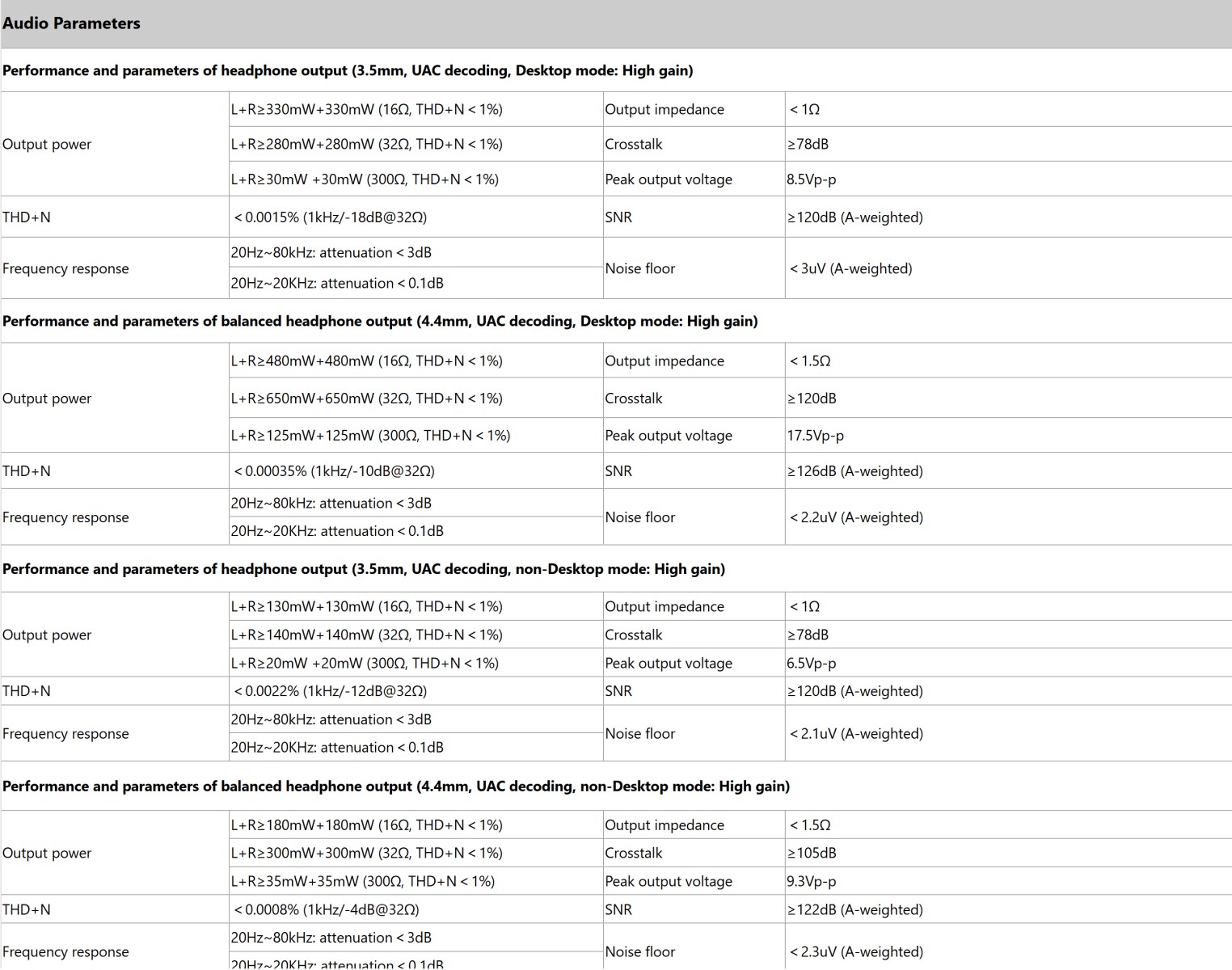
Packaging and Accessories

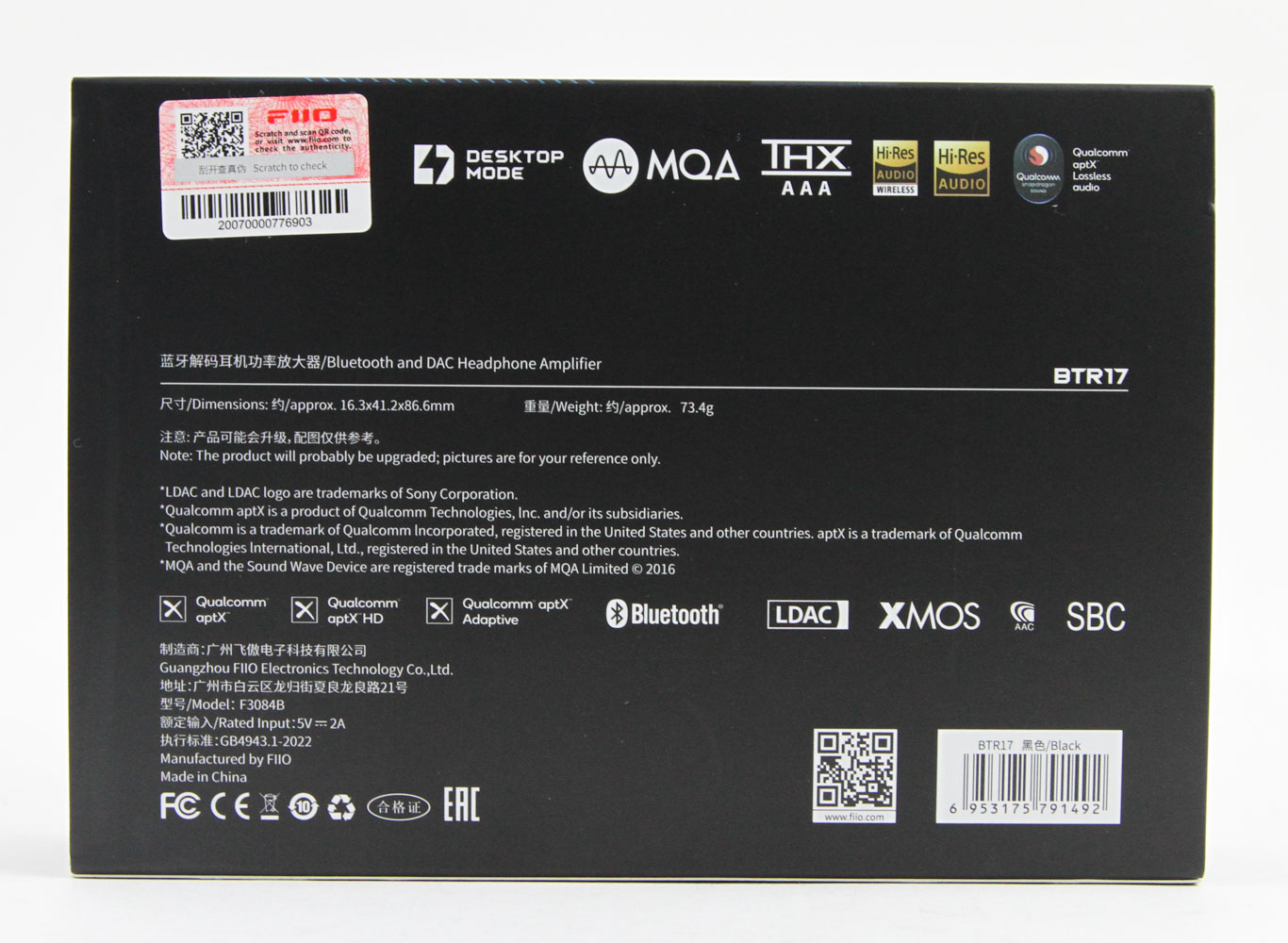

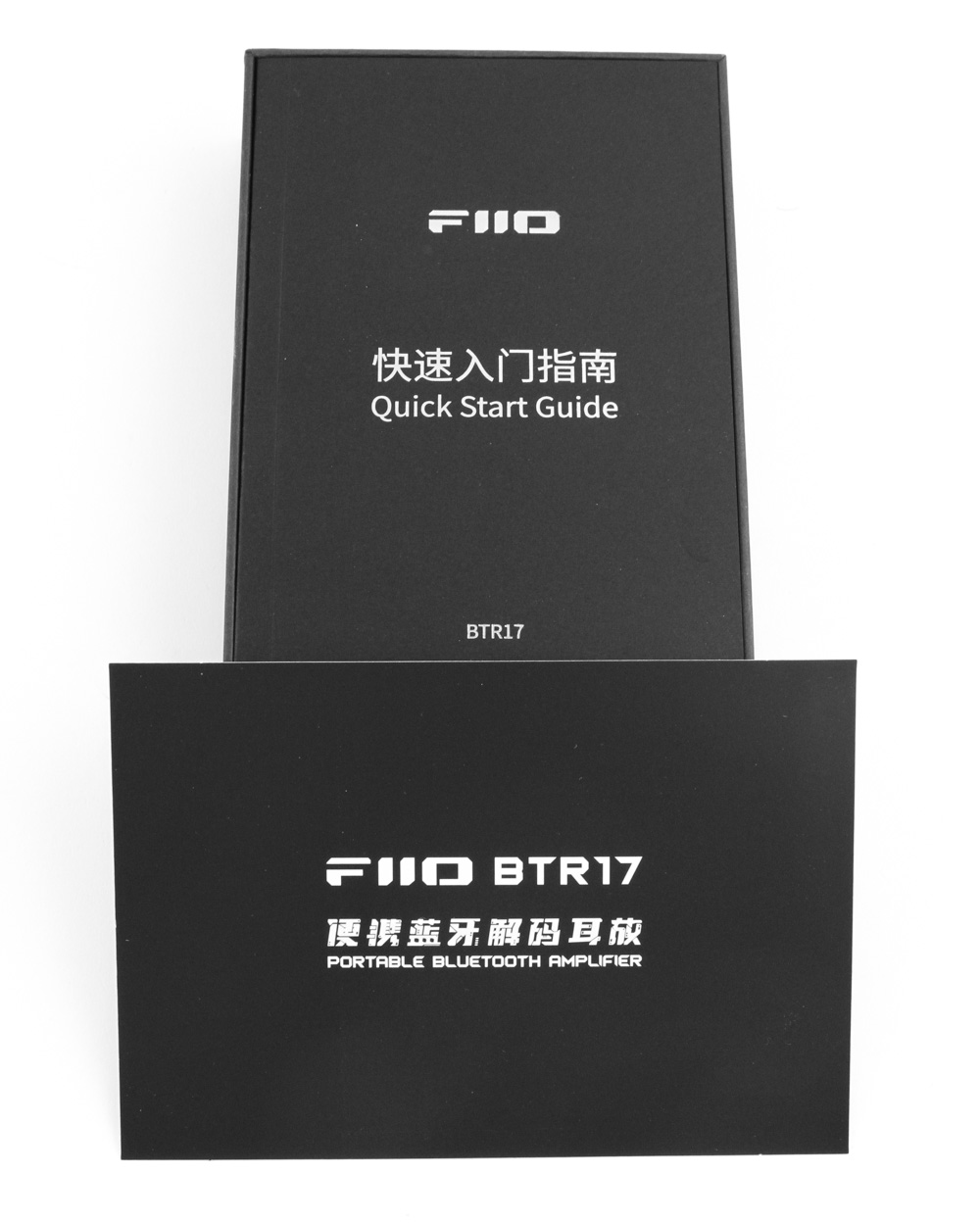

The BTR7 product box is slightly larger than I anticipated, especially since I already knew how small the actual product is. We see a typical FiiO-style fancy packaging thus, with geometric patterns on a glossy finish applied to an external sleeve which has the brand logo, product name, a product description, and a list of FiiO-owned brands—somewhat weird to have it here, but this happens to be our first time seeing FiiO's third brand, SNOWSKY, mentioned on a product. On the back are some salient specs, although most of this real estate is taken up by certification logos galore. Slide the inner box out to see a note on how the desktop mode works, followed by a multi-language quick start guide (online version here) going over the setup and use of the BTR17. There is a thick foam sheet with a machined cutout to snugly protect the BTR17, which comes in a wax paper wrap to help keep it pristine out of the box. Alongside is a cardboard accessory box that contains everything else FiiO has deemed fit to include with the BTR17.

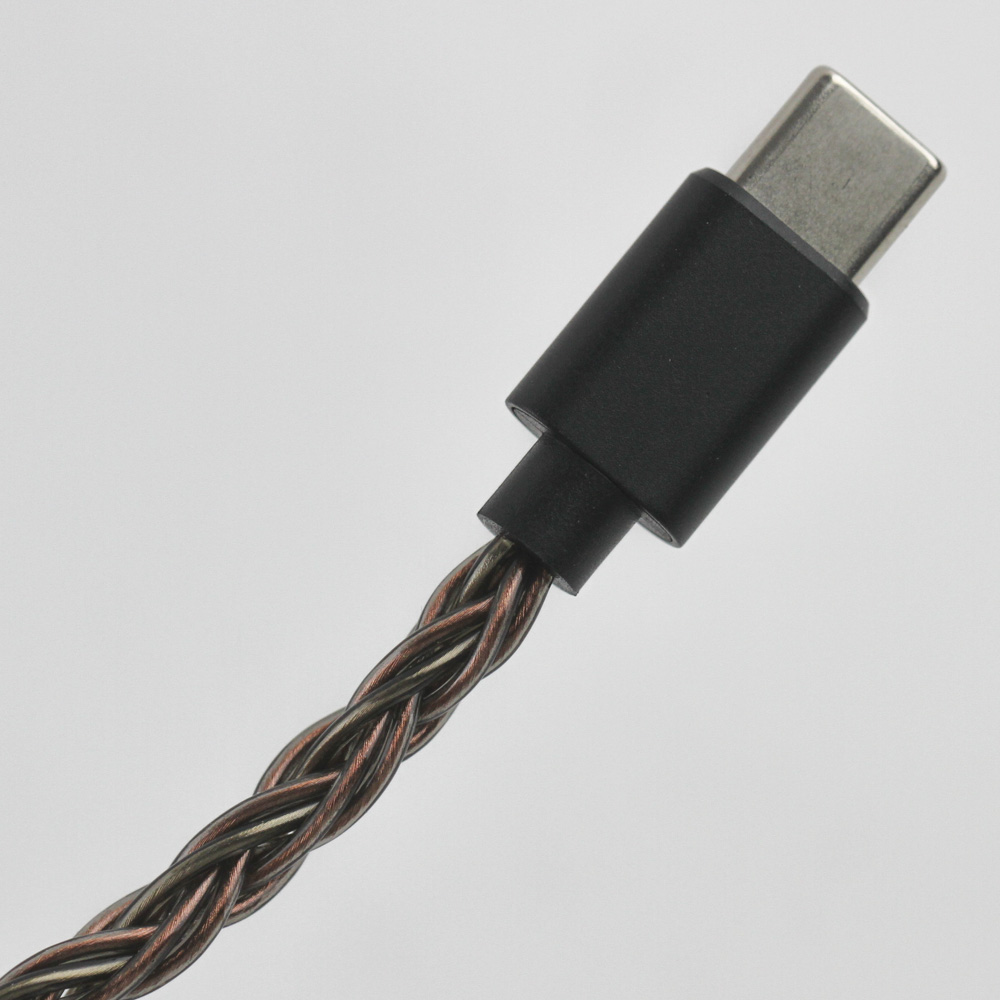
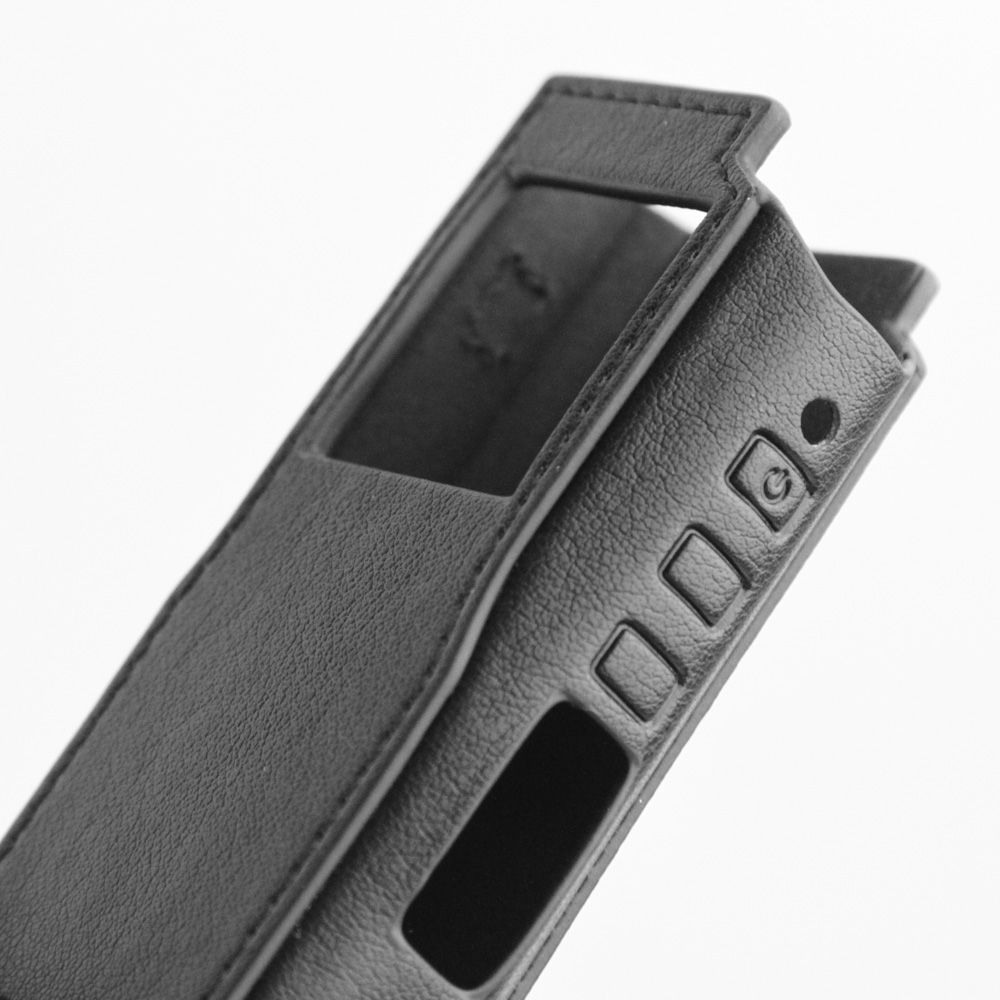
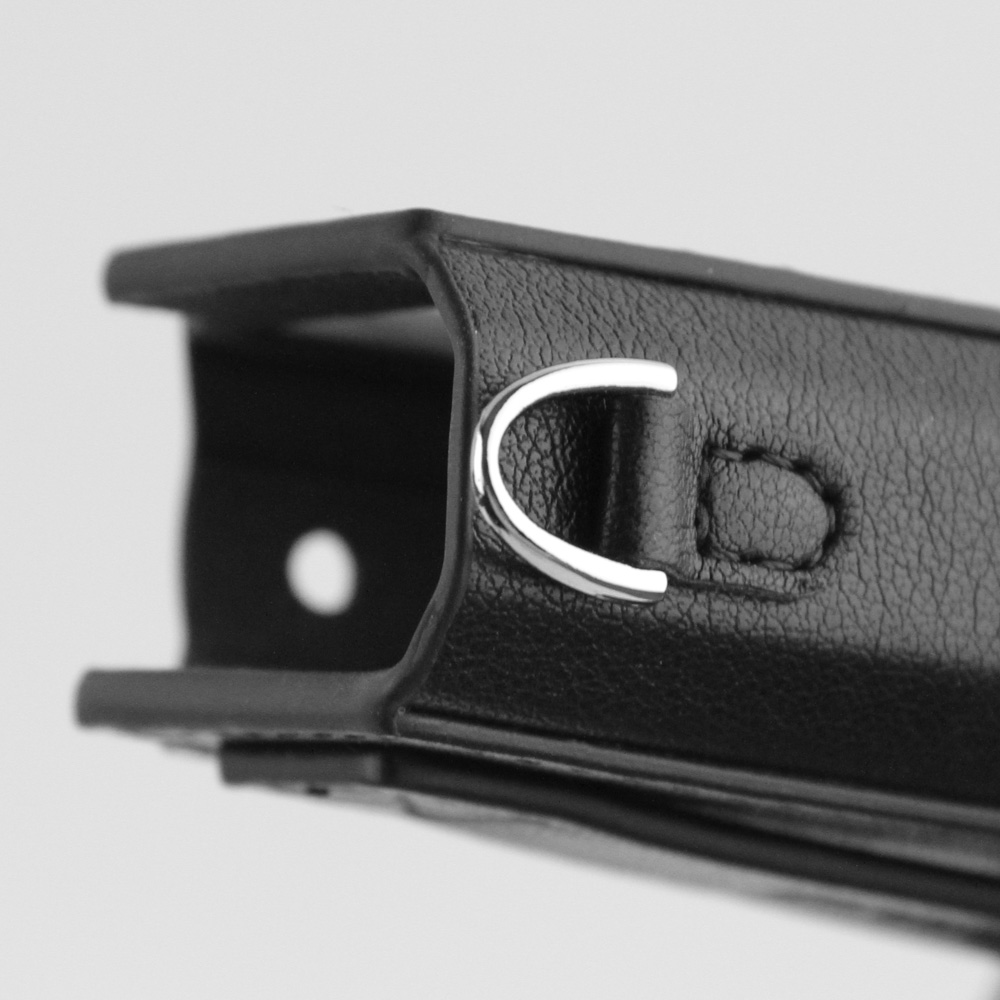
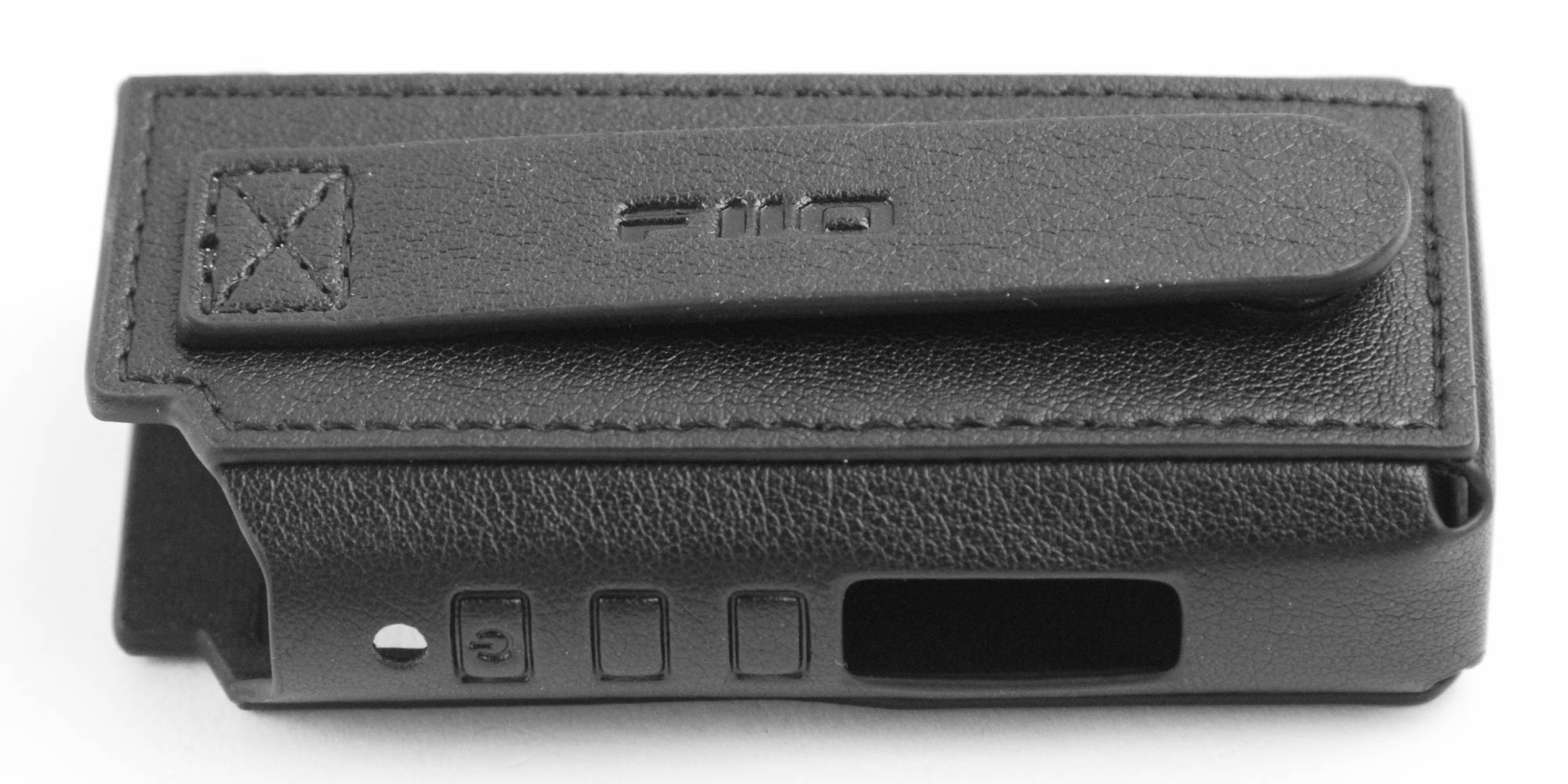
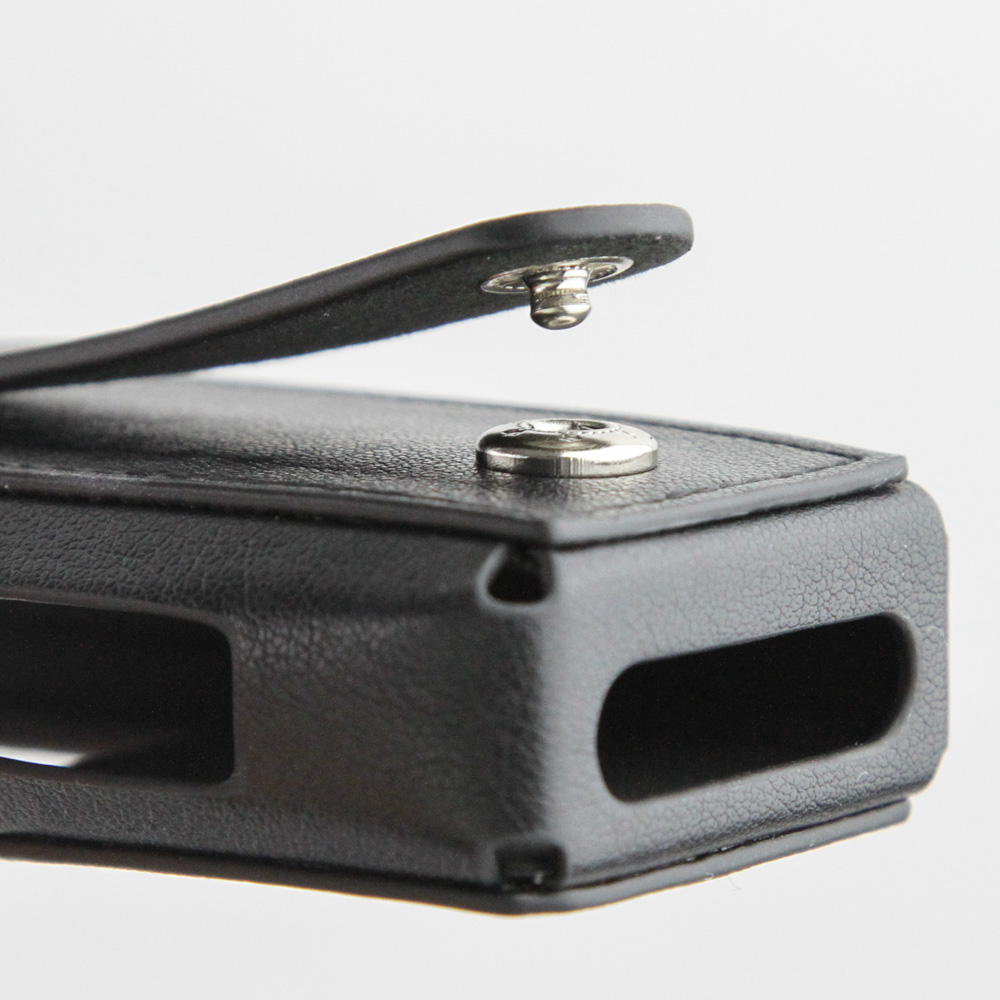
We get a note to connect with FiiO over social media in addition to a warranty card should anything go wrong. FiiO also provides a specially-made short Type-C to Type-C USB OTG cable to use the BTR17 with, say, a phone. This is an eight-strand cable, of which six strands are monocrystalline copper and handle current transmission and the other two strands are silver-plated monocrystalline copper and used for digital transmission. Obviously fancy digital cables don't really matter, but there will always be audiophiles who are willing to spend $$$ for USB cables, so in a way FiiO has also done this to appease them. I am just happy this feels like a durable cable which can easily be twisted or bent without retaining any memory. We also get a leatherette, aka protein leather, protective case for the BTR17 which will be in the same color as the product you chose. I have the black version here thus, and we see it has a steel clip to use with an optional lanyard in addition to an integrated belt clip which relies on a snap button mechanism to keep it closed. This means that whatever you want to put through the gap is limited in size, and the absence of a clamp force or magnet prevents the BTR17 from hanging off a shirt or trouser pocket, unfortunately. FiiO says this will work well with its MagClip phone accessory, for what it's worth.

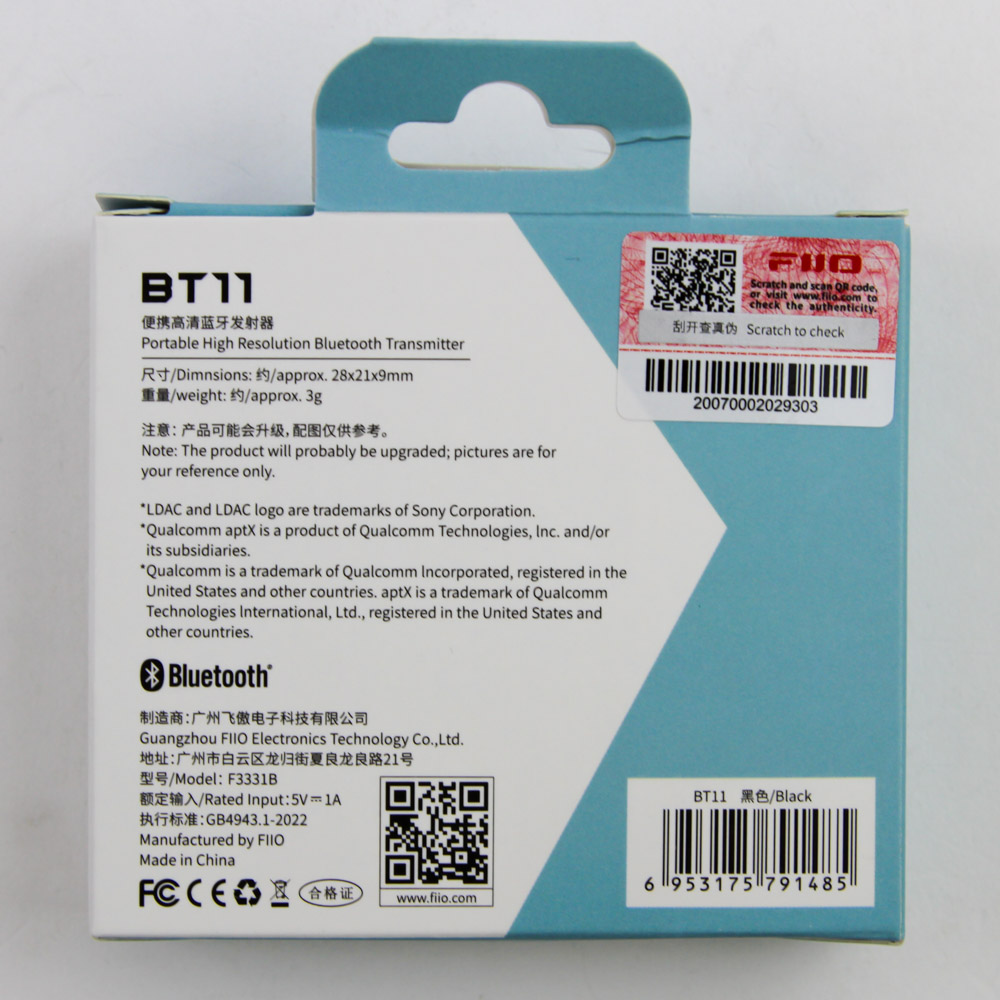
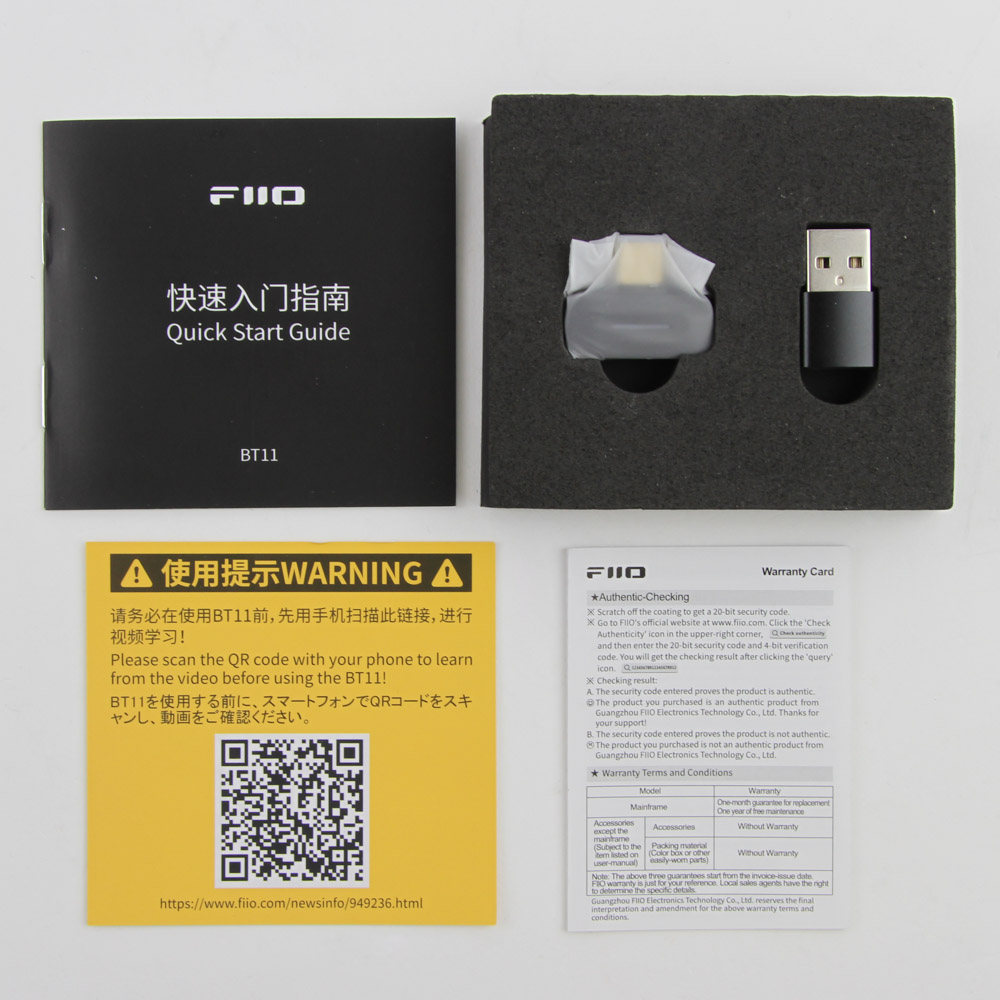
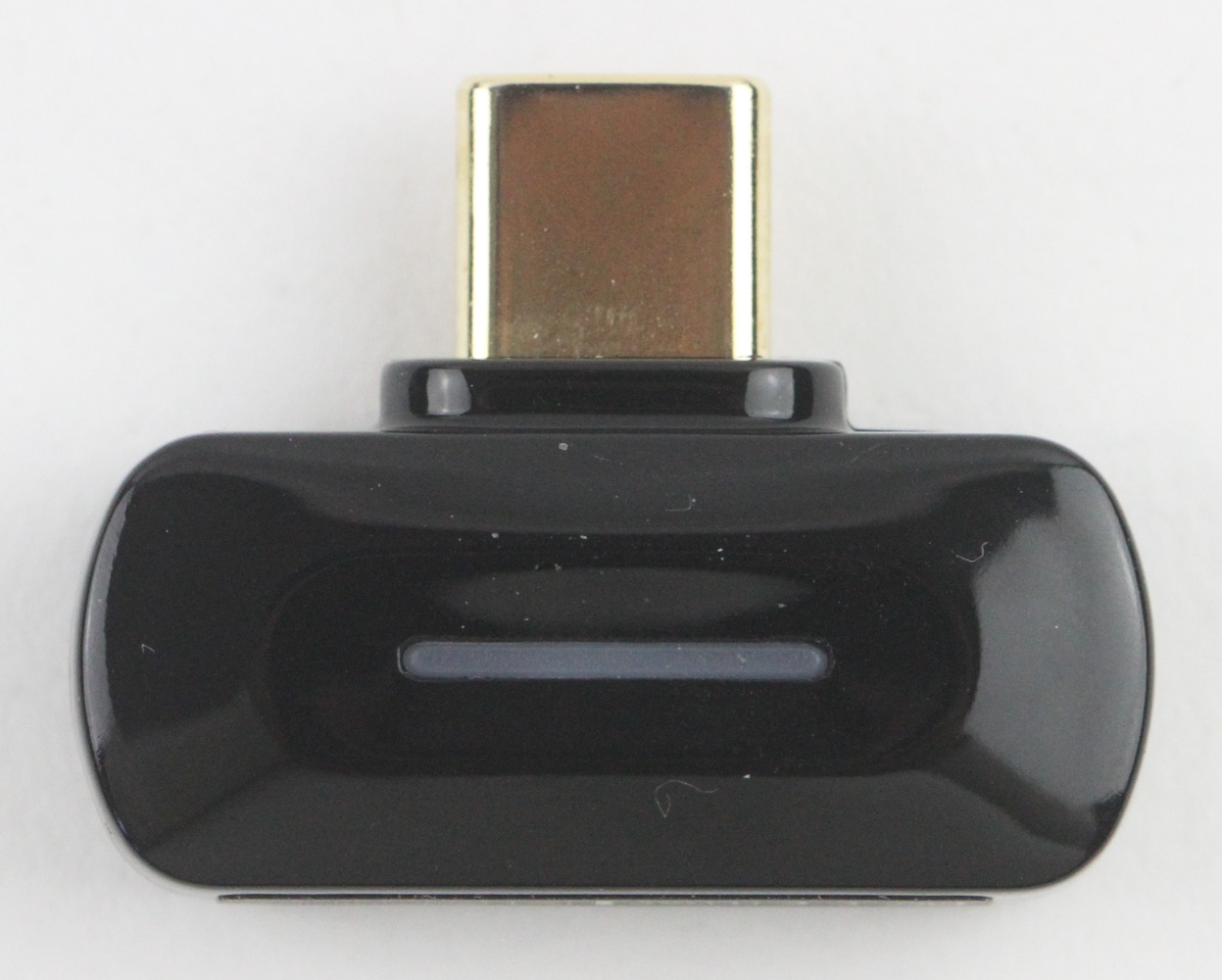


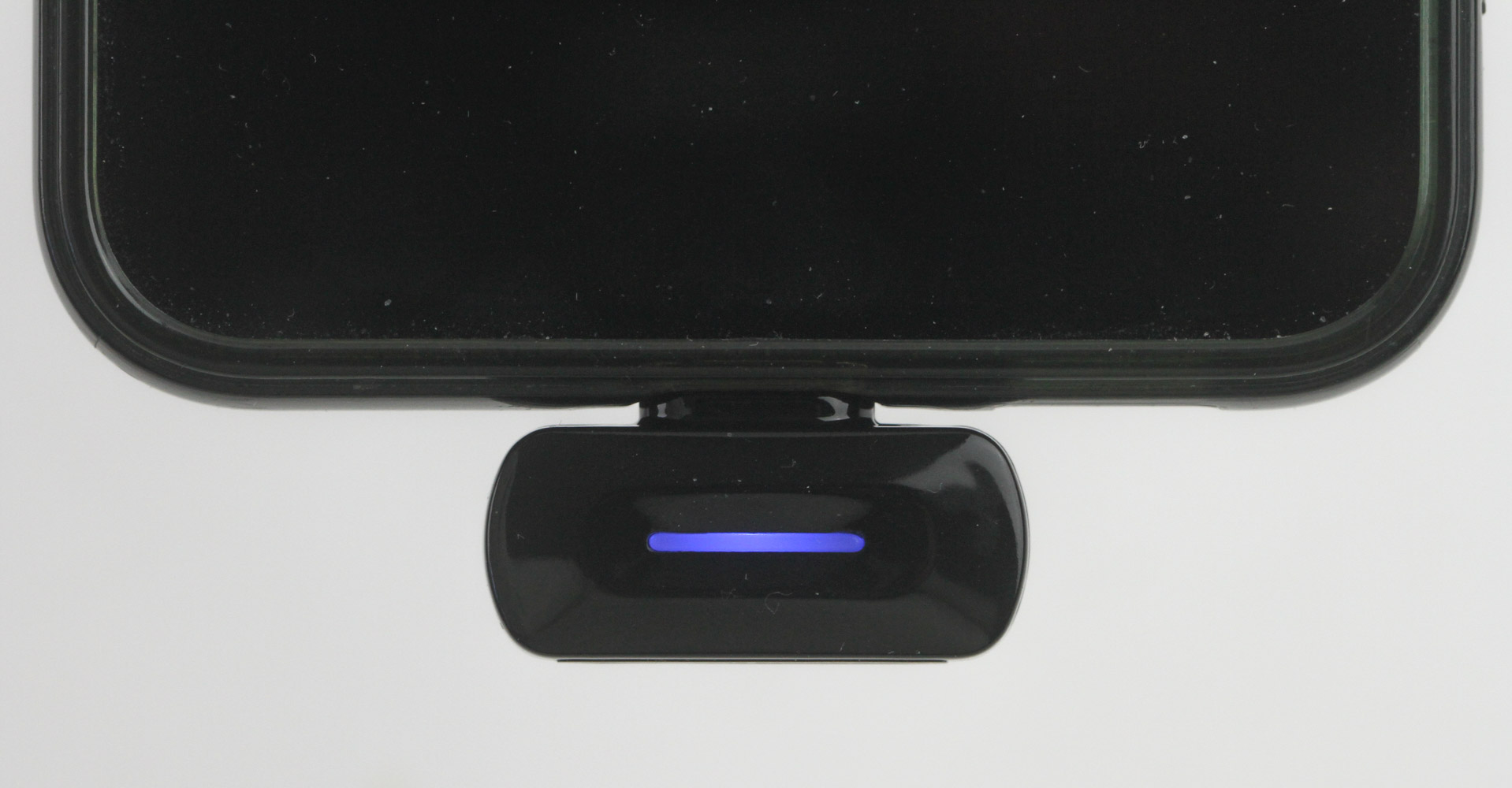
At my request, FiiO also sent over its new BT11 portable Bluetooth transmitter. This is a simple plug-and-play device with a Type-C port (Type-A with the provided adapter) and comes in black or silver plastic bodies and basically helps provide more extensive Bluetooth codec support to clients that don't have them—Apple products, basically. It gives Bluetooth 5.4 support thanks to the Qualcomm QCC5181 SoC inside, and with it comes SBC/aptX/aptX LL/aptX HD/aptX Adaptive/aptX Lossless/LDAC support. It can thus be used with laptops or PCs too if you don't want to go the A2DP route, where honestly I found the device to work better than with phones. For example, LDAC at 990 Kbps wasn't the most stable connection on some phones, and I never got aptX Lossless working, so hopefully a firmware update will help. The BT11 is 28 x 21 x 9 mm in size, weighs ~3 g, and has an indicator light that helps alert you to its operating status and current codec. FiiO rates a Bluetooth transmission distance of up to 50 m without obstacle—35 m being more realistic—and the device costs ~$45 at this time. If you plan on using the BTR17 over Bluetooth, this can be a handy device for anyone wanting LDAC support.
Our Patreon Silver Supporters can read articles in single-page format.
Nov 21st, 2026 07:20 PST
change timezone
Latest GPU Drivers
New Forum Posts
- Bought MAX-P495 - Which model? (33)
- RX 9000 series GPU Owners Club (2250)
- Honestly, do you care about GTA VI? (221)
- Cpu waterblock water shows some tinting = Bad? (18)
- GeekMagic Ultra Smart WiFi Weather Station (9)
- What's your latest tech Freebie? (87)
- UPS what one to get? (3)
- Differences i might've missed between these ultrawides to decide which to buy during BF. (0)
- Anthrophics IPO (31)
- Without Jensen, PC gaming will be (53)
Popular Reviews
- Microsoft Surface Laptop Ultra Review - The Next-gen Arm Laptop
- Ugreen NASync DXP4800 GT Review
- Corsair RM1200e (Second Generation) Review
- Pulsar Office Tour & First Look at P1 Dual-Sensor Mouse
- Upcoming Hardware Launches 2027 (Updated Nov 2026)
- Acemagic Retro X3 Review
- Biwin Black Opal NV7400 2 TB Review
- AMD Ryzen 7 9800X3D Review - The Best Gaming Processor
- AMD Zen 6 Technical Deep Dive
- Chieftec Iceberg PRO 360 DARK Review
TPU on YouTube
Controversial News Posts
- NVIDIA Co-Founder and CEO Jensen Huang Officially Resigns (491)
- Report: Jensen Huang Eyes NVIDIA Comeback (259)
- Open Letter Asking NVIDIA to Reinstate Jensen Huang Passes 115,000 Signatures (184)
- OpenAI CEO Argues Home PCs Waste the World's Limited DRAM Supply (152)
- NVIDIA Launches Investigation Into Jensen Huang's Relationship With Suspected Chinese Spy (136)
- Intel "Raptor Lake Next" 16-Core and 20-Core CPUs Surface (130)
- Legendary Game Studio BioWare Shuts Down Following EA Layoffs (104)
- NVIDIA GeForce RTX 50-Series Scheduled for up to $500 Price Hike This Week (89)