 6
Fractal Design Epoch XL RGB TG Review
Review System Setup »A Closer Look - Inside
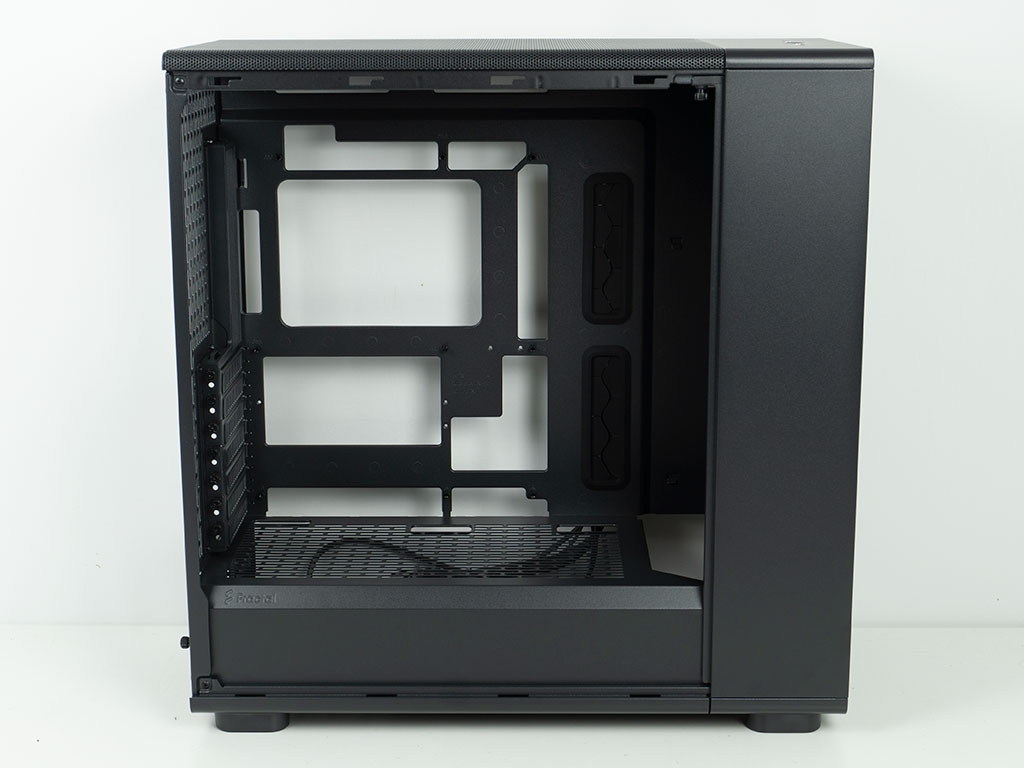
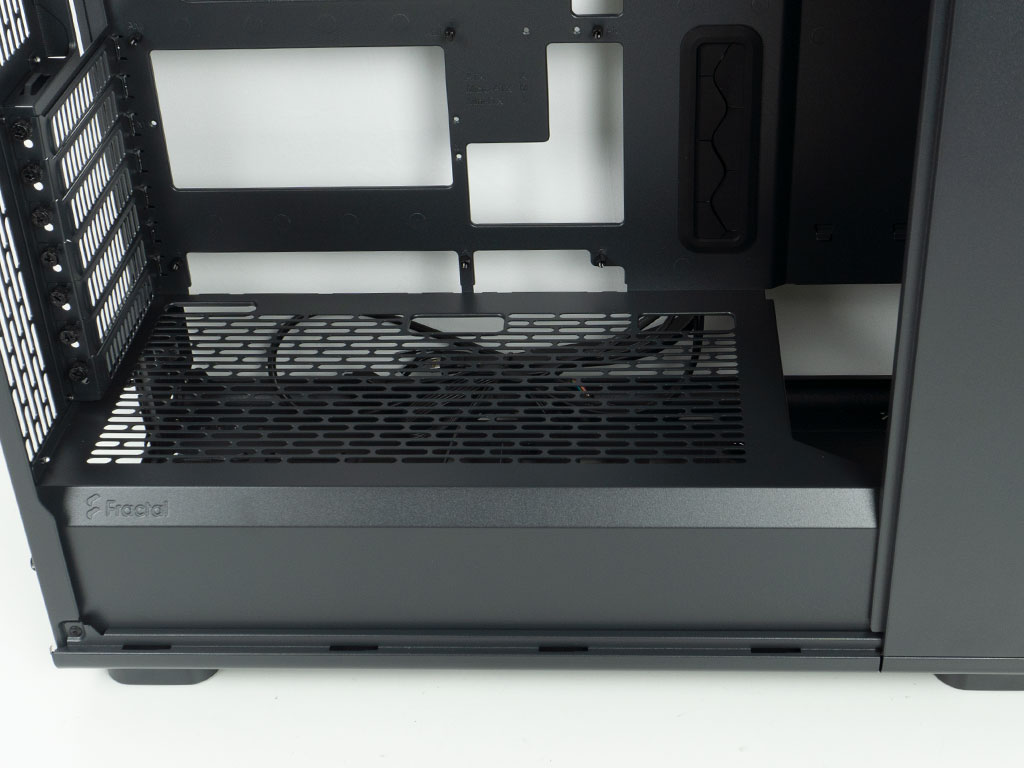
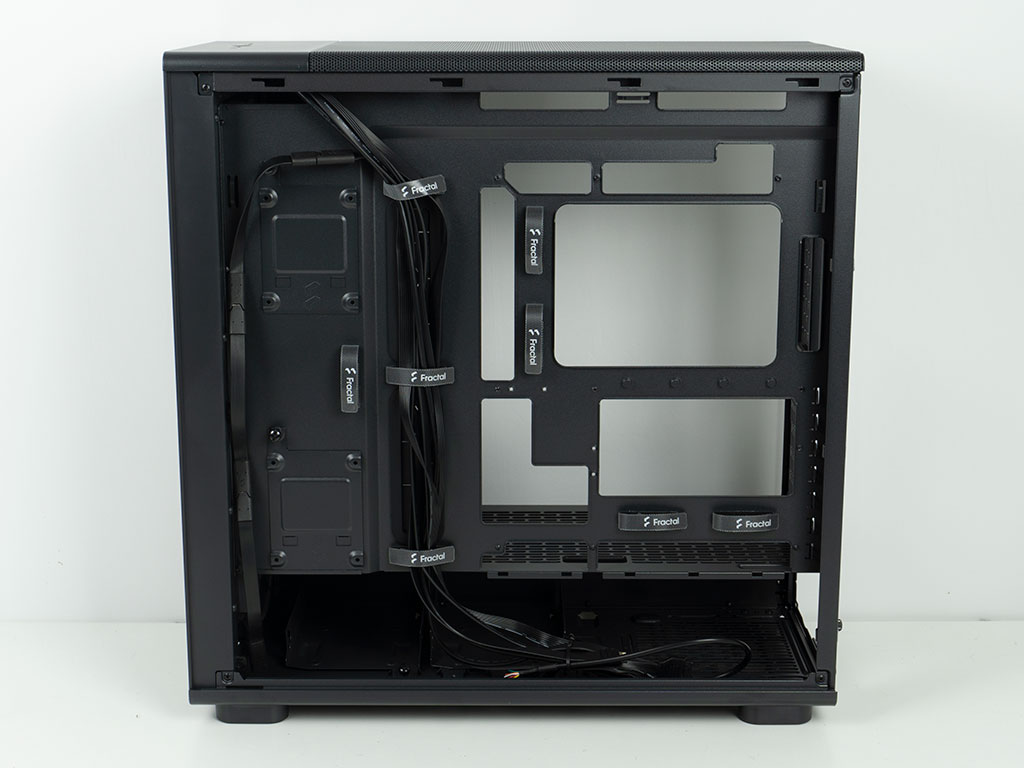
To gain access to the interior of the chassis, simply detach the captive thumb screws holding each panel in place. With the glass panel removed, you will have access to the majority of the interior space, without the immediate need to remove the metal portion, albeit easily detachable. The interior of the black Fractal Epoch XL is also black to match the exterior. This is also where you will find the biggest tooling update in comparison to the North XL, with which this case shares most of its bones, as the Epoch XL can now hold BTF based boards as well.
The shroud is made of steel and comes with a large opening in the front, along with smaller cable routing cutouts along the bottom edge of the motherboard. Unlike the original Epoch, the XL variant has a vent across the entire surface area of the shroud, forgoing the ability to hang one of the HDD cages from the ceiling. While that was a unique approach, it did mean that you could retain the use of both 3.5" trays in combination with a large PSU and bulky front liquid cooling assembly. Unfortunately, as this is no longer the case with the Epoch XL, there will be scenarios that will limit you to a single pair of a 2.5" and 3.5" drives on the floor.
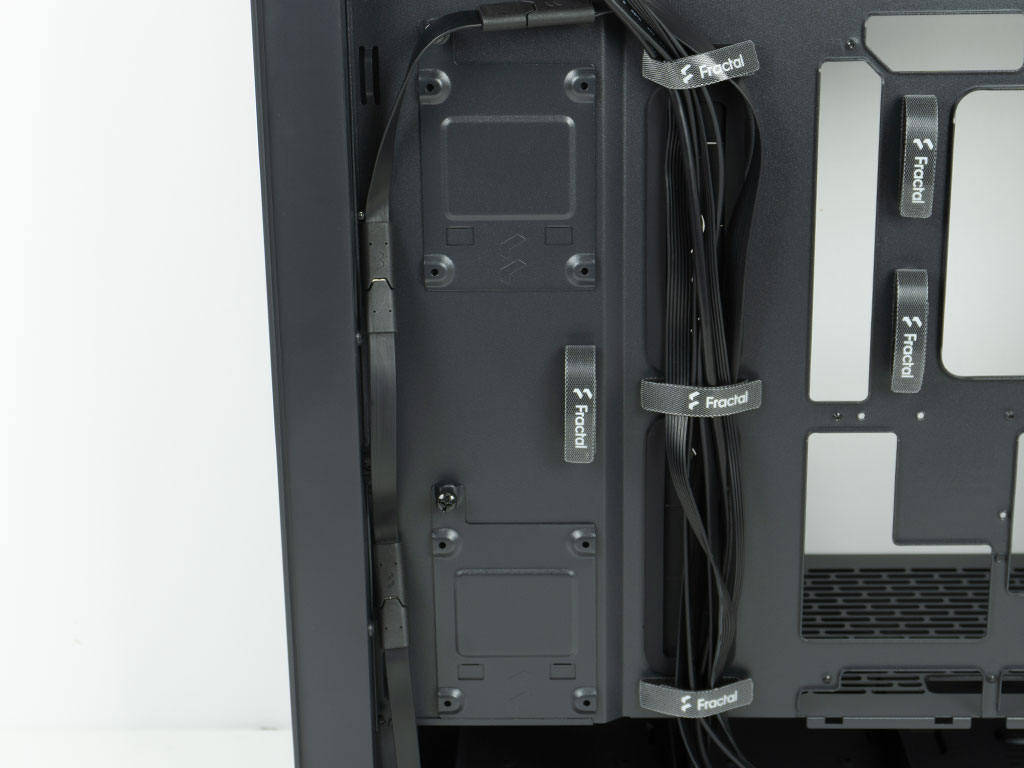
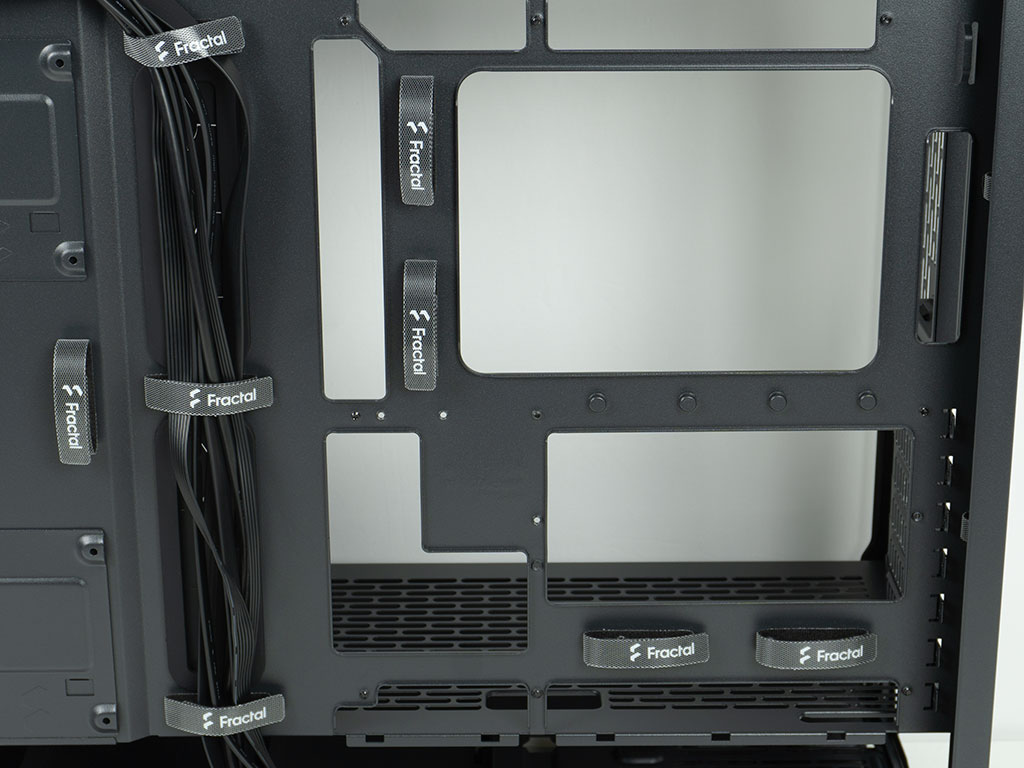
To make room for the required openings to support the reverse motherboard connectors, Fractal has also moved the two SSD plates towards the front of the chassis, while those were implemented as a simpler, single plate underneath the CPU cooler openings inside the North XL. The Epoch XL also has a very different configuration of Velcro strips, but Fractal has made sure to include plenty of them. These are now mounted unto the case with metal knobs which have been pressed through smaller openings of the Velcro strips. While that looks cleaner, it also means they are prone to pop out if you end up pulling on then too hard - that feels like a step back. There are additional such knobs underneath the cooler cutout, so you could easily relocate some Velcro strips to suit your needs.
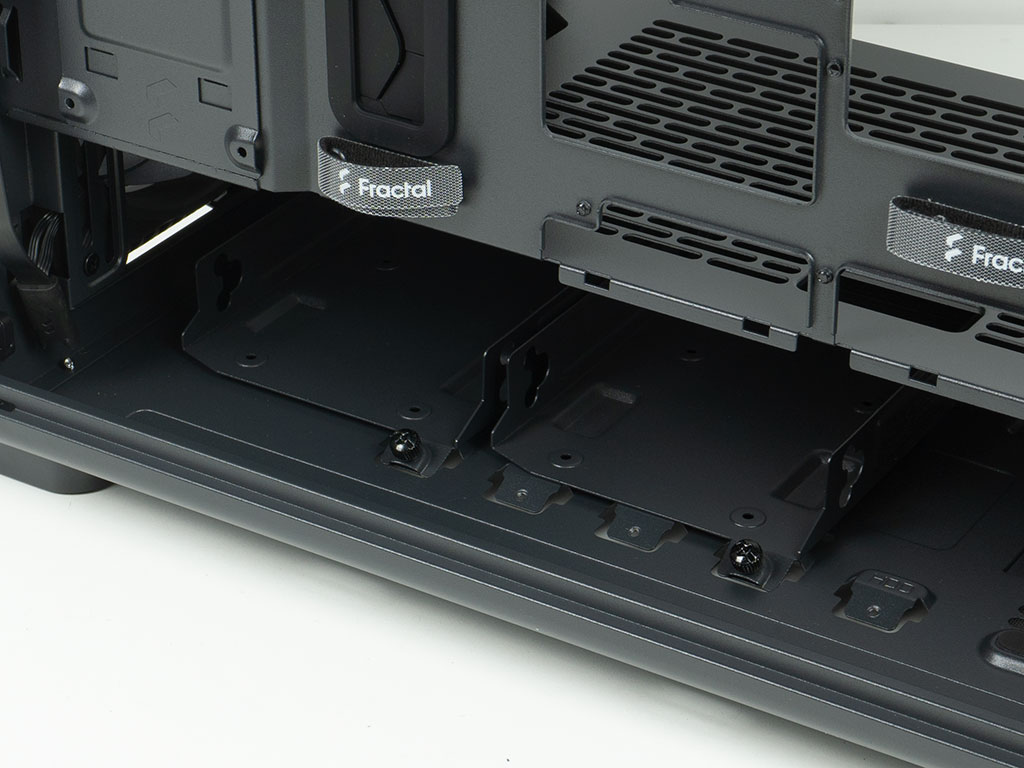
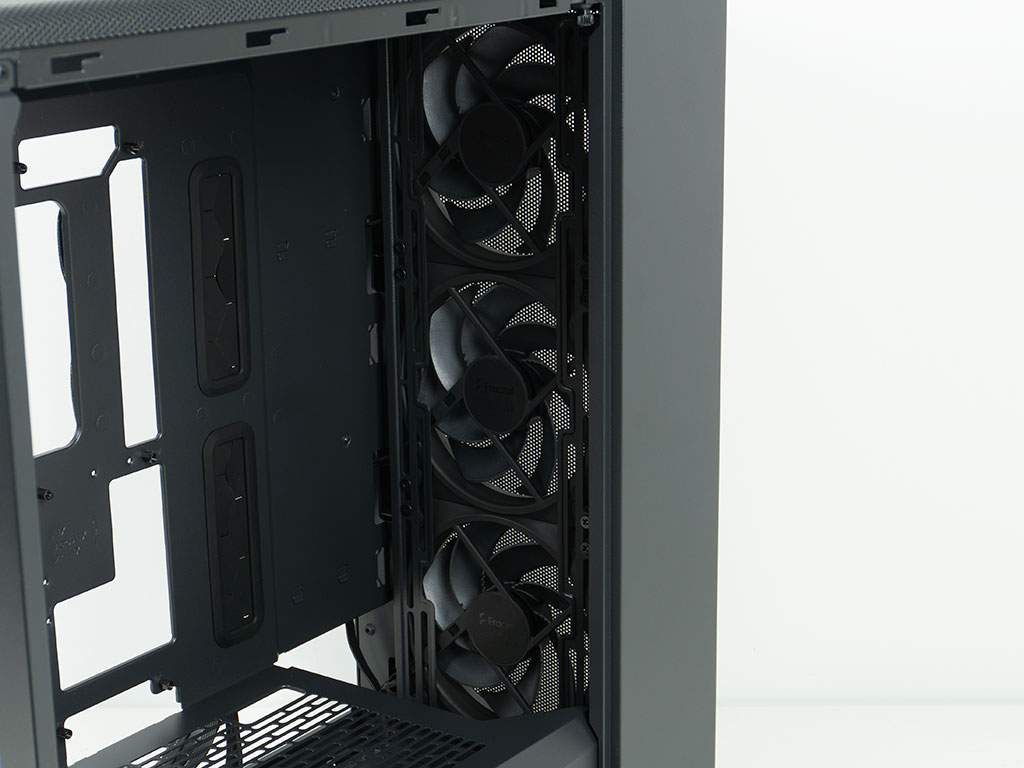
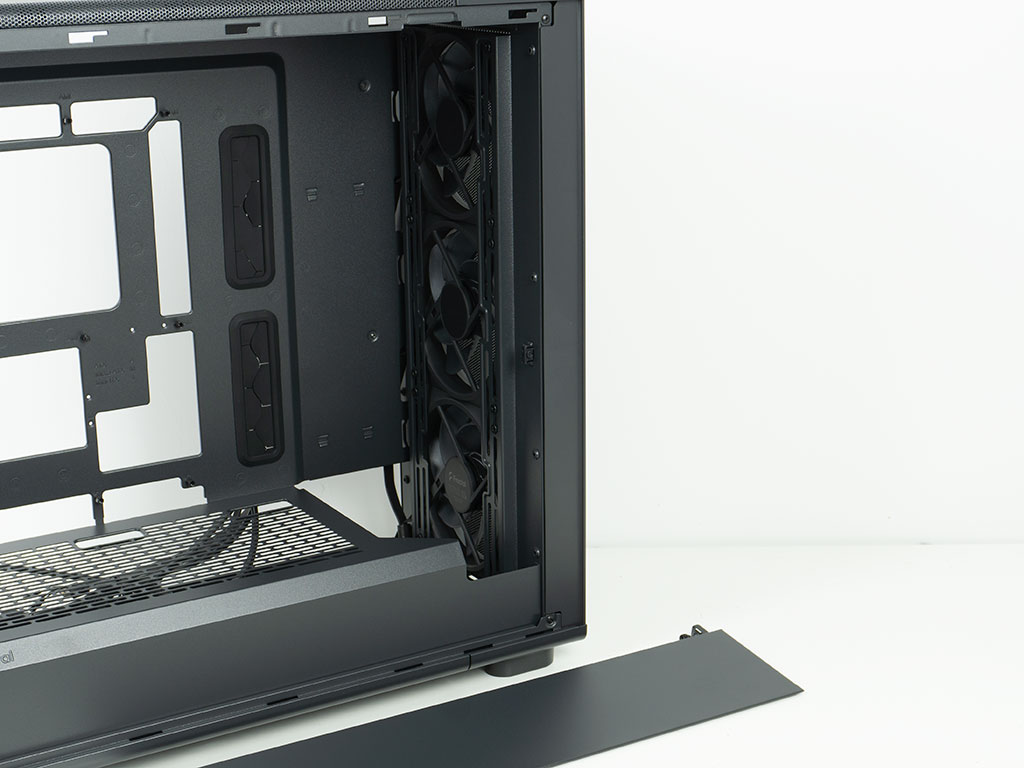
In the front, there are the two 3.5" trays. Above those there is the cooling element with the three pre-installed 140 mm fans. You may remove the side panel to gain access to this area of the case, for example if you are looking to alternatively install three 120 mm units or a liquid cooling setup of up to 420 mm in size. Thanks to the dimensions of the Epoch XL, this area is also capable of holding thicker radiators or push/pull configurations, while also retaining sufficient GPU length clearance for all the latest and greatest pixel pushers.
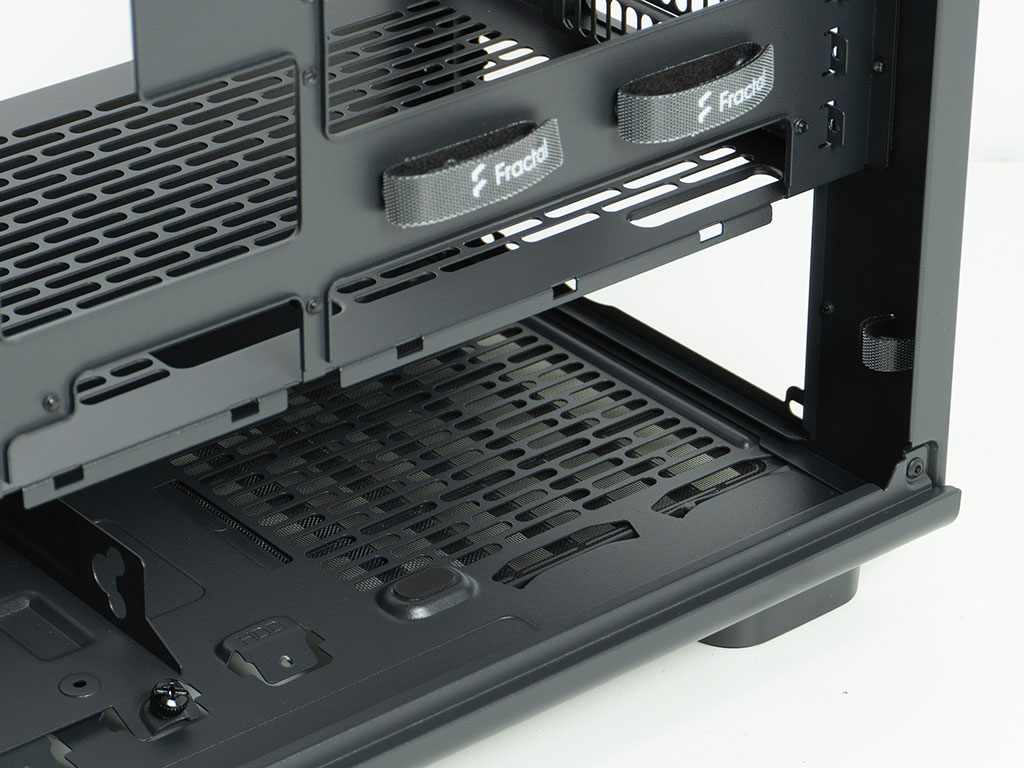
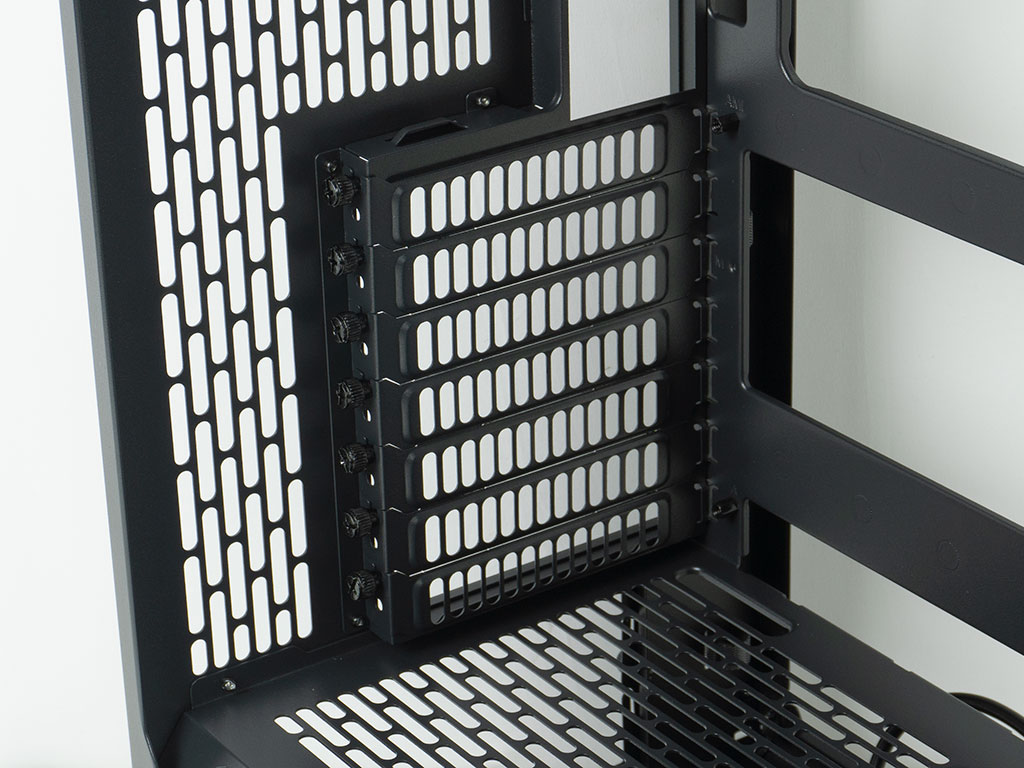
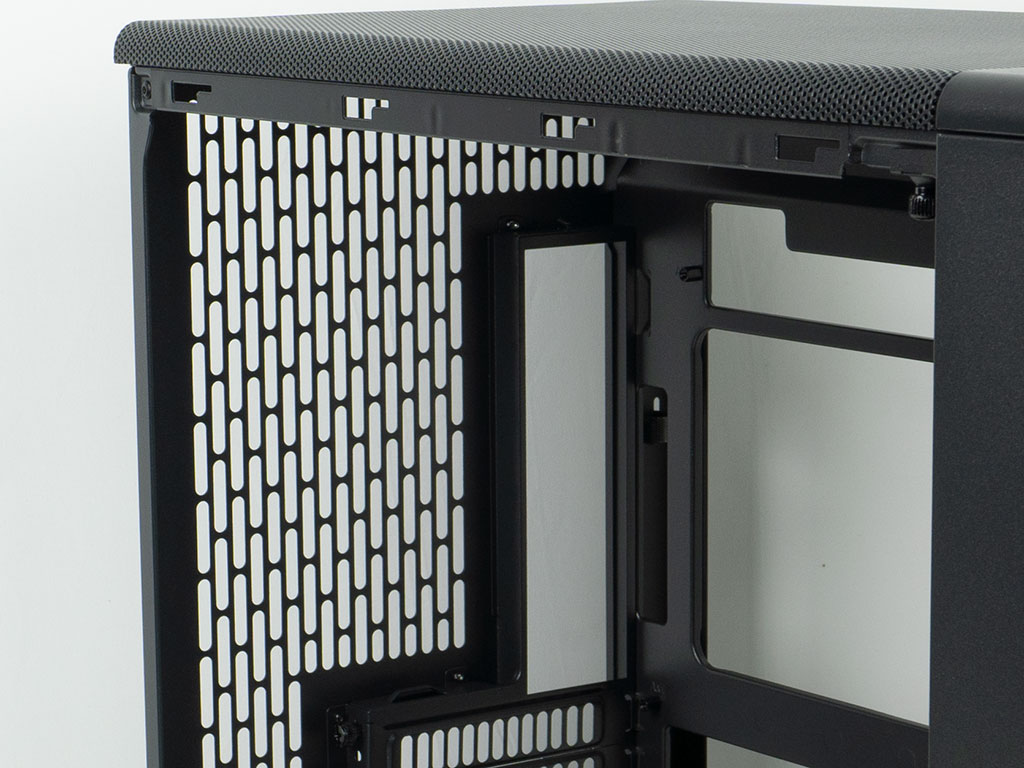
In the rear, the PSU bay underneath the shroud is pretty straightforward, with some foam pads for your unit to rest on. Above that are the seven expansion slots, where Fractal also employs thumb screws to hold each cover in place. As there are no dividing elements in the chassis frame between the expansion slots, you will be able to use horizontal GPU mounting brackets as well. In the very top, there is that vent/fan mount as noted before. If you look closely, you will notice the hooks for cable management in this part of the chassis, which should make it easy to cleanly route fan wiring to a header of the motherboard, while keeping the cable mess to a minimum.

The fan/liquid cooling mounting element in the ceiling is offset as far away from the motherboard as possible. On top of that, thanks to its additional height, the enclosure offers lots of room above the motherboard, once again meaning that you can install thick radiators or push/pull configurations for liquid cooling here without interfering with the motherboard. With the Epoch XL, Fractal has also included a round cutout where you may install a fill port for your custom liquid cooling setup.
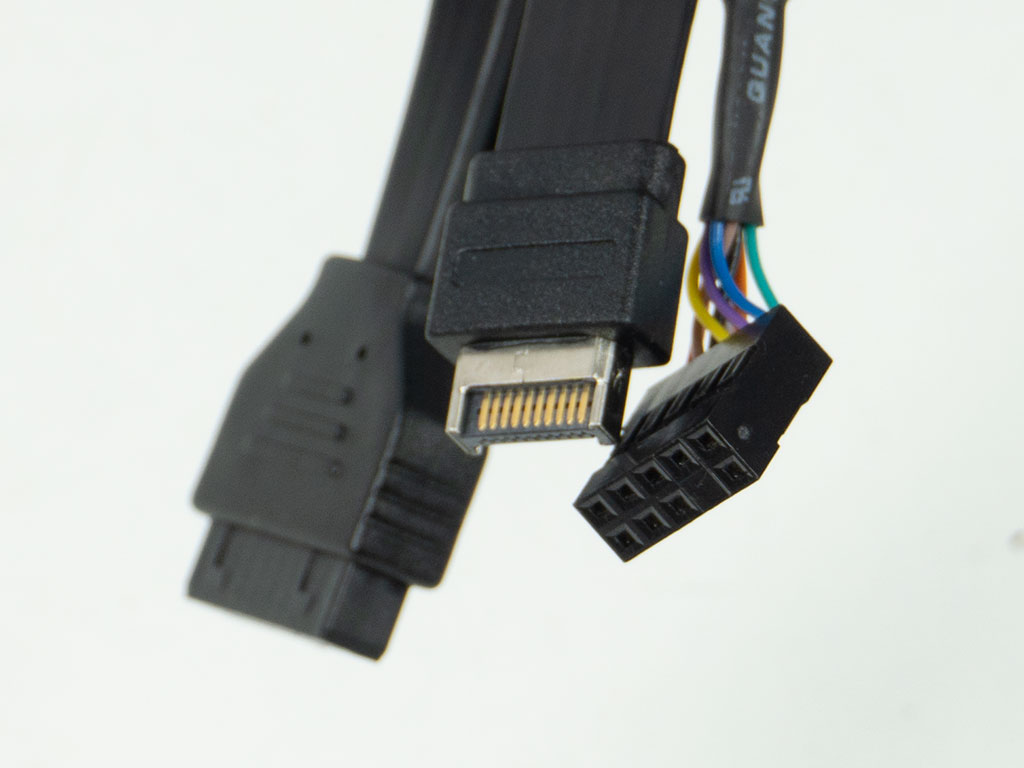
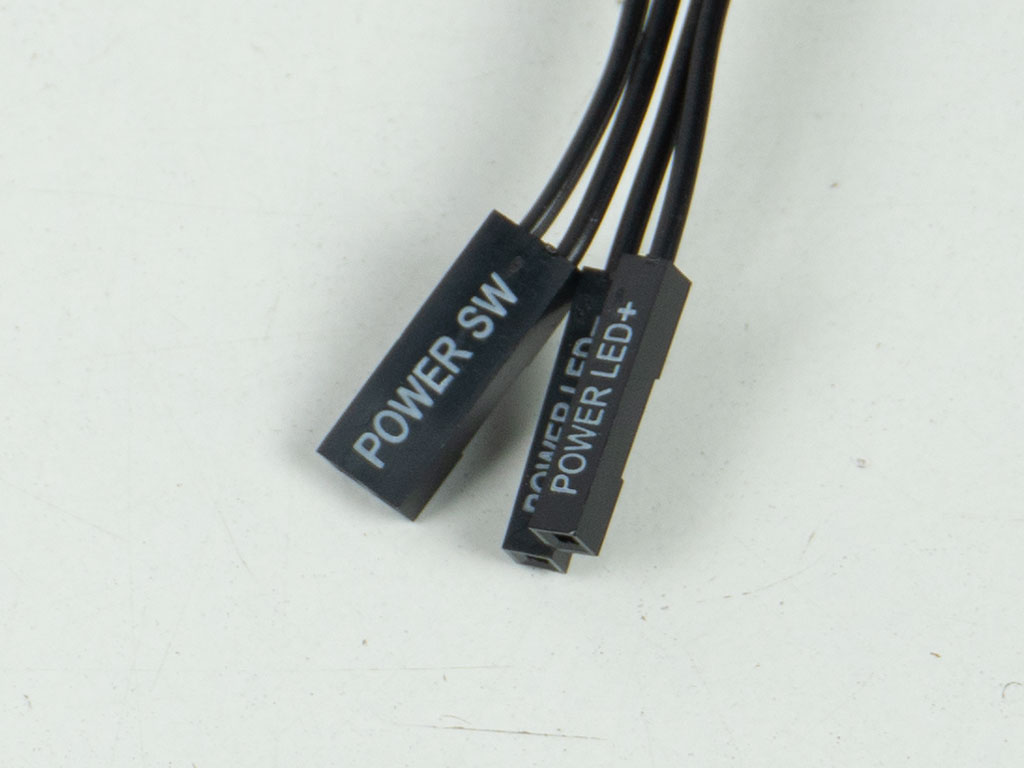
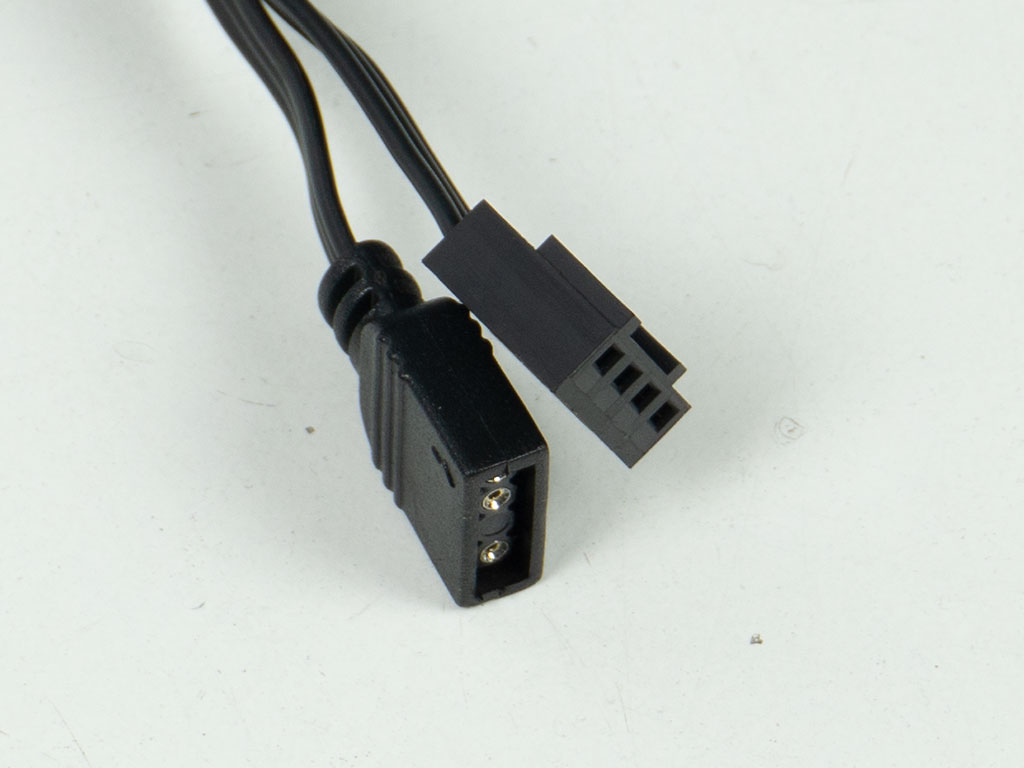
All the wiring within the Fractal Design Epoch XL is of the sleeved black variety. Unfortunately, Fractal is still sticking to separate pins and plugs for the front panel wiring, whereas most brands have already transitioned to a unified one instead. As the Epoch XL is equipped with three pre-wired Momentum 14 ARGB fans with their unique USB-C like connectors and wiring, you will also get a terminating end that interfaces with the classic PWM and ARGB headers on your motherboard.
Nov 20th, 2026 13:47 PST
change timezone
Latest GPU Drivers
New Forum Posts
- Honestly, do you care about GTA VI? (208)
- When you could finally run Crysis maxed out? (63)
- WarpCoreBench scores! (80)
- GTA VI (20)
- Anthrophics IPO (25)
- GeekMagic Ultra Smart WiFi Weather Station (8)
- Very unusual two gaming-pc scenarios. (35)
- Can i play GTA 6 now? (Joke) (14)
- How to prevent OLED burn damage due to PC freezes or power outtages? (47)
- Zen 3 IF/IMC degradation (239)
Popular Reviews
- AMD Zen 6 Technical Deep Dive
- Ugreen NASync DXP4800 GT Review
- Microsoft Surface Laptop Ultra Review - The Next-gen Arm Laptop
- Corsair RM1200e (Second Generation) Review
- Acemagic Retro X3 Review
- Upcoming Hardware Launches 2027 (Updated Nov 2026)
- Pulsar Office Tour & First Look at P1 Dual-Sensor Mouse
- Biwin Black Opal NV7400 2 TB Review
- AMD Ryzen 7 9800X3D Memory Performance Scaling
- AMD Ryzen 7 9800X3D Review - The Best Gaming Processor
TPU on YouTube
Controversial News Posts
- NVIDIA Co-Founder and CEO Jensen Huang Officially Resigns (490)
- Report: Jensen Huang Eyes NVIDIA Comeback (255)
- Open Letter Asking NVIDIA to Reinstate Jensen Huang Passes 115,000 Signatures (184)
- OpenAI CEO Argues Home PCs Waste the World's Limited DRAM Supply (152)
- NVIDIA Launches Investigation Into Jensen Huang's Relationship With Suspected Chinese Spy (136)
- Intel "Raptor Lake Next" 16-Core and 20-Core CPUs Surface (130)
- Legendary Game Studio BioWare Shuts Down Following EA Layoffs (104)
- Dell CEO Says the Memory Shortage Will Get Worse in 2027 (95)