 9
Fractal Design Refine 2 Review - Nearly perfect, but worth the price?
User Experience »Backrest
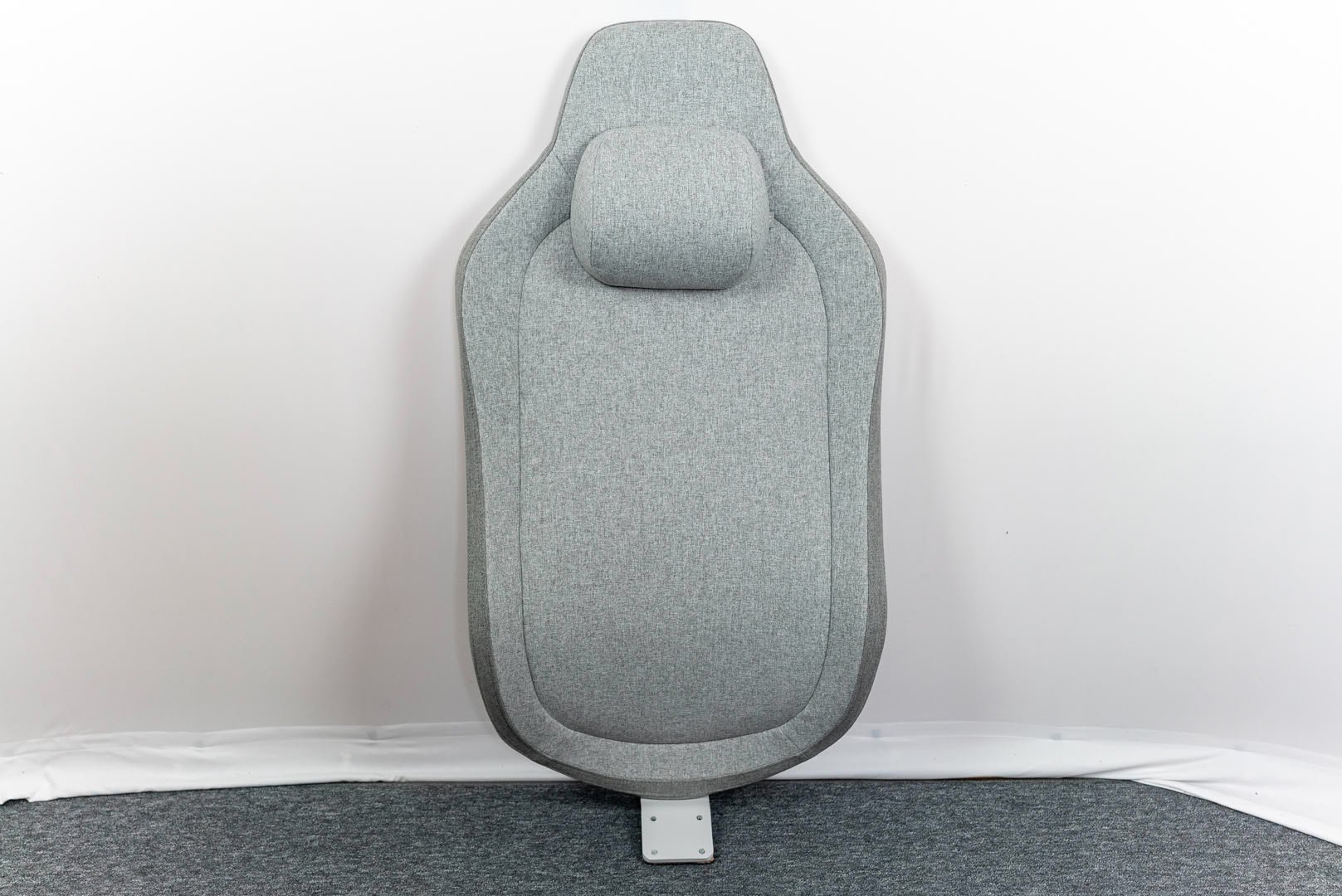
Now that we've covered the introduction, it's time to take a closer look at the individual components, starting, as usual, with the backrest. It's mounted on a frame made of reinforced fiberglass and other plastics, while the inside is filled with cold-cured foam and covered with fabric that feels pleasant to the touch. There's really nothing to complain about here—in fact, the stitching looks even better than on the previous model, mainly because there's simply less of it. Thanks to that, the whole chair looks really clean and well-finished. As for the materials, there's also some metal here, used for the mounting elements connecting the backrest to the seat and tilt mechanism.
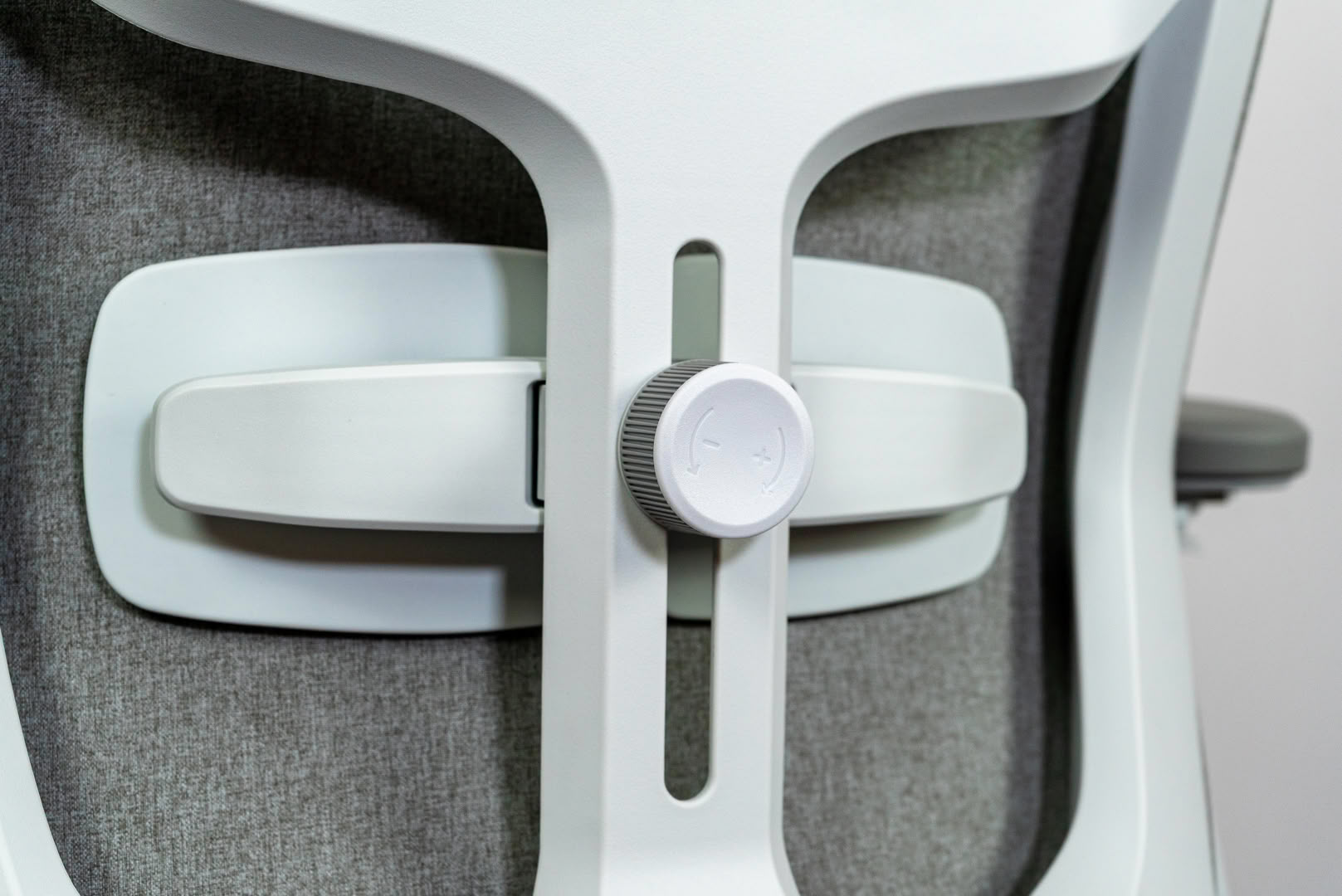
Is there really anything to complain about here? Well… not really. The chair is very well-made, uses high-quality materials, and features a precise finish. The lumbar support is still clearly visible, although this time it consists of not one but two pads. Thanks to this change, we can adjust them not only front-to-back and up-and-down, but also have them conform better to the shape of our backs.
The front-to-back adjustment itself is simple, while moving the pads up and down requires a bit more force and some time to get used to the resistance provided by the mechanism. Other than that, however, everything is in perfect order.
Seat
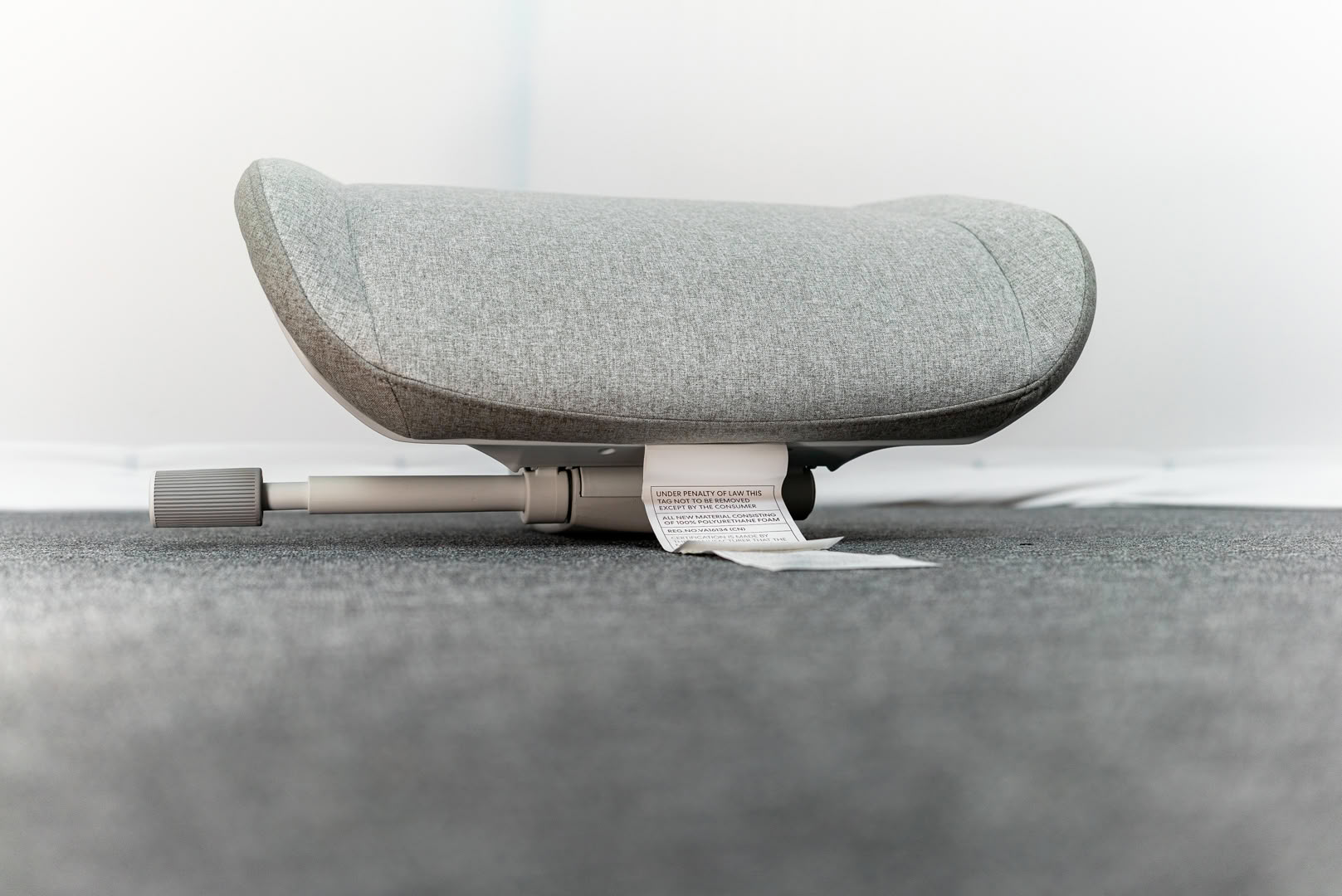
Moving on, we come to the seat, which has also received some minor changes. Here, too, compared to the original model, there are fewer visible seams, which improves the overall appearance. The seat combines fabric upholstery with cold-cured foam, while the entire construction is based on fiberglass, plastics, and metal.
The workmanship leaves practically nothing to be desired, nor does the fit of the individual components. The chair as a whole also feels slightly thicker, which may be the result of the new shape of the foam used inside the seat. Its firmness has also been adjusted to improve overall comfort. There have also been some minor changes to the dimensions, as well as to the available range of seat height and depth adjustment.
Armrests
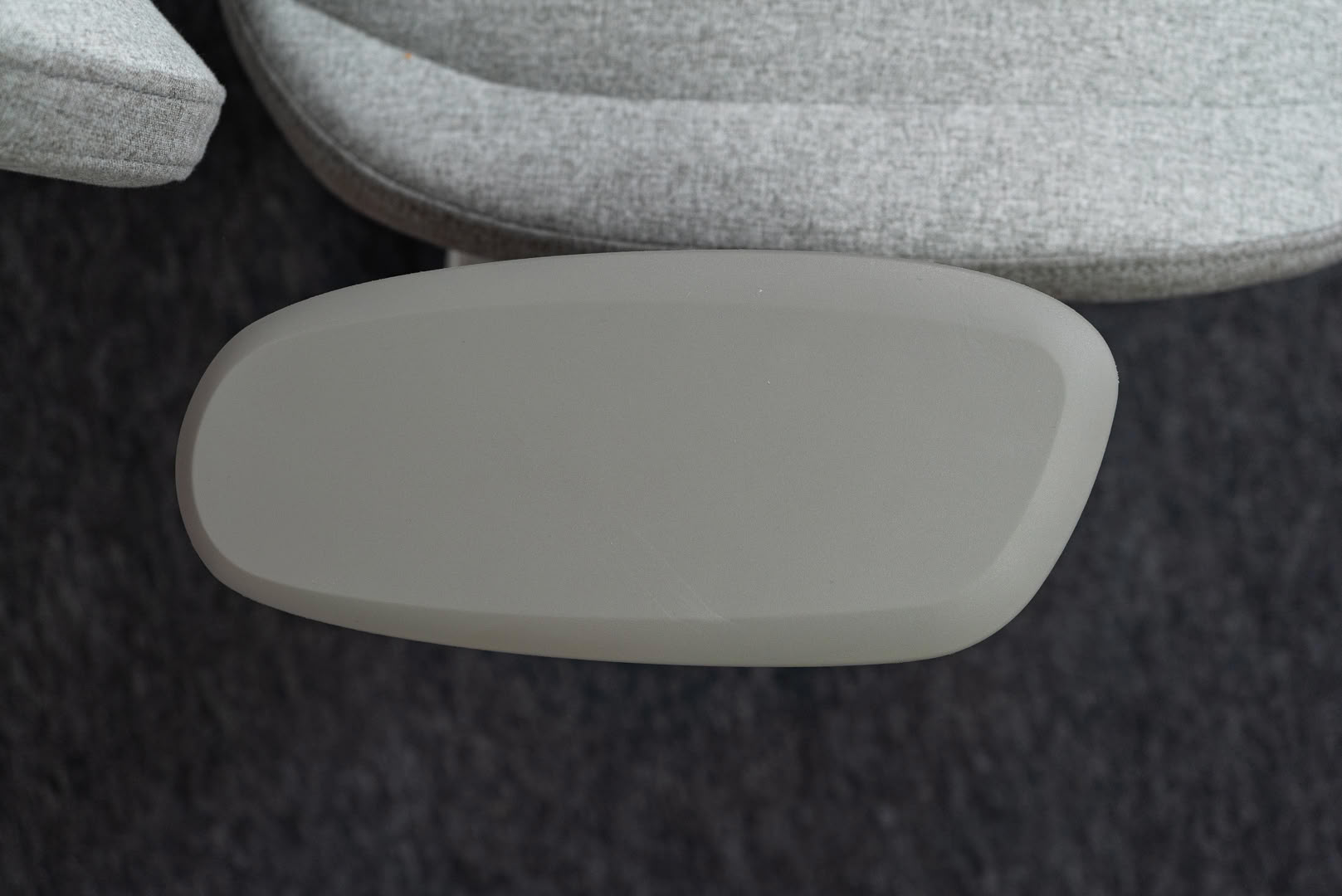
Next up are the armrests, which still don't have the standard, textbook shape you'll find on most chairs, instead featuring their own distinctive design. Compared to the previous version, not much has changed here, although the adjustment range has once again been expanded, including the height adjustment of the armrests.
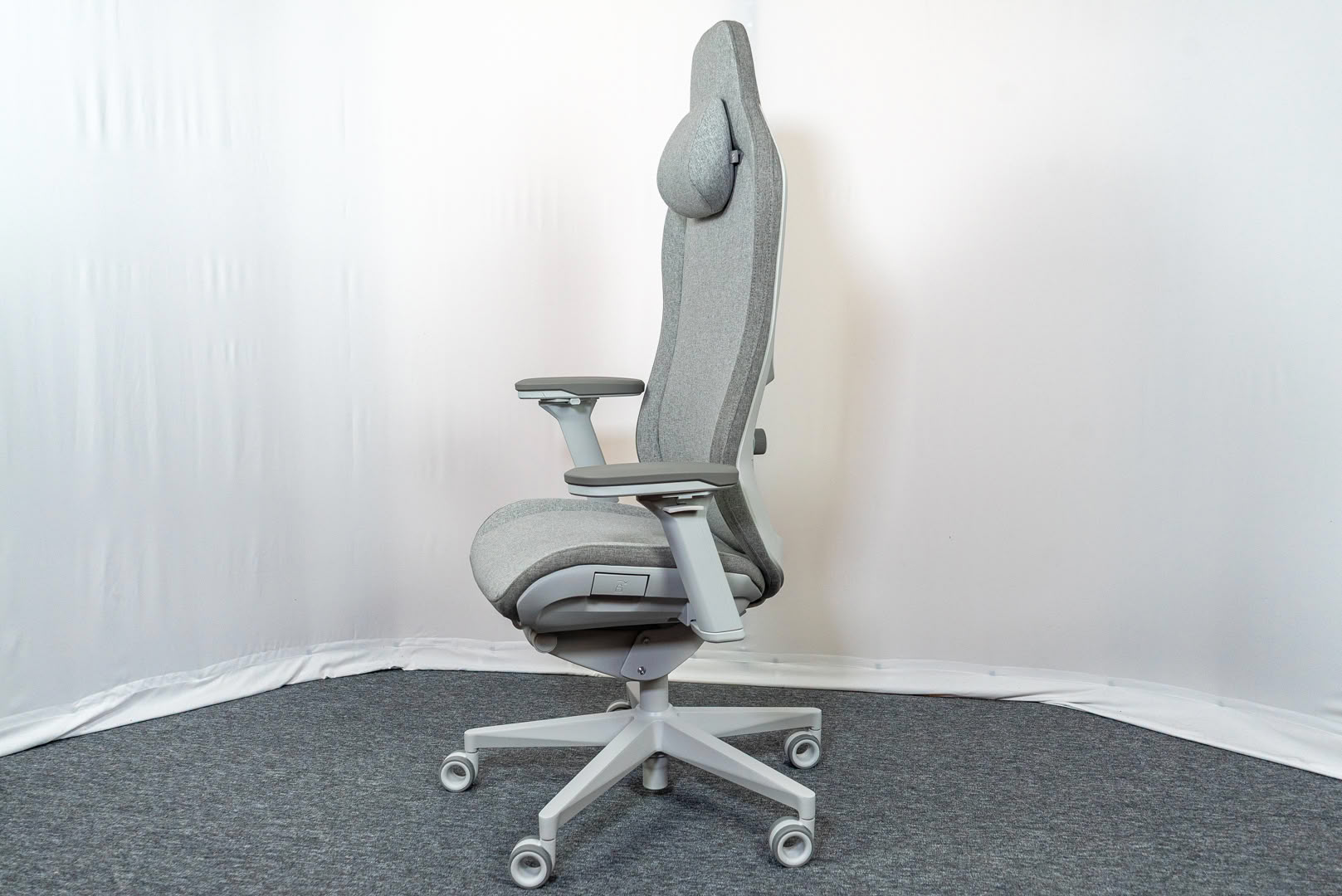
The construction remains essentially the same as in the first-generation Refine, combining plastics, metal, leather upholstery, and PU foam padding. The range of movement is also unchanged, offering 4D adjustment:
- Up-down
- Left-right
- Left-right angle
- Forward-backward
Base and Wheels
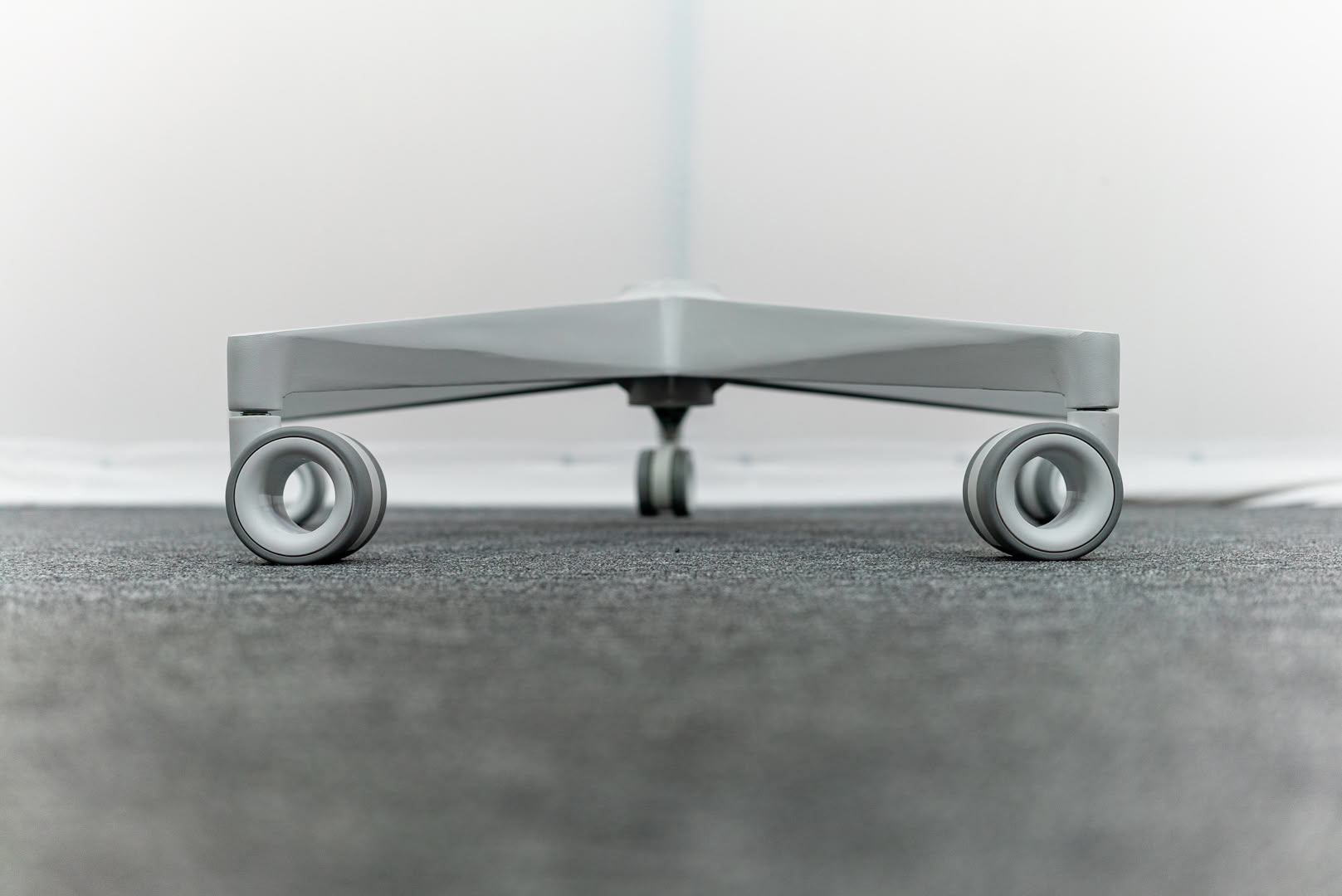
We're almost at the end, so let's move on to the five-star base and the casters, which have also received some minor changes compared to the previous model. The manufacturer claims that they should be quieter, and indeed, the casters are really quiet and "roll smoothly" across the floor. The base itself is sturdy and feels solid, so there's not really much more to add here. There are no noticeable issues in this regard.
Headrest
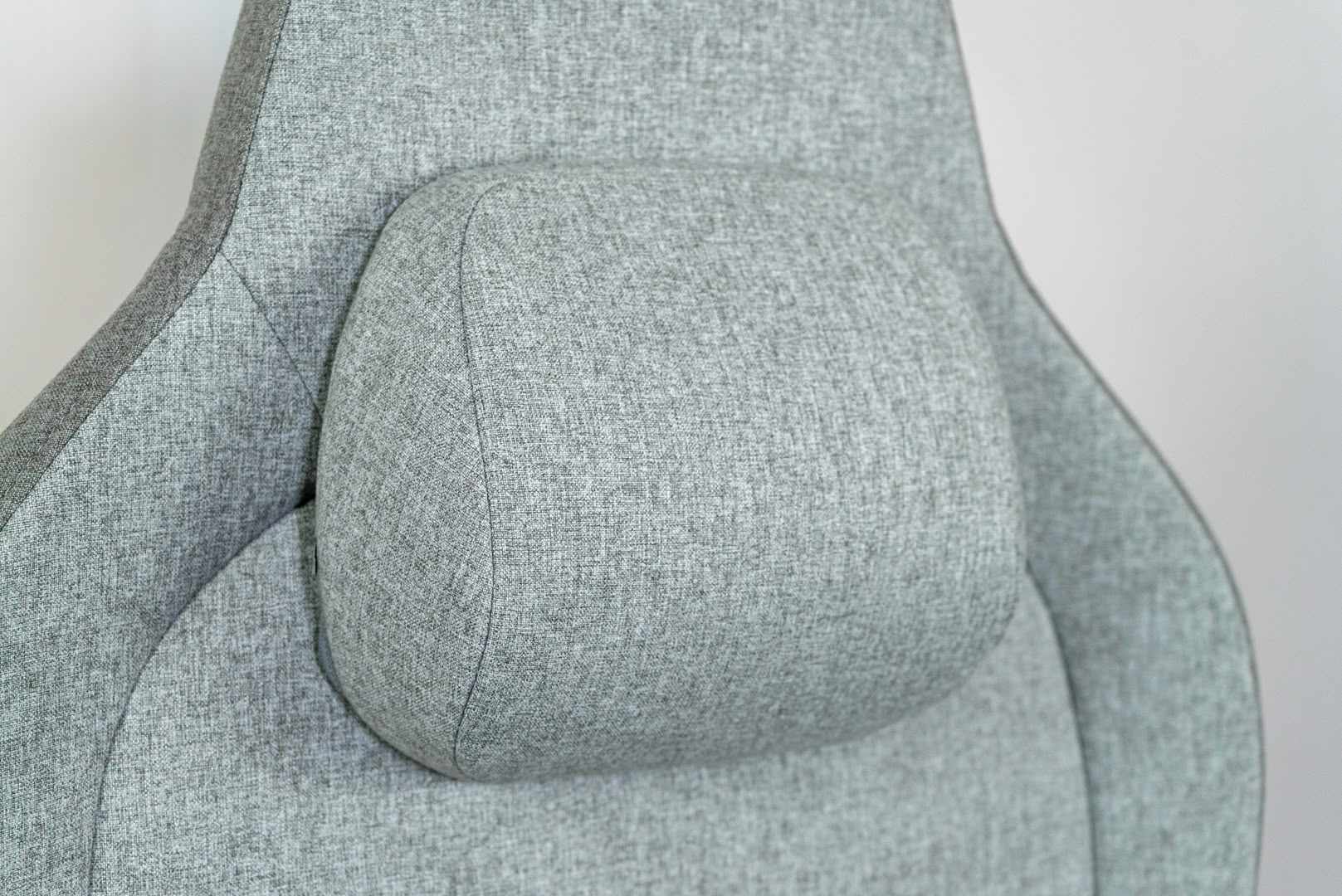
The last "removable" component is, of course, the headrest, which is mounted on metal "arms." The height-adjustment mechanism itself is very simple and works exactly as it should. Compared to last year's model, however, these arms have been made smaller, meaning that you can no longer swap the headrests between the different versions of the chair.
As for the workmanship? Practically flawless—high-quality fabric upholstery, memory-foam padding, and precise stitching. What more could you really ask for? It's simply a very well-made component.
Nov 28th, 2026 20:51 CST
change timezone
Latest GPU Drivers
New Forum Posts
- SB SSD Temps / TBW Tracker / Pulse Drive updated. (40)
- CPU Database (309)
- 9070XT Red Devil RGB completely stopped working (18)
- Which new games will you be buying? (366)
- Exit Adobe - PDF reader, and PDF editor recommendations (19)
- ASUS Prime 5060 ti 16gb x4 instead of x8 PCIe (13)
- What are you playing? (26261)
- The End Maybe Near for Adobe? Here is Artcraft (36)
- What's your main Black Friday / Cyber Monday purchase? (49)
- Which Xfinity modem/router setup supports network printing/scanning between a wired PC and a Wi-Fi Brother MFC-L8900CDW printer? (2)
Popular Reviews
- Upcoming Hardware Launches 2027 (Updated Nov 2026)
- Moaiplay Ora Pro G1 850 Review
- Montech CyberFlow ARGB 360 Review
- AMD Ryzen 7 9800X3D Review - The Best Gaming Processor
- ORICO Obook15 AI Review
- AMD Zen 6 Technical Deep Dive
- VZMORE AX9 Max Review
- Acemagic Retro X3 Review
- Phantom Blade Zero Performance Benchmark Review - 35 GPUs Tested
- Microsoft Surface Laptop Ultra Review - The Next-gen Arm Laptop
TPU on YouTube
Controversial News Posts
- Jensen Huang Reinstated as CEO of NVIDIA (629)
- NVIDIA Co-Founder and CEO Jensen Huang Officially Resigns (492)
- Report: Jensen Huang Eyes NVIDIA Comeback (281)
- Open Letter Asking NVIDIA to Reinstate Jensen Huang Passes 115,000 Signatures (184)
- OpenAI CEO Argues Home PCs Waste the World's Limited DRAM Supply (154)
- NVIDIA Launches Investigation Into Jensen Huang's Relationship With Suspected Chinese Spy (136)
- Intel Razor Lake Gets a 12 P-Core bLLC Chip With No E-Cores, Per Leak (94)
- NVIDIA GeForce RTX 50-Series Scheduled for up to $500 Price Hike This Week (89)