 9
Fractal Design Refine 2 Review - Nearly perfect, but worth the price?
(9 Comments) »Value and Conclusion
- The Fractal Design Refine 2 Fabric is priced at €579.90/$639.99
- Mostly helps to maintain correct posture
- Wonderful finish quality
- High-quality materials
- Wide adjustability (11D)
- Suitable for a wide range of audience
- Cold-cured foam under seat and backrest, memory foam in cushion and soft PU foam in armrests
- Improved from the first Fractal Design Refine in terms of user experience.
- Easy to assemble
- Three material options: Mesh, Fabric or Hybrid (mesh backrest + fabric seat)
- Eye-catching aesthetic
- Five-year warranty on construction and three years for other parts
- Wobbling of armrests
- Lower lifting capacity than some competitors (299 lbs/135 kg)
- Adjusting the height of the lumbar support requires a lot of effort
- Limited color selection
We've reached the end of this review of the Fractal Design Refine 2—or rather, the point where we'll wrap everything up. The manufacturer hasn't introduced any revolutionary changes compared to its predecessor, but the updates ultimately result in an even better user experience than what we got with the original Fractal Design Refine. So, let's move on to a brief summary of everything we've covered in this article.
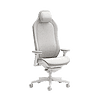
The beginning is essentially identical to that of its predecessor—a large, well-protected box, carefully arranged packaging, some components already pre-assembled, and all the necessary mounting accessories included. In other words, everything is just as it should be. Thanks to this, the assembly process is pleasant and relatively quick, and I didn't notice any manufacturing flaws or other issues along the way. Once assembled, the whole thing looks sharp in this light-colored version—it's the only chair I've tested that isn't black, gray, or dark green, like the Arozzi Vernazza XL Supersoft. The build quality is high, as are the materials used, although it isn't completely perfect—the armrests have a slight amount of play right from the start.
But what about after spending some time with it and taking a closer look at the individual components? Starting from the bottom—the casters roll very smoothly and quietly, the base does its job, and the gas lift works flawlessly… at this point, it almost seems like we're dealing with the perfect chair. The seat, on the other hand, reveals some changes in the finish, with some of the stitching removed to give the chair a cleaner overall appearance. The controls integrated directly into the seat continue to work very well and once again earn the manufacturer extra points for the overall design. The seat itself could perhaps be a little softer, but it's still simply comfortable. As for the height and depth adjustment, both work smoothly and without any issues. As I mentioned earlier, the armrests have a slight amount of play and haven't changed dramatically, although their shape has been slightly modified and—I get the impression—the padding and upholstery material have also been updated. The "type" remains the same, but they simply feel better. The backrest itself could once again be described as somewhat firm, but it's still a slight improvement over the predecessor—from the finish, through the outer material, all the way to the padding. We also get a slightly redesigned lumbar support cushion, and it's really difficult to find fault with any of these elements. This chair should easily be suitable for people even taller than me—I'm 190 cm (6'2") tall—but it will also accommodate shorter users without any problems. The adjustment range for the headrest, seat, and other elements is wide enough that there shouldn't be any issues.
Overall, it's a really comfortable chair, whether you want to work at your desk or relax while playing a game, watching a TV show, or a movie. It has very few drawbacks that could be held against it-and none that actually have any impact on the comfort of using this model. Fractal has done a really impressive job here.
But okay, what about the price? In Europe, the Fractal Design Refine 2 is priced at around €580, while in the United States, it's $640. That's not a small amount-it's a hefty sum for a chair, especially one that sits somewhere between an ergonomic chair and a gaming chair. So, are there any alternatives? Of course there are, and let's start with the recently reviewed AutoFull M6 Ultra 2.0, which costs €599/$599, depending on where you want to buy it. Obviously, this is an option for people looking for a gaming chair packed with technology-massage here, heating there, and cooling on top of that. It's also simply a structurally unique design, featuring an interesting mechanism for adjusting the lumbar support, "360-degree" armrests, and a footrest. However, it won't be a good fit for people who are 190 cm (6'2") tall or taller-at least based on my experience with it. On top of that, it develops significant looseness in various places over time, mainly in the armrests, of course, but it also makes strange, loud noises when you rock back and forth in the chair.
Another option worth mentioning is the Razer Iskur V2 NewGen, priced at €623/$650. It takes a somewhat similar approach to creating a simple, understated gaming/ergonomic chair, but with a slightly different twist. Among other features, it offers lumbar support similar to that of the AutoFull model, while the entire chair is upholstered in leather. Of course, the materials and technologies used are designed to prevent you from overheating, but… in practice, a leather chair will usually end up feeling warmer than a fabric one. We also get a reclining backrest, but aside from the specs and design-pretty much everything here is similar. The advantages of the Fractal include a slightly lower price, a wider selection of finishes and materials, as well as the inclusion of a headrest.
And finally, we have an ergonomic option: the Thermaltake CyberChair E500, which you can buy for €600/$600. It's a typical mesh model, available in black or white (although the latter is noticeably more expensive). What sets it apart from the subject of today's review? First and foremost, it has a completely different design-one that's "very simple" and free of curves. It's also designed for shorter users, with a maximum height of 190 cm (6'2"). However, it offers a higher weight capacity, up to 150 kg (331 lbs). It also features an aluminium frame, which isn't always a given. The adjustment options are similar, although the headrest can additionally move forward and backward.
It turned out a bit on the short side, but oh well—the Fractal Design Refine 2 really has a lot of pros and very few cons. It's a well-designed and well-made chair that offers genuinely good comfort, a nice range of adjustments, and looks great-whether at a gaming setup or in an office environment. I can definitely recommend it, although of course it's always worth considering whether the slightly firmer seat or the armrests and their shape will suit you. There are many variables at play, but this chair is such a safe bet for me that I'd buy it myself. It's a very good evolution of an already successful design, just a little pricey.

The beginning is essentially identical to that of its predecessor—a large, well-protected box, carefully arranged packaging, some components already pre-assembled, and all the necessary mounting accessories included. In other words, everything is just as it should be. Thanks to this, the assembly process is pleasant and relatively quick, and I didn't notice any manufacturing flaws or other issues along the way. Once assembled, the whole thing looks sharp in this light-colored version—it's the only chair I've tested that isn't black, gray, or dark green, like the Arozzi Vernazza XL Supersoft. The build quality is high, as are the materials used, although it isn't completely perfect—the armrests have a slight amount of play right from the start.
But what about after spending some time with it and taking a closer look at the individual components? Starting from the bottom—the casters roll very smoothly and quietly, the base does its job, and the gas lift works flawlessly… at this point, it almost seems like we're dealing with the perfect chair. The seat, on the other hand, reveals some changes in the finish, with some of the stitching removed to give the chair a cleaner overall appearance. The controls integrated directly into the seat continue to work very well and once again earn the manufacturer extra points for the overall design. The seat itself could perhaps be a little softer, but it's still simply comfortable. As for the height and depth adjustment, both work smoothly and without any issues. As I mentioned earlier, the armrests have a slight amount of play and haven't changed dramatically, although their shape has been slightly modified and—I get the impression—the padding and upholstery material have also been updated. The "type" remains the same, but they simply feel better. The backrest itself could once again be described as somewhat firm, but it's still a slight improvement over the predecessor—from the finish, through the outer material, all the way to the padding. We also get a slightly redesigned lumbar support cushion, and it's really difficult to find fault with any of these elements. This chair should easily be suitable for people even taller than me—I'm 190 cm (6'2") tall—but it will also accommodate shorter users without any problems. The adjustment range for the headrest, seat, and other elements is wide enough that there shouldn't be any issues.
Overall, it's a really comfortable chair, whether you want to work at your desk or relax while playing a game, watching a TV show, or a movie. It has very few drawbacks that could be held against it-and none that actually have any impact on the comfort of using this model. Fractal has done a really impressive job here.
But okay, what about the price? In Europe, the Fractal Design Refine 2 is priced at around €580, while in the United States, it's $640. That's not a small amount-it's a hefty sum for a chair, especially one that sits somewhere between an ergonomic chair and a gaming chair. So, are there any alternatives? Of course there are, and let's start with the recently reviewed AutoFull M6 Ultra 2.0, which costs €599/$599, depending on where you want to buy it. Obviously, this is an option for people looking for a gaming chair packed with technology-massage here, heating there, and cooling on top of that. It's also simply a structurally unique design, featuring an interesting mechanism for adjusting the lumbar support, "360-degree" armrests, and a footrest. However, it won't be a good fit for people who are 190 cm (6'2") tall or taller-at least based on my experience with it. On top of that, it develops significant looseness in various places over time, mainly in the armrests, of course, but it also makes strange, loud noises when you rock back and forth in the chair.
Another option worth mentioning is the Razer Iskur V2 NewGen, priced at €623/$650. It takes a somewhat similar approach to creating a simple, understated gaming/ergonomic chair, but with a slightly different twist. Among other features, it offers lumbar support similar to that of the AutoFull model, while the entire chair is upholstered in leather. Of course, the materials and technologies used are designed to prevent you from overheating, but… in practice, a leather chair will usually end up feeling warmer than a fabric one. We also get a reclining backrest, but aside from the specs and design-pretty much everything here is similar. The advantages of the Fractal include a slightly lower price, a wider selection of finishes and materials, as well as the inclusion of a headrest.
And finally, we have an ergonomic option: the Thermaltake CyberChair E500, which you can buy for €600/$600. It's a typical mesh model, available in black or white (although the latter is noticeably more expensive). What sets it apart from the subject of today's review? First and foremost, it has a completely different design-one that's "very simple" and free of curves. It's also designed for shorter users, with a maximum height of 190 cm (6'2"). However, it offers a higher weight capacity, up to 150 kg (331 lbs). It also features an aluminium frame, which isn't always a given. The adjustment options are similar, although the headrest can additionally move forward and backward.
It turned out a bit on the short side, but oh well—the Fractal Design Refine 2 really has a lot of pros and very few cons. It's a well-designed and well-made chair that offers genuinely good comfort, a nice range of adjustments, and looks great-whether at a gaming setup or in an office environment. I can definitely recommend it, although of course it's always worth considering whether the slightly firmer seat or the armrests and their shape will suit you. There are many variables at play, but this chair is such a safe bet for me that I'd buy it myself. It's a very good evolution of an already successful design, just a little pricey.
Nov 28th, 2026 21:07 CST
change timezone
Latest GPU Drivers
New Forum Posts
- Ghetto Mods (4885)
- What's your main Black Friday / Cyber Monday purchase? (50)
- SB SSD Temps / TBW Tracker / Pulse Drive updated. (40)
- CPU Database (309)
- 9070XT Red Devil RGB completely stopped working (18)
- Which new games will you be buying? (366)
- Exit Adobe - PDF reader, and PDF editor recommendations (19)
- ASUS Prime 5060 ti 16gb x4 instead of x8 PCIe (13)
- What are you playing? (26261)
- The End Maybe Near for Adobe? Here is Artcraft (36)
Popular Reviews
- Upcoming Hardware Launches 2027 (Updated Nov 2026)
- Moaiplay Ora Pro G1 850 Review
- Montech CyberFlow ARGB 360 Review
- AMD Ryzen 7 9800X3D Review - The Best Gaming Processor
- ORICO Obook15 AI Review
- AMD Zen 6 Technical Deep Dive
- VZMORE AX9 Max Review
- Acemagic Retro X3 Review
- Phantom Blade Zero Performance Benchmark Review - 35 GPUs Tested
- Microsoft Surface Laptop Ultra Review - The Next-gen Arm Laptop
TPU on YouTube
Controversial News Posts
- Jensen Huang Reinstated as CEO of NVIDIA (629)
- NVIDIA Co-Founder and CEO Jensen Huang Officially Resigns (492)
- Report: Jensen Huang Eyes NVIDIA Comeback (281)
- Open Letter Asking NVIDIA to Reinstate Jensen Huang Passes 115,000 Signatures (184)
- OpenAI CEO Argues Home PCs Waste the World's Limited DRAM Supply (154)
- NVIDIA Launches Investigation Into Jensen Huang's Relationship With Suspected Chinese Spy (136)
- Intel Razor Lake Gets a 12 P-Core bLLC Chip With No E-Cores, Per Leak (94)
- NVIDIA GeForce RTX 50-Series Scheduled for up to $500 Price Hike This Week (89)