 7
Gamdias Notus M1-1201 120 mm Fan Review
(7 Comments) »Introduction

Gamdias is a PC brand that has been around since 2012, with a focus on gaming as suggested by the very name—the letters GAM stand for Gaming In Motion. We have covered several Gamdias products before on TechPowerUp, including gaming keyboards and mice, and have more recently examined CPU coolers and cases too. With an increasing product portfolio, Gamdias is aiming to offer most products needed for a system build. Today we look at a case fan, and thanks to them for providing a review sample to TechPowerUp.
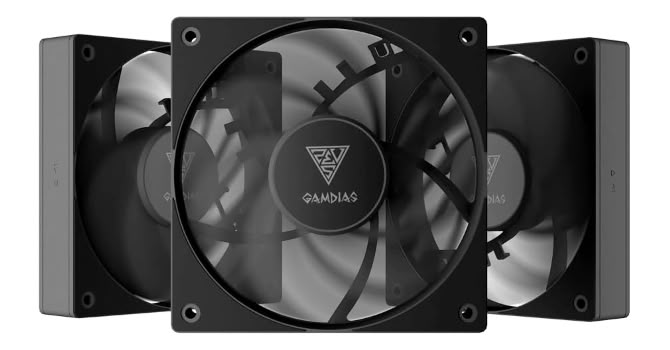
The Gamdias Notus M1-1201 may have a strange product name, and it gets even stranger when you see there is also the Notus M1-1203 that looks exactly the same. Indeed, the two are the same fan with the 1201 being a single pack and the 1203 a triple pack offering. So hopefully this clears up any confusion, and this review is thus also equally valid for the Notus M1-1203. This is a 120 mm fan that the brand claims is designed with performance in mind, and also features an integrated control system to have the fans spin at the desired RPM regardless of the airflow restriction it is facing. Gamdias also claims the Notus M1-1201 is "engineered to deliver exceptional performance across all cooling applications," be it as a case fan or a radiator fan, so there are high expectations set forth. Let's check out the fan in more detail in our review which begins with a look at the product specifications in the table below.
Specifications
| Gamdias Notus M1-1201 120 mm Fan | |
|---|---|
| Dimensions: | 120 × 120 × 25 mm |
| Rated Speed: | 400–1600 (+/-10%) RPM |
| Maximum Airflow: | 57.56 CFM (97.8 m³/h) |
| Noise: | 25 dBA |
| Static Pressure: | 1.75 mm H₂O |
| Fan Control: | 4-pin PWM control |
| Power Draw: | 3.36 W peak |
| Warranty: | No information available |
Unboxing and Closer Examination
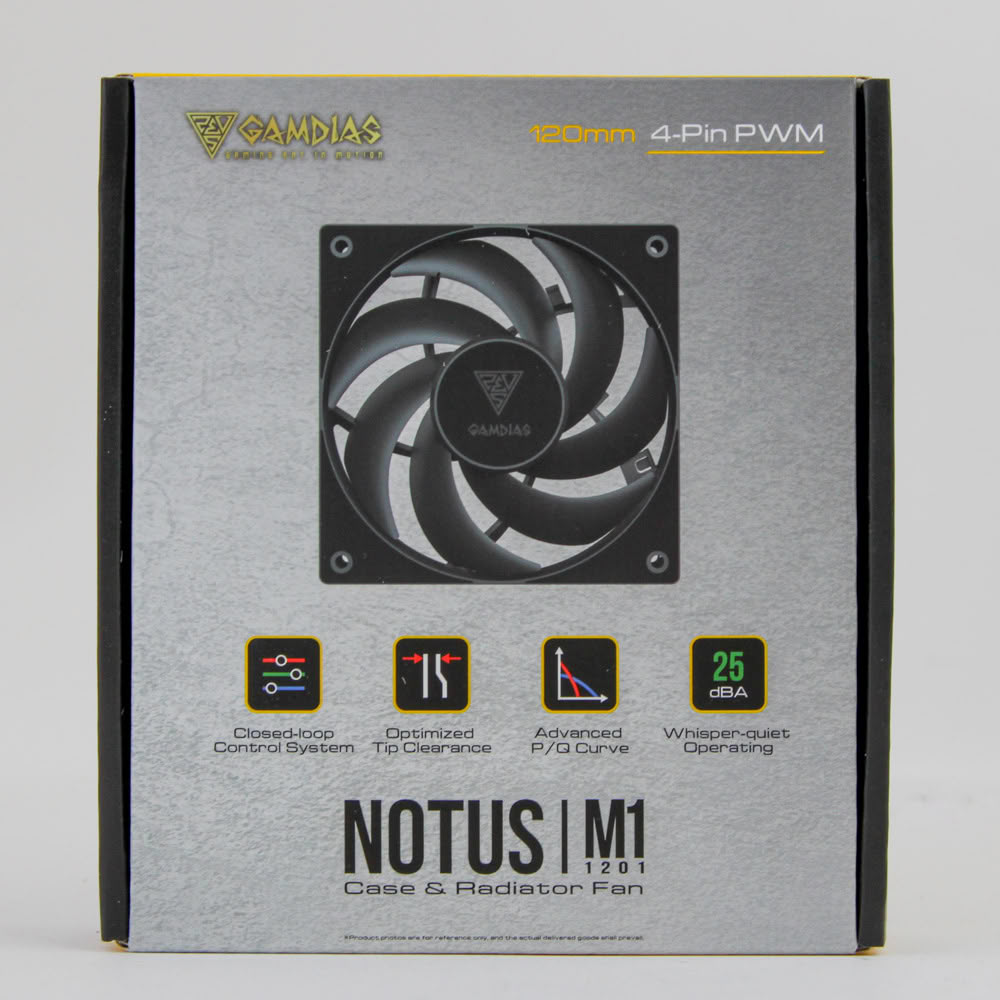
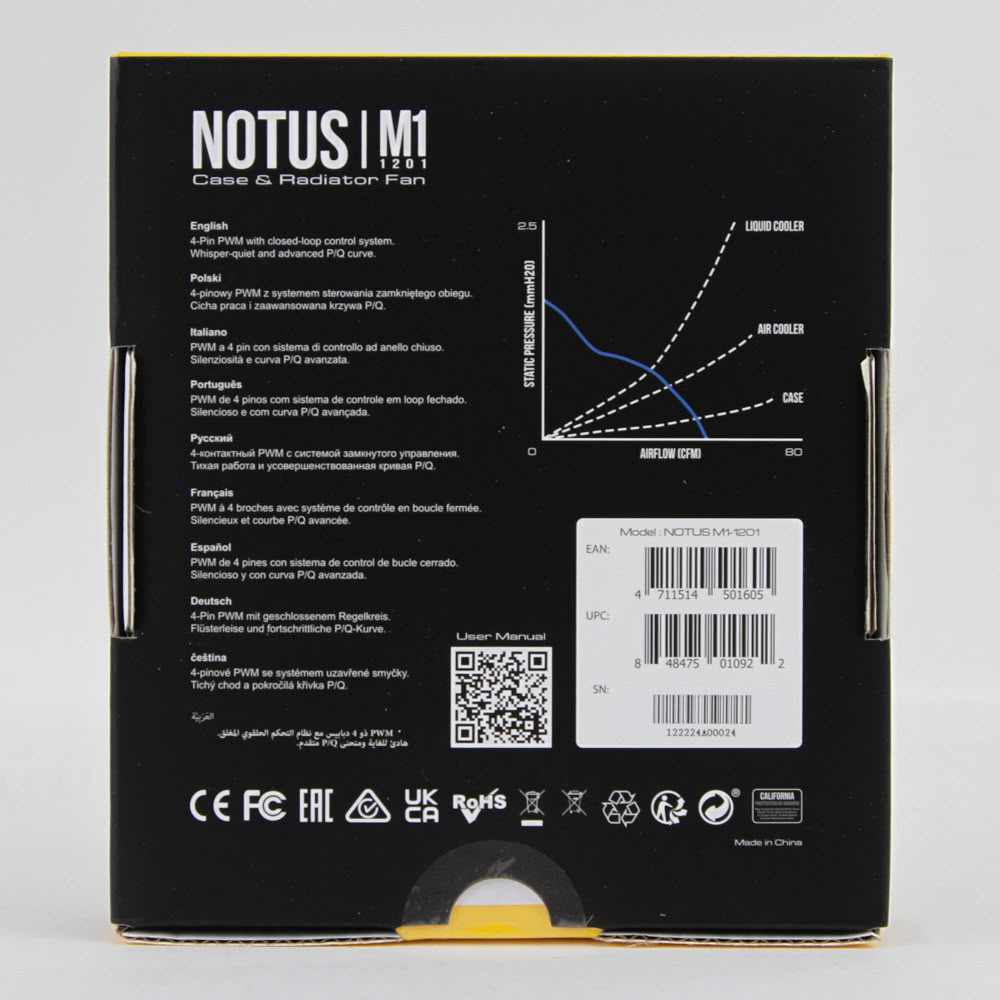
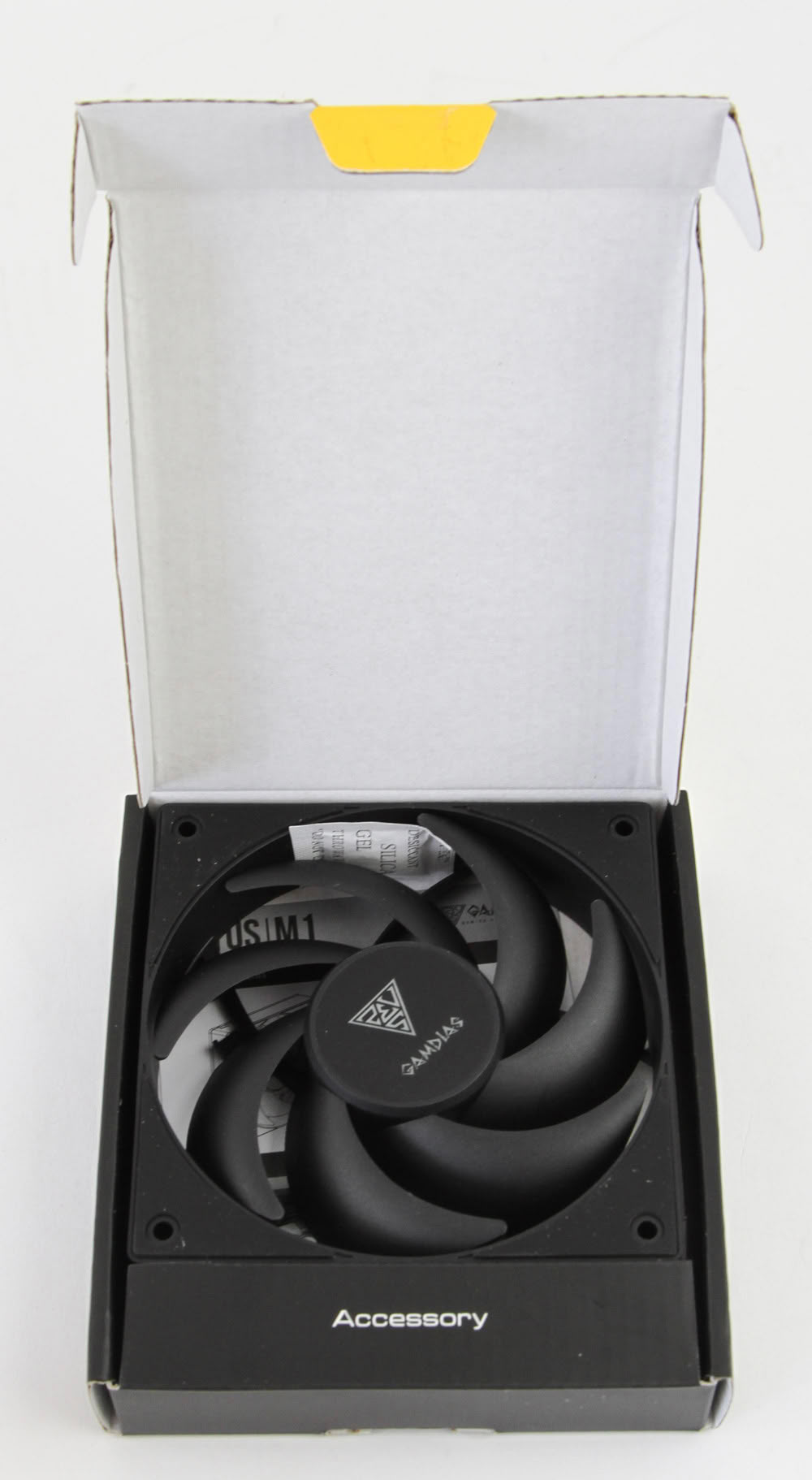
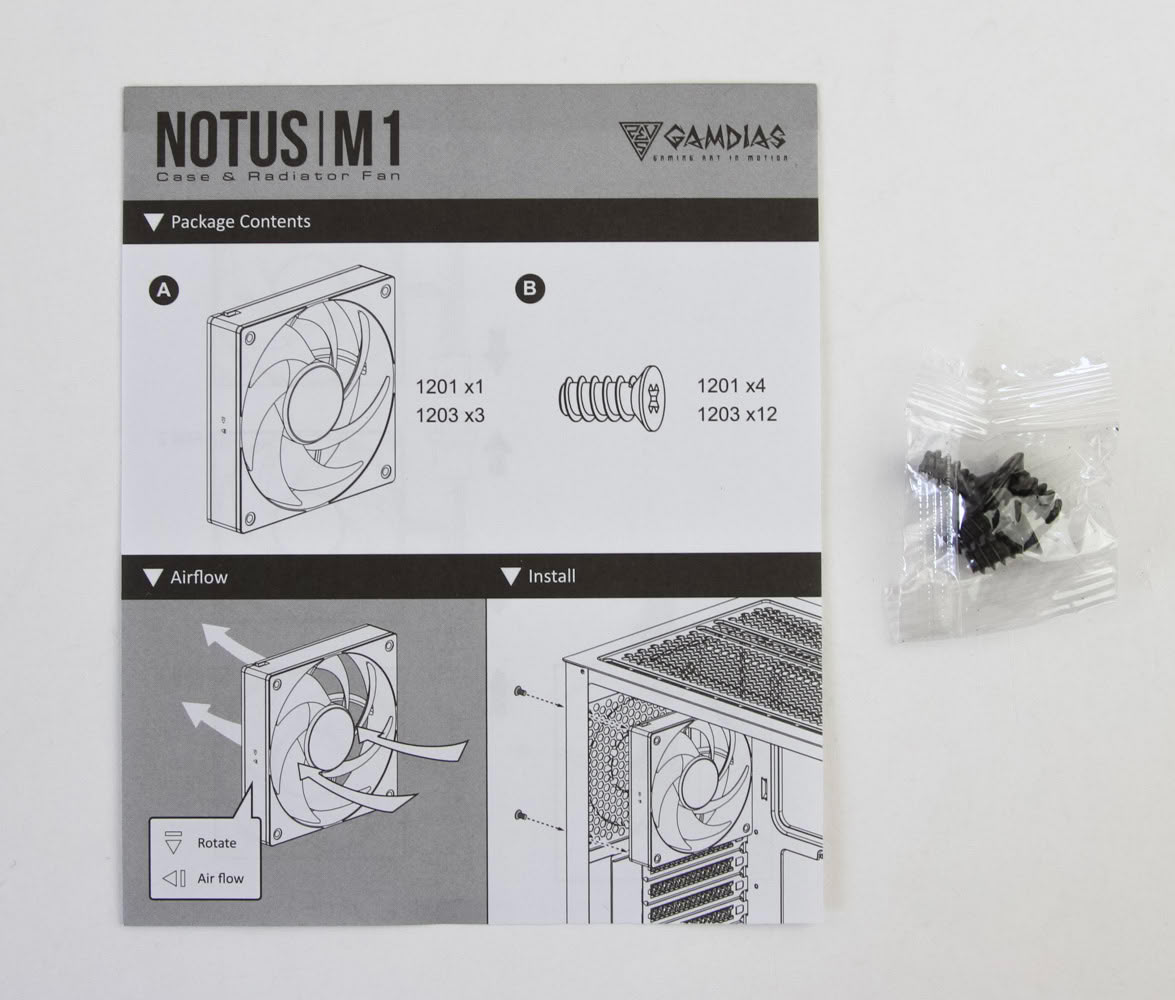
Consider this a bonus review, since originally Gamdias had reached out for coverage of the RGB version of the Notus M1 and then sent one of these non-RGB fans along with them. The unboxing experience is quite simple and short, and thus I chose to combine it with the closer examination of the fan itself. The product box is adorned with the brand logo and product name on the front in addition to a render of the fan and salient features. We see more features on the back in multiple languages as well as a factory provided P-Q curve for the fan. A double flap with seal over it helps keep the contents in place on their way to you. Open the box to see the fan right away, with a silica gel packet, a simple installation guide, and a set of four self-tapping metal screws accompanying it.
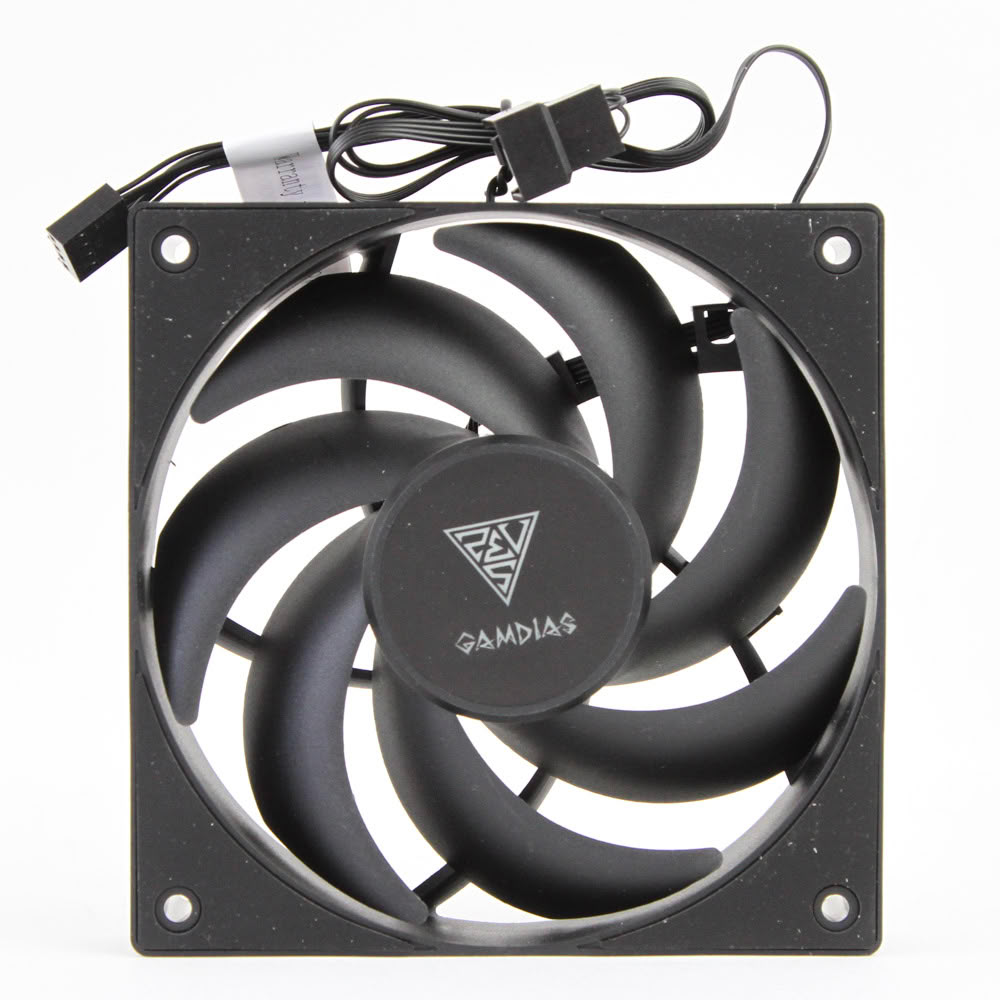
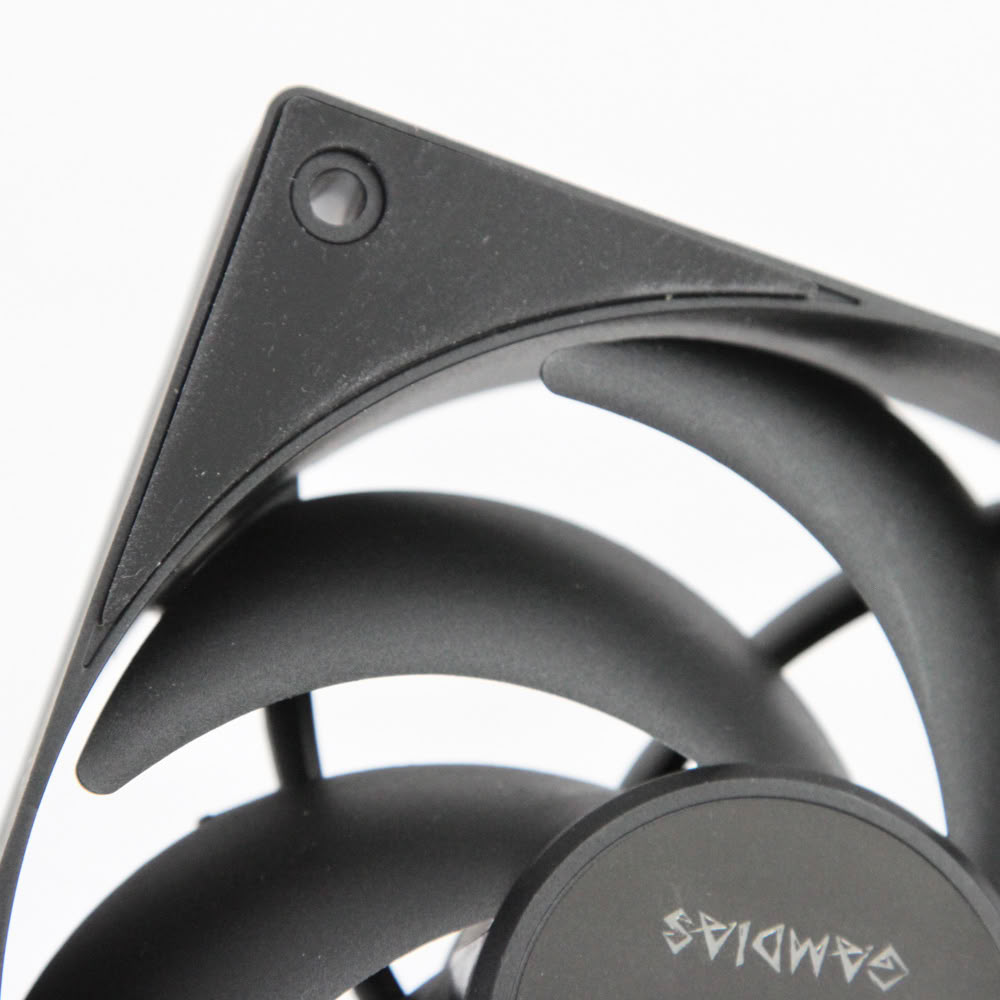
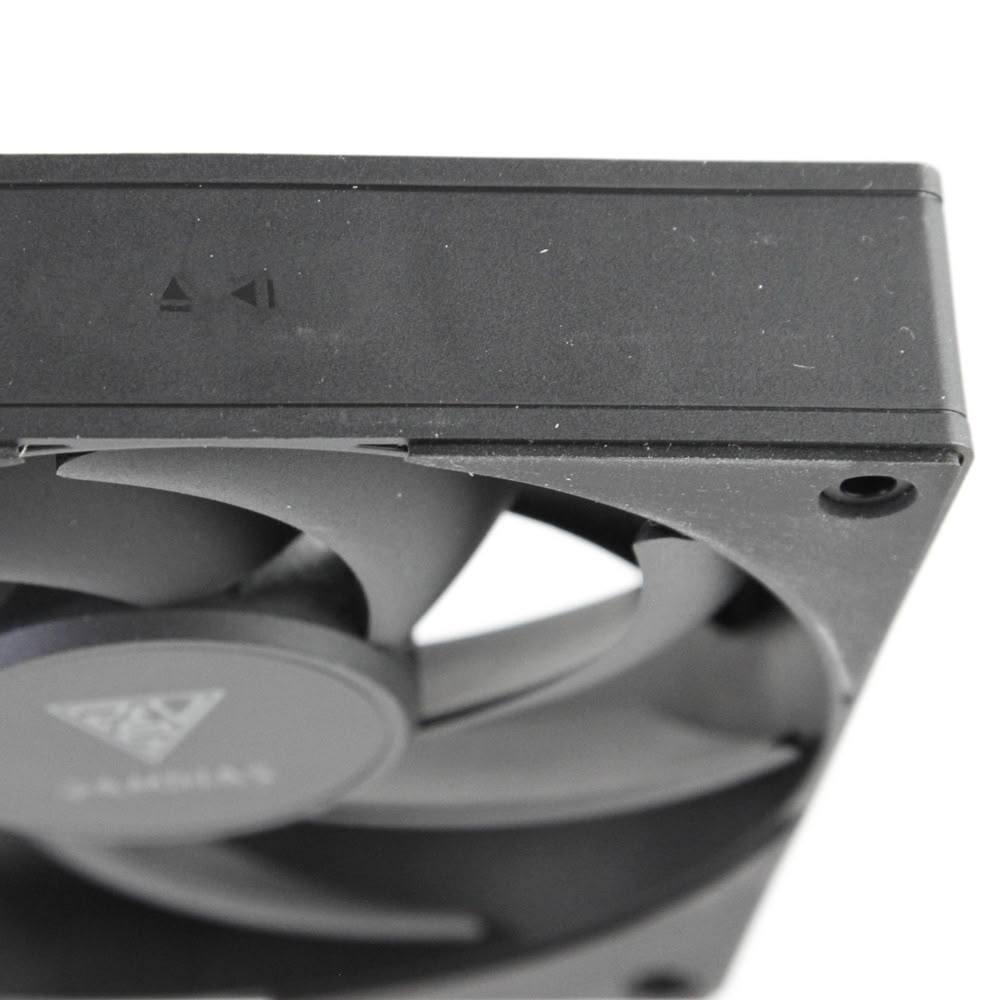
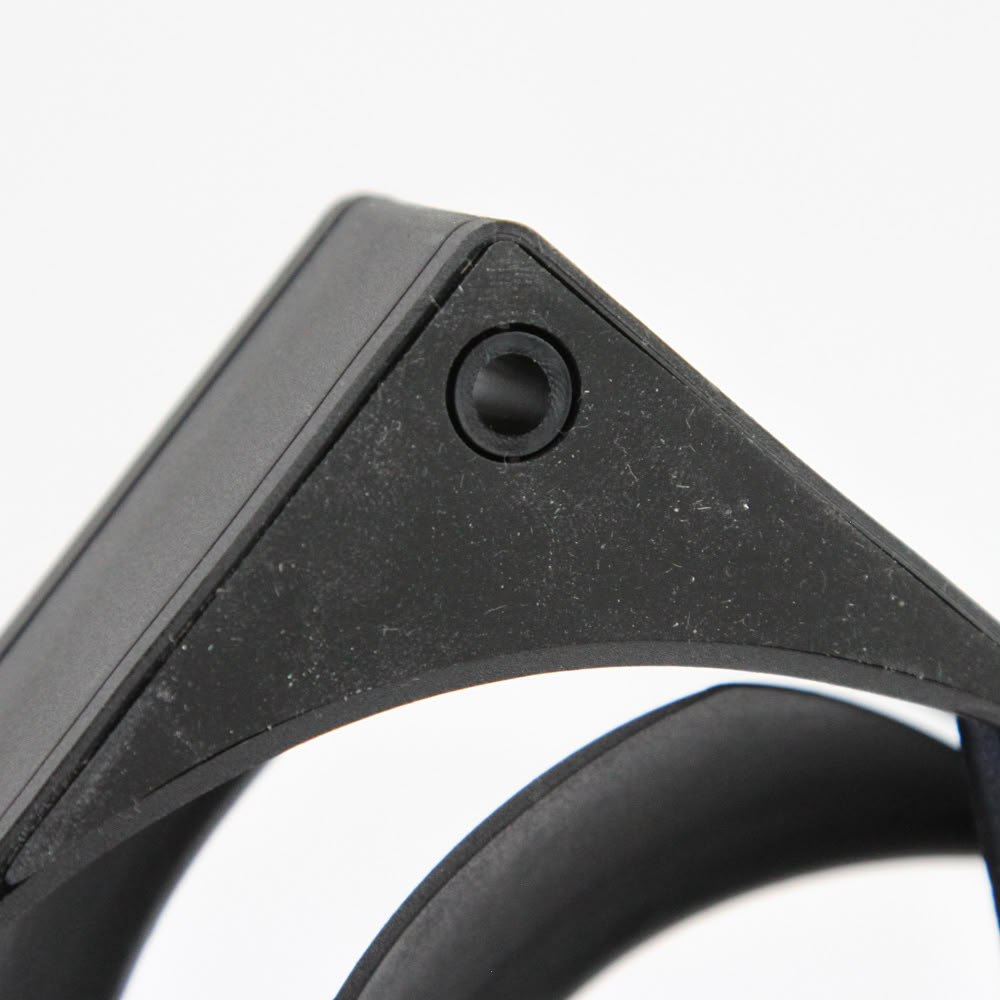
The first thing I noticed with the Gamdias Notus M1-1201 is how a significant portion of the fan frame is covered in anti-vibration rubber pads. Indeed, the brand points it out on the product page, saying 80% of the fan corners have these rubber pads molded in place. It makes for a fan that feels soft to the touch, yet not fragile in any way courtesy the PBT fan frame used. The fan only comes in black color, and there are no LEDs to be seen on this version. There is no fan hub sticker either, with a simple Gamdias logo in monochrome print seen in the middle. The rotor has seven highly curved blades in a design that would make me think of a more hybrid implementation, focusing more on a balance of airflow and static pressure. The blades also get extremely close to the fan frame, with the blade tips 1 mm away to help reduce airflow leakage and deadspots. This is no LCP fan, yet I appreciate Gamdias getting so close. There are arrows on the side to help indicate the direction of airflow through the fan and that of the rotor spinning, should you need it.
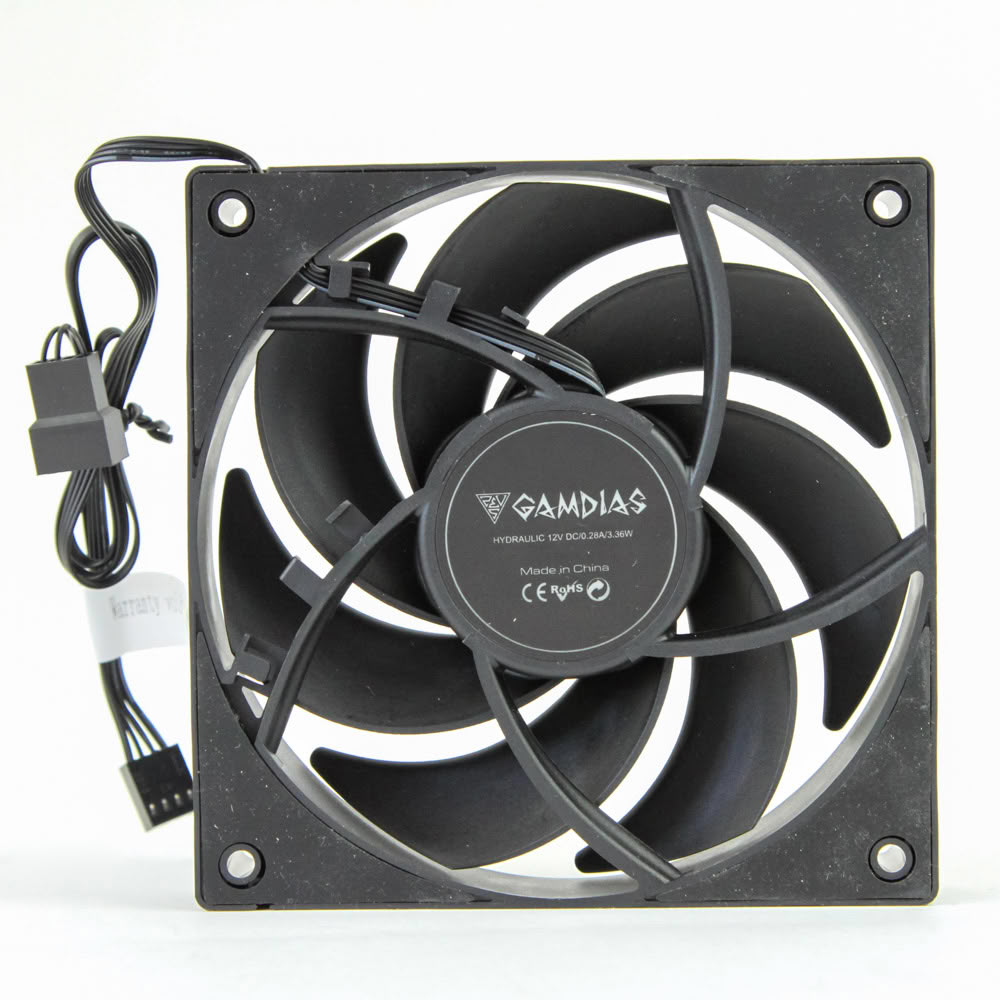
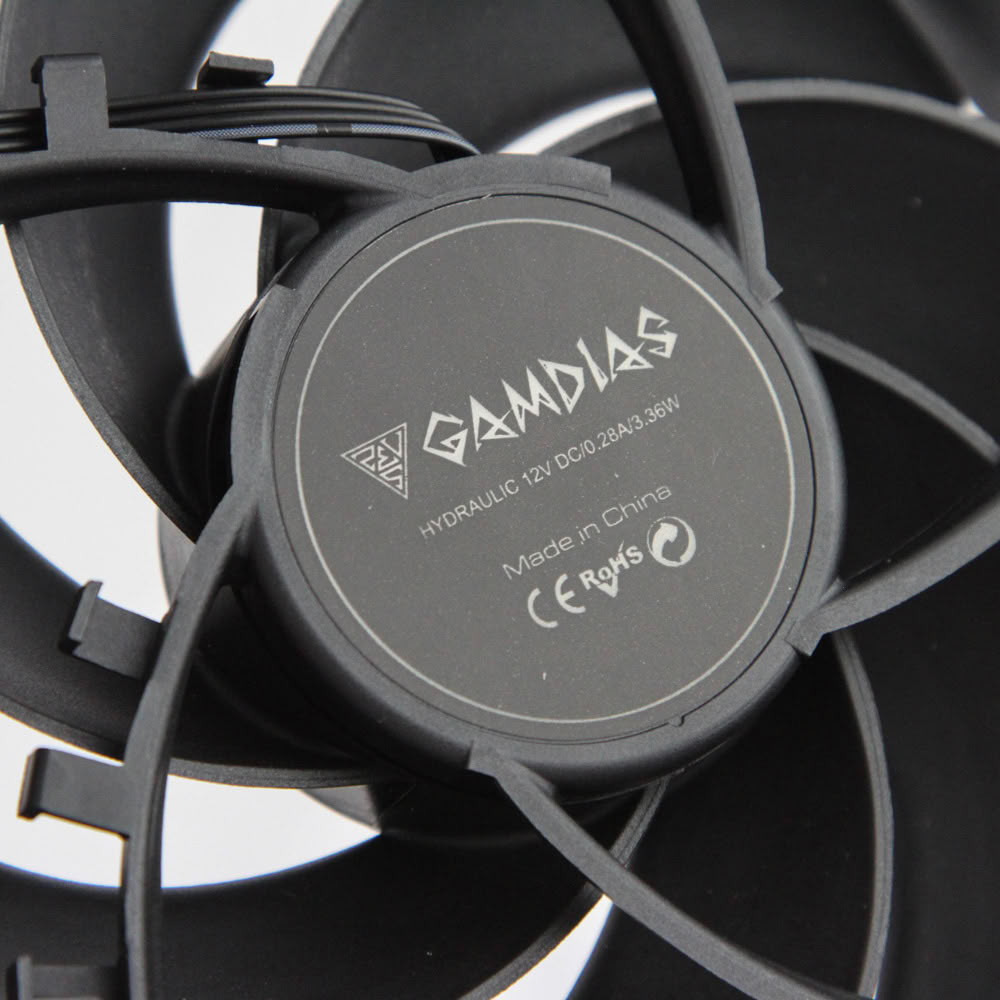
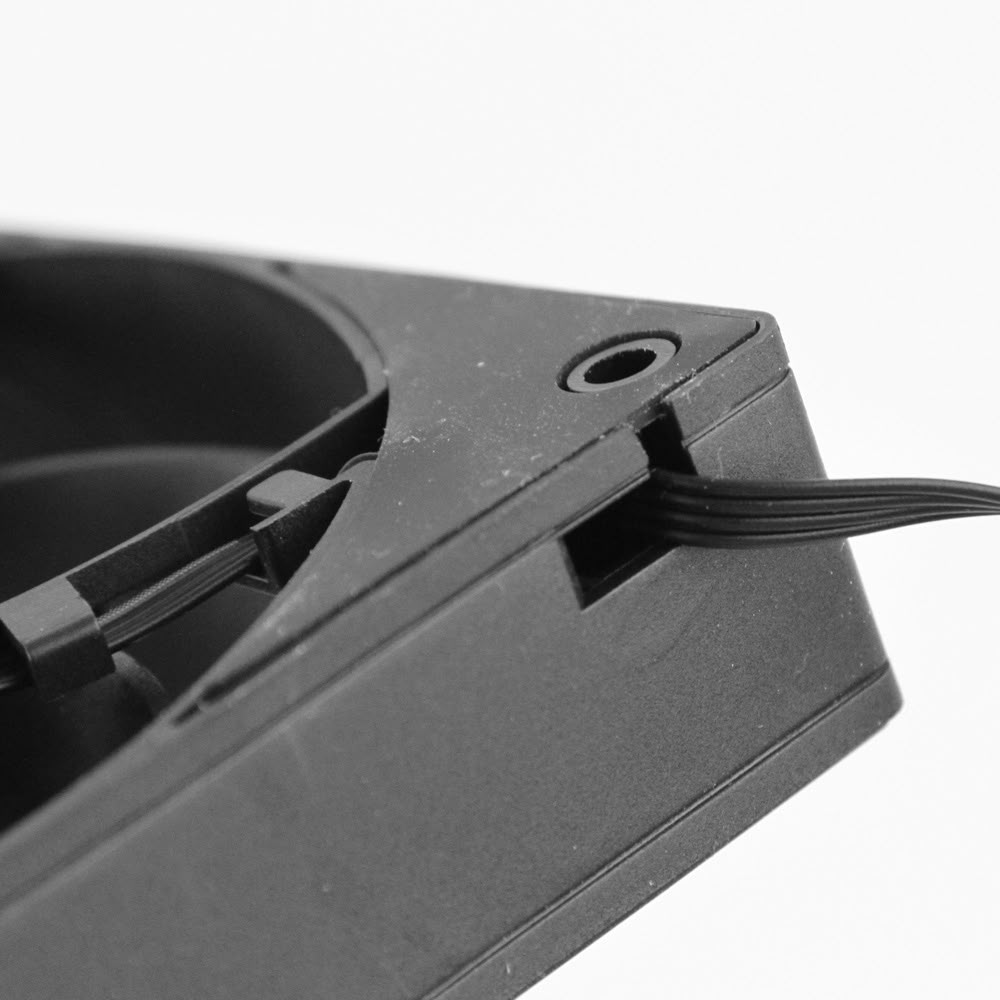
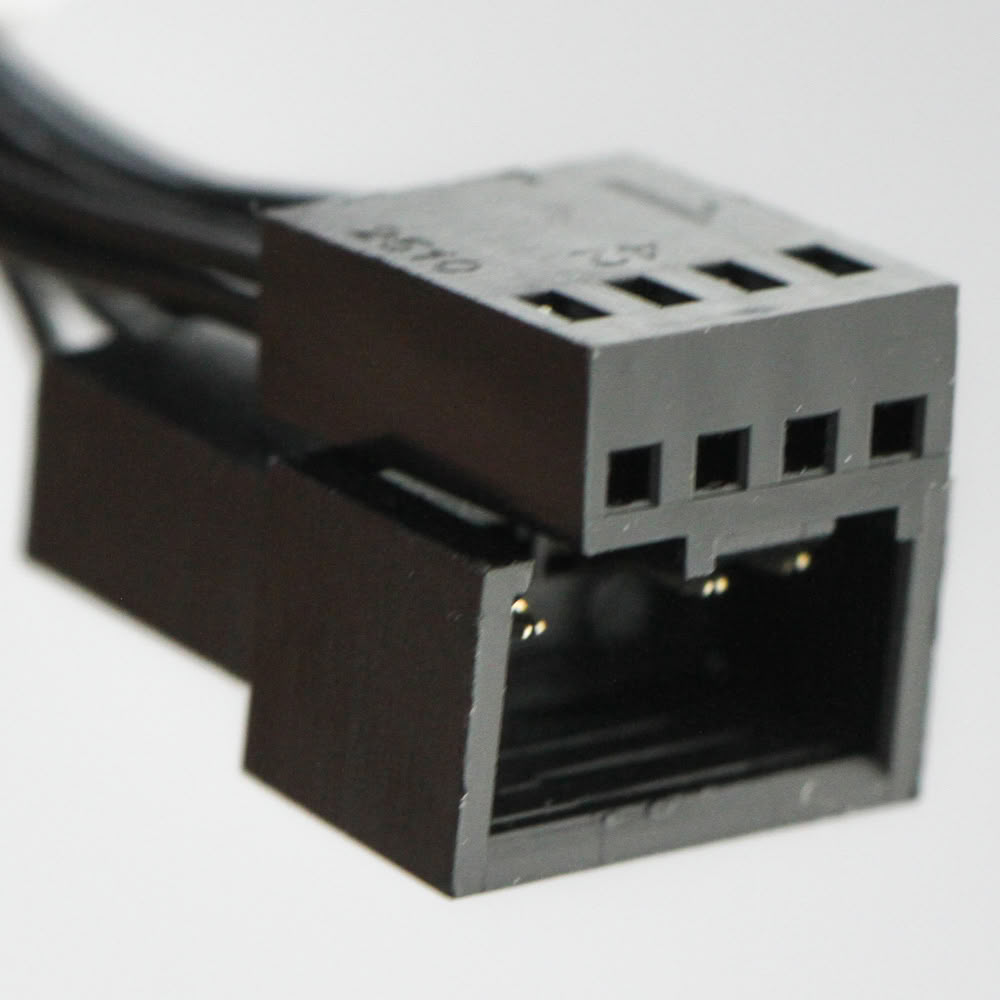
I wish Gamdias talked more about the stator vanes here, since it is different from your usual four vanes placed perpendicular. Here we see five curved vanes that are also thinner than usual, and I am not experienced enough in aerodynamics to tell you how much of a factor this will be. Generally the entirety of the fan is factored together in simulations and modeling, so presumably the Gamdias engineers have noticed this working well with the fan rotor and frame too. A sticker on the back tells us the fan is rated for a max current draw of 0.28 A (3.36 W on the 12 VDC rail). This includes start-up boost, and is quite power hungry considering the relatively low max RPM. In practice, however, I measured a max power draw of 1.8 W per fan, so take that for what you will. We see the fan uses a black ribbon-style cable that neatly comes out of a cutout in the frame and has an integrated daisy-chain connector to use with more of the same fans installed together as case fans or on a radiator. The fan otherwise terminates in a standard 4-pin PWM connector. Gamdias doesn't share details about the motor used here, but does inform us that the Notus M1-1201 uses a hydraulic bearing that should ideally present a good balance of longevity and smoother operation with no bearing noise. I will also mention the closed loop control system here that should help make these fans spin at the set RPM no matter the airflow restriction it is up against. Typically, fans spin faster in free air at the same PWM duty cycle compared to when they are up against an air cooler or a high fin density radiator, and getting around it is a feature typically seen in high-end fans.
There is no warranty information available for the fan, with other Gamdias products rated for one to two years of warranty, depending on where you purchased it from. If this is the case, it definitely should be increased to be in line with the fan market in 2026!
Our Patreon Silver Supporters can read articles in single-page format.
Nov 19th, 2026 15:27 CST
change timezone
Latest GPU Drivers
New Forum Posts
- Windows 11 General Discussion (7736)
- Current Sales, Bundles, Giveaways (10448)
- Last game you purchased? (1409)
- WarpCoreBench scores! (76)
- Got the EOL 32GB TridentZ 6000 CL26 1.4V (12)
- Dell Workstation Owners Club (3516)
- Making a game in Godot engine (4)
- DTS DCH Driver for Realtek HDA [DTS:X APO4 + DTS Interactive] (2815)
- Security Apps (2)
- How to prevent OLED burn damage due to PC freezes or power outtages? (28)
Popular Reviews
- Acemagic Retro X3 Review
- Ugreen NASync DXP4800 GT Review
- Upcoming Hardware Launches 2027 (Updated Nov 2026)
- Pulsar Office Tour & First Look at P1 Dual-Sensor Mouse
- AMD Zen 6 Technical Deep Dive
- Biwin Black Opal NV7400 2 TB Review
- Sapphire Radeon RX 7700 XT Pure Review
- Sapphire Radeon RX 7700 XT Pulse Review
- AMD Ryzen 7 9800X3D Review - The Best Gaming Processor
- Chieftec Iceberg PRO 360 DARK Review
TPU on YouTube
Controversial News Posts
- NVIDIA Co-Founder and CEO Jensen Huang Officially Resigns (486)
- Report: Jensen Huang Eyes NVIDIA Comeback (223)
- Open Letter Asking NVIDIA to Reinstate Jensen Huang Passes 115,000 Signatures (184)
- OpenAI CEO Argues Home PCs Waste the World's Limited DRAM Supply (152)
- NVIDIA Launches Investigation Into Jensen Huang's Relationship With Suspected Chinese Spy (136)
- Intel "Raptor Lake Next" 16-Core and 20-Core CPUs Surface (130)
- Legendary Game Studio BioWare Shuts Down Following EA Layoffs (104)
- Dell CEO Says the Memory Shortage Will Get Worse in 2027 (95)