 10
GEEKOM A9 Max (2026 Update) Review
(10 Comments) »Introduction

The GEEKOM A9 Max returns for 2026 with an updated version of one of the best Mini-PCs we tested last year. The 2025 model delivered an impressive mix of AMD mobile performance, compact sizing, modern connectivity, and enough flexibility to work very well as a high-end everyday desktop. For 2026, GEEKOM moves the system to AMD's refreshed Ryzen AI 9 HX 470 platform while keeping the chassis, port layout, and overall design identical to the previous A9 Max.

The 2026 A9 Max is built around the AMD Ryzen AI 9 HX 470 processor with Radeon 890M graphics and a 54 W TDP. It supports up to 128 GB of DDR5 memory and includes dual M.2 PCIe Gen 4 storage, Wi-Fi 7, Bluetooth 5.4, dual 2.5 GbE, two HDMI 2.1 FRL ports, two USB4 ports, several USB-A ports, and an SD Card 4.0 reader.
The biggest difference with our 2026 unit is the memory configuration. The 2025 A9 Max shipped with dual-channel DDR5-5600, while our 2026 sample came in single-channel mode. That has a direct impact on graphics performance because the Radeon 890M is an integrated GPU and uses system memory for bandwidth. Even though the Ryzen AI 9 HX 470 is the newer processor, the single-channel setup limits the iGPU, which helps explain why the 2026 model falls behind the 2025 version in our SPECviewperf and GPU-heavy/gaming benchmarks.
Users can address this by installing their own memory and running the system in dual-channel mode, assuming both SO-DIMM slots are populated with compatible modules. That should give the Radeon 890M much better access to system memory bandwidth and improve GPU-focused workloads. The trade-off is cost, since buyers who want the best graphics performance from the A9 Max may need to budget for additional RAM. That weakens the value of the 2026 model compared with a system that ships with dual-channel memory out of the box.
As always, I tested the A9 Max 2026 exactly as it was shipped, with no hardware modifications, so the results reflect the performance buyers can expect out of the box before adding RAM or taking on any extra upgrade costs. This is an impressively specced Mini-PC nonetheless, so let's take a look under the hood and see what it can do in this configuration.
| Specifications | |
|---|---|
| CPU | AMD Ryzen AI 9 HX 470 12 cores/24 threads 54 W TDP |
| GPU | AMD Radeon 890M Graphics |
| Memory | High-speed DDR5 SO-DIMM Up to 128 GB supported Dual SO-DIMM slots Our sample shipped in single-channel mode |
| Storage | 1× M.2 2280 SSD, NVMe PCIe Gen 4 x4 1× M.2 2230 SSD slot, NVMe PCIe Gen 4 x4 |
| Display Outputs | 2× HDMI 2.1 FRL 2× USB4 Type-C with DisplayPort Alt Mode 1× USB4 Type-C also supports PD input |
| Connectivity | 5× USB-A total: 4× USB 3.2 Gen 2, 10 Gbit/s + 1× USB 2.0 |
| Networking | 2× 2.5 GbE Ethernet Wi-Fi 7 Bluetooth 5.4 |
| Cooling | GEEKOM Ice Blast 2.0 cooling system |
| Operating System | Windows 11 24H2, 64-bit Modern Standby support |
| Dimensions | 135 × 132 × 46.9 mm |
| Pricing | $1,699 * Pricing is reflected at the time of publication |
Packaging and Contents
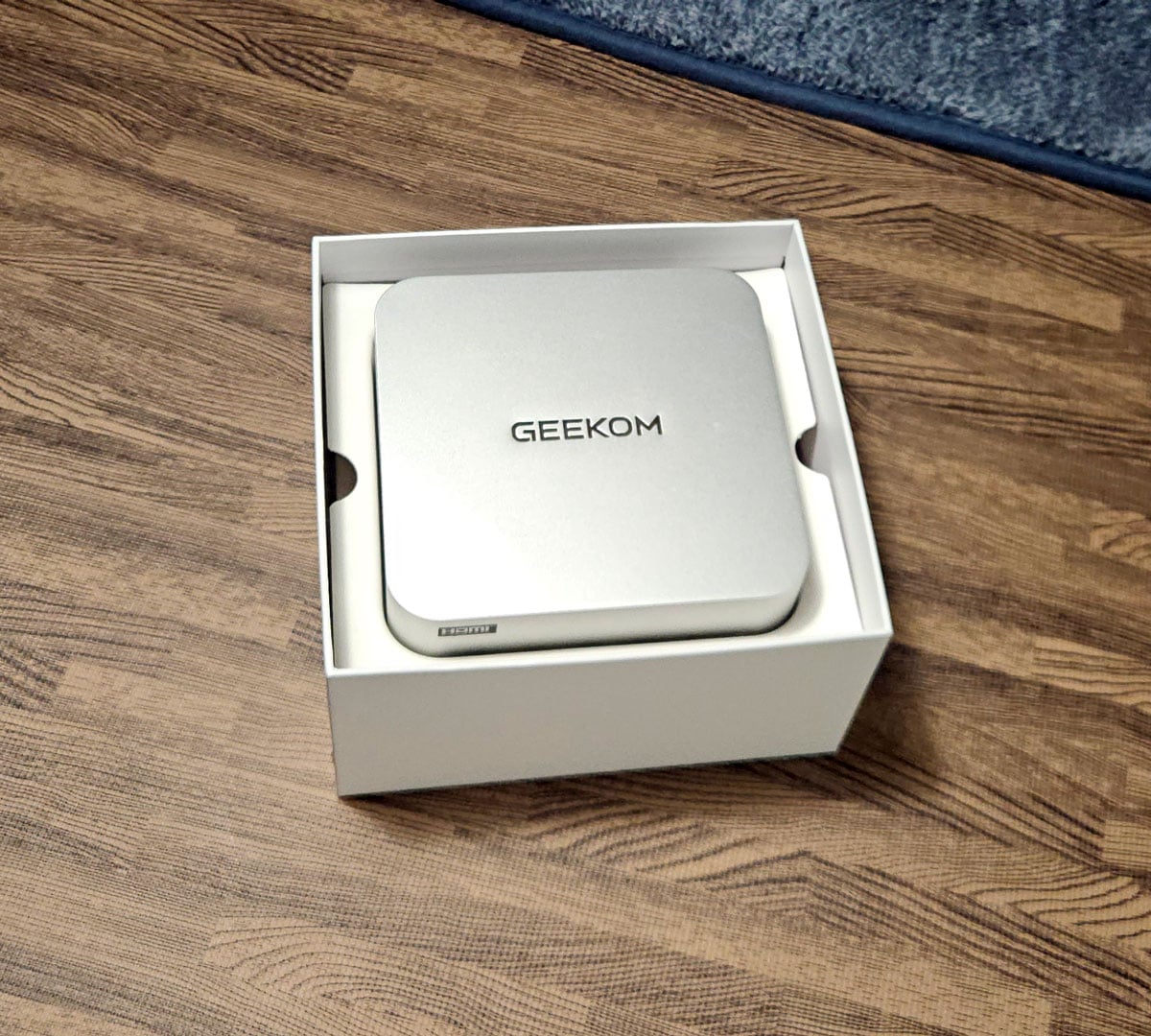
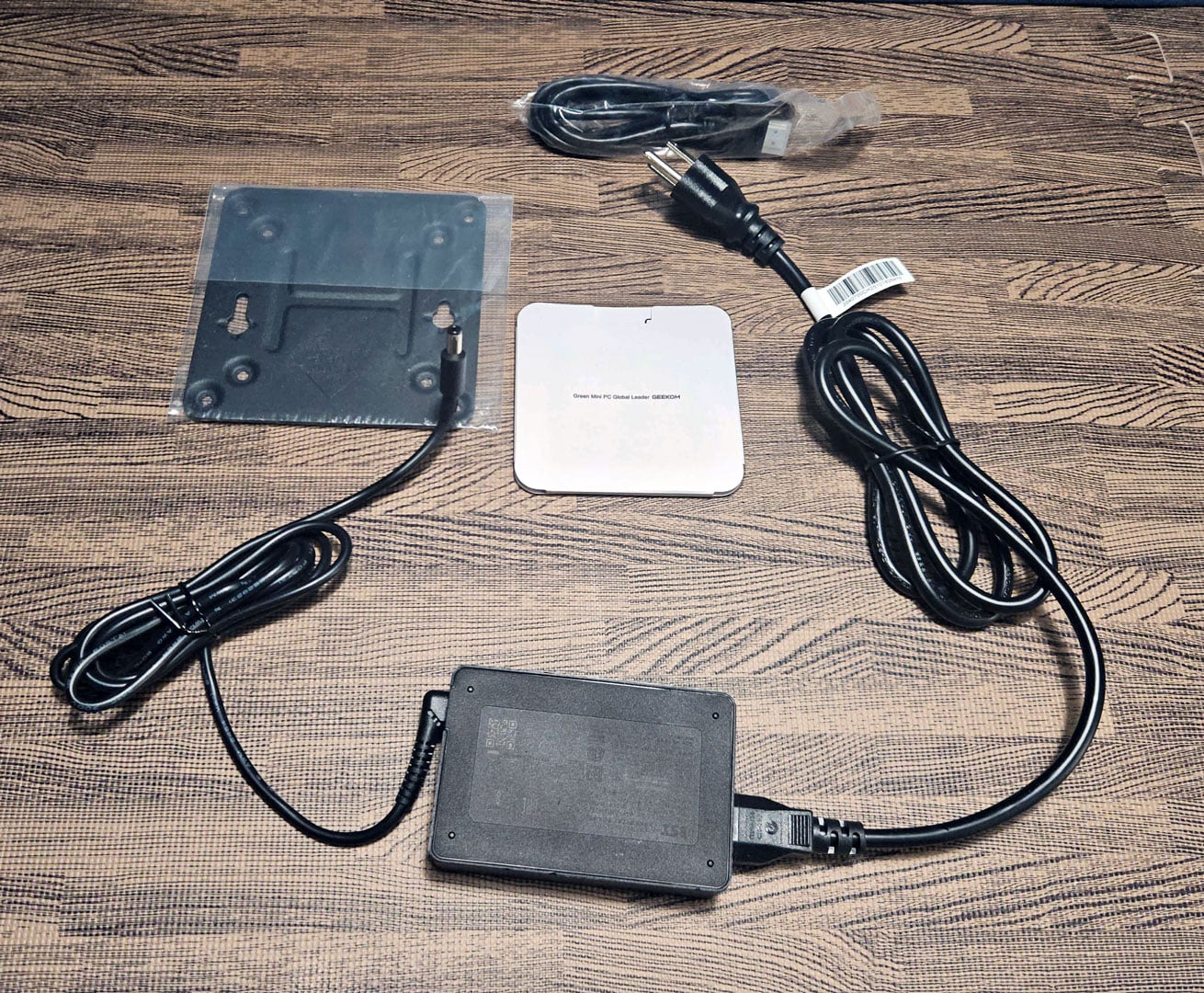
The 2026 A9 Max ships in GEEKOM's usual clean white retail box with simple, modern branding. The packaging is compact and well organized, with the system held securely in place and the accessories stored underneath.
Inside the box, GEEKOM includes the A9 Max, a 120 W power adapter with a standard IEC C5 power cord, two HDMI cables, a VESA mount, mounting screws, and the usual documentation.
Design and Build
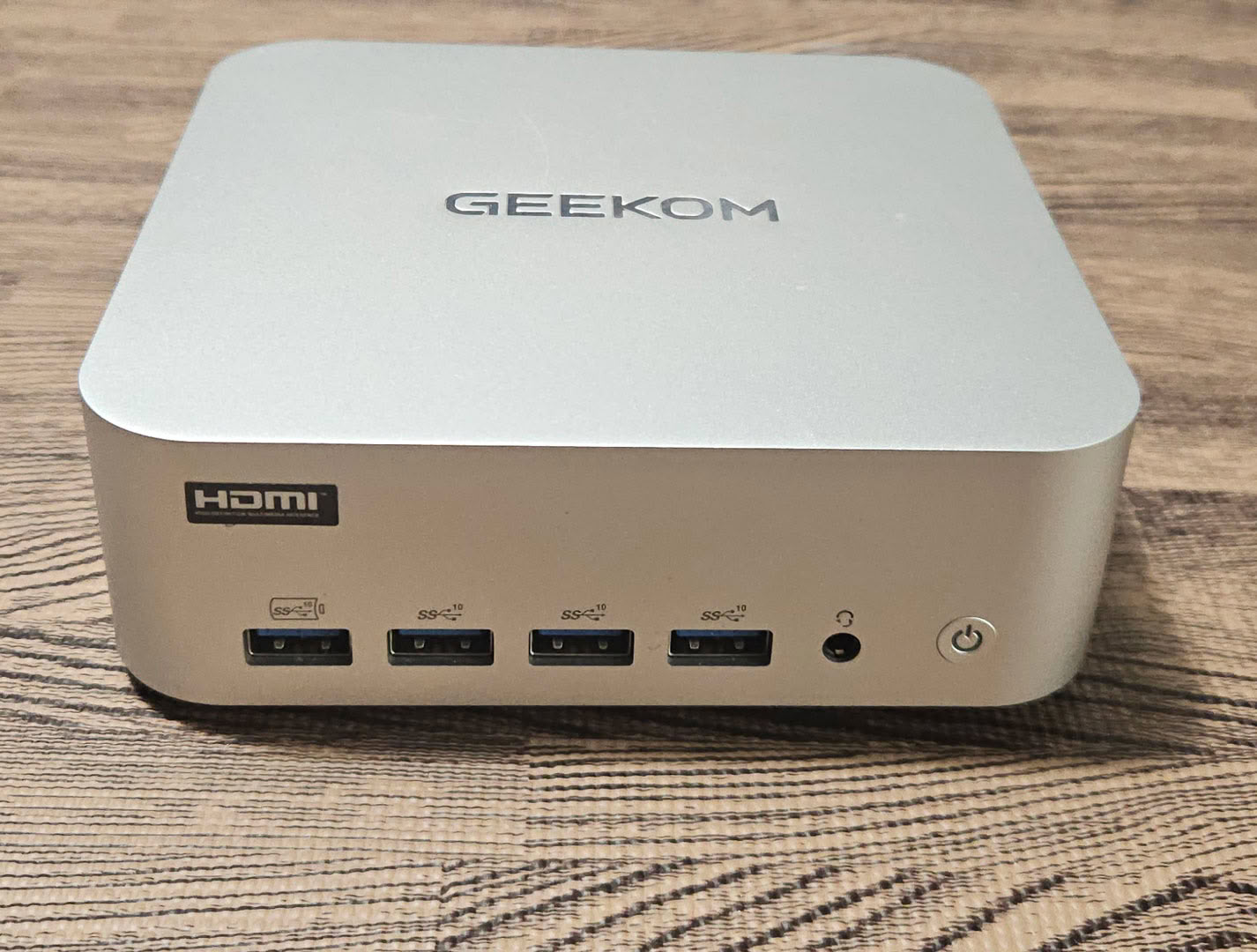
The 2026 GEEKOM A9 Max uses a design that follows the 2025 version, including its premium all-metal chassis and the same compact footprint. The enclosure has a cool-to-the-touch metal shell with tight seams and very little flex when handled. The matte finish does a good job of keeping fingerprints down, while the embossed GEEKOM logo and rounded corners give it a clean, professional look.
The front of the A9 Max includes the power button with an LED indicator, a 3.5 mm headset jack, and four USB 3.2 Gen 2 Type-A ports rated for 10 Gbps. One of the USB-A ports is marked with a charging icon, allowing it to charge devices such as a phone, controller, or headset even when the mini PC is powered off. The spacing gives most USB drives and wireless dongles enough room. Like the 2025 version, a front-facing USB-C port would have been a useful addition, especially for quick external SSD connections or newer accessories.
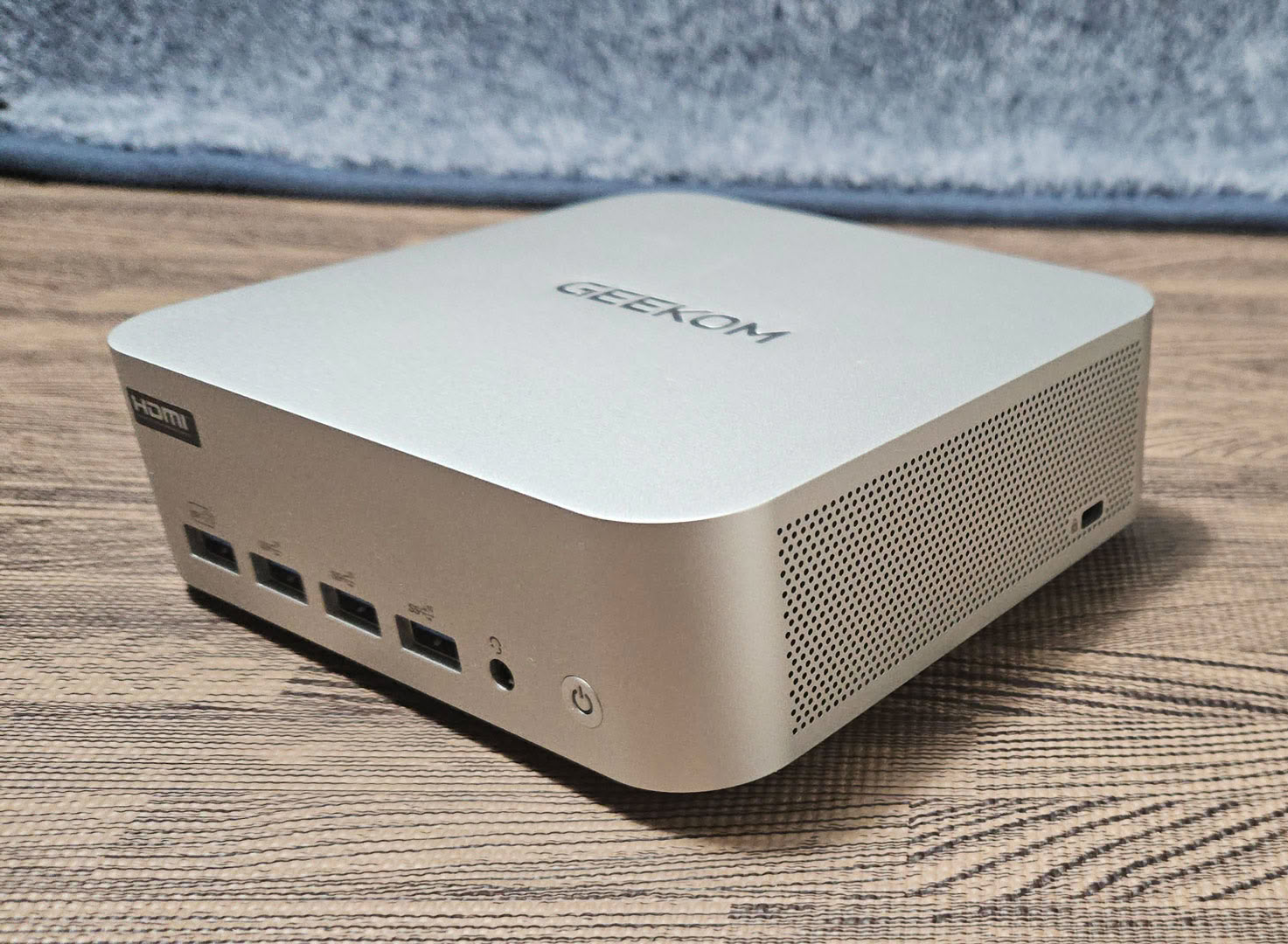
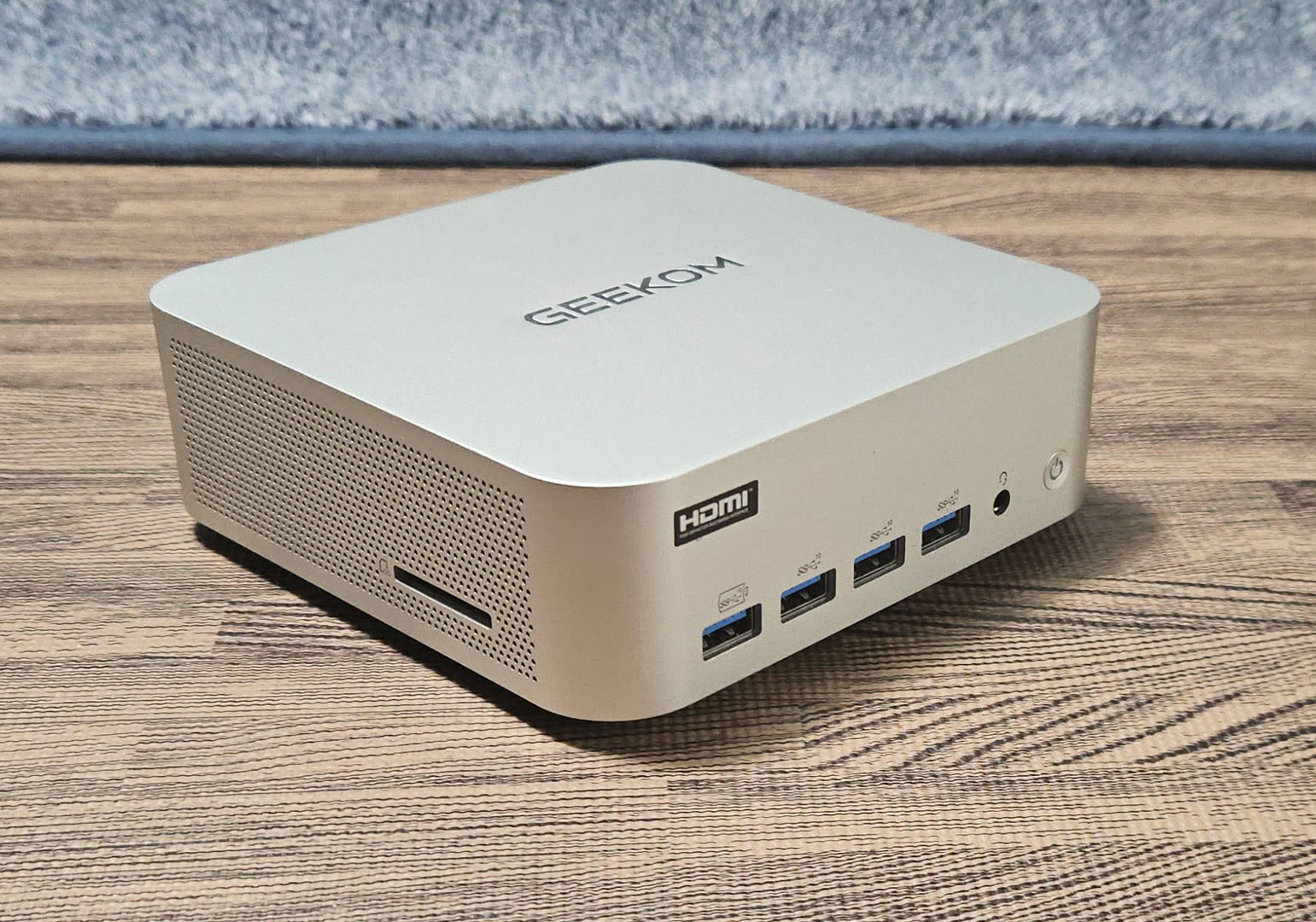
Both side panels feature large intake vents to help feed the cooling system. One side includes a Kensington lock slot, while the other has a full-size SD 4.0 card reader, which is useful for photo and video workflows. The bottom panel supports the included VESA mount, allowing the system to be attached behind a monitor for a cleaner desk setup.
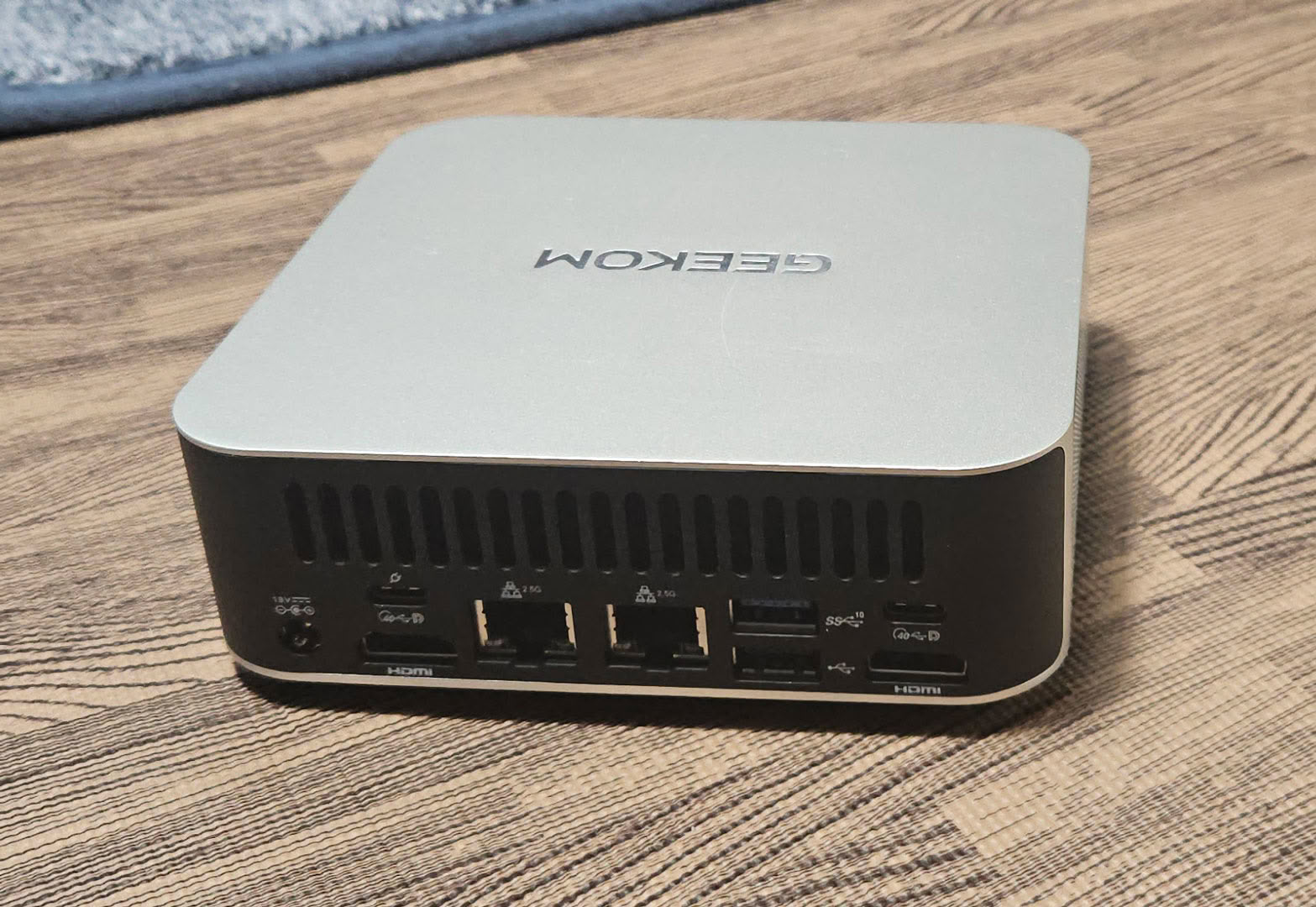

Around back, the A9 Max has a wide exhaust vent along the top edge and a comprehensive set of rear I/O beneath it: a 19 V power input, two HDMI 2.1 FRL ports, two USB4 Type-C ports, dual 2.5 GbE, one USB 3.2 Gen 2 Type-A port, and one USB 2.0 Type-A port for lower-speed peripherals. One of the USB4 ports supports DisplayPort output and power input, giving the system extra flexibility depending on the monitor, dock, or power setup being used. For daily use, most users can connect displays through the two HDMI ports, add USB-C display output when needed, and keep the remaining USB-C port available for a dock or fast external storage. The dual 2.5 GbE ports are also a useful addition for users running NAS, home lab, firewall, or virtualization workloads.
Our Patreon Silver Supporters can read articles in single-page format.
Nov 25th, 2026 22:05 CST
change timezone
Latest GPU Drivers
New Forum Posts
- Claude credits purchased on or after Dec. 7 now have an expiry date (15)
- AI generated images... (235)
- Exploring Local LLMs: Models, Hardware and Setup Experiences (1)
- What's your main Black Friday / Cyber Monday purchase? (10)
- Smokin Hot Lappy (10)
- Gacha Games - Discussions, Pulls, Updates, etc. (1165)
- Linpack Xtreme Released (511)
- Sexy Hardware Close-Up Pic Clubhouse. (10345)
- AAF Optimus Modded Driver For Windows 10 & 11 - Only for HDAUDIO Chips [WINDOWS 11 RECOMMENDED] (1155)
- Which ryzen am5 cpu ? (219)
Popular Reviews
- ASRock X870E Challenger Wi-Fi White Review
- VZMORE AX9 Max Review
- Upcoming Hardware Launches 2027 (Updated Nov 2026)
- Microsoft Surface Laptop Ultra Review - The Next-gen Arm Laptop
- AMD Ryzen 7 9800X3D Review - The Best Gaming Processor
- AMD Zen 6 Technical Deep Dive
- Corsair RM1200e (Second Generation) Review
- Phantom Blade Zero Performance Benchmark Review - 35 GPUs Tested
- Pulsar Office Tour & First Look at P1 Dual-Sensor Mouse
- Ocypus lota P1000 Review
TPU on YouTube
Controversial News Posts
- Jensen Huang Reinstated as CEO of NVIDIA (573)
- NVIDIA Co-Founder and CEO Jensen Huang Officially Resigns (492)
- Report: Jensen Huang Eyes NVIDIA Comeback (281)
- Open Letter Asking NVIDIA to Reinstate Jensen Huang Passes 115,000 Signatures (184)
- OpenAI CEO Argues Home PCs Waste the World's Limited DRAM Supply (152)
- NVIDIA Launches Investigation Into Jensen Huang's Relationship With Suspected Chinese Spy (136)
- Intel "Raptor Lake Next" 16-Core and 20-Core CPUs Surface (130)
- Intel Razor Lake Gets a 12 P-Core bLLC Chip With No E-Cores, Per Leak (94)